Tag: air cargo

  • Asia Air Cargo Rates Diverge as Transpacific Prices Surge 30 Percent

    Asia Air Cargo Rates Diverge as Transpacific Prices Surge 30 Percent

    Air cargo rates from China to the United States climbed 30 per cent year-on-year ahead of the peak shipping rush, driven by steady semiconductor and e-commerce shipments.

    By contrast, rates on the China-to-Europe corridor rose 12 per cent over the same period, slowed by the European Union ending its de minimis tax exemption on July 1.

    The price split reflects an uneven recovery across Asian export corridors. While air space out of Taiwan remains tight on artificial intelligence hardware, and outbound demand from South Korea, Malaysia and Singapore holds firm, outbound volumes from mainland China and Hong Kong have cooled. Pricing data from the TAC Index shows transpacific air freight maintaining a sharp premium, supported by technology shipments alongside higher jet fuel expenses caused by Persian Gulf shipping disruptions.

    Ground Bottlenecks and Route Shifts

    Airlines and forwarders face wide gaps in aircraft fill rates across the region. Dedicated freighter aircraft operate at roughly 65 per cent average load factors, compared with only 36 per cent for passenger aircraft belly hold space, according to IATA figures cited in the Journal of the Air Transport Research Society.

    Freight forwarder Dimerco Express Group noted that cross-border shippers altered transport modes to bypass tight air lanes, diverting freight between China, Vietnam and Thailand onto road networks and utilizing rail corridors into Europe. Early tariff front-loading by retail importers also pulled seasonal volumes forward into earlier quarters.

    Capacity limits on the ground often matter more than available aircraft. At regional transshipment hubs such as the Maldives’ Velana International Airport, which handled nearly 89,000 tonnes of cargo in 2025, warehouse throughput and labor deployment govern holiday processing speeds rather than runway slots.

    Shifting Asian Supply Chain Flows

    For consumer brands and electronics manufacturers across Asia, these fragmented lane dynamics mean freight procurement can no longer rely on broad regional averages. Shippers managing supply chains out of Taipei or Penang face sustained space premiums that do not match the softer spot rates available out of southern Chinese export hubs.

    Carriers are adjusting winter flight schedules to manage the uneven demand. Velana International Airport expects flight movements to rise 12 per cent during the 2026/27 winter schedule, supported by new scheduled freighter operations including Raya Airways’ weekly service from Penang.
  • FedEx Commits $150 Million to Build Automated Air Cargo Hub at Delhi Airport

    FedEx Commits $150 Million to Build Automated Air Cargo Hub at Delhi Airport

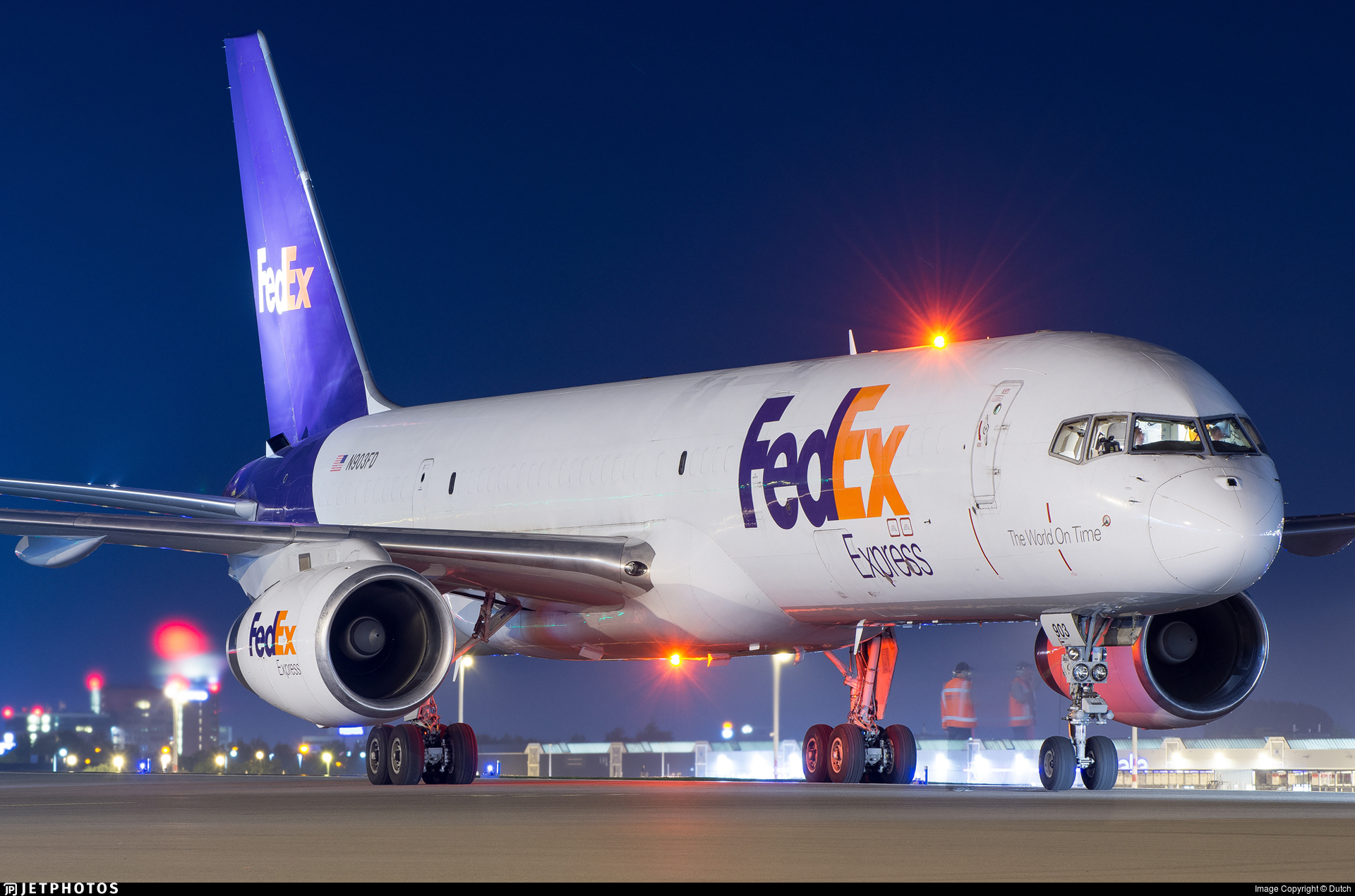
    FedEx will spend $150 million to build and equip a dedicated air freight terminal at Delhi international airport, expanding its international cargo processing capacity across northern India. The planned 230,000-square-foot facility will lift the carrier’s sorting rate at the airport from 600 packages an hour to 5,000.

    The investment will consolidate FedEx’s scattered pickup and delivery operations around the airport into a single base. It includes high-speed automated conveyor lines and computer vision scanners powered by artificial intelligence to route international parcels through customs and sorting lanes.

    Consolidation at GMR Cargo Campus

    Airport operator GMR Airports Ltd is developing the broader cargo zone to house airlines, freight forwarders, and logistics providers. Phase 1 will cover roughly one million square feet, with construction starting shortly. A planned second phase could add between 500,000 and one million square feet of space.

    FedEx is leasing the warehouse structure from GMR and financing all internal sorting systems, scanning hardware, and IT infrastructure. The site design allows for modular physical expansion as freight volumes increase.

    “India is a critical market in our global network, with North and East India playing an important role in the country’s growing trade and economic opportunity,” said Kami Viswanathan, president of FedEx Middle East, Indian Subcontinent and Africa. Viswanathan noted that the expanded presence aims to give regional exporters faster links to overseas buyers as annual Indian merchandise trade exceeds $1.2 trillion.

    Expanding the Indian Triangle

    The Delhi project is the third major air cargo site FedEx has funded in India over the past nine months. In February, the Memphis-based logistics group committed $250 million for an on-airport freight facility at Navi Mumbai International Airport, an Adani Group project targeting 500,000 metric tons of cargo capacity in its initial phase. FedEx will run that site alongside its existing operations at Mumbai’s legacy airport.

    Before that, in December, the company opened a 60,000-square-foot hub at Kempegowda International Airport in Bengaluru, processing up to 4,000 packages an hour across pharmaceutical, industrial, and technology export lines.

    Connecting Delhi, Mumbai, and Bengaluru gives FedEx dedicated airport-side sorting hubs across India’s three largest manufacturing and technology corridors. Construction on the Delhi cargo park begins in the coming weeks, with GMR preparing the phase one site for tenant fit-outs.

  • Hong Kong air cargo volumes continue rebound

    Hong Kong air cargo volumes continue rebound

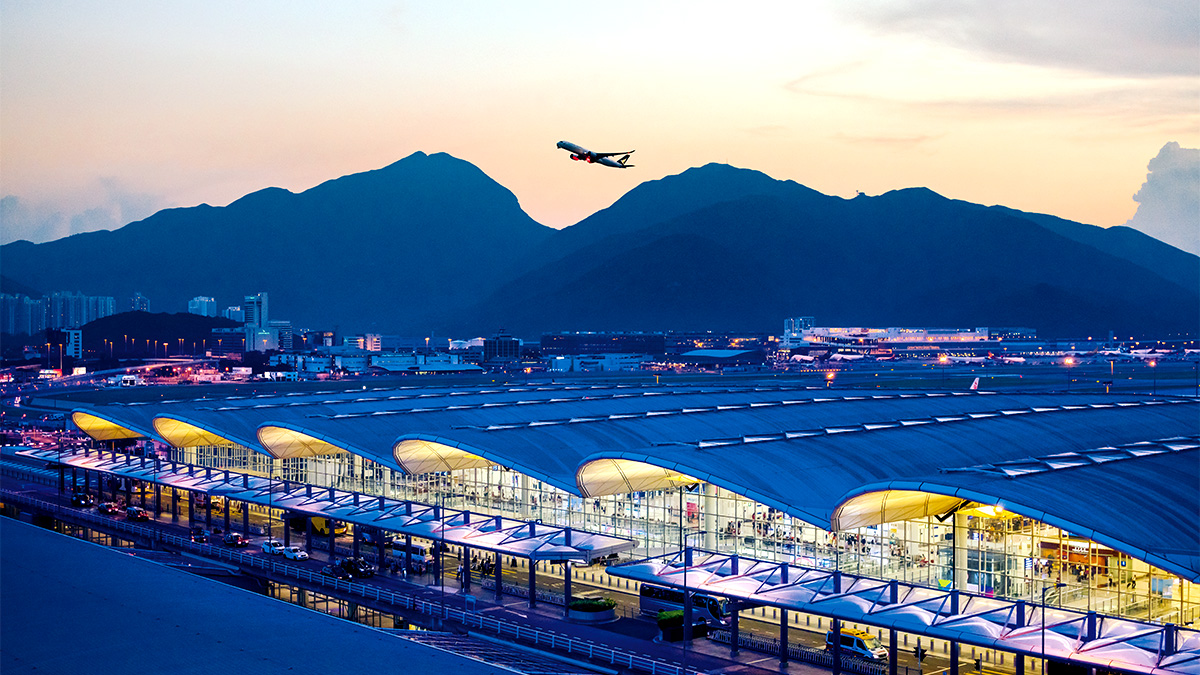
    Cargo volumes at Hong Kong International Airport continued on its path to recovery in July as the airport recorded a year-on-year increase of 3.8 percent over the same month last year at 361,000 tonnes. 

    Month-on-month, this represents an uptick of 1.7 percent over June as flight movements reached 24,030, up 7.4 percent over the previous month. 

    Records say exports contributed the most to the year-on-year increase in cargo volumes in July, up 12.6 percent, with traffic to and from North America, the Middle East and Europe seeing significant growth during the month. 

    Considering the last 7 months, cargo volumes at Hong Kong airport slid 4.2 percent year on year to 2.4 million tonnes, as the airport handled 142,840 flight movements, almost double the flights (94 percent growth) seen over the same 7-month period last year. 

  • Air cargo experiences strongest first half year growth since 2010

    Air cargo experiences strongest first half year growth since 2010

    The International Air Transport Association (IATA) released data for global air freight markets showing that demand, measured in freight tonne kilometers (FTKs), grew by 10.4% in the first-half of 2017 compared to the first-half of 2016. This was the strongest first half-year performance since air cargo’s rebound from the Global Financial Crisis in 2010 and nearly triple the industry’s average growth rate of 3.9% over the last five years.

    Freight capacity, measured in available freight tonne kilometers (AFTKs), grew by 3.6% in the first half of 2017 compared to the same period in 2016. Demand growth continues to significantly outstrip capacity growth, which is positive for yields.

    Air cargo’s strong performance in the first half of 2017 was confirmed by June’s results. Year-on-year demand growth in June increased 11% compared to the same year-earlier period. Freight capacity grew by 5.2% year-on-year in June.

    The sustained growth of air freight demand is consistent with an improvement in global trade, with new global export orders remaining close to a six-year high. However, there are some signs that the cyclical growth period may have peaked. The global inventory-to-sales ratio has stopped falling. This indicates that the period when companies look to restock inventories quickly, which often gives air cargo a boost, may be nearing an end. Regardless of these developments, the outlook for air freight is optimistic with demand expected to grow at a robust rate of 8% during the third quarter of this year.

    “Air cargo is flying high on the back of a stronger global economy. Demand is growing at a faster pace than at any time since the Global Financial Crisis. That’s great news after many years of stagnation. And, even more importantly, the industry is taking advantage of this momentum to accelerate much-needed process modernization and improve the value it provides to its many customers,” said Alexandre de Juniac, IATA’s Director General and CEO.

  • Hazmat Worries Growing

    Hazmat Worries Growing

    Concerns are rising about hazardous cargo. Bans on Galaxy Note 7 smartphones by airlines mark the latest flashpoint in a debate on how to reduce risks from carrying dangerous goods, but there are also worries in the maritime sector.

    Troubles with Samsung’s Galaxy Note 7 have reignited the debate on lithium batteries. After faulty batteries on some units went ablaze, several airlines, including Finnair, Qantas, Aeroflot and Air Canada, have banned the smartphone from their cargo holds.

    Samsung has recalled 2.5 million of the smartphones in at least 10 countries and promised to send replacements out as quickly as possible.

    Airlines that knowingly carry the version with potentially defective batteries or shippers that send them as air freight would be breaking IATA’s Dangerous Goods rules, which mandate that “lithium batteries identified by the manufacturer as being defective for safety reasons, or that have been damaged, that have the potential of producing a dangerous evolution of heat, fire or short circuit are forbidden for transport (for example those being returned to the manufacturer for safety reasons).”

    The International Civil Aviation Organization (ICAO) issued an interim ban on lithium-ion battery shipments on passenger aircraft, which came into effect on April 1. According to ICAO, it will stay in force until a new, safer packaging standard has been established.

    The ban has been criticized by battery manufacturers and some shipper organizations. Many airlines have refrained from comment. According to IATA, about 400 million lithium-ion batteries are produced every week. Most of them are shipped by ocean carrier, but a small contingent goes by air.

    Much of the opposition to bans has revolved around the issue of undeclared battery shipments, which are seen to pose a greater risk. In a joint letter sent in early August to ministers of trade, industry and transport, and directors of civil aviation in the world’s largest lithium battery producing countries, IATA, the Global Shippers Forum, the International Air Cargo Association and several battery manufacturer interest groups called for lithium battery safety regulations to be enforced at the point of origin, including the initial shipper and the battery manufacturer.

    The US Federal Aviation Administration (FAA) appears bent on stepping up enforcement. It recently hit a company that had tendered a shipment of 30 four-ounce ‘Fryer Boil-Out Foaming’ tablets made of corrosive sodium hydroxide for air transportation from Florida to North Carolina to UPS with a US$54,000 fine.

    The amount and the fact that a shipper was punished (usually the FAA metes out fines to carriers, who then deal with clients who have tendered hazmat cargo without proper identification) suggest that the administration is sending out a signal, one airline executive commented.

    In June the FAA slapped a US$350,000 penalty on Amazon, after the company had tendered a package containing a one-gallon container of “Amazing! LIQUID FIRE,” a corrosive drain cleaner, for air transport to UPS. DHL was fined US$455,000 for seven hazardous materials violations back in February.

    “It’s like the Wild West where some companies, lacking in logistics expertise, make serious mistakes in the shipping process, such as unwittingly sending hazardous material via air freight without the benefit of knowledgeable, trained shipping professionals who can provide the necessary advice in adhering to regulations and keeping the flying public safe,” remarked Brandon Fried, executive director of the US Airforwarders Association.

    “As e-commerce volumes increase, shippers will likely experience an increase by the FAA in vigorous enforcement of hazardous material regulations to avoid similar occurrences,” he added.

    IATA has warned about hazardous materials being shipped without proper declarations in mail. The rapid growth of e-commerce, drawing in many merchants with scant or no knowledge of hazardous goods regulations, has heightened concerns about this.

    Concerns about misdeclared hazmat shipments are not confined to air cargo. According to mutual insurance association P&I Club, mis-declared cargo is responsible for 27% of incidents on ships, second only to poor packaging.

    Cargo insurance firm TT Club recently issued a warning about hazardous cargo. Peregrine Storrs-Fox, the company’s risk management director, pointed out that risk assessment surveys at ports over the last 12-18 months have found “worryingly little adherence to segregation requirements for dangerous goods.”

    He pointed to the explosion at Tianjin port a year ago, which resulted in insured losses between US$2.5 and US$3.5 billion. “It underlines how cargo in transit, potentially mis-declared, or packed or handled incorrectly, can cause widespread damage and loss of life,” he said.

  • Amazon is Secretly Testing Air Cargo Operations

    Amazon is Secretly Testing Air Cargo Operations

    Amazon.com, Inc. has been conducting secret trial flights that have carried thousands of packages to and from its fulfillment centers in the United Kingdom. Evening Standard reports that the tech-giant has chartered a Boeing 737 aircraft, which has been flying on routes between Poland, Germany, and England since mid-November.

    The online-retail giant has reportedly chartered the aircraft from DB Schenker, a German logistics company. Five weekly flights have been determined so far, on which the planes travel first from Katowice, Poland to Kassel, Germany. Katowice and Kassel are both significant stops, as the airports in these towns are within close proximity of the e-commerce giant’s huge warehouses in the two countries, respectively.

    The flight then continues from Germany to England, where the plane finally lands at one of the airports in Luton, Doncaster or East Midlands. The packages are dispatched from these airports to Amazon’s various fulfillment centers, including its biggest one at Dunfermline and another in Hemel Hempstead. The company is also rumored to extend the trials by chartering more planes and include its centers in Italy and Spain in this network.

    The move highlights Amazon’s urgency to limit reliance on traditional courier firms. The company has already built its own van delivery fleet in the UK this year, after one of its couriers, CityLink, went bankrupt. On a global-scale, the company has locked horns with its chief carrier UPS. Amazon provides business worth around $1 billion to UPS, but its dissatisfaction has risen due to the increasing shipment charges. Shipping cost has increased 10.4% in a year, compared to revenues growth of 11.7% in the same period.

    This means generating higher revenues did not have the expected positive impact on earnings, if supply chain costs had been further streamlined. Amazon was further unhappy with UPS services, when during last two Christmas periods the courier services was unable to deliver consumer packages on schedule, due to delivery overload. Consequentially, the e-commerce giant has sought to build its own distribution network to restrict costs, and have more control over its distribution network.

    Even within the US, recent reports suggest Amazon is looking to lease 20 Boeing 767 freight aircrafts. While these are positive cost control strategies for the online-retail firm, its air cargo expansion spells trouble for traditional freight carriers such as UPS, FedEx, and DHL. These couriers will likely lose a great chunk of business when Amazon starts carrying its own inter and intra-continental freight.

    An Amazon spokesman was quite tight-lipped when the Evening Standard asked for a comment over the European flights, and did not reveal information beyond the fact that the retail-firm employs various distribution and fulfillment modes, including air transport. No other official statement was made by the company.