Tag: AirAsia X

  • Thai AirAsia X looking for new investors

    Thai AirAsia X looking for new investors

    Thai AirAsia X needs a major restructuring and new investors to prep the airline to resume international routes next year, after Thai AirAsia (TAA) already secured additional funding for the carrier last week.

    Thai AirAsia X, a long-haul, low-cost carrier under the AirAsia group, has been grounded for almost two years since the pandemic emerged in 2020. The 11-aircraft fleet was reduced to seven earlier this year, said Tassapon Bijleveld, executive chairman of SET-listed Asia Aviation (AAV), the majority shareholder in TAA.

    Mr Tassapon, also a shareholder in Thai AirAsia X, said the airline had to switch its wide-body Airbus A330 jets to cargo service to stem financial losses. Thai AirAsia X requires additional liquidity to prepare for passenger flights, which are expected to resume next year, he said.

    Tourists have started asking when international flights will resume and the airline responded by launching ticket sales for the Bangkok-Incheon (South Korea) route from April 2022 in the hope that borders will reopen by then, said Mr Tassapon.

    “Border closures should not be an option to prevent the spread of the Omicron variant as the national economy and cash-strapped tourism sector in particular cannot afford to survive another lockdown,” he said.

    Mr Tassapon said it has been over two years since the pandemic broke out and the government should learn to live with it by sourcing sufficient immunity, by using vaccines and medicines, for local communities in order to let economic activities run as usual.

    He said Thai AirAsia X, which is not yet listed on the stock market, is in negotiations with a few potential investors and will enter the restructuring process by next year.

    TAA was given approval by shareholders at a meeting on Nov 26 to commence the restructuring plan, enabling the airline to raise an additional 14 billion baht.

    Under the new structure, Mr Tassapon will hold 18% of the shares, down from 40.52% at present, while AirAsia Aviation, the investing company under AirAsia Group Berhad, will hold 40.7%, followed by commercial banks at 5.3% and new individual Thai investors at 5.2%.

    However, even though TAA is expected to receive the first allotment of fresh capital by mid-December, the cost-cutting measures have to remain until air travel fully recovers.

    On announcing massive layoffs last month, Mr Tassapon said TAA would have to bid farewell to more than 400 employees from its total workforce of 5,000. Some employees decided to join the early retirement program offered by the firm, he said.
  • AirAsia X narrows operating losses in quarter to 30 September

    AirAsia X narrows operating losses in quarter to 30 September

    Long-haul, low-cost carrier AirAsia X has reported an operating loss of MYR82.5 million ($19.6 million) for the first quarter of its 2022 financial year. The carrier generated revenue of MYR99.3 million for the three months ended 30 September, and a net loss of MYR149 million, it says.

    The carrier did not provide corresponding figures for the same period in 2021, given that it changed its financial year. Still, its performance improved across key metrics.

    In the three months to 30 September 2020, it generated an operating loss of MYR498 million, revenues of MYR60 million, and a net loss of MYR308 million. The airline adds that it remains largely grounded, apart from a “limited number of cargo and charter flights.”

    AirAsia X also provided some details about Thai AirAsia X (TAAX) and Indonesia AirAsia Extra, in which it holds 49% stakes, during the three months to 30 September.

    TAAX suffered a net loss of MYR353 million, while Indonesia AirAsia Extra generated a net profit of MYR12.3 million.

    The group adds that there is “meaningful uncertainty about the reopening of international borders,” which affects its prospects. Earlier this month, AirAsia X received crucial approval from creditors for debt restructuring, following a series of court-convened meetings on 12 November.

    This paved the way for restructuring and recapitalization, which it hopes to wrap up in early 2022.

    The carrier has labeled the restructuring a “wide and deep reset,” that covers all creditors.

    “With the completion of this exercise, AirAsia X will be one of the very few airlines worldwide that has no gearing and a restructured cost base that is significantly below that of its competitors in the region and will be

  • AirAsia crowned world’s best Airline again

    AirAsia crowned world’s best Airline again

    AirAsia has been named the World’s Best Low-Cost Airline at the Skytrax World Airline Awards 2019 for the 11th consecutive year.

    The airline won the title based on a survey of over 21.6 million passengers of 100 nationalities and over 300 airlines between September last year and May.

    AirAsia also won Asia’s Best Low-Cost Airline award and the World’s Best Low-Cost Airline Premium Cabin award for its premium flatbed on widebody long-haul AirAsia X aircraft.

    The prestigious Skytrax World Airline Awards are considered the global benchmark of airline excellence.

    AirAsia Group Berhad executive chairman Datuk Kamarudin Meranun and AirAsia X Berhad chairman Tan Sri Rafidah Aziz were among those who accepted the awards at the Paris International Air Show yesterday.

    Kamarudin said it was an honour for the airline to be recognised for its commitment to provide “affordable travel and guest-obsessed service”.

    “The fact that these awards are based on direct feedback is a gratifying and wonderful recognition for the Allstars who put so much effort and commitment into service excellence for our guests,” he said, referring to AirAsia employees.

    Rafidah also expressed her appreciation for the airline’s employees for AirAsia’s win in the World’s Best Low-Cost Carrier Premium Cabin category.

    “(This year’s) win represents nine years of being the world’s best in this category, and is dedicated to our Allstars who have been steadfast in upholding our corporate culture, mission and vision,” she said.

    She added that AirAsia X will introduce the new Airbus A330neo, an aircraft which will bring even greater inflight comfort to passengers.

    “Combined with our renowned inflight service as a long-haul low-cost carrier, AirAsia X will strive to continue to offer excellent value for money to our guests to 30 destinations in 10 markets across the AirAsia Group long-haul network,” she said.

  • AirAsia X Wants To Launch Flights From The US West Coast To Japan

    AirAsia X Wants To Launch Flights From The US West Coast To Japan

    Air Asia is the world’s largest and best low-cost carrier (They have won awards for the last 10 years). Air Asia X, their low-cost long haul carrier has built a route network spanning from the middle east to southern Australia. But many people in the US have never had a chance to fly on Air Asia, as the name would imply, have only ever been centered around South East Asia.

    Could Air Asia X routes from Japan to the US West Coast work?

    In a massive new rumor, Air Asia might be starting direct routes between Japan and the US West Coast onboard their fleet of brand new Airbus A330-900 aircraft. As none of the 66 new aircraft on order have been delivered yet, Air Asia X has been reluctant to place address the theory. They are however one of the first airlines to order the aircraft, and as deliveries have begun, we expect news sometime this year.

    Previously, the current fleet of older A330-300s has only been able to reach as far as Hawaii from Osaka, Japan (their range is 6,350 nmi (11,750 km)), limited by their ability to cross the Pacific ocean.

    But these new A330neo aircraft, with a range of 7,200nmi (13,334km), allow Air Asia X to reach destinations like Los Angeles and San Fransisco. This opens up a huge potential market for the company, and on the flip side, a cheap (and good) way for American’s to access Japan, and through transfer, South East Asia.

    What is the service like on Air Asia X?

    Whilst there has been no information yet on the fit out of the new Airbus A330-900 aircraft, we can hazard a guess based on their current A330-300 jets.

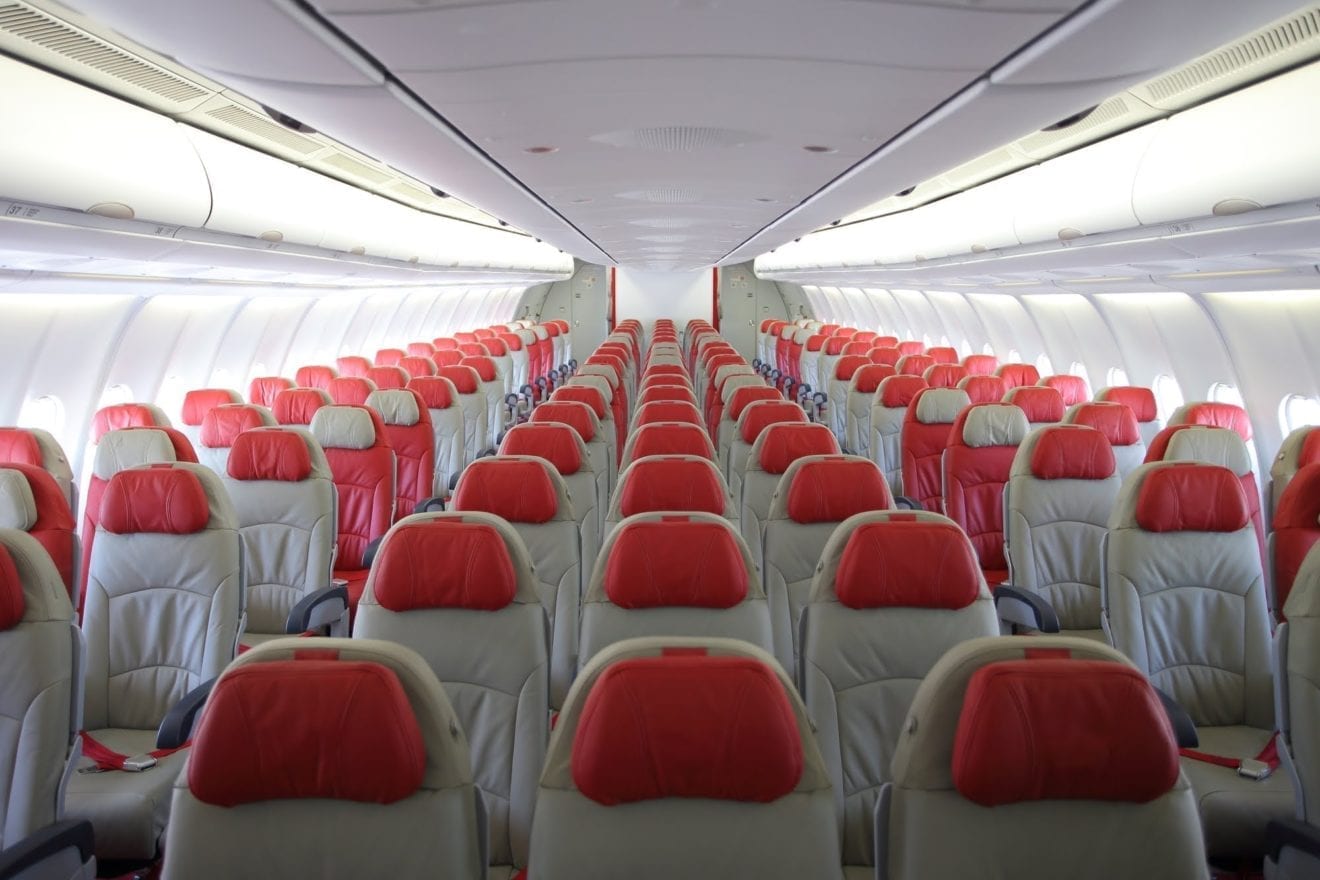
    There are three classes on board, a ‘premium’ business light class, a quiet zone and a normal economy class. There are also exit row seats scatted throughout.

    The business class features “flat beds” (They do not go entirely 90 degrees flat, but are more around 70-80 degrees), as well as included entertainment (via tablet), baggage allowance and food and beverages. They have around 60 inches of pitch and are 20 inches wide.

    There is every possibility that AirAsia will upgrade the seat truly lie flat in their newer aircraft.

    The quiet zone on board is a section of economy row seats at the front of the economy section that only allows adults and forbids loud noise. The economy section is laid out in a 3 by 2 by 3 configuration.

    Naturally, as it is a low-cost carrier, passengers will need to budget for seat selection, baggage, food and bring their own entertainment. The economy seats have 32 inches of pitch and are 16 1/2 inches wide.

    The real win, however, is the cost. Typically you would be looking at around $1000 USD return in economy to fly from Los Angeles to Osaka. Air Asia typically offers premium business for the cost of an economy ticket (which is well worth the upgrade) and economy for dirt cheap prices (through economies of scale). It is very likely that Air Asia will instantly undercut the market on these routes and be the cheapest to fly.

  • AirAsia strengthens Malaysia-Thailand connectivity with new Chiang Rai hub

    AirAsia strengthens Malaysia-Thailand connectivity with new Chiang Rai hub

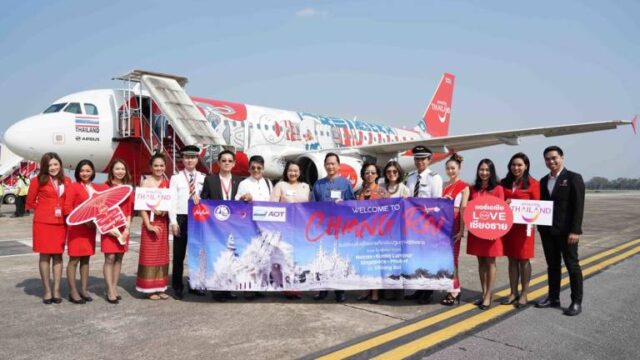
    AirAsia has further strengthened Malaysia-Thailand connectivity with the launch of a new route from Kuala Lumpur to Chiang Rai, its seventh and newest hub in Thailand. AirAsia Thailand, which will base an Airbus A320ceo at Chiang Rai’s Mae Fah Luang International Airport, will also operate new services to Phuket, Singapore and Macau, providing a massive boost to the local tourism and business communities, the airline said in a statement.

    AirAsia currently operates a total of six routes to and from the capital of Thailand’s northernmost province, including existing services from Bangkok Don Mueang and Hat Yai.

    AirAsia Thailand director of ground operations Witchunee Kuntapeng said the opening of its new hub in Chiang Rai is much like building a new home.

    “Chiang Rai has great potential to be one of the top tourism destinations in Thailand, with its unique Lanna culture and hill tribe way of life recently gaining global attention.

    “We believe it is a great time to promote Chiang Rai to travelers and are pleased to see that our four new routes between Chiang Rai and Phuket, Macau, Singapore and Kuala Lumpur have been well received. We’d like to thank the local community for their wonderful support,” Kuntapeng added.

    A welcoming ceremony led by Chiang Rai vice governor Paskorn Boonyalug, Tourism Authority of Thailand executive director for the East Asia region Titiporn Manenate and local travel agents was held at the new hub for each of AirAsia’s four inaugural flights from Phuket, Macau, Singapore and Kuala Lumpur between Jan 30 and Feb 1, 2019.

    The flight from Kuala Lumpur saw a load factor of 85% percent, proving the airline’s efforts to promote Chiang Rai as a leading destination for overseas visitors was off to a great start, it added.

  • AirAsia, AirAsia X in RM400m counterclaim against MAHB

    AirAsia, AirAsia X in RM400m counterclaim against MAHB

    AirAsia Group Bhd and its affiliate AirAsia X Bhd are seeking over RM400 million in counterclaims against Malaysia Airport Holdings Bhd (MAHB) in relation to the suit filed against them over the passenger service charges (PSC) collection. AirAsia and AirAsia X told Bursa Malaysia that they had filed a statement of defence against Malaysia Airports (Sepang) Sdn Bhd (MASSB), a wholly-owned subsidiary of Malaysia Airport Holdings Bhd (MAHB).

    “In the statement of defence, AirAsia Bhd (AAB) contended, amongst others, that the claim by MASSB is misconceived, invalid and/or premature as MASSB has not complied with and/or availed itself of the statutory provisions for dispute resolution within the Malaysian Aviation Commission Act 2015 (Mavcom Act). Accordingly, AAB has filed an application to strike out the suit on the above grounds,“ said AirAsia.

    “Further, AAB together with its affiliate AirAsia X Bhd (AAX), will be availing themselves of the statutory provisions for dispute resolution within the Mavcom Act to seek more than RM400 million in counter-claims against MASSB and/or MAHB for losses and damages experienced by AAB and AAX due to operational disruptions at klia2,” it added.

    Last month, AirAsia was being sued for refusing to collect the additional RM23 PSC per passenger at klia2.

    AAB was served with an unsealed copy of a writ of summons in the sum of RM9.4 million by MASSB pertaining to PSC that AAB has not collected and refuses to collect from traveling passengers. Meanwhile, AAX was served with an unsealed copy of a writ of summons in the sum of RM26.7 million for alleged PSC arrears.

    AirAsia yesterday closed up 1.33% to RM3.05 with 5.17 million shares done; while AAX closed 1.72% lower at 28.5 sen with 12.17 million shares traded. MAHB was up 0.25% at RM8.12 with 3.33 million shares changing hands.

  • AirAsia eyes Vietnam launch, turnaround India and Japan units

    AirAsia eyes Vietnam launch, turnaround India and Japan units

    AirAsia Group chief executive Tony Fernandes says the group has no plans to establish new subsidiaries over the next three years, apart from a unit in Vietnam. In a series of tweets, Fernandes says the low-cost carrier will focus its efforts on launching AirAsia Vietnam, as well as making Indonesia AirAsia and AirAsia Philippines “very profitable”. Last December, AirAsia signed a memorandum of cooperation with Thien minh Travel for a Vietnamese joint venture.

    Meanwhile, AirAsia‘s Indonesia and Philippines units, which have suffered losses over the years, have had their financials incorporated into the Group since the start of 2017. AirAsia has said that it is planning for a secondary listing for its Indonesia operations in fiscal 2019.

    Fernandes is also expecting AirAsia India and AirAsia Japan to be profitable by 2021. AirAsia India is working towards launching international services while AirAsia Japan plans to start connecting to points in North Asia.

    “We have a great seam[less] franchise. Indonesia, Malaysia, Thailand, Philippines and Vietnam… All the major populations and growing economies. Coupled with two great countries to enable us to cover the world – India and Japan.”

    The AirAsia Group previously had plans to launch a China unit and signed a MoU in May 2017. The pact with China Everbright Group and the Henan Government Working Group however lapsed in August 2018.

  • MAHB’s record profits come at a cost to the Malaysian economy and tourism

    MAHB’s record profits come at a cost to the Malaysian economy and tourism

    Against a backdrop of a challenging economy and falling profitability in corporate Malaysia, Malaysia Airports Holdings Berhad (MAHB) won a major Malaysian award last week, topping billion ringgit companies for giving its shareholders the best three-year returns in its class.

    MAHB’s net profit more than tripled in 2017 to RM237 million from RM73 million in 2016 – itself nearly double from RM40 million in 2015 – and it is set to break yet another record this year.

    In the write-up that accompanied the award, the sharp increase in profits was attributed to two reasons: an increase in Passenger Service Charge (PSC) and growth in passenger numbers coming through its airports.

    The write-up unabashedly stated that MAHB owed its vastly improved performance to its structural dominance and described MAHB as a structural monopoly.

    Kudos to MAHB. But then, it is not difficult to keep showing such numbers when you are a monopoly.

    Nevertheless, unjustified price increases, such as the PSC hike imposed by MAHB, will lead to unintended consequences when its clients, who have no choice but to use its services, are eventually squeezed out of business. Then, everything will collapse – Malaysia’s tourism arrivals, billions in tourism receipts and revenues to MAHB’s own coffers (a fact it has failed to acknowledge).

    MAHB rewards itself with excessive monopoly profits, yet it provides the Malaysian public with embarrassingly low service levels.

    AirAsia X Malaysia CEO Benyamin Ismail said, “In addition to the RM50 PSC it already imposes, MAHB is now demanding an additional RM23 from each passenger travelling through klia2. The millions of passengers departing from klia2, more than 90 percent of whom fly with AirAsia, will attest to the long walks they have had to endure to reach their gates in what is a passenger-unfriendly airport with inferior facilities yet unjustified high charges.

    “Furthermore, since klia2 opened, there have been constant flight disruptions and cancellations due to major apron and runway defects, unscheduled closure of runways, ponding of water on the best of days and fuel pipeline ruptures.

    “We were sued after we refused to collect the extra RM23 that MAHB has imposed for the sole benefit of its shareholders. We will vigorously fight this suit. We will not be part of this scheme to burden the travelling public by making them pay more for below par services.”

    Benyamin added that while the operating results of klia2 itself were not immediately apparent, AirAsia estimates that MAHB’s returns on capital are well in excess of the level of the cost of capital set by regulators.

    AirAsia Malaysia CEO Riad Asmat said, “The overall tourism sector, one of Malaysia’s biggest revenue earners, and the interests of millions of Malaysians who have been able to fly because of the low fares pioneered by AirAsia, are being threatened by MAHB’s price hikes. We urge the regulators and policy makers to rebuff this unfair and unreasonable attempt by MAHB to use its monopoly to enrich itself further by revisiting and rescinding the decision to raise the PSC.

    “MAHB has argued it needs more profits to operate smaller loss-making airports on behalf of the government, but it is obvious from its exponential growth in profits over the last three years – even after taking into account losses in its Turkish operations – that this is not the case.

    “The additional RM23 to be collected will amount to more than RM100 million a year that will go straight to MAHB’s bottom line rather than to the government. MAHB will continue to be among the most profitable Malaysian companies for many years to come. But this will come at a cost to the wider Malaysian economy and at the expense of engines of growth such as AirAsia and AirAsia X.”

    Riad also referred to MAHB’s defence of its decision to charge the extra RM23 in PSC from each travelling passenger, saying it is “bound by Article 15 of the Chicago Convention of 1944.”

    “This would almost be laughable if it were not so serious. MAHB is falling back on a convention ratified in 1944, when Japan still ruled Malaya and when Frank Whittle was testing the jet engine and when only the well-heeled could fly.

    “For all these reasons, we shall not accede to MAHB’s demands and we will take our battle both to the people and to the court of law.”

  • AirAsia: High cost of unjustified PSC hike

    AirAsia: High cost of unjustified PSC hike

    Unjustified price increases such as the hike in passenger service charge (PSC) could result in airlines being squeezed out of business and subsequently affect tourism arrivals, said low-cost carrier AirAsia. In a strongly worded statement titled “MAHB’s record profits come at a cost to the Malaysian economy and tourism industry”, the airline said the PSC hike imposed by airport operator Malaysia Airports Holdings Bhd (MAHB) will lead to unintended consequences when MAHB’s clients, who have no choice but to use its services, are eventually squeezed out of business.

    “Then, everything will collapse – Malaysia’s tourism arrivals, billion in tourism receipts and revenues to MAHB’s own coffers (a fact it has failed to acknowledge). MAHB rewards itself with excessive monopoly profits, yet it provides the Malaysian public with embarrassingly low service levels,” it said.

    The two parties have been in a row over the additional PSC imposed by MAHB of RM23 per passenger at klia2, in a move to equalise the PSC rate at klia2 and Kuala Lumpur International Airport (KLIA).

    Last week, MAHB slapped AirAsia Group Bhd and AirAsia X Bhd (AAX) with a RM36.1 million lawsuit for refusing to collect the additional PSC and alleged arrears in PSC.

    AirAsia X Malaysia CEO Benyamin Ismail said more than 90% of the “millions” of passengers departing from klia2 who fly with AirAsia will attest to the long walks to the departure gates, labeling klia2 as a passenger-unfriendly airport with inferior facilities and unjustified high charges.

    He reiterated AirAsia’s complaints about the airport such as flight disruptions and cancellations due to major apron and runway defects, unscheduled closure of runways, ponding of water and fuel pipeline ruptures.

    “We were sued after we refused to collect the extra RM23 that MAHB has imposed for the sole benefit of its shareholders. We will vigorously fight this suit. We will not be part of this scheme to burden the travelling public by making them pay more for below par services,” he said.

    AirAsia noted that MAHB’s net profit more than tripled in 2017 to RM237 million from RM73 million in 2016, and estimates that MAHB’s returns on capital are well in excess of the level of the cost of capital set by regulators.

    AirAsia Malaysia CEO Riad Asmat urged regulators and policy makers to rebuff the “unfair and unreasonable” attempt by MAHB to use its monopoly to enrich itself further by revisiting and rescinding the decision to raise the PSC.

    “The overall tourism sector, one of Malaysia’s biggest revenue earners, and the interests of millions of Malaysians who have been able to fly because of the low fares pioneered by AirAsia, are being threatened by MAHB’s price hikes,” he said.

    He challenged MAHB’s argument of needing more profits to operate smaller loss-making airports on behalf of the government, noting MAHB’s “exponential” growth in profits over the last three years even after taking into account losses in its Turkish operations.

    “The additional RM23 to be collected will amount to more than RM100 million a year that will go straight to MAHB’s bottom line rather than to the government. MAHB will continue to be among the most profitable Malaysian companies for many years to come. But this will come at a cost to the wider Malaysian economy and at the expense of engines of growth such as AirAsia and AirAsia X,” he said.

  • AirAsia X falls on the back of Q3 losses

    AirAsia X falls on the back of Q3 losses

    AirAsia’s share price slid in yesterday’s early morning trade as the airline recorded widening losses. At 9.45am, the counter was down 1.5 sen or 6.25% to 22.5 sen a share on turnover of 2.8 million shares. An increase in average fuel price and a RM138.2mil impairment made on an amount due from a joint venture resulting in AirAsia X’s net losses jumping almost five times to RM197.47mil from RM43.3mil in the year-ago quarter.

    The carrier said the average fuel price in 3Q18 had increased to US$91 per barrel compared with US$65 in 3Q17.

    Meanwhile, the impairment made in the third quarter was related to a lease rental and maintenance reserve due from a JV through a third-party leasing intermediary.

  • Indonesia AirAsia X to cease scheduled operations in January

    Indonesia AirAsia X to cease scheduled operations in January

    Indonesia AirAsia X< will cease scheduled operations in January 2019 and operate as a non-scheduled commercial airline thereafter. The carrier’s only scheduled operation – a seven-times weekly service between Denpasar and Tokyo Narita using an A330 – will be suspended in January, the AirAsia X Group disclosed in its third quarter results.

    “With the challenging operational environment in Indonesia, primarily due to the series of natural disasters that occurred in proximity to Bali, the company is underway to evaluate the available options for our Indonesian associate to ensure sustainability of the company with the last schedule flight from Bali to Narita will end in January 2019,” says AirAsia X group CEO Nadda Buranasiri.

    AirAsia X Indonesia will operate on a non-scheduled commercial airline basis.” IAAX posted a net loss of $1.53 million in the third quarter of the year, compared to a profit of $2.15 million a year ago. It attributed the poor performance to a 34% jump in costs, driven by the rise in fuel prices.

    During the period, it saw a 32% drop in the number of passengers carried, while load factor held steady at 80%. Average base fare climbed 21% to $146.The airline, which has struggled for some time now, also disclosed that it terminated its Jakarta-Tokyo Narita service in October. Last month, sister carrier Indonesia AirAsia said it will take over the routes and slots that IAAX had been using to operate a trio of Airbus A320s. IAAX was operating short-haul services to Denpasar, Jakarta and Surabaya.

    IAAX with two A330-300s. 2005-built PK-XRA is owned and managed by Aviator Capital, while PK-XRC, also built in 2005, is owned by KDAC 2017-1 ABS Portfolio and managed by Deucalion Aviation Funds.

  • AirAsia X inks conditional amendment agreement with Airbus for additional 34 aircraft

    AirAsia X inks conditional amendment agreement with Airbus for additional 34 aircraft

    AirAsia X Bhd has entered into a conditional amendment agreement with Airbus S.A.S for the purchase and delivery of an additional 34 A330-900neo aircraft pursuant to the A330-300 purchase agreement dated June 14, 2007.

    This comes after the low-cost long-haul carrier announced yesterday that it had placed an order of 100 Airbus A330neo widebody aircraft.

    AirAsia X said that the aircraft will be delivered between October 2019 and the second half of year 2028.

    The aircraft will each be fitted with a set of two Rolls-Royce Trent 7000-72 engines.

    The group said the rationale for entering into the conditional agreement is to seek additional aircraft for its operational growth and also for aircraft replacement in respect of current aircraft on lease, which will be returned to the respective lessors within the next 10 years.

    “The new generation aircraft provide many benefits including greater fuel efficiencies, lower operating costs, enhanced customer comfort and importantly, greater range capability enabling non-stop services to new international markets, namely Europe and the US.”

    It added that the additional delivery of the aircraft also provide opportunities for the group to operate from other hubs in Malaysia such as Penang and Kota Kinabalu.

  • AirAsia X net profit up fourfold in first quarter

    AirAsia X net profit up fourfold in first quarter

    Low-cost, long-haul carrier AirAsia X Bhd saw a more than fourfold jump in net profit in the first quarter ended March 31, 2018 to RM41.5 million from RM10.34 million in the same quarter a year ago.

    Revenue for the period under review rose 7.2% to RM1.27 billion from RM1.18 billion on the back of a 13% increase in passenger volume.

    Despite a slight reduction in the average fare of 3% compared with the same quarter last year, the airline maintained its load factor at 84% in addition to delivering an additional 231,855-seat capacity, representing a year-on-year increase of 14%.

    “The company recognises the challenges posed by the recent hike in fuel prices, and best mitigative efforts are being put forth through the boost in ancillary and capacity numbers. The company is confident of presenting the results from these measure during the third and fourth quarters of the financial year,” AirAsia X said on its prospects.

    It noted that based on the current forward booking trend, forward loads are trending better than in the previous year.

    “Barring any unforeseen circumstances, including but not limited to terrorist attacks, natural disasters, epidemics, economic downturn, fuel price hike and fluctuation in foreign currencies against the ringgit, the company expects its prospects to remain positive,” it added.

    On Bursa Malaysia yesterday, AirAsia gained 1.33% to 38 sen on volume of 10.76 million shares.

  • AirAsia, AirAsia X Malaysia log increase in passenger volume, load factor in Q4 2017

    AirAsia, AirAsia X Malaysia log increase in passenger volume, load factor in Q4 2017

    Budget airlines AirAsia Bhd and its long-haul carrier counterpart AirAsia X Bhd registered higher year-on-year passenger volume and load factor in the fourth quarter of 2017.

    Air Asia carried 10.44 million passengers between October and December 2017, which is a 17% increase from the previous year’s 8.25 million, in line with the 16% seat capacity increase to 11.93 million.

    The low-cost carrier, which saw an expansion to its fleet to 116 aircraft, also saw its load factor improve by 1% to 88% against the 87% registered in the same quarter in 2016.

    Meanwhile, its Malaysian operations reported a 15% increase in passenger volume to 7.79 million from 6.76 million in the quarter under review.

    AirAsia commenced 10 new routes, five originating from Malaysia, two from the Philippines and three from India, while AirAsia Japan commenced its first flight on October 29, 2017, flying between Nagoya and Sapporo.

    On another note, AirAsia X carried 1.54 million passengers in the last quarter of 2017, translating into a 12% increase from the fourth quarter of 2016. Load factor improved 2% to 83% while capacity expanded 10% to 1.87 million from 1.7 million.s

  • AirAsia X plans for more fifth-freedom flights

    AirAsia X plans for more fifth-freedom flights

    AirAsia X is planning to add more fifth-freedom flights as it seeks to take advantage of the growth at secondary and tertiary cities across North Asia.

    Sharing the long-haul, low-cost carrier’s plans was its head of network planning Venggatarao Niadu, as part of a panel at the Routes Asia Strategy Summit in Okinawa.

    “We now operate an eight-hour range for our Airbus A330 widebodies, and we want to go beyond that using more fifth-freedom flights,” says Naidu.

    Naidu cites AirAsia’s Kuala Lumpur-Gold Coast-Auckland and Kuala Lumpur-Osaka-Honolulu as examples of the model it is looking to for future growth. He adds that North Asia and China are regions for expansion and where it could mount more fifth-freedom services.

    When asked about AirAsia X’s plans to return to Europe, Naidu describes it as “still a work in progress” and that the carrier is still working to secure the relevant rights. He reveals that flights to Europe will not only be operated by its main Malaysian unit, but also Thai AirAsia X.

    Meanwhile, AirAsia X acknowledges that it faces certain obstacles to growth, largely bilateral limitations, and slot and infrastructure shortages.

    Naidu says that, even with those challenges, and growing competition in the market, it isn’t deterred from seeking new growth opportunities.

    “When we see an opportunity, we grab it first. Then the industry will follow suit and flood the market. But we have seen that the industry will rationalise after a few years to keep it stable,” he says.