Retail News CRM

Tag: airbag

  • Ferrari Vietnam recalls cars over faulty airbags

    Ferrari Vietnam recalls cars over faulty airbags

    Ferrari Vietnam is recalling 24 cars for airbag faults that can cause severe damage in the event of a crash.

    The recall covers five models: 458 Speciale, 488 GTB, 488 Spider, California T, and F12 Berlinetta. The recalled cars were produced between March 2014 and July 2017, according to a statement submitted by the automaker to the Vietnam Register.

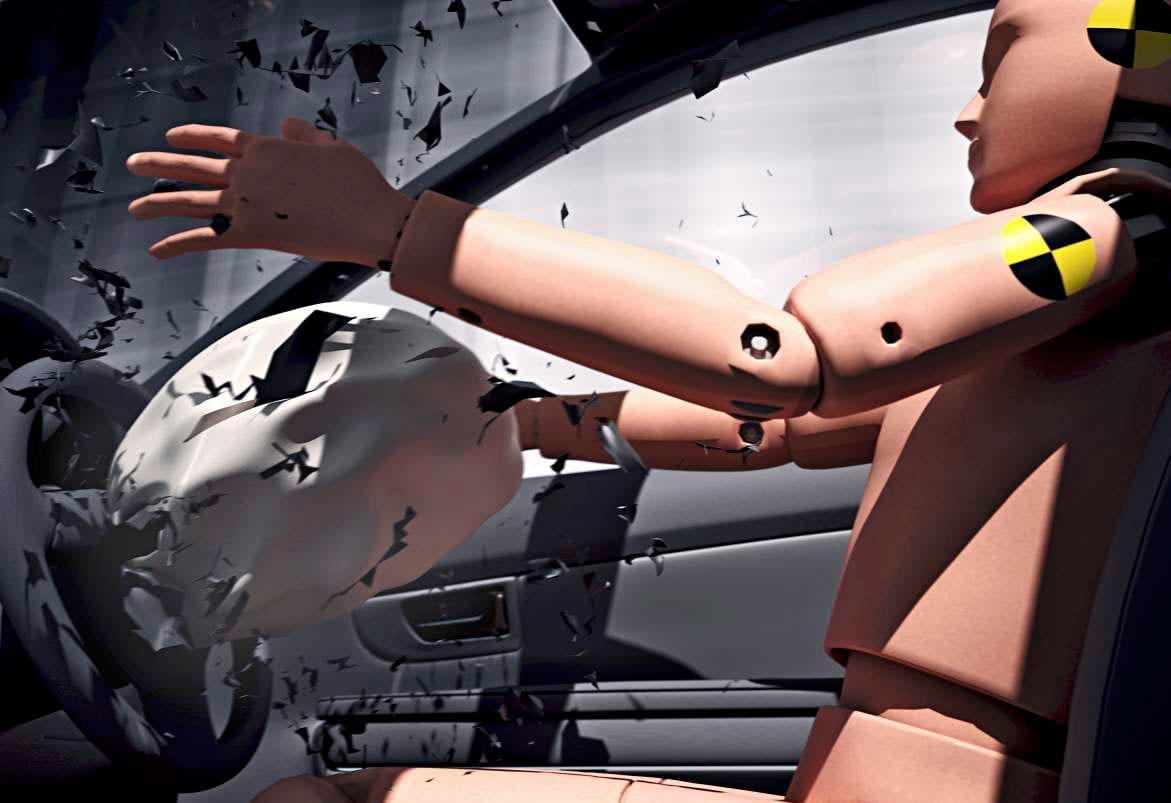
    The front passenger airbags in these vehicles are produced by Japanese auto parts producer Takata Corporation. It has been found that humidity can penetrate and damage them. In some crashes, activation of the airbag can break the inflator inside into pieces and push them through the inflated airbag, causing serious damage to users

    Customers can bring their vehicles for a free replacement of the faulty parts at Ferrari’s only showroom and service center in HCMC. The replacement should take one to three hours. The recall will run in one year from May 7, 2021.

    Ferrari opened its first showroom in HCMC’s District 7 in 2019 to sell old cars and provide maintenance service. Recently, it started to sell new Ferraris in Vietnam, but is yet to make a sale.

  • India Seeks Comment On Proposal To Make Airbags Mandatory For Car Front Passengers

    India Seeks Comment On Proposal To Make Airbags Mandatory For Car Front Passengers

    India on Tuesday sought public comment on a proposal to make airbags mandatory for the front passenger in all cars from next year, in a move that could raise costs for automakers slowly seeing a revival in demand.

    Carmakers are required to provide an airbag only for the driver, though Indian officials have been talking about the need to improve safety.

    All new models manufactured from April 1, and existing models made from June 1, will have to meet the new guideline if approved, the Ministry of Road Transport and Highways said in the notification dated Dec 28.

    It asked for suggestions and objections from the public within 30 days from Tuesday before the rule is implemented.

  • Hyundai Motor Group Develops New Centre Side Airbag

    Hyundai Motor Group Develops New Centre Side Airbag

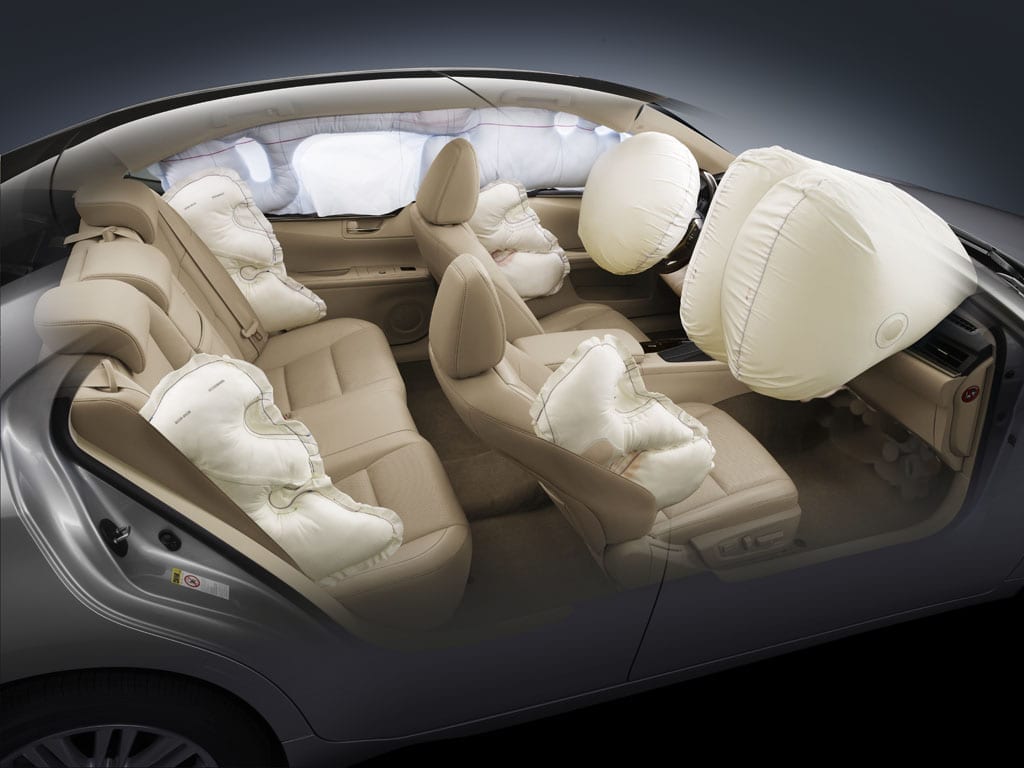
    Hyundai Motor Group has developed a new center side airbag, which works to separate the space between driver and passenger. The Group will roll out the technology in upcoming vehicles. This new, additional airbag expands into the space between driver and passenger seats to prevent head injuries of passengers in the front row. If there is no one in the front passenger seat, the airbag will protect the driver from side collision coming from the right side. The center side airbag is installed inside the driver’s seat and will deploy once the impact is sensed.

    The new center side airbag is expected to diminish head injuries caused by passengers colliding with each other by 80 percent. The Group has applied newly patented technology to maintain reliability but reduce the weight and size of the airbag.

    Hyundai Motor Group has developed a new technology to simplify the design and reduce the weight of component produce an airbag which is about 500g lighter than the competing products. Thanks to the smaller size of the airbag, the company’s design teams will have more flexibility in the type of seat design they envision for future products.

    The additional airbag expands into the space between driver and passenger seats to prevent head injuries

    Upcoming Euro NCAP is expected to include side-impact into its consideration beginning year 2020 and Hyundai Motor Group’s airbag will certainly help in addressing this.

  • Honda Develops New Front Airbag Technology

    Honda Develops New Front Airbag Technology

    The development and testing of the new airbag was led by engineers at Honda R&D Americas, Inc. in Ohio in partnership with Autoliv

    Jim Keller, President of Honda R&D Americas, Inc, said, “This new airbag technology represents Honda’s continuing effort to advance safety performance in a wider variety of crash scenarios and reflects the innovative thinking that our engineers are bringing to the challenge of reducing traffic injuries and fatalities.”

    Unlike conventional airbag systems that rely on a single inflatable compartment, the new system utilises four major components: three inflated compartments – a center chamber and two outward-projecting side chambers that create a wide base across the dash – along with a sail panel that stretches between the two side chambers at their outermost edge. Operating something like a baseball catcher’s mitt, the sail panel catches and decelerates the occupant’s head while also engaging the side chambers, pulling them inward to cradle and protect the head, mitigating the potential for injury.

    It is particularly beneficial in angled frontal impacts in which lateral collision forces can cause an occupant’s head

    Honda also is working to develop and deploy advanced passive safety and active safety systems that can reduce the severity of a collision or help avoid it entirely. In addition to passive safety systems such as airbags, seatbelts and advanced crash safety structures like the company’s Advanced Compatibility Engineering (ACE) body structure, Honda is aggressively deploying its Honda Sensing and AcuraWatch suites of safety and driver-assistive systems. The company has committed to making this broad suite of technologies standard on nearly all of its vehicles by 2022.

  • Hyundai develops safer airbag deployment system

    Hyundai develops safer airbag deployment system

    Hyundai Motor Group, Korea’s biggest carmaker by sales, said Monday it has developed a safer airbag deployment system to better protect people from multiple crashes. The advanced airbag system immediately prepares for additional crashes once it recognizes an initial collision, in cases where the collision is not serious enough to warrant a deployment, the conglomerate said in a statement.

    “If the first collision is a minor one, but the vehicle continues on and collides with something else, such as trees or street lamps, the airbag system optimizes itself to prepare for additional crashes,” a company spokesman explained to reporters over the phone.

    It is the first time a Korean carmaker has developed such a multi-crash airbag system, the statement said.

    Existing airbag systems do not inflate once they determine the initial collision is minor, even if subsequent impacts involve greater force and can lead to serious injury, it said.

  • GM, China JV to recall over 2.5 million vehicles over airbags

    GM, China JV to recall over 2.5 million vehicles over airbags

    General Motors and its joint venture in China, Shanghai GM, will recall more than 2.5 million vehicles due to faulty airbag inflators, China’s top quality watchdog as said.

    The vehicles are equipped with airbag inflators produced by troubled Japanese manufacturer Takata, according to the General Administration of Quality Supervision, Inspection and Quarantine.

    From Oct. 29, the companies will recall 13,492 imported Saab and Opel vehicles, and from Dec. 29 another recall will start that involves more than 2.51 million Chevrolet and Buick cars.

    The recall, announced by the administration on Friday, followed a similar recall last week by Volkswagen AG and its Chinese joint ventures involving 4.86 million vehicles in China due to potential issues with Takata air bags.

    State news agency Xinhua quoted the quality watchdog as saying the faulty airbag inflator involved 37 car manufacturers and more than 20 million vehicles, of which 24 carmakers had recalled 10.59 million vehicles by the end of June.

    Takata air bags have been linked to at least 16 deaths and 180 injuries globally. The air bags have the potential to explode with too much force and spray shrapnel. The defect led to the biggest recall in automotive history and the eventual bankruptcy of the Japanese maker.

  • With new Takata air bag recalls, automakers may face more liabilities

    With new Takata air bag recalls, automakers may face more liabilities

    Takata’s bankruptcy filing last month was meant to draw a line under the auto industry’s biggest safety recall, but last week’s announcement of more air bag inflator recalls suggests automakers could face fresh liabilities in the future.

    In late-2015, U.S. regulators gave Takata until the end of 2019 to prove that its replacement air bag inflators – which add a drying agent to combat moisture that can set off the ammonium nitrate compound in an inflator, with potentially lethal results – are also safe.

    If Takata fails that test – and some industry consultants, explosives experts and former employees question whether the workaround guarantees safety over the long-term – the 100 million or so replacement inflators currently being installed may themselves need to be replaced.

    “Absent proof that the other desiccated inflators are safe, they will also be subject to recall,” the U.S. National Highway Traffic Safety Administration (NHTSA) said in a statement last week. The agency declined to comment on the risk that additional inflators may be subject to recall.

    NHTSA announced last Tuesday that new testing at Takata prompted the Japanese parts firm to declare 2.7 million of the new air bag inflators defective, raising questions about the risk from replacement air bags as moisture can still seep into the propellant of some inflators.

    Takata’s automaker customers, which have so far borne much of the estimated $10 billion cost of replacing faulty bag inflators, could be on the hook for future liabilities in the event that Takata fails to prove that the desiccant workaround is sufficient.

    Last week’s recall is the first to involve Takata bag inflators that use a drying agent.

    Nearly 20 automakers have been affected by the air bag recalls, and some still use Takata inflators for replacements in the recalls. Automakers including Honda Motor Co, Toyota Motor Corp and Nissan Motor Co have said they will stop using Takata inflators for new contracts for future models.

    “If NHTSA in the future raises issues about the safety (of desiccated inflators) we will of course comply with their orders,” Nissan’s chief sustainability officer Hitoshi Kawaguchi told Reuters. “At the moment, our focus is on getting replacement inflators to our customers.”

    Toyota said it was “working closely with all stakeholders, including Takata, other suppliers and relevant agencies, to assess any potential impact and take action accordingly” on the recall issue. Honda, Takata’s biggest client, declined to comment.

    “The automakers… and Takata – they all know that this is a future issue,” said Scott Upham, chief executive at Valient Market Research, whose clients include auto parts suppliers. “But I think everybody is concerned about the near-term issues, and the financial arrangements of the bankruptcy.”

    Takata says it has produced around 100 million replacement inflators containing drying agents: the 2.7 million recalled last week used calcium sulfate, and the rest contain zeolite.

    “We still have to prove the safety of our desiccated inflators, but we believe those using zeolite are safer than those using calcium sulfate,” said spokesman Toyohiro Hishikawa.

    The company has declined to comment further on the testing process or the NHTSA deadline.

    Takata is the only global air bag maker to use ammonium nitrate as a propellant in its inflators. The compound’s vulnerability to high temperature and moisture can trigger an explosion that can spew shrapnel inside a vehicle. The defect has been linked to at least 17 deaths, mostly in the United States.

    ‘Lengthening the Fuse’

    The new inflators with the added desiccant have not been linked to any deaths or injuries, but the problems with the original inflators typically took five years or more to emerge.

    Keiichi Hori, who oversees automotive safety components at the Japan Explosives Society, said adding a drying agent can reduce, but not eliminate, the risk of uncontrolled explosions.

    If the desiccant can prevent all moisture from reaching the inflator propellant, “then it would be possible that the inflators could be used safely,” he said. “Otherwise, alternatives should be considered.”

    But Upham, the industry consultant, predicts the recalled parts will themselves eventually be recalled – because ammonium nitrate is fundamentally too volatile – and Takata’s carmaker customers may again have to foot the bill given that Takata is unlikely to be able to cover the costs.

    “Automakers are hoping and praying that the desiccant solves the problem… (but) this might come back to bite them,” Upham said.

    Former Takata employees involved in manufacturing inflators have said the desiccant may buy Takata time. One told Reuters last year that by adding the desiccant, “you’re just lengthening the fuse, not correcting the problems.”

    Key Safety Systems, a U.S.-based components supplier owned by China’s Ningbo Joyson Electronic Corp, has agreed to buy Takata’s good assets such as seat belts and steering wheels, for $1.6 billion. The plan is for Takata’s air bag business to be wound down by March 2020 after making replacement inflators for the ongoing recalls.

  • Takata decides to file for bankruptcy

    Takata decides to file for bankruptcy

    Japan’s Takata Corp decided on Monday to file for bankruptcy protection in Japan with liabilities of more than 1 trillion yen (US$9 billion), Japanese media reported, as the auto parts supplier has struggled due to its defective air bag inflators at the center of the auto industry’s biggest ever product recall.

    The decision came at a special board meeting, public broadcaster NHK said.

    Takata is expected to file for a U.S. Chapter 11-style bankruptcy protection procedure, along with a similar filing in the United States, sources have told Reuters. This would open the door for a financial rescue from U.S. auto parts supplier Key Safety Systems, which Takata has tapped as its preferred financial sponsor.

    Faulty air bag inflators made by Takata have been linked to at least 17 deaths in the United States and other countries, prompting a massive global recall which began nearly a decade ago.

  • Takata would stop making air-bag inflators under new plan

    Takata would stop making air-bag inflators under new plan

    Japan’s Takata, facing bankruptcy over the biggest recall in automotive history, would stop making air-bag inflators after completing a global recall, under a restructuring plan under consideration by its steering committee, sources told Reuters on Friday.

    The committee is discussing plans with rival Key Safety Systems Inc (KSS) which is negotiating to take control of the company. Any plan would require final approval from Takata’s board before the air bag maker submits them as part of expected bankruptcy filings in the United States and Japan.

    Takata declined to comment on the plans.

    Takata is still building replacements required under a recall of around 100 million inflators that could detonate with excessive force after prolonged exposure to heat.

    Exploding Takata airbag inflators have been blamed for at least 16 deaths and more than 150 injuries worldwide.

    Takata would stop producing airbag inflators after it completes production of replacement parts and fulfills existing supply contracts for them with automaker clients, the sources said.

    One source said existing contracts would likely end around 2020.

    Job cuts are also on the table, the sources said, including upper-level managers involved in manipulating inflator test results to conceal possible defects. Many plant managers would likely remain to ensure that production continues during the transition period.

    The plan is critical for a bankruptcy restructuring that could be launched as early as next week. Takata is hoping to erase billions in liabilities and resolve the recall of air-bag inflators.

    Any bankruptcy would pose limited risk to Takata’s ability to supply the roughly 100 million replacement inflators required to complete the global recall, one of the sources familiar with the company’s plans said. U.S. vehicle safety regulators are putting pressure on Takata and automakers to speed up the replacement of defective inflators in the United States.

    The plan would also have Takata air bags and seatbelts rebranded as KSS products after Takata emerges from bankruptcy. Michigan-based KSS, owned by Chinese supplier Ningbo Joyson Electronic, currently is a smaller competitor to Takata in airbags and seatbelts.

  • Daicel, Toyota affiliate plan capital tie-up to expand air bag businesses

    Daicel, Toyota affiliate plan capital tie-up to expand air bag businesses

    Japanese chemicals maker Daicel and auto parts maker Toyoda Gosei Co said on Friday they will invest 1 billion yen ($8.98 million) in each other’s equity, deepening ties as both companies expand their global air bag businesses.

    Daicel, which produces inflators used in air bags, along with polymer and plastic products, and Toyoda Gosei, which makes air bag modules, steering wheels and other auto components, have been growing their air bag-related businesses since a global recall of inflators made by Takata Corp has snowballed since 2013.

    The companies would take a stake of about 0.3 percent in each other and discuss research and development opportunities that would enable them to further expand globally.

    Headquartered in Japan’s automaking heartland of Aichi Prefecture, Toyoda Gosei is a group company of Toyota Motor Corp , which owns a 43 percent stake in the firm. Toyota also owns a 4.3 percent stake in Daicel.

    Osaka-based Daicel supplies inflators to Takata, which has become its biggest customer as the embattled Japanese air bag maker struggles to produce enough replacement inflators in the global auto industry’s biggest ever recall.

    Daicel also sells inflators to Key Safety Systems, the Chinese-owned, U.S.-based components maker which is in talks with Takata about a financial rescue.

    Air bags and other safety-related products accounted for 28 percent of Toyoda Gosei’s annual revenue last year, up from 27 percent the previous year.

    It has been increasing air bag sales to Toyota, Honda Motor Co and other automakers in the last few years, as an increasing number of automakers shift away from Takata.

  • Takata to pay $1 billion to settle U.S. air bag probe

    Takata to pay $1 billion to settle U.S. air bag probe

    Japan’s Takata is expected to plead guilty to criminal wrongdoing as early as Friday as part of a $1 billion settlement with the U.S. Justice Department over its handling of air bag ruptures linked to 16 deaths worldwide, sources said.

    The settlement includes a $25 million criminal fine, $125 million in victim compensation and $850 million to compensate automakers who have suffered losses from massive recalls, the sources said.

    The settlement also calls for an independent monitor of the Japanese auto parts manufacturer. It could help Takata win financial backing from an investor to potentially restructure and pay for massive liabilities from the world’s biggest auto safety recall.

    The company is poised to plead guilty to wire fraud, or providing false test data to U.S. regulators, according to the sources, who were not authorized to discuss the settlement publicly.

    In 2015, Takata admitted in a separate $70 million settlement with U.S. auto safety regulators that it was aware of a defect in its air bag inflators but did not issue a timely recall.

    It admitted it provided the regulator, the National Highway Traffic Safety Administration (NHTSA), with “selective, incomplete or inaccurate data” dating back at least six years and also provided automakers with selective, incomplete or inaccurate data.

    The wire fraud charge is expected to be filed in U.S. District Court in Detroit. The Justice Department is considering naming Ken Feinberg, a longtime compensation adviser, to oversee the Takata settlement funds. He declined to comment on Thursday.

    The settlement is expected to include restitution to some victims and automakers, who have been forced to recall vehicles with the defective inflators. Honda Motor Co (7267.T) and Takata have settled nearly all lawsuits filed in connection with fatal crashes. The recall impacts 19 automakers including Ford Motor Co (F.N), General Motors Co (GM.N), Toyota Motor Corp (7203.T), Volkswagen AG (VOWG_p.DE) Fiat Chrysler Automobiles NV (FCHA.MI).

    Takata spokesman Jared Levy declined to comment.

    Deaths linked to the company’s air bag inflators include 11 in the United States – nearly all in Honda vehicles. Regulators have said recalls would eventually affect about 42 million U.S. vehicles with nearly 70 million Takata air bag inflators, making this the largest safety recall in U.S. history.

    Takata is expected to agree to come up with the $1 billion within a year or when it secures a financial backer.

    Senators Richard Blumenthal of Connecticut and Edward Markey of Massachusetts backed a Takata deal but said in a joint statement they were “deeply concerned that the DOJ settlement appears to only target Takata Corporation and no executives.” The senators also said that if the company “files for bankruptcy, its new creditors, and not Takata, would be responsible for paying criminal fines on the company’s behalf.”

    Reuters reported in November Takata was considering a bankruptcy filing for its U.S. unit as the air bag maker looks for a sponsor to help pay for liabilities related to its faulty air bag inflators.

    The inflators can explode with excessive force, launching metal shrapnel at passengers in cars and trucks. Many of those killed were involved in low-speed crashes that they otherwise may have survived, including a 17-year-old high school senior in Texas killed last year. At least 184 people have been injured in the United States as well.

    In November 2015, Takata agreed to pay a $70 million fine for safety violations with U.S. auto safety regulators and could face deferred penalties of up to $130 million under a NHTSA settlement.

    The agency named a former U.S. Justice Department official to oversee the Takata recalls and the company’s compliance with the safety settlement.

    Last month, NHTSA said it would press the auto industry to accelerate the pace of replacements for defective Takata inflators and signaled a likely widening of the safety recall. Only about one third of the inflators recalled have been replaced, leaving more than 30 million to be fixed.

    In June, NHTSA warned that Takata air bag inflators on more than 300,000 unrepaired recalled Honda vehicles showed a substantial risk of rupturing, and urged owners to stop driving the “unsafe” cars pending a fix.

  • Potential bidders for Takata may balk at GM bankruptcy precedent

    Potential bidders for Takata may balk at GM bankruptcy precedent

    As auto supplier Takata Corp (7312.T) prepares for a possible U.S. bankruptcy filing, potential bidders are poring over a recent U.S. court ruling that could expose a buyer to liability for the company’s defective air bags, sources have told Reuters.

    Takata faces potentially billions of dollars in costs from the world’s largest automotive recall, stemming from millions of its air bags that were equipped with malfunctioning inflators.

    The Japanese company has said it is seeking a financial backer. But interested bidders, if the parts maker goes up for sale, want Takata to put its U.S. business into bankruptcy first, the sources said.

    Generally, U.S. bankruptcy law allows a bidder to buy assets free and clear of lawsuits and other liabilities, and the selling company uses the money to repay its creditors.

    General Motors used the strategy when it filed for Chapter 11 bankruptcy in 2009. The automaker quickly sold its best assets to a so-called “new GM,” scrubbed free of billions of dollars of debt, which enabled the company to withstand an economic crisis.

    In July, the 2nd U.S. Circuit Court of Appeals in Manhattan held that General Motors Co (GM.N), the “new GM,” could be sued over faulty ignition switches made by “old GM.”

    The ruling set what some see as a troubling precedent.

    “What that says to me: buyer beware,” said Henry Jaffe, a bankruptcy lawyer with Pepper Hamilton in Wilmington, Delaware who represents debtors and creditors. Jaffe said the ruling could undercut what bidders are willing to pay for Takata.

    Takata’s air bags use a chemical compound that can explode with excessive force after prolonged exposure to hot conditions and have been linked to at least 16 deaths globally, mainly in the United States. About 100 million Takata air bag inflators have been classified as defective, leading to continuing safety recalls.

    Last month, the company received proposals from five bidders, all of whom have presented plans that require Takata to file for a GM-style bankruptcy protection.

    Takata’s creditors include automakers who want to be reimbursed for millions of dollars spent on recalls. They may also demand that any buyer of Takata’s assets share in some of those costs. The automakers could also try to use the tools of bankruptcy to protect themselves from lawsuits by car owners for the faulty air bags, according to bankruptcy attorneys.

    The U.S. government is also likely to play a role. Takata is operating under a five-year, $200 million consent decree with the U.S. National Highway Traffic Safety Administration.

    Given the uncertainties, bidders could propose using “holdback,” bankruptcy lawyers said. Some sale money would remain in escrow and be used to settle any unanticipated legal claims against the buyer. Over time, unused money would be released to the Takata bankruptcy estate.

    Takata and its creditors would likely resist a holdback, lawyers said.

    In Japan, Takata Chief Financial Officer Yoichiro Nomura told reporters on Friday that the company hoped to reach an agreement with its automaker customers on a restructuring by year end. He said the company preferred to avoid bankruptcy.

    Takata has posted a net loss in three of the past four financial years, but it remains one of the auto industry’s biggest suppliers of air bag systems. The company is also one of the world’s top seatbelt producers, and makes steering wheels, electronic control units and child safety seats.

    ‘GIVE A BUYER HEARTBURN’

    To get a sale approved quickly, a Takata buyer may have to assume some legal obligations, an approach used by “new GM” which took on 15 categories of liabilities.

    “That will give a buyer heartburn,” said Bill Weintraub at Goodwin Procter in New York, who worked with ignition switch plaintiffs on the GM appeals court case.

    GM has said it plans to ask the U.S. Supreme Court to review the July ruling, which it said wrongly punishes it, the buyer, for mistakes made by “old GM,” the seller. The company and business groups have argued that the ruling, if allowed to stand, will depress the value of assets that are sold in bankruptcy.

    Those who are close to GM and Takata are quick to point out the situations of the two companies differ in key ways.

    Takata’s air bags have been subject to headline-grabbing recalls for years. By contrast, GM knew its ignition switches were faulty when it introduced them in 2002 but concealed the problem until 2014, five years after its bankruptcy sale.

    Because of the concealment, the court of appeals reasoned that GM’s customers had been denied the opportunity to object or file a claim over the ignition switch defects as part of GM’s bankruptcy and sale. To remedy the lack of notice, the court said car owners could pursue a class action against the buyer of GM rather than the bankruptcy estate.

    Takata’s notoriety could work to the advantage of bidders, ensuring potential claims have been identified.

    “You have a known problem,” said bankruptcy lawyer Ed Weisfelner, who also represented some ignition switch plaintiffs in the GM appeal case.

    The GM ruling only binds U.S. Bankruptcy Courts in one of 11 U.S. judicial circuits, and Takata may look to other courts.

    In its appeals case, GM cited precedent in the 3rd U.S. Circuit, which it said is more protective of buyers in bankruptcy sales.

    Takata’s main U.S. subsidiary, Michigan-based TK Holdings Inc, is incorporated in Delaware, giving the company access to the state’s prominent bankruptcy court and 3rd U.S. Circuit precedent.

    “Any bankruptcy judge will be really nervous about this one,” said John Pottow, a professor at University of Michigan Law School who specializes in bankruptcy.
  • Toyota to recall 5.8 million cars in Japan, China, Europe over Takata airbags

    Toyota to recall 5.8 million cars in Japan, China, Europe over Takata airbags

    Japan’s Toyota Motor Corp on Wednesday said it was recalling a total of about 5.8 million cars at home and abroad over potentially faulty air bag inflators made by Takata Corp.

    The recall, which includes the Corolla and the Vitz subcompact hatchback model which is marketed overseas as the Yaris, covers models produced between May 2000 and November 2001, and April 2006 and December 2014, the company said in an email.

    It affects about 1.16 million vehicles sold in Japan, and also includes about 820,000 cars sold in China and around 1.47 million cars in the European market.

  • BMW recalls 110,000 cars in Japan over Takata airbags

    BMW recalls 110,000 cars in Japan over Takata airbags

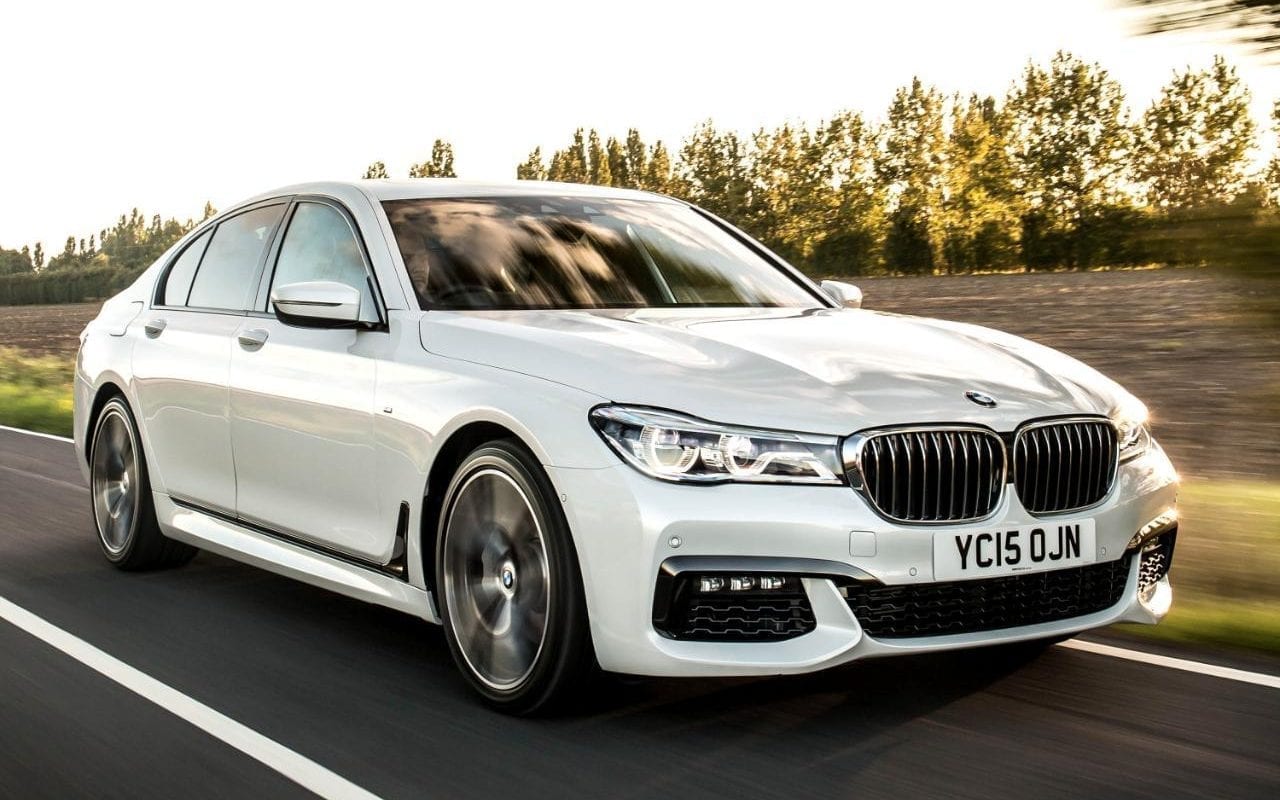
    BMW Group said today it is recalling about 110,000 cars in Japan over potentially faulty airbag inflators made by Takata Corp., as part of the auto industry’s largest ever global call back.

    The automaker recalled 44 models including its 1-series 116i and 118i hatchbacks and the 3-series 320i sedan to replace passenger-side airbags made by the supplier, according to a filing to Japan’s transport ministry.

    Affected vehicles were produced between 2004 and 2012.

    Defective Takata airbags have been linked to at least 14 deaths and 150 injuries worldwide as the ammonium nitrate-based propellant used in its inflators has a tendency to explode following prolonged exposure to hot, humid conditions, spraying metal shrapnel at the car’s occupants.

    Today’s recall comes after Japan’s transport ministry in May ordered automakers to recall an additional 7 million vehicles in Japan equipped with Takata airbag inflators which do not contain a drying agent, in phases by 2019, following an expanded recall by U.S. authorities.

    Battered by the recalls, Takata is looking for a financial backer to help overhaul its business and carry ballooning costs as its stock price has crumbled almost 90 percent since early 2014 and it faces potentially billions of dollars of liabilities.