
Tag: airfreight

  • Singapore Changi Airport Sees 3.1% Surge In Passenger Traffic Amid Robust Asian Travel Demand In Q3 2025

    Singapore Changi Airport Sees 3.1% Surge In Passenger Traffic Amid Robust Asian Travel Demand In Q3 2025

    Between July and September 2025, Singapore Changi Airport experienced a 3.1% year-on-year increase in passenger movement, handling approximately 17.3 million passengers. The number of aircraft movements, encompassing takeoffs and landings, remained fairly consistent with the same quarter of the previous year, totaling 91,600.

    Leading Markets

    The primary markets for Changi Airport during this period were China, Indonesia, Malaysia, Australia, and India. Among the top 10 markets, China and Vietnam displayed the most substantial growth, at 9.7% and 11.3% respectively. The leading city connections for the quarter were Kuala Lumpur, Jakarta, Bangkok, Denpasar (Bali), and Shanghai. Notably, the Singapore–Jakarta route exhibited double-digit growth.

    Airfreight Throughput

    During the third quarter, Changi Airport recorded an airfreight throughput of 531,000 tons. This figure represents a 3.7% increase year-on-year. Despite ongoing global trade uncertainties, air trade at Changi grew, with imports showing substantial growth of 10% compared to 2024 levels. The main air cargo markets for the quarter were China, the United States, Australia, Hong Kong, and India.

    Executive Remarks

    Executive Vice President for Air Hub and Cargo Development at Changi Airport Group, Mr. Lim Ching Kiat, stated that Changi Airport continues to capitalize on the positive travel demand this quarter, especially on Asian routes. The airport is extending its network with new airlines and destinations, which further enhance Changi’s regional connectivity. The airport is preparing for the year-end travel season, promising greater convenience and additional ways for travelers to explore both new and familiar destinations.

    New Services

    On 11 August, new Indonesian airline Pelita Air began operations at Changi Airport, offering daily flights between Singapore and Jakarta. This development expands Changi’s network to include about 100 airlines. New city links have been added to Changi’s network with the launch of Hainan Airlines’ four-times-weekly Singapore–Haikou–Changchun service on 22 September, and Loong Air’s three-times-weekly flights to Zhangjiajie on 9 October. Lion Group affiliate Batik Air Malaysia will begin new daily flights to Ipoh, Penang, and Subang from 8 December 2025 to accommodate the group’s growth and increasing regional travel demand.

    In addition, Scoot has introduced new routes to four Indonesian cities – Labuan Bajo, Medan, Palembang, and Semarang – providing travelers with more travel options across the archipelago.

    On the air cargo front, Changi Airport welcomed JD Airlines’ thrice-weekly Shenzhen freighter services, providing more shipping options for Southeast Asia and China.

    As of 1 October, approximately 100 airlines operate around 7,000 scheduled weekly flights at Changi Airport, linking Singapore to over 160 cities in 50 countries and territories worldwide.

    Questions & Answers

    **What were the leading markets for Singapore Changi Airport in Q3 2025?**
    The top five markets for Changi Airport during the third quarter of 2025 were China, Indonesia, Malaysia, Australia, and India.

    **What was the total airfreight throughput at Changi Airport in Q3 2025?**
    In the third quarter of 2025, Changi Airport recorded an airfreight throughput of 531,000 tonnes.

    **Which new airlines began operations at Changi Airport during this period?**
    New Indonesian carrier Pelita Air began operations at Changi Airport on 11 August, and Hainan Airlines and Loong Air introduced new city links in September and October respectively.
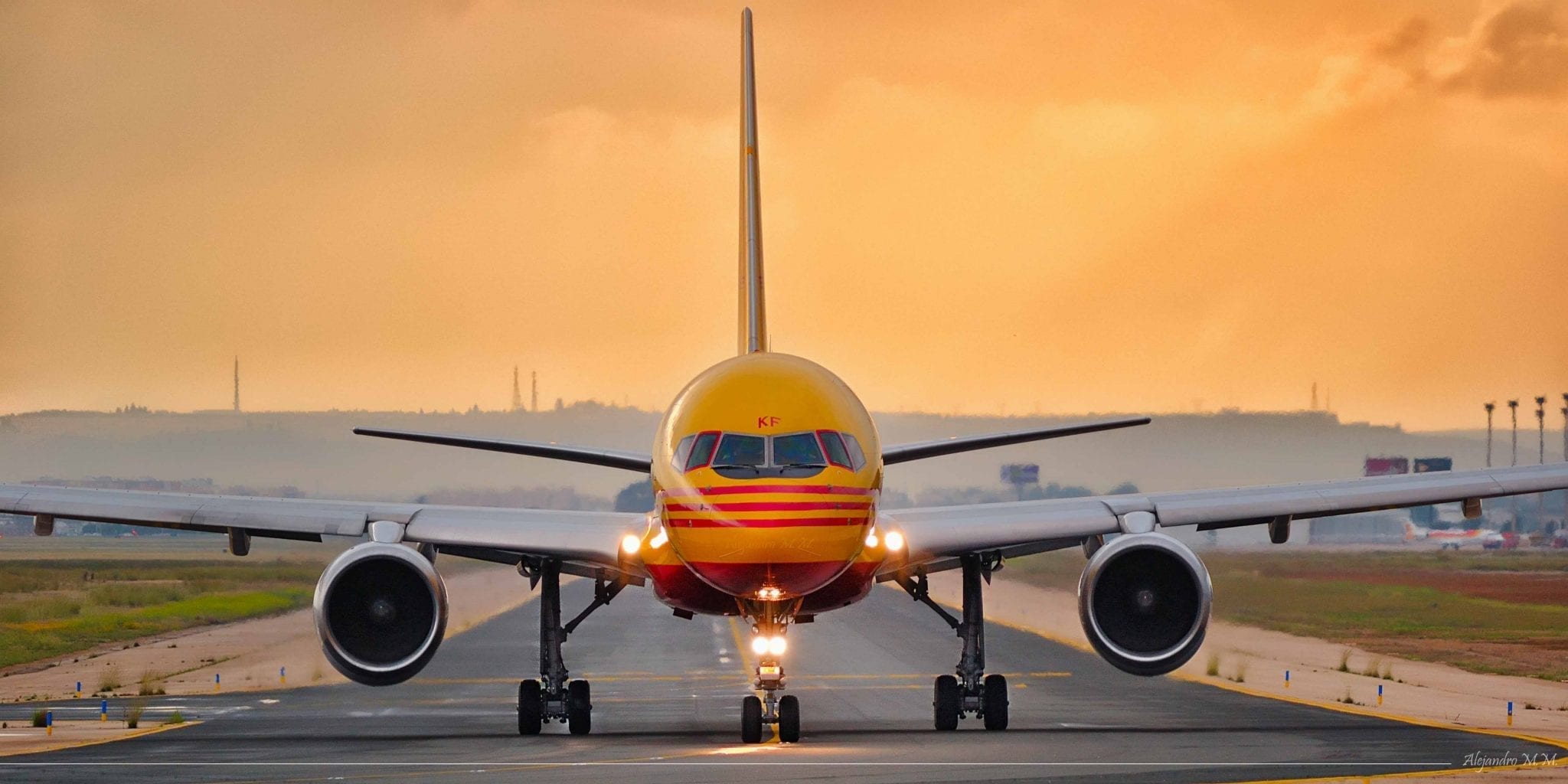
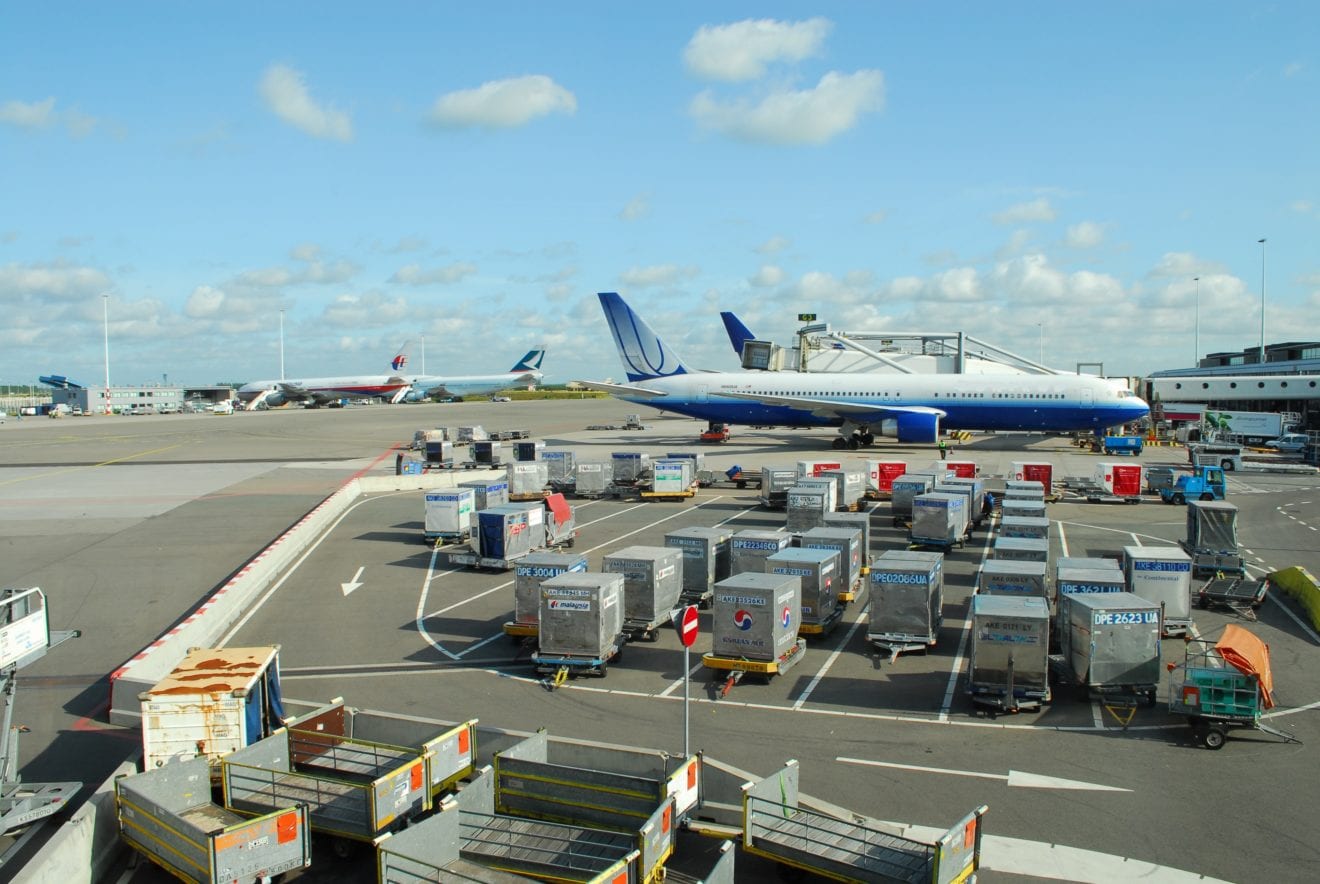
  • DHL promotes new head of global air freight

    DHL promotes new head of global air freight

    DHL Global Forwarding, the air and ocean freight specialist of DHL Group, has announced changes in its global leadership team with Thomas Mack, current executive vice president for air freight, set to move into a new senior advisor role. 

    Max Sauberschwarz, who currently holds the role of Senior Vice President Global StarBroker, DHL Global Forwarding’s air charter organisation, will assume the role of Head of Global Air Freight on 1 October 2023. 

    Max Sauberschwarz has more than 15 years of experience in logistics and has held several senior management roles in the air freight sector. He joined DHL Global Forwarding in 2019 as Senior Vice President Global StarBroker. 

    The two will report directly to Tim Scharwath, CEO of DHL Global Forwarding, during the transition, after which Mack will leave the company into retirement in October 2024. Thomas Mack joined the company five years ago as Head of Global Air Freight where he was heavily involved in transforming the organization into one of the world’s leading providers of integrated air freight services, working closely with DHL Express to leverage valuable synergies within the group.

  • Domestic airfreight industry hits turbulence

    Domestic airfreight industry hits turbulence

    The country’s airfreight services industry will likely flat line this year amid the domestic economic slowdown, which has affected exports and imports, an industry group has said.

    The International Air Transport Association (IATA) released data recently saying that the global airfreight market remains slow with respect to air cargo demand in June.

    “The mid-year report for air cargo is not encouraging. With growth of just 1.2 percent compared to June of last year, markets are basically stagnating. But overall it has been a disappointing first half of 2015, especially considering the strong finish to 2014,” IATA’s director general and CEO Tony Tyler said in a statement.

    “The remainder of the year holds mixed signals. The general expectation is for an acceleration of economic growth, but business confidence and export orders look weak. Air cargo and the global economy will all benefit if governments can successfully focus on stabilizing growth and stimulating trade by removing barriers,” he said.

    According to the report, Asia-Pacific carriers saw a drop in freight ton kilometers (FTKs), which measures actual freight traffic, of 0.3 percent in June from a year earlier. The region has experienced a notable slowdown in imports and exports over recent months, and the latest data shows trade in emerging Asian markets down 8 percent.

    In line with global and regional airfreight performance, during the first half of this year, national-flag carrier Garuda Indonesia’s cargo volume decreased to 176,000 tons from 193,500 tons in the same period last year, as stated in the company’s financial report.

    Garuda’s president director Arif Wibowo said that 60 percent of the cargo revenues were derived from the domestic market, while the remaining 40 percent came from the international market, mainly in China, South Korea and Japan.

    Garuda Indonesia Cargo currently operates around 70 cargo service centers across the archipelago, including in Medan, Jambi, Jakarta, Bandung, Yogyakarta, Surakarta, Semarang, Surabaya and Denpasar.

    The carrier’s acting vice president for communications Ikhsan Rosan said that it aimed at pushing for more cooperation with other air cargo operators and increasing international services to improve the performance in the second quarter.

    Meanwhile cargo airline Cardig Air CEO Boyke Soebroto said that he was pessimistic that the company would be able to reach the target cargo volume of up to 10,000 tons this year.

    “The government recently announced that economic growth in the first semester reached only 4.7 percent and they will push it to 5 percent in the second semester, I believe that the demand for air cargo will remain stagnate until the end of the year and it is highly unlikely to reach our target,” he said.

    The carrier transported a total of 6,000 tons of cargo with a value of around Rp 20 billion (US$1.5 million) last year, according to Boyke.

    Data from the Central Statistics Agency (BPS) shows that the country’s exports declined 11.86 percent to US$78.29 billion during the first six months of this year. From January to June, overall imports declined 17.81 percent to $73.94 billion.

    AirAsia Indonesia’s revenue and business head Rifai Taberi separately said that the carrier, which is the Indonesian affiliate of Malaysia’s AirAsia, also saw decreasing demand for air cargo with a 17 percent decrease in volume in the first semester of 2015 as compared to the same period in 2014.

    Without mentioning the volume, Rifai said that the steep decrease was seen in the domestic routes, particularly in Java.

    “Apart from the current economic slowdown, the improvement in land and railway transportation has highly affected the air cargo demand in Java as we see up to a 25 percent decrease in volume for the Jakarta-Surabaya route in the first semester,” Rifai

    Rifai said that the air cargo service could not outcompete the land and railway transportation in terms of costs, since air cargo require more cost components such as x-ray procedures and warehouses.