Tag: airports

  • Shinsegae Duty Free to Exit Incheon Airport’s DF2 Zone Amid Rising Losses: A Strategic Shift or an Economic Warning?

    Shinsegae Duty Free to Exit Incheon Airport’s DF2 Zone Amid Rising Losses: A Strategic Shift or an Economic Warning?

    Shinsegae Inc, a major retail conglomerate in South Korea, announced on Thursday that it plans to shut down its duty-free business unit in Incheon International Airport’s DF2 zone. This decision has been prompted by growing losses.

    Motivation Behind the Decision

    As South Korea’s second-largest department store chain, Shinsegae has resolved to enhance the operational efficiency of its duty-free business by confronting escalating losses head-on. The company intends to cease operations within the DF2 zone, which houses cosmetics, perfumes, liquor, and tobacco offerings, by April 27, 2026.

    However, Shinsegae DF Inc’s duty-free outlets in the airport’s DF4 zone will continue business as usual.

    Challenging Market Conditions

    A representative from Shinsegae cited a myriad of adverse and unpredictable circumstances plaguing the duty-free market, such as high exchange rates, economic downturn, and diminished spending among primary consumers. The company had previously sought rent modifications from the Incheon International Airport Corp (IIAC), but the airport authority denied these requests.

    Future Business Focus

    With the impending shutdown of its DF2 zone outlet, Shinsegae DF plans to concentrate on its continuing operations in the airport’s DF4 zone and its city center store in Myeongdong, central Seoul.

    Just last month, Hotel Shilla Co relinquished its DF1 zone license to the airport due to mounting losses. The IIAC is predicted to initiate a new bidding process for the DF1 zone license previously held by Shilla Duty Free later this year.

    Questions & Answers

    Why is Shinsegae closing its duty-free business in the DF2 zone?
    Shinsegae is closing its duty-free operations in the DF2 zone due to escalating losses and a desire to improve overall operational efficiency.

    What areas does the DF2 zone cover?
    The DF2 zone houses a variety of products, including cosmetics, perfumes, liquor, and tobacco.

    What will be the future focus of Shinsegae DF?
    Following the closure of its DF2 zone outlet, Shinsegae DF will focus on its remaining operations in the airport’s DF4 zone and its downtown store in Myeongdong.

  • Thailand Lifts Alcohol Ban on Five Buddhist Holidays at Airports and Hotels, Boosting Tourism Appeal

    Thailand Lifts Alcohol Ban on Five Buddhist Holidays at Airports and Hotels, Boosting Tourism Appeal

    Thailand is stepping into a new era for travelers, as the government embarks on a journey to boost tourism by allowing limited alcohol sales during five prominent Buddhist holidays. Specifically, from Saturday, international airports, hotels, venues hosting major events, and select nightlife spots will welcome patrons looking to raise a glass—even on days traditionally marked by sobriety.

    Selected Venues, Select Days

    However, not every establishment will be joining the celebration; the rule relaxation is strategically aimed at specific locations rather than a blanket policy. In a statement reported by the Bangkok Post, government spokesman Jirayu Houngsub emphasized that the change is part of the “Amazing Thailand Grand Tourism and Sports Year 2025” campaign, aimed at providing a much-needed boost to the tourism industry. “It will directly benefit businesses in the tourism sector,” he noted.

    Despite its reputation as a premier tourist hotspot known for stunning beaches, lively nightlife, and being the only Southeast Asian nation to decriminalize cannabis, Thailand has often left visitors scratching their heads. Tourists frequently encounter closed bars during religious holidays, even amid peak travel seasons.

    A Cautious Celebration

    People’s Party MP Taopiphop Limjittrakorn, a notable advocate for liberalizing Thailand’s alcohol laws, urged caution in celebrating this change. He pointed out that the ban on alcohol sales persists for many retail outlets. “Roadside food stalls, convenience stores, and supermarkets are not included in the new announcement. They still cannot sell alcohol,” he shared on Facebook.

    In recent months, Thailand has taken significant steps toward relaxing restrictions in the alcohol sector. Earlier this year, lawmakers in the House of Representatives passed an amended alcohol control bill, repealing an outdated 1972 military decree that prohibited alcohol sales before 11 a.m. and during certain afternoon hours. This exciting legislation is currently making its way through the Senate, paving the way for further changes in the beverage industry.

    Who knows—maybe soon, you’ll be sipping a cold one during sunset by the beach, even on a holiday!

    Questions & Answers

    What are the specific locations where alcohol sales will be allowed during Buddhist holidays?
    Alcohol sales will be permitted at international airports, hotels, venues hosting major events, and select nightlife spots.

    Why was this change implemented?
    The change is part of the “Amazing Thailand Grand Tourism and Sports Year 2025” campaign aimed at stimulating the tourism sector and benefiting related businesses.

    Are all businesses allowed to sell alcohol during these holidays?
    No, the new regulations only apply to select locations, and many places like roadside food stalls, convenience stores, and supermarkets will still be prohibited from selling alcohol.

  • Changi Airport Group opens refurbished air logistics facility Changi Nexus One in Changi Airfreight Centre

    Changi Airport Group opens refurbished air logistics facility Changi Nexus One in Changi Airfreight Centre

    Changi Airport Group (CAG) announced the opening of Changi Nexus One, a refurbished air logistics facility within Changi Airfreight Centre (CAC) spanning close to 8,000 sqm of warehousing space. Strategically located with direct apron connectivity, Changi Nexus One is designed as a facility for two tenants, capable of expeditious cargo handling and will serve the special needs of air logistics players looking to expand their global airfreight operations through Singapore.

    This new facility will increase Changi Airport’s logistics warehouse capacity, ensuring that Singapore’s Changi air cargo hub can meet the growing demand for air cargo services, prior to the completion of the Changi East Industrial Zone (CEIZ) in the mid-2030s. CAG’s investment in Changi Nexus One demonstrates its commitment to providing world-class facilities for air logistics players, augmenting Changi’s role as a leading regional air cargo transshipment hub. The new tenants at Changi Nexus One are expected to bring new air logistics handling capabilities, as well as adopt automation and smart technology in their operations, further enhancing Changi Airport’s air cargo management capabilities.

    A key partner taking up space in this facility is Expeditors, the world’s seventh largest air freight forwarding company, which is looking to expand its air logistics activities in Singapore.

    Mr Barthul Hoefnagels, Regional Vice President – Malaysia, Singapore & Indonesia said, “The new facility in Changi Airfreight Centre will enhance our end-to-end efficiency and reliability through fewer touch points, allowing Expeditors to further enhance our specialised cargo handling capabilities for pharmaceutical, aviation, semiconductor and other industries, and better serve the in-transit needs of our global customers. We are excited to expand our collaboration with Changi Airport Group to drive further value to our customers.”

    New benchmark for green building practices

    In line with Changi Airport’s commitment to sustainability, Changi Nexus One is a pioneer in several areas. It is the first building within CAC, and the first-of-its-kind in Changi, to achieve both Green Mark Platinum and the Green Mark Platinum Positive Energy Building (PEB) certifications by the Building and Construction Authority (BCA).

    The Green Mark Platinum PEB certification is issued to buildings with the highest environmental performance. To achieve this, Changi Nexus One has demonstrated that it is a BCA super-low energy building that achieves more than 60% energy savings and generates more renewable energy than it consumes. Besides the ongoing installation of solar photovoltaic (PV) system airport wide including at the Cargo Agent Buildings, solar PV panels will also be installed at Changi Nexus One by the first quarter of 2025 to provide on-site renewable energy. By 2028, Changi Nexus One will generate enough on-site solar power to offset the total building energy consumption by over 140%. This surplus of renewable energy will be channelled to other airport facilities to sustain Changi Airport’s other operations.

    Additionally, this project is the first in Singapore’s private sector to adopt the collaborative contracting method. This new contracting method recommended by BCA is an innovative approach which fosters greater collaboration between project stakeholders, leading to improved efficiency. It focuses on risk management, which involves all parties assessing and evaluating potential project threats in advance, resulting in completion of works ahead of schedule, risk sharing and cost savings.

    Mr. Lim Ching Kiat, CAG’s Executive Vice President for Air Hub and Cargo Development said, “The opening of Changi Nexus One marks a significant milestone in our efforts to strengthen Changi Airport’s position as a global air cargo hub. Through enhancing our cargo handling capacity and capabilities, we aim to stay at the forefront of the air cargo industry, putting Changi in a good position to capture growth from key cargo players, as well as growth in the region. Working closely with our tenants, we aim to bring in new cargo opportunities and expand into new markets.

    “As we strive to maintain Changi’s continued success as a thriving air cargo hub, we also constantly challenge ourselves to carry out our development works and operations according to our sustainability goals.”

  • Changi Airport’s retail sales start steady post-Covid recovery

    Changi Airport’s retail sales start steady post-Covid recovery

    However, concession sales last year represented just 37 percent of sales in 2019, the last full year without border closures. Retail revenue in December was at 58 percent of the pre-Covid levels on the back of a passenger traffic recovery to 72 percent.

    The biggest spenders at Changi Airport are from Indonesia, India and Thailand, as the prolonged Covid-19 situation in China – its major market – caused the near absence of travelers from this market. Liquor & tobacco, perfumes & cosmetics and luxury were among the most popular product categories.

    Changi Airport recorded more than 13 million transactions during the year with an average of 35,000 transactions daily.

    As Changi Airport has seen more traffic since the Covid-19 restrictions were lifted, the airport has increased its promotional activities to lure customers and enhance their shopping experience, including the ‘Be A Changi Millionaire’ campaign.

    Last year, Changi Airport teamed up with Lotte Duty-Free to host the the ‘World of Wines and Spirits’ event, which brought together products from 75 brands, including Bowmore, The Macallan, Midleton, The Singleton and Penfolds. The company plans to launch the second installation of ‘World of Wines and Spirits’ this year.

  • AirAsia Experiences Turbulent Stock Market

    AirAsia Experiences Turbulent Stock Market

    AirAsia Group has announced that stock exchange operator Bursa Malaysia dismissed its application to extend a relief period that prevented it from being classified as a Practice Note 17 (PN17) company, a status that relates to companies that are in financial distress.

    Companies classed as PN17 must submit to the stock exchange a proposal to restructure and revive the company in order to maintain listing status. In a disclosure to the exchange on January 13, the AirAsia (AK, Kuala Lumpur Int’l) parent confirmed that, according to Bursa regulations, with the expiry of the relief period it is now “required to reassess its condition.”

    The PN17 financial distress criteria had been triggered in July 2020 after independent auditors from Ernst & Young highlighted in the group’s annual results that net loss and liabilities at the end of 2019 significantly exceeded assets, flagging material uncertainties that cast doubt on its ability to continue as a going concern.

    In light of the pandemic, Bursa Malaysia gave the group 18 months to take steps to address the issue, and when the relief period expired on January 7, AirAsia filed an appeal to prolong it. This has now been rejected, risking delisting from the exchange.

    The following day, on January 14, Bursa Malaysia issued a statement saying that short selling for AirAsia stock had been suspended for the rest of the day as “the last done price of the approved securities dropped more than 15 sen [cents] from the reference price.” Trading will be reactivated at 0830L (0030Z) on the next trading day, Monday, January 17.

    Meanwhile, in Jakarta, the Indonesia Stock Exchange (IDX) again suspended trading in Indonesia AirAsia (QZ, Jakarta Soekarno-Hatta) on January 12. Trading had only resumed on January 3, nearly two-and-a-half years after its shares were suspended due to its failure to meet the 7.5% threshold for free-floating equity.

    This time, the IDX cited unusual market activity the previous day when the stock closed at 24.4% up. In fact, the bourse said, Indonesia AirAsia’s shares jumped in value by 185% from IDR184 rupiah (USD0.0129) on January 3 to IDR525 (USD0.0367) at the close of trading on January 11. The exchange appealed to investors to pay attention to the performance of listed companies and their disclosures of information before making investment decisions.

    In a statement, Indonesia AirAsia clarified: “There is no material information that has not been submitted by the company to the public; and there is no information about the company circulating as rumours or in the mass media.”

  • Transport ministry wants several airports to be privatized

    Transport ministry wants several airports to be privatized

    The Ministry of Transport wants private investors to build and operate proposed airports such as Sa Pa in the north and Quang Tri in the central region.

    It wants two others built under public-private partnerships in Lai Chau and Cao Bang in the north.

    It also said local authorities should take over the management of runways in 13 airports.

    Four central airports that have military components, Tho Xuan in Thanh Hoa Province, Chu Lai in Quang Nam Province, Phu Cat in Binh Dinh Province, and Tuy Hoa in Phu Yen Province, can also involve private investors if the Ministry of Defense transfers runway management to local authorities.

    Many companies have expressed interest in building and upgrading airports.

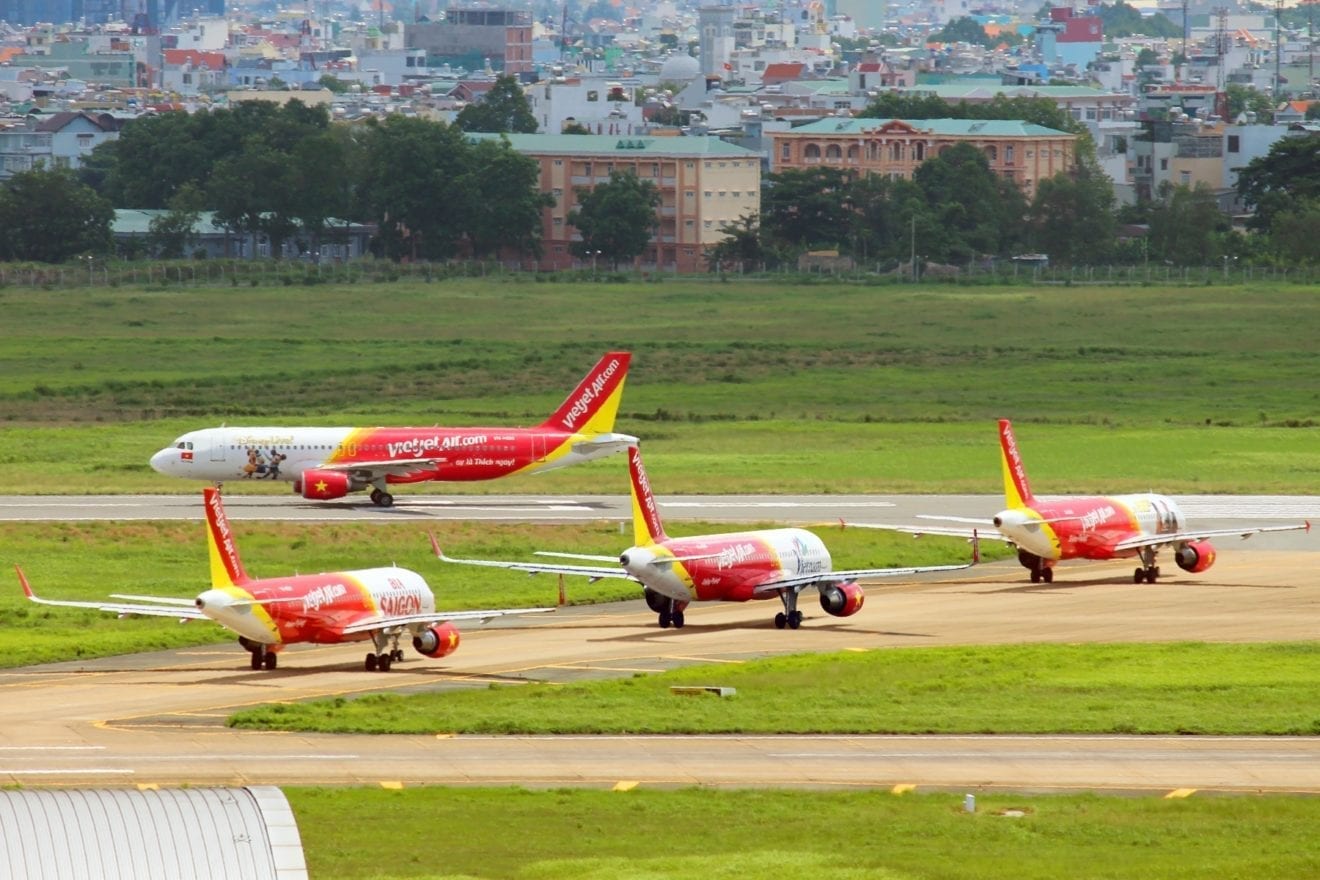
    Vietjet has been eyeing Chu Lai in central Quang Nam Province, Cat Bi Airport in Hai Phong City, Tuy Hoa, and Dien Bien in the namesake northwestern province.

    IPP Group wants to invest in Phu Quoc and Tuy Hoa, Vingroup in Chu Lai and FLC in Dong Hoi Airport.

    Vietnam began building and upgrading airports before the Covid pandemic hit since tourism was growing rapidly.

    By 2025, the government plans to have the first phase of Long Thanh International Airport operational with a capacity of 25 million passengers a year.

    Tan Son Nhat in HCMC and Noi Bai in Hanoi are set to be expanded to handle 50 million and 60 million passengers by 2030.

    The country needs VND403.1 trillion ($17.75 billion) to build and expand airports by 2030.

  • Vietnam rejects five new airport proposals

    Vietnam rejects five new airport proposals

    Aviation authorities have rejected the proposal of five localities to build their own airports and suggested that only one be added to the current master plan.

    Airport proposals by the northern provinces of Ha Giang, Bac Giang and Ninh Binh as well as the central provinces of Binh Phuoc and Ha Tinh have been rejected by the Civil Aviation Authority of Vietnam (CAAV).

    The CAAV has proposed to the Ministry of Transport that the number of airports in the country stays at 28 by 2030, and just one more airport in the northern province of Cao Bang be built by 2050, bringing the total nationwide to 29.

    Vietnam has 22 airports operating at present and six more approved for construction by 2030, including the Long Thanh International Airport in the southern province of Dong Nai and Sa Pa Airport in the northern province of Lao Cai.

    Officials and experts have expressed concern over an airport glut in the country.

    Nguyen Anh Dung, deputy head of the Department of Planning and Investment under the Transport Ministry, said that all airports with annual traffic of under two million passengers a year are recording losses.

    Airports built within 100 kilometers of each other are likely to result in low efficiency, according to case studies done in other countries, he added.

    Aviation expert Nguyen Bach Tung said that some of the proposals have been rejected because of unsuitable topography, like the mountainous terrain in Ha Giang and the vast rice fields in Ninh Binh that are the main source of livelihood for the locals.

    Other proposals have been rejected because the airports would be too close to existing ones. For instance, residents of Ha Tinh and Ninh Binh can use the Vinh International Airport or the Tho Xuan Airport, respectively, because these two are within 100 kilometers of the localities.

    Pham Van Toi, deputy chairman of the Vietnam Association on Aviation Science and Technology, said that many proposals have been made without a thorough examination of their merits and demerits.

    Ha Giang, for example, proposed an airport for both military and civilian purposes, even though it has limited land and airspace, he said.

    The CAAV has also identified a possible land area for a second international airport in the northern city of Hai Phong, which had been planned by the government in 2011.

    The airport is set to be located in Tien Lang District, around 120 kilometers to the southeast of Noi Bai International Airport, and will serve to absorb overflow at the Hanoi’s airport and the existing Cat Bi International Airport in Hai Phong.

    Tung said that Tien Lang has a land fund of 4,000-6,000 hectares available for building an airport with a capacity of up to 100 million passengers a year, which is four times that of the Noi Bai airport in Hanoi.

    This location is also within 100 kilometers from four other northern provinces – Ha Nam, Thai Binh, Nam Dinh and Hai Duong, he said.

    Toi also said that Tien Lang was a suitable location because it has good road connectivity with Hanoi, while the existing Cat Bi airport cannot be expanded as it is located near a river.

    A spokesperson for construction company Tedi, which is advising authorities on the construction of the Tien Lang airport, said existing airports in the north can still meet demand from now until 2040, and authorities should take a call on whether the airport is needed later.

  • Vietjet expands international network

    Vietjet expands international network

    Low-cost carrier Vietjet on Tuesday announced its operation plan for the Hong Kong market and the launch of a new route linking Phú Quốc and Hong Kong, one of Asia’s most well-known destinations.

    The Phú Quốc – Hong Kong route will operate return flights with a frequency of four flights per week, starting from April 19. With a flight time of two hours and 45 minutes per leg, the flight will depart Phú Quốc at 10:50am and land in Hong Kong at 2:35pm (local time) while the return flight will depart from Hong Kong at 3:40pm and arrive in Phú Quốc at 5:25pm (all local times).

    “After nearly three years of operating our HCM City-Hong Kong route, Vietjet has gained the love and trust of Hong Kong residents, business people and international tourists, and has contributed positively to the promotion of air travel and trade between Việt Nam and Hong Kong as well as across the region,” said Lưu Đức Khánh, Vietjet’s managing director.

    Khánh said the airline has thus far transported more than 300,000 passengers on this route, which includes a significant number of transit passengers who boarded in Hong Kong.

    The director said the new direct route between Phú Quốc and Hong Kong, the first direct flight connecting the two destinations, will enhance the flying experience and reduce travel time for passengers, as well as offer flight opportunities for millions of people.

    Victor Liu, deputy director of the General of Civil Aviation Authority in Hong Kong, said that Việt Nam and Hong Kong have enjoyed very good and long-standing economic and social relations.

    “With the addition of the direct passenger services between Hong Kong and Phú Quốc, it will no doubt further enrich the bilateral links between Hong Kong and Việt Nam,” he said.

    Known as “the Pearl Island”, Phú Quốc is the biggest island in Việt Nam. As one of the most talked-about tourism destinations in Asia with beautiful beaches and friendly local people, Phú Quốc in the southern province of Kiên Giang has attracted strong levels of investment in hotels and resorts in recent years and has become one of the most popular holiday destinations in the country.

    Adding to the island’s appeal, international travellers are exempt from visas for visits of 30 days or less.

  • Amazon-go to open more stores in the airports

    Amazon-go to open more stores in the airports

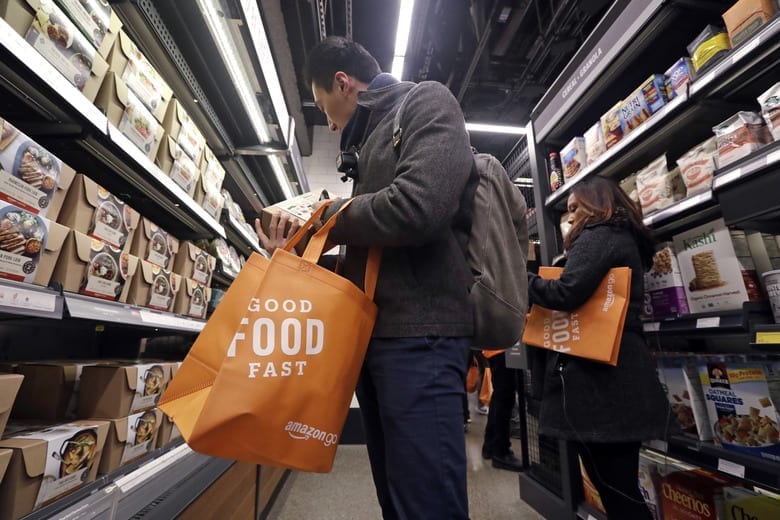
    Online giant Amazon is looking to expand the reach of its automated bricks-and-mortar Amazon Go offer by opening stores in airports, according to a report by Reuters. The retailer’s Go stores utilise myriad cameras which are able to identify customers as they enter, see what they pick up and leave with, and subsequently charge the customer’s Amazon account without the need for any staff interaction – a natural fit for customers needing to get from gate to gate in a short amount of time.

    According to emails obtained by Reuters, Amazon requested a meeting with staff from several airports, including Los Angeles International and San Jose International, referencing Amazon Go as “one of many possibilities we can discuss”.

    Beyond the meetings, which took place in June, officials from both airports confirmed they have had no further correspondence with the business, and that it would need to undergo a competitive bid process in order to acquire the locations necessary.

    The move would put Amazon in front of the more than 350 million people who boarded flights from the country’s top 12 airports last year, according to data from the US Department of Transportation.

    Amazon has been slowly expanding its physical retail offering through numerous Whole Foods, seven Amazon Go stores, and three reviews-driven Amazon 4-star stores, spread across the US, though efforts to bring these offers internationally are reportedly heating up.

    Telegraph UK has learned that Amazon is planning to open an Amazon Go store near Oxford Circus in London, with the location serving as a flagship store for the UK.

  • Aviation infrastructure overloaded

    Aviation infrastructure overloaded

    The heavy investment made recently by the Airports Corporation of Vietnam (ACV) to upgrade airports and develop new infrastructure still cannot satisfy the increasingly high travel demand.

    The additional parking lots set up by ACV recently do not mean much if compared with demand, while airlines still have to scramble for the locations to park their aircrafts. Noi Bai and Tan Son Nhat Airports had many meetings to discuss the allocation of parking lots but they were not useful.

    Giao Thong quoted a high ranking executive of Vietnam Airlines as saying that the carrier’s fleet has 10-15 new aircraft every year while it has put next-generation aircrafts into operation. In 2015, Vietnam Airlines had 83 aircrafts, while the figure is expected to increase to 120 by 2020. This leads to a higher demand for parking lots and the upgrade of technical service areas.

    Nguyen Thi Phuong Thao, CEO of Vietjet Air, has repeatedly asked for more aircraft parking lots at the Tan Son Nhat, Noi Bai and Da Nang Airports. In 2016 alone, the air carrier needs at least 44 parking locations.

    According to Tran Van Thang, ACV’s deputy CEO, ACV has arranged 11 new parking locations at Noi Bai, raising the total number of licensed locations to 70.

    At Tan Son Nhat Airport, four new locations have been arranged for ATR72 aircrafts. The figures are 8 at Da Nang and 16 at Cam Ranh. However, he admitted that the additional supply still cannot satisfy the high demand from airlines.

    Head of the Civil Aviation Authority of Vietnam (CAAV) Lai Xuan Thanh confirmed the lack of parking lots for aircrafts. He said all the four large airports including Noi Bai, Tan Son Nhat, Da Nang and Cam Ranh need to have their parking areas expanded to satisfy the demand.

    A CAAV report showed that in the first six months of 2016, airlines provided more than 128,000 flights, 15.8 percent of which were delayed while the canceled flights amounted to 0.6 percent.

    About the reasons behind the delayed and canceled flights, the report pointed out that airlines’ technical problems were the direct reason of 10.3 percent of delayed flights, while the lack of equipment at airports caused the delay of 6.2 percent, or 1,250 flights.

    Meanwhile, the problems in flight control at the departure airports were the reason behind the late arrival of 11.3 percent of total delayed flights.

    Thanh from CAAV said that until the Long Thanh Airport is built and put into operation, the overloading at Tan Son Nhat would still not be settled.

  • Thai airports feel impact of reduced ‘illegal’ Chinese tours

    Thai airports feel impact of reduced ‘illegal’ Chinese tours

    According to the Airports of Thailand (AOT) the country’s aviation industry performance only improved ‘slightly’ between October-December 2016 (Q1 FY2017), due to a reduced number of Chinese tourists visiting through ‘illegal tours’.

    During the period, concession revenue grew by just +2.68% year-on-year to Baht 3,302.71m (US$94m).

    “After the repressive measures against illegal tours by the cooperation between the Thai government and the Chinese government, Chinese tourists reduced consequently,” said the airports operator.

    “Therefore, tourism industry didn’t grow as fast this quarter because the Chinese are the largest group of foreign tourists visiting Thailand.”

    GROWTH OF MIDDLE-INCOME PASSENGERS

    However, ‘a more stable domestic political situation’, the government’s domestic and international tourism stimulus policies, and the rapid expansion of low cost airlines, increased new demand for air travel for middle-income groups, says AOT.


    The effects of the aforementioned ‘repressive measures’ were also compensated by increases in other foreign travellers, especially Russian and European passengers.

    “The consequence of the repressive measures against illegal tours by the government is expected to affect the volume of Chinese tourists for a short period of time,” adds AOT.

    The total number of passengers served by Thai airports reached 30.69m in the October-December 2016 period; a 6.11% increase compared to the same period last year. International traffic made up the majority of total traffic at 16.52m international passengers.

    Net profit for the three-month period ended 31 December, 2016 reached Baht 5,084.22m (US$145m), up +9.91% compared to the same period last year.

    INCREASE SALES OR SERVICES REVENUES

    Revenues from sales or services increased by Baht 798.77m or 6.76% as a result of an increase in aeronautical revenue of Baht 254.32m or 3.72% and non-aeronautical revenue of Baht 544.45m or 10.93% because of an increased number of flights and passengers.

    Non-aeronautical revenue of Baht 5,526.73m increased by Baht 544.45m or 10.93% comparing to the same period last year due to an increase in service revenues of 31.02% attributed to advance check in costs to passengers.

    “This was because AOT installed Advance Passenger Processing System (APPS)on 1 December, 2015.

  • Airports of Thailand sees nine-month commercial revenue climb

    Airports of Thailand sees nine-month commercial revenue climb

    Airports of Thailand saw non-aeronautical revenue climb 21.34% to Bt3.83bn ($107m) in the first nine months of 2016, mainly as a consequence of an increasing number of flights and passengers.

    Revenue generated from duty-free sales increased by Bt934m, with the majority of non-aeronautical attributed to concession revenues. Non-aeronautical revenue represented also 43% of the total revenue share.

    Concession revenue represented Bt13.62bn in the nine months of 2016, up 16.1% year-on-year from the Bt11.73bn registered in the same period of 2015.

    Total revenues grew by Bt7.27bn up to September 30 this year, while generating net profit of Bt19.57bn, up Bt842m or 4.5% from the same period last year.

    Photo of AOT 2

    Photo of AOT

  • Malaysia Airports partners with Union Pay to boost Chinese spend

    Malaysia Airports partners with Union Pay to boost Chinese spend

    The Commercial Division of Malaysia Airports Holdings Berhad is collaborating with UnionPay International to boost Chinese tourist spending at its airports.

    The move is said to be in line with Malaysia Airports’ Commercial Division’s new strategic direction which calls for a targeted passenger focus. According to Malaysia Airports Holding Senior General Manager Commercial Services Berhad Mohammad Nazli Abdul Aziz, the collaboration also fits in with the significant growth of Chinese passenger traffic.

    Air China, Shanghai Airlines and Spring Airlines were the latest to join the fleet of Chinese airlines flying to Kuala Lumpur and Kota Kinabalu in 2015. Together they connect Malaysia to more than 17 key cities located throughout China.


    “According to statistics obtained from Tourism Malaysia, on average, a Chinese tourist spends approximately MYR3,300 (US$847). If Tourism Malaysia achieves its target Chinese tourist arrivals of over 2 million for 2016, this will translate to more than MYR6.7billion (US$1.72 billion) in tourist receipts. Capturing a fraction of that will contribute positively to our revenue. UnionPay is a fast-growing global payment brand.

    Partnering UnionPay International will allow us to tap into the Chinese tourists.”Nazli said: “The Chinese tourists market is a priority for us given their volume and strong spending power. Last year, total passenger movement between Malaysia and China stood at approximately 5.54 million, the second highest for Malaysia Airports. Much of it is boosted by the fact that we currently have 12 airlines connecting Malaysia to over 17 destinations in China. We expect the Chinese tourists market to increase even further with the visa-waiver programme.

    To further boost tourist spending, Malaysia Airports has signed several new brands at its international gateways. Among the local brands are Noodlelicious, Sofia Iman, Killiney Kopitiam, and Upin & Ipin Café. New international brands include Michael Kors, Pedro, Montblanc and Barry Smith.

    The partnership between Malaysia Airports Holdings Berhad and UnionPay includes the ‘Be Rewarded When You Spend Campaign’, of which the launch coincided with the prize presentation ceremony to mark the conclusion of Malaysia Airports’ Indulge & Explore Campaign.

    UnionPay International Southeast Asia General Manager Wenhui Yang said: “We are pleased to partner Malaysia Airports for the “Be Rewarded When You Spend” campaign. Malaysia Airports is one of the biggest players in Malaysia’s tourism and hospitality industry, our collaboration is in line with our efforts to bring greater value and more exciting privileges to our customers, wherever they go.”

    Foo Yit Kin from Kota Bahru, who claimed the Grand Prize in the Indulge & Explore Campaign, won a six-day trip to participate in a Panda Experience Programme in China.According to data recorded by Malaysia Airports’ recently-concluded Indulge & Explore Campaign, Chinese tourists were among the top three airport spenders. For the three-month duration of the campaign, which ran from 7 December 2015 to 6 March 2016, Chinese tourists spent an estimated MYR1.65million (US$425,000) at KLIA/klia2 combined. On the whole, the campaign saw a +7% increase over the previous year’s initiative.

    In addition to the Grand Prize won by Foo, the Indulge & Explore Campaign also awarded 13 weekly prizes, including Lovina Dolphin trips to Bali and New Leaf Detox programmes in Koh Samui, Thailand. The 13 weekly prize winners were selected throughout the campaign period, with each weekly prize winner also entered to win the Grand Prize.

    According to Malaysia Airports, more than 43,500 travellers from 164 countries partook in the Indulge & Explore Campaign, with top participation from Malaysians followed closely by Chinese tourists.


    Malaysia Airports’ Indulge & Explore Campaign, which was supported by MasterCard, provided the opportunity for shoppers to double their entries when they used their MasterCard.Nazli added: “The Indulge Campaign is an important component of our overall commercial strategy. It underscores our drive towards providing passengers and visitors with the total airport experience. 2016 will see us doing even more to drive the message home.”

    MasterCard Group Country Manager Indonesia, Malaysia and Brunei and Group Head Islamic Payments and Southeast Asia Safdar Khan said: “MasterCard understands that Malaysians love to travel and for many of them, shopping is an integral part of their trip. According to our latest Consumer Purchasing Priorities Survey, nine in ten Malaysians intend to travel in the next year and shopping is among their top three activities when travelling.”

    He added: “Together with Malaysia Airports, we are delighted to have delivered unique travel experiences in conjunction with the Indulge & Explore Campaign over the past decade. We look to continue offering exciting benefits and exclusive rewards to MasterCard cardholders at every step of their journey.”

  • 180 flights added to Bali in anticipation of Christmas and New Year’s rush

    180 flights added to Bali in anticipation of Christmas and New Year’s rush

    With natal and tahun baru fast approaching, Bali’s Ngurah Rai Airport has received a list of 180 extra flights destined for Bali. 

    The statement was disclosed by the General Manager of Angkasa Pura I Ngurah Rai Airport, Trikora Harjo. 

    “The flights will account for 34,508 passengers in total. This figure is an increase of 55 percent compared to last year (2014). These extra flights include 88 from Citlink and 68 from Lion Air. All are Denpasar-Jakarta,” he explained on Friday, as quoted by Tribun Bali. 

    Besides the Citilink and Lion Air flights, Garuda Indonesia and Sriwijaya will also be offering extra flight services for the holidays, Harjo added. 

  • APAC airports rank top for international traffic

    APAC airports rank top for international traffic

    For the first time in 2014, Asia Pacific’s airports collectively qualified as the world’s number one region for commercial passenger air traffic, handling 2.3bn passengers in 2014 and leaving second-ranked Europe trailing with ‘just 1.8bn’, according to Airports Council International (ACI).

    However, DF&TR industry executives know only too well that dynamic spending patterns at airports are not always ‘guaranteed’ by sheer passenger numbers, especially considering the multiple factors that can adversely influence customer spending.

    As Asia’s leading airport with a 6.1% rise to 62.9m international passengers last year, Hong Kong International Airport (HKIA) appears to be doing reasonably well however.

    It has continued to see healthy HY1 traffic growth to 33.6m to the end of June 2015, but there is certainly concern, as downtown retail sales of luxury goods to previously high-spending Chinese visitors fall dramatically.

    While Hong Kong Airport is also expanding with its Midfield Concourse, due to open at the end of this year, so is Asia’s second biggest airport at Changi in Singapore.

    Last year, Changi’s traffic grew by just 1% to 53.2m, but its shops generated retail sales of more than S$2bn ($1.50bn) in 2014 from an average of over 120,000 transactions a day, according to Lim Peck Hoon, Executive Vice President Commercial, Changi Airport Group (CAG).

    This was achieved from a total of 54.1m passengers, corresponding to a marginal 0.7% rise on the 2013 number, reflecting CAG’s cautionary comments last year that it was expecting slower traffic growth this year.