Retail News CRM

Tag: Ajinomoto

  • V2food Acquires Daring Foods, Forms Alliance With Ajinomoto In Global Expansion Move

    V2food Acquires Daring Foods, Forms Alliance With Ajinomoto In Global Expansion Move

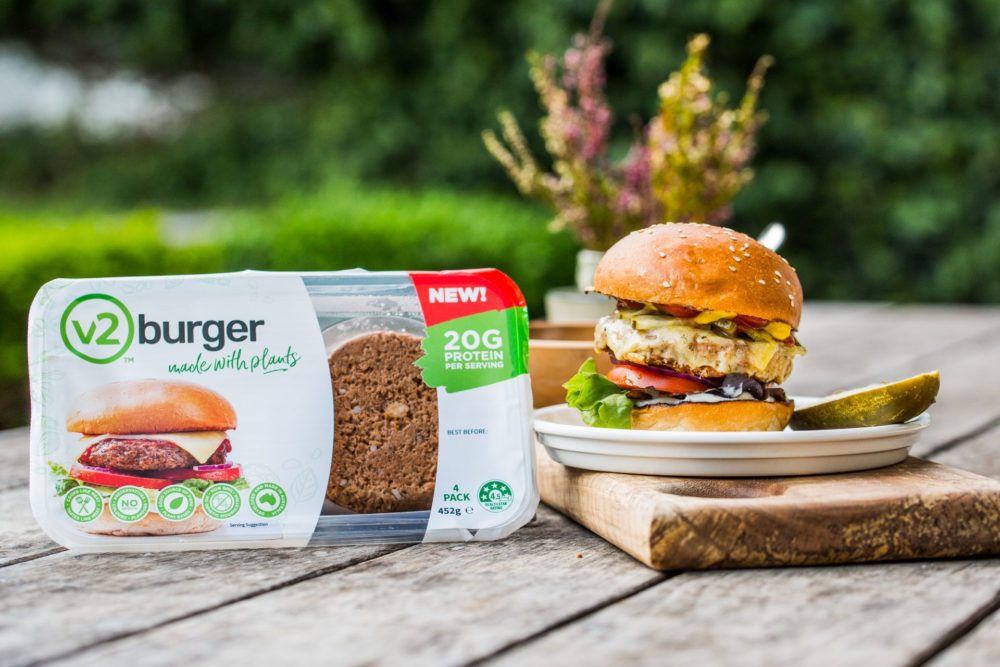
    V2Food, an Australian alternative meat company that emphasizes plant-based products, has made a significant stride in its worldwide expansion by acquiring Daring Foods, a company based in the United States, and forming a strategic alliance with Ajinomoto, a renowned Japanese food conglomerate.

    According to V2Food, this deal integrates its proprietary protein technology with Daring’s robust retail footprint in the U.S. and Ajinomoto’s extensive global reach and food science expertise that spans over a century.

    Merging Technological Capabilities

    Tim York, the CEO of V2Food, commented on the newly formed partnership. He believes that merging their technological prowess with Ajinomoto’s global scale and profound knowledge in food science, as well as Daring’s tested market triumph, will result in an influential platform for sustainable nutrition. This platform will not undermine the taste or quality of the food.

    Daring, which currently ranks as the top unbreaded plant-based chicken brand in the U.S., will maintain its brand name and operations. The acquisition, however, enables the brand to serve as a springboard for the introduction of V2Food’s products to the American market.

    Key Roles of Ajinomoto

    Ajinomoto will play a crucial role in expanding the business on an international scale, concentrating on Asia and Africa. These regions are currently witnessing a surge in demand for accessible and sustainable protein sources.

    Shigeo Nakamura, the president and CEO of Ajinomoto, spoke about the strategic association between Ajinomoto and V2Food. He emphasized the mutual dedication of both companies to revolutionizing the global food system through innovation, sustainability, and co-creation in technology and business development. All these efforts are geared towards contributing to the well-being of individuals, society, and our planet.

    Future Plans

    Both companies plan to introduce clean-label products to the market, including a line of frozen meals. These products are aimed at meeting the consumer demand for healthier, more natural plant-based options. V2Food’s technology features methylcellulose-free formulations and an innovative use of algae for colour.

    Questions & Answers

    What is the significance of V2Food’s acquisition of Daring Foods and partnership with Ajinomoto?
    Answer: These strategic steps mark a major milestone in V2Food’s global expansion, combining V2Food’s protein technology with Daring’s established US market presence and Ajinomoto’s extensive food science expertise and global reach.

    What role will Ajinomoto play in this partnership?
    Answer: Ajinomoto will help scale the business internationally, with a primary focus on Asia and Africa where the demand for accessible and sustainable protein sources is on the rise.

    What future plans do the companies have?
    Answer: The companies plan to launch clean-label products, including a frozen meal line, to meet the consumer demand for healthier, more natural plant-based options. Additionally, they will make use of V2Food’s innovative technology that involves methylcellulose-free formulations and algae-based colouring.

  • New product helps Vietnam’s canned coffee market

    New product helps Vietnam’s canned coffee market

    One of the largest beverage makers in the world is hoping to ‘capture’ Vietnamese taste with its new canned coffee product. Coca-Cola, one of the two biggest players in the Vietnamese carbonated beverages market, has entered the canned coffee market with Georgia Coffee Max.

    Though Vietnam is the second largest exporter of coffee in the world, its ready-to-drink coffee market has not attracted much attention from major players.

    Coca-Cola’s move could breathe life into it, but the challenge is not a small one, industry insiders said.

    For instance, at a supermarket on Quan Hoa Street in Hanoi’s Cau Giay District, canned coffee products do not have their own section, but are placed among other carbonated and energy drinks.

    Four brands of this rarely-seen product — Birdy, Nescafe, Highlands Coffee, and My Café — sit inconspicuously among dozens of other beverages.

    According to the shop assistants, canned coffee is hardly purchased, and sometimes is not bought for weeks at a time.

    The market for canned coffee came to existence 10 years ago with the entry of Birdy Coffee from Japan’s Ajinomoto.

    A year later Nestlé, which wanted a piece of the action, established a canned coffee production line at its plant in the southern Dong Nai Province.

    Other early birds included local dairy giant Vinamilk, which started putting up ready-to-drink coffee production facilities, followed by two then-emerging brands, Tan Hiep Phat and Highlands.

    Though initially many of the brands ran aggressive marketing campaigns, the market gradually fizzled out. Many products disappeared completely within a short time.

    In 2013 local coffee giant Trung Nguyen launched a range of fresh coffee products in bottles and cartons in sizes ranging from 500 ml to a liter. Within two years these too disappeared from grocery store and supermarket shelves.

    Today only a few names are left in the market, like PepsiCo, Highlands Coffee, Nestlé, Ajinomoto, and the new entrant, Coca-Cola.

    The real challenge for producers is no longer getting market share but changing consumer habits.

    Industry insiders quoted customer feedback as saying canned coffee is like fast food, sweet and lacking the authentic coffee taste.

    Speaking at the launch of the new product, a Coca-cola executive said though there are other brands in the market, their research showed the pie is large enough for new players to enter.

    Le Trung Tin, director of the Georgia Coffee Max line, said the secret to success is capturing the Vietnamese taste in the canned coffee.

  • Ajinomoto becomes SEA Games sponsor as healthy eating promoter

    Ajinomoto becomes SEA Games sponsor as healthy eating promoter

    Japanese food company Ajinomoto has signed an agreement to become a top sponsor for the 29th Southeast Asian Games (SEA Games) and the 9th ASEAN Para Games in Kuala Lumpur this year.

    Ajinomoto Co., the parent company of Ajinomoto Vietnam, will provide support for both events as Platinum Sponsor. This is the first time a Japanese company has become an official sponsor for these regional events.

    Since 2003, Ajinomoto Co. has been working on the Victory Project®, which supports activities including sports nutritional guidance and amino acid conditioning for top-level athletes at international tournaments.

    The project provides top level athletes in Japan with Ajinomoto Group’s products and nutritional support through Kachimeshi® program, Ajinomoto’s sports nutrition meal program for building a winning physique.

    Being an official sponsor for the SEA Games and the ASEAN Para Games gives Ajinomoto Co. the opportunities to provide various supports through its subsidiaries in the Southeast Asian region based on a wealth of knowhow on nutritional support for athletes that the company has accumulated in Japan.

    Under the agreement, Ajinomoto Co. will provide products including seasonings, soups and coffee, depending on the cuisine of each country. It will also supply Amino VITAL®, the amino acid based product which aids in conditioning during extreme workouts, provides substantial muscle-building properties as a typical protein supplement and helps replenish energy during endurance sports.

    Ajinomoto Group representative inks deal making it the Platinum Sponsor of the 29th SEA Games and the 9th ASEAN Para Games.

    Ajinomoto Group representative inks deal making it the Platinum Sponsor of the 29th SEA Games and the 9th ASEAN Para Games.

    Founded in 1909, Ajinomoto is now operating in 28 countries and regions. It earned net sales of $9.87 billion in fiscal 2015.

    As a global manufacturer of high-quality seasonings, processed foods, beverages, amino acids, pharmaceuticals and specialty chemicals, Ajinomoto has for decades contributed to food culture and human health through wide-ranging application of amino acid technologies. Today, the company is becoming increasingly involved in finding solutions for improved food resources, human health and global sustainability.

    The company has established business bases in many Southeast Asian countries including Vietnam, Malaysia, Thailand, Indonesia, the Philippines and Singapore. The company has developed a consumer food business in these countries for many years, and thus has maintained a strong connection with the local food culture.

    Ajinomoto Co. established its Vietnam business in 1991. Ajinomoto Vietnam follows the mission of contributing to the growth of Vietnam, and to the happiness and good health of Vietnamese people through food culture and food resources development. The company specializes in “Delicious No.1” seasoning, food and beverage products.

    With the company’s specialty in food and health, Ajinomoto Vietnam is now taking initiatives in ASV, short for “Ajinomoto Group Creating Shared Value” which represents Ajinomoto Vietnam’s unchanging commitment to the creation of economic value and growth by contributing to the resolution of social issues, to create value together with the society and local communities.

    The company is now helping improve nutrition status for healthy living, develop food resources in agriculture sector and become model citizen in saving energy and natural resources.

    The Victory Meal as part of the Kachimeshi Program includes five dishes which provide nutritional balance with carbohydrates, protein and fiber.

    The Victory Meal as part of the Kachimeshi Program includes five dishes which provide nutritional balance with carbohydrates, protein and fiber.

    Under its School Meal Project, Ajinomoto Vietnam is collaborating with education and nutrition authorities to perform its social responsibility in the education sector. The project aims to improve the state of health among children and enhance their awareness of nutrition through primary school meals, to improve nutrition and health for the country’s next generation.

    The company’s expansion to the sports area aims to further its contribution to advances in food and health for general public as well as athletes in each country.

    The SEA Games and the ASEAN Para Games are held every two years to help forge strong regional cooperation, understanding and unity in the Southeast Asian community. They are the largest sports events in the region, attracting more than 600 million people each time.

    The 29th SEA Games and the 9th ASEAN Para Games are mainly held in Kuala Lumpur, Malaysia and hosted by Malaysia Organising Committee, with the participation of 11 nations: Vietnam, Brunei, Cambodia, East Timor, Indonesia, Laos, Malaysia, Myanmar, Philippines, Singapore, Thailand and Vietnam. The 29th SEA Games will take place between August 19-31, 2017 and the 9th ASEAN Para Games September 17-23.