Retail News CRM

Tag: alert

  • Pokemon Centre at Jewel Changi Aims for Localised Transformation – Get Ready for a Cultural Spin and Expanded Merchandise!

    Pokemon Centre at Jewel Changi Aims for Localised Transformation – Get Ready for a Cultural Spin and Expanded Merchandise!

    The Pokémon Centre, located in Jewel Changi Airport in Singapore, has decided to temporarily close its doors starting from April 1. This temporary closure is to allow for renovations aimed at introducing a completely localised store concept.

    Previous Store Offerings

    Ever since the center first opened in 2019, it has been a hub for a wide range of Pokémon-themed products. These products range from video games and trading cards to plush toys and bag charms.

    What to Expect from the Revamped Store

    Upon completion of the renovation, the revamped Pokémon Centre will feature several design elements and installations inspired by Singapore’s rich heritage and culture. Additionally, customers can look forward to an expanded merchandise selection and a host of immersive experiences.

    Temporary Pop-Up Stores

    During the three-month renovation period, Pokémon will set up temporary pop-up stores at Jewel Changi and Plaza Singapura. These stores will continue to cater to the needs of Pokémon fans, ensuring that they can still access their favorite merchandise during the renovation period.

    Shunsuke Sasaki, the Managing Director of Pokémon Singapore, reflected on the brand’s journey. “Over the past seven years, Pokémon has become an increasingly meaningful part of everyday life, and we are proud to have been part of that journey,” he said.

    He also shared a glimpse of what the refreshed store will offer: “The refreshed store will feature curated products, including some limited edition merchandise, and an enhanced interior design concept. We look forward to welcoming everyone soon.”

    The Pokémon Centre at Jewel Changi Airport is set to reopen its doors in the third quarter of the year.

    Questions & Answers

    When will the Pokémon Centre at Jewel Changi Airport be closed for renovations?
    The Pokémon Centre will be temporarily closed starting from April 1.

    What changes can customers expect from the revamped store?
    Customers can expect to see design elements and installations inspired by Singapore’s heritage and culture. The store will also offer an expanded merchandise range and immersive experiences.

    Will there be any temporary stores during the renovation?
    Yes, during the renovation period, Pokémon will open temporary pop-up stores at Jewel Changi and Plaza Singapura.


  • Unsafe Landfill Cheese Surfaces on NZ Market: Over The Moon Brand Issues Alert

    Unsafe Landfill Cheese Surfaces on NZ Market: Over The Moon Brand Issues Alert

    Cheese that had been previously discarded in a landfill was discovered being unlawfully sold in Waikato.

    New Zealand Food Safety reports that the cheese seems to have been removed from the Putaruru rubbish tip before being located for sale in the town on Sunday. It was stated that the product had not been kept in refrigerated conditions and was therefore unsuitable for consumption. Additionally, there’s a possibility that this cheese is being sold in other regions as well.

    The Impacted Products

    The cheeses in question are all from the Over The Moon brand. The list of items includes Camembert, OMG, Black Truffle Brie, Galactic Gold, Halloumi, Gee’s Spread (Black Truffle & Garlic Chilli flavors), Smoked Chilli Camembert, Goat Camembert, and Double Delight. The batches affected carry the numbers 18.11.25, 25.11.25, and 26.11.25.

    Over the Moon was the first to bring this issue to the attention of New Zealand Food Safety, and is currently working on alerting its customers.

    Despite the absence of any reported illness linked to the consumption of this product, New Zealand Food Safety expressed “serious concerns” about the product’s safety. This is especially due to the fact that the cheese was deemed unfit for sale by the company and consequently disposed of.

    Vincent Arbuckle, the deputy director general of New Zealand Food Safety, warned about the evident food safety risks connected with the consumption of cheese that has spent a certain period of time in a landfill and outside of the food supply chain. He stated that the cheese should be avoided as it hasn’t been subjected to mandatory food safety controls and its storage, transport, and handling methods remain unknown.

    Customers who come across the affected cheese in unregistered businesses can call the toll-free line 0800 00 83 33. They have been advised to instead buy the legitimate Over The Moon products from the company’s authorized stockists.

    Investigations Underway

    Arbuckle emphasized that the sale of discarded cheese is illegal and poses a considerable risk to public health. He noted that an investigation is underway by New Zealand Food Safety.

    Questions & Answers

    What are the specific cheese products that have been found illegally for sale?
    The implicated products are from the Over The Moon brand, including Camembert, OMG, Black Truffle Brie, Galactic Gold, Halloumi, Gee’s Spread (Black Truffle & Garlic Chilli flavors), Smoked Chilli Camembert, Goat Camembert, and Double Delight.

    What is the risk of consuming these cheeses?
    The cheeses, which were not refrigerated and have spent time in a landfill, could be contaminated and pose significant food safety risks.

    What should customers do if they find the affected cheese for sale?
    Customers should report any sightings of the cheese being sold at unregistered businesses to the toll-free line 0800 00 83 33. They should only purchase Over The Moon products from the company’s authorized stockists.

  • Singapore Scam Victims Top Southeast Asia in Financial Losses, Each Losing an Average of $2,132

    Singapore Scam Victims Top Southeast Asia in Financial Losses, Each Losing an Average of $2,132

    In a startling revelation, Southeast Asia grappled with an astonishing $23.6 billion in scam-related losses last year, according to the Global Anti-Scam Alliance’s State of Scams in Southeast Asia 2025 report released in late August. The staggering figure translates to roughly $660 vanished from every adult in the region, highlighting a profound issue that calls for urgent attention.

    Among the countries surveyed, Malaysia topped the charts with an average loss of $1,035 per victim, while Thailand trailed with losses averaging $354. Singapore, meanwhile, set a poignant record with S$1.1 billion (approximately US$861.2 million) lost to scams, marking a dramatic 70% surge from the previous year, as reported by The Straits Times.

    In the city-state, investment, job, and phishing scams emerged as the trifecta of deceit, both in terms of frequency and financial impact. However, there is a glimmer of hope this year—with reported cases and losses in Singapore down 26% and 12.6%, respectively, in the first half, tallying 19,665 cases that resulted in S$456.4 million in losses, according to Channel News Asia.

    Victims by the Numbers: Malaysia Leads the Pack

    Malaysia also accounted for the highest percentage of scam victims, with a staggering 32% of adults reporting financial losses. The Philippines followed closely with 31%, while Singapore’s figure stood at 21%. Across the region, wire transfers remained the scammers’ preferred payment method. However, in the Philippines, digital wallets have emerged as a popular tool for fraudulent transactions.

    Top Scams: It’s All About Investment

    Investment scams reigned supreme with 63% of respondents claiming they had been targeted, including 32% who encountered such schemes more than once. Following closely were unexpected money scams, where individuals were deceived into providing money or personal information to claim non-existent prizes or lottery winnings; 58% reported such experiences. Impersonation scams, shopping scams, and employment scams rounded out the top five categories of fraud, each affecting more than half of the respondents.

    A Call to Action for a Collective Defense

    Jorij Abraham, CEO of the Global Anti-Scam Alliance, emphasized that scams represent a pressing social threat, not merely an individual misfortune. “Scammers are evolving faster than our defenses,” he warned, urging a collective response from governments, technology firms, and financial institutions. “We must unite to counter this growing menace, lest we inadvertently accept fraud as a normalized part of daily life—almost like an encore after the plays of our lives.”

    Questions & Answers

    What was the total amount lost to scams in Southeast Asia last year?
    The total amount lost to scams across Southeast Asia last year reached a staggering $23.6 billion.

    Which country had the highest average losses per victim?
    Malaysia had the highest average losses per victim, amounting to $1,035.

    What types of scams were most prevalent in Singapore?
    Investment, job, and phishing scams were the top three scams in Singapore during the reporting period.

  • Tesla Recalls 817,000 Vehicles In U.S. Over Seat Belt Reminder Alert

    Tesla Recalls 817,000 Vehicles In U.S. Over Seat Belt Reminder Alert

    Tesl is recalling more than 817,000 vehicles in the United States because an audible alert may not activate when a vehicle starts and the driver has not buckled the seat belt, a U.S. auto safety regulator said. The National Highway Traffic Safety Administration (NHTSA) said on Thursday the vehicles, 2021-2022 Model S and Model X, 2017-2022 Model 3, and 2020-2022 Model Y fail to comply with a federal motor vehicle safety standard on “Occupant Crash Protection” because the chime does not activate. Tesla will perform an over-the-air (OTA) software update to address the issue.

    Tesla told NHTSA that as of Jan. 31 it was unaware of any crashes or injuries related to the issue. Tesla said in a document filed with NHTSA, the South Korea Automobile Testing & Research Institute (KATRI) on Jan. 6 brought the condition to Tesla’s attention. Tesla said on the recalled vehicles a software error may prevent the chime from activating upon vehicle start under certain circumstances.

    The automaker said the issue was limited to circumstances where the chime was interrupted in the preceding drive cycle and the seat belt was not buckled after that interruption. Tesla added the issue does not affect the audible seat belt reminder chime from activating when the vehicle exceeds 22 km/h and the driver seat belt is not detected as buckled. The condition does not impact the accuracy of the accompanying visual seat belt reminder. Tesla has come under increasing scrutiny from U.S. regulators and issued several recalls in recent months.

    On Tuesday, Tesla said it was recalling 53,822 U.S. vehicles with the company’s Full Self-Driving (Beta) software that may allow some models to conduct “rolling stops” and not come to a complete stop at intersections posing a safety risk. Tesla will perform an over-the-air software update that disables the “rolling stop” functionality, NHTSA said.

  • Google adds new “high visibility” security alerts

    Google adds new “high visibility” security alerts

    Google published a blog on Wednesday explaining how the company plans on using a new process to alert Google Account subscribers when a serious security issue pops up. Back in 2015, Android alerts were used to notify people when they had a security issue with their Google Account. This notification would appear if someone’s account was, for example, hacked. With the new notifications, Google saw a 20-fold increase in the number of users who responded to them within an hour of their receipt compared to those who received word of a security issue via email.

    Soon, Google says that it will release a new security alert that will surface on whichever Google app that the user has open and it will help him address a problem. These new alerts cannot be spoofed so if one shows up on a Google app, the user can be sure that it is genuine. This feature will be rolling out on a limited basis over the next few weeks with a broader distribution expected to begin early in 2021.

    Google also announced today that it has added a new Guest mode for Google Assistant. With Guest mode, you can use a simple voice command to save your Assistant interactions somewhere else instead of on your device. You can also turn off Guest mode at any time to get the full personalized version of Google Assistant back again. You can also use your voice to delete what you just said to Google Assistant. And the latter will now instantly answer more questions about privacy and security.

    Google says, “To make it easier to control your privacy, you’ll soon be able to directly edit your Location History data in Timeline by adding or editing places you’ve visited with just a few taps, and because Search is the starting point for so many questions, starting today we’ll display your personal security and privacy settings when you ask things like “Is my Google Account secure?”

    Google claims to block over 100 million phishing attempts a day; the Google Play Project scans over 100 million apps daily looking for malware and other problems.

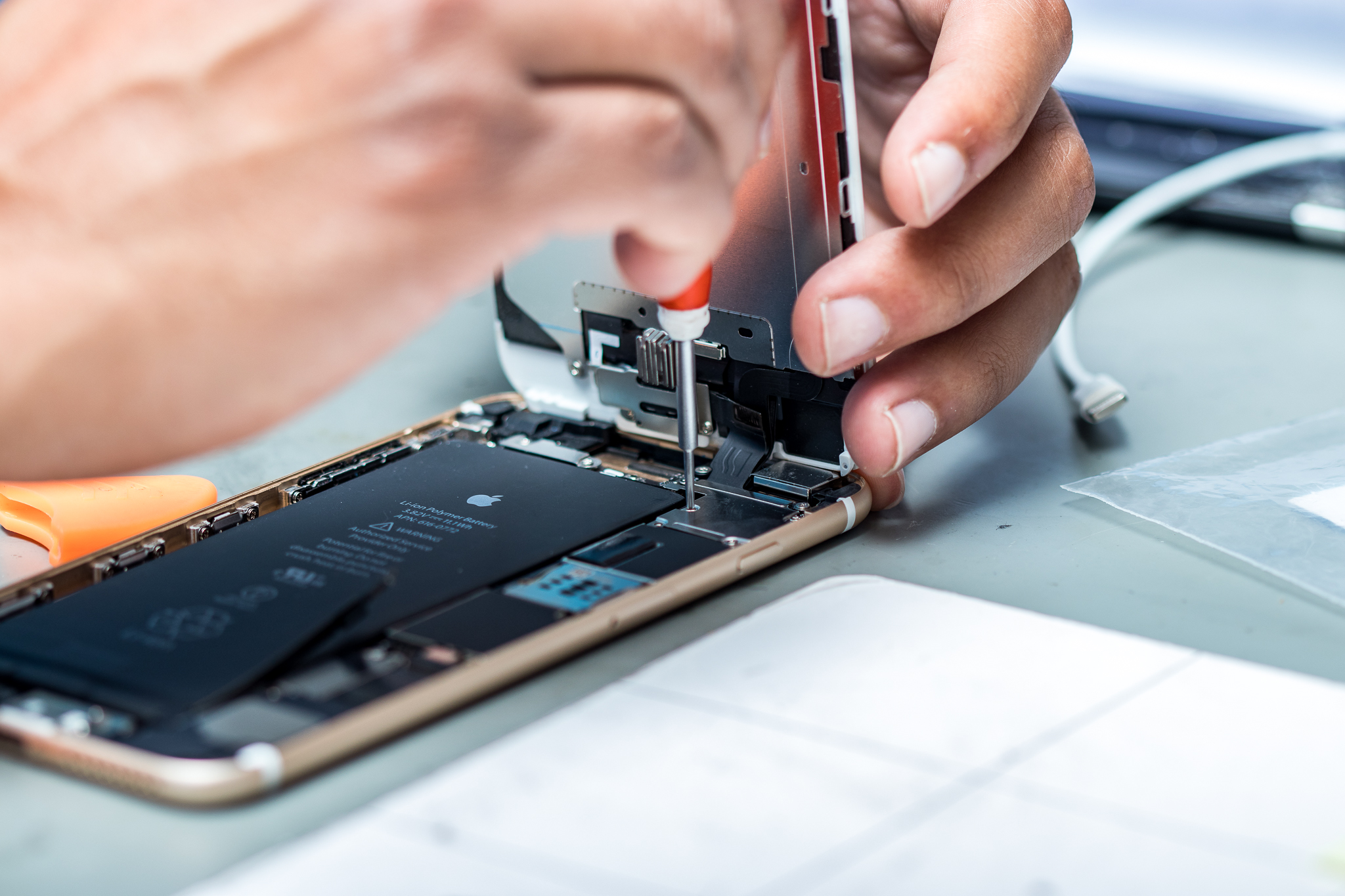
  • Apple ‘fixed’ thousands of fake iPhones

    Apple ‘fixed’ thousands of fake iPhones

    Counterfeit goods are a big problem for any established brand, but when Apple is involved, you know that there will be both demand and supply through the roof given the iPhone role as a status symbol, especially in Asia where most of the fake goods originate from.

    Two Chinese students in Oregon,  Yangyang Zhou, and Quan Jiang, have been running a fake iPhone repair scheme since 2017, it turns out, defrauding Apple of $895,800 in total, according to the company’s estimates. They had bulk shipments of counterfeit handsets shipped to them from China, and submitted those to Apple as “iPhone won’t power on” cases, both online and in stores. The replacement phones were then shipped back to the source in China who deposited money into Jiang mother’s account he had access to in the States.

    Apple “repaired” (most likely just swapped them for refurbished ones) and returned 1,493 of the more than three thousand fake iPhones that were sent to its service before it got an alert that something was amiss on a grand scale. When the situation was raised with Apple’s fraud department in the summer of 2017, they sent Jiang two cease-and-desist orders to stop the scheme but got no response, presumably since the notices were sent to Zhou’s listed address.

    It’s not clear if the fraud alert came within Apple, or the port authorities that have been investigating suspicious bulk iPhone shipments from China since the spring of 2017 but in any case, the scheme started falling apart for the two Chinese on an engineering student visa. Zhou’s lawyer claims that his client will be “vindicated” as he did not know that the iPhones sent to him from China were counterfeit, and thought he was simply taking a cut for a service.

    Ditto for Jiang, who has been accused of wire fraud, as well as trafficking in counterfeit devices, so we’ll see if Apple manages to retrieve anything from the scheme, considering that the repaired real iPhones have already been sent to the vast Chinese prairies.