Retail News CRM

Tag: alexa

  • Amazon has a plan to make Alexa mimic anyone’s voice

    Amazon has a plan to make Alexa mimic anyone’s voice

    Amazon is planning to come up with a way that will help Alexa voice assistant users to speak to their family members, even after they’ve died.

    As per TechCrunch, the online retailer announced its plan about developing a system to let Alexa mimic any voice after hearing less than a minute of audio during its annual re:Mars conference today in Las Vegas.

    “This required inventions where we had to learn to produce a high-quality voice with less than a minute of recording versus hours of recording in the studio.The way we made it happen is by framing the problem as a voice conversion task and not a speech generation path. We are unquestionably living in the golden era of AI, where our dreams and science fictions are becoming a reality,” Amazon’s Senior Vice President and Head Scientist for Alexa, Rohit Prasad said.

    After learning about this development, several netizens expressed their views. Many said the technology can be used for scams or to create false narratives about people.

    “I m so heartbroken, last month I deleted a bunch of voicemails from my phone because it was getting full, and a couple days later my dad died. His girlfriend had videos of him singing and playing guitar, so I have that. But now I’m afraid to delete voicemails ever,” a Twitterati wrote.

    “Funny thing is, they love introducing all this ‘new tech’ all cute and sweet and really they using it IN THE BACKGROUND for other devious bull shit,” another one wrote.

    “This (or similar) tech is already used in (mostly) corporate fraud. In ex someone calls the secretary sounding like its the boss who is calling, asking for an urgent bank transfer from the accountant….. I mean, for this product there must be a serious licence. Sad lobbypower,” a netizen commented.

    In a demonstration video, a child said, “Alexa, can Grandma finish reading me the Wizard of Oz? However, Amazon did not say when the feature will roll out to the public.

  • Amazon launches Alexa Together, a subscription-based service for seniors

    Amazon launches Alexa Together, a subscription-based service for seniors

    Alexa Together is the new subscription-based service for elders launched by Amazon. It’s an upgrade to the existing Care Hub service and it costs $19.99 per month or $199 per year. Besides the basic features offered by Alexa Care Hub, the new service provides seniors with additional benefits.

    These additional benefits include access to an emergency helpline, fall detection response features, a remote assist option that allows family members to manage settings on the elderly person’s device and an activity feed for family members that will notify them when the aging customer is active.

    Alexa Together provides a few layers of privacy protection. For example, the elder needs to allow access to the family members to use features like Remote Assist. More importantly, the activity feed has been designed to show that the elder did interact with Alexa but will not show what that interaction specifically was.

    Amazon announced that all Care Hub customers will receive a free year of Alexa Together until December 2, 2022. Customers can also sign up for a free limited-time, six-month trial.

  • How Apple’s iOS 14 privacy-friendly update is helping Twitter out

    How Apple’s iOS 14 privacy-friendly update is helping Twitter out

    We have all learned to question our privacy in this day and age of constant online activity, Alexa and Siri always listening, and advertisers spewing ads at us about things we hadn’t even yet realized we wanted. The whole Facebook fiasco over data privacy violation didn’t help our sense of security much, either.

    However, Apple seems to be taking a step in the right direction with its next update to give us a little more peace of mind. Apple’s iOS 14.5 (to be released in the very near future) is including a significant and commendable change in its privacy policy. As of the update’s release, all apps will be required to ask for explicit permission before using IDFA (a unique identifier all iPhones and iPads have to allow device tracking) for advertising (or other) purposes.

    According to Apple, users will have complete control over who is able to track their activity and data. Of course, that doesn’t guarantee we’ll always have full use of an app before consenting to data collection, but it does provide a significantly better sense of security.

    Twitter CEO Ned Segal voiced his approval for the coming update as well yesterday at the Morgan Stanley Technology, Media & Telecom Conference, claiming it will provide a more even playing field between social media companies. Segal acknowledged Twitter has not been as streamlined in leveraging its use of users’ data as other platforms (e.g. Facebook and Instagram), putting it at a disadvantage. However, this update will put all media companies back at the same starting point, requiring user permission to begin collecting data which most have been freely gathering left and right until now.

    “IDFA in a way is going to level the playing field. We’re in an industry where many were much better than Twitter historically at leveraging all of the data that was available to them, from the device ID to what people were doing on other websites. When we all have the same set of new challenges that we have to face, leveling the playing field will be a really interesting impact on the broader industry.”

    Segal promises that Twitter will not begin asking users for access to their devices right away, a restraint which other companies are unlikely to show. Instead, he plans to scope out and “learn from the industry and the broader ecosystem” before making such a move.

  • Amazon brings Dark and Light modes to Alexa app on iOS devices

    Amazon brings Dark and Light modes to Alexa app on iOS devices

    An important update is now rolling out to Alexa app users on iOS devices. The update adds support for both Light and Dark modes, allowing users to switch between them on the fly, as well as Dynamic Type support.

    The update is meant to further improve Alexa’s accessibility features. Thanks to the newly added Dynamic Type support, iOS users will no longer have to choose the size of the text within the Alexa app. Instead, the app will now automatically choose the text-size set at a system level.

    As far as the new Dark/Light modes go, the new feature lets Alexa app users switch between them or let the app handle usage of the modes automatically. By default, the Alexa app will switch appearance at sunrise and sunset, but users can permanently set the app to either Light or Dark Mode from the iOS’s Settings menu.

    Previously, the Alexa app did have a dark mode, but it didn’t display a completely black background whereas the new one added in the update does a better job at mimicking the black color. The updated Alexa app has already been uploaded to the App Store, so feel free to download it to benefit from the recent changes.

  • Amazon adds important offline capabilities to Alexa Auto

    Amazon adds important offline capabilities to Alexa Auto

    Voice assistants are becoming more useful as companies like Amazon, Apple and Google are trying to penetrate as many markets and industries as possible. It’s great to have a car that allows you to make a call or ask for information concerning the weather without having to touch anything.

    Voice control has become a convenient way to do all these tasks while driving thanks to digital assistants like Amazon Alexa, Siri, and Google Assistant. The majority of the features offered by these assistants rely on connectivity, so when you’re driving through tunnels, parking garages or areas with a weak signal, these features are unavailable.

    To reduce the chance of being unable to access Alexa, Amazon launched something called Local Voice Control Extension, which is available in Alexa Auto SDK 2.0. The new feature enables offline access to Alexa in vehicles so that you can use music and radio, search and navigation, calling and messaging, as well as car control even when connectivity is intermittent or not available at all.

    With the latest version of Alexa Auto SDK, automakers will be able to add a lite version of Alexa’s cloud-based service to a car’s infotainment system, which kicks in when your car is no longer in an area with decent connectivity.

    The in-vehicle voice service will impact the purchasing decision of 59% buyers, and most (76%) people want continuity from their voice service at home to vehicle, Amazon claims. That’s why the name of the voice assistant vehicles offer could become a major selling point in the coming years.

  • Amazon brings Alexa to Android TV, Sony Bravias are first

    Amazon brings Alexa to Android TV, Sony Bravias are first

    Amazon promised a few months ago that it will bring Alexa to Sony’s TVs running Android, despite the issues the US retailer has with Google when it comes to access to their TV platforms. Today, a first sign that Amazon fulfilled that promise has just popped up in the Google Play Store in the form of a new app.

    Amazon recently published a new Alexa app in the Google Play Store, which specifies that it’s meant for Sony Bravia TVs powered by Android. The new Amazon Alexa app allows Sony Bravia TV users to listen to music from Amazon Music, Pandora, iHeartRadio, TuneIn, and much more.

    Of course, its main use is to enable voice commands, so whenever you want to listen to a specific song, you could simply say “Alexa, play songs by the artist on [TV name].” The functionality goes beyond just asking Alexa to play songs on various music streaming services, which means you can change the channel, volume, or even turn your TV on and off.

    The new Alexa app can be only be downloaded on Sony Bravia TVs in the US, Amazon said. Once the app is installed on your TV, select a group for your TV and complete the guided Sony set-up. Also, make sure that you have all the skills for music providers and cameras using the Alexa mobile app enabled.

  • Amazon is making Alexa easier to use

    Amazon is making Alexa easier to use

    Imagine being able to arrange a night out in advance through Alexa by engaging in a naturally flowing conversation with the virtual assistant. This is what Amazon showed off last week at its re: Mars conference when it unveiled a preview of Alexa Conversations. Found in Amazon’s Alexa Skills Kit, Conversations allows developers to combine voice apps in order to streamline certain functions.

    Amazon showed off what Conversations could do at the conference by showing a clip of a woman using Alexa to purchase a movie ticket, reserve a table at a nearby Chinese restaurant, and order an Uber to pick her up. The whole process took less than a minute. Amazon says that this “night-out” scenario is the first of many that will allow users to quickly move from one voice app to another inside one conversation. The Conversation feature is designed to reduce the number of interactions it takes to get things done. For example, with the “night-out” scenario, approximately a dozen instructions were required to arrange the whole evening compared to the 40 or so that it would have taken without the new capability. And to make Alexa even more conversational, the virtual assistant can order an Uber by saying “Get me a ride,” instead of “Alexa, launch the Uber skill.”

    Last year, Amazon introduced Follow-up Mode so that users can ask Alexa to handle multiple tasks without having to repeat the “Alexa” hotword every time they want to add a task or request. This can be enabled by opening the Alexa app on your phone and swiping to the right to reveal the app’s menu. From there, go to Settings > Device Settings and tap on the appropriate device. Scroll down to Follow-up Mode and toggle it on. This should make asking Alexa to do multiple tasks a lot easier and quicker. Google launched something similar to Continued Conservations for Google Assistant. This allows users to continue a conversation without having to continually say “Ok, Google.”

    “If you make customers repeat information again and again and again, you are forcing them to believe that they are talking to a dumb entity, and if that’s the rapport you’re building with them from the get-go, the chances are they’re never going to delegate higher order tasks to you, because they will never think you’re capable of solving higher-order problems for them.”-Sanju Pancholi, Alexa AI senior product manager, Amazon.

    Eventually, Amazon could add different Skills for Alexa that will allow users to order food to be delivered, buy a present, or view content at home. Alexa currently is on over 100 million devices and users have more than 90,000 skills that can be enabled for the platform. With 325,000 developers using the Alexa Skills Kit, we can expect many more Skills to be available in the future.

  • Amazon’s Alexa Guard Arrived to Guard your Home

    Amazon’s Alexa Guard Arrived to Guard your Home

    Even though music streaming remains the primary use case for Amazon and Google’s insanely popular smart speakers, it goes without saying Alexa and Google Assistant can do many other cool, innovative, and practical things simply by listening to your voice. The Echo lineup arguably maintains its superiority in the living room, hiding plenty of neat smart home tricks up its sleeve, the latest of which is specifically designed to keep an eye on things while you’re away.

    Formally unveiled way back in September and made available by invitation only a couple of months after that, the very ingenious Alexa Guard feature is now rolling out more widely in the US at last. All you have to do to activate this functionality is remember to say “Alexa, I’m leaving” every single time you exit the premises of your house and want your digital assistant to keep its virtual ear to the ground.

    After setting Guard to “away mode” with the aforementioned magic phrase, your Echo device will stay alert and send notifications to your phone if it detects the sound of smoke alarms, carbon monoxide alarms, or glass breaking. Obviously, you shouldn’t panic as soon as you get a “smart alert”, and instead try to determine if the danger detected by Alexa is actual cause for concern by listening to a 10-second audio recording from your house or even “drop in” on your Echo remotely to check exactly what its microphone is picking up.

    By no means a replacement for a real security system, Alexa Guard can enhance the capabilities of popular setups from Ring and ADT, while also working in tandem with connected smart lights to discourage burglary attempts. Most importantly, the feature naturally doesn’t cost a thing. The latest version of the mobile Alexa app lets you enable it from the “Settings” menu, where you’ll find a Guard-dedicated subsection containing simple step-by-step setup instructions.

  • Music Streaming on Amazon for free using Alexa

    Music Streaming on Amazon for free using Alexa

    If you love music and own an Amazon Echo or another device that uses Alexa as a virtual assistant, we have some good news. Late last week, Amazon announced that those in the U.S. can stream top playlists and stations for free, without having to pay for an Amazon Prime or Amazon Music Unlimited subscription. Instead, a free-ad supported tier of music is available for Alexa-enabled devices.

    Alexa will play for free stations based on a song, artist, genre and era. Playlists like Country Heat, Fuego Latino and others are available without any charge. Amazon says that even without a paid subscription, Alexa will respond to the following commands:

    • Say “Alexa, play the playlist Pop Culture” to stream global pop hits.
    • Say “Alexa, play the Imagine Dragons station” to stream a station that plays music “inspired” by the band.
    • Say “Alexa, play 80s music” to stream a station filled with music from that decade.
    • Say “Alexa, play country music” to stream a station playing that style of music.

    Note that with the free ad-supported service, you cannot request specific songs on demand. You can do that if you sign up for Amazon Prime. The cost of the service is $12.99 per month, or $119 a year. Besides streaming ad-free tunes on demand from your Alexa device, you’ll be streaming Prime Video on your phone, tablet or smart television. You also get free two-day shipping, unlimited photo storage, unlimited reading and free same-day delivery (when available).

    You might also consider Amazon Music Unlimited, which gives you unlimited and on-demand access to 50 million songs. After a 30 day free trial, the service is priced at $7.99 a month, undercutting both Spotify and Apple Music by $2.00 a month.

  • Bose brings AirPlay 2 support to Alexa-enabled smart speakers

    Bose brings AirPlay 2 support to Alexa-enabled smart speakers

    Bose announced last week that owners of its smart speakers will be able to enjoy AirPlay 2 support after the last update is installed. This is quite unexpected considering that Bose’s products weren’t among the third-party AirPlay 2 speakers list published by Apple.

    In any case, if you own a Bose Home Speaker 500 and installed the latest firmware update, which is deployed OTA (over the air) automatically, you’ll benefit from AirPlay 2 support. Besides smart speakers, Bose confirmed Soundbar 500 and Soundbar 700 are getting the same improvement as well.

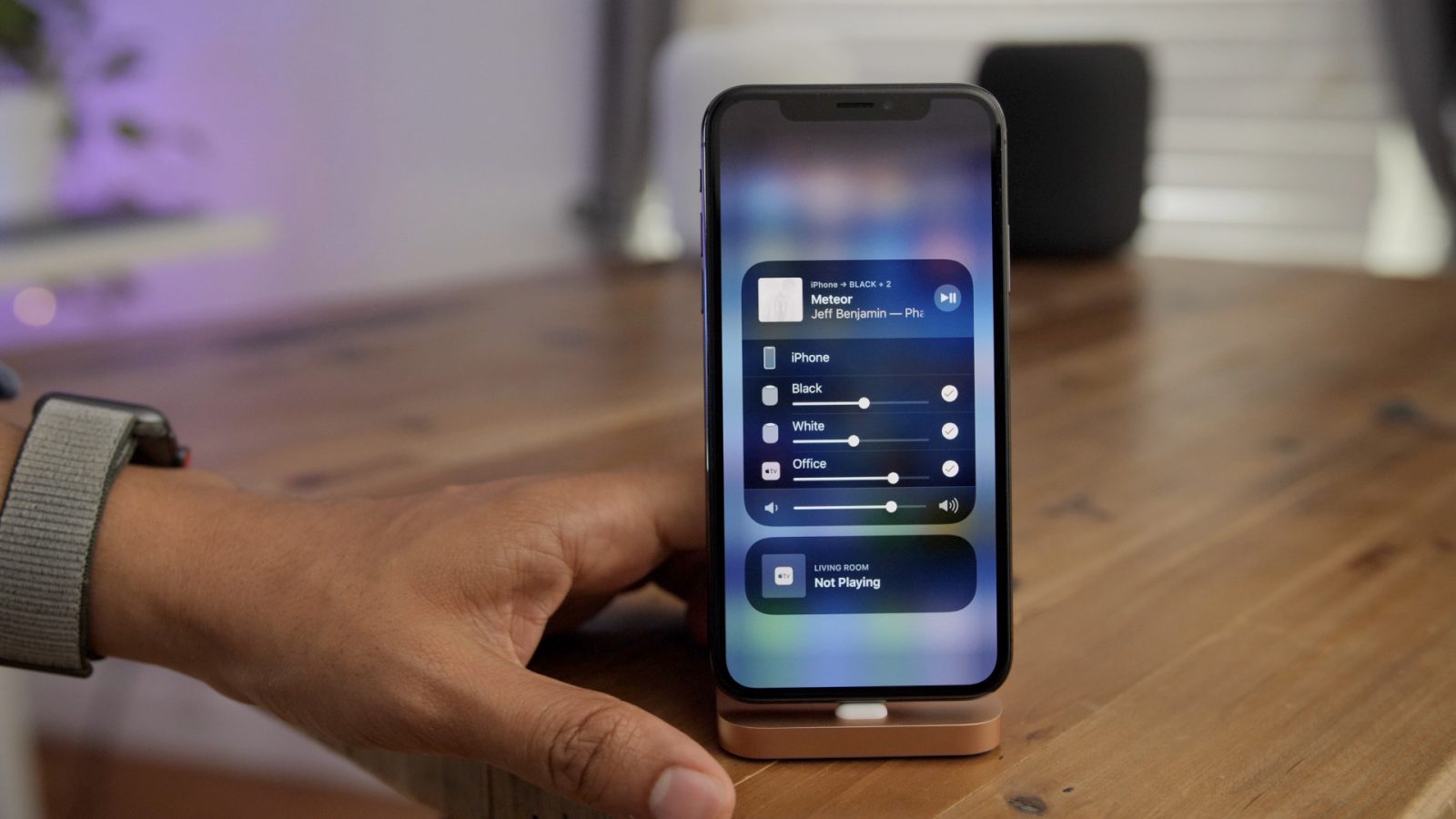
    With AirPlay 2 support, those who own an Apple device will be able to stream music, podcasts and audio to the Bose products mentioned above, including Apple Music.

    Last but not least, Bose announced that it’s working hard to bring AirPlay 2 support to SoundTouch customers, although the US company didn’t offer a timeline for the release. Well, if you own a SoundTouch speaker, at least you now know that something nice will come to you at some point.

  • Focals smartglasses could give us a glimpse at Apple’s next big thing

    Focals smartglasses could give us a glimpse at Apple’s next big thing

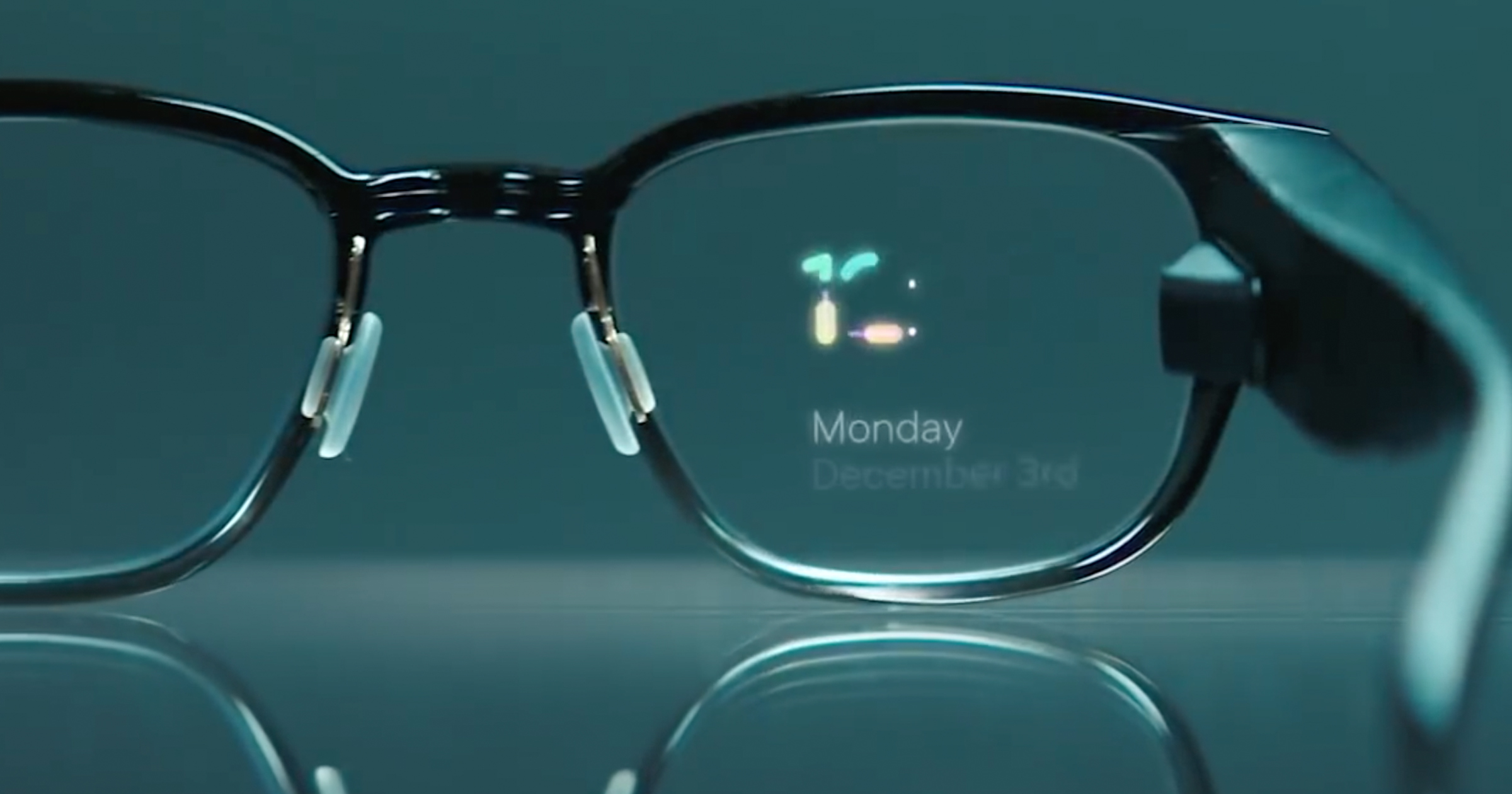
    North’s Focals smartglasses look nothing like the original version of Google Glass, which is a good thing. In fact, if you didn’t know any better, you’d think that they were just an ordinary pair of spectacles. But Focals feature Alexa integration allowing you to hear the latest news, view the weather forecast, stream music, control the smart appliances in your home, and more. The glasses will also show you upcoming appointments from your calendar, let you arrange for an Uber, send a text and navigate with turn-by-turn directions. Focals can be controlled through the use of the ring-like “Loop” which is a four-directional joystick that you wear on your finger to interact with the glasses.

    Focals were launched last October and are priced at $599 and up. Prescription lenses cost an additional $200. Personal sizing is required, which means that if you want to buy a pair, you will have to visit one of the company’s showrooms in Brooklyn or Toronto. There are also pop-up locations where this can be done. For example, from today through April 9th, the company can fit you in San Francisco. April 10th and 11th, a pop-up location will be open in Santa Clara. You can book an appointment for any of the locations through the Focals web site.

    The Focals smartglasses have limited functionality; the company says that it did this so that users won’t be distracted from the things right in front of them. But that doesn’t mean that new functions aren’t being added. Thanks to a new update, when a Focals wearer is listening to streaming music from Spotify, he/she can now skip a song, adjust the volume of a connected device like a phone or speaker, and see the title of the song and the name of the artist. And the volume of the music can be controlled even when the display is off, by using the Loop. The update also gives Focals the ability to recommend the fastest transit route for a user’s morning and evening commutes, and the it will also show any delays. The device will calculate an Estimated Time of Arrival (ETA) and share it with the user’s contacts.

    With a feature called Rewind, the Focals smartglasses can be used to make a voice recording of a meeting. Afterwards, North will send out an email containing a transcript of the meeting along with a recording of the get together. Since Focals are made to the exact specifications of the wearer, it isn’t easy just to take them off and give the glasses to a friend to check them out. So North came up with something it calls Lenscast. The latter puts your Focals’ display on top of the live camera feed from your smartphone to show others how Focals work. The glasses use Bluetooth to pair with your iOS or Android phone, and charge using a special carrying case.

    Last month, reliable Apple analyst Ming-Chi Kuo of TF International said that he expects mass production of the company’s AR glasses to begin no later than the second quarter of 2020. At least with the first version of the device, Apple is reportedly going to play it safe by having its glasses access the processor, GPS, memory chip and other components belonging to a user’s iPhone.

    Many consider smartglasses to be the next big thing. Nearly two years ago, analyst Gene Munster said that the wearable will be bigger than the iPhone.

  • Amazon joins Apple in trillionaire’s club

    Amazon joins Apple in trillionaire’s club

    Amazon briefly became the second US company to join the trillionaires club overnight.

    Like Apple just one month ago, Amazon’s market capitalisation has exceeded US$1 trillion.

    Neil Saunders, MD of GlobalData Retail, described the achieved as “extraordinary” after just 24 years in business.

    “That Amazon has achieved this demonstrates its dramatic advancement in both the retail and technology sectors, as well as the influence it now wields over large parts of the consumer landscape. Amazon is a very customer-centric retailer that has earned and deserves its success.”

    The e-commerce behemoth posted losses for many years when it launched in the relative infancy of the online shopping industry. But in recent times its growth has been stellar, based on creating a subscription platform (Amazon Prime), developing smart devices like the Alexa and acquiring and opening retail businesses to expand its reach offline, including upmarket grocer Whole Foods and its cashierless Amazon Go format currently in trial phase.

    Saunders said the valuation reflects the forward potential of the company. “Despite its size and scale, there is still something young about Amazon. It might be mature in a sector like books and media, but in categories like grocery and home furnishings, Amazon is really only just getting started. The same applies to geographic expansion – there are many global pockets of demand that Amazon has yet to fully tap into.”

    Saunders has no doubt Amazon will make the most of all of those opportunities.

    “We also believe it will move more heavily into new areas like pharmacy and healthcare. Its future success will be predicated on the same basis as its past victories: finding innovative ways of delivering on customer’s needs and identifying unique ways of solving their problems.”

    Apple was not the world’s first trillionaires club member: Chinese government-controlled company PetroChina briefly reached a stock market value of about $1.1 trillion in 2007, however it is now worth only about $200 million.

  • Is there any Alexa advantage?

    Is there any Alexa advantage?

    The Australian market is approaching 5 months since Amazon launched its highly anticipated marketplace service, and by many accounts its entry hasn’t been all it was cracked up to be.

    While Amazon has said that Australia brought in its higher launch day volumes in the company’s history, the overwhelming market response to its immediate impact has been a shrug and a sigh of relief.

    In his second public appearance since taking the reigns of Amazon in Australia yesterday company veteran Rocco Brauniger conceded that he and his team still have a lot of work to do as the business moves towards a launch of the Prime loyalty program locally.

    “There’s still a long way to go,” he said. “We’re really working hard to bring a lot of innovation here.”

    Brauniger faces an interesting challenge. Amazon is estimated to account for more than 50 per cent of total e-commerce sales in the US, but the business is far from an early mover in the online or marketplace space in Australia – local retailers have had years to learn from the mistakes of their international peers.

    But those trying to go toe-to-toe with Amazon’s e-commerce platform could be in for a surprise.

    Earlier this year Amazon’s voice assistant Alexa launched locally with its suite of accompanying echo products to little fanfare, which is interesting given founder Jezz Bezos’ clear focus on the service.

    “Our 2017 projections for Alexa were very optimistic, and we far exceeded them. We don’t see positive surprises of this magnitude very often — expect us to double down,” he said when Amazon reported fourth quarter earnings in February.

    The Alexa advantage

    Bezos isn’t the only one excited about Alexa either, Brauniger has two echo devices in his home and uses Alexa every day to do everything from getting the headlines to checking the surf at his local beach.

    Despite only being a few months into its Australian life, Alexa has more than 15,000 ‘skills’ (applications) available on its platform, providing customers with voice access to movie tickets, pizza, news, public transport and banking.

    A myriad of local brands is already on board, from Qantas to National Australia Bank, Domino’s and Hoyts.

    In a presentation yesterday, Alexa’s recently hired managing director of Alexa skills in ANZ, former Intel Australia MD Kate Burleigh, said that voice interaction was a game changer that will take the Australian market by storm.

    “It is the biggest leap forward we’ve seen in a number of years and we can do it now because its technically possible,” she told a crowd of thousands gathered in Sydney.

    “Voice is how we like to interact, it’s the most natural way for all of us to communicate with each other … and bring our ideas to life.”

    Alexa is an important part of Amazon’s end-to-end customer strategy in the US, embedding Amazon into the living rooms of consumers that have been turning to voice shopping in droves.

    In Australia voice shopping is still relatively under-developed but is expected to take off in the next few years, with a recent survey conducted by Salmat finding that as many as 46 per cent of Aussies are excited to take voice shopping for a spin.

    For Amazon it represents an opportunity to ground floor and catch many otherwise prepared Australian competitors off guard – Alexa could be the key to cementing its presence in the local market.

    Competitors responding

    Amazon’s closest local competitors are already responding though, with Ebay one upping its rival late last year by launching voice shopping in partnership with Google’s voice assistant. Amazon shopping is still not available to Australian Alexa users.

    Meanwhile, Ruslan Kogan is looking to launch his range of own-branded smart speakers with Google Assistant built in and Catch Group is actively looking into the channel.

    “Voice will be the future of search, there’s no doubt about that,” Catch’s head of marketing Ryan Gracie has said.

    But for traders outside of the marketplace space voice is a tricky proposition. Voice lends itself to convenient product searches that are light on detail about things like brand or preferred seller, raising the possibility that Amazon, which also sells its own products, could gate-keep shopper queries.

    Alexa in the home – completing the closed loop

    Burleigh, who will be working on implementing Alexa’s voice shopping capabilities locally, didn’t delve into the details of Amazon’s plans on Tuesday, but outlined Amazon’s ambition to put the voice assistant at the heart of the Australian household.

    “We’ve already had such excitement in the marketplace around the potential that Alexa can bring into our homes,” she said.

    In the US, where Alexa now has more than 30,000 skills, large appliance businesses such as LG are embedding Alexa into their products.

    “You can build your own devices and solutions and embed Alexa’s voice service,” Burleigh explained.

    Aside from its hope that Alexa can become part of millions of Australian homes, it will also form a cornerstone of the infamous closed-loop model it has implemented in the US, synergising with its forthcoming Prime loyalty program by enabling exclusive deals for subscribers.

    The highly anticipated loyalty program is expected to launch later this year and is expected to deliver a step-change for Amazon’s Australian plans as it expands its fulfilment capabilities here.
  • Alexa allies with Cortana to take on Google Assistant, Siri

    Alexa allies with Cortana to take on Google Assistant, Siri

    It’s the first time two tech giants, Amazon and Microsoft open up their AI powered virtual aides to each other. Amazon.com Inc and Microsoft Corp have joined forces to let their voice-controlled virtual assistants talk to each other, offering users the ability to seamlessly tap into work, their homes and shop online.

    The partnership is the first time two technology companies open up their artificial intelligence-powered virtual aides to each other, and will be aimed at outsmarting rivals Google Assistant and Apple’s Siri.

    The move in itself is rare as most virtual assistants are known to use data from their own ecosystems and not talk to one another.

    Users of Amazon’s Alexa will be able to ask Microsoft’s Cortana to do a range of activities — from booking a meeting to reading work email. And Cortana users will be able to call on Alexa to play music or turn on house lights.

    Not to be left behind, Alphabet Inc said on Wednesday Google Assistant will soon be available on third-party speakers and other home appliances.

    “Starting later this year, with manufacturers like LG, you’ll be able to control your appliances, including washers, dryers, vacuums and more from your Assistant on your smart speaker, Android phone or iPhone,” Google said.

    Several technology companies are trying to grab a share in smart homes, which allow consumers to control various connected appliances such as refrigerators and lights from a central hub or a smartphone.

    “In the long run it would seem that Amazon has more to gain from this deal, as Cortana remains trapped within the PC…while Amazon has won a powerful ally in its battle against Google,” Atlantic Equities analyst James Cordwell said.

    While Amazon introduced voice-controlled Alexa with its Echo speakers in 2014, Google launched Assistant on its Google Home speakers last year. Apple Inc in June introduced HomePod, powered by Siri.

    Amazon Echo devices will claim a 70.6 percent share of the U.S. market this year compared with a 23.8 percent share for Google Home, research firm eMarketer said in May.

    Users will be able to turn to their Echo device later this year and say, “Alexa, open Cortana,” or turn to their Windows 10 device and say, “Cortana, open Alexa,” the companies said.

    “It is surprising to me that these competitors have collaborated, that speaks to the quality of their respective CEOs,” Wedbush Securities analyst Michael Pachter said.

    “They understand that they will benefit more by working together than trying to destroy one another.”

  • DHL Parcel offers Alexa interaction

    DHL Parcel offers Alexa interaction

    DHL Parcel’s customers can now use Amazon’s digital smart speaker “Alexa” for updates on their parcels’ delivery status and location.

    “We want to continually expand and improve service levels for our customers, so of course we’re going to take a close look at any new and innovative technologies available. As an innovation leader in the industry, this is the standard we set for ourselves,” said Michaela Lukas, who heads DHL Parcel’s customer service for private customers. “Voice enabled technologies, including hands-free interaction with online apps, will become more and more prevalent in the future.”

    Depending on user feedback, DHL plans to extend the new voice-controlled service later this year to include information on outlet locations, opening hours, products and prices.

    A number of other delivery companies- including DPD – have also been rolling out applications for Alexa on the Amazon Echo and Amazon Dot platforms.