Tag: Alfred Dunhill

  • Richemont Group sales soars after YNAP acquisitions

    Richemont Group sales soars after YNAP acquisitions

    Richemont Group sales soared 24 per cent in December quarter, to €3.915 billion. It was largely down to the inclusion of online acquisitions Yoox-Net-A-Porter (YNAP) and Watchfinder, which were consolidated into the group’s accounts on May 1 and June 1, respectively. But even excluding that, the sales growth was still strong at 5 per cent by constant exchange rates.

    By region, European sales accelerated at twice the rate of Asia, up 35 per cent at constant exchange rates, with Asia Pacific – still the company’s largest single geographic market – up by 17 per cent.

    Sales in Europe reached €1.147 billion in the quarter, and in Asia €1.389 billion. Sales in the Americas surged 41 per cent to €801 million and in Japan by 14 per cent to €344 million.

    The only market where Richemont failed to perform was the Middle East and Africa, where sales slipped 3 per cent to €234 million.

    The company’s largest category, jewellery maisons, recorded 8 per cent growth to €1.985 billion, while Richemont said YNAP posted double-digit growth across all regions and solid performances across all its categories. Watchfinder’s sales expanded “more moderately”.

    Excluding the new online business unit, Richemont Group sales grew in all regions, with the exception of the Middle East and Europe. During the latter part of the quarter, sales in Europe were affected by social unrest in France which impacted tourism and led to store closures for six consecutive Saturdays. The disposal of Lancel in June also impacted the year-on-year comparison.

    A 10 per cent increase in sales in Asia Pacific reflected double-digit sales growth in Mainland China and good increases in other main markets. Sales growth in Hong Kong slowed, primarily due to the strength of the Hong Kong dollar versus the renminbi that resulted in lower tourist spending.

    In Japan, a 7 per cent expansion in sales was fuelled by continued domestic and tourist spending as well as the impact of newly opened directly operated boutiques.

    Sales in the Americas rose by 9 per cent, primarily driven by the jewellery maisons.

    Of Richemont’s many brands, Cartier and Van Cleef & Arpels led the way, increasing sales by 8 per cent, driven by jewellery and watches.

    Richemont operates in four business areas: jewellery maisons, being Cartier and Van Cleef & Arpels; specialist watchmakers, being A. Lange & Sohne, Baume & Mercier, IWC Schaffhausen, Jaeger-LeCoultre, Officine Panerai, Piaget, Roger Dubuis and Vacheron Constantin; online distributors, being YNAP and Watchfinder; and other businesses, including Alfred Dunhill, Azzedine Alaïa, Chloe, Montblanc and Peter Millar.
  • Major trade mark victory for Alfred Dunhill in China

    Major trade mark victory for Alfred Dunhill in China

    Alfred Dunhill has announced it has won a major victory in a long-running trademark battle in China. In a ground-breaking decision, the luxury brand has been awarded RMB 10 million (USD 1.47 million) after the Foshan Intermediate People’s Court, Guangdong Province, ruled that rival menswear brand Danhuoli was guilty of both trademark infringement and unfair competition practice.

    In a rare move for Chinese courts, the judge also deemed that the individual responsible for the company was personally liable for the infringement, giving extra teeth to the court’s decision and strengthening China’s growing reputation for intellectual property protection.

    The trademark infringement centred around Danhuoli’s illegal imitation of the ‘long tail mark’ of Alfred Dunhill’s globally recognised logo.

    Danhuoli had originally registered the ‘Danhuoli’ trade mark in plain font, but had for several years used the mark in a manner bearing striking similarities to Alfred Dunhill’s signature elongated lettering and black and white colour palette.

    The budget clothes company had also established a shadow company named ‘Dunhill Group’ in Hong Kong, to manage corporate business activities for the brand. Alfred Dunhill had previously been successful in shutting down the shadow company in Hong Kong; however, it had continued to trade across the Chinese mainland.

    Danhuoli operates more than 200 franchisee stores across 61 cities in China, claiming to generate annual turnover of RMB 100m (USD 14.7m).

    The case represents a landmark trade mark victory in China for any global brand, given the scale of the damages awarded. The RMB 10 million awarded is significantly larger than the average ruling in trade mark infringement cases in China.

    The ruling is another key milestone in China’s continued crackdown on IP infringement. Over the past decade China has made significant strides in developing and enforcing a robust IP rights regime, bringing the Chinese IP landscape in line with other developed systems in the US and Europe.

    Alfred Dunhill were supported by international IP consultancy Rouse and its Chinese law firm partner, Lusheng Law Firm.

    Commenting on the ruling, Andrew Maag, CEO at Alfred Dunhill said:

    “Today’s ruling demonstrates Alfred Dunhill Ltd.’s unequivocal resolve in tackling infringement of our IP rights in China and globally. Our system of IP management and enforcement is second to none. With the support of Rouse and Lusheng Law Firm, we’ve secured a fair and proportionate ruling.”

    Luke Minford, Global CEO of Rouse, said:

    “This win for Alfred Dunhill is just reward for all their hard work protecting their brand in China. The decision should reinforce to other brand owners that China is finally getting serious about protecting foreign brands.”

  • Alfred Dunhill opens concept store

    Alfred Dunhill opens concept store

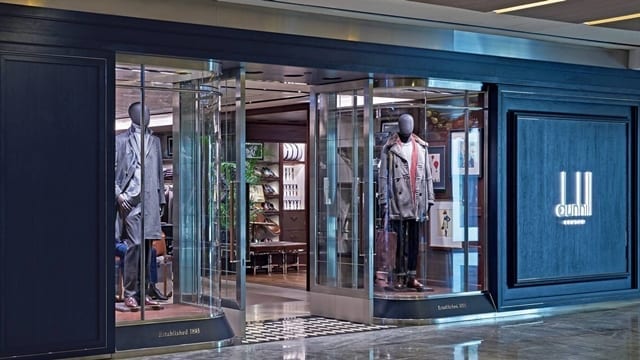
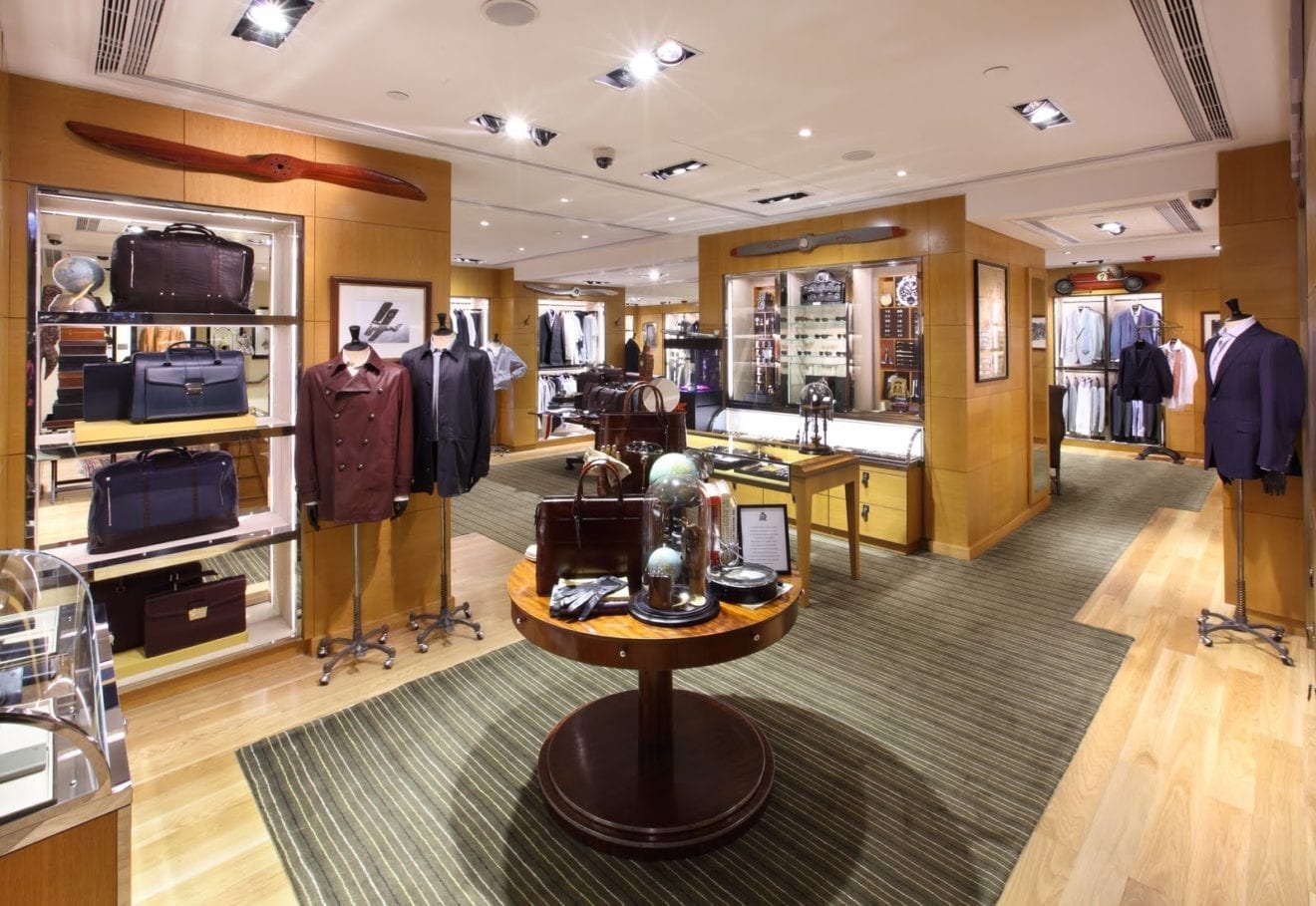
    One year after a “garage” pop-up store in Paragon Singapore, British men’s luxury brand Alfred Dunhill has opened its first-ever concept store.

    Its fourth outlet in Singapore brings to life the brand’s heritage of motoring, saddlery and gentlemanly inventions and adventures, says president Francois Carrere.

    “Inspired by the Alfred Dunhill home Bourdon House, the store’s decor features rich textures, contemporary and vintage furnishings, and traditional English architectural accents,” he writes on LinkedIn.

    Dunhill’s roots in Singapore date back to its first store opening in 1971.

    Specialising in ready-to-wear, custom and bespoke menswear, leather goods, and accessories, the brand was founded by English tobacconist and inventor Alfred Dunhill in 1907.

    Dunhill was just 21 years old when he took over his father’s saddlery business in 1893. With the automobile becoming popular, he transformed the saddlery into an automobile accessories store, offering such non-standard (at the time) accoutrements as horns, lamps and dashboard clocks. Dunhill also made leather overcoats, goggles and other accessories for drivers.

    In 1907, Dunhill opened a tobacco shop, followed in 1910 by his own pipe factory. Tobacco proved so successful the company expanded with shops in Paris and New York. Dunhill was the first company to develop a lighter that could be used with one hand.

    The brand is now owned by Switzerland-based luxury goods holding company Richemont.

  • Asia weighs on Richemont

    Asia weighs on Richemont

    Luxury goods retailer Richemont has reported its first drop in Christmas retail sales in seven years, citing a downturn in Asia and fallout from the Paris terror attacks.

    And worse may be in store in the fourth quarter for the Geneva-based owner of luxury brands including Montblanc, Cartier, IWC Schaffhausen, Net-a-Porter and Alfred Dunhill – especially in the watches category.

    According to data from the Swiss watch industry, stock shipments to Hong Kong, Richemont’s single largest market, are down 28 per cent.

    The company said demand for luxury watches and fashion was significantly down in Hong Kong and Macau in the three months to December 31. Sales in the territories fell by 9 per cent, but that rate was less than the 15 per cent decline for the first nine months of the year, suggesting the decline was levelling out.

    In contrast, Richemont said sales growth in Mainland China “continued to improve”.

    In Europe, sales fell 3 per cent in the quarter after Europeans were spooked by the Paris terror attacks in November, reducing the ranks of tourists to the French capital. That followed “very strong sales growth” in the first half of the financial year, which ends next March 31.

    Richemont’s global sales rose 3 per cent to 2.93 billion euros (US$3.2 billion), but on a constant currency basis fell 4 per cent, one per cent further than analysts were forecasting.