Retail News CRM

Tag: alibaba group

  • Alibaba Group sales jumps high

    Alibaba Group sales jumps high

    Alibaba Group sales soared 41 per cent in the December quarter as its customer based neared 700 million. The Chinese company’s turnover for the three months reached US$17.057 billion and its net income attributable to shareholders $4.807 billion. “Our resilient operating and financial performance is a direct reflection of our persistent focus on better serving our growing base of nearly 700 million consumers across retail, digital entertainment and local consumer services,” said CEO Daniel Zhang. “Our growth is also driven by the power of Alibaba’s cloud and data technology that helps expedite the digital transformation of millions of enterprises.”

    Alibaba group sales from core commerce increased 40 per cent to $14.958 billion, while the cloud-computing division posted 84 per cent growth, turning over $962 million. The digital media and entertainment division achieved 20 per cent growth to reach $944 million.

    In a statement, Alibaba said its Taobao platform achieved “robust user growth and enhanced engagement”. Last December, its China retail marketplaces had 699 million mobile monthly average users, representing a quarterly net increase of 33 million. The annual active consumers on its China retail marketplaces was 636 million for the 12 months ended December 31, compared to 601 million for the 12 months ended September 30 last year, “reflecting successful user acquisition programs, such as referrals through the Alipay app”.

    More than 70 per cent of the increase in annual active consumers was from third-and-lower tier cities.

    Tmall thrives

    Alibaba said GMV on its Tmall business grew 29 per cent year on year in the December quarter, outpacing the industry.

    “This robust growth was driven by strength in the fast-moving consumer goods (FMCG), apparel and home furnishing categories,” the company said.

    During the quarter, Tmall signed up new brands to the platform including Valentino, Ermenegildo Zegna, Stuart Weitzman and Sergio Rossi which opened flagship stores and joined the Tmall Luxury Pavilion.

    Meanwhile, Alibaba’s proprietary grocery retail chain Freshippo (formerly Hema) continued to expand its footprint, “optimise its stores and introduce new initiatives that improve customer experience”. As of December 31, there were 109 self-operated Freshippo stores in China, primarily located in tier 1 and tier 2 cities, which continued to achieve “robust same-store sales growth” through the quarter.

    ‘Robust’ Lazada growth

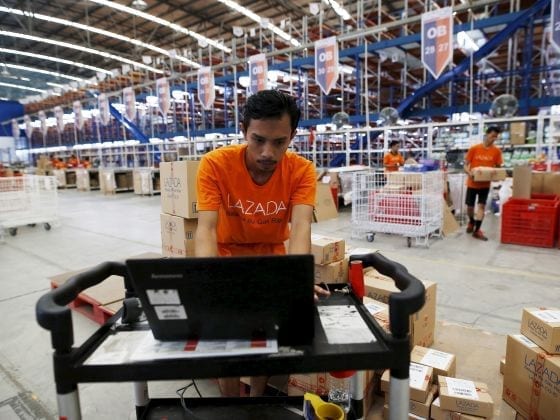
    Alibaba’s Southeast Asian e-commerce platform Lazada achieved what the company described as “robust growth” in GMV. The company upgraded Lazada’s technology, which resulted in boosting the number of active users and achieved greater user engagement on Lazada’s mobile app.

    “We continue to invest resources to integrate Lazada’s business and technology operations into Alibaba with the aim of building a strong foundation for us to extend our offerings in Southeast Asia.”

  • Alibaba plans technology boost

    Alibaba plans technology boost

    Alibaba plans to form independent research and development teams to build up core technologies that support its vision of serving 2 billion people in the future.

    The giant e-commerce and technology company unveiled its grand plan at its inaugural tech summit, “New Technology, New Future”, at its Hangzhou headquarters in China. About 5000 engineers attended, plus thousands of other staff members, technical and otherwise, watched via live stream.

    “Alibaba’s success in commerce has outshone its light of technology over the past 18 years,” Alibaba Group chief technology officer Jeff Zhang told the summit, describing it as “a tech-driven company that seamlessly combines business and technology”.

    Over the past several years, Alibaba has rolled out a wide range technologies for an array events and business areas, including Alibaba’s 11.11 Global Shopping Festival, payments, cloud computing and logistics. Zhang said Alibaba had reached “a critical point in technology innovation” and should gear up to develop more core technologies for future success.

    Executive chairman Jack Ma said he expected Alibaba to become the world’s fifth-largest economy in the next 20 years, serving 2 billion customers, creating 100 million job opportunities and enabling 10 million businesses to make profits. To hit that goal, he said the new economy he envisioned should be built on the continuing development of technological infrastructure.

    “An economy that serves 2 billion people must be backed by solid technological capacity. To shoulder the future responsibility, we will build Alibaba’s own ‘NASA”, Ma said, referring to the National Aeronautics and Space Administration, an organisation he admires for what it has contributed to mankind through technological advances.

    “We will establish new teams to develop the core technologies of machine learning, chips, the Internet of Things, operating systems and biometric identification.”

    He said Alibaba once developed figurative “hand grenades”, but the new R&D-focussed team and mechanisms would allow it to develop “missiles”.

    Ma said Alibaba needed to have a discerning, independent eye when judging technology trends. Technology developed by Alibaba should empower people in the virtual economy, making it more inclusive and creating opportunities. Technology needed to ensure the new economy would be sustainable and lead to its participants having happy and healthy lives.

    Speaking about computers and robots, and the possibility they might one day replace or displace humans, Ma said machine learning should help humans do things that otherwise could not be done. Machines should serve as assistants to humans, rather than robbing them of human pleasure or becoming rivals.

    Alibaba has more than 20,000 engineers on staff, including more than 500 with doctoral degrees. Among its 36 partners — the group’s powerful decision-making body — nine come from a technology background.

    Alibaba has been investing in new technologies for many years, and has developed many key technologies of its own. These include…

    Cloud computing

    Apsara: A super computational engine developed by Alibaba Cloud. It offers clients powerful computing capability, robust technology services and software that can affect broader society.

    Database systems

    OceanBase: The first applied large-scale financial database system in China, developed by Alibaba Group and Ant Financial.

    Artificial intelligence

    ET: Artificial intelligence services that can be broadly applied to different areas in society. Cases include the Hangzhou City Brain master plan, which has enhanced the city transportation department’s efforts to ease traffic congestion. It has also helped Guangzhou International Airport with flight management.

    Personal recommendations: Tailored shopping pages on Taobao/Tmall with a most-suitable product recommendation for each buyer. About 6.7 billion personalised shopping pages were created during Alibaba’s 11.11 Global Shopping Festival last year.

    Ali Xiaomi: A smart personal shopping assistant on Alibaba’s e-commerce sites. About 95 per cent of daily inquiries can be handled by Ali Xiaomi.

    Ant Financial’s smart customer service: This can answer about 97 per cent of daily inquiries.

    Quantum computing/communications

    The Chinese Academy of Sciences -­ Alibaba Quantum Computing Laboratory was established in 2015. Quantum cryptographic data-transfer services became available on Alibaba Cloud this year.

    Virtual reality

    Buy+: Offers the world’s first end-to-end VR shopping experience, in which the entire transaction can be completed, from browsing, to order, to payment.

    Biometric recognition

    Facial recognition payment: Alipay enables facial-recognition payment with an accuracy of more than 99 per cent. It is listed among the top 10 technology breakthroughs this year by the MIT Technology Review.

    Alibaba is also using biometrics to recognise eye patterns, irises, palm prints and handwriting.

    Geolocation technology

    QianXun location network technology: Using BeiDou satellite technology, this can achieve a positioning accuracy of 1 millimetre.

    Operating systems

    YunOS: The world’s third-largest mobile operating system works in mobile phones, cars, TVs, tablets and other Internet of Things items.

    Blockchain

    Ant Financial has started deploying this technology for charitable donations. Blockchains are a database — an open ledger that records transactions between two parties in an immediate, secure, verifiable and permanent way.

    Smart logistics

    Alibaba’s smart-logistics technology includes last-mile delivery robot and its intelligent warehousing system.

    -Susan Wang

  • China main market for Korean online industry

    China main market for Korean online industry

    Sales of South Korea’s online shopping malls rose dramatically in recent months helped by the growing number of Chinese customers.

    Data released this week shows the Korean online industry growth is happening amid China’s retaliation against South Korea over Seoul’s plans to deploy an advanced US missile defense system on its soil.

    WeMakePrice, a major online shopping mall, said its sales on Alibaba Group’s Tmall rose 100 per cent in January compared with the same period last year. The comparable figure was 50 per cent for February.

    “We don’t expect any drastic decline in the sales in Tmall, one of the biggest online shopping sites in China, unless Chinese consumers stage a boycott of South Korean products,” a WeMakePrice official said.

    GMarket, another online shopping mall, said its sales to Chinese consumers surged 18 per cent in 2016 from a year earlier, and the trend is similar for the first two months of this year.

    A possible decline in the number of Chinese tourists visiting South Korea, however, may adversely affect the South Korea online industry as many Chinese tourists place orders at South Korean duty-free shops online before picking up goods in person while touring South Korea, industry sources said.

    China has been retaliating against Seoul’s decision reached in July to have the Terminal High Altitude Area Defense (THAAD) system deployed on South Korean soil later this year. South Korea says the missile system will not target China but only counter threats from North Korea.

    In the latest retaliation, Chinese travel agencies suspended sales of tour packages to South Korea last week.

  • Closing shop on China’s e-commerce platforms

    Closing shop on China’s e-commerce platforms

    The closures of a number of retail and luxury brand giants on China’s e-commerce platforms indicate that retail competition is no less fierce online than offline.

    It is old news that the Chinese market is highly competitive and unlike any other market in the world. What may sell on the high street in London is not guaranteed to sell in China. The rainbow-lensed promises of e-commerce seem to be an easy way to access China’s 770.4 million working population, 0.2 per cent or over 1.5 million of which have an average income of US$500,000.

    Political concerns and falling sales: Lotte

    In 2015, Lotte Group Retail opened a Tmall store, hoping to widen its reach in China, where over 60 per cent of its overseas stores are located. The large South Korean multinational conglomerate has had a presence in China for over 20 years, with 115 supermarkets and five shopping malls.

    But on January 12 this year, Lotte closed its Tmall store – along with three brick-and-mortar stores in Beijing – after rising political tension between China and South Korea. In December, Lotte’s China headquarters admitted that the company was facing investigations for tax, fire control and safety issues. However, the closure of its Tmall store seems to have stemmed also from the fact that China is Lotte’s only international market where growth is stymying. Sales fell during the last three months of 2016, year-on-year.

    While Lotte remains in the market through its physical shopping malls and supermarkets, and on the JD.com website, the company has not announced whether it will be reopening its Tmall store at any future date.

    Heavy local competition: Asos

    Asos, the UK’s largest online fashion retailer, entered China in 2013 with high expectations. The company announced it was investing RMB 100 million (US$14.5 million) towards the market, importing British styles and developing a sales force. Its business model relied exclusively on e-commerce, with its own website, as well as a Tmall store.

    However, Asos failed to attract enough customers and was running a loss of GBP 4 million (US$5 million) by April of 2016, when it announced that it was shutting down its China operations.

    Asos faced a number of problems in the Chinese market, from operations to marketing. When it first started, the company encountered issues with shipping though China Post, with customers paying import taxes on clothes. Eventually, Asos obtained a local warehouse, but then it encountered complex clothing trade regulations in China, particularly in regards to correct labelling. As a result, Asos had to spend additional funds on restitching to comply with local code, contributing to higher than expected start-up costs.

    Effective marketing was also a major issue for Asos, with the company failing to distinguish itself from local, more affordable brands. While it may be a major player in the US and Europe, Asos was relatively unknown to Chinese millennials, its target consumer base.

    Tmall concerns for luxury brands: Coach

    Coach was one of the first US luxury handbag brands to launch a Tmall store, creating a pop-up store from December 2011 to January 2012, and then an official one in 2015. However, citing a shifting operational strategy, Coach announced that it was leaving the platform just one year later in September 2016.

    China is a critical market for luxury goods, as sales in the US and Europe steadily decline. Many brands see e-commerce as a way to directly access customers and receive greater exposure, which is why many have moved onto online platforms en masse. Despite this, online platforms have always been a concern for luxury brands, who fear appearing too mass market. Moreover, Alibaba has been criticised by brands for not doing enough to remove fake goods, despite a counterfeit removal program. In 2016, Gucci and Michael Kors quit the anti-counterfeit coalition as protest against the program’s inefficacy.

    Coach still remains in the Chinese market through its WeChat account, an avenue that is growing in popularity amongst luxury brands. Cartier, Longchamp, and Montblanc all have WeChat shops with WePay functions. Some companies believe that WeChat offers a more personalised shopping experience, as well as greater control over its brand.

    For many luxury brands, online platforms are more for marketing and building brand image, rather than sales. However, official Tmall flagship stores do not receive priority listing on searches. In fact, according to a 2016 study by L2, only 12 per cent of first page Tmall search results were through the official Coach shop. The only luxury brands that controlled more than 80 per cent of first page search results were Ports 1961, Burberry, Tommy Hilfiger, Calvin Klein, and Tumi.

    Key Takeaways

    E-commerce is a high-growth sector, with online retail sales totaling US$581.61 billion in 2015, and it is estimated to grow 20 per cent annually by 2020. China is now the biggest online retail market in the world, and Chinese consumers make up almost half of all online sales globally.

    Companies looking to take advantage of China’s market size and sell to Chinese consumers often mistakenly believe that e-commerce offers a shortcut to success. While a misconception, this idea is understandable. There are fewer licensing requirements to operate through e-commerce, and customs clearance is faster.

    However, as has been demonstrated through high-profile store closures in 2016, e-commerce requires extensive pre-entry knowledge of current regulations, a realistic logistics plan, and a local marketing strategy. Those who enter the market blindly do so at the risk of expensive learning curves and wasted efforts.

    • This article was first published on dezshira.com.  Since its establishment in 1992, Dezan Shira & Associates has been guiding foreign clients through Asia’s complex regulatory environment and assisting them with all aspects of legal, accounting, tax, internal control, HR, payroll, and audit matters. For inquiries, email [email protected].
  • Third Party Logistics Market in China Growth at a CAGR of 10.16% by 2021

    Third Party Logistics Market in China Growth at a CAGR of 10.16% by 2021

    The third-party logistics market in China to grow at a CAGR of 10.16% during the period 2017-2021.

    Third Party Logistics Market in China 2017-2021, has been prepared based on an in-depth market analysis with inputs from industry experts. The report covers the market landscape and its growth prospects over the coming years. The report also includes a discussion of the key vendors operating in this market.

    One trend in the market is increase in overseas shopping. The preference for overseas shopping is increasing in China owing to the increased internet penetration. Consumers have access to various communication devices and payment methods and have become familiar with the mechanics and benefits of shopping online. In addition, the Internet has raised awareness of new online shopping destinations across the globe. Online shopping user base and the total amount of online shopping are showing strong growth momentum in China.

    The cross-border e-commerce transactions are expected to have more than 20% share in the total import and export trading volume of China by the end of 2016. E-commerce companies like Alibaba Group, JD.com, and NetEase have also entered the cross-border e-commerce business. To adapt to the changing demands, the logistics service providers need to be efficient in the supply chain process.

    According to the report, one driver in the market is growing demand from e-commerce sector. China is a leader in the global online retail market. In 2015, the share of online sales in the total retail sales in China was 11% while the online sales constituted only 8% of the total retail sales in the US. Online retail sales are growing at a YoY rate of 53%. Thus, in order to stay competitive in the e-commerce industry, the vendors need to find an effective approach to delivering their goods on time and meet the customer expectation of on-time delivery of goods. Thus, many e-commerce industries are demanding highly efficient logistics services like 3PL. 3PL also allows vendors to focus on other activities to promote their business while the logistics are handled by 3PL service providers.

  • Musgrave wins contract to export Supervalu products to China

    Musgrave wins contract to export Supervalu products to China

    Irish retailer Musgrave is to begin exporting SuperValu own brand products to China.

    It will initially supply up to 40 own brand products – including SuperValu breakfast cereals, coffee, jam, biscuits and healthy snacks amongst a range of other goods.

    Musgrave has agreed a partnership with Alibaba Group, and will use its Tmall Global ecommerce platform to sell directly to Chinese consumers.

    Tmall Global is an overseas platform and an extension of Alibaba Group’s B2C Tmall business – which enables overseas merchants to enter China’s online retail market.

    Musgrave will also open a flagship SuperValu e-commerce storefront on Tmall Global, making it the first Irish retailer with a presence there.

    Musgrave say the storefront will be offered over time “as a potential route to market” for Irish food producers seeking to access China.

    Alibaba’s logistics affiliate, Cainiao Network, will manage the distribution of products.

    Musgrave CEO Chris Martin said: “Our core business in Ireland is performing well and our grocery retail and wholesale brands occupy leadership positions in their respective markets.

    “We are exploring new opportunities to grow our business including export and we are excited by the opportunity to partner with Alibaba Group.

    “In the past five years Chinese consumers are increasingly purchasing overseas through online shopping.

    “We expect that the heritage of SuperValu and the provenance of our products will be attractive to Chinese consumers.”

    David Lloyd, director of UK and Ireland for the Alibaba Group, added: “Chinese consumers have a desire to discover high quality brands from around the world that they can trust and enjoy.

    “Because of Musgrave’s long history of providing quality food produce, we are delighted to be working with them to bring their high quality SuperValu range to Chinese consumers via our Tmall Global platform”

  • Thailand signs up for eCommerce initiatives

    High-level witnesses attended the signing of a letter of intent in China that will see Thailand co-operate with Alibaba on eCommerce initiatives.

    Thailand’s deputy prime minister Somkid Jatusripitak was invited by the eCommerce giant to its headquarters in Hangzhou to witness the signing alongside Alibaba Group executive chairman Jack Ma.

    Initiatives covered by the agreement include training for SMEs and individuals, and exploring ways to enhance logistics capabilities to support digital economy strategies as well as the government’s new Thailand 4.0 economic model, aimed at steering the country toward a value-based economy.

    Other senior Thai government officials also attended the signing along with private-sector representatives. Thailand’s permanent secretary Wiboonlasana Ruamraksathe and Alibaba Group president Michael Evans signed the documents.

    “This visit to Alibaba represents a continuation of the bilateral talks between the prime minister and Jack Ma,” says Somkid Jatusripitak. “To strengthen the competitiveness of Thailand’s SMEs and help them succeed in an increasingly digital era, the prime minister earlier assigned responsibilities to a task force made up of government agencies and private enterprises to work with Alibaba in a joint effort to lift the export capabilities of Thai businesses, starting from the grassroots and community level and extending to mid-tier businesses.”

    “We are very honoured to have this opportunity to work with the Thai government,” Ma said at the signing ceremony, “and I would like to thank the Thai people for their trust, because trust is the basis of any successful partnership.”

    Long-term vision

    He said that since Alibaba was founded 17 years ago, its vision had always been about empowering small businesses and young people, particularly those in developing nations.

    “We want to partner with governments and organisations that share this vision and commitment. By working together and applying technology and innovative ideas, I believe we can make that vision a reality, and magic will happen.”

    Four key areas are covered by the Thailand agreement, the first involving eCommerce training for 30,000 Thai SMEs to help them access both domestic and international platforms. Alibaba and its majority-owned eCommerce platform in Southeast Asia, Lazada Group, will help provide the training.

    The group will also share its experience and expertise with the Thai government to help build the nation’s own national eCommerce platform.

    Secondly, Thailand and Alibaba will collaborate on creating a nationwide program to train around 10,000 individuals so they can be proficient in digital technology. The two sides will also work on nurturing software developers, who will be given access to the China market via Alibaba Cloud’s marketplace for the software apps they create.

    Training for officials

    Furthermore, senior government officials will receive training at the Thailand Digital Government Academy, initially on big data and AI technologies. Alibaba and Lazada will jointly run a train-the-trainer program to groom eCommerce business co-ordinators who will in turn help SMEs establish their own online export capabilities.

    Thirdly, Alibaba and Lazada will contribute to the development of the Thailand’s supply-chain and logistics systems by sharing their experience and expertise with Thailand Post in a bid to expand domestic delivery services to all provinces. Thailand Post will also study Alibaba’s inventory-management systems and international eCommerce fulfillment services to gain insight into the establishment of bonded warehouses and fulfillment centres.

    Finally, Alibaba and the Thai government will explore co-operation opportunities under the Eastern Economic Corridor Development (EECD) project with the aim of helping establish Thailand as a hub of digital technology and regional data centres in Southeast Asia.

    Various Thai agencies lead the taskforce in charge of building upon the bilateral talks, including the Ministry of Commerce, Ministry of Digital Economy and Society, Ministry of Science and Technology, the Office of Small and Medium Enterprises Promotion, the Small and Medium Enterprise Development Bank of Thailand, the Export-Import Bank of Thailand, the Electronic Government Agency (a public organisation), and Thailand Post.

  • Isetan Mitsukoshi launching online store

    Isetan Mitsukoshi launching online store

    As part of its aim to have digital strategy as the core of its business, Japanese department store company Isetan Mitsukoshi Holdings is preparing to launch an online store.

    It has started tests leading up to its launch this month of its first online store on Alibaba Group Holding’s Tmall Global.

    In the first half of this year, Isetan Mitsukoshi saw sales of duty-free items rise about 3.7 times compared with the same period in 2013. It says Chinese customers account for about 70 per cent of duty-free sales, and are interested in Japanese products that are popular in Japan. This has led to it seeking to develop a following in China through its strategic partnership with Tmall Global.

    It will offer safe, high-quality products, mainly Japanese, on Tmall Global; form an alliance between its Chinese and Japanese stores; and accumulate know-how on marketing in China.

    Isetan Mitsukoshi will initially offer hundreds of types of products on the platform ranging from fashion and cosmetics to foodstuffs and daily necessities, with plans to subsequently expand the scope of ifs offering.

    It will focus on its own brands and seasonal products, and gradually add other Japanese brands. From next year it will stage special campaigns in collaboration with designers.

    There will also be after-sale services, including repairs, as well as pop-up stores through its network in China.

    Alibaba Group, which runs Tmall – China’s largest B2C online shopping mall – and other eCommerce portals, had 434 million active users on China’s retail market as of June.

    Isetan Mitsukoshi was formed in 2008 by merging Mitsukoshi and Isetan, originally inaugurated in 1673 and 1886 respectively as kimono shops. It runs Japan’s largest department store network with 27 outlets in Japan and 31 overseas.

  • Alibaba investing in Sanjiang Shopping Club

    Alibaba investing in Sanjiang Shopping Club

    Chinese eCommerce giant Alibaba Group Holding plans to invest 2.1 billion yuan (US$305 million) in supermarket chain Sanjiang Shopping Club.

    Sanjiang’s share were suspended by the Shanghai stock exchange on November 8, with trading resuming today.

    Under the terms of the deal, according to stock-exchange filings, Alibaba will subscribe to a private placement in Sanjiang, giving it about a 25 per cent stake.

    Sanjiang also plans to issue up to 188 million yuan worth of exchangeable bonds to Alibaba, which will also acquire another 9.3 per cent stake for 438.6 million yuan via a share transfer, says Sanjiang. This will take Alibaba’s stake to 32 per cent, above the 30 per cent threshold where Chinese law says a company must make a full takeover bid in China. Alibaba will need approval from Sanjiang’s shareholders to waive this requirement.

    Sanjiang said it aims to use Alibaba’s eCommerce platform as China’s economic growth slows.

  • Boom quarter for Alibaba Group

    Boom quarter for Alibaba Group

    While China’s economy goes through a sluggish patch, internet shopping mall giant Alibaba Group has announced a sparkling quarter in which profit beat expectations, its fledgling cloud computing business more than doubled sales, and its entertainment income quadrupled.

    “Our results reflect our increasing ability to monetise our 450 million mobile users through new and innovative social commerce experiences,” says CEO Daniel Zhang.

    “Beyond the strong performance of our core commerce business, we are pleased with the continued rapid growth of our cloud computing business. We also see huge potential in our newly integrated digital media and entertainment unit. By combining engaging online experiences with highly relevant content, we delivered impressive financial and operational results for the quarter. ”

    CFO Maggie Wu says the group had robust revenue growth of 55 per for the quarter ended September 30.

    “Our highly profitable and cashflow-generative core commerce business enables us to invest in our future growth areas of cloud computing, digital media, and entertainment and innovation initiatives. We expect each of these businesses to drive long-term value for both our customers and shareholders.”

    At RMB34.292 billion (US$5.142 billion), revenue increased 55 per cent year-over-year, the star sector being digital media and entertainment, which ballooned 302 per cent to RMB3.608 billion. There was also an impressive 130 per cent growth in revenue from cloud computing to RMB1.493 billion, while revenue from innovation and other sources grew 78 per cent to  RMB698 million, and revenue from core commerce rose 41 per cent to RMB28.493 billion.

    Up 23 million

    Mobile monthly active users (MAUs) on its China retail marketplaces reached 450 million in September, an increase of 23 million over June, while annual active buyers reached 439 million, an increase of 5 million from the 12-month period ended in June.

    Customers for its cloud computing business grew to 651,000 from 577,000 in the previous quarter. The operating loss from cloud computing was RMB398 million for the quarter, and adjusted EBITA loss narrowed from RMB158 million in the previous quarter to RMB57 million.

    Alibaba says its Taobao app continues to be the leading social-commerce platform, serving creative content, social-engagement opportunities and personalised shopping recommendations. Livestreamed demonstrations for fashion apparel, cosmetics, maternity/baby products, sports and activewear generated millions of daily views.

    The company says it also achieved high social engagement on the mobile Taobao platform, citing more than 6 million app users sharing their shopping experience with friends each day.

    “We continue to see strength in the consumer electronics category, with robust growth in smartphones and large appliances,” says Alibaba. “In September, Apple recognised our branding reach and distribution capability by appointing Tmall the third-party online platform for the simultaneous launch of the iPhone 7 with Apple in China.”

    In the large appliance category, Alibaba is continuing to work with Haier’s logistics subsidiary RRS, with orders from its marketplaces handled by RRS growing by more than 82 per cent for the quarter.

    Triple digits

    Alibaba has also continued to make strong progress in the FMCG category, with personal care, food, and mother and baby being among the top growth categories. Its Tmall Supermarket has seen its volumes grow by triple digits year-on-year.

    “Multinational FMCG brands are working with us as the partner of choice, not only to drive their transaction volume, but also in the areas of brand building, channel expansion and product launches to grow their presence in China.”

    During the year Alibaba launched innovations around livestreaming, AR and VR to drive consumer engagement. Examples include a livestreamed “See now, buy now” fashion show watched by 7 million viewers on Taobao, Tmall and the Tudou and Youku apps. Alibaba also integrated the omni-channel shopping experience at more than 60,000 offline storefronts, including Gap, Uniqlo and Intime department store.

    A pilot program has been introduced to help global merchants sell beyond China. Hong Kong and Taiwan are the first markets outside the mainland.

    Alibaba Cloud hosts and provides security products and services for more than 35 per cent of China’s websites, says the company.

  • Alibaba tipped to record solid quarterly revenue growth

    Alibaba tipped to record solid quarterly revenue growth

    Alibaba Group Holding, the world’s largest e-commerce company, is expected to report another strong quarter of sales in the three months to September 30, as its preparations intensify for the Singles’ Day online shopping festival next week.

    Analysts estimated New York-listed Alibaba’s total second-quarter revenue for its fiscal year that ends March would increase about 50 per cent year on year.

    “We model total revenue to grow 51.7 per cent to 33.64 billion yuan (HK$38.55 billion) versus [market analysts’] consensus estimate of 33.94 billion yuan,” Alicia Yap, the head of regional internet research at Citi Research, said in a report published ahead of Alibaba’s earnings announcement on Wednesday.

    Yap estimated Alibaba’s gross merchandise volume, the total amount of goods sold through the company’s vast online retail platforms, to have grown 22 per cent year on year to 872 billion yuan in the past quarter.

    Citi maintains a “buy” rating on Alibaba shares, and has raised its target price to US$133, up from the previous US$112.

    In an open letter to shareholders early this month, Alibaba chief executive Daniel Zhang Yong said: “During fiscal year 2016, our China retail marketplaces reached a historical milestone when annual gross merchandise volume transaction surpassed 3 trillion yuan, making Alibaba Group the largest retail ecosystem in the world.”

    In the three months to June, Alibaba reported a 59 per cent year on year jump in revenue to 32.15 billion yuan. The gross merchandise volume transacted on its China retail platforms rose 24 per cent to 837 billion yuan.

    Alibaba, which owns the South China Morning Post, runs four business segments – core commerce, cloud computing, digital media and entertainment, and innovation initiatives.

    Citi estimated Alibaba’s revenue from its core commerce business would reach 28.18 billion yuan in the quarter to September, up from 27.24 billion yuan in the quarter to June.

    That segment comprises the China and international online marketplaces operating in retail and wholesale commerce, including Taobao Marketplace, Tmall.com, Juhuasuan, 1688.com, AliExpress and Lazada.

    Citi predicted Alibaba’s cloud computing revenue would reach 1.56 billion yuan in the three months to September. Led by subsidiary Alibaba Cloud, it had revenue of 1.24 billion yuan in the quarter to June.

    Digital media and entertainment revenue was estimated by Citi to have reached 3.35 billion yuan in the past quarter. This segment, which includes UCWeb and Youku Tudou, had revenue of 3.13 billion yuan in the June quarter

    Alibaba’s innovation initiatives segment was forecast by Citi to have posted revenue of 550 million yuan in the three months to September, compared with 535 million yuan in the June quarter. This segment includes the YunOS mobile operating system and web mapping and navigation software AutoNavi.

    We want to offer a large variety of daily necessities to the city’s consumers

    Daniel Zhang Yong, Alibaba chief executive

    Last week, Alibaba said its introduction of the Singles’ Day shopping extravaganza and the Tmall.hk platform to Hong Kong would ramp up e-commerce services outside the mainland.

    “We want to offer a large variety of daily necessities to the city’s consumers,” Zhang said at the launch of Alibaba’s 11.11 Global Shopping Festival in Hong Kong.

    That kicked off a flurry of activities ahead of Singles’ Day, an annual event held on November 11 that will see billions of dollars of goods transacted on Alibaba’s online retail platforms within 24 hours, making it the world’s biggest online shopping event.

    At last year’s 11.11 festival, Alibaba posted a 60 per cent year on year increase in gross merchandise volume to 91.2 billion yuan.

    Daiwa Capital Markets analyst John Choi said in a report that sentiment on Alibaba was positive as “most investors now seem to have a better understanding of Alibaba’s ecosystem”. Daiwa has a “buy” rating on Alibaba.

  • FMCG, fashion spur Lazada Indonesia growth

    FMCG, fashion spur Lazada Indonesia growth

    eCommerce group Lazada Indonesia says its current volume growth has accelerated to more than 150 per cent than at the same time last year.

    Key contributing categories are FMCG and fashion, which are both growing more than three times as much as last year. Also, about 80 per cent of the orders are via mobile devices.

    “Our rapidly growing orders in categories such as FMCG and fashion, being shipped all across the country, further demonstrates that Lazada has truly become the one-stop shopping destination of choice,” says Lazada Indonesia co-CEO Florian Holm.

    This success is also helping SMEs, which can now sell on Lazada free of commission – an initiative that will ultimately also benefit consumers through more competitive pricing, says Lazada. The initiative has helped SMEs achieve up to 10 times growth in sales since the beginning of the year.

    Brands are also benefiting from the growth through partnerships with Lazada Indonesia to offer exclusive products.

    In a recent Lazada collaboration with L’Oreal Paris, the My Superstar Look campaign – endorsed by celebrities Maudy Ayunda and Dian Sastrowardoyo – resulted in a 10-times increase in sales as well as engaging thousands of new customers for the cosmetics giant.

    Levi’s is now working with Lazada to create an onsite experience including product story videos, and fit and size guides to help consumers find the right jeans. This season the companies will run joint marketing campaigns for the Levi’s 511 Slim Fit Jean for men and Levi’s 711 Asia Skinny Jean for women.

    Free shipping

    Meanwhile, Lazada Indonesia has launched a free shipping service, enabled by its last-mile logistics arm and network of reliable delivery partners. The company has also extended its cash-on-delivery option to more products.

    Lazada Indonesia’s strong growth comes on the back of Alibaba Group’s investment, announced in April. To reduce lead-time to the consumer, Lazada has started using Cainiao, a logistics network 47 per cent owned by Alibaba which allows parcels to be picked up from Lazada merchants in China. Lazada has also entered into a partnership with Alibaba subsidiary UCWeb to drive more traffic to the platform.

    For the fourth quarter, Lazada Indonesia is planning more initiatives and preparing for the Online Revolution, an online event involving sellers and consumers. From November 11 to December 12, Indonesian consumers will be offered flash sales, special promotions, attractive deals and engaging activities.

    “Since we created the Online Revolution in 2012 to introduce consumers to online shopping, it has sparked a shopping frenzy that breaks records year after year. No other eCommerce player in Southeast Asia can claim a similar achievement,” says Holm.

  • Alibaba Group now Asia’s richest company

    Alibaba Group now Asia’s richest company

    Alibaba Group Holding has surpassed Tencent Holdings and China Mobile in market capitalisation to become Asia’s richest company.

    Alibaba’s market value rose to US$261 billion in New York last week, overtaking Tencent’s US$255.98 billion capitalisation in Hong Kong on Thursday during a trading week shortened by a public holiday.

    China Mobile was the region’s third-largest company, valued at $249.38 billion.

    Alibaba’s shares have risen 28.8 per cent this year to $104.64, making the owner of Taobao.com and Tmall eCommerce platforms the world’s 10th-largest company by value, according to Bloomberg data. The world’s five most valuable companies now gain their revenue from technology or the internet – Apple, Alphabet, Microsoft Corp, Facebook and Amazon.com.

    In Asia, technology and internet-related businesses have displaced oil refineries, manufacturers and banks in the top three spots.

    Samsung Electronics of South Korea is the other technology company among Asia’s 10 most-valuable corporations, valued at $191.76 billion.

    As well as eCommerce, Alibaba has businesses in internet finance, cloud computing, film investment and logistics. The Hangzhou-based company’s second-quarter revenue rose 59 per cent, the strongest since its 2014 initial public offering in New York.

  • Wine Australia store launched on Alibaba

    Wine Australia store launched on Alibaba

    Australian wines are set to get a big boost in China from e-commerce giant Alibaba Group’s latest venture.

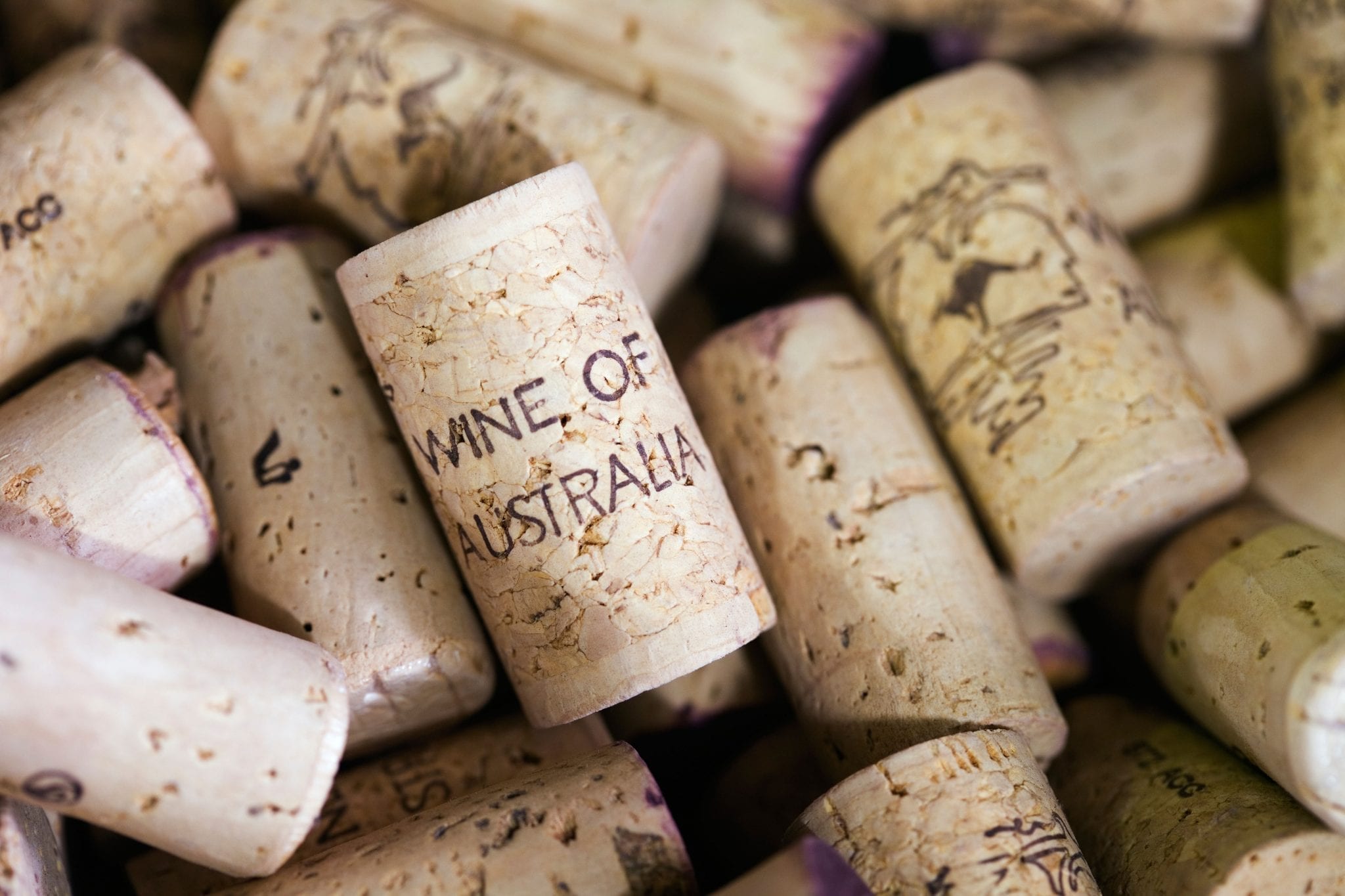
    An online “flagship store” featuring Australian wine has been launched on Alibaba’s business-to-consumer platform Tmall.com.

    Alibaba’s online retail sites cater to 434 million Chinese consumers, and the group generates half of China’s online wine sales.

    The new store on Tmall, supported by Wine Australia and operated by Chinese online retailer Vinehoo.com, will initially stock 10 brands from eight Australian wine regions, followed by another 20 brands in coming months. The first brands to be featured include Brokenwood, Coriole, John Duval, Pikes and Voyager Estate. Wine Australia does not select the brands. Wine Australia chief executive Andreas Clark said Alibaba was a significant player in Chinese e-commerce — a massive company with great reach. “The muscle they can bring, potentially, to further increasing Australian wine sales is vitally important,” Mr Clark said.

    China’s food and wine culture is still evolving, he said, and more Chinese consumers are looking online for premium products.

    “Our support of Tmall’s flagship Australian wine store helps us capitalise on this growing interest in Australian wine and gives us the opportunity to further reinforce the message with consumers that wines of Australian provenance are of the highest quality,” Mr Clark said.

    Alibaba’s managing director for Australia and New Zealand, Maggie Zhou, said Australian wines are considered world-class, and come at varied price points, so the opportunity to sell to China’s growing middle class is significant. Mainland China is now Australia’s second most valuable export market after the US.

    Total Australian wine exports to mainland China in fiscal 2016 rose 50 per cent to $419 million. Exports of wine priced at $10 or more per litre grew 71 per cent to $169m.

  • Alibaba Wine & Spirits Festival planned

    Alibaba Wine & Spirits Festival planned

    An inaugural 9.9 Alibaba Global Wine & Spirits Festival will be held next week through Tmall.com.

    Alibaba Group will bring 100,000 international wines, cognacs, whiskeys and other beverages from 50 countries to Chinese consumers through Tmall.com.

    Brands such as Gallo Family Vineyards and Robert Mondavi Winery of the US, France’s Lafite and Japan’s Suntory Yamazaki will join winemakers from Australia, Italy, New Zealand and Spain in the first of what is expected to be annual shopping event on Tmall.

    Alibaba says hundreds of brands will make their China debut during the festival.

    Once a trend among China’s wealthy elite, wine has since caught on with the country’s estimated 152 million middle-class consumers. Growth is being driven by consumers in first-tier cities such as Beijing and Shanghai, as well as Chinese in their 20s, according to market researcher Wine Intelligence. The UK firm estimates that 48 million people in China bought imported wine last year, up 26 per cent from 38 million in 2014.

    Greater choice

    Wine Intelligence says eCommerce is bringing greater choice for wine buyers in a country where wine shops and other outlets are not common. Online distribution channels, as well as tariff-reducing trade deals with countries like Australia and Chile, have helped boost imported wine sales to 43.7 million nine-litre cases last year, a jump of 37 per cent over the previous year.

    Consumers are also drinking wine more frequently, says Wine Intelligence, with 35 per cent partaking on a weekly basis last year versus 23 per cent in 2014.
    Alibaba says Tmall saw the number of active buyers in the wines and spirits category climb five times to 10 million consumers between 2013 and 2015.

    Italian winemaker Gruppo Mezzacorona launched a flagship store on Tmall in June, five years after establishing brick-and-mortar sales channels in China including restaurants, hotels and supermarkets. Its country manager Nick He says that selling online via Alibaba marketplaces allows the company to reach parts of China otherwise not possible.

    Live video

    “We believe Tmall will really help us to reach every corner of China,” he says, Also, consumers who would typically have a smaller selection of wines at physical stores have access to most of the company’s wine inventories when shopping online.

    Gruppo Mezzacorona is planning to live-stream video from its wineries in Italy in the run-up to the sale, showing Chinese consumers how grapes are picked and the wine is made. There will also be tips on wine drinking as an interactive component allowing consumers to ask questions.

    Tmall has already launched marketing campaigns to generate buzz around the festival, including live auctions of rare and limited labels and live-streamed broadcasts with experts such as Château Valandraud founder Jean-Luc Thunevin and American wine critic James Suckling.

    Offline, about 5000 bars and pubs in China will support the festival with free tastings and distribution services.