Tag: alibabba

  • Alibaba’s Freshippo launches into Australia with local partner

    Alibaba’s Freshippo launches into Australia with local partner

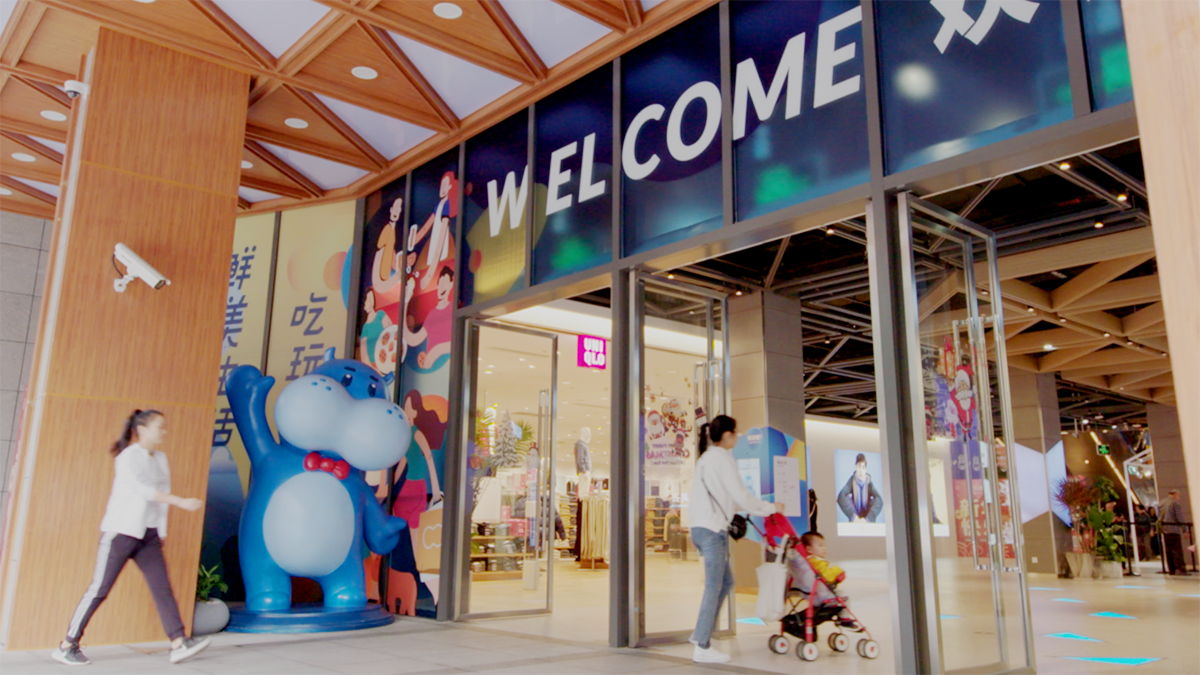
    Alibaba-owned grocery chain Freshippo will launch its first presence in Australia, in partnership with Ebest, the local online Asian supermarket.

    Freshippo’s items will be available through Ebest’s shopping app and website, with a product selection tailored to the Australian market, including Chinese delicacies such as snacks, juices, tea drinks, and culinary sauces.

    Ebest’s spokesperson says that this agreement will greatly expand their product line, providing Australians with better access to authentic and modern Chinese groceries.

    “The pandemic has driven more consumers to explore ethnic products, diversifying their home cooking either as a lifestyle choice or as a cost-saving alternative to dining out,” the spokesperson said.

    “This trend has encouraged a wider demographic to discover different cultural ingredients and find better deals at grocers that initially served migrants.”

    Australia is Freshippo’s third offshore market after the US and Singapore. Freshippo, founded in 2015 as Alibaba Group’s grocery retail business, now has 400 locations in 30 Chinese cities.

    Ebest, launched in 2020, has become one of Australia’s highest-profile online Asian supermarkets, with more than 50,000 items across 18 categories.

    In June, Ebest launched on Albaba’s e-commerce platform AliExpress, with the goal of “revolutionising the online grocery shopping landscape by bringing in a new era of convenience and accessibility for consumers.”
  • Alibaba quarterly revenue misses expectations as spending slows

    Alibaba quarterly revenue misses expectations as spending slows

    Chinese e-commerce giant Alibaba Group Holding Ltd 9988.HK posted a smaller-than-expected rise in quarterly revenue on Thursday as COVID-19 curbs and a worsening economic outlook stifled consumer spending.

    Retail spending in China has sagged this year with consumers frustrated by the government’s strict zero-COVID policies that have led to frequent snap lockdowns and hurt economic activity.

    Alibaba has also had to contend with stiff competition from the likes of Pinduoduo PDD.O and ByteDance’s Douyin – the Chinese version of Tiktok – which have expanded their e-commerce offerings and taken more market share.

    The company has also yet to fully recover from a regulatory crackdown on the tech sector that has curtailed growth opportunities.

    Revenue grew 3% to 207.18 billion yuan ($28.96 billion) in the three months ended Sept. 30, compared with a Refinitiv consensus estimate of 208.62 billion yuan drawn from 25 analysts.

    Alibaba, which runs China’s largest online marketplaces Tmall and Taobao and owns a wide range of businesses from logistics to cloud services, reported net loss attributable to shareholders of 20.56 billion yuan in the quarter.

    Excluding one-off items, Alibaba earned 12.92 yuan per American Depository Share.

  • Alibaba’s Freshippo struggles to meet demand during Shanghai lockdown

    Alibaba’s Freshippo struggles to meet demand during Shanghai lockdown

    Alibaba’s supermarket chain Freshippo says it is adding more couriers to meet high demand in Shanghai but this was not yet catching up with the rising needs of locked-down residents as the city battles a surge in Covid-19 cases.

    Shen Li, a vice president at Alibaba Group’s Freshippo, told reporters on Sunday that while the company’s delivery capacity had recovered to about 60-70 per cent of pre-outbreak levels as more couriers were allowed back on the roads, many difficulties remained.

    “The biggest challenge we are facing now is that the demand and numbers of orders from consumers has increased by about two to three times compared with pre-outbreak levels,” she said.

    China’s most important economic hub has locked down most of its 25 million residents for more than three weeks in an effort to stamp out the country’s largest outbreak since the virus first emerged in Wuhan in late 2019.

    After most supermarkets and stores were shut across the city, residents resorted to online buying to procure food and other essentials but have faced difficulties. Shanghai authorities have said they are trying to ease these bottlenecks but it remains a key public frustration.

    Many residents have described waking up as early as 5am to try and grab delivery slots from online grocers such as Freshippo, only to find them sold out in seconds. While Freshippo and other vendors have launched bulk-buying purchase schemes, some people have complained about the inability to reach the volumes needed to guarantee orders.

    Shen said Freshippo as of Sunday had 47 stores open for online deliveries in Shanghai and it also had set up six additional ad hoc warehouses for the city, due to issues with inter-province supply chains.

    About 5000 staff were working in these stores and its warehouses while a further 1000 were working online from home, she added.

  • Alibaba betting big on Vietnam e-commerce potential

    Alibaba betting big on Vietnam e-commerce potential

    Fast increasing online groceries demand and the high growth potential of Vietnamese e-commerce market are factors driving Chinese giant Alibaba’s investment in Vietnam.

    A consortium led by the Chinese e-commerce giant invested $400 million in The CrownX, a subsidiary of conglomerate Masan Group that operates retail chain WinMart.

    The investment was seen as a chance for Lazada, Alibaba’s e-commerce platform, to create a business relationship with WinMart for the online groceries business, Singapore-based technology media company Tech in Asia said.

    Kenny Ho, Head of Investment for Southeast Asia at Alibaba, said the combination of Alibaba’s online retail expertise, Lazada’s e-commerce platform in Vietnam and Masan’s leading offline network will be a strong catalyst for modernizing Vietnam’s retail landscape.

    WinMart will become the preferred grocery retailer on Lazada, while its outlets will be used as pick-up points for online orders, Ho said.

    The investment by Alibaba indicates that the company is tapping into a pandemic-fueled growth in the demand for online groceries, Tech in Asia reported.

    The pandemic has elevated groceries into the hottest e-commerce vertical. Vietnamese consumers who have tried online grocery shopping have doubled in 2020, according to a report from Google, Temasek, and Bain & Company, with over 75 percent indicating they would continue the practice even after the pandemic has subsided.

    Another reason for Alibaba’s investment in Vietnam is its high growth potential. The nation’s e-commerce market expanded by 18 percent last year to $11.8 billion, the only country in Southeast Asia to record double-digit growth amid the pandemic, according to the Vietnam e-Commerce and Digital Economy Agency.

    A report by market research company Global Data’s E-Commerce Analytics said Vietnam’s e-commerce is likely to see compounded annual growth of 18.8 percent between 2020 and 2024, with the value rising to $26.1 billion.

    Vietnam has a stable growth economy, which grew by 2.9 percent last year despite the Covid-19 pandemic. The number of middle-class households in the country is expected to reach 17 million by 2030.

  • Alibaba Acquires One-Third of Ant Financial

    Alibaba Acquires One-Third of Ant Financial

    Alibaba Group has bought a 33 percent equity interest in Ant Financial, pulling the financial tech giant closer to mainland China.

    Following the acquisition, Ant will no longer be required to pay 37.5 percent of its pre-tax profits to the e-commerce behemoth.

    The profit transferal agreement was brokered in 2011 following a dispute Alibaba and Yahoo which consequently led the former’s co-founder Jack Ma to shift Ant Financial – formerly known as Alipay – into a separate entity he controlled. Concerns about conducting business in China with a foreign-owned entity was the cited for the move.

    Every year we generate new stuff and we acquire new stuff. We never stop,» Alibaba chairman Daniel Zhang said at its annual investor conference in Hangzhou. «Payment and financial services are very important pillars in Alibaba’s system.

    The latest deal places the value of Alibaba’s global portfolio at $83 billion with investments into diverse high tech industries including artificial intelligence and augmented reality, according to group CFO Maggie Wu.

    Ant, valued at $150 billion, offers a full range of financial services and products including micro-lending, insurance, credit scoring and China’s largest money market fund. It is also in the midst of foreign acquisitions in India and Thailand. Its flagship digital payments platform currently boasts 900 million users.