Tag: Alizila

  • Tmall taps 10 beauty brands for omnichannel growth

    Tmall taps 10 beauty brands for omnichannel growth

    Tmall will this year work with top beauty brands such as Estee Lauder and Lancome to help them surpass RMB 1 billion (US$157.9 million) in annual sales on the platform.

    The increased focus on the beauty sector will also see Tmall deliver an updated suite of New Retail solutions so that all merchants can better serve Chinese consumers, the Alibaba Group-owned B2C shopping site says.

    Tmall plans to partner closely with about 10 beauty brands in particular, also including SK-II and Olay, to help them break that sales threshold. New Retail initiatives include a new “try-before-you-buy” feature, where users pay a 10 per cent deposit to test a product with the promise of a simpler and faster refund process.

    “Our partnership with brands will cover every corner from online to offline,” Tmall president Jet Jing said. “We will be consistently involved in daily operations ranging from product innovation, brand building, channel management, supply chain to customer operations.”

    Tmall Supermarket would also expand its one-hour delivery service to more customers, as faster service is also a part of New Retail, Jing said. However, the biggest changes won’t come until the 11.11 Global Shopping Festival, which is typically when Alibaba rolls out its New Retail initiatives.

    The initiatives were announced during the Tmall Beauty Awards in Shanghai, where more than 1000 beauty professionals, from both international and home-grown brands, gathered for the annual event. This year, Estee Lauder, SK-II, Giorgio Armani Beauty and Givenchy each took away a “Super Brands Award,” for their outstanding performance in brand influence, marketing creativity and consumer engagement. Newcomer Givenchy on March 1 broke the single-day sales record, selling more than 58,000 lipsticks and generating over RMB 16 million – all in the first 12 hours of the day.

    Since launching in 2015, the awards largely have spotlighted New Retail-driven innovations. Featured technology at this year’s awards included the “Cloud Shelf” and the latest iteration of the augmented reality-powered “Magic Mirror,” which allows users to virtually try on new hairstyles, lipstick, eyeshadow and blush. Tmall said it would partner with with French cosmetics company L’Oreal to install Magic Mirrors in 50 of the beauty giant’s physical stores in China.

    Tmall hosts more than 3000 beauty brands on its platform, according to a report released by Tmall and Chinese research firm CBNData last year. Some of the newest entrants include LVMH-owned Givenchy, L’Oreal’s Giorgio Armani Beauty and Estee Lauder’s Darphin.

    “After two years of very successful acceleration in China, we felt this is the right timing to join Tmall to push artistry and premium-ness of the brand,” said Andrea Yann, GM of the China market at Giorgio Armani Beauty. “Our plan is really to understand from [Alibaba’s] database what are the main beauty concerns of Chinese women to solve their beauty issues, be very personalised still being [seen as] very artistry and premium.”

    Andrea Yann, GM of the China market at Giorgio Armani Beauty, speaks on stage.

    Younger more focused on beauty

    According to a report released by Tmall and market research consultancy Kantar, what they want is a more elaborate skincare regimen. Thirty-five per cent of respondents said they have added more steps to their beauty routines, and therefore are spending more on skincare products and cosmetics. Tmall attributed 53 per cent of the sales of beauty products on Tmall to consumers making more purchases per person.

    Beauty consumers in China – the world’s largest and fastest-growing beauty market at $22 billion – are also becoming younger than ever, the report noted. In 2017, users born after 1990 made up over 40 per cent of shoppers on Tmall Global, the site’s cross-border e-commerce channel, overtaking those born in the 1980s as the main consumption force on Tmall Global, the site’s cross-border e-commerce channel.

    Consumers born after 1990 like to try new products from new brands and less familiar origin countries, the report said.

    Embracing the new

    “In China, there’s more willingness to try new products at a faster rate than what you would see in different markets,” said Danielle Bailey, head of Asia Pacific research at digital agency L2.

    “It’s not that [Chinese beauty consumers] are less loyal, but their desire to explore is much higher,” she said. “This makes it more challenging for brands to sell to the market, but also creates new opportunities.”

    Tmall’s latest report also showed momentum for homegrown brands, particularly for skincare, where they accounted for 56 per cent of sales last year – up from 54 per cent in 2016. However, foreign brands still dominate the cosmetics category with 56 per cent of total makeup sales.

    Chinese brands are trying to boost their profiles by launching new prestige product lines or creating new products within an existing line, said Bailey. “It will be interesting to see if local brands can successfully transition to that space. It’s still a bit unclear because Western brands tend to be associated with better quality,” she added.

    From a product development standpoint, the pace of innovation in Asia has forced brands in the West to shrink development timelines to stay relevant, said Bailey. Where Western companies may take two years to release a product,” he said, “in Korea, some brands are launching new product every three months.”

    Time-to-market is indeed very important for beauty brands, said Ye Guohui, GM of Tmall’s new retail division.

    “Conducting market research alone can be very time-consuming, taking up to over a year,” he said. “But brands in China can leverage Alibaba’s data capacities to really shorten that timeline, and accelerate product development.”
  • Alibaba’s Hema supermarket chain to open more stores

    Alibaba’s Hema supermarket chain to open more stores

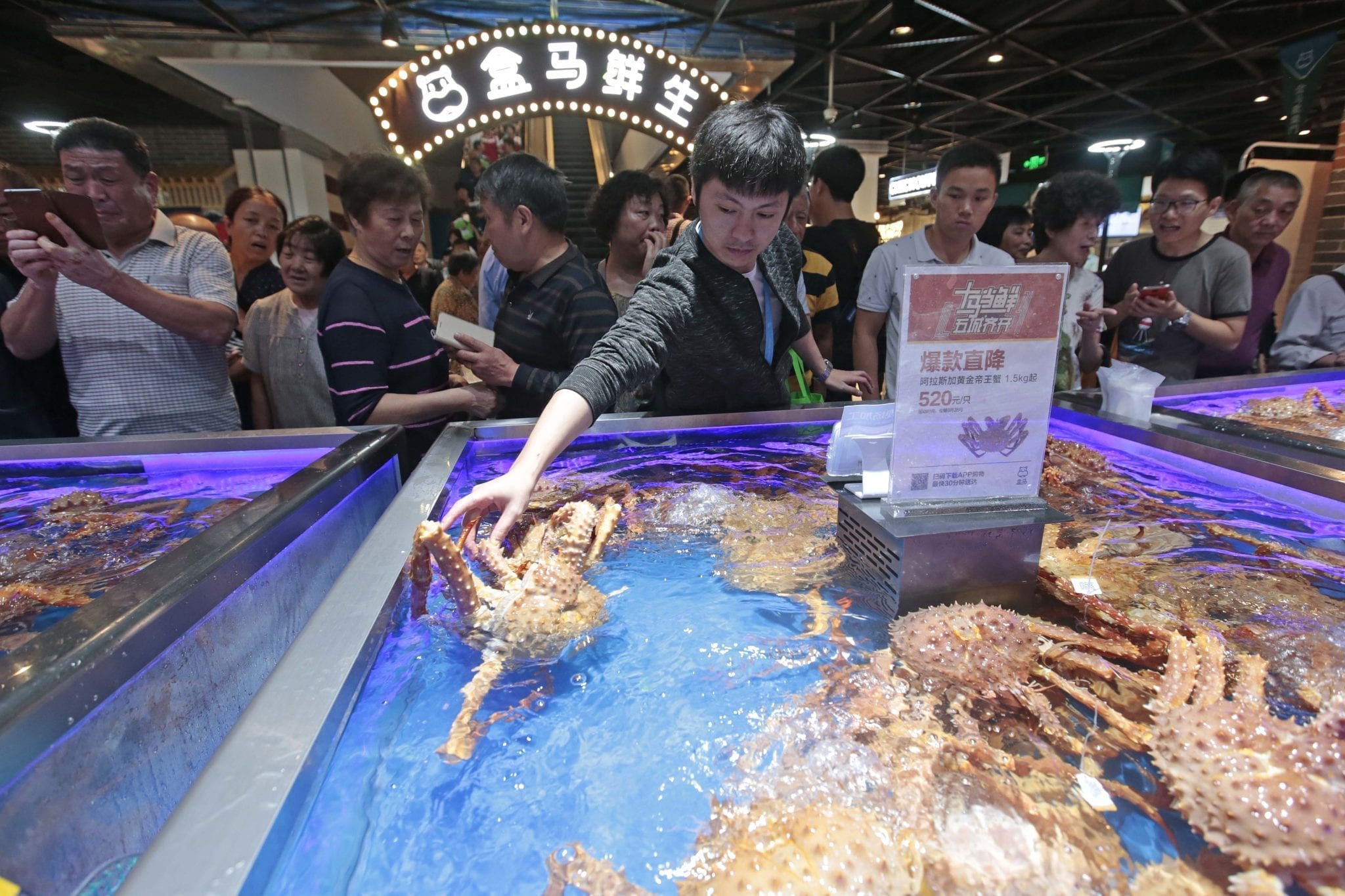
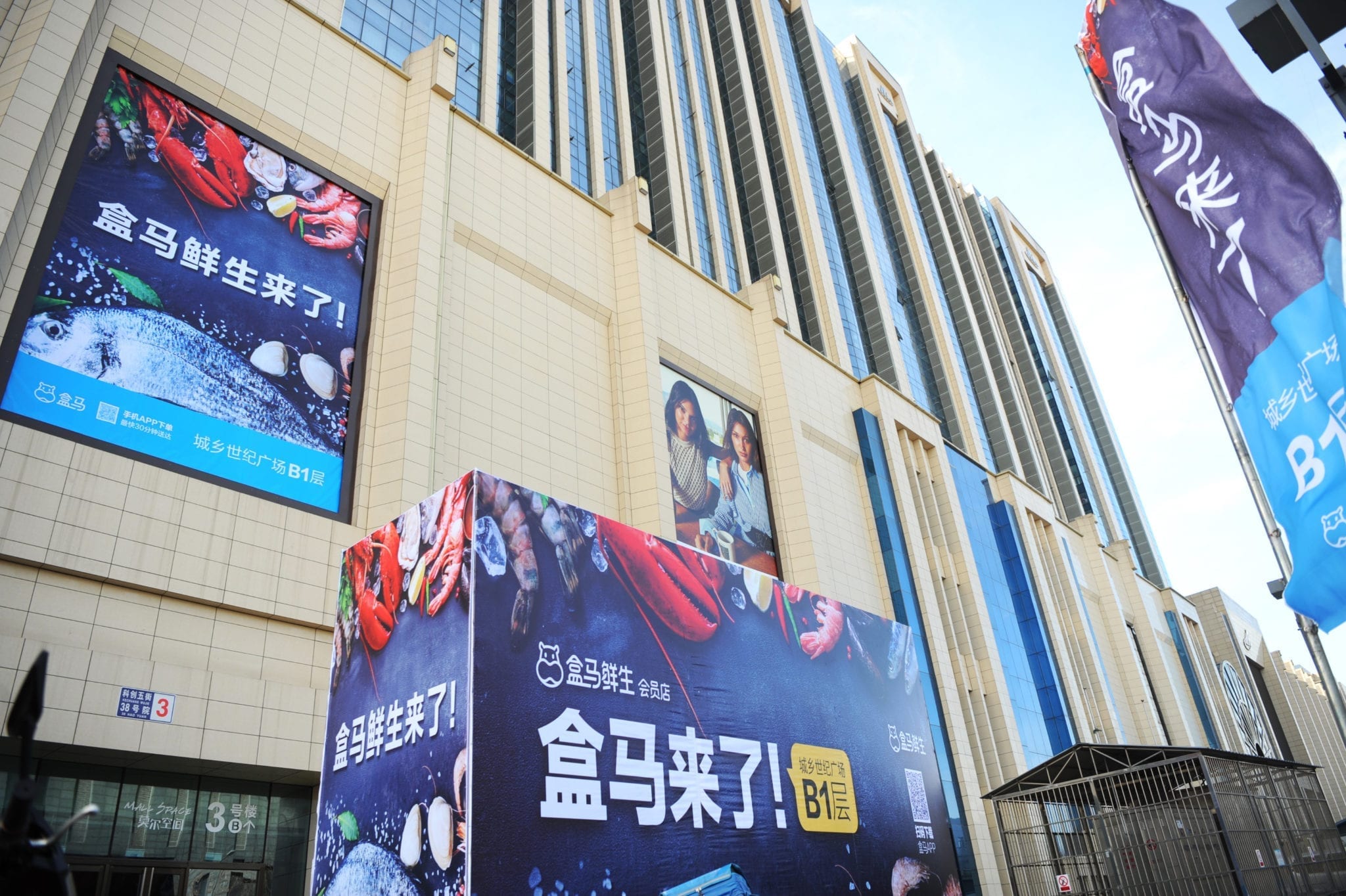
    Alibaba’s Hema supermarket says it will open three stores in the Chinese city of Xian by the end of this year.

    The offline supermarket’s expansion into the northwestern Chinese city follows an announcement that it will add 30 locations in Beijing by year-end, rapidly expanding its store count in the capital to 35 from the current five.

    The Beijing and Xian expansion, together, more than doubles Hema’s presence – currently 26 stores in seven Chinese cities, including 14 in Shanghai, five in Beijing, two in Ningpo, two in Hangzhou, and one each in Shenzhen, Suzhou and the Southwest city of Guiyang.

    Launched in March 2015, the ‘new retail’-driven supermarket is the purest manifestation of Alibaba’s ambitions to marry online with offline, offering consumers a “more-efficient and flexible” shopping experience.

    It starts with a mobile app that allows for researching of products while consumers browse the store. All payments are handled through Alipay, the mobile-payments platform owned by Alibaba’s related company Ant Financial. To improve consumers’ experience, the data collected from transactions is used to personalise recommendations, while geographic data helps to plan the most efficient delivery routes. Residents living within a 3km radius of a Hema store can have their groceries delivered to their doors as quickly as 30 minutes after ordering.

    Government partnership

    Expanding Alibaba’s Hema supermarket in Xian is part of a series of pacts Alibaba Group signed with the city government on Tuesday, including a memorandum of understanding for Alibaba’s new Silk Road headquarters, which the company will build in the city in the next few years. The two parties signed a total of 11 strategic partnership agreements spanning cloud computing, smart logistics, New Retail and financial services.

    Tianhua Zhong, vice president of Alibaba Group, said the partnership with the city government has been progressing smoothly since talks began last summer, adding that the next stage of collaboration will focus on five areas: e-commerce and new retail, City Brain projects, accessible financial services, smart logistics and culture and entertainment.al

    In addition to being the historic gateway to the Silk Road, “Xian is an important part of the ‘Belt and Road’ initiative, and building our Silk Road headquarters [in the city] will help to expand Alibaba’s reach in the midwest, in addition to economic zones along the [modern-day] Silk Road,” added Zhong.

    The Belt and Road Initiative, announced by Chinese President Xi Jinping in 2013, is an ambitious, US$90-billion infrastructure project to connect Asia, the Middle East, Europe, and Africa through global trade.

    Earlier this year, Xian became the first city in China to have its entire subway system accept mobile payments via Alipay – passengers can pass through subway gates simply by scanning a QR code. Upcoming collaboration projects with Ant Financial, Alibaba’s related company and operator of Alipay, include allowing cabs throughout the city to receive payments using the digital wallet, as well as providing accessible credit and financing options to the thousands of small and midsized businesses based in Xian.

    “With this agreement, Cainiao will work with Xian City to build a smart logistics hub for the northwestern region, which would serve the needs of the Belt and Road Initiative. Delivery speed in the midwest has a chance of becoming on par with eastern regions,” said Zhong.

    Alibaba’s logistics arm, Cainiao Network, is expected to invest RMB1 billion in the logistics hub, which would house the unit’s cutting-edge technologies such as automated production lines, AGV robots and robotic arms. Constructions are slated to begin this year and to be put into use before the 11.11 Global Shopping Festival comes around in 2019.

  • China’s new cross-border e-commerce rules explained

    China’s new cross-border e-commerce rules explained

    The Chinese government has issued updated guidance on rules for cross-border e-commerce in the world’s second-largest economy, giving stakeholders much-needed clarity on potential changes in policy that have hung over the sector for the past year.

    China’s Ministry of Commerce said in a statement on March 17 that overseas goods purchased online and distributed through bonded warehouses would continue to receive some preferential treatment, avoiding quarantine and quality checks that could have brought the import of many popular foreign products to a halt.

    “We believe this policy move injects confidence into China’s [cross-border e-commerce] industry as it demonstrates the authorities’ determination to provide regulatory clarity and spur growth for the industry,” Fung Global Retail & Technology MD Deborah Weinswig said in an email.

    Dennis Zhang, CEO of Los Angeles-based e-commerce service provider Voyage One, agreed, saying, “It gives everybody, including our clients, peace of mind to let them know that this is something the Chinese government continues to support.”

    Pilot program refined

    Last April, Beijing announced changes to a pilot program meant to bolster Chinese consumers’ ability to buy online directly from overseas merchants via cross-border e-commerce. At the centre of the program are bonded warehouses, where international brands shipped merchandise for sale to Chinese consumers without being subject to normal import duties or rules for quarantine and quality checks on goods such as food, cosmetics and health supplements. The proposed changes would have increased the tariffs paid on that merchandise and removed the preferential regulatory treatment. This caused significant upset among international brands because some of the most popular foreign goods purchased online – the food, health supplements and cosmetics – are also the most tightly regulated by Chinese authorities.

    According to reports, cross-border e-commerce orders plummeted as much as 60 per cent in major trading hubs such as Shenzhen, Zhengzhou, Ningbo and Hangzhou a week after the announcement. A month later, apparently in response to industry concerns, regulators said they would suspend the rollout of the new quarantine and quality check restrictions until the end of this year while leaving in place the higher import tax. In its March 17 announcement, regulators extended that suspension indefinitely, saying that all goods shipped through bonded warehouses would be considered “personal items” and therefore exempt from the stricter regulations.

    The government said it might issue further guidance on cross-border e-commerce before the current rules are formalised on January 1, but the announcement at least gives stakeholders a longer runway with which to prepare for any potential changes.

    “Everything is pretty much business as usual for the rest of this year,” said Ron Wardle, the Shanghai-based China CEO of Export Now, a company that helps retailers sell online in China.

    For Alibaba, by far China’s largest e-commerce player, the news means that the online purchase of overseas goods will continue unabated, with marketing research firm eMarketer predicting the sector will reach $157.7 billion by 2020 from about $86 billion last year.

    Pumping water into pools to raise fish

    Cheng Ouyang, a director at Alibaba’s Cross-Border E-Commerce Research Center, called the announcement a “positive signal” for the sector. Using a popular Chinese idiom to describe the new announcement, Ouyang said the government was “pumping water into pools to raise fish,” which means that Beijing is allowing space for cross-border e-commerce to grow. At the same time, the government will continue to fine-tune its regulations for the sector, while stakeholders are able to take advantage of a burgeoning sales channel for foreign goods.

    Part of the ministry’s announcement also included the addition of five more pilot zones, or testing areas for bonded warehouses, in Dalian, Hefei, Chengdu, Qingdao and Suzhou, bringing the total number to 15. Wardle said the additional zones would allow for faster delivery and reduced shipping costs, “which is great for consumers”.

    Alibaba’s logistics affiliate Cainiao Network said it welcomed the news. “We already have a strong network and will work closely with our partners in the newly announced pilot zones to continuously provide seamless cross-border logistics service and better serve both merchants and consumers,” said James Zhao, director of import logistics at Cainiao.

    While the government’s statement has lent stability to the sector for the moment, Fung Global’s Weinswig said there was still no guarantee about what updates to the policy may look like if they are indeed issued later this year.

    “There are still some unanswered questions,” she said. “Will there be some imports that do not fall within personal items? Is registration for imports required which would slow down [cross-border e-commerce] imports?”

    Wardle, meanwhile, expects that any updates to policy will be a hybrid of those already in place along with recommendations from major players in cross-border e-commerce, such as Alibaba’s cross-border shopping site Tmall Global. Any such model “would benefit both consumers and brands,” he said.

    Whatever the changes, Wardle said he doubts that regulators will backtrack on the progress that has been made in China’s cross-border e-commerce sector. Stakeholders have already made significant investments in infrastructure and resources, while consumers have come to expect access to foreign goods they can’t otherwise get.

    “The floodgates are already open,” he said. “That’s going to be hard to pull everything back.”

  • Social Commerce blossoms on mobile Taobao

    Social Commerce blossoms on mobile Taobao

    On the way to becoming the world’s largest e-tailing market (US$590 billion in 2015), online shopping in China has become a highly social activity.

    Wary Chinese consumers don’t swallow advertising at face value and they don’t take vendors at their word – they check the internet for product reviews, swap links to favoured products and seek out third-party opinions, especially those of people they trust. According to a recent McKinsey report, two-thirds of China’s consumers cite recommendations from families and friends as the most important factor in purchasing decisions. In the US, only one out of three people say the same.

    In other words, in China, shopping is also sharing. So pronounced is this trend that Alibaba Group, owner of China’s largest online marketplaces, insists it’s not so much in the e-commerce business these days as it is in the social commerce business. And since more sharing equals more sales, the company is doing everything it can to make it easier for users to interact with one another when shopping online – going beyond offering the standard eCommerce fare of user-generated product recommendations and ratings by establishing online communities, encouraging shoppers to share photos of their latest online purchases and even adding monetary incentives to encourage greater social participation.

    The tip of the social-commerce spear is Mobile Taobao, Alibaba’s hugely popular mobile shopping app. With 369 million monthly active users, Mobile Taobao is “not only China’s, but the world’s largest social commerce platform,” according to Jiang Fan, who leads Mobile Taobao’s business at Alibaba.

    The app, which offers access to Alibaba shopping sites Taobao Marketplace, Tmall.com and Juhuasuan, generates up to 20 million product reviews every day, and involves 5 million users sharing content with friends. Users “like to share whatever they find- fun things, fun merchandise – with their friends through social media,” Jiang said last month during an investor conference at Alibaba headquarters in Hangzhou, China. “We don’t view ourselves [merely] as a shopping app,” he said. “Our community is not only about us serving the consumers, but consumers themselves helping each other.”

    To drive greater customer engagement, Mobile Taobao has been developing new social commerce features within the app. One such addition is the hosting of special interest groups calledquanzi(circles) where hobbyists and other like-minded individuals can talk about their pastimes and favourite products. Taobao says it now hosts more than 1000 circles covering interests such as wedding planning, fishing, infant care and many others.

    “We want to get people together to allow them to discuss and generate content that can serve more people,” said Zhang Jiehan, a Taobao product manager.

    Photo sharing is also a hit with users, said Jiang. “Every day after [mobile shoppers] complete their transactions they like to share what they’ve bought,” he said, “so we have a specific app for buyers to show off their products.” This feature currently generates about 1.5 million daily reviews, he added.

    One of the most popular social functions on Mobile Taobao is a Q&A feature called Wendajia (ask others) that lets shoppers with questions about a particular product get answers from members of the Taobao community. Wendajia helps free consumers from the drudgery of combing randomly through product reviews or resorting to asking sometimes biased and unhelpful vendors for answers. “The essence here is mutual assistance,” Zhang said. “The new feature builds a direct and effective communication channel between people who have purchased and people who want to purchase.”

    Crowdsourced Q&As have been around for a while, of course. But Wendajia is innovative in the way Taobao identifies and proactively reaches out to users who can provide feedback. When a buyer submits a question, Taobao employs big data and a sophisticated algorithm to spot members of the online community who are most likely qualified to answer the question, typically those who have recently purchased the product. After zeroing in on up to 12 potential candidates, the system then sends out messages to their smartphones soliciting responses.

    Wendajia has proven to be a boon to buyers because they don’t have to wait hours or days for fellow shoppers to stumble on their questions and provide answers. One-fourth of all questions are answered within one minute and 60 per cent of questions within 10 minutes, Jiang said.

    “This greatly optimises the pre-shopping decision process,” he said. Every day, it receives as many as 1 million questions, and 2 million consumers participated in answering.

    China’s widespread adoption of smartphones and the reach of the mobile internet has undoubtedly contributed to the growth of social commerce by making participation easy, ubiquitous and dynamic. Still, Mobile Taobao isn’t relying solely on user enthusiasm and social goodwill to foster greater user involvement.

    Last year, Alibaba rolled out a program to encourage bloggers, writers and noteworthy online expertsto post content on Mobile Taobao by paying them small sales commissions for product recommendations that lead to purchases. More recently, Taobao began offering similar incentives for the general public to encourage social participation.

    Through an upgrade to Taobao’s existing membership program, which previously awarded points only for online spending, users can earn additional points by posting product reviews and links, answering consumer questions and interacting with the Taobao community in other ways. While there are no cash awards, amassing points entitles users to benefits such as coupons for car-hailing app Didi Chuxing and service upgrades such as late check-out times at participating hotels.

    In social-media-crazed China, such perks may not be necessary. Just being part of the conversation seems to be enough to keep people involved. According to media research firm ComScore, the average Mobile Taobao user spends more than 25 minutes a day on the app, compared with Amazon Mobile’s nine minutes.

    As Taobao shopper Cici Wang notes, social-commerce features like Wendajia have value “because of the volunteer work offered by ordinary users, which makes it trustworthy.” Indeed, having armies of consumers keeping each other informed and vendors honest is seen as a positive development as e-commerce morphs into social commerce, says Zhang, the Taobao product manager. Digital word-of-mouth provides merchants with continuous feedback and compels them to maintain quality products and services.

    “In the long term, it drives healthy growth of the platform,” Zhang said.

  • Why Alibaba bought the South China Morning Post

    Why Alibaba bought the South China Morning Post

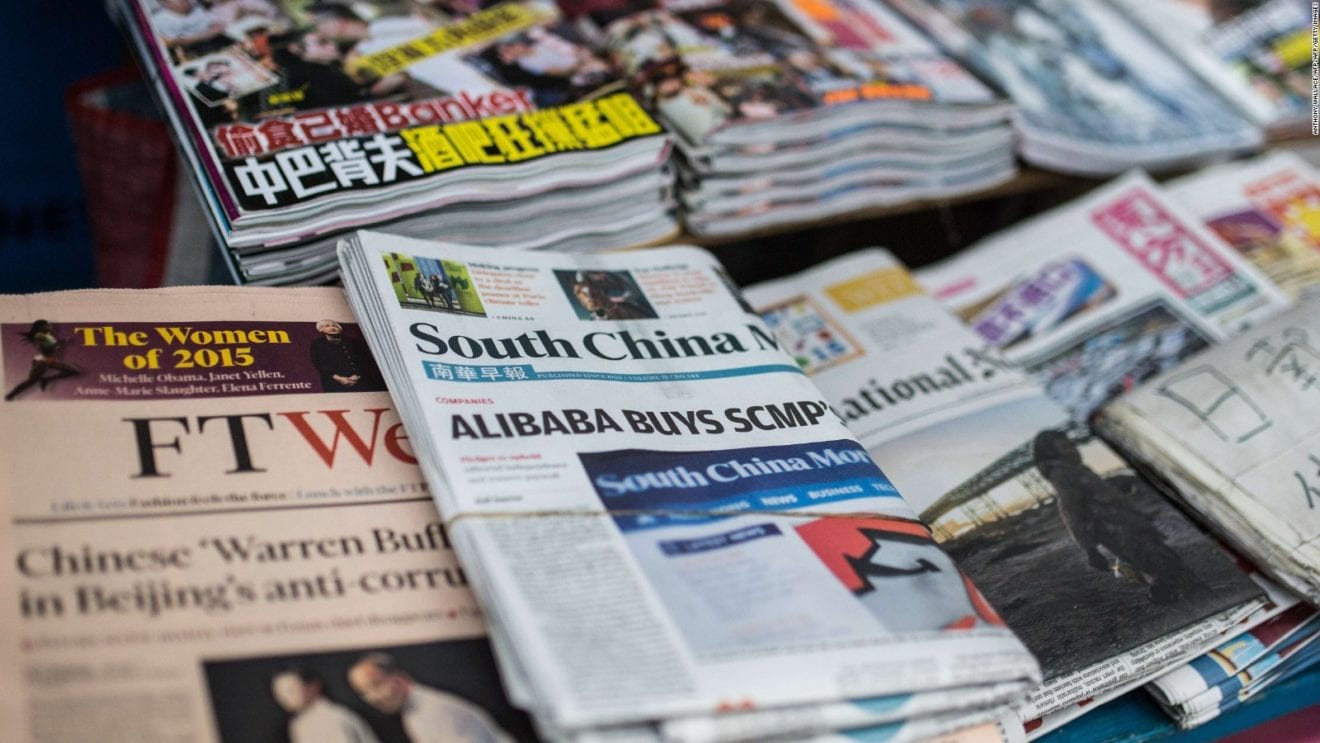
    Alibaba Group has struck a deal to buy Hong Kong’s venerable English-language newspaper, the South China Morning Post, adding a relatively small but influential content provider as the Chinese eCommerce giant expands into online entertainment and information.

    The agreement calls for Alibaba to purchase the media assets of Hong Kong-listed SCMP Group for an undisclosed amount. In addition to the daily newspaper, Alibaba is acquiring other SCMP operations including magazines, outdoor media, recruitment, events and conferences, and education and digital media businesses. Publications involved in the deal include the Sunday Morning Post; SCMP.com and related mobile apps; Chinese websites Nanzao.com and Nanzaozhinan.com; and a portfolio of magazine titles such as Esquire, Elle, Cosmopolitan, The PEAK and Harper’s Bazaar.

    Through the acquisition, Alibaba said it will “combine the heritage and editorial excellence” of the SCMP, which was founded in Hong Kong in 1903, with Alibaba’s digital capabilities “to provide comprehensive and insightful news and analysis of the big stories” in Hong Kong and China. The company plans to use technology to create content more efficiently, and provide resources to expand the SCMP’s audience beyond Hong Kong through digital distribution.

    “The South China Morning Post is unique because it focuses on coverage of China in the English language,” said Joe Tsai, executive vice chairman of Alibaba Group, in a statement. “This is a proposition that is in high demand by readers around the world who care to understand the world’s second-largest economy.”

    With the rise of the Internet, newspapers and magazines have suffered steep declines in readership and advertising revenue while struggling to make a profitable transition from print to digital distribution. In an open letter to the SCMP’s readers, Tsai said some may ask why Alibaba is buying into traditional media “considered by some (to be) a sunset industry.”

    “The simple answer is that we don’t see it that way,” Tsai wrote, calling the acquisition “the perfect opportunity to marry our technology with the deep heritage of the SCMP to create a vision of news for the digital age.”

    To enable greater access to SCMP content on computers and mobile devices anywhere in the world, Tsai said Alibaba intended to make all digital content available for free, eliminating the newspaper’s “pay wall” that requires readers to subscribe to get access to stories posted on the Internet. This change would occur “with enough preparation time after we take over operations,” Tsai wrote.

    SCMP CEO Robin Hu said Alibaba’s “proven expertise especially in mobile Internet” placed the company “in an excellent position to leverage technology to create content more efficiently and reach a global audience”.

    “We welcome Alibaba’s commitment to invest additional resources in its editorial and business operations to make the SCMP even stronger,” Hu said in a statement.

    Alibaba has been pursuing a media strategy that builds on its extensive eCommerce assets and consumer connections – the company’s China marketplaces have 386 million annual active buyers – to bring content to China’s entertainment-hungry masses. Alibaba has rapidly expanded in this area through investments in a variety of traditional and Internet businesses, including film production (Alibaba Pictures), sports (Alibaba Sports Group) and streaming video. Last month Alibaba agreed to buy Youku Tudou, A Chinese version of YouTube, in a multibillion-dollar deal.

    Tsai’s letter to SCMP readers:

    Marrying Heritage and New Technology: a Vision for the Digital Age

    Dear Readers,

    By the time you read this, you will have heard the news that Alibaba Group is acquiring the South China Morning Post.

    With an age difference between the two companies of nearly one hundred years, this is truly a mix of the old and the new. The SCMP is resonant with the history, heritage and culture of the region, just as Alibaba has its place in the new age of digital technology.

    We at Alibaba are both humbled and excited to be the new owner.

    Our Business Case

    So, you’re probably wondering why. Why is Alibaba buying into traditional media, considered by some a sunset industry? The simple answer is that we don’t see it that way.

    The SCMP has iconic status in the region, with a strong reputation internationally for the quality and credibility of its journalism over the years, thanks to its reporters and editors who have worked hard to build this heritage.  Like many print media, however, the SCMP faces challenges amid the dramatic changes in the way news is reported and distributed. But these changes play to Alibaba’s strengths, which is why we believe the two companies complement each other well.

    We see a compelling business case for the acquisition because we believe that Alibaba is best positioned to take the SCMP to the next level. The foundation for this work must be the quality of the content. And what underpins this will be editorial excellence: a clear prerequisite to maintaining readers’ trust and, ultimately, achieving commercial success. Be assured, we get that.

    Yet, the news business is in a state of flux. It has already gone digital and is now moving from online destination to other forms of distribution, in particular social media and mobile. Media now has a global audience and the challenge is to reach it in the most efficient and reader-friendly way. With proven expertise in digital distribution, especially on mobile devices, Alibaba is in an excellent position to leverage technology to create content more efficiently and expand distribution without borders.

    In other words, we see the perfect opportunity to marry our technology with the deep heritage of the SCMP to create a vision of news for the digital age.

    Our Vision

    Our vision is to grow the readership globally. We believe we can do this because the SCMP, from its base in Hong Kong, is uniquely positioned to report on China with objectivity, depth and insight, a proposition that is in high demand by readers around the English-speaking world – from New York to London to its home in Hong Kong – who care to better understand the world’s second largest economy.

    To help achieve our vision, we plan to make the SCMP more readily available. In this spirit, with enough preparation time after we take over operations, the pay wall on SCMP.com will come down, and you will be able to access its content for free on the Internet and on your mobile device.

    We will also invest to strengthen the foundation of editorial excellence. Only through additional resources will the SCMP be able to stay true to its core values of quality, integrity and trust. Further, the SCMP will stay close to its roots, with a strong China focus offering distinctive and informed analysis on trade, business, economy and society while maintaining its status as the paper of record for Hong Kong.

    Editorial Independence

    Some have suggested that ownership by Alibaba will compromise the SCMP’s editorial independence. This criticism reflects a bias of its own, as if to say newspaper owners must espouse certain views, while those that hold opposing views are “unfit.”

    In fact, that is exactly why we think the world needs a plurality of views when it comes to China coverage. China’s rise as an economic power and its importance to world stability is too important for there to be a singular thesis.

    In reporting the news, the SCMP will be objective, accurate and fair. This means having the courage to go against conventional wisdom, and taking care to verify stories, check sources and seek all viewpoints. These day-to-day editorial decisions will be driven by editors in the newsroom, not in the corporate boardroom.

    It’s humbling to assume the responsibility of ownership of such a storied newspaper. We thank the Kuok family who have been tremendous stewards of your trust; we hope Alibaba will have an opportunity to earn your trust.

    Sincerely,

    Joseph C. Tsai

    Executive Vice Chairman

    Alibaba Group Holding Limited

  • Alibaba to launch ‘nation pavilions’

    Alibaba to launch ‘nation pavilions’

    Chinese language etailing big Alibaba says it’ll launch 11 ‘nation pavilions’ on its Tmall International on-line market to spice up cross-border eCommerce commerce.

    On the similar time, Alibaba’s group-buying platform, Juhuasuan, is becoming a member of the corporate’s cross-border drive. Alibaba has entered into partnerships with the embassies of 26 nations on advertising and promotion of their nation’s merchandise by way of Juhuasuan.

    On Tmall International, 11 nations – the US, New Zealand, Australia, Switzerland, France, Britain, Spain, Singapore, Thailand, Malaysia and Turkey are working to construct out their pavilions – described as “curated, vertical buying websites designed to advertise fashionable merchandise and genuine specialties from chosen SMEs from every nation”, in addition to present journey and cultural info to China’s internet buyers.

    South Korea’s authorities turned the primary nation to launch an official pavilion on Alibaba’s Tmall.com in Might.

    “Alibaba Group has been incubating this nation pavilion undertaking for a while now,” stated Jeff Zhang, president of China retail marketplaces for Alibaba Group, calling the 11 websites launched this week because the “first fruit of this ongoing challenge to make international commerce simpler.”

    Retailers which are already promoting on Tmall.com and Tmall International marketplaces can choose to hitch their nation’s pavilion in the event that they meet sure necessities, based on Alibaba.

    Alibaba Group in current months has been aggressively selling the expansion of cross-border on-line purchasing with authorities officers and enterprise leaders all over the world. Earlier this month, Alibaba government chairman Jack Ma visited the US to speak about Alibaba’s worldwide technique and the way small companies can use the Net to promote on to Chinese language shoppers, who’re more and more in search of top quality, imported merchandise.

    Based on a current report on cross-border eCommerce by Accenture, China is predicted to grow to be the world’s largest cross-border B2C market by 2020.

    In the meantime, the businesses becoming a member of the Juhuasuan initiative are the US, Canada, Russia, New Zealand, South Korea, Japan, Italy, Australia, Thailand, Bulgaria, Ukraine, Greece, Mexico, Singapore, Finland, Indonesia, Norway, the Czech Republic, Slovakia, Costa Rica, Brazil, Chile, Nepal, Israel, South Africa, and Malaysia.