Tag: Alphabet

  • Google Defends US$15 Billion Indian AI Data Hub Against Community Scrutiny

    Google Defends US$15 Billion Indian AI Data Hub Against Community Scrutiny

    Google is pushing forward with a US$15 billion artificial intelligence data centre hub in Visakhapatnam despite community protests over power grids and water supplies in southern India.

    The gigawatt-scale development represents the search giant’s largest AI infrastructure project outside the United States and is scheduled to enter service in 2028.

    Local groups and environmental activists in Andhra Pradesh have called for a blanket moratorium on data centre construction across the state until authorities assess collective ecological impacts. The development footprint spans construction sites at Tarluvada village and Rambilli in the Anakapalli district, placing heavy computing loads in an area already experiencing water stress.

    Air Cooling Replaces Freshwater Systems

    Google altered its baseline engineering for the campus after pre-development studies identified acute pressure on the surrounding watershed. The facility will rely on advanced air cooling instead of evaporative water cooling towers to chill server racks, avoiding the millions of litres of daily freshwater extraction typical of large-scale server farms.

    Facility maintenance and non-cooling operations will still draw municipal water. The company has pledged to replenish 120 per cent of the volume consumed by non-cooling facility needs across its operational footprint by 2030.

    Grid capacity presents a parallel bottleneck. While Google declines to publish site-level electricity numbers, company executives state that the group pays for all necessary grid substation and transmission upgrades upfront while funding local renewable energy projects above statutory quotas.

    Subsea Cabling and Regional Edge Networks

    Visakhapatnam offers direct coastal access for international subsea fibre connections linking India to landing stations in Australia and South Africa. That routing establishes Andhra Pradesh as India’s third core subsea landing hub alongside Mumbai and Chennai, giving enterprise networks faster bandwidth to Southeast Asia and Indian Ocean routes.

    Hyperscale cloud operators across the Asia-Pacific region face rising friction over energy allocations. Authorities in mature data hub markets like Singapore have enforced strict sustainability caps, while Finnish regulators recently suspended construction on two Google sites pending mandatory environmental assessments. Digital platforms rolling out enterprise AI models across Asia must now compete directly with residential populations and manufacturing zones for grid access.

    For enterprise software vendors, regional retailers and cloud customers, infrastructure constraints in primary metros make secondary coastal hubs essential. Yet when global operators cluster in emerging tier-two corridors, they import the same resource disputes that delayed builds in Western Europe and Southeast Asia. The financial exposure rests with regional governments that offer tax concessions before local utilities can guarantee steady baseload power.

    Economic Payoffs and Local Employment

    Data centre developments generate large short-term construction payrolls but run with lean permanent staff once servers go live. Google estimates the Visakhapatnam hub will support approximately 4,200 construction workers annually across a three-to-five-year build cycle.

    Company projections place the recurring economic contribution at US$688 million each year through supply chain activity, facility services and maintenance contracts. Alexander Smith, Google’s head of infrastructure and energy for the Asia-Pacific region, defended the long-term community footprint during project reviews.

    “For every job inside a Google data centre we support nine additional jobs in the surrounding community,” Smith said.

    Andhra Pradesh state planning officials must now review activist petitions demanding an environmental audit before granting additional clearances for companion tech facilities scheduled for the same coastal corridor.

  • Waymo Plans Commercial Autonomous Ride-Hailing Service in Singapore by 2028

    Waymo Plans Commercial Autonomous Ride-Hailing Service in Singapore by 2028

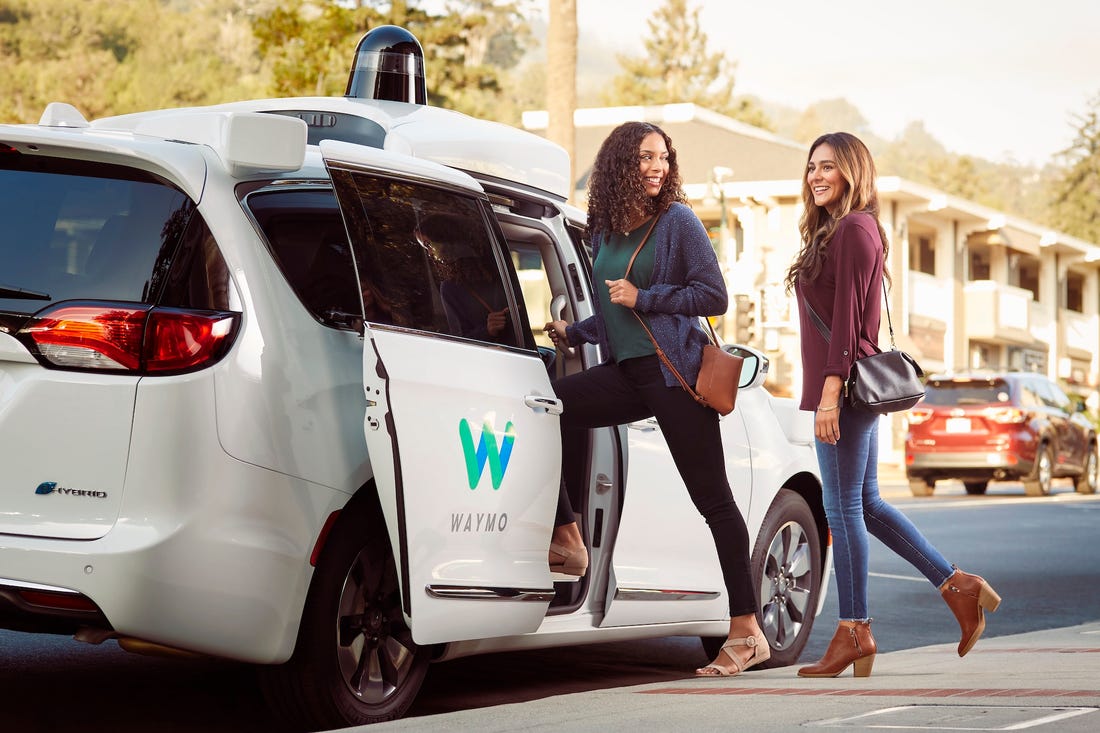
    Alphabet subsidiary Waymo will launch a fully autonomous ride-hailing service in Singapore by 2028, deploying an all-electric fleet in its first expansion into Southeast Asia.

    The commercial rollout gives the self-driving unit a regulated beachhead in Asia after building its initial commercial operations across select metropolitan markets in the United States.

    Fleet Deployment and Local Mapping

    Initial batches of all-electric Jaguar I-PACE vehicles will arrive in Singapore in the coming months. Waymo plans to run a structured readiness phase starting next year, using trained specialist drivers behind the wheel to operate the cars manually.

    Manual testing allows the Waymo Driver software stack to map Singapore’s complex road geometry, lane systems, and heavy monsoon downpours. Engineers need that baseline data before removing safety drivers from the vehicle cabin entirely.

    Regulatory Framework with Transport Authorities

    The company formed a direct partnership with Singapore’s Ministry of Transport and the Land Transport Authority to establish the operational framework. The arrangement mirrors Singapore’s broader regulatory approach to autonomous transport, which requires strict staged trials before granting commercial approvals.

    Waymo co-CEO Tekedra Mawakana met Singapore Transport Minister Jeffrey Siow in the San Francisco Bay Area earlier this year to outline the deployment roadmap. Public passengers will eventually book driverless rides directly through the standalone Waymo mobile application once full regulatory clearances clear.

    Implications for Southeast Asian Mobility

    Singapore represents the most structured proving ground for autonomous tech in the region, offering dense urban corridors, high taxi utilisation rates, and clear legal liability guidelines. The entry puts direct long-term pressure on regional ride-hailing incumbents like Grab, which operate traditional driver-dependent platforms across Southeast Asian capitals.

    Autonomous electric fleets shift operating economics from variable driver commissions to fixed capital expenditure and fleet charging overhead. For municipal transport networks, commercial self-driving cars offer supplementary capacity on fixed routes without adding labor bottlenecks.

    Testing Schedule and Next Milestones

    Singapore previously tested smaller autonomous shuttle pilots in restricted areas like Sentosa and one-north, but Waymo’s program marks the first large-scale commercial fleet deployment targeting general public streets.

    Vehicle arrivals in late 2026 will trigger the start of manual data-collection routes across designated public roads in 2027.

  • YouTube’s weaker than expected Q2 performance hurts Google parent Alphabet

    YouTube’s weaker than expected Q2 performance hurts Google parent Alphabet

    A 13% year-over-year increase in revenue from YouTube ads during the second quarter of 2024 and a 13.8% annual increase in revenue from Google Search ads helped lead Alphabet subsidiary Google to report an 11% annual gain in advertising for Q2 of 2024. Google Search ad revenue rose from $42.63 billion to $48.51 billion year-over-year and YouTube ad revenue amounted to $8.66 billion up from the $7.67 billion that was generated during the same quarter last year.
    Google said that for the three months ended in June 2024, total Google advertising revenue came to $64.62 billion compared to the $58.14 billion in advertising revenue that came into Google’s coffers during the second quarter of 2023. Traffic acquisition costs rose 6.8% to $13.39 billion which was well worth it to Google thanks to the aforementioned 11% annual hike in Q2 advertising revenue.
    The business unit which includes Pixel devices, Google subscriptions, platforms, and devices, saw top-line growth of 14.4% to $9.31 billion from $8.14 billion. That could indicate growing demand for Pixel phones, tablets, smartwatches, and earbuds. Google’s Cloud business was very strong with the top-line rising 28.8% to $10.35 billion compared to the $8.03 billion that this business generated during the same quarter last year. This was the first time that Google’s Cloud business topped $10 billion in revenue and $1 billion in operating profit during a single quarter.
    Alphabet’s total revenue of $84.74 billion during the second quarter was up from the $74.60 billion reported during the 2023 second quarter. This was a 13.6% increase and helped Alphabet report a 28.6% gain in net income to $23.62 billion for the second quarter of 2024. During the same quarter last year, Alphabet had net income of $18.37 billion. Diluted earnings per share, which assumes the conversion to equity of all convertible debt, was reported by Alphabet to be $1.89 for  Q2 of 2024, up 31.3% from the $1.44 reported for the same quarter in 2023.
    The report did not sit well with Alphabet investors; the shares rose 12 cents during the regular trading session to $181.79 but plunged $3.96 or 2.18% to $177.83 in after-hours trading after the earnings were released. While Alphabet’s earnings and revenue were higher than expected, YouTube’s performance disappointed investors, explaining the subsequent stock sell-off during the extra trading session.
  • Alphabet Owned Wing Has Over 100,000 Drone Deliveries In Two Years

    Alphabet Owned Wing Has Over 100,000 Drone Deliveries In Two Years

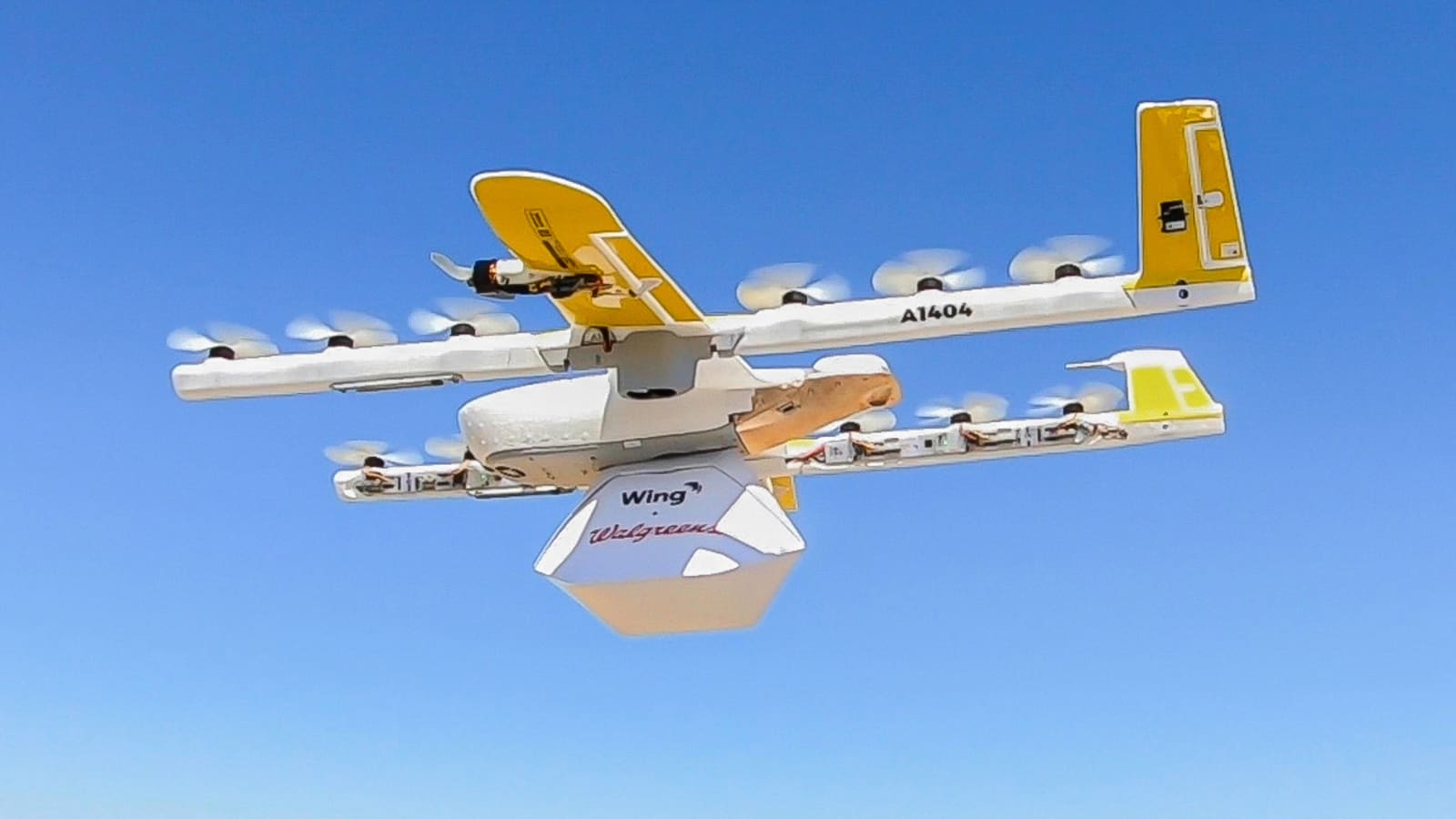
    Alphabet-owned Wing has said that it will hit a landmark of 100,000 drone deliveries over the weekend. This news comes after two years of the launch of service in the Australian city of Logan which only has 300,000 people. This is happening at a time where there are reports stating that Amazon’s plans of drone deliveries are collapsing. Wing has said that it will be entering new markets in the coming months.

    “I think we’ll expand quite a bit. I think we’ll launch new services in Australia, Finland and the United States in the next six months. The capabilities of the technology are probably ahead of the regulatory permissions right now,” said Jonathan Bass, the comms head at Wing.

    Of all the deliveries more than half were completed in Logan itself in the last eight months. In the first week of August customers have placed orders for over 4,500 deliveries that works out to be one order every 30 seconds during its delivery window. Over 10,000 cups of coffee have been ordered, alongside 1,700 children’s snack packs, 1,200 hot chooks, 2,700 sushi rolls, and 1,000 loaves of bread.

    These drones have a range of 9.6 kms as they are limited by the capacity of their batteries and larger batteries are not possible because that will inhibit their ability to fly. This means the short trips are ideal for food delivery which happens in a package that resembles a McDonalds happy meal. Batteries add weight but apart from that, even parcels add weight, so these drones cannot carry anything more than 1.36 kg. But the system works well with fragile objects like eggs which don’t break.

    The drones cruise at a height of 100 to 150 feet in the air and lower down to about 23 feet when they reach the destination. There is a tether that lowers the package to the ground which is unhooked. No person is required to receive the package, something that Amazon’s solution needed.

  • Google parent Alphabet reports record-breaking first quarter

    Google parent Alphabet reports record-breaking first quarter

    Now that we are in the midst of earnings season, Google parent Alphabet announced its results for the first quarter of 2021. Alphabet said that it garnered a record $55.3 billion in revenue from January through March which was a healthy 34% gain from the $41.2 billion that the company grossed during the same quarter last year.

    Net income soared from last year’s $6.84 billion (or $9.87 per share) to this year’s $17.93 billion (or $26.29 per share). Advertising revenue was $44.68 billion from last years’ $33.76 billion for a 32.3% increase. YouTube ad revenue for the quarter rose 48.8% to $6.01 billion from $4.04 billion.

    Google and Alphabet CEO Sundar Pichai said, “Over the last year, people have turned to Google Search and many online services to stay informed, connected and entertained. We’ve continued our focus on delivering trusted services to help people around the world. Our Cloud services are helping businesses, big and small, accelerate their digital transformations.”

    Ruth Porat, CFO of both Google and Alphabet, also weighed in on the release. Porat stated, “Total revenues of $55.3 billion in the first quarter reflect elevated consumer activity online and broad-based growth in advertiser revenue. We’re very pleased with the ongoing momentum in Google Cloud, with revenues of $4.0 billion in the quarter reflecting strength and opportunity in both GCP and Workspace.”

    Google spent a little more to obtain more business. For the quarter, its Total Acquisition Costs (TAC) were $9.71 billion compared to last year’s $7.45 billion. That works out to a 30% increase on an annual basis.

    Alphabet shares (GOOG) closed Tuesday’s regular trading session down $19.62 or .84% to $2,307.12 per share. After the earnings were released, the stock rose $106.28 or 4.61% to $2,413.40.

    Clubhouse is becoming an extremely popular social media app on iOS. If you don’t know what it is or how to get an invite, read this.

  • Google’s strong fourth quarter pushes Alphabet shares higher

    Google’s strong fourth quarter pushes Alphabet shares higher

    Google parent company Alphabet reported its fourth-quarter earnings this afternoon and during the three-month period the company recorded a record-breaking $56.9 billion in revenue. That was a gain of 31.7% from the $43.2 billion that Alphabet grossed during last year’s fourth quarter. It also topped Wall Street expectations of $52.7 billion in revenue.

    Advertising revenue was $46.2 billion during the quarter, up 22% on a year-over-year basis. Analysts were looking for Google to report $42.3 billion in advertising revenue for the fourth quarter. To generate that amount of business, Google had to spend $10.47 billion in traffic acquisition costs.

    Alphabet’s fourth-quarter profit rose from $9.3 billion last year to $15.7 billion for a 69% hike. Analysts were expecting the company to report a profit of $11.9 billion. According to Google finance chief Ruth Porat, YouTube and Search helped Google perform so well during the period. The executive said, “Consumer and business activity recovered from earlier in the year.” Revenue from YouTube ads rose in the fourth quarter to $6.89 billion from $4.72 billion during the same quarter the previous year for a strong 46% increase.

    Looking at the bottom line for the fourth quarter, Alphabet made $15.23 billion during the 2020 period compared to the $10.67 billion the company earned in 2019’s Q4. That resulted in a 42.7% gain in earnings. Earnings per Share (EPS) rose to $22.30 per share from $15.35 per share.

    Google continues to tend to its Money Tree. At the start of the fourth quarter, Alphabet had a cash position of $20.1 billion. By the end of the quarter, that figure was up to $26.5 billion. So using our fingers and toes, we can compute that Google’s parent added $6.4 billion in cash during the fourth quarter of the year. Still, it would appear that money seems to disappear in the cloud. For the first time ever, Alphabet released information related to its cloud unit; for the quarter that business took in $3.8 billion in revenue while reporting a loss of $1.2 billion.

    Wall Street was smitten with Alphabet’s report. Shares of Alphabet, which rose $26.16 or 1.38% to $1,927.51 during the regular trading session, soared 7.66% in after-hours trading after the earnings report was released. During the later trading period, Alphabet was changing.

  • Alphabet partners with Avis to manage self-driving car fleet

    Alphabet partners with Avis to manage self-driving car fleet

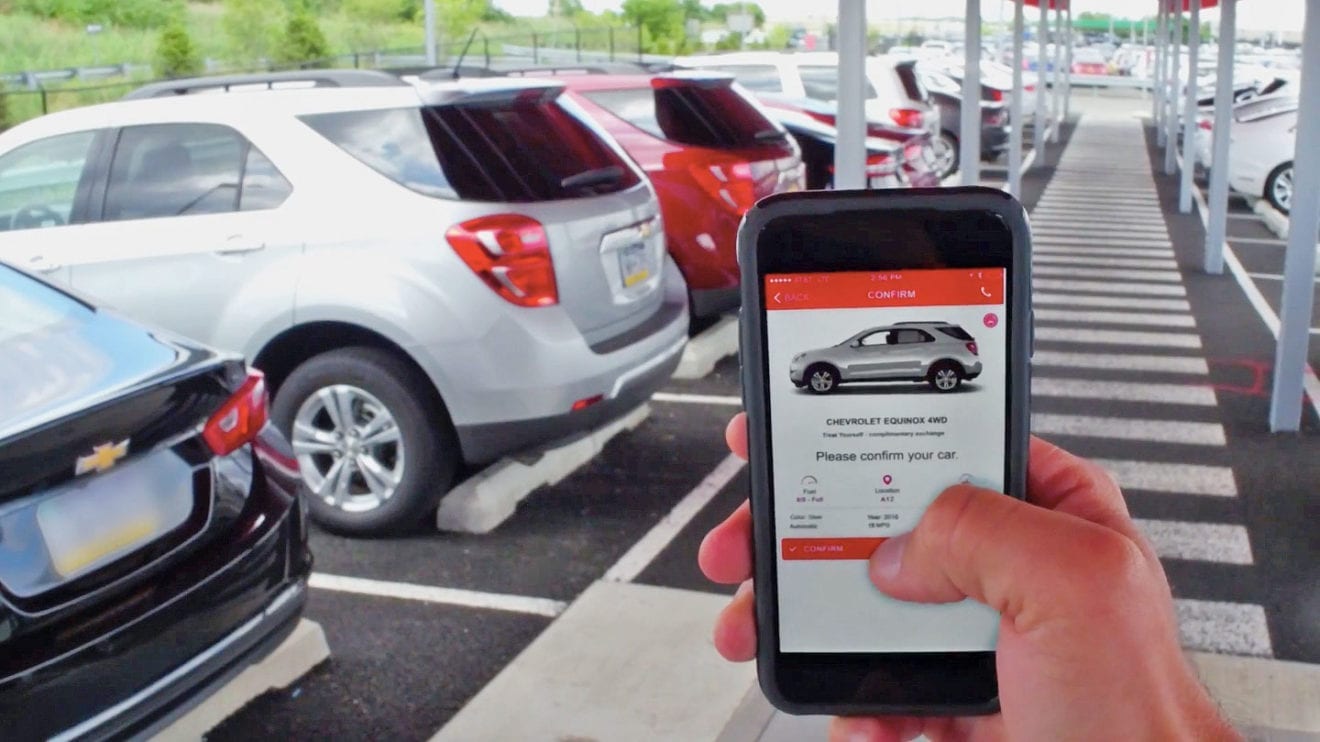
    Waymo, the self-driving car unit of Alphabet Inc, said on Monday it signed a multi-year agreement with Avis Budget Group Inc for the car rental firm to manage its growing fleet of autonomous vehicles, sparking a surge in Avis Budget’s stock.

    Investors bid Avis shares up by as much as 21 percent on Monday, the biggest intraday percentage gain for the stock in more than five years. The shares closed at $27.67, up about 14 percent.

    Shares in traditional rental car companies such as Avis and Hertz Global Holdings have taken a beating as more travelers use ride services such as Lyft and Uber Technologies The Waymo-Avis deal points to a potential future for rental car companies as managers for fleets of shared and autonomous vehicles require their services changing tires, cleaning interiors, and securing vehicles when they are not in operation.

    A Bloomberg report on Monday that Apple was using vehicles supplied by rival rental car company Hertz Global Holdings to test its self-driving car technology prompted a surge in that company’s shares.

    Also on Monday, General Motors Co Chief Financial Officer Chuck Stevens told analysts during a conference call that the automaker has “done a lot of thinking” about how to manage its growing fleet of self-driving vehicles. But he said “it’s early days on how that business model may play out.” GM has a large network of franchised dealers that could provide fleet management services, as well as an alliance with Lyft and its own Maven car-sharing unit.

    Waymo and Avis said they will launch their partnership in Phoenix, Arizona, where Waymo is allowing selected members of the public take rides in self-driving cars, including modified Chrysler Pacifica minivans built by Fiat Chrysler Automobiles NV. Waymo has said it plans to expand its fleet of Chrysler minivans to about 600 vehicles.

    Waymo and Avis did not say whether their partnership will expand to other cities, but John Krafcik, the head of Waymo, said in a statement that “with thousands of locations around the world, Avis Budget Group can help us bring our technology to more people, in more places.”

  • Alibaba Group now Asia’s richest company

    Alibaba Group now Asia’s richest company

    Alibaba Group Holding has surpassed Tencent Holdings and China Mobile in market capitalisation to become Asia’s richest company.

    Alibaba’s market value rose to US$261 billion in New York last week, overtaking Tencent’s US$255.98 billion capitalisation in Hong Kong on Thursday during a trading week shortened by a public holiday.

    China Mobile was the region’s third-largest company, valued at $249.38 billion.

    Alibaba’s shares have risen 28.8 per cent this year to $104.64, making the owner of Taobao.com and Tmall eCommerce platforms the world’s 10th-largest company by value, according to Bloomberg data. The world’s five most valuable companies now gain their revenue from technology or the internet – Apple, Alphabet, Microsoft Corp, Facebook and Amazon.com.

    In Asia, technology and internet-related businesses have displaced oil refineries, manufacturers and banks in the top three spots.

    Samsung Electronics of South Korea is the other technology company among Asia’s 10 most-valuable corporations, valued at $191.76 billion.

    As well as eCommerce, Alibaba has businesses in internet finance, cloud computing, film investment and logistics. The Hangzhou-based company’s second-quarter revenue rose 59 per cent, the strongest since its 2014 initial public offering in New York.