
Tag: American Apparel

  • Fashion etailer SuperGurl apologises for rape gaffe

    Fashion etailer SuperGurl apologises for rape gaffe

    Singapore online fashion retailer SuperGurl has apologised online and on social media for a homepage banner inviting rape, described by at least one shopper as “absolutely vile”.

    The banner featured a young woman with her arms up in submission and a button users could click on to gain discounts inviting them to “rape us now”.

    The momentously stupid and insensitive promotion – targeting Black Friday shoppers – has received media attention internationally. UK Lifestyle news blog The Debrief referred to it as evidence that Black Friday “brings out the worst in retail brands”.

    On SuperGurl’s Facebook page one follower of the brand Wei Wei Gwee eloquently summed up community anger: “Rape isn’t an advertising angle that one can exploit when thousands of victims suffer the irreparable damage rape has caused to them every day. Not only do you make light of sexual assault, you used this really young girl in a suggestive pose which seems to be extremely inappropriate. I wonder how the model will feel if she knew her photo was being used this way.”

    SuperGurl creative director Jordus Lim posted an unqualified apology on the SuperGurl website and Facebook page claiming the brand never meant to offend anyone. He says a junior graphic designer created the promotion and uploaded it online before the image was approved.

    “I am writing this to express our sincerest apologies pertaining to our insensitive action and the choice of [the] word ‘rape’ during our ‘Black Friday’ sale. We do not mean for it to be offensive to anyone, and I extend my sincerest apology for the lack of a better word.

    “I hereby acknowledge that we have made a mistake, and that our caption does not advocate the right values to the young women community today.

    “Having regretted [sic] for what we have done, the team at Supergurl will definitely be more careful with what we will put up in future as this is also a lesson learnt for us.

    “This is an honest mistake that we have made on our side, and we do know that it is indefensible. We hope that the public will accept our apology for what we have done wrong.”

    Another follower Christina Chew responded, typing Lim’s response “is uncommon valour”.

    “Perhaps the wounds would leave some lingering scars thereafter. But I pray that the scars will heal and you will grow in increasing wisdom.”

    To be fair, as The Debrief points out, SuperGurl is not alone in its poor judgement.

    Last month, American Apparel was criticised for asking employees to wear shirts that read ‘Ask Me To Take It All Off’, while Bloomingdale’s issued an apology for their Christmas ‘date rape’ advertisement, with the caption: ‘Spike your best friend’s eggnog when they’re not looking’, the site reported.

    “When will fashion brands (or any brands for that matter) get the message that rape is not an acceptable advertising tool?”

    Indeed.
  • Can American Apparel be saved?

    Can American Apparel be saved?

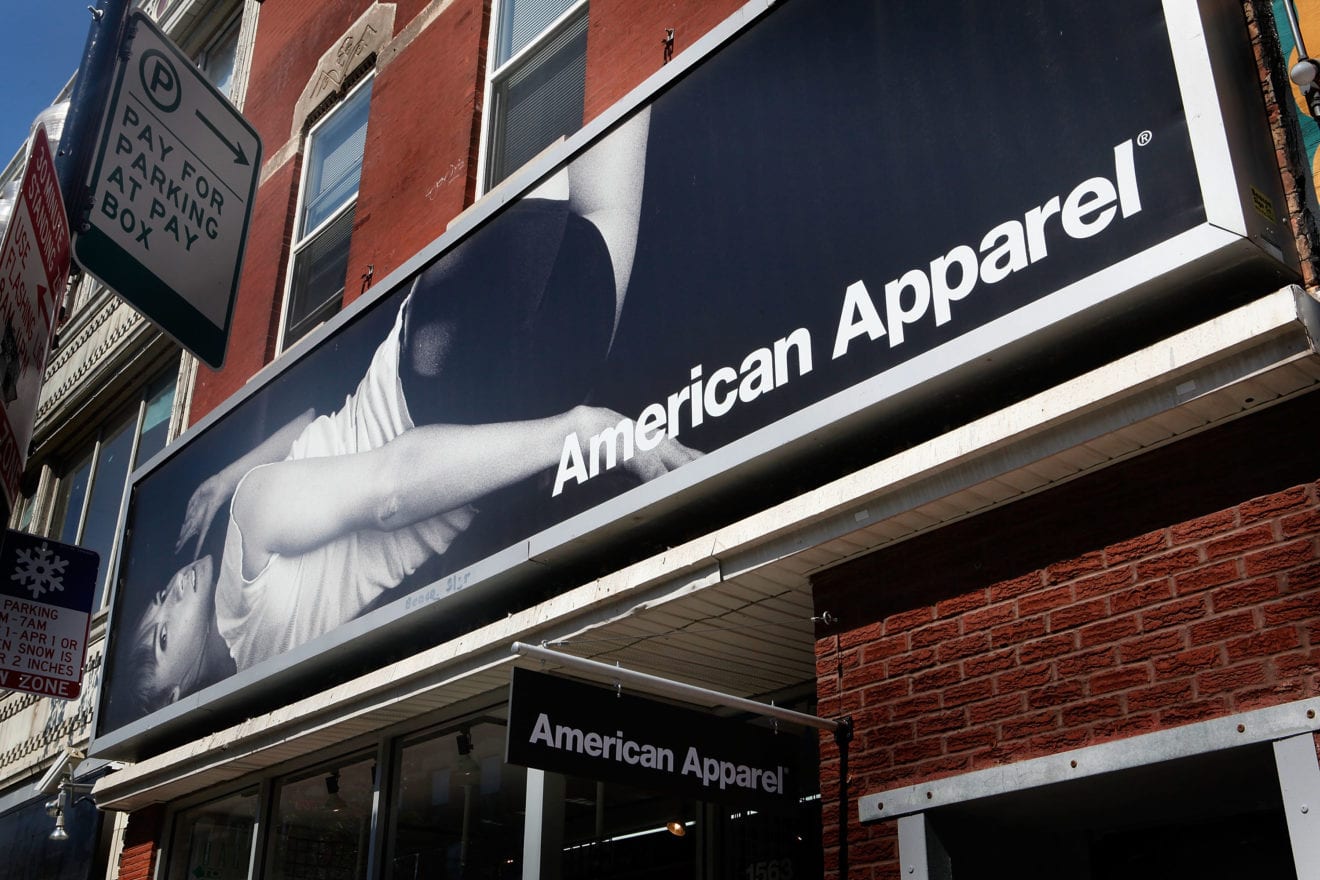
    American Apparel, the controversial teenage-oriented fashion brand founded in 1989, has been placed in Chapter 11 bankruptcy protection.

    The company says it intends to pay its suppliers in full under normal terms for goods and services provided.

    The move comes a year after the company ejected its founder Dov Chaney, currently embroiled in a legal battle with the business. Chaney has a string of sexual harassment charges and controversies surrounding his leadership of the business, which was also criticised in the past for its sexualisation of models and risque clothing.

    Neil Saunders, CEO of Conlumino, said a “triumvirate of rapidly falling sales, a balance sheet laden with debt, and several ongoing management crises has finally proven too much” for the iconic retailer.

    “Bankruptcy protection is, in our view, the only viable option for American Apparel which is crippled by $311 million of debt and subject to a number of corporate lawsuits, including those brought by Charney.”

    If granted by the federal court, Chapter 11 will allow the company to reduce its debt to $120 million under a debt-for-equity conversion; consequent interest payments would be reduced by some $24 million a year, giving the company much needed breathing space. However, most importantly, protection would temporarily forestall any pending lawsuits, which will allow management to focus on its turnaround program rather than fighting legal battles.

    “Arguably, the big loser will be founder Dov Charney, who will not only see his legal proceedings delayed but will also find, along with other shareholders, his holding in the company (currently worth some $8.2 million) wiped out,” says Saunders.

    In our view, while Chapter 11 gives American Apparel some space to sort out its various issues it is not, in and of itself, a solution to the retailer’s woes. Paula Schneider, the current CEO, and her team – many of whom look likely to stay on through the process – must proactively use the opportunity of Chapter 11 to reinvent and reestablish the company,” he said.

    “While the turnaround will be tough, we do have confidence that Ms Schneider understands the issues and has a plan of action. Indeed, at the last set of quarterly results she clearly outlined a number of initiatives – including streamlining costs, new fall collections, and the strengthening of the leadership team – in order to help revive sales and profits. We are also encouraged by the more favorable trading numbers coming from a number of American Apparel’s teen competitors: the trading backdrop is now more favorable than it once was.”

    But Saunders cautioned that “ big questions remain” around both brand and product.

    “On the former, it is still not clear what American Apparel is trying to change to. We know that the company is looking to be more ethical in its marketing, relying far less on the sexual overtones it has used in the past. However, as welcome as this may be, it does mean that a fresh viewpoint is needed in order to give the company a clear and cohesive brand image.

    “The search for a point of view and a handwriting for its ranges is also a crucial one, and is something that American Apparel needs to sort out as quickly as possible. This is especially so with competition intensifying, with the expansion of players like Forever 21, H&M and now, albeit on a smaller scale, Primark.

    “Without a distinct identity, we fear American Apparel will simply remain lost in the murkiness of the teen apparel market,” said Saunders

    “Chapter 11 buys only time. Whether the company and its management use that time to solve the deep seated issues remain to be seen.”