Retail News CRM

Tag: american eagle

  • American Eagle and Forever 21 to make a return to Japan

    American Eagle and Forever 21 to make a return to Japan

    Forever 21 and American Eagle Outfitters Inc. are set to return to Japan after both U.S. fast-fashion brands exited the market in 2019, according to company announcements on Wednesday.

    Forever 21 will begin e-commerce sales next February and open a physical store in the spring, according to Japanese trading company Itochu Corp., which acquired domestic sales and licensing rights for the brand.

    Forever 21 was acquired in 2020 by New York-based Authentic Brands Group (ABG). Itochu said in August it was working with ABG to expand Eddie Bauer stores in Japan after that brand closed its last shop in the country in December 2021.

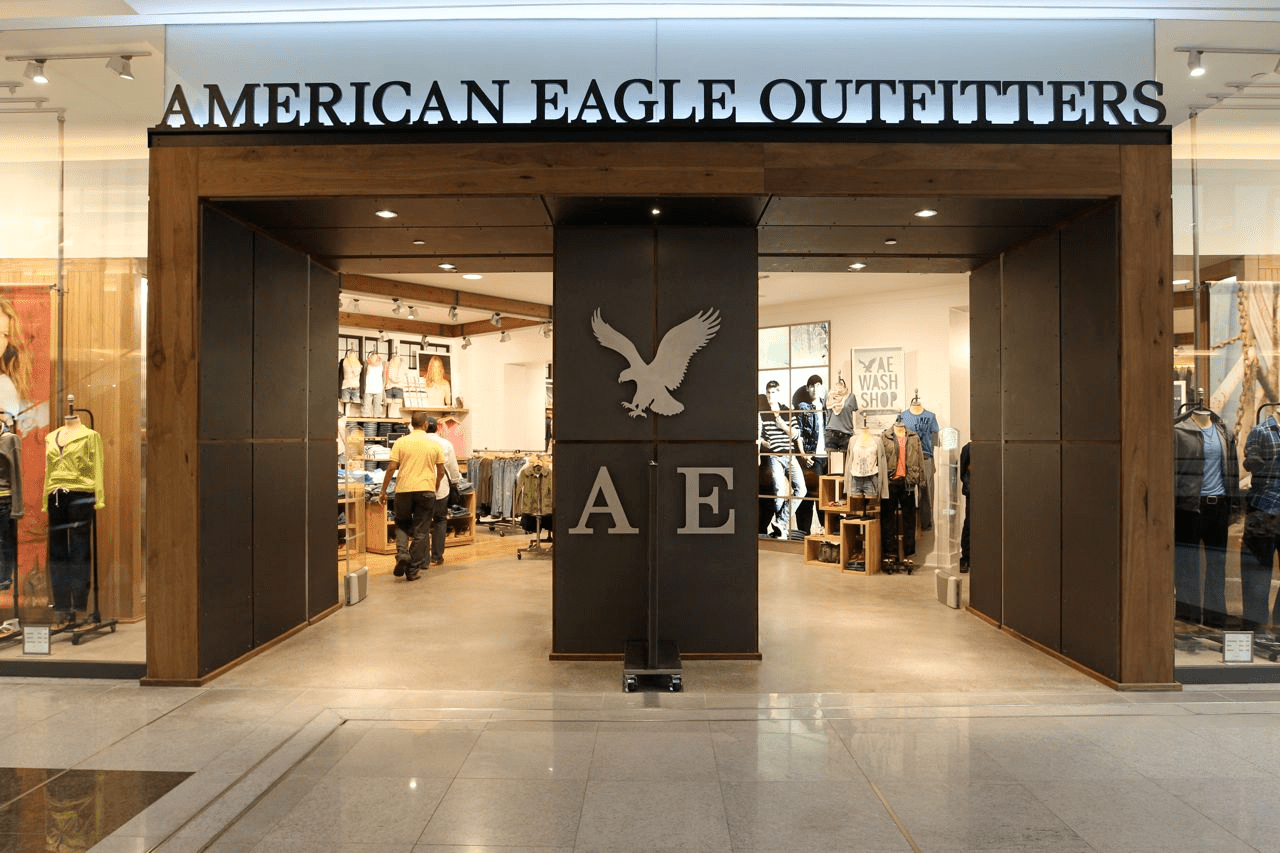
    American Eagle said separately it was returning to Japan with two flagship stores in the Tokyo neighborhoods of Shibuya and Ikebukuro in October. The brand had only been available online in Japan following the closure of its last physical stores in 2019.

  • Aerie powers American Eagle to best first-quarter sales in three years

    Aerie powers American Eagle to best first-quarter sales in three years

    American Eagle Outfitters, Inc. (AEO) reported GAAP operating income of 4 million dollars for the fourth quarter compared to 0.5 million dollars for the same quarter last year. The company’s adjusted operating income was 106 million dollars compared to 77 million dollars in last year’s fourth quarter. Fourth-quarter GAAP EPS was 2 cents compared to 3 cents last year and adjusted EPS reached 39 cents this year compared to 37 cents last year.

    Commenting on the results, Jay Schottenstein, AEO’s Executive Chairman of the board and Chief Executive Officer commented, “After an unprecedented year, we ended 2020 on a positive note, with fourth-quarter adjusted operating income up 38 percent, driven by strong margins across brands.”

    Total net revenue decreased 22 million dollars or 2 percent to 1.29 billion dollars, while comparable sales declined 1 percent. Aerie revenue increased 25 percent to 337 million dollars and comparable sales increased 29 percent, while American Eagle revenue decreased 9 percent to 943 million dollars and comparable sales declined 8 percent. AEO’s digital revenue increased 35 percent and store revenue declined 20 percent. Aerie digital revenue rose 75 percent and AE increased 20 percent.

    The company added that gross profit of 440 million rose 8 percent and gross margin of 34 percent expanded from 31 percent last year.

    AEO’s board of directors has approved reinstating its quarterly cash dividend at 0.1375 cents per share.

  • American Eagle closing all Japanese stores

    American Eagle closing all Japanese stores

    All American Eagle and Aerie stores in Japan are set for closure by year-end.

    Eagle Retailing Corporation, the Japanese partner of American Eagle Outfitters, said it is shutting down all American Eagle and Aerie stores including its digital business in Japan starting from December 18, with the exit to be completed by the end of the month.

    The closure forms part of Eagle Retailing’s decision to shift focus to business wear and the mutual termination of a license agreement with Pennsylvania-based American Eagle Outfitters.

    Denim brand American Eagle and lingerie brand Aerie has been operating in the Japanese market for seven years. Eagle Retailing opened the first store in 2012, two years after signing the license agreement. The two brands currently have 33 combined brick-and-mortar stores, complemented with an e-commerce business.

    However, American Eagle Outfitters says it remains committed to continued growth in the Japanese market despite the closure.

    “The company is exploring options for its future business model and is taking steps to reposition its distribution channels to best serve customers,” it said.

    “We thank our partners at Eagle Retailing for establishing a strong brand presence and we look forward to our next chapter of growth,” the company added.

  • American Eagle expands Aerie lingerie brand

    American Eagle expands Aerie lingerie brand

    Global apparel retailer American Eagle is boosting its Aerie lingerie brand, with plans to open 60 to 75 stores this year.

    The strategy, which coincides with rival brand Victoria’s Secret’s declining sales and series of store closures, involves both standalone locations and side-by-sides with American Eagle, predominantly in Texas and California. The company currently operates 1055 stores.

    “Aerie is a game changer by staying at the forefront of body positivity and women’s empowerment,” said Aerie’s global brand president Jennifer Foyle. “Our new cast of role models are even more inspirational. They embrace the Aerie lifestyle and were chosen for their influential voices, unique stories and commitment to increase the power and empowering our community.”

    The firm reported US$431 million in earnings for the last financial quarter, a 1 per cent rise over the previous year’s figures. Its total net sales also rose 1 per cent to $1.24 billion.

    “Strong execution by the teams drove a record fourth quarter and fiscal 2018, as we reached a milestone of $4 billion in annual revenue with increased operating profit,” said American Eagle’s CEO and chairman Jay Schottenstein.

    “Eagle and Aerie continued to deliver consistent performance by combining product innovation and great merchandise with an improved customer experience across channels. As we head into 2019, we will continue to leverage the strength of our brands, selling channels and the team’s commitment to continually raising the bar for our customers. The strength of our balance sheet and free cash flow enables us to make important investments in our business to fuel market share gains, future growth and returns to our shareholders.”

  • American Eagle Outfitters to exit Singapore by end Feb

    American Eagle Outfitters to exit Singapore by end Feb

    US fashion retailer American Eagle Outfitters is about to quit the Singapore market.

    At a closing-down sale at at its Suntec City outlet, staff members have confirmed that the store’s closure on Wednesday will mark the end of the brand’s presence in Singapore.

    Its VivoCity flagship store closed last week.

    The brand’s departure comes within days of rival US brands Gap and Banana Republic signalling a retreat from the city after FJ Benjamin decided to drop the franchises.

    American Eagle Outfitters entered Singapore less than three years ago when local firm Star 360 Holdings scored exclusive retail and distribution rights for the brand in Singapore and Malaysia. Star 360 represents brands such as Birkenstock, Cole Haan and Onitsuka Tiger as well as running multi-label footwear and apparel stores.

    A spokesman for subsidiary Trendz 360 says the company will be refocusing on its strategic business in footwear both in Singapore and around the region, and its core business of footwear brands will not be affected by the exit of American Eagle Outfitters.

  • The Up and Down for American Eagle result

    The Up and Down for American Eagle result

    Third quarter American Eagle results may be mixed, but they point to a company that is holding its own in a challenging market.

    There are, however, some negative numbers, such as the erosion on the bottom line, that signal the company has much more work to do before it can claim to be back to full health.

    American Eagle’s gross margin fell 1.2 percentage points to 39 per cent during the quarter, largely due to higher warehousing and shipping costs on online orders and increased promotional activity. Sales rose 2 per cent to US$960.4 million, but net income fell 16 percent to $63.7 million, partly due to a $14 million one-off charge.

    American Eagle stores posted a comparable sales increase of 1 percent, reversing the declines of the last two quarters which represents a step up on preceding periods when growth was present but anemic. As positive as this is, it is not a cause for unbridled celebration. The uplift was delivered against the backdrop of a stronger period for apparel overall. This raises a question as to how much is down to underlying natural demand, and how much is attributable to the improvements American Eagle has made over the past year.

    In fairness, a mix of both delivered the number. Categories like denim are performing well for American Eagle, with new washes and styles helping to drive sales. GlobalData Retail’s customer data suggests shoppers who visit to buy jeans are now buying more in other categories too – particularly in menswear.

    An increase in cross-category shopping is comforting and partly alleviates concerns that American Eagle was becoming overly reliant on denim. As much as this is currently helping results, it makes the company’s sales growth dependent upon denim remaining in fashion – something that it is unable to control or guarantee. By using denim as a springboard to promote other parts of its offer, American Eagle is on the right track.

    Along with a skew in category performance, American Eagle is also showing a disparity in channel results. The growth in stores is poor while growth online is much stronger. Given the interplay between shops and the website, it is arguably the overall numbers that matter. However, the higher costs associated with online fulfillment contributed to a margin decline this quarter. This was further exacerbated by heavy promotional activity, which was necessary to keep pace with the rest of the market.

    Aerie proves positive

    Away from American Eagle, Aerie continues to be a reliable source of growth. Its robust comparable sales uplift of 19 per cent this quarter was market-beating and underlines that it is still taking the share of other players. Usually, after such a long run of very high sales increases,one would be concerned about a softening as lapping comparatives become tougher. But that’s not the case with Aerie.

    The brand has excellent growth potential from two sources. First, the customer base continues to grow as more shoppers discover and migrate over to the brand. Aerie’s positioning and stance remain aligned with consumer attitudes, and this is helping to enlarge its share of shoppers.

    Second, the category extensions into products like soft knit tops and leggings are helping to increase average transaction values and are giving Aerie access to a more significant share of its shoppers’ overall spending.

    Overall, American Eagle is in a reasonable position and the performance over the holiday quarter should be solid, marking a good end to a respectable year.

  • American Eagle Outfitters exits UK

    American Eagle Outfitters exits UK

    After three years trying to crack the UK market, US fashion retailer American Eagle Outfitters is heading home.

    The Daily Telegraph reports online that stores at Bluewater shopping centre in Kent, Westfield Stratford and Westfield Shepherd’s Bush have all ceased trading.

    The first American Eagle Outfitters UK store opened in November 2014 and at the time the brand said it planned as many as 30 stores across the region. But the brand has failed to gain any brand traction with London’s 15- to 25-year-olds.

    Confirming the exit, an American Eagle Outfitters spokesperson said UK customers would still be able to buy its products online.

    Based in Pittsburgh, the company has about 950 stores in the US.

  • Retail woes a boost for Hong Kong indie fashion

    Retail woes a boost for Hong Kong indie fashion

    High-end international brands have long held court alongside local Hong Kong indie fashion designers – who are now enjoying greater visibility in the city’s vibrant retail market.

    The city’s deep-rooted love of luxury has seen names like Gucci and Hermes open multiple stores in the city – stores that have co-existed with a stable of local apparel brands, such as Giordano, Baleno, Bossini and Esprit.

    By 2014, consumers’ tastes had diversified and fast-fashion overseas brands began descending on Hong Kong. The arrival of names like Topshop, American Eagle, H&M, Zara and Mango added yet more to the mix in Asia’s favourite shopping destination. Now that shop rents are finally becoming more affordable, independent fashion retailers are increasingly making their presence felt.

    Structural change

    In a report by commercial real estate firm CBRE, Joe Lin, executive director, retail services at CBRE Hong Kong, said that the city is undergoing a period of structural change.

    “Over the previous decade, high-street shop landlords have reaped the benefits of strong demand from luxury retailers and massive rental growth.”

    Lin noted that in the past 12 months, luxury retailers have adjusted their leasing strategies to save costs. “Landlords have become more realistic on rental negotiations, enabling more mid-range brands to tap into prime locations at relatively affordable rental levels.”

    The trend has opened the door for mid-market brands to expand, and for the rise of independent labels.

    “More independent stores are coming back to the market, streets, malls, and even some up-and-coming revitalised buildings in the traditional industrial districts, such as Lai Chi Kok and Kwun Tong,” said Lin. “They modernise the decoration and with the decent F&B outlets that draw good foot-traffic to these areas, independent retailers also benefit from this new trend.”

    Refined taste

    British fashion designer Elizabeth Lau established The Refinery in 2014 after moving to Hong Kong with her husband. Lau said she saw an opportunity to “curate for individuals” in Hong Kong by introducing unique fashion, accessories and lifestyle brands from around the world.

    Her first store, at the creative and design hub PMQ in Central, found a steady following, and in January 2016, The Refinery opened a second retail outlet in Tai Koo.

    Fashion edit

    Partners in fashion Genevieve Chew and Jacqueline Chak, an accountant and architect respectively, launched Edit in Central in 2012 as a concept store stocking emerging brands. They later created their own in-house label, which is described as “one part eclectic femininity and the other relaxed ease.” Their collections are worn by fashion personalities such as Yasmin Sewell, Margaret Zhang and Amanda Strang. The partners have also designed uniforms for Hong Kong’s new boutique Tribute Hotel in Kowloon.

    Fé Valvekens is another career-change entrepreneur who found her fashion foothold in Hong Kong. German-born Valvekens is a qualified engineer who founded fashion label A Day with Fé, blending daywear with yoga wear. Her PMQ store in Central also holds yoga and fashion styling workshops

    Quality indie labels

    Building on her established career in fashion, US expat Jamie Dredge co-founded Polkadot Boutique on Hollywood Road, Central, in 2011. After moving to Hong Kong two years earlier, Dredge spotted a gap between high-end luxury designers and mass-market clothing in Hong Kong.

    Her idea was to offer quality, well-designed womenswear and accessories from indie labels in the US, as well as supporting upcoming local designers.

    “We still have our local-based designers, but are also working with hot new labels out of Los Angeles and New York,” she said. Examples include Yumi Kim and Blank NYC Denim from New York, Veronica M from Los Angeles, and Hong Kong’s What the Frock?!.

    Being an independent retailer in Hong Kong has its challenges, said Dredge. Rents remain high, especially for smaller operators who don’t have the negotiating leverage of a famous brand. The demise of free print lifestyle magazine HK Magazine, which folded last year after 25 years, closed one door for independents to build a profile – and paid advertising is expensive.

    “We now have to work harder on our social media channels – and be more creative in our promotions,” Dredge said.

    On the other hand, word-of-mouth networking is an advantage in a city as close knit as Hong Kong.

    Pop-ups and collaborations

    One of Polkadot’s strategies is to host events where customers can meet the designers for a social night out, which might involve hair and makeup as well as fashion. One of the “biggest perks of Hong Kong” is the willingness of businesses to collaborate with each other, Dredge said.

    “Hong Kong is great for doing pop-up events and collaborations, which get the customers involved,” she said.

    It also illustrates how a physical boutique can still be successful, despite the challenges of online shopping.

    “People still like to feel the clothes, to try them on, to talk to the designer,” she said.

    “A lot of our garments are unique, and many of them exclusive. Our customers aren’t walking around seeing other people dressed the same, and that’s why they come to us.”

    -HKTDC
  • Hyundai buying SK Networks’ fashion sector

    Hyundai buying SK Networks’ fashion sector

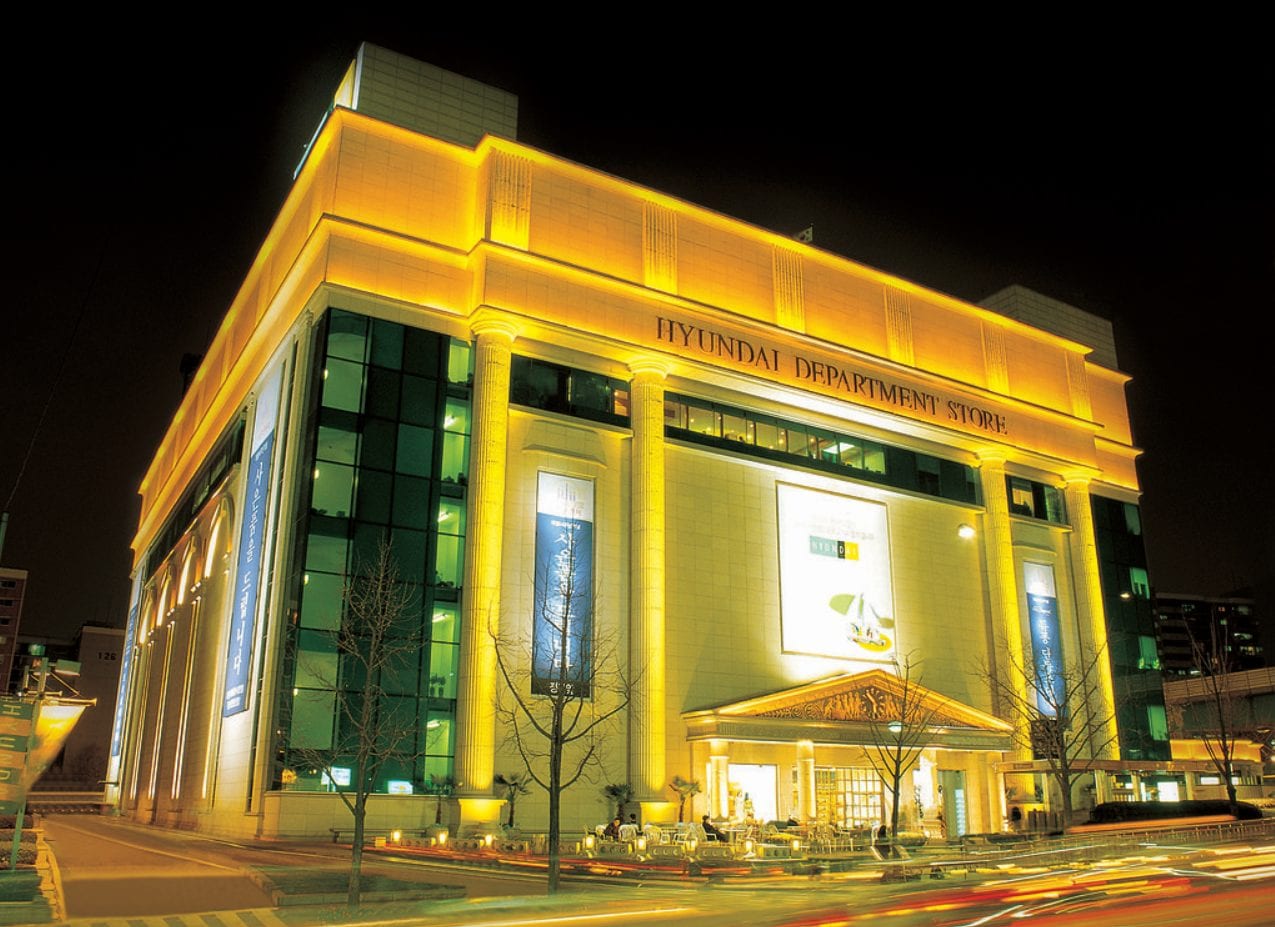
    South Korea’s Hyundai Department Store is buying trading company SK Networks’ fashion business for KRW326.1 billion (US$284 million).

    When the purchase is complete, probably by February, SK Networks (SKN) will no longer have interests in the fashion industry.

    The two companies have signed a deal to merge SKN’s 12 fashion brands into Hyundai’s Handsome fashion unit, which has annual sales of KRW750 billion. With SKN’s KRW600 billion added in, the merged group becomes the fourth-largest fashion company in South Korea behind E-Land, Samsung C&T and LF.

    Hyundai says it will retain SKN’s 400 designers, merchandisers, marketers and production staff, guaranteeing their jobs for five years.

    Analysts say the two businesses are a good fit and are unlikely to cannibalise each other’s trade as Handsome is known largely for its local womenswear brands while SKN is a major importer of global labels such as American Eagle, Club Monaco, DKNY and Tommy Hilfiger.

    Its house brands  include Obzee, O’2nd and Rouge & Lounge.

  • American Eagle to open in two new Asian markets

    American Eagle to open in two new Asian markets

    “We look forward to bringing our casual American style and iconic American Eagle Outfitters jeans brand as well as Aerie intimates to new customers,” said Simon Nankervis, executive VP of global commercial operations.

    “Together with our licensed partners, we will offer the very best brand experience. Our partners bring vast knowledge in their respective markets, an expertise in building businesses and a strong passion for our brands.”

    In Korea, SK Networks has vast fashion brand experience, representing international brands including Tommy Hilfiger, DKNY, Donna Karan Collection, Club Monaco and Calvin Klein. Store openings will begin in mid-2015, with several shops planned to be trading byyear end.

    In Singapore, Trendz 360 is an established distributor and retailer of international brands,representing Patagonia, DKNY Kids, Nike Equipment and Patrick. It plans to open the first store in mid-2015.

    American Eagle Outfitters currently has 111 licensed stores in 17 countries, including Hong Kong, the UAE, Kuwait, Russia, Saudi Arabia, Lebanon, Jordan, Morocco, Egypt, Israel, Japan, Poland, the Philippines, Colombia, Panama, Thailand and Indonesia. The company currently expects to open approximately 40 licensed stores in fiscal 2015.