Tag: American Tourister

  • Tumi boosts Samsonite sales growth

    Tumi boosts Samsonite sales growth

    Rapid Tumi expansion is powering solid sales growth for Hong Kong-listed luggage specialist Samsonite International. Group sales rose 5.2 per cent in the third quarter to US$945.2 million, with sales in Asia up 7.2 per cent to $324.2 million. Global sales for the first nine months were up 10.1 per cent.

    The company says the Asian sales growth was primarily driven by the Tumi, American Tourister, Kamiliant and High Sierra brands. Tumi sales in Asia surged 27.7 per cent year-on-year, driven by expansion in key Asian markets. Kamiliant, the group’s value-conscious, entry level brand, saw net sales increase by 31.8 per cent as the brand continued to gain market share, while the High Sierra and American Tourister brands grew by 22.2 per cent and 3.6 per cent respectively.

    In Japan, sales grew 12.5 per cent in the third quarter, driven by the Tumi and Samsonite brands.

    Net sales in Hong Kong increased by 23.5 per cent, driven by increased net sales from the Tumi and American Tourister brands, however Mainland China net sales decreased by 3.2 per cent due to weak consumer sentiment amid concerns about trade relations and a decrease in business-to-business orders. Excluding business-to-business orders for both periods, net sales in China increased by 4.1 per cent.

    The Samsonite, American Tourister and Kamiliant brands drove a net sales increase of 28.6 per cent in India. Sales in South Korea decreased by 4.1 per cent due to “continued challenging domestic market conditions”.

    CEO Kyle Gendreau said the group was pleased with the third quarter results and especially its continued progress in Asia.

    Sales in Europe rose 10 per cent and in Latin America by 13.4 per cent.

    Profit attributable to shareholders during the third quarter rose by $18.9 million, or 33.3 per cent, to $75.5 million, driven by a reduction in the group’s income tax expenses. For the nine months ended September 30, profit attributable to shareholders, excluding a non-cash charge to write-off the $53.3 million of deferred financing costs, increased by $42.9 million, or 30.6 per cent.

    Gendreau said the company is excited about the opportunities ahead, despite global concerns about the US-Sino trade war and subdued consumer sentiment in many markets.

    “With consumers still showing a strong propensity for travel, our industry continues to enjoy favorable long-term growth prospects. We will continue to invest in marketing, product innovation and development of our distribution channels, including direct to consumer. We are confident that we can continue to leverage our strong, diversified portfolio of brands to expand our global presence.”

  • Samsonite Asia sales experiences positive growth

    Samsonite Asia sales experiences positive growth

    Strong performances throughout Asia helped Samsonite International lift sales by 12.9 per cent in the first half of this year, to US$1.849 billion.

    Samsonite Asia sales across the group’s entire brand portfolio grew 14.4 per cent year on year, behind Latin America’s 17 per cent, but ahead of Europe’s 11.4 per cent.

    Tumi sales rose 16.6 per cent, with Asia the fastest-growing market where sales rose 39.4 per cent. American Tourister sales rose 24.2 per cent.

    Globally, Samsonite’s namesake brand achieved a stunning 50 per cent increase.

    Chairman Tim Parker said the first half of 2018 saw generally better trading conditions and more favourable foreign currency effects globally, which helped the group achieve what was another new record in total sales.

    In Asia, net sales of the American Tourister brand rose by 17.7 per cent during the first half, largely driven by the Cristiano Ronaldo marketing campaign, while the group’s value-conscious, entry-level Kamiliant brand achieved the fastest growth of all of its brands, up 57.5 per cent.

    In Hong Kong, where the company is listed, net sales increased by 28.3 per cent, driven by net sales of the Tumi brand (which included sales to Tumi distributors in some other Asian markets) and by the Samsonite and American Tourister brands. Those brands also drove an 11 per cent increase in sales in Mainland China.

    Sales in Japan, driven by Tumi, American Tourister and Samsonite, grew 18.5 per cent. India was up 17.8 per cent, South Korea by 2 per cent and Australia by 8.7 per cent.

    Group operating profit grew by 24.5 per cent year on year to $201.8 million and adjusted net income by 19.5 per cent to $119.8 million.

    Parker concluded: “This solid performance is not only a testament to the resilience of our multi-brand, multi-category and multi-channel business model and our devolved management structure, it is above all a reflection of the strength of our people. Our business enjoys strong team management at the top, but we also rely on a community of managers around the world and in different functions to ensure prompt and effective execution in response to changes in the marketplace. This collective effort by the experienced people within our company remains one of the keys to our success.”

  • Tumi acquisition lead Samsonite to good numbers

    Tumi acquisition lead Samsonite to good numbers

    Samsonite Asia sales lept 16 per cent last year, a rate slower than the Hong Kong-listed company’s global growth, and predominantly driven by the acquisition of Tumi.

    The world’s largest travel luggage company achieved global sales of US$3.49 billion, up 23.3 per cent, with Asia accounting for $1.19 billion of that. Samsonite Asia sales excluding the Tumi effect grew by a much more modest 4.8 per cent, while sales in Japan grew by 32 per cent, or 12 per cent excluding the Tumi business, driven by the Gregory, American Tourister and Samsonite brands.

    In the first half of last year, Samsonite assumed direct control of the wholesale and retail distribution of Tumi products in South Korea, Hong Kong, Macau, China, Indonesia and Thailand.  Net sales in China increased by 11.9 per cent year-on-year, (7.2 per cent excluding Tumi), due to increased sales of the Samsonite and American Tourister brands. Net sales in South Korea increased by 15.7 per cent, but fell 2.5 per cent excluding Tumi, due to fewer shoppers visiting from China and weak consumer sentiment.

    Net sales in Hong Kong increased by 34 per cent year-on-year, driven by the addition of Tumi, but by just 1.5 per cent excluding Tumi.

    Net sales in India increased by 4.6 per cent, despite a temporary disruption during the year due to the Indian government’s introduction of a goods and services tax that took effect in the third quarter of last year.

    Strong direct-to-consumer growth

    Samsonite showed solid progress on its move towards increasing its direct-to-consumer sales, aided by the acquisition of online luggage retailer eBags last May.

    Net sales rose 57.4 per cent overall, by 32.1 per cent excluding Tumi and by 12.2 per cent after 1 further excluding eBags.

    Dollar reported profit attributable to the equity holders increased by US$24.1 million, or 12.1 per cent.

    “We saw very satisfying growth last year, further driven by a strong performance from the Tumi and eBags businesses following their integration into the group,” said chairman Tim Parker.

    “In particular, we made solid strides in improving Tumi’s performance and as a result it was accretive to earnings in its first full year post acquisition. Now that we have strategically expanded into the highly attractive premium segment, and established a firm foothold in e-commerce, we look forward to more aggressively expanding our presence in the direct-to-consumer channel worldwide, especially direct-to-consumer e-commerce, where we see strong growth opportunities.”

    CEO Ramesh Tainwala said that while the company continued to benefit from the buoyant growth in travel and tourism worldwide, its strong performance was also driven by continued investment in brands, especially in the form of increased marketing support, as well as the expansion of direct-to-consumer e-commerce and brick-and-mortar retail operations.

    “Looking ahead, we will continue to implement our multi-brand, multi-category and multi-channel strategy, while leveraging our decentralised management structure and investment in marketing, in order to capitalise on the many exciting opportunities ahead of the group,” he said.

  • Cristiano Ronaldo Is American Tourister 2018 Brand Ambassador

    Cristiano Ronaldo Is American Tourister 2018 Brand Ambassador


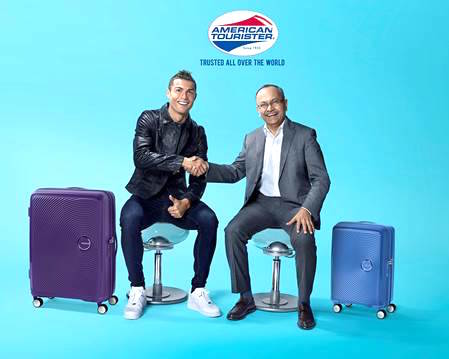
    Football superstar and fashion icon Cristiano Ronaldo has been appointed American Tourister brand ambassador.

    Ronaldo is the holder of the FIFA Ballon d’Or Award for a record fifth time. The former Manchester United and now Real Madrid record goal-scorer has won 24 trophies, including four UEFA Champions League titles. He also captained Portugal to victory in the 2016 UEFA European Championship.

    He has a global following of more than 230 million fans across Facebook and Instagram, and his appointment comes as Moscow prepares to host the FIFA World Cup in June.

    “There couldn’t be a better time to bring Cristiano on board,” says Asia Pacific president Subrata Dutta of Samsonite, which owns the American Tourister luggage brand.

    Ronaldo says that as a frequent traveller he appreciates the need for high-quality luggage that “still allows you to express your personality”.

  • Samsonite Asia heightens focus on China

    Samsonite Asia heightens focus on China

    Branded luggage-maker Samsonite Asia aims to make China its biggest market within five years, pinning its hopes on eCommerce and social media to fuel growth.

    While sales in China now account for more than 10 per cent of its total revenue, Samsonite CEO Ramesh Tainwala says they are likely to double by 2022, thanks to the explosion in online shopping and a wealthier population keen to travel.

    “Now that 20 per cent of our Chinese businesses come from online, we expect the number to grow by about a third in a couple of years,” he says.

    Global net sales in 2015 reached US$2.43 billion for the Indian company.

    Virtual stores on B2C sites JD and Tmall have claimed 60 per cent of Samsonite’s online business in China. Its luggage is also sold through the digital outlets of shopping malls and department stores.

    Samsonite will open its own direct online shopping portal this year aimed at more sophisticated buyers who want bigger-ticket items via the brand rather than a third party.

    First-half sales last year remained flat for Samsonite, according to its interim report, partly because of sluggish performance in China as consumers forsake department stores for online retail.

    Samsonite president for China and the Philippines Frank Ma says the company spares no effort in using social media campaigns to guide traffic to brick-and-mortar stores. For example, followers of Samsonite’s official WeChat account are given a discount coupon when they sign up for promotional events in shopping centres.

    Ma says content marketing helps attracts customers and adds to another 5 per cent to its offline sales.

    Seven of Samsonite’s nine brands have been introduced to China, ranging from the entry-level American Tourister to the newly acquired Tumi, which targets high-end business travellers.

  • Good time for Samsonite

    Good time for Samsonite

    Buoyed by its Tumi acquisition, Samsonite sales soared in the last quarter in every market, even in its weakest link, Asia.

    The world’s largest luggage maker and retailer achieved a net sales boost of 22.8 per cent in the three months to September 30. Its strongest performance was the US where net sales increased by 22.7 per cent to US$765.3 million.

    In Asia, sales rose 13.4 per cent – although excluding figures for Tumi, acquired on August 1 and contributing to two months of sales, only by 3.7 per cent.

    North America sales rose 39.1 per cent, or by 9.8 per cent excluding Tumi, and in Europe by 16.5 per cent, or 9.4 per cent excluding Tumi. And in Latin America it was ahead by 26.2 per cent including and excluding Tumi.

    CEO Ramesh Tainwala said there is no doubt that the global trading environment continued to be challenging, yet despite the headwinds, all of Samsonite’s regions delivered positive constant currency net sales growth during the third quarter of 2016.

    “It is especially encouraging to see organic sales growth picking up in both the US and China, our two largest markets, while Europe and Latin America have maintained their growth momentum.”

    Gross profit increased by 26.5 per cent year-on-year to $419.8 million and gross profit margin increased to 54.9 per cent, from 53.2 per cent.

    On the negative side, operating profit decreased by 16.4 per cent year-on-year to US$71.7 million for the quarter, largely due to acquisition costs. Excluding those, operating profit increased by 23.7 per cent.

    Asia performance

    After a relatively lacklustre first half, both China and India saw net sales growth improve to 8.1 per cent year-on-year in the third quarter of 2016. Net sales in Hong Kong (including Macau) increased by 73.6 per cent, driven primarily by the addition of the Tumi brand. Excluding Tumi, net sales in Hong Kong (including Macau) decreased by 11.5 per cent. The decline was driven primarily by fewer Chinese shoppers visiting from the mainland.

    Japan and Australia continued to record strong year-on-year net sales growth of 29.7 per cent and 13 per cent, respectively. Excluding Tumi, net sales in Japan increased by 7.4 per cent. Also, the group continued to penetrate the emerging markets within the region with notable net sales growth in Thailand and Indonesia of 7.6 per cent and 3.1 per cent, respectively, year-on-year. Net sales in South Korea were up slightly year-on-year on a constant currency basis due to weak consumer sentiment.

    Growth by brand

    Globally, excluding Tumi, sales were driven by the Samsonite (up 10.2 per cent) and Kamiliant (up 576.1 per cent). Other brands including Hartmann (up 58.8 per cent), Lipault (up 342.8 per cent) and Gregory (up 20.4 per cent) also experienced solid net sales growth. The increase was partially offset by an 11.3 per cent decrease in net sales of the American Tourister brand.

  • Samsonite sales soar globally

    Samsonite sales soar globally

    Samsonite sales soared 16.6 per cent in the first half of this year.

    The Hong Kong-based travel luggage retailer says it has benefited from “robust growth in travel and tourism worldwide” achieving sales of US$1.197 billion in the six months to June 30.

    Excluding the effects of foreign currency exchange rates, Samsonite’s profit attributable to shareholders increased by 8.9 per cent.

    Fresh from bedding down the acquisition of Rolling Luggage in February, Samsonite says it will continue to evaluate further potential acquisition opportunities “that offer both a compelling strategic and financial rationale”.

    Rolling Luggage is one of the world’s leading airport retailers of branded luggage and travel products. The acquisition provides Samsonite with a significant retail footprint in some of the leading airports in Europe and the Asia Pacific region, and establishes a strong multi-brand platform to showcase the group’s brands and collections.

    Samsonite chairman Tim Parker said behind the strong numbers for the first half year, “some strong foundations are being laid for future growth”.

    “It is worth bearing in mind that Samsonite, our flagship brand, is still number one in most markets of the world. One of the key strengths of our business is its diversity in terms of brands, segments and geographical markets. Thus, in the first half of 2015, pockets of local market pressure were more than compensated for by good performances elsewhere.”

    CEO Ramesh Tainwala added: “Samsonite achieved a very encouraging set of results for the first half of 2015 despite challenging economic and trading conditions in almost all of our major markets. All of our operating regions posted solid constant currency net sales growth, underscoring the resilience of our multi-brand, multi-category and multi-channel business model.”

    Samsonite’s net sales in Asia continued to grow across all markets within the region, reaching US$471.4 million for the six months, an increase of 17.2 per cent year on year. The growth was driven by both Samsonite and American Tourister, whose net sales grew by 15.1 per cent and 9.6 per cent, respectively.

    The group’s Samsonite Red sub-brand was the driving force behind the 42.3 per cent increase in the casual product category in the Asia region. The group also recorded net sales of US$7.1 million from the High Sierra brand in the region during the first half of 2015, representing an increase of 64.4 per cent from the previous year.

    Samsonite introduced the Kamiliant brand in Asia during the second half of 2014, which has contributed US$1.0 million of net sales in the first half of 2015. All of the group’s brands continue to benefit from products and marketing campaigns that are designed specifically for the region.

    Driven by Samsonite and Samsonite Red through the eCommerce channel and strong business-to-business sales, China saw first half net sales increase by 29.8 per cent year on year. South Korea continued to grow, recording a 4.8 per cent increase in net sales despite the negative impact from the MERS outbreak.

    India, Japan, Hong Kong and Australia all recorded strong year-on-year net sales growth of 13 per cent, 44.6 per cent, 8.1 per cent and 33.5 per cent, respectively.

    “Aside from additional points of sale and increased product offerings, the success of the group’s business in Asia has been bolstered by its continued focus on country-specific products and marketing strategies to drive increased awareness of, and demand for, the group’s products,” the company said in a statement.

    For the second half of 2015, the Group will continue to leverage the strength of its diverse portfolio of brands to gain market share across all of its markets. Those brands include Samsonite, American Tourister, Hartmann, High Sierra, Gregory, Speck and Lipault.