Tag: amoled

  • Sony tipped to launch mystery budget phone later this year

    Sony tipped to launch mystery budget phone later this year

    Sony recently unveiled the Xperia 1 III and the Xperia 5 III flagship models as well as the mid-range Xperia 10 III. But if a machine-translated post on Weibo written by a tipster is legitimate, Sony purposely moved up the release schedule of its new 2021 flagships to release both of them during the same time period. This will allow it to release another phone that will either be a budget-priced model or an “Ultra” version of another Sony handset.

    The machine-translated message from a tipster known as ZackBuks, while a bit confusing, seems to suggest that by releasing both 2021 flagships together, it opens up some time to allow a “new U release” to take place months earlier than in past years. Normally Sony unveils its compact flagship model in the fall which is why it was so surprising to see the Xperia 5 III introduced at this time of the year.

    The last such Sony handset to use the “Ultra” title in its name was 2018’s Xperia XA2 Ultra which featured a larger screen, more storage, a larger battery, and an additional front-facing camera compared to the “non-Ultra” Xperia XA2. Another theory is that the “new U release” is a refresh of last year’s budget-priced Xperia L4 model. For those hoping for a top-of-the-line “Ultra” model powered by the Snapdragon 888 SoC, the tipster’s post would seem to make that impossible since he comes right out and states that the 2021 flagships are the Xperia 1 III and the Xperia 5 III.

    The Xperia 1 III features a 6.5-inch AMOLED display with a 4K resolution (1644 x 3840) and a tall and thin 21:9 aspect ratio. Powered by the Snapdragon 888 SoC, this model sports 12GB of memory and 256GB of storage. A quad-camera setup is found on the back.
    The Xperia 5 III is equipped with a 6.1-inch display with a 1080 x 2520 (FHD+) resolution and is powered by Qualcomm’s top-of-the-line Snapdragon 888 chipset. It features 8GB of memory (LPDDR4 RAM), 256GB of storage, and a triple camera setup.

    Speaking of the Xperia 5 III, the phone recently was benchmarked through Ge.

  • Microsoft appears ready to add Dark Theme to its Office suite apps for Android

    Microsoft appears ready to add Dark Theme to its Office suite apps for Android

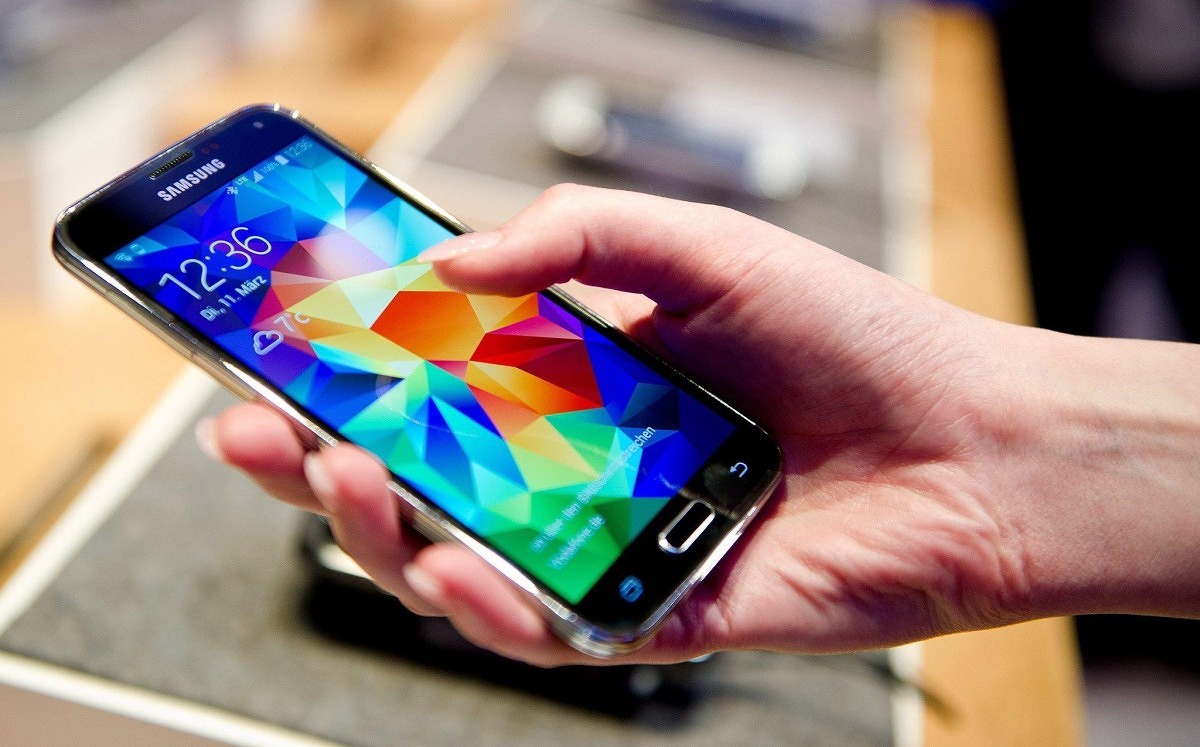
    Microsoft is adding Dark Theme to its Microsoft Office suite apps for Android. Dark Theme replaces the standard black text on a white background with white text on a black background. This reduces the strain on the user’s eyes, especially at night or in a dark room. And Dark Theme also can help save some battery life on a phone using an AMOLED panel. That’s because unlike LCD displays, AMOLED does not use a backlight and each pixel can be controlled individually.

    The color black is created on an AMOLED screen by turning off a pixel and such pixels don’t draw power from the battery. So with a black background, enough pixels are shut down to make a difference in how much power is being used by the screen.

    Paluzzi disseminated a tweet that included screenshots of Microsoft Word in Dark Theme. The tipster said that the same look will be used for PowerPoint and Excel. There will be three options for users to select, Light theme, Dark theme or System Default. The Light theme is the traditional white background with black text, Dark theme is the inverse, and System Default uses whichever theme you have set for your phone. A blank sheet in Word is white, even in Dark Theme. But Paluzzi says that this might change to black when the feature is rolled out.

    Microsoft had already added Dark Theme to several of its Android apps including OneDrive, Edge, Outlook, OneNote, and Remote Desktop, so it is no surprise that this capability is being rolled out for its Office suite app.

  • Producers of flexible and punch-hole AMOLED displays Facing Roadblocks

    Producers of flexible and punch-hole AMOLED displays Facing Roadblocks

    Flat panel display producers in China are eager to start selling flexible AMOLED displays, and AMOLED displays with punch-holes. At this year’s China Information Technology Expo 2019 (CITE), which wrapped up earlier this month, companies like BOE Technology, Visionox, Tianma Microelectronics, Everdisplay Technology and China Star Optoelectronics Technology (CSOT) displayed their flexible screens for use in foldable phones. Also showing off its flexible AMOLED panels was Royole, which uses the screens for its own foldable FlexPai smartphone.

    All of these manufacturers are monitoring what is going on with Samsung and its Galaxy Fold device. Earlier today, the company delayed the U.S. launch of its foldable phone by at least one month due to issues with the interior display and the hinge. The Huawei Mate X outward folding device is expected to launch later this year. Other companies that could release a foldable phone in 2019 include Oppo, TCL, Motorola and Xiaomi.µ

    Meanwhile, companies turning out smartphone displays in China are now offering punch-hole panels with resolutions as high as 1080p (Full HD). The punch-hole is a small opening punched into a display allowing a front-facing selfie camera to be housed inside a phone’s screen. Some phones, like the Samsung Galaxy S10+, have two punch-holes in the screen for a dual selfie camera setup. The use of the punch-hole allows phone manufacturers to offer handsets with a high screen-to-body ratio and thin bezels without the use of a notch.

    CSOT is said to be shipping through hole and blind hole panels to Samsung. The latter has a punch-hole that goes completely through the display to the other side, while the latter has a hole that is drilled down to a certain depth. The company also showed off its self illuminating displays, while Tianma exhibited a back-lit smartphone panel. Both of these depend on mini-LEDs as a source of light. These are light emitting diodes that are smaller than 100 micrometers.

  • Surprise New Model Introduction by OnePlus

    Surprise New Model Introduction by OnePlus

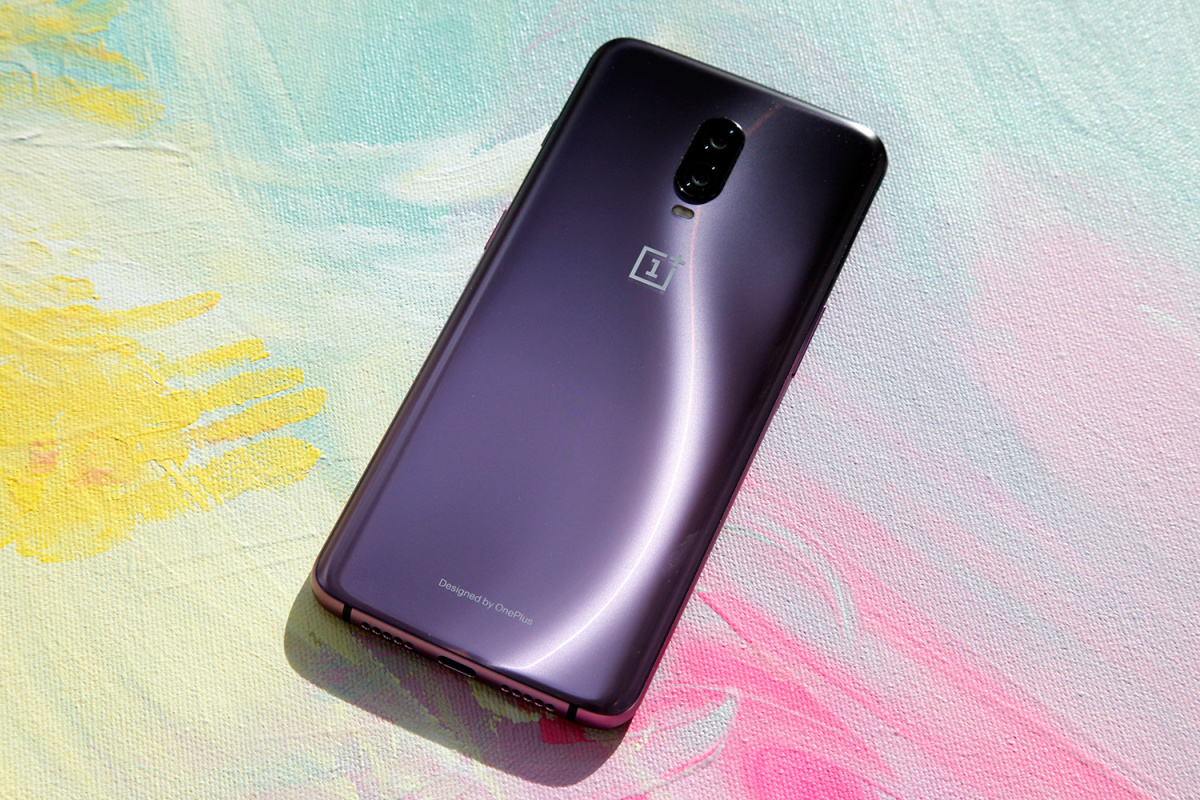
    Sparking rumors that the unwrapping of the OnePlus 7 is imminent, OnePlus today cut the price of its current model by 400 Yuan ($60 USD) in China only. This means that the OnePlus 6T now starts at 2,299 Yuan in the country. That is the equivalent of $342 USD based on current foreign exchange rates. This across the board price cut is a permanent one and is a move typically done by phone manufacturers to clear out inventory of a model that is about to be replaced by a newer device.
    That newer device would be the OnePlus 7. Exactly one month ago today, e-tailer GizTop listed the unannounced device revealing a treasure trove of possible, if unconfirmed, specs. If the leak was legit, we expect to see the latest OnePlus model feature a 6.5-inch AMOLED display. The device will be powered by Qualcomm’s latest and greatest chipset, the Snapdragon 855 Mobile Platform. Apparently, there will be three configurations, one with 8GB of memory and 128GB of storage, one with 8GB of memory and 256GB of storage and the top-of-the-line unit sporting 12GB of memory along with 256GB of storage. A triple-camera setup is said to adorn the rear of the device (48MP + 20MP + 5MP depth sensor) and we should see a 16MP pop-up front-facing selfie snapper. Keeping the lights on will be a 4000mAh battery with 44W rapid Dash charging, and OnePlus’ Oxygen OS 9 (based on Android 9 Pie) will be pre-installed. The price posted was $569, but the listing could have been a placeholder.
    After the price cuts are calculated, the OnePlus 6T with 6GB of memory and 128GB of storage is tagged at 2,299 Yuan. The model with 8GB of memory and 128GB of storage now costs 3,199 Yuan, and the variant with 8GB of memory and 256GB of storage will now run you 3,599 Yuan. In the U.S., the OnePlus 6T model with 8GB of RAM and 128GB of native storage is available from T-Mobile for $550 (or 24 monthly payments of $22.92). At the moment, that price is unaffected by the move made today by OnePlus. There have been rumors calling for a May release of the OnePlus 7, which makes the timing of today’s move rather intriguing.
    T-Mobile is the first U.S. carrier to team up with OnePlus and the partnership has proven to be beneficial to both firms. Even though the OnePlus 6T wasn’t available to T-Mobile subscribers until last November, the carrier sold enough units for OnePlus to finish fifth among phone manufacturers selling premium models in the states. As a result, we would certainly expect to see the OnePlus 7 offered by T-Mobile.
    What U.S. consumers won’t get this year is the first 5G enabled OnePlus phone. Back in February, OnePlus founder and CEO Pete Lau said that the company has long term goals regarding 5G in the U.S., but it won’t be shipping such a model into the U.S. this year.
  • Over 1 million Xiaomi Mi 9 units have already shipped worldwide

    Over 1 million Xiaomi Mi 9 units have already shipped worldwide

    Just over one month after the Mi 9 flagship was first announced, Chinese smartphone brand Xiaomi has today revealed that it has already shipped over one million units of its latest premium device.

    The majority of these devices were undoubtedly supplied to consumers in China, where Xiaomi conducts roughly 60% of its business and where the smartphone was made available to purchase just days after its unveiling. Europe, however, is becoming increasingly important for Xiaomi – sales surged over 415% in the region last year – and likely played a big role in the phone’s short-term success.

    The Xiaomi Mi 9, which retails at just €449 across Europe, offers a variety of impressive features such as a large 6.4-inch AMOLED display manufactured by Samsung, Qualcomm’s Snapdragon 855, up to 128GB of storage, and as much as 8GB of RAM. The smartphone also includes a 3,300mAh battery, support for extremely fast 20W wireless charging, and Android 9 Pie straight out of the box.

    Alongside the Mi 9, Xiaomi also sells two other devices in the form of the cheaper Mi 9 SE and the more expensive Mi 9 Explorer Edition. The sales figures for these two models weren’t broken down, but Xiaomi did confirm that they push the total number of Mi 9 sales to 1.5 million units, an even bigger achievement for the low-cost brand.