Retail News CRM

Tag: analysis

  • China business confidence soars

    China business confidence soars

    Confidence among executives at China’s largest companies bounced back to a one-year high in August, implying that the fall in July was driven by temporary factors related to stock market volatility.

    According to the latest MNI China Business Sentiment Survey, a gauge of current business sentiment, China business confidence surged back into expansion, rising 17 per cent to 57.1 in August – a big leap from 48.8 in July.

    Discounting last month’s plunge, which looks to have been driven more by animal spirits than a tangible lull in activity, sentiment has been increasing since May alongside the stabilisation in official data, said MNI Indicators in a statement.

    “However, it’s still too early to tell whether the latest improvement will be sustained over the following months or if it was a normal bounce after a very weak outcome in the month before.”

    Firms also revised up their expectations for the future, with the Future Expectations Indicator up 12.6 per cent to 60.9 in August, the highest reading since the same month a year earlier.

    Both Production and New Orders picked up strongly in August following a setback in July, leaving both at the highest so far this year. Companies expected increased activity to continue over the next three months, with the Future Expectations Indicators for both measures regaining the ground lost in the previous month.

    In a further sign of increased demand, both Input Prices and Prices Received rose in August, with the latter jumping just above the 50 breakeven level after 12 months in contraction. The hike in Prices Received is an indication that CPI inflation may continue to push higher over the coming months.

    The sharp devaluation of the yuan following the PBOC’s introduction of new guidelines for the exchange rate fix came just before the survey period ended and will therefore not be fully captured until the September survey. The August survey showed most companies were dissatisfied with the impact of the exchange rate on their business with the Effect of the Yuan Exchange Rate Indicator dipping below 50 for the first time in five months.

    “Last month we noted that the impact of the stock market turmoil on business confidence would be difficult to gauge. For now businesses have shrugged it off, with key activity measures in the August survey increasing sharply and the stimulus policies of the authorities seemingly having a significant positive impact,” said Philip Uglow, chief economist with MNI Indicators.

    MNI China Business Sentiment is a monthly poll of Chinese business executives at companies listed on either the Shanghai or Shenzhen stock exchanges. Companies are a mix of manufacturing and service sector firms.

  • Chinese shoppers feel safer online

    Consumers across Southeast Asia and Greater China feel safer paying in a brick and mortar environment as opposed to online; sole exception is China

    According to the inaugural MasterCard Safety and Security Index, consumers across Southeast Asia and Greater China cited identity theft and ATM-related fraud as the top two security concerns when it comes to electronic payments.

    Some 42 per cent of consumers in Southeast Asia (Indonesia, Malaysia, Philippines, Singapore Thailand, and Vietnam) were most concerned with ATM-related fraud such as a stolen card, card cloning or skimming. In the Greater China markets (China, Hong Kong and Taiwan), this figure was 31 per cent.

    But the biggest surprise was in confidence in shopping online. The Index showed that in general, consumers across Southeast Asia, and the markets of Taiwan and Hong Kong still feel safer paying in a bricks and mortar environment than buying online. China differed, being the only market where consumers felt paying online was safer than in a physical store; even more so than in Singapore.

    Almost every consumer polled in the Greater China markets had made an online payment in the past year. Consumers in China (62 per cent) particularly favored the use of digital wallets in online electronic payments over those in Hong Kong (14 per cent) and Taiwan (29 per cent).

    Consumers across Southeast Asia (35 per cent) and Greater China (32 per cent) were almost as equally concerned about identity theft in relation to data breaches. This includes personal data such as bank details, personal IDs, addresses, and signatures that are stolen or compromised through websites. In both regions however, it appears that these concerns do not directly stem from consumers’ own personal experiences but rather, as a result of the perceived severity of fraud based on what was reported in the media.

    MasterCard chart1

    Meanwhile, the Index also reinforced that banks continue to play a critical role in ensuring payment safety and security for consumers in Southeast Asia. This is both, because of the high levels of trust consumers place in banks as well as the reliance that consumers have on banks to help them resolve issues that crop up in this area.  Banks are often the first line of defense and recourse for the affected consumer – nearly half of all consumers in Southeast Asia who experienced ATM fraud first approached their card-issuing banks for advice.

    “The fact that most cardholders have a primary relationship with their banks, has an obvious and deep-rooted correlation to their sentiment, around who they trust most when it comes to ensuring the safety and security of electronic payments,” said Ari Sarker, oo-president, Asia/Pacific, with MasterCard.

    “This was emphatically reflected in the feedback from all the markets in Southeast Asia and Greater China. However, in Singapore in particular, in addition to banks, consumers also placed significant trust in the government, which is a natural outcome given the country’s strong regulatory environment and overall reputation around safety and security.”

    None of the respondents surveyed in Southeast Asia placed any trust in local websites, suggesting that there is still a lot of work to be done by local eCommerce merchants to ensure that they meet global security standards for payments and build consumer confidence on this front.

    In Greater China, aside from banks and governments, merchants were also seen to have a growing responsibility in ensuring payment safety and security, with 28 per cent of consumers in these markets going to merchants as their first recourse in seeking resolution for payment safety and security issues. Furthermore, merchants in these markets were instrumental in solving 40 per cent of all online electronic payment disputes.

    These and other key findings of the MasterCard Safety and Security Index will be discussed at the MasterCard Global Risk Leadership conference in Singapore on August 26 – 27. The 20th edition of this conference will gather global payment risk leaders to share best practices in fighting fraud together, as an industry. The conference demonstrates MasterCard’s commitment in helping partners and customers fight fraud using the latest tools, processes, and technologies so there is no one weak link in the payments ecosystem.

    The survey was carried out across in six markets in Southeast Asia (Indonesia, Malaysia, Philippines, Singapore, Thailand, and Vietnam) as well as three markets in Greater China (China, Hong Kong, and Taiwan). A total of 6600 consumers and 100 merchants were polled online and face-to-face between January and May 2015 on questions relating to the payments security landscape, payments in brick and mortar and online, safety and security payment concerns and experience with payment fraud, among others.

  • Singapore in recovery mode

    Singapore in recovery mode

    Singapore has bounced back from a drop in new business formations, with a nine per cent increase in the second quarter of this year.

    According to official data, 15,964 new businesses were registered in the three months to June 30, underscoring the confidence in Singapore as an international business centre.

    Jacqueline Low, COO of Hawksford Singapore, says, the significant quarter on quarter growth rate reflects the improving confidence of the entrepreneurial community and investors alike.

    “Despite various global challenges, the numbers have shot up in this quarter. This is reflective of the high business confidence and the trust in the strong business fundamentals of Singapore and the business community’s proactive mind-set to capitalise on the early signs of economic growth,” she said.

    Though the numbers contracted by more than 28 per cent in quarter one, compared to the last three months of 2014, in this second quarter it appears to be returning to normal.

    Singapore, with its strong business-friendly fundamentals and its strategic location amidst the burgeoning Asian markets, continues to attract foreign investors and enterprises. One third of the new business formed in the second quarter had foreign shareholders, while 47 new foreign company branch offices were set up – 11.9 more than in the first quarter.

    Entrepreneurs continue to take advantage of the favourable share capital clause of the Singapore Company Act that provides for businesses to be formed with share capital as low as S$1. As a result, in this quarter 74 per cent of the businesses were formed with less than $10,000 share capital.

    International enterprises continue to set up their subsidiaries in Singapore. The share of US companies setting up subsidiaries increased in this quarter by two per cent to five per cent.

    “For the second half of 2015 we anticipate the economic growth to remain muted yet the business incorporation numbers will continue to grow at the present level aided by strong domestic consumption, sustained recovery of the west and the regional growth pockets,” added Low.

    Private limited companies continued to be the dominant type of business formation, accounting for 54.7 per cent of the total registration, with Sole Proprietorship the second most popular type of entity, with 6021 new business formations.

    More detailed analysis and information can be found in the Q2 2015 Singapore Business Formation Statistics Report here.

  • China’s shoppers may take 10 years to step up

    China’s shoppers may take 10 years to step up

    Chinese policymakers are gung-ho to transition their economy away from investment and toward consumption, but that may not happen for another decade, new data shows.

    “Without a substantial intervention, we believe consumption’s share of China’s economy is unlikely to rise substantially before 2025,” The Demand Institute, a non-profit organization operated by The Conference Board and Nielsen, said in a new report.

    Private consumption as a share of gross domestic product (GDP) will average 28 percent from now until 2025, the think-tank said.

    To be sure, the mainland has long underperformed the global average in this regard as Beijing previously focused on export-led growth.

    Consumption as a share of GDP was 37 percent last year, according to the Brookings Institution, compared with around 70 percent in the U.S. and 60 percent in fellow emerging market, India.

    The indicator has only recently started to stabilize in recent years. Consumption relative to GDP declined 48 percentage points from 1952 to 2011, one of the longest and largest drops of any nation on record.

    Based on an examination of 167 countries between 1950 and 2011, the report found that nations with similar economic characteristics to China saw consumption remain flat relative to GDP for a considerable period following previous declines.

    China’s desire to rebalance its economy stems from the need to avoid the dreaded “middle-income trap,” in which developing countries are unable to graduate into high-income countries after achieving a certain level of per capita GDP.

    While many economists believe the economic transition is already underway, albeit at a gradual pace, they also expect it will take a while before consumption’s share of GDP spikes higher.

    “Only towards the end of decade, when the economy slows further to 5-6 percent, consumption’s share of GDP will become more important,” said Jian Chang, China economist at Barclays. “But we have seen investment slow significantly and I think total consumption as a share of GDP could near 50 percent this year.”

    Beijing’s strategic vision of boosting consumption was first outlined in 2011’s 12th Five-year Plan and since then, the government has unleashed a slew of measures, including raising wages and slashing import tariffs on high-demand goods.

    But The Demand Institute warns that the burden can’t rest on the government alone: “It is up to business to nurture the demand that policy unleashes, aligning goods and services with consumers’ shifting preferences.”

    Ensuring access to products and services via reliable distribution channels, satisfying demand across different income, regional and age groups as well as offering more financial services to support consumption are some of the factors that businesses can embrace, the report said.

  • Singapore Savings Bonds: Good intent, bad timing, say analysts

    Singapore Savings Bonds: Good intent, bad timing, say analysts

    Singapore’s plan to launch a savings bond to encourage long-term retail savings is unsettling domestic banks and economists who fear this bond will push interest rates up and suck cash out from an already anaemic economy.

    The new bond, which will begin selling in October, will have a term of 10 years. It will offer the same yields as government bonds or ten times the returns on bank deposits, and can be redeemed without penalty at any point.

    Such a juicy proposition could cause a flight of cash from bank deposits into these bonds and force interest rates higher as banks compete to attract savers.

    The government says it will issue a maximum of S$4 billion worth of bonds this year, which is still more than a fifth of deposit growth in 2014.

    The timing of these bonds, which are aimed at meeting a long-felt need for long-term investment options in the low-yielding economy, couldn’t be worse, say analysts.

    The economy contracted sharply in the second quarter as manufacturing slumped and is at risk of tipping into technical recession. Price pressures are subdued and expectations are building for the central bank to ease policy once again at a twice-yearly review in October.

    “Launching a retail savings bond now is almost like reverse QE,” said Chua Hak Bin, an economist with BofA Merrill Lynch in Singapore, referring to the unorthodox quantitative easing (QE) policies the United States and other major economies have pursued in the years since the 2007 financial crisis.

    Chua points to the already slowing deposit growth in the Singapore banking system, with just S$3.8 billion ($2.8 billion) of deposits being added in the first five months of 2015, just 20 percent of the total growth last year.

    He suspects the government would invest the savings bond flows overseas. That would further pressure loan growth, by tightening available cash and triggering a rise in deposit rates, he said.

    “So the timing is not ideal. The economy has stagnated in the first half and this will worsen the situation,” Chua said.

    Citibank analysts expect that of a total S$559 billion of deposits in the banking system, 36 percent are savings deposits held by households. If on average the MAS issued about S$6 billion worth of bonds each year, S$30 billion would flow from the deposit base into bonds over five years, they estimate.

    RISK-FREE AND REWARDING

    Singapore’s central bank, the Monetary Authority of Singapore (MAS), has set a cap of S$100,000 on individual investments in the bond.

    MAS Managing Director Ravi Menon played down fears the bond will cannibalise bank deposits.

    “The savings bonds issuance numbers pale in significance compared to the total size of the banking deposits,” he said at a news conference this week.

    Yet there is little doubt the bonds will draw savers from banks. Government bonds yield about 0.95 percent for one-year and 2.6 percent for 10 years. Bank deposits fetch around 0.25 percent for a year and just double that for 24 months.

    “The Singapore Savings Bond is bending the risk-reward paradigm in investors’ favor,” said Zal Devitre, head of investments at Citibank in Singapore.

    Devitre believes retail investors and consumers will be keen to buy the bonds, and yet thinks it is premature to be projecting the impact that will have on rates and banking system liquidity.

    Local banks such as DBS, Oversea-Chinese Banking Corporation and UOB are expected to be impacted if there is a heavy migration of deposits.

    But analysts also expect there will be more pressure on global banks such as Citibank, Standard Chartered, HSBC and Malayan Banking Bhd, which have been deemed systemically important by Singapore and therefore need to maintain higher capital than stipulated under the Basel 3 guidelines.

  • Five trends in Vietnam retailing

    Five trends in Vietnam retailing

    Vietnam’s retail market is set to grow by 8.4 per cent annually until 2020, making it one of the fastest-growing markets in south-east Asia.

    Against a backdrop of increased disposable income, rapid urbanisation and an appetite for change among younger shoppers, we take a look at five trends defining the marketplace for pan-Asian retailers right now.

    Confident investment

    January 2015 marked the first time non-domestic retailers could take full ownership of commercial property in Vietnam, following commitments made to the World Trade Organisation. Now, new trade agreements with Japan, Korea and the countries that make up the Association of South-East Asian Nations (ASEAN) look set to support further growth for international retailers in Vietnam:

    Tailoring the best of international retail

    Domestic retailers may have the advantage when it comes to local shopper knowledge but
    international retailers are drawing on their own strengths to help them compete.

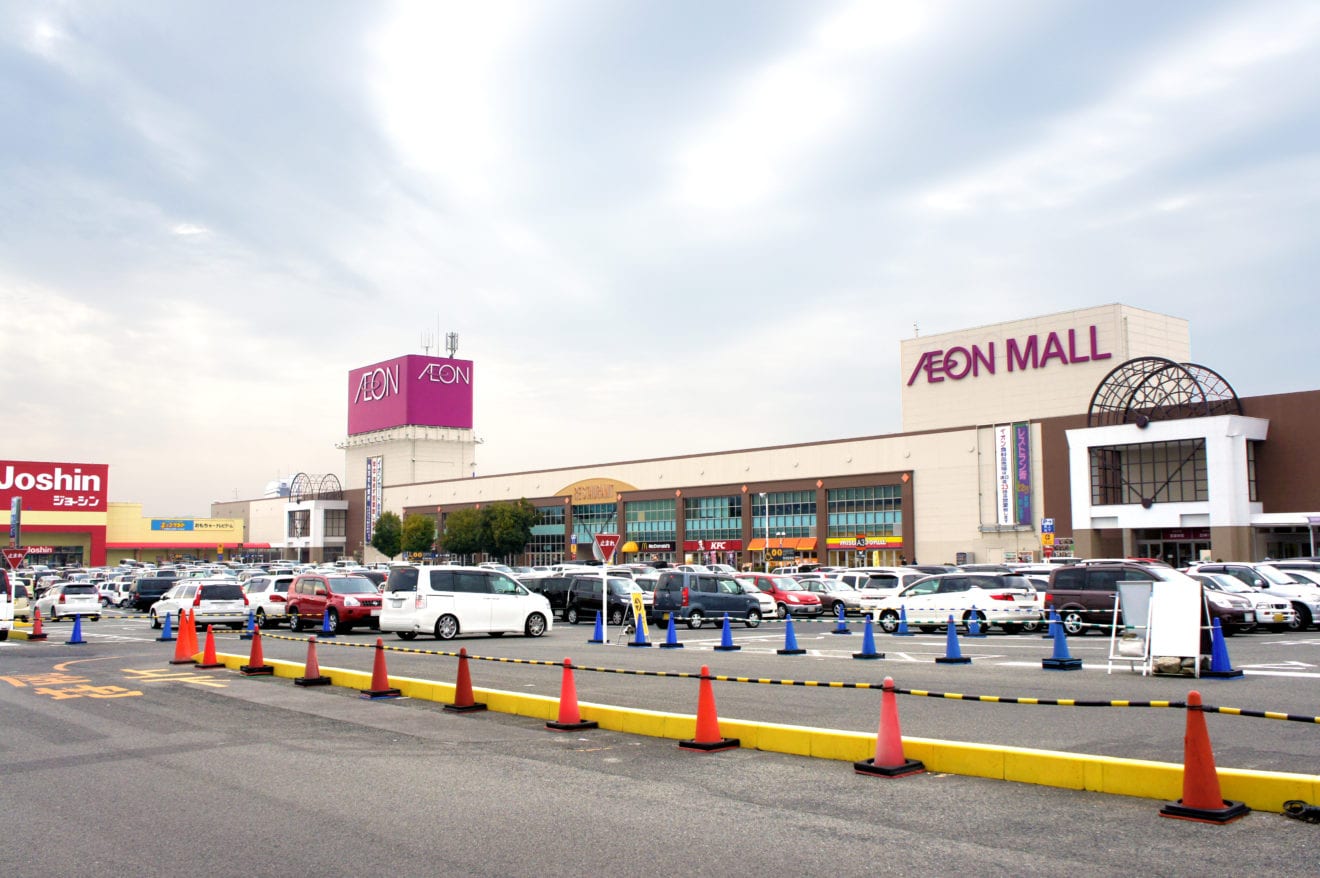
    Dairy Farm, FamilyMart and Aeon have brought their expertise in loyalty schemes, private label and innovative marketing to their stores in the region.

    Other points of difference include appealing to busy office workers with a fast food to go counter (seen at Family Mart and B Mart) and bringing an international flavour to the in-store hot food offer (Aeon Mall).

    Alternative store concepts

    Many retailers have established themselves in Vietnam with a hypermarket presence in one of the major retail hotspots like Hanoi or Ho Chi Minh City.

    Lotte and hypermarket chain Aeon are appealing to families and experimental shoppers with department store formats that act as wider shopping and entertainment destinations. Aeon is also making its mark with a loyalty scheme that includes tailored offers for mums – such as birthday treats or discounts on baby care.

    In the convenience channel, Guardian is the first combined-format health, beauty and drugstore in Vietnam. The store is making waves with its clean layout, colourful signage, bold promotional activity and sales assistants offering a superior level of service.

    Product innovation for a changing market

    A new concept in Vietnam, private label is appealing to young, experimental shoppers thanks to its lower prices and alternative products.

    Aeon has introduced its TopValu private label range, which taps into the popularity of Japanese culture by offering authentic Japanese ingredients and home cooking kits. The retailer is now working with local suppliers to explore domestic production.

    An increasingly affluent middle class is also supporting demand for exclusive and imported novelties. Dairy Farm is well-known for attracting these shoppers with its packaged food, household, health and beauty ranges.

    Expanding to national coverage

    A priority for most retailers is to create a nationwide presence. Lotte has built a network of ten hypermarkets spanning six big cities across Vietnam, making them the first pan-Asian retailer to achieve such a spread of coverage. Meanwhile, Ministop (Aeon), Guardian (Dairy Farm) and Shop&Go are pushing their convenience format in retail hotspots.

    Major retailers are seeing good growth from their franchise models, making partnerships, mergers and acquisitions hot topics.

    Aeon has partnered with local retailers Citimart in the south of the country and Fivimart in the north. The domestic chains are helping Aeon speed up its expansion plans by using their existing store networks. In return, their own customers are benefitting from the retail giant’s private label ranges and investment in infrastructure.

  • China’s 2Q economic growth steady at 7 percent

    China has released figures of its economic growth for the second quarter showing the country’s economy has grown at a steady seven percent, its weakest performance since the global crisis but slightly better than expected. Citibank said recently that it believes China’s actual growth rate could be closer to 5%.

    The Chinese economy has posted a 7-per cent growth in the second quarter compared to a year ago quarter, beating market predictions of a 6.8-per cent expansion and demonstrating that the world’s second-largest economy is on a stable path. They suggested the Chinese government would need to continue implementing a “proactive fiscal policy”, including further interest rate cuts, in the second half of the year, in order to hit its investment targets.

    Suan Teck Kin, an economist at UOB, took the data at face value, raising his full-year growth forecast to 7.1 percent from 6.8 percent. Late last month, the People’s Bank of China (PBOC) cut interest rates and the reserve requirement ratio (RRR) for some lenders in a bigger-than-expected easing package.

    Slowing growth in trade, investment and domestic demand has been compounded by a cooling property sector, deflationary pressure, and the recent equity market panic, so signs of improvement may help buttress faltering investor confidence in the effectiveness of Beijing’s management.

    China’s total trade declined in the first half of this year, official data showed Monday, falling well short of the government’s targets.

    The National Bureau of Statistics data showed that growth in the June quarter was 1.7 per cent, up from an upwardly revised 1.4 per cent in the previous quarter.

    Retail sales quickened to 10.6 per cent, compared with expectations for a 10.2 per cent gain.

    In light of the figures Nomura lifted its annual GDP forecast from 6.8 percent to 6.9 percent.

    Retail investors have sent $3.4 billion to China-focused mutual funds and ETFs for the year to date, the largest amount since 2009, according to Lipper data.

    It is not only the government reporting a warmer second quarter; the recent independent China Beige Book survey also reported signs of a broad-based recovery for the period, which it said was largely driven by growth in the interior provinces.

    It is higher than the growth rate of the industrial sector, or the secondary industry, that expanded by 6.1 percent.


  • Understanding is key to cracking Asia

    Understanding is key to cracking Asia

    It’s important for investors to be aware of the subtle differences between key Asian countries, according to a survey by BNY Mellon and analytics and advisory firm Oxford Metrica.

    The study looked at trends across Singapore, Taiwan, Hong Kong and South Korea, and noted that the differences between the markets also applies to distribution channels, and other factors that have an impact on the market.

    For example, Hong Kong retailers showed a preference for low-cost fund complexes that could meet all of their needs, while Taiwanese retailers appeared to be more inclined towards appointing specialist managers for each category.

    The report also highlighted the comparatively high costs faced by retail investors in South Korea, compared to institutional investors, and noted that in Singapore and Taiwan, more importance is placed on investment performance, while in Hong Kong, the security of a well-known brand takes prevalence.

    There were also differences in price sensitivity. While retail investors in Singapore, Hong Kong and South Korea that invest cross-border are sensitive to pricing by investment firms, this is not such a concern in Taiwan.

    South Korean institutional investors enjoy the lowest fund prices and, at the same time, regulatory developments in South Korea are geared towards attracting more international assets.

    Product range preferences also vary – a one-stop shopping solution is popular among retail investors in Hong Kong, and they tend to favour firms that can provide funds suitable throughout different market cycles. Hong Kong institutions, however, generally favour niche providers that can provide specialist expertise.

    Retail investors in Taiwan and South Korea were more inclined towards funds offered by specialist providers, and the retail market in Taiwan has even greater product diversity than Hong Kong.

    For retail and institutional investors in Singapore and Taiwan, and, to some extent, South Korea, the report suggested that a fund’s relative performance to the index as important. In Hong Kong, however, brand security tends to hold more weight.

    In Hong Kong, brand security appeared to hold greater weight than outperforming the benchmark in the long-term, however cumulative returns over one-year, three-year and five-year periods were shown to be a strong driver of sales for retail investors across all four markets.

    Singapore, Hong Kong, Taiwan and South Korea are all markets where the European UCITS structure is widely accepted, and so represent accessible entry-points for non-Asian investment managers looking to sell funds.

    Daron Pearce, global investment manager segment head for investment services at BNY Mellon, said: “Sales success in Asia’s major cross-border funds markets requires a deep understanding of the different factors that inform retail and institutional demand.”

    He added: “As one might expect, retail investors are generally more price sensitive than institutional investors. However the interplay between price, product range and performance is finely balanced across all markets analysed and, as such, close attention to the realities of individual markets is required by fund promoters.”

  • Singaporean retailers thrive on online market

    Singaporean retailers thrive on online market

    A study by eBay shows that Singapore’s tech savvy retail exporters, who use the company’s online market place, sell to an average 41 international markets.

    eBay defines retail exporters as those sellers on its site who garner US$10,000 in sales to global customers (that is buyers outside of Singapore).

    According to an eBay spokesman, Singaporean retail exporters have been experiencing solid growth on the back of a revitalised US dollar. In South-east Asia, Singapore is ranked second in terms of reach behind Thailand. Interestingly, Singapore’s ranking is five destinations higher than US retail exporters.

    Jason Lee, director, eBay South-east Asia, noted that the US is the top trade corridor for Singaporean retail exporters.

    “An exciting trend for Singapore businesses seeking new revenue streams is the speed in which entrepreneurs are able to become a retail exporter, with 22 per cent of Singaporean retail exporters on eBay hitting the US$10,000 sales mark in the past year alone,” he added.

    The top three categories that Singaporean retail exporters sell on eBay are jewellery and watches, cell phones and accessories and clothes, shoes and accessories.


  • Singapore retail gross sales enhance

    Singapore retail gross sales improved in April, in response to knowledge from the Division of Statistics.

    In March, retail gross sales excluding motor automobiles, slumped three.2 per cent. However in April they recovered a bit of, rising zero.eight per cent.

    Yr on yr gross sales have been down zero.7 per cent on April 2014, though with motor automobiles included within the determine they rose 5 per cent.

    Complete retail gross sales in April 2015 have been an estimated $three.three billion – $200 million greater than the earlier month.

    Gross sales of meals & beverage providers (seasonally adjusted) elevated zero.three per cent over the earlier month, however declined 1.7 per cent in contrast with April 2014.

    The full gross sales worth of meals & beverage providers in April 2015 was estimated at $615 million, decrease than the $626 million in April 2014.

    By class, after seasonal adjustment, gross sales of telecommunications equipment & computer systems,
    optical items & books, medical items & toiletries, furnishings & family gear and
    supermarkets elevated between 1.four per cent and eight.6 per cent month on month.  Gross sales of attire & footwear rose zero.9 per cent.

    On the opposite aspect, gross sales of meals & drinks, watches & jewelry, mini-marts & comfort shops, leisure items and department shops decreased between 1.four per cent and 6.eight per cent in April 2015 in comparison with March 2015.

    Yr on yr, gross sales of telecommunications equipment & computer systems, department shops, watches & jewelry and medical items & toiletries additionally elevated between 2.four per cent and three.eight per cent. In distinction, retail gross sales of petrol service stations decreased 21.1 per cent, partly because of decrease petrol costs.

    Equally, Singapore retail gross sales of meals & drinks, leisure items, attire & footwear, furnishings & family gear, mini-marts & comfort shops and optical items & books declined between 2.6 per cent and seven.zero per cent in April 2015 over April 2014. Supermarkets recorded a lower of zero.5 per cent in gross sales throughout the identical interval.

  • The way forward for retail is omnichannel

    The way forward for retail is omnichannel

    Digital know-how, which permits us to decide on actual supply slots, surf the aisles in the midst of the night time and verify comparability websites for the most effective costs, has put an finish to the times of the omnipotent retailer. Not can retail manufacturers decide once we store, the place we store or how we store. To a big extent, even how a lot we pay.

    Know-how has created a ferociously aggressive shopping for battleground the place retailers are usually not simply competing with the shop down the street, but in addition each retailer on-line, whether or not it’s a huge model, a small area of interest outfit or a digital pure play.

    At the moment, probably the most profitable retailers will not be all-powerful; they’re omnichannel. The facility has shifted to the buyer, who’s now firmly ensconced within the driving seat, with an insatiable urge for food for retail to be quicker, cheaper and higher.

    In 2015, the thought of a buyer taking a day without work work to take a seat at house ready for a supply (which can not even come) appears quaint, risible and consigned already to the historical past books about how we used to reside earlier than the web took maintain.

    The 2 most important drivers forcing this revolution are the change in shopper behaviour and the velocity at which know-how is creating. The coupling of those two developments means one factor: a lot greater shopper expectations, no matter which retail sector you’re working in.

    So, what are shoppers anticipating from retailers?

    Comfort. Most significantly, they need to obtain their items in a means that fits their way of life with out incurring unreasonable premiums, or wasting your time. Many retailers have been testing their method into offering extra seamless omnichannel experiences and driving actual enterprise outcomes. For instance, within the UK, John Lewis realized that buyers needed to purchase on-line and pickup in retailer (click-and-collect) – that service now accounts for 45 % of on-line orders.

    Wonderful Buyer Service. This new competitors for the buyer has led to vital enhancements within the retail buyer expertise. Manufacturers like Nutmeg, Uber and Airbnb are offering radically simplified service fashions. Shoppers’ service expectations are not restricted to a product class or vertical business which compounds the problem for retailers. These pioneers have met the service problem and raised the bar dramatically for his or her retail friends, with shoppers now anticipating excellence as normal.

    Social Proof of Buy. Peer suggestion is a key a part of the fashionable shopping for course of, particularly for millennials. Some manufacturers are responding to this development, similar to Nordstrom, a pacesetter within the within the US for omnichannel retailing, which now tags gadgets which might be well-liked on Pinterest. Shoppers worth the perception and expertise of their friends, and this can be a nice instance of how digital knowledge can affect in-store gross sales.

    Personalised Experiences. Some retailers are already offering these to nice impact, reminiscent of Tori Burch, which has developed a retailer associate-facing pill software, Shopper Ebook, which places the facility of data on the affiliate’s fingertips. The gross sales affiliate can see a strong profile of the person shopper and supply a customized purchasing expertise.

    Related Content material to Inform their Buy. REI, the outside gear retailer, as an example, excels at mixing content material and commerce. The enterprise understands the life-style of its shopper – it publishes common content material, and hosts in-store occasions to deliver individuals collectively. Sephora can also be a winner on this entrance: it seamlessly blends content material, similar to how-to movies and inspirational magnificence boards, with environment friendly commerce. It understands how cellular experiences can increase the in-store expertise – in truth, it encourages cellular use in retailer.

    Retailers have to aggressively restructure their enterprise if the present mannequin does not work. Shoppers anticipate to work together with manufacturers seamlessly throughout channels and units and have a constant expertise. They don’t seem to be within the challenges of integrating totally different communications channels or IT methods. They’re on the lookout for a degree of connectedness that retailers typically wrestle to offer. Some retailers have realized this implies they should continuously reinvent their enterprise and put utterly new processes in place. An excellent instance of that is GrandVision, a worldwide main optical retailer with operations in 43 nations. When GrandVision launched in China, probably the most superior social commerce market on the earth, it enhanced its present instruments and processes with digital applied sciences to offer a seamless cross-channel expertise. For instance, the in-store expertise is now enhanced with a sensible storefront and interactive shows. The personalised expertise allows the client to make a extra knowledgeable buy, in addition to validate their determination inside their social community. Retailer associates are additionally empowered to raised service the client with digital tablets that allow the complete omnichannel buyer journey.

    Whereas on-line retail pure gamers, from Amazon to Netflix to Uber, are getting a whole lot of consideration proper now, at Razorfish we consider probably the most profound improvements within the near-term will truly come from brick-and-mortar retailers— particularly as a result of over 90 % of retail gross sales nonetheless occur in bodily shops.

    There are already indicators of this occurring. For instance, Greatest Purchase, which is leveraging its retailer community to ship merchandise to clients quicker than Amazon does. Within the course of, too, Greatest Purchase has improved margin on clearance and end-of-life stock that has been traditionally trapped in shops.

    To win this omnichannel recreation, retailers want to deal with inner challenges head on. Meaning altering their organizational buildings and incentive fashions to drive collaboration and innovation round digital; placing the client expertise on the centre and re-configuring their infrastructure and knowledge fashions round that—particularly connecting digital to in-store.

    However, when talking with conventional retailers, they typically cite their skinny revenue margins, an lack of ability to draw digital expertise and a hesitancy of shifting first as the primary explanation why they’re holding again in digital, and subsequently not with the ability to present seamless multi-channel experiences.

    Nevertheless, if these ex-power gamers don’t ramp up their tempo and begin adapting their techniques to this new, extra degree enjoying subject, they may quickly discover themselves sitting on the side-lines for good and can by no means have the prospect to revive their former glory.

  • Japan shopper confidence fell in Might for second straight month

    Japan shopper confidence fell in Might for second straight month

    Shopper confidence worsened in Might for the second straight month amid rising costs of products comparable to meals, knowledge confirmed Tuesday, prompting the federal government to downgrade its evaluation.

    The seasonally adjusted index of sentiment amongst households made up of two or extra individuals fell zero.1 factors from April to 41.four, the Cupboard Workplace stated.

    The federal government downgraded its primary evaluation of the index, saying the tempo of a pickup in shopper confidence is “turning into average.” Final month, the federal government stated shopper confidence was “choosing up.”

    The survey polls shoppers on the financial outlook for the approaching six months. A studying under 50 suggests pessimists outnumber optimists.

    Of the 4 elements, these for employment circumstances and the timing of latest sturdy items purchases declined 1.four factors to 47.2 and zero.1 factors to 39.6, respectively.

    In the meantime, shoppers’ view of their livelihoods improved zero.four factors to 38.eight, whereas their evaluation of revenue progress rose zero.5 factors to 39.eight, based on the Cupboard Workplace.

    Within the reporting month, 87.four % of households stated they anticipate shopper costs to rise within the yr forward, down from 89.2 % within the earlier month, the survey confirmed.

    The newest survey was carried out as native media reported a rise in costs of on a regular basis gadgets corresponding to chocolate and liquor, in line with a authorities official. Common gasoline costs additionally rose in Might from the earlier month, the official stated.

    The Cupboard Workplace survey, carried out on Might 15, coated 5,712 households, with legitimate responses acquired from 5,498, or 65.5 %.

  • Blaming China’s anti-graft measures hides issues in retail methods

    With a inhabitants of over 1.36 billion and with over 160 cities with a inhabitants of over a million, the alternatives that China presents retailers with are monumental. Subsequently it’s regarded by many as a precedence market.

    During the last 24 months, a variety of the world’s most famous manufacturers have introduced that they’re experiencing a troublesome time in China and are both scaling again their operations or closing their China enterprise.

    So why are these retailers struggling when others proceed to develop a worthwhile enterprise? Within the report, Nobody stated that it might be straightforward: Find out how to crack the China Retail Market, CR Retail’s Managing Director James Rogers, analyses retailer’s methods and behavior, identifies the important thing causes behind these failures.

    “Numerous retailers regularly blame the anti-graft measures for the slow-down, nevertheless these are solely partly accountable” says Rogers. “We see the problems beginning lots earlier with the retailers failing to understand the complexities and challenges concerned with opening there.”

    In line with the report, there are 15 questions that have to be requested previous to getting into the market starting from figuring out one’s audience to figuring out whether or not the model will journey and, whether or not the buyer is definitely prepared.

    “When talking with retailers it’s astounding what number of new entrants haven’t considered a few of these points” notes Rogers. “They consider the parable that a retailer can simply open a retailer just like what they function in different markets and the shoppers will come flooding in. Typically this could not be farther from the reality.”

    There have been numerous examples of shops saying very aggressive enlargement plans however only a few truly obtain them. “When retailers announce their enlargement plans for the China market, it is rather shortly obvious how good an understanding they’ve of what lies forward.” says Rogers. “Retailers are sometimes drawn by the numbers and whereas the market is getting simpler to function in, the competitors stays fierce.”

    In 2014, China recorded on-line gross sales of USD 427 billion making it the most important on-line retail market on the planet. “No matter your on-line technique at house, if establishing your self in China, you can’t afford to disregard the e-commerce market. It’s a key pillar of China’s retail market.” provides Rogers.

    As with bodily bricks-and-mortar shops, China’s e-commerce market might be equally as difficult. One must firstly decide whether or not you’re to launch your personal native website or have your merchandise bought by way of a 3rd celebration platform. In that case, which one? How are you to speak with the buyer and draw them to the place your merchandise are being bought?

    “The methods during which a retailer engages with the Chinese language shopper are totally different. A social media presence is vital, nevertheless there isn’t any Fb or Twitter. Retailers subsequently have to familiarise themselves with the native platforms,” he continues.

    With China’s retail market nonetheless considered immature, Rogers advises that one thinks long-term. “The US retailers are notably good at this in comparison with their European counterparts. They respect how lengthy it has taken to construct a robust enterprise at house and are typically extra affected person. Whereas turning into spoilt for selection, the buyer continues to be studying. Rome wasn’t inbuilt a day and nor will a retailer’s China enterprise. It ought to be remembered nevertheless, establishing a profitable presence in China may even drive gross sales in different worldwide markets. Subsequently conceding defeat and retrenching must be a final resort.”

  • Cross-border eCommerce to hit $1 trillion in 2020

    Cross-border eCommerce to hit $1 trillion in 2020

    The worldwide B2C cross-border eCommerce market will balloon to $1 trillion in 2020 from simply $230 billion in 2014, in line with a report from international consulting agency Accenture and AliResearch, Alibaba Group’s analysis arm.

    Within the report, Cross-border B2C E-commerce Market Tendencies, researchers forecast  this more and more fashionable type of on-line purchasing – entailing shoppers taking to the web to purchase merchandise instantly from abroad retailers – will see compound annual progress of 27.four per cent over the subsequent 5 years, double the speed of worldwide B2C purchasing as an entire.

    By 2020, greater than 900 million individuals all over the world shall be worldwide internet buyers, the report says, with their purchases accounting for almost 30 per cent of all international B2C transactions.

    Cross-border on-line purchasing is gaining reputation notably in rising markets, the place shoppers can discover it arduous to seek out reasonably priced imported merchandise in native outlets. In lots of instances, the one various is purchasing on web sites in different nations or from marketplaces reminiscent of Alibaba Group’s Tmall.com, a Chinese language B2C web site that hosts retailers from all over the world.

    In accordance with the Accenture-AliResearch report, China is predicted to drive a lot of the expansion of cross-border e-commerce in coming years as a result of the nation’s giant and rising center class is hungry for genuine, good-quality overseas merchandise. China’s center class at this time is equal in measurement to all the US inhabitants and is predicted to succeed in 630 million by 2022, in response to administration consultancy McKinsey.

    China will grow to be the most important cross-border B2C market by 2020, with the transaction quantity of imported items bought on-line reaching $245 billion, based on Accenture-AliResearch. The report predicts over 200 million Chinese language shoppers can be cross-border purchasing in 5 years.


    Right here’s how issues break down graphically in charts from the report: 

    AliResearch crossborder chart 1AliResearch cross border retailing chart 2

  • M&S outperforms

    M&S outperforms

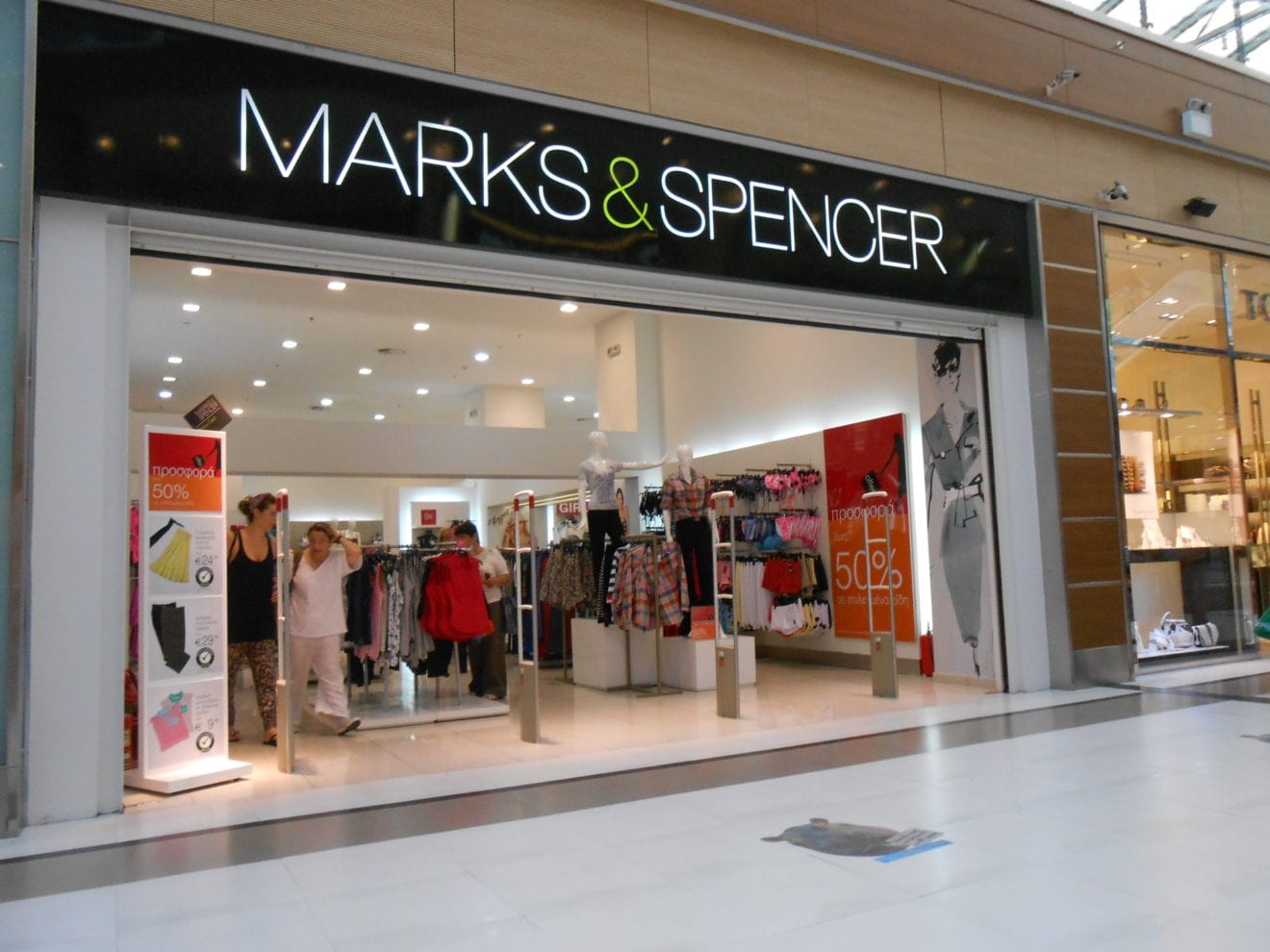
    M&S says its food sales grew in both total and like-for-like terms in the March quarter as it repositioned its offer.

    Its food division grew at a rate ahead of the total market, despite a “difficult and deflationary quarter for the food market”.

    CEO Mark Bolland said the company made “strong progress” during the quarter.

    “We continued to deliver on general merchandise gross margin and are pleased that we have achieved this whilst also improving general merchandise sales. M&S.com has returned to growth, as planned, with further improvement in customer metrics.”

    The company will release financials for the quarter – and the year – on May 20. But it says food sales rose 3.7 per cent overall and 0.7 per cent on a like for like basis. General merchandise sales rose 1.3 per cent, or 0.7 per cent like for like.

    Clothing sales were up 1.2 per cent and 0.6 per cent like for like. International sales at actual currency were down 6.3 per cent and total group sales were up 1.6 per cent.

    “Customers turned to us for special times of the year as well as everyday quality they can trust. We had a record Valentine’s Day and launched over 350 new products over the quarter. We continue to invest in price in order to stay competitive while protecting the gross margin,” said Bolland.

    Outside the UK, results were mixed. “Macro-economic issues particularly in our Russia, Ukraine and Turkey franchise partnership, coupled with further weakening in the Euro, have significantly impacted International second half profit,” the company’s statement said. But key priority markets such as India “continue to perform well”.