Tag: Analytics

  • The role of telecoms in a growing big data analytics market

    The role of telecoms in a growing big data analytics market

    In today’s data-driven world, more organizations are investing in big data analytics to improve business performance and build business resiliency as the world experiences unprecedented digitalization.

    According to IDC, big data and analytics (BDA) spending in the Asia-Pacific region, has been on the rise. In 2020, revenue for BDA solutions reached US$22.6 billion, representing a growth of 12% from the preceding year. IDC predicts that this revenue will grow with a five-year CAGR of 15.6% for the period from 2019 to 2024.

    Banking is the top vertical leading the overall BDA market, followed by the telecommunications sector, where big data analytics has been applied to predictive customer churn analysis, for instance.

    Since telecom operators handle billions of records every day, the use of big data converts raw data into meaningful insights that are valuable to enterprises and the government.

    In the region, China accounts for the largest share of the BDA solutions market, driven by banking and state and local government. Even Chinese factories have turned to big data to focus on the domestic market when exports were disrupted last year. When overseas demand dropped and China was at the height of the pandemic, factories turned to e-commerce giants like Alibaba and JD.com to track consumer behaviors. Within just three months, Alibaba successfully helped 300,000 Chinese export factories to focus on local consumers.

    To secure tech supremacy, China is investing heavily in emerging innovations. Last month, China’s state media announced a US$3 billion plan to build a supercomputing center to analyze data obtained from space by the end of the year. The center will provide big data services for industries such as the aerospace and marine sectors as early as next year.

    Taking cues from the central government, companies are also investing in big data. Last month, tech giant Tencent and venture capital firm Sequoia China led a US$25 million funding round in a Chinese big data startup to capitalize on global digitalization efforts.

    In Malaysia, where big data analysis is still in its early stages, IDC has forecasted that the BDA market will grow from US$1.1 billion in 2021 to US$1.9 billion in 2025. In this research commissioned by Malaysia Digital Economy Corporation (MDEC), findings show that the services sector will dominate the BDA market, contributing 64% of total spending, followed by banking and telecommunications, with both contributing to a third.

    Malaysia has plans to become a regional data hub leader, with capabilities such as big data, IoT and AI. Last month, Microsoft announced that it is establishing its first data center in Malaysia’s Greater Kuala Lumpur area. Estimated to cost US$1 billion, this investment is expected to create 19,000 jobs and generate US$4.6 billion in revenue for Malaysia.

    New revenue sources across sectors
    Amid big data growth and advances in big data analytics, global telecom operators are well-positioned to take advantage to compete. Apart from transforming customer experiences within to reduce customer churn and improve operational efficiency, the telecommunications industry is in a unique position to mine the sheer volume of data for other sectors as data becomes a key differentiator to stand out among the competition.

    Insights into big data present telecom operators’ monetization opportunities when offered to organizations across increasing industries that are recognizing its perks. Such industries include logistics and shipping, as well as the retail industry.

    In the logistics industry, for instance, historic data and pattern analysis that take into consideration seasons and cycles can be used for predictive analytics. Insights from data can be used to predict future volumes, route planning using real-time analytics on weather and traffic conditions for route optimization, and more efficient dispatch of transportation vehicles to prevent delays. Predictive analysis also enables robotic systems to scale inventory management in warehouses as needed. Essentially, big data analytics offers visibility and transparency throughout the supply chain so that firms can better respond to immediate real-time information for smoother operations.

    Big data also promotes client segmentation and target marketing to attract and retain existing clients in the retail sector. For example, telecom operators can run analytics on consumer data that are sought after by retailers to enhance existing targeted marketing campaigns. More specifically, behavior analytics carried out by telecom operators can help retailers connect with their buyers both online and offline and decide if it is worthwhile opening a store or franchise in a particular precinct.

    Given that the telecommunications industry is inextricably linked to organizations in today’s digital age, data-driven insights are an important driver for the continued relevance and prosperity of organizations across diverse sectors. The onus is on telecommunications operators to tap on this growth area.

  • Siemens MindSphere Offers Cloud-Based Motorcycle Analytics

    Siemens MindSphere Offers Cloud-Based Motorcycle Analytics

    A team of scientists from Siemens is developing a new cloud-based real-time motorcycle analytics program called MindSphere. The system uses a series of sensors fitted around the bike that monitor the machine as well as the environment around it. The MindSphere system automatically uploads data to the cloud in real-time, so in case of a competition machine, the team in the pits can review the information within seconds of the bike entering a corner, or while negotiating a bump on the tarmac. While there are already systems in place which monitor motorcycle performance, the current system uses telemetric data which is recorded and stored and then needs to be downloaded to review after a few laps or test runs.

    The system can monitor the lean angle of the bike, rear tire temperature, GPS position, air temperature, the speed of the bike, acceleration, and deceleration, and also fork travel. The number of systems monitored by MindSphere is limited only by the number of sensors that can be fitted on the bike. And if it’s any indication, the system opens up a long list of possibilities and measuring almost all kinds of parameters related to a race bike, like pitch, yaw, brake pressure, rear-wheel slip, and more.

    The MindSphere system is being developed by a team of scientists led by Petra Fuchsikova, a Siemens scientist from the Czech Republic. Fuchsikova works as a consultant for the digital enterprise and the open, cloud-based Internet of Things (IoT) operating system from Siemens. She is also an accomplished motorcycle racer and has been at the forefront of testing the new system by connecting her race bike to the cloud.

  • Telkomsel to adopt Kinetica analytics platform

    Telkomsel to adopt Kinetica analytics platform

    Indonesia’s Telkomsel has arranged to adopt the Kinetica advanced analytics platform to help it transform the customer experience for its users.

    The operator will use the Kinetica engine and NVIDIA graphics processing units (GPUs) to enable real-time analytics, location-based visualization and AI capabilities.

    Telkomsel plans to use thee capabilities to deliver data-driven customer experiences and to enable real-time financial and business reporting.

    “The rapid growth in mobile devices, digital users, and the micro-services nature of prepaid across the Indonesian market has led to exponentially more data generated than ever before,” Telkomsel CIO Montgomery Hong said.

    “This influx of extreme data presents a massive opportunity to develop new, personalized, digital lifestyle experiences for Indonesian consumers. Unlike traditional database solutions, the Kinetica engine is purpose-built for extreme data and provides real-time data analysis and location intelligence across our business, from prepaid and postpaid mobile, to digital lifestyle services (video, gaming, music), to mobile financial services, and digital advertising for starters.”

  • AirAsia rides on big data analytics

    AirAsia rides on big data analytics

    The airline that made flying more affordable for Malaysians since 2001 is now looking to up its game by using big data analytics to mine data on 80 million unique passengers at its disposal, to personalise and anticipate travelling patterns for marketing purposes.

    “We have a database of about 80 million unique individuals. We know where they like to fly to, or when they like to fly during the year, or how many holidays they take maybe during the year.

    “Now, the marketing side has already started employing data analytics there, to actually start targeting certain portions of passengers on specific dates or specific periods of the year that they go on holiday,” AirAsia Bhd CEO Riad Asmat told last week.

    “We can be more specific and will go further, not now but at one point, where maybe we can offer you as an individual, your preferred destination on the right date … and say we will give you a nice package at a discounted rate and all that,” he added.

    On data protection, Riad gave an assurance that the data trove is one of its most important assets which, as a “very responsible organisation”, the company is very protective of at all times and use responsibly.

    “We don’t share our information with any other parties but ourselves. If you notice what we are doing is we bring expertise inhouse. We employ people and bring in expertise,” he explained.

    Riad said while the airline is utilising its current resources, it is also on a continuous lookout for expertise and new technology.

    Besides marketing and ticket purchases, digitalisation has enabled AirAsia to improve operational efficiency, through the use of data in features such as live reporting and operations review from the previous day, made available to the team on a daily basis.

    This, according to Riad, enables the team to identify and tackle challenges and come up with preventive measures.

    “The airline bit is the traditional bit but it will be 100 times enhanced with digitalisation,” he quipped.

  • They’re only human: Big data made simple

    They’re only human: Big data made simple

    Big data has become one of the big buzzwords of retail in 2017. But many retailers remain confused by what it means and how to use it.

    Cue a team from Scotland who just three years ago founded a startup called Big Data For Humans.

    They weren’t your typical team of ‘tech guys’ but by a group of highly experienced retailers with decades of shop floor customer experience under their belts. Their mission: harness the power of big data to bring an unprecedented depth of insight into customers – not just as lines on a spreadsheet but as groups of ‘humans’ with unique tastes, needs and spending habits.

    “It’s one of those ideas that didn’t come to us overnight. It came to us gradually,” recalls co-founder and CEO Peter Ellen. “I was a retailer for about 20 years as a founder, and latterly as CEO, of a retailer in the UK which grew pretty quickly throughout the 1990s. One of the key rationales there was that we were really customer focused – we knew which customers delivered the most sales and we analysed carefully how we could use those relationships to drive growth in the business.”

    In 2005 Ellen co-founded a business called Maxymiser, a cloud-based software solution that tests, targets and personalises what customers see on a web page or a mobile app, substantially increasing engagement and revenue. It was ultimately sold to Oracle in the US.

    “We dealt with digital marketers as well as general marketers. What became very clear was that very, very few of those digital marketers actually knew who their customers were and some couldn’t even tell you what a customer was. One of them said ‘Is that like a non-unique visitor?’ And I said, no that’s like a human,” Ellen recalls.

    “The dictionary definition of a customer is someone with whom you transact. The culture being created around digital marketing is such that people are starting to categorise anyone as a customer… Someone who rocks up to your digital store or anywhere else, rather than someone who actually buys something.”

    Lurkers vs spenders

    “When I was a retailer it was very important to differentiate between the people who hung around your store and the people who actually spent serious cash. Online, I think, that problem is magnified many, many times over. And with retailers facing increasing costs of acquisition online, under constant pressure of dealing with occupancy costs offline, and with all the other marketing costs they’re surrounded with in multichannel, it is economically critical that retailers build relationships with the customers they have. Those people deliver 80 per cent of your profits and if you leave that process to chance – or leave them to an email marketer to knock out a couple of emails here and there on a random basis – you’re probably missing out on the biggest profit and revenue opportunity your retail business has.”

    Ellen is constantly amazed how many retailers have no idea who their customers are. “They guess who their customers are or they use technology invented in a bygone era to do the job.”

    The problem identified, the solution was already there. Or was it? The technology required to measure and monitor customer behaviour meaningfully is very technical. Analysts use complex tools to understand it, then there is an uneasy transition to transfer that information in a usable format to the people running the marketing and managing actual stores.

    “We realised retailers fell into two groups: One was retailers who didn’t bother doing anything with their customer data because it seemed like too nasty or scary a project to attack because of the technical challenges and the cost. Then there was a second group who had invested vast sums of money into customer analytics and employed analytics teams but often the rate at which they were able to get the insights into the hands of people who actually wanted to do something with it was really slow.

    “And the cost associated with that process was really high. So it was almost easier for retailers to go on ignoring their customers and carry on acquiring them over and over many times with different methods and losing money in the process.

    “So we thought: that’s not right. It’s economically unsustainable. We watched some businesses growing and growing through omni channel where the costs got higher and higher the bigger they got. And their profit shrank as their sales grew. We thought: It’s time to do something about that. If we can simplify the process in a smart way, we could help a lot of retailers around the world.”

    That’s how Big Data for Humans thus became the first company in the market to develop an automated customer insights platform which has transformed the way retailers understand their customers and sell to them, helping deliver deeper understanding of customers, more effective marketing, increased customer value and thus higher revenue. At its heart is the ‘Customer Graph’, which empowers business users at all levels to use automated customer insights to power their marketing.

    “We realised that one of the best ways to understand people in the modern world is through networks and that’s how we understand our place in social [media] and professional networks as well. So why don’t we do something similar to understand customers in the retail business?”

    Overcoming barriers

    “We found there were barriers to achieving that goal. Most of them around the fact using graphs is a more complex and technically difficult thing to do for an analyst but we realised if we could automate the process, and do it well, we could produce incredibly powerful insights that anyone in the marketing team could pick up and run with. We spent about a year on the basics of that before we launched the company and since then we’ve been growing in Europe and Asia very fast and getting some amazing results.”

    Since opening a Singapore office last October, the company has signed up Philippine Seven Corporation – the local operator of the 7-Eleven convenience store network – adding the brand to an international list already including AirAsia, Tesco, Selfridges and Jelmoli.

    “We are new to the region, but we have been talking to businesses in Thailand, Malaysia, Singapore and the Philippines. Hong Kong is definitely one of our next steps and we are speaking to some great businesses there.”

    Big Data for Humans works within retail sectors ranging from convenience stores to luxury and in size from small businesses to multinationals. The concept is easily scaled to fit different sized companies.

    “The smallest retailer we deal with would have tens of thousands of customer records, whereas the largest might have 60 million.” Data sources the company starts with range from loyalty-scheme information, or data collected from e-commerce receipts. “You generally find a retailer has some degree of data coverage.”

    The business hosts workshops in Europe and Asia in a bid to ‘demystify’ big data, the most recent held in Kuala Lumpur in May. During the two-hour sessions, retailers are challenged to rank their needs for information using a ‘playbook’. The retailers rank goals in order of priority, such as upselling, cross-selling, retention and win-back. They then drill down into subcategories like (within retention) seasonality prediction, implementing a VIP program, improving the conversion from first to second order and enhancing customer sentiment during the purchase process. There is no hard-sell at these seminars – rather they help retailers understand where their business is at and how using their own data can make a difference.

    For example, Tesco used data to cross-sell customers making weekly shops for shelf-stable foods into more regular shoppers buying fresh foods where the margins are higher. “Obviously they were buying fresh food, they just weren’t buying it from Tesco,” explained Ian Webster, chief customer officer at the Kuala Lumpur workshop. Using big data to drive a tailored marketing campaign, Tesco converted 15 per cent of ‘family supplier” shoppers into fresh food shoppers.

    Train-of-thought

    “In analytics there is something called a train-of-thought analysis where you sit an analyst down in front of data and everyone says: well that’s amazing – but what are we going to do now?,” explains Ellen.

    “Often they come up with interesting things that nobody can use. So in our software and our playbook we take a highly prescriptive approach to how you turn the data results you have in your business into money. Because that’s really all we are interested in. We guide people down that path and our software looks at what is the most important data you need in retail – we believe that’s mainly around people, products and money. And then we guide them through that process so that the output tells them who the customers are, what they want, what they might want in the future, how much they are worth, how often they shop, where they shop and all the main things they need.

    “And then through our methodology we help them plan a customer marketing program across their business and channels that should deliver an increase in annual revenue.

    “Big data provides a massive competitive edge because now retailers can actually plan their customer marketing communications and strategy in their overall business rather than in one channel. A lot of marketing is done in channel now where the company says: ‘I might send them an email on a Monday, an SMS on a Tuesday and a flyer on a Wednesday’, whereas our solution enables our clients to see what the opportunities are within the retailer’s customer base and how they can sell more.”

    Once they’ve worked that out, explains Ellen, they can calculate which channels are the best to contact the customer groups. It might mean direct relationships in the luxury sector, or reaching out by emailing special offers in high-volume businesses.”

    After only a matter of months in Asia, Ellen and his team are already seeing differences compared with European retailers.

    “Because Asian retailers often have experience running multiple locations and brands across multiple [territories], a lot have developed large databases for cross-brand marketing activities.”

    Big data is clearly in retailers’ lives to stay – and Ellen argues there is a need to understand it and make the most of it if retailers are to build a competitive edge – and more importantly optimise their sales.

    “It comes down to the economics of how you’re going to get more revenue from your customers. Retail is all about selling more to the customers you have.”

    “Embrace data,” adds chief marketing officer for Asia, Helen Wasserman. “You have to embrace it.”

    And study your customer life cycles, adds Webster. “A retailer might have customers who shop every week, every month or every five years. Treating those customers the same is not a good idea. If someone buys from you every three years and you don’t see them for a month, that’s not an issue. But if you normally see a customer every week and you don’t see them for a month, you should be worried.”

  • The age of self service data

    The age of self service data

    A recent EY– Forbes Insights research report  clearly shows the value organisations get from the strategic use of data; the most mature respondents of its survey were found to be considerably more likely to enjoy growth in revenues and operating margins of 15% or more, along with significant improvement in their risk profile.  No wonder all areas of the business are looking to data to support their drive for modernisation and transformation.

    A challenge is that across the organisation there are many different requirements being placed on a company’s data – and until now access to analytics was reserved for either the data scientist or business users needed significant IT support, just to get a limited set of standardised set of reports run at set times.

    So how can an enterprise make sure all these demands are met with the right data at the right time and in the right format, giving each department and job function the ability to use data they need – in short, how can we facilitate the age of self service?

    Let’s take two examples of how requirements can differ, and why opening up an organisation’s data to self service should be a priority.

    It is often the Marketing department that is the first to harness data driven technologies and tools.  Those that are the most mature and comprehensive in their use of analytics, as compared to their peers, have been shown to gain a 56% greater return on marketing investments, and 10 times greater year on year increase in annual revenue. Common initiatives focus on seeking cross channel insights, better targeting of customers in real time with the next best offer, improved customer engagement and ultimately demonstrating how their actions contribute to the bottom-line.

    Other areas of the business are also turning to data for help; take HR, for example. Similar to Marketing, companies advanced in employing workforce analytics consistently outperform competition, increasing revenue per employee by up to 26% and being 2.5 times more likely to improve their leadership pipeline. They are looking for analytics to help them identify the employee skills and strengths that will help make an impact on business performance, understand workforce challenges, and better align people strategies with business strategies, so that they can more easily attract, nurture, and retain top talent.

    While the business roles, goals and use of data are different, there are common themes: the need to use multiple data sources, present data visually in a simple and easily understandable way, and demonstrate business impact. To deliver on these business goals, enterprises must empower staff to self service data so that they can be met without the need for expensive, time consuming and sometimes restrictive technical or IT support.

    What does this mean in terms of how data should be handled and distributed in an organisation? How can the age of self service data be made a reality?

    A driving force for democratising data in the workplace is the cloud.  Making enterprise class analytics available to all and from anywhere, quickly and cost-effectively, it is also bringing new and powerful visualisation technologies into the hands of the business user.

    Able to be deployed as a hybrid solution, new cloud-based analytics capabilities can be linked to data sources which can remain either in place, on-premises, in the cloud or a mixture of on-premises and the cloud, giving massive flexibility.  It helps organisations quickly and easily dip a toe in the water and test out the cloud or undertake a managed transition, thereby avoiding a “big bang” approach. Given that most companies have multiple legacy systems at different stages of their lifecycle, it enables them to gain maximum value from past investments.

    Gaining maximum value from these new investments is also key.  With cloud, it can be all too easy for the different departments to go out and buy in a SaaS solution.  This can lead to there being different solutions in place across the company that do not work together and as a result create new data silos.  As the true value of data is gained, when it can be pooled so that everyone can access it and unexpected correlations made, it is essential that IT has a part in the implementation of these new solutions. That way the entire organization’s analytics needs can be catered for and underpinned by a platform for success.

    The age of self service data is a business need today. The key is to look across the business at each job role or line of business and seek to understand their different requirements will evolve for the future, not just today. This approach will also lead IT to be an enabler for an organisation that maximises value from data in unique and impactful ways.

  • Malaysia’s MMU, Teradata ink pact on big data analytics skills

    Malaysia’s MMU, Teradata ink pact on big data analytics skills

    Multimedia University, Malaysia (MMU) and Teradata have announced a strategic partnership to collaborate on education and research in an effort to cultivate the next generation of data science professionals and experts in Malaysia.

    Through this co-operation, MMU will gain access to the Teradata University Network (TUN), a web-based portal that provides complementary teaching and learning tools used by more than 45,000 students around the world to share expertise, access knowledge as well as information on how to enhance both curriculum and align research to the current industry needs.

    Teradata University Network currently has over 5,500 registered faculty members, from over 2,400 universities, in 115 countries, with thousands of student users.

    A key to the success of Teradata University Network is that it is led by academics to ensure the content will meet the needs of today’s classrooms.

    Leveraging the partnership, MMU’s Faculty of Computing and Informatics will offer a Data Science Specialization as part of its Bachelor of Computer Science degree.

    This step was taken following the formalization of a Data Science Institute (DSI) at MMU last month designed to cater to both research and industry engagement of MMU’s expertise in this area.

    “This MoU facilitates greater input from a leading industry player, and Teradata has committed to provide experts to support exposure to our students and staff alike to its services and solutions,” said MMU president Ahmad Rafi Mohamed Eshaq.

  • Qlik and Esri Singapore join forces to redefine visual analytics

    Qlik and Esri Singapore join forces to redefine visual analytics

    Qlik, a leader in visual analytics, today announced its technology partnership with Esri Singapore, the country’s leading Geographic Information System (GIS) technology provider.

    The collaboration will see Esri Singapore and Qlik working together to educate industries on the benefits of synergising geographic and spatial analytics.

    Smart mapping: making intelligent decisions with geographic information

    Esri’s ArcGIS Online is a collaborative, cloud-based technology platform that allows users to easily create, share and access content rich maps, applications and data. The technology collects location information contained within an organisation’s data and translates static data into useful, intelligent maps. Different locations have unique characteristics, and organisations need to identify, qualify and understand the connections between people, places and events. When mapping analytics is combined with a powerful visual analytics platform, organisations can add a new dimension to the practice of analysing information by translating complex datasets into the universal language of smart maps.

    Additionally, by integrating location information with data in real-time, businesses can unearth relationships, patterns and trends that would otherwise remain hidden. Esri’s ArcGIS Online maps are compatible with both QlikView and Qlik Sense. The Qlik Sense extension is available on Qlik Branch – a collaborative workspace and open exchange that provides customers, developers and partners simplified access to the open and powerful APIs of Qlik solutions. “More than 80 per cent of our business data is location related. From understanding your customer information and their behaviours to managing chronic illness, pandemic patterns, and even business impact due to accessibility of transport networks – location essentially links different sets of business information together to provide executives with better informed decision making.

    Through our partnership with Qlik, we aim to help organisations understand the value of letting users see their data in new and provoking ways, allowing them to develop actionable plans to address real-world challenges, said Thomas Pramotedham, Chief Executive Officer, Esri Singapore. “From retail sales performance to urban planning, being able to seamlessly merge intelligent mapping with visual analytics is critical to smart, data-driven decision-making. Qlik is proud to partner with Esri Singapore to promote the benefits of combining mapping technology and visual analytics for organisations to drive better decision making. We look forward to pursuing more innovative projects together in the future,” said CK Tan, Product Marketing, Qlik Asia Pacific.

  • Orange Business launches IoT and analytics suite globally

    Orange Business launches IoT and analytics suite globally

    Orange Business Services has announced the worldwide launch of Datavenue, its IoT and data analytics modular suite.

    Datavenue will help multinational and large national corporations seize the endless opportunities offered by the IoT revolution, the operator said.

    Already 56% of decision makers consider IoT as strategic. Use cases include improving safety and user experience within smart cities by connecting street lights or parking meters, as well as improving quality of life by connecting medical devices to monitor a person’s health remotely.

    Datavenue is supported by Orange Business Services’ 700 IoT and analytics experts worldwide, as well as data scientists, developers, consultants, statisticians and IoT security experts.

    Datavenue includes four modules:

    1. Select relevant objects and sources of data. Orange offers a range of certified and tested connected objects, such as sensors, cameras or modules to connect existing assets. Datavenue has a catalog of data that includes population movement analytics using anonymized data from mobile networks.
    2. Connect objects reliably with the most suitable and secured networks. A truck travelling cross borders or an agricultural sensor in a field would require different networks. To address the wide diversity of needs, Orange provides a range of connectivity options. These include future-proof global cellular networks and innovative capabilities, such as eUiCC, worldwide fixed and satellite networks, as well as low-power solutions, such as LoRa.
    3. Manage data to improve efficiencies and create enhanced services. For example, a construction company can monitor cranes worldwide to prevent problems and reduce maintenance costs. Managing data in real-time enables technicians to solve issues remotely or to arrive on site with the right material, reducing service interruptions. Orange offers both cloud-based and on-premises software solutions, encompassing remote device management, processing and visualization.
    4. Control key elements of enterprise transformation projects. Orange experts aim to provide end-to-end security and data protection, integration with information systems and service scalability. Throughout the entire project and beyond, customers can rely on Orange to ensure the solutions are future-proof and adapted to market evolutions.

    “We have developed extensive vertical expertise around IoT and data analytics in several sectors, including automotive, industry, smart cities, healthcare and smart homes,” Orange Business Services VP of IoT and analytics Olivier Ondet said.

    “Our solutions have already improved performance and employee safety through industrial machinery monitoring, enhanced patient care with remote assistance, and enriched citizen well-being with smart city services. This is now all being brought together to support the international launch of Orange Datavenue.”

    Datavenue was first launched in France in 2015. Orange today operates more than 10 million active B2B objects and processes 65 million items of technical data per minute – all fully compliant with data protection regulations.

  • Hangzhou to harness Alibaba Cloud’s AI, analytics tools

    Hangzhou to harness Alibaba Cloud’s AI, analytics tools

    Alibaba Cloud announced at its recent Computing Conference that it will provide its AI, deep learning and data analytics capabilities for two new cutting-edge developments in China.

    Initiated by the Hangzhou government, the “Hangzhou City Brain” is set to address the city’s urban living challenges. As the hub to consolidate data and provide real-time analysis, the “Hangzhou City Brain” will rely on Alibaba Cloud’s AI program ET and big data analytics capabilities to perform real-time traffic prediction with its video and image recognition technologies.

    The project will support transportation departments’ efforts to ease traffic congestion and provide users with real-time traffic recommendations and travel routes.

    “By establishing the Hangzhou City Brain, Hangzhou is taking the lead in harnessing artificial intelligence and deep learning technologies to promote greater sustainability and improve the quality of urban living for Chinese citizens. Alibaba Cloud is proud to support and be part of this important development, “said Dr Jian Wang, chairman of Alibaba Group’s technology steering committee.

    With automated traffic system capabilities, intelligent adjustments of traffic lights will be performed on the spot; when a vehicle changes direction, the green light will automatically be extended. The pilot of world’s most advanced smart traffic management system in the Hangzhou’s Xiaoshan District, which started in September this year, has since seen an increase in traffic speed by 11%.

    The project is being led by the Hangzhou government in coordination with 13 firms including Alibaba Cloud. As part of the project, a research and development team of scientists from various companies has been formed.

    Forming the backbone of the “Hangzhou City Brain” data processing and analysis capabilities is Apsara, Alibaba Cloud’s large scale computing operating system, which is able to cluster millions of servers into a super computer and to support a multitude of cloud-based services by analyzing terabytes of data points. This computational engine is one of the largest of its kind in the world and uses propriety algorithms.

    Paving the way for astronomical data storage and analytics

    Aiming to leverage its technologies for astronomical data collection and analysis, Alibaba Cloud also announced at the Computing Conference its research collaboration with the National Astronomical Observatory of China (NAOC) on deep space exploration.

    The plans are to set up a data and research centre for astronomy, as well as a virtual solar observatory which will be supported by Apsara’s massive scalability and advanced capabilities to process astronomical data.

  • Analytics shift to predictive, prescriptive

    Analytics shift to predictive, prescriptive

    While the value of historical and descriptive analytics persists, the balance has been tipped towards more predictive and prescriptive analytics, according to a new report from Machina Research.

    For many decades, enterprises have solidly built their knowledge, strategic insights and processes around well-established approaches to data management and analytics.

    Terms such as ETL (extract-transform-load), data warehouses, data-marts and business intelligence became solid ground on which to build strategic and business approaches and decisions.

    With millions of connected devices providing real-time data about the physical world as it is, data management and analytics processes have been inundated with new requirements and opportunities.

    Machina Research said business and strategic decisions are being augmented with highly operational and predictive/prescriptive analytics, shifting the ground from “look at what happened” to “what may happen” and how best to address those potential scenarios.

    “One of the more significant developments as part of, and in parallel to, developments in IoT, is the approach of two different ‘waves’ in data management—Big Data and Fast Data,” said Emil Berthelsen, principal analyst at Machina Research.

    “Both are characterized by scale and speed, and the combination or aggregation of these two waves have led to significant changes and new requirements on data management technologies,” said Berthelsen.

    He said the landscape of IoT data and analytics is certainly evolving and will include a new age of machine learning, augmented insights and managed autonomy, as well as a new set of enabling technologies and data governance tools.

  • Baidu adopts Qlik Sense for self-service analytics

    Baidu adopts Qlik Sense for self-service analytics

    Baidu is Qlik Sense to improve its cloud services platform and provide an enhanced data analytics experience to its customers.

    Qlik Sense will be integrated into Baidu Palo to enable self-service visualization analytics on the Palo OLAP engine, giving Chinese enterprises the ability to achieve greater agility in aggregating data from various sources to make data driven business intelligence decisions.

    By incorporating Qlik into the Palo OLAP engine, Baidu aims to provide start-ups in China, especially those enterprises on Baidu Cloud, with greater support in driving data analytics among cloud or filed sources.

    “We are very excited to implement Qlik Sense into Palo OLAP to provide users in China with innovative self-service visual analytics,” said Yang Liu, General Manager, Baidu Open Cloud.

    “Qlik Sense has an open API and powerful features, and is suitable for enterprise level applications. The close cooperation and technical integration of the two companies has led to more powerful and flexible business intelligence solutions, which will greatly enhance the user experience.”

    “With the popularity of big data, cloud computing in BI, social networks, and mobile applications in China these past few years, integrating a powerful visual analytics solution into China’s largest search engine company will only lead to greater value for businesses,” said Toni Adams, senior vice president Partners and Alliances, Qlik.

    “Businesses of all sizes using Baidu’s Palo OLAP will now have the ability to take their analysis to a deeper level, leading to a better understanding of their business, as well as their customers.

  • Viavi, Brocade readying subscriber data analytics solution

    Viavi, Brocade readying subscriber data analytics solution

    Viavi Solutions and Brocade are developing a joint solution that enables mobile operators to capture and analyze subscriber data to quickly resolve quality of experience (QoE) issues.

    Viavi’s xSIGHT Targeted Subscriber Search (TSS) leverages the Brocade Packet Broker and Brocade Session Director to filter and deliver targeted subscriber traffic so only the data required to resolve customer experience problems is forwarded to xSIGHT TSS. In addition to significantly reducing resolution time for QoE issues, the solution enables mobile operators to open up opportunities for new value-added services.

    The joint solution is in production at a US Tier-1 mobile operator to help provide better QoE to their subscribers and enable new premium services.

    The xSIGHT TSS and Brocade Packet Broker target specific subscribers—for example, VIPs or corporate customers covered by SLAs—and capture correlated control and user plane traffic, at a scale applicable to a Tier-1 mobile network.

    By reducing the average time spent gathering end-to-end subscriber traces from several hours to minutes, xSIGHT TSS and the Brocade Packet Broker may save mobile carriers up to tens of thousands of labor hours per year.

    xSIGHT is Viavi’s customer experience assurance portfolio including an analytics platform fed by agents distributed throughout the network. The agents passively analyze traffic in real time, build network and application performance metrics and selectively store traffic for troubleshooting purposes. xSIGHT TSS is an agent which can be programmed to capture all control and user plane data for targeted subscribers defined by the service provider.

  • Nokia launches real-time mobile network analytics platform

    Nokia launches real-time mobile network analytics platform

    Nokia is launching “Real-Time Mobile Network Analytics”, said to be the industry’s first solution to give operators an end-to-end view of mobile networks from individual subscribers, applications, devices and operating systems, network elements, cells and calls.

    The analytics link the performance of applications and devices to network issues in real-time, effectively making every mobile device part of a network test bed.

    This enables operators to pinpoint potential causes of service degradation much more rapidly than they can today since they no longer need to consult a myriad of tools and correlate the data from them manually. It also offers engineering teams a proactive way to understand over the top (OTT) application impacts on the network and optimize opportunities.

    The Real-Time Mobile Network Analytics solution integrates three network analytics tools widely deployed by more than 200 operators.

    These include Nokia Wireless Network Guardian that provides engineering teams with analytics on applications, network and devices; Nokia Traffica that supports Network Operations Centers by linking application-level analytics to real-time troubleshooting and root-cause analysis in radio and core networks; and Nokia Network Performance Optimizer that provides deeper, call-level analytics.

    The combination of tools, sources data directly from radio access and core networks with fewer tapping points than standard solutions.  This reduces the need to expand interfaces for legacy network probes. It also offers open Application Programming Interfaces (APIs) that enable operators to use the collected data for their big data strategies.

  • MemSQL brings enterprise security to real-time Analytics

    MemSQL brings enterprise security to real-time Analytics

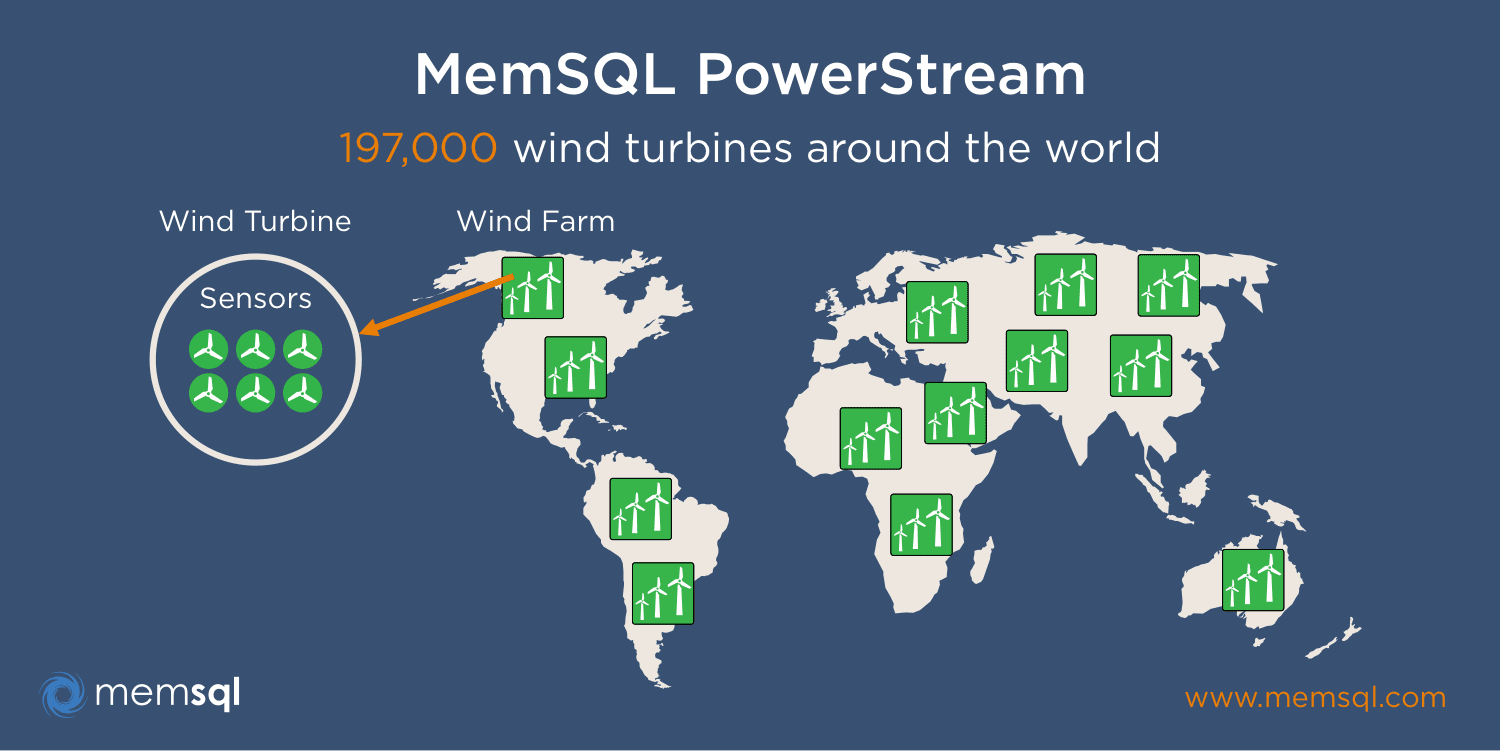
    MemSQL has introduced new enterprise security capabilities to further the adoption of solutions requiring both speed and advanced security.

    With this additional functionality, enterprises can streamline the security and administration of MemSQL, resulting in wider adoption and maximum protection in performance environments.

    Specifically, MemSQL is introducing Role-Based Access Control (RBAC) for its distributed database platform. RBAC provides enterprises a flexible way to set security measures by user role and group—all while maintaining maximum performance.

    “More companies across more industries now view real-time workflows as a critical technology enabler,” said Nikita Shamgunov, CTO and co-founder, MemSQL. “In many cases, security cannot be compromised just to keep up with the data. With the addition of RBAC, MemSQL customers can scale the number of users and roles to tens of thousands without compromising performance—absolutely critical in today’s real-time world.”

    MemSQL customers can now use simple and robust security configurations to create a role with specific capabilities, which then can be associated with a user and specified access. The RBAC feature was extensively run with a rigorous set of functional and performance tests, including inside a FIPS 140-2 environment.

    Shamgunov said real-time is the new standard for processing and analyzing data. Historically, companies with stringent security requirements have been kept at arm’s length from achieving real-time results.

    By including RBAC in its latest release, MemSQL furthers adoption of real-time data in environments requiring comprehensive security. This includes global industries such as healthcare, IoT, and government.