Tag: Ant Financial

  • Ant Financial Capitalizes on Open Banking Amid Pandemic

    Ant Financial Capitalizes on Open Banking Amid Pandemic

    Alibaba-backed Ant Financial grew its client base of mainland Chinese lenders by 175 percent in just two months through April this year, as the nation grappled with the ongoing pandemic.

    Paying customers from the banking sector grew to over 200 (out of around 4,500 nationwide) during the period which also saw collaboration-related inquiries surge 400 percent.

    Ant Financial, formerly known as Alipay, was able to capitalize on open banking opportunities in a timely fashion as more than 800 branches were permanently shuttered, according to Chinese regulators, which placed pressure on brick-and-mortar lenders to seek income elsewhere. This was especially the case for players that lacked scale for in-house development.

    The bigger banks might want to build their own private cloud, but we’re targeting the smaller lenders who might not have the budget to build their entire online infrastructure from scratch,» said Liu Xin, who oversees the fintech giant’s cloud unit, in a Bloomberg report.

    One successful user of Ant’s open banking solutions was Shenzhen Rural Commercial Bank Co. which was able to cater to significantly increased traffic and heightened digital demands. It managed to cut loading time on its app by four-fold to less than half a second to meet the various needs of its 15 million retail customers.

    According to the bank, nearly all of its transactions during the height of the outbreak were executed online.

    While we’ve always prioritized mobile development, the growing demands from our customers made us realize our existing infrastructure wasn’t enough,» said Zhan Bin, head of the network finance department at Shenzhen Rural Commercial Bank.

  • Ant Financial Services targets 40 million service providers

    Ant Financial Services targets 40 million service providers

    Ant Financial Services subsidiary Alipay says it will spend the next three years opening up its online payments platform to support the digital transformation of 40 million service providers across China.

    “The service sector in China is still in the nascent stages of digital transformation, and that means it has huge untapped potential,” said Ant Financial CEO Simon Hu.

    He said consumer demand for digitalized services has been expanding rapidly in Mainland China with the number of searches for lifestyle services within the Alipay app surging 300 percent last year alone. Currently, just 1 million service providers are on the platform.

    “Alipay’s success has always depended on the success of our partners, and that is why we believe the only way to best serve consumers is to open up our platform further, so service providers can better tap into consumer demands,” he said.

    “Building a one-stop digital lifestyle platform not only creates immense value for our users – it will also play an essential role in accelerating the digital transformation of the service industry and unlocking more growth opportunities.”

    Alipay will work with 50,000 independent software vendors to help the service providers digitize their operations, helping service companies in fields including consumer retail, food-and-beverage, hotels-and-accommodations, transportation and medical services.

    Hu said that during the coronavirus outbreak, Alipay launched an incentive program for service providers to create mini-programs that could help consumers deal with the impact, including providing for the needs of people forced to stay at home and minimizing physical contact with service providers. It took just one week for more than 1200 developers to respond and 181 mini-programs were created allowing ‘contactless services’ in areas such as grocery delivery, medical and legal advice, logistics and public services. One, offering free medical advice by AliHealth, attracted an average of 700,000 visits daily.

    “Amid the ongoing coronavirus outbreak, we have also seen how digital technology can be used to help service providers become more agile and respond effectively to the fast-changing market environment,” said Hu.

    Another example was Beijing grocery startup Meicai, which connects farmers with consumers and restaurants. A mini-program making its delivery services available to Alipay users amid the coronavirus outbreak drew more than 800,000 new users and attracted orders from 80 cities across China.

  • Ant Financial Invests in Vietnam E-Wallet

    Ant Financial Invests in Vietnam E-Wallet

    Ant is expected to have significant influence and provide technical expertise to the e-wallet, created locally by a small start-up.

    Chinese digital finance giant Ant Financial has acquired a «sizeable» stake in Vietnamese e-wallet eMonkey, «Reuters» reported on Thursday.

    The acquisition, which is below 50 percent, wasn’t publicly reported because of fears over anti-China sentiment in Vietnam, the report said, citing people familiar with the matter.

    Vietnam’s consumer market has immense potential, with a population of almost 93 million and a surging middle class, high internet and smartphone penetration, and a fast-growing liking for e-commerce. The competitive digital payments space in the country is led by Standard Chartered e-wallet Momo.

    While Ant has an office in the country, eMonkey already has the necessary operating licenses and has established partnerships with financial institutions and telecoms, making market penetration easier, the news wire said.

    Ant, a fintech affiliate of e-commerce giant Alibaba, on Thursday appointed company veteran Simon Hu as its new chief executive officer.

    The online finance giant controlled by billionaire Jack Ma started out in 2004 as a way for Alibaba Group to pay for goods. It has since evolved into a $150 billion behemoth covering micro-lending, insurance, credit-scoring, and money-market funds. Ant has a domestic user base of 900 million.

  • Ant Financial and Vanguard Launch Advisory Joint Venture

    Ant Financial and Vanguard Launch Advisory Joint Venture

    Ant Financial and Vanguard establish a joint venture to provide advisory services to China’s onshore retail market.

    U.S. asset manager Vanguard would provide customized solutions to investors based on their risk profile, time horizon, and investment objectives, according to a report citing a statement, with a minimum investment of 800 yuan ($115) to access the service through Ant Financial’s Alipay app.

    The tie-up marks the second partnership Ant Financial has established in the last month. In late November, it signed a partnership with Postal Savings Bank of China to focus on areas such as digital payments, online lending, rural finance, and corporate finance alongside the establishment of a joint lab to explore other innovations.

    Vanguard, which launched a wholly foreign-owned enterprise in China in May 2017, recently bolstered its onshore capabilities with the hire of Yan Pu as its managing director and China head of investment management group.

  • Ant Financial Establishes Startup Fund

    Ant Financial Establishes Startup Fund

    Ant Financial is building a roughly $1 billion investment fund to back start-ups across Southeast Asia and India.

    Alibaba’s financial technology arm is looking to expand its reach across the region using a huge war chest. Plans for the fund are at an early stage. Jack Ma’s financial group is keen to expand outside of China, where rival Tencent has a strong grip in the personal finance space.

    Ant Financial Group also expressed interest in bidding for a digital banking license in Singapore

  • Ant Financial Eyeing Singapore’s Digital Bank Licences

    Ant Financial Eyeing Singapore’s Digital Bank Licences

    Jack Ma’s Ant Financial Services may apply for a virtual banking license in Singapore, potentially making a splash in the regional banking landscape.

    Ant Financial Services is the latest contender to enter the race for a digital banking license. Up to two licenses are on offer for full digital banks, while another three are on offer for wholesale banks. The firm did not disclose whether it will seek a retail or wholesale license.

    We are actively looking into this opportunity,” said Ant Financial, who was quoted in a report. Ant’s payments app Alipay and its local e-wallet partners had about 900 million annual active users in China and 1.2 billion globally as of June, according to Bloomberg Intelligence.

    Singapore’s move to open up the banking industry to technology companies follows in the footsteps of Hong Kong, where Ant has obtained a license. So far, OCBC has agreed to join peer-to-peer lender Validus Capital and Temasek Holdings’ venture capital arm to apply for a wholesale license before the year-end application deadline.

    South-east Asia’s digital lending market is expected to more than quadruple to US$110 billion by 2025, according to a report by Bain & Co, Google, and Temasek Holdings.

  • Alibaba’s Ant Financial buys WorldFirst for $700m

    Alibaba’s Ant Financial buys WorldFirst for $700m

    Alibaba subsidiary Ant Financial says it plans to buy UK-headquartered money-transfer company WorldFirst. And in separate news, the Chinese e-commerce behemoth is in discussions over investing in the Metro China wholesale retail business.

    The WorldFirst deal will allow Ant Financial to gain market share in Europe’s fintech and payments industries and will give it an established retail network of currency-exchange stores covering cities including Sydney, Australia; London and Amsterdam, as well as throughout Asia. It has 600 employees in seven international offices and claims to have exchanged more than US$67 billion for 130,000 customers since its launch in 2004.

    The company also had outlets in the US but has reportedly closed these to avoid potential regulatory hurdles with the sale to a Chinese-owned business.

    Ant Financial last year unsuccessfully tried to acquire US-based money-transfer company MoneyGram, largely due to opposition from US lawmakers.

    Metro move

    Meanwhile, Alibaba is in talks to buy a share of German wholesaler Metro AG’s Chinese business.

    Neither company has confirmed or denied the talks are underway and they are at an early stage and may break down.

    Metro China operates 95 stores and struggled to achieve profitability in the market until recently. Metro sales in Asia rose 7 per cent to US$1.17 billion in the December quarter.  Most of the Metro China stores are in tier 1 cities, including Beijing and Shanghai.

    Metro is holding talks with other parties as well ahead of an official sale process.

    Olaf Koch, Metro’s CEO, confirmed this week that the company was considering potential partnerships with Chinese companies. Metro and Alibaba have already cooperated online.

    “We are growing continually and we are profitable [in China],” Koch said at the time Metro released its first-quarter results.

  • Ant Financial to support Shanghai Pudong Development Bank’s digital transformation

    Ant Financial to support Shanghai Pudong Development Bank’s digital transformation

    Ant Financial Services Group (“Ant Financial”) has signed a strategic cooperation agreement with Shanghai Pudong Development Bank Co., Ltd. (“SPD Bank”) to support the bank’s digital transformation with Ant Financial’s technological capabilities. The agreement is the third of its kind announced this month between Ant Financial and established banks, following partnerships with Huaxia Bank and China Everbright Bank.

    Ant Financial and SPD Bank will partner in online risk management, including fraud prevention, with the former providing technological support to help the latter prevent loan, transaction and marketing fraud. The partnership will also leverage Ant’s financial-grade technologies in AI, supply chain finance, biometric identification and risk management.

    “Ant Financial and SPD Bank share the same vision for the future. With this partnership, we will explore how to improve efficiency in banking operations, as well as how to leverage technology to create greater value for our users,” said Eric Jing, Executive Chairman and CEO of Ant Financial.

    In addition to sharing technological capabilities, the partnership will allow Ant Financial and SPD Bank to strengthen collaboration on a broad range of inclusive finance initiatives, from improving user experience while using online and offline payment services, to providing secure, convenient and efficient financial services for small and micro businesses.

    Last year at the 2017 Ant Fortune Open Platform Conference, Mr. Jing indicated that Ant’s technologies would be opened up to current and potential partners, with the only criterion being whether the partnership is innovative enough to deliver value to users.

    The partnership with SPD Bank is just one example of how Ant Financial’s technologydriven solutions are enabling financial institutions to deliver inclusive services efficiently and at scale. In addition to the bank partnerships announced this month, also in May, Ant Financial’s consumer finance service Huabei announced that it would partner with financial institutions to provide consumer financing solutions, while Alipay added two new third-party money market funds to the Yu’e Bao spare cash management platform.

  • bKash and Ant Financial in strategic partnership to promote financial inclusion for the unbanked in Bangladesh

    bKash and Ant Financial in strategic partnership to promote financial inclusion for the unbanked in Bangladesh

    The leading mobile financial services provider of Bangladesh, bKash Limited (“bKash”) and Ant Financial Services Group (“Ant Financial”), operator of Alipay, today announced a strategic partnership to promote financial inclusion for the unbanked and underbanked communities in Bangladesh. The partnership involves Ant Financial investing into bKash and increasing its technological capabilities, allowing it to provide greater convenience and security in mobile financial services throughout Bangladesh.

    Established in 2010 by founding shareholders, BRAC Bank Limited and Money in Motion LLC, bKash is running a network of more than 180,000 agents throughout urban and rural areas of Bangladesh with over 30 million registered accounts.

    “Along with its investment, Alipay brings the best payment technologies built by thousands of engineers and the knowledge of applying those technologies to economies like China which went through a massive transformation in recent years. Such track record makes Ant Financial a fitting partner for bKash since Bangladesh too has a large population of 160 million and an economy that is advancing rapidly. This investment opens many new opportunities for bKash and demonstrates the confidence a world-class player is placing in Bangladesh,”said Kamal Quadir, Chief Executive Officer of bKash.

    “Ant Financial and bKash share similar goals, in that we want to bring equal opportunities to everyone here in Bangladesh. bKash can tap on the experience Alipay has built over the last decade serving 800 million users together with our strategic partners worldwide. As part of Ant Financial’s global strategy, we are keen to share our technology know-how with partners like bKash, who has successfully brought financial services to the largely unbanked population in Bangladesh. bKash is managed by a strong team with deep local knowledge and execution capabilities. We are confident, together with bKash, we can bring highly secure and inclusive financial services to address the needs of local people and small businesses here,” said Eric Jing, Executive Chairman and Chief Executive Officer of Ant Financial.

    “bKash, a company taking financial services to the doorsteps of millions of unbanked people in Bangladesh, will benefit immensely from this landmark partnership with Ant Financial. It will help bKash significantly step up its activities in changing and positively impacting on the lives of millions,” said Selim R. F. Hussain, Managing Director and CEO of BRAC Bank.

    bKash and Ant Financial were both named in Fortune Change The World 2017 list, a recognition given to companies that have had a positive social impact through activities that are part of their core business strategy.

    International Finance Corporation (IFC) and the Bill & Melinda Gates Foundation have been shareholders in bKash, since 2013 and 2014 respectively.

  • Apple Retail Stores in China to Accept Alipay Mobile Payments

    Apple Retail Stores in China to Accept Alipay Mobile Payments

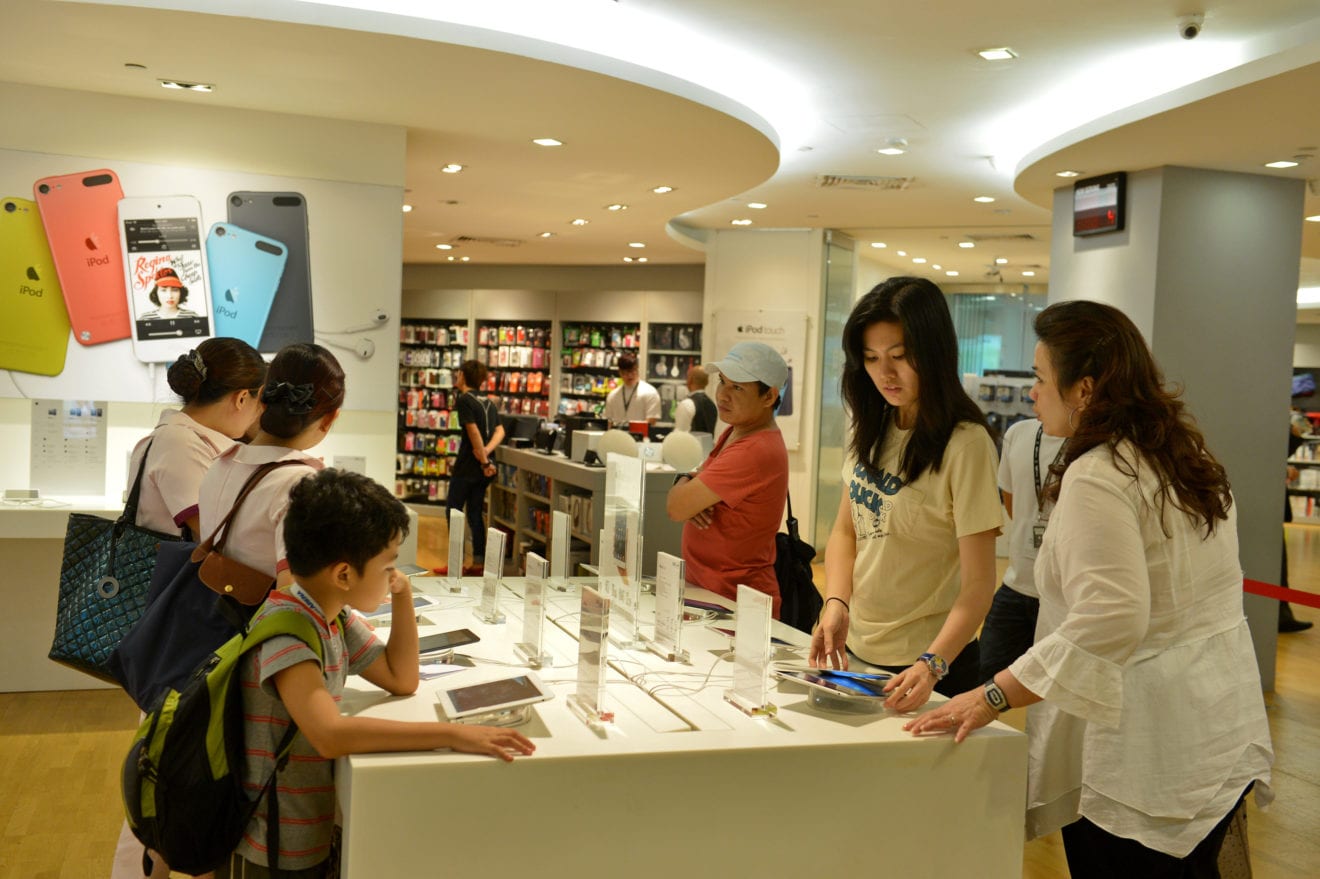
    Apple China will accept Alipay in its stores – the first third-party mobile payment system to be accepted at any Apple store worldwide.

    This follows lukewarm reception in China for Apple’s own payment system, says Reuters.

    The IT giant will accept Alipay payments across its 41 brick-and-mortar retail stores in China, says Ant Financial, which runs the system for Alibaba.

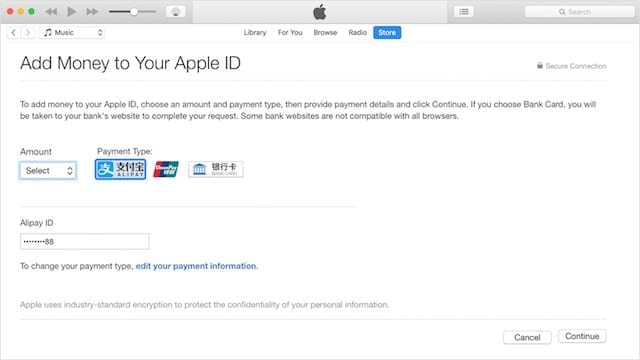
    Meanwhile, Apple China’s website, iTunes store and App Store have been accepting Alipay for more than a year.

    Apple is shifting user data to China-based servers this month to meet local rules, and last year removed dozens of local and foreign VPN apps from its Chinese app store.

    China’s official Xinhua news agency says Apple will build its second data centre in China, in the Inner Mongolia Autonomous Region, after setting up a data centre in Guizhou.

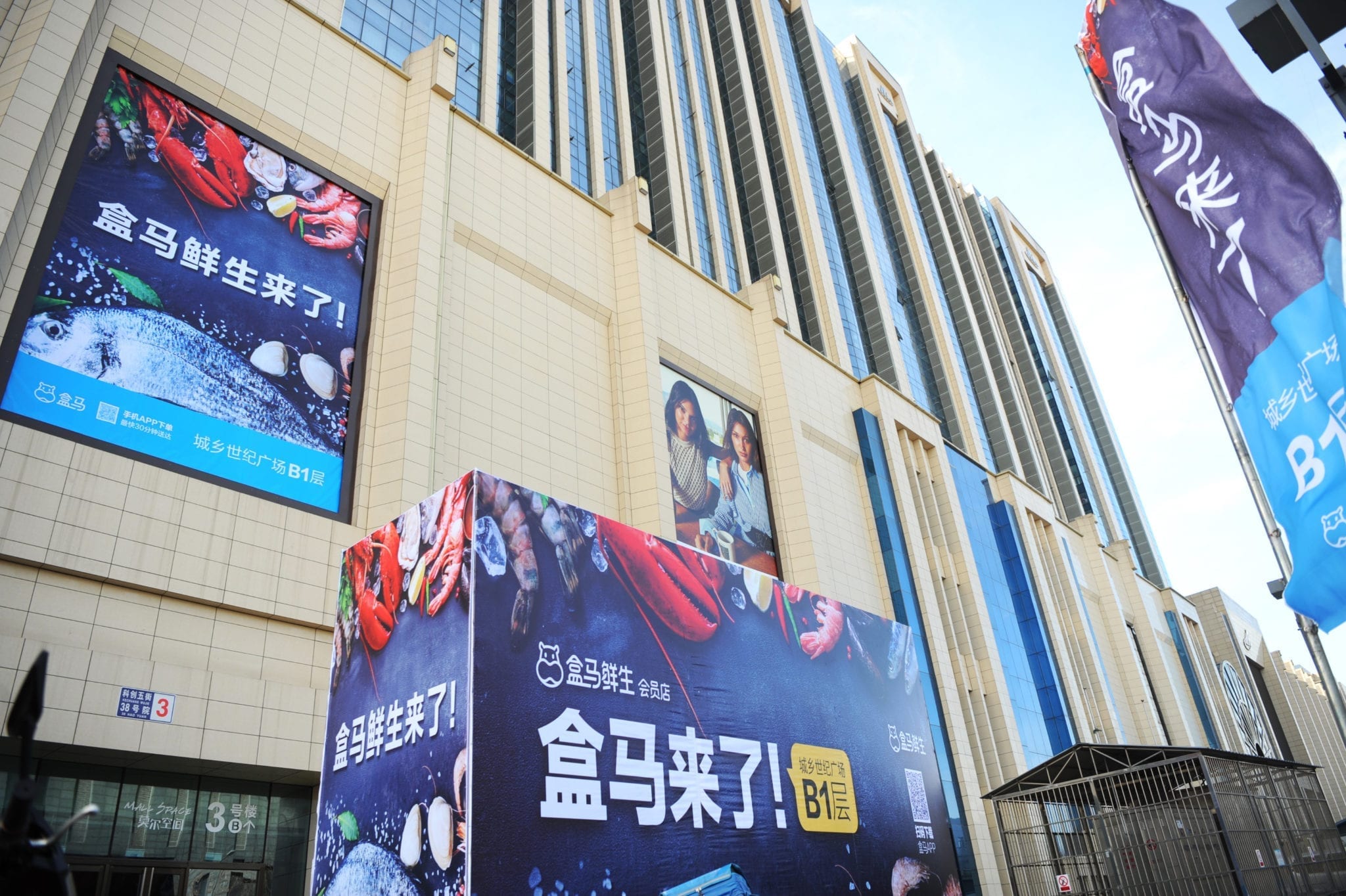
  • Alibaba’s Hema supermarket chain to open more stores

    Alibaba’s Hema supermarket chain to open more stores

    Alibaba’s Hema supermarket says it will open three stores in the Chinese city of Xian by the end of this year.

    The offline supermarket’s expansion into the northwestern Chinese city follows an announcement that it will add 30 locations in Beijing by year-end, rapidly expanding its store count in the capital to 35 from the current five.

    The Beijing and Xian expansion, together, more than doubles Hema’s presence – currently 26 stores in seven Chinese cities, including 14 in Shanghai, five in Beijing, two in Ningpo, two in Hangzhou, and one each in Shenzhen, Suzhou and the Southwest city of Guiyang.

    Launched in March 2015, the ‘new retail’-driven supermarket is the purest manifestation of Alibaba’s ambitions to marry online with offline, offering consumers a “more-efficient and flexible” shopping experience.

    It starts with a mobile app that allows for researching of products while consumers browse the store. All payments are handled through Alipay, the mobile-payments platform owned by Alibaba’s related company Ant Financial. To improve consumers’ experience, the data collected from transactions is used to personalise recommendations, while geographic data helps to plan the most efficient delivery routes. Residents living within a 3km radius of a Hema store can have their groceries delivered to their doors as quickly as 30 minutes after ordering.

    Government partnership

    Expanding Alibaba’s Hema supermarket in Xian is part of a series of pacts Alibaba Group signed with the city government on Tuesday, including a memorandum of understanding for Alibaba’s new Silk Road headquarters, which the company will build in the city in the next few years. The two parties signed a total of 11 strategic partnership agreements spanning cloud computing, smart logistics, New Retail and financial services.

    Tianhua Zhong, vice president of Alibaba Group, said the partnership with the city government has been progressing smoothly since talks began last summer, adding that the next stage of collaboration will focus on five areas: e-commerce and new retail, City Brain projects, accessible financial services, smart logistics and culture and entertainment.al

    In addition to being the historic gateway to the Silk Road, “Xian is an important part of the ‘Belt and Road’ initiative, and building our Silk Road headquarters [in the city] will help to expand Alibaba’s reach in the midwest, in addition to economic zones along the [modern-day] Silk Road,” added Zhong.

    The Belt and Road Initiative, announced by Chinese President Xi Jinping in 2013, is an ambitious, US$90-billion infrastructure project to connect Asia, the Middle East, Europe, and Africa through global trade.

    Earlier this year, Xian became the first city in China to have its entire subway system accept mobile payments via Alipay – passengers can pass through subway gates simply by scanning a QR code. Upcoming collaboration projects with Ant Financial, Alibaba’s related company and operator of Alipay, include allowing cabs throughout the city to receive payments using the digital wallet, as well as providing accessible credit and financing options to the thousands of small and midsized businesses based in Xian.

    “With this agreement, Cainiao will work with Xian City to build a smart logistics hub for the northwestern region, which would serve the needs of the Belt and Road Initiative. Delivery speed in the midwest has a chance of becoming on par with eastern regions,” said Zhong.

    Alibaba’s logistics arm, Cainiao Network, is expected to invest RMB1 billion in the logistics hub, which would house the unit’s cutting-edge technologies such as automated production lines, AGV robots and robotic arms. Constructions are slated to begin this year and to be put into use before the 11.11 Global Shopping Festival comes around in 2019.

  • Ant Financial aims for ‘cashless’ cities in China

    Ant Financial aims for ‘cashless’ cities in China

    Alibaba’s financial arm Ant Financial is looking to create more “cashless” cities across China, with the latest agreement inked with Tianjin municipality in North China.

    The city-wide “cashless” campaign pushed by the e-commerce giant is the fourth installment to hit China, following similar initiatives in Hangzhou — where Alibaba is based — followed by Wuhan and Fuzhou.

    As with the other “cashless” cities, Tianjin residents will soon be able to pay for an array services and goods using their mobiles when paying bus fares and medical bills, as well as school tuition and social security.

    It will be officially rolled out by the end of 2017, as reported by the China Economic Times.

    However, going “cashless” does not mean money will become obsolete. It will simply allow customers to decide on the way of payment, Jing Xiaodong, the company’s CEO, said

    Tianjin was chosen, said Jiang, as it has a good foundation for Internet Plus to make it the first cashless city in the north.

    With a resident population of 155 million, sone 69 million are real-name registered Alipay users, according to China Economic Times. The city ranks 10th nationwide by mobile payment activities.

    Ant Financial was a leading sponsor of a cashless alliance set up in April. The company earlier vowed to make mobile payment accessible in the whole country in the coming five years.

    2017 has proven a busy year for Alibaba. Last week, the world’s largest e-commerce platform operator said it plans to enter Macau with a bevy of products and services. Last month, the group acquired an 18% stake in Lianhua Supermarket. Before that, the Chinese giant said it had invested US$1 billion in Southeast Asian online retailer Lazada Group, increasing its stake to more than 80%.

    Looking ahead, said that in fiscal 2018 sales may increase by up to 49 per cent, 10 percentage points higher than estimates.

  • Alibaba plans technology boost

    Alibaba plans technology boost

    Alibaba plans to form independent research and development teams to build up core technologies that support its vision of serving 2 billion people in the future.

    The giant e-commerce and technology company unveiled its grand plan at its inaugural tech summit, “New Technology, New Future”, at its Hangzhou headquarters in China. About 5000 engineers attended, plus thousands of other staff members, technical and otherwise, watched via live stream.

    “Alibaba’s success in commerce has outshone its light of technology over the past 18 years,” Alibaba Group chief technology officer Jeff Zhang told the summit, describing it as “a tech-driven company that seamlessly combines business and technology”.

    Over the past several years, Alibaba has rolled out a wide range technologies for an array events and business areas, including Alibaba’s 11.11 Global Shopping Festival, payments, cloud computing and logistics. Zhang said Alibaba had reached “a critical point in technology innovation” and should gear up to develop more core technologies for future success.

    Executive chairman Jack Ma said he expected Alibaba to become the world’s fifth-largest economy in the next 20 years, serving 2 billion customers, creating 100 million job opportunities and enabling 10 million businesses to make profits. To hit that goal, he said the new economy he envisioned should be built on the continuing development of technological infrastructure.

    “An economy that serves 2 billion people must be backed by solid technological capacity. To shoulder the future responsibility, we will build Alibaba’s own ‘NASA”, Ma said, referring to the National Aeronautics and Space Administration, an organisation he admires for what it has contributed to mankind through technological advances.

    “We will establish new teams to develop the core technologies of machine learning, chips, the Internet of Things, operating systems and biometric identification.”

    He said Alibaba once developed figurative “hand grenades”, but the new R&D-focussed team and mechanisms would allow it to develop “missiles”.

    Ma said Alibaba needed to have a discerning, independent eye when judging technology trends. Technology developed by Alibaba should empower people in the virtual economy, making it more inclusive and creating opportunities. Technology needed to ensure the new economy would be sustainable and lead to its participants having happy and healthy lives.

    Speaking about computers and robots, and the possibility they might one day replace or displace humans, Ma said machine learning should help humans do things that otherwise could not be done. Machines should serve as assistants to humans, rather than robbing them of human pleasure or becoming rivals.

    Alibaba has more than 20,000 engineers on staff, including more than 500 with doctoral degrees. Among its 36 partners — the group’s powerful decision-making body — nine come from a technology background.

    Alibaba has been investing in new technologies for many years, and has developed many key technologies of its own. These include…

    Cloud computing

    Apsara: A super computational engine developed by Alibaba Cloud. It offers clients powerful computing capability, robust technology services and software that can affect broader society.

    Database systems

    OceanBase: The first applied large-scale financial database system in China, developed by Alibaba Group and Ant Financial.

    Artificial intelligence

    ET: Artificial intelligence services that can be broadly applied to different areas in society. Cases include the Hangzhou City Brain master plan, which has enhanced the city transportation department’s efforts to ease traffic congestion. It has also helped Guangzhou International Airport with flight management.

    Personal recommendations: Tailored shopping pages on Taobao/Tmall with a most-suitable product recommendation for each buyer. About 6.7 billion personalised shopping pages were created during Alibaba’s 11.11 Global Shopping Festival last year.

    Ali Xiaomi: A smart personal shopping assistant on Alibaba’s e-commerce sites. About 95 per cent of daily inquiries can be handled by Ali Xiaomi.

    Ant Financial’s smart customer service: This can answer about 97 per cent of daily inquiries.

    Quantum computing/communications

    The Chinese Academy of Sciences -­ Alibaba Quantum Computing Laboratory was established in 2015. Quantum cryptographic data-transfer services became available on Alibaba Cloud this year.

    Virtual reality

    Buy+: Offers the world’s first end-to-end VR shopping experience, in which the entire transaction can be completed, from browsing, to order, to payment.

    Biometric recognition

    Facial recognition payment: Alipay enables facial-recognition payment with an accuracy of more than 99 per cent. It is listed among the top 10 technology breakthroughs this year by the MIT Technology Review.

    Alibaba is also using biometrics to recognise eye patterns, irises, palm prints and handwriting.

    Geolocation technology

    QianXun location network technology: Using BeiDou satellite technology, this can achieve a positioning accuracy of 1 millimetre.

    Operating systems

    YunOS: The world’s third-largest mobile operating system works in mobile phones, cars, TVs, tablets and other Internet of Things items.

    Blockchain

    Ant Financial has started deploying this technology for charitable donations. Blockchains are a database — an open ledger that records transactions between two parties in an immediate, secure, verifiable and permanent way.

    Smart logistics

    Alibaba’s smart-logistics technology includes last-mile delivery robot and its intelligent warehousing system.

    -Susan Wang
  • Ant Financial invests in Globe Telecom’s Mynt

    Ant Financial invests in Globe Telecom’s Mynt

    Alibaba’s Ant Financial is making its first foray into the Philippines via partnership with Ayala and an investment into Globe Telecom’s Fintech business unit Mynt.

    The fresh capital infusion will help Mynt achieve its vision of becoming a world-class online and offline payment provider as well as scale up its mobile wallet services and quickly expand its digital financial services.

    Mynt is a wholly-owned subsidiary of Globe Capital Venture Holdings (GCVHI) under Globe Telecom. Upon closing of the transaction, Ant Financial will own a substantial minority interest in Mynt, while Ayala Corp will acquire a minority interest. GCVHI will hold the remaining equity interest.

    Ernest Cu, Globe President and Chief Executive Officer, Ernest Cu said the capital infusion from will help position Mynt to democratize financial services in the Philippines.

    Mynt is pioneering mobile and digital initiatives that provide financial services that previously were not available to most Filipinos. It is currently the biggest mobile money base in the Philippines with over 3 million registered customers and 1 billion pesos ($19.9 million) worth of transactions per week.

    Mynt claims to be the only company in the country that serves as a one-stop shop for Fintech services for consumers, merchants, and organizations through GCash and Fuse Lending.

    Mynt operates GCash and Fuse Lending. GCash is a micropayment service used to buy prepaid load, pay bills, send money, make donations, shop online, and purchase goods without the need for cash.

    Fuse Lending offers personal and business loans to unbanked and underserved Filipinos through the use of mobile technology, alternative data, as well as innovative credit scoring methods.

  • Ant Financial teams with Thailand’s Ascend Mobile

    Ant Financial teams with Thailand’s Ascend Mobile

    Ant Financial Services Group has announced a strategic agreement with Thailand fintech company Ascend Money.

    Under the agreement Ant Financial will invest in Ascend Money, with the aim of accelerating the growth of a mobile lifestyle and digital financial services platform in Thailand and support the company’s growth in Southeast Asia.

    Headquartered in Bangkok, Thailand, Ascend Money operates in six countries, including Thailand, Indonesia, the Philippines, Vietnam, Myanmar and Cambodia. Ascend Money targets two under-served groups, including digital consumers with its innovative mobile wallet application and the under-banked with its massive agent network.

    It currently provides payment services such as domestic and international remittance, bill payment, top up services, online and offline payments and payroll services. Future services will include lending, insurance and investment.

    Together with Ant Financial, Ascend Money will grow its online and offline payment and financial services ecosystem and strengthen its payment services for users and merchants. The deal represents Ant Financial’s first-ever investment in a Thailand-based company. With this partnership Ant Financial, which also runs Alipay, the largest mobile lifestyle and payment app in China, will provide Ascend Money with strategic and technical support for the growth of its business.

    Leveraging Ant Financial’s capabilities in payment, Big Data, risk control and cloud computing capabilities, the partnership with Ascend Money aims to offer Thai consumers comprehensive and equal access to financial services. Ascend Money is Ant Financial’s first partner in Southeast Asia and second globally after Paytm in India.

    “Ascend Money’s mission is to enable everyone access to innovative financial services, leading to better lives,” said Suphachai Chearavanont, Chairman of Ascend Group. “The shared vision of financial inclusion and company values in creating opportunity and sustainability have lead us to this partnership.”

    “Ant Financial is setting its footprint worldwide, not only to provide services for its Chinese users, but to promote equal access to financial services globally,” added Ant Financial SVP Douglas Feagin.

    “Partnerships are vital for Ant Financial’s growth and we want to work alongside companies around the world who share our missions.”

    In early 2015 Ant Financial joined forces with Paytm, the world’s fourth largest e-wallet, to promote secured digital payment to local users in India. Ant Financial is also working with dozens of global payment partners, including Concardis, Ingenico, Wirecard and Zapper in Europe, First Data and Verifone in North America, Paysbuy and Counter Services in Southeast Asia, Recruit in Japan and KICC and ICB in Korea.