Retail News CRM

Tag: Anta

  • Anta Sports Clinches $1.8 Billion Puma Stake, Emerges as Largest Shareholder in German Sports Giant

    Anta Sports Clinches $1.8 Billion Puma Stake, Emerges as Largest Shareholder in German Sports Giant

    Anta Sports Products, a leading sports company based in China, announced on Tuesday that it plans to acquire a 29.06 percent share in Puma from the Pinault family. The deal, worth 1.5 billion euros (approximately US$1.8 billion), will make Anta the largest shareholder in the German sports apparel manufacturer.

    In the agreement, which was outlined in a stock exchange filing, Anta will pay 35 euros per share in cash for 43 million Puma shares. This represents a considerable 62 percent premium on Puma’s closing share price of 21.63 euros on Monday. Following this announcement, Anta’s shares saw an early trading increase of 3.4 percent on Tuesday.

    The Strategic Sale

    This strategic move comes at a time when Puma is striving to regain its market position after losing ground to rivals Nike and Adidas. The brand is also currently dealing with increasing competition from rapidly expanding brands such as New Balance and Hoka.

    Anta expressed its confidence in Puma’s potential to enhance its global competitiveness and brand awareness with Anta as its primary investor. It was also stated that, upon finalizing the deal, Anta would pursue seats on Puma’s board.

    “Puma’s global business footprint and focused positioning in sports categories are highly complementary to our existing multi-brand and specialized business,” Anta expressed in a public statement.

    Expanding Market Reach

    The acquisition is likely to boost Puma’s sales in the highly profitable mainland Chinese market, while also promoting Anta’s multi-brand strategy. Anta has a successful history of acquiring and revitalizing Western sports and lifestyle brands. In 2019, for instance, Anta led a consortium to purchase Amer Sports, a company that owns brands such as racquet manufacturer Wilson and mountain sports specialist Salomon.

    The transaction follows a challenging period for Puma, as the company strives to boost sales and investor confidence under new CEO, Arthur Hoeld. In an effort to ignite a company turnaround, Puma announced in October that it would increase discounts, enhance marketing, and reduce its product range. This strategic shift also includes the reduction of 900 jobs.

    Previously, Artemis, headed by Francois-Henri Pinault, the chairman of luxury group Kering, characterized its Puma stake as non-strategic. The Pinault family received the holding from Kering in 2018 when the group refocused its operations exclusively on luxury goods.

    Puma has been grappling with weakened demand and lackluster sneaker launches, such as the Speedcat. Hoeld, who took the helm last year, has proposed a turnaround strategy focused on “brand heat,” performance products, and cost discipline.

    The deal is still conditional on antitrust clearances, shareholder approval at Anta, and regulatory approvals in China and other jurisdictions. Anta plans to organize an extraordinary general meeting, with the deal’s closure expected following the fulfillment of these conditions.

    Questions & Answers

    What percentage share in Puma does Anta Sports Products plan to acquire?
    Anta Sports Products is planning to acquire a 29.06 percent share in Puma.

    How does Anta Sports Products plan to pay for the Puma shares?
    Anta will pay 35 euros per share in cash for 43 million Puma shares.

    What is the expected impact of this acquisition on Puma’s sales?
    The acquisition is expected to increase Puma’s sales in the profitable mainland Chinese market.
  • Anta Sports Eyes Major Puma Stake: A Turnaround Hope for the Struggling German Sportswear Brand?

    Anta Sports Eyes Major Puma Stake: A Turnaround Hope for the Struggling German Sportswear Brand?

    China-based sporting goods company, Anta Sports Products, has proposed to purchase a 29% stake in Puma, the struggling German sportswear manufacturer, from the French Pinault family, according to insiders familiar with the negotiations.

    Anta Sports submitted their bid several weeks ago and has already arranged financing for the prospective acquisition, two of the sources disclosed. However, one source noted that negotiations have reached a stalemate.

    The Pinault family’s firm, Artemis, managed by François-Henri Pinault, Chairman of Kering, had been expecting bids for its Puma shares to surpass 40 euros each, said a fourth insider. The Pinault family originally obtained their shares in Puma from Kering as part of a conversion of the conglomerate into a luxury-focused entity in 2018.

    When approached for comments, both Artemis and Puma declined. A response from Anta is still pending.

    Following this news, Puma’s shares increased by up to 9%, reaching their highest value since May 2025, trading at 24.6 euros. Despite this, Puma’s market cap was 3.3 billion euros (US$3.85 billion) at the close of trading on Wednesday, a drastic 50% decrease from the same time the previous year due to a severe drop in sales.

    Arthur Hoeld, Puma’s newly-appointed CEO, revealed his recovery strategy in October following disappointing sales of releases like the Speedcat and a general decrease in revenue as customers favoured competitors such as Adidas, On, and Hoka.

    Anta, a Hong Kong-listed company with a history of acquiring and rejuvenating Western sports and lifestyle brands, has been considering a bid for Puma, a source revealed in November. In 2019, Anta led a consortium to buy Amer Sports, the owner of iconic brands like Wilson and Salomon.

    Analysts at RBC have stated that the potential sale of Artemis’ 29% stake in Puma could prove beneficial for Puma’s equity story. New ownership might increase investments in the brand, provide fresh insights, and support the early stages of Arthur Hoeld’s turnaround strategy.

    Artemis controls Kering as well as auction house Christie’s and Hollywood talent agency CAA. It has faced investor scrutiny due to the debt it accumulated as Pinault sought to diversify away from Gucci during a dip in luxury sales. A senior source close to Artemis noted in September that the Pinault family would not sell their Puma stake at the then-current market valuation but admitted the stake was “non-strategic”. Since then, Puma’s shares have increased by 15%.

    Questions & Answers

    Who has proposed to purchase a stake in Puma?
    Anta Sports Products, a China-based sporting goods company, has offered to buy a 29% stake in Puma.

    What is the estimated value of the Puma shares?
    Artemis, the Pinault family’s firm, had expected bids for its Puma shares to surpass 40 euros each.

    What has been the recent performance of Puma in the market?
    Puma’s market capitalization was 3.3 billion euros (US$3.85 billion) at the close of trading on Wednesday, which is a 50% decrease from the same time last year due to a severe drop in sales.

  • Chinese Giant Anta Sports Eyes Takeover Bid for Struggling German Brand Puma

    Chinese Giant Anta Sports Eyes Takeover Bid for Struggling German Brand Puma

    Anta Sports Products, a prominent Chinese sportswear manufacturer, is reportedly considering the acquisition of German sportswear brand, Puma. It’s understood that Anta, listed on the Hong Kong stock exchange, is currently working with an adviser to examine the feasibility of a bid for Puma. If the proposition proves profitable, Anta may collaborate with a private equity firm to proceed with an offer.

    Potential Competitors in the Bid

    Alongside Anta, other possible contenders for the acquisition include the Chinese sportswear group Li Ning and the Japanese sportswear company Asics. Li Ning has reportedly been engaging with banks to discuss financing for a potential bid, giving an early indication of the company’s interest in Puma. As for Asics, there’s speculation that it could also show interest in the German sportswear brand.

    When approached for comments on the acquisition, Anta Sports, Puma, and Asics didn’t offer immediate responses. On the other hand, Li-Ning provided a statement indicating that the company had not yet participated in any significant discussions or assessments relating to the transaction mentioned. The company further stated that its main focus remains on the expansion and evolution of its brand.

    Shareholder’s Stand

    Artemis, the private holding firm that has the biggest share in Puma and also controls Kering, the owner of Gucci, has stated that it’s exploring all options for its 29% stake. Information from a source previously revealed that Artemis had no intentions of selling their shares at the market value as of September.

    Puma’s current market valuation stands at 2.52 billion euros, equivalent to $2.92 billion. The Pinault family that manages Artemis obtained its stake in Puma in 2018 from Kering when the luxury conglomerate transitioned into a pure luxury player focusing on brands like Gucci and Saint Laurent.

    Strategy Shift

    In October, Puma’s new CEO, Arthur Hoeld, announced that the brand would decrease discounts, enhance marketing, and trim its product range. This strategy change was part of Puma’s turnaround plan following a dip in demand for its products and the impact of US tariffs on imports. The plan also included cutting 900 corporate jobs.

    The competitive sportswear market has seen Puma’s share price fall by half since the beginning of this year, losing ground to its competitors.

    Questions & Answers

    Who are the potential bidders for the acquisition of Puma?
    Anta Sports Products, Li Ning, and Asics are the potential contenders for the acquisition of Puma.

    What is Puma’s current market valuation?
    Puma’s current market valuation is approximately 2.52 billion euros or $2.92 billion.

    What is Puma’s new strategy under CEO Arthur Hoeld?
    Puma’s new strategy involves decreasing discounts, enhancing marketing, reducing its product range, and eliminating 900 corporate jobs as part of its turnaround plan.

  • Chinese Sportswear Giant, Anta Group, Targets 1000 Stores In Southeast Asia By 2025

    Chinese Sportswear Giant, Anta Group, Targets 1000 Stores In Southeast Asia By 2025

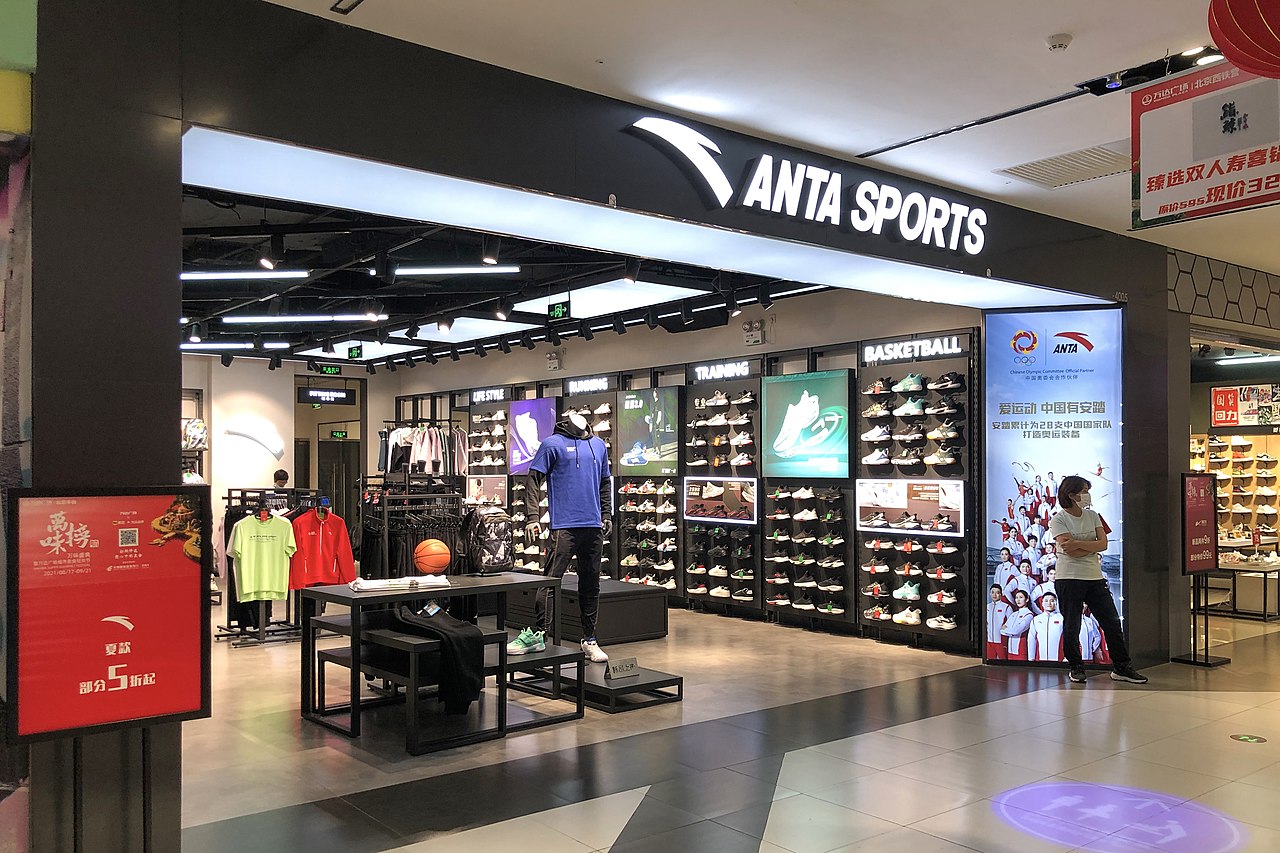
    Anta Group, a Chinese sportswear company, has announced its goal to reach a total of 1,000 stores in Southeast Asia within the next three years. Currently, the group operates almost 13,000 stores globally, including more than 200 in Southeast Asia. These stores are spread out over various countries including the Philippines, Singapore, Malaysia, and Vietnam. The ambitious expansion plan will see the group quadruple its retail presence in Southeast Asia.

    Speaking at the 2025 Asia New Vision Forum

    The announcement was made by Will Wang, Vice President of Anta Group and Chairman and President of Anta SEA, during the 2025 Asia New Vision Forum held in Singapore. The forum assembled a panel of executives from various Southeast Asian industries to discuss strategies for creating strong connections between brands and consumers at a regional and global level.

    Wang stressed the critical role of Southeast Asia in Anta’s global expansion strategy, revealing that the brand’s retail sales in the region have nearly doubled in the first half of this year compared to the same period last year. Wang attributed this success to Anta’s high-value products, localization and digitalization strategies, and the effective implementation of its “Brand+Retail” business model.

    In his speech, Wang underscored the importance of staying true to the brand’s DNA while achieving localization in each market. He stated, “It’s not just about selling products in Southeast Asia; it’s about delivering brand value and high-quality service to local consumers with standardized excellence. Our team is confident we will achieve our 1,000-store target for the Anta brand in the next three years.”

    Anta’s Global Growth Strategy

    For Anta, Southeast Asia is not only a significant market but also a strategic starting point for its global growth. The region’s expansion into neighboring markets, combined with the growth of both its offline and online businesses, has fueled a significant increase in the brand’s overseas revenue. In the first half of this year alone, Anta’s overseas revenue grew by more than 150% year-over-year.

    Anta Group’s international retail network extends to crucial markets such as the UAE, Saudi Arabia, Egypt, Kenya, and North America, all achieved through strategic partnerships. Most recently, the group opened its first flagship store in the United States, located in Beverly Hills, California.

    Questions & Answers

    What is Anta Group’s expansion target in Southeast Asia?
    Anta Group aims to open 1,000 stores in Southeast Asia within the next three years.

    What factors have contributed to Anta Group’s success in Southeast Asia?
    The success of Anta Group in Southeast Asia can be attributed to their high-value products, effective localization and digitalization strategies, and the implementation of their “Brand+Retail” business model.

    Where has Anta Group recently opened its first flagship store in the United States?
    Anta Group recently opened its first flagship store in the United States in Beverly Hills, California.

  • Sportswear label Anta opens outlet in Thailand

    Sportswear label Anta opens outlet in Thailand

    Chinese sportswear brands Anta has launched its first brick-and-mortar store in Thailand as part of its expansion plan in the Southeast Asia market.

    Located in Bangkok’s CentralWorld, the store covers an area 230sqm, embraces the Thai culture, and features designs in collaboration with local artists.

    Anta’s entry into Thailand marks the brand’s fourth expansion in the Southeast Asia market following the Philippines, Malaysia and Singapore.

    “You will also see that this is the first store in Anta where we devised a social space for customers to try on shoes, and while doing so able to engage in a bit of co-creation on the sticker bomb on the floor – we have additional stickers also for you to be a part of the co-creation process, to add onto the sticker bomb,” the brand wrote on its official statement.

    With more than 30 years of operation, Anta has a portfolio of brands including Fila, Descente, Kolon Sport, Arc’teryx, Salomon, Wilson, Peak Performance, and Atomic.

    The company is reportedly planning to launch its brand Fila in Thailand before the end of this year, and Salomon, Wilson and Descente by next year.

  • Anta Sports shows positive result

    Anta Sports shows positive result

    Anta Sports Products is planning more than 1000 new stores this year after revealing another record profit. The Hong Kong-listed Chinese sports apparel and footwear manufacturer operates more than 11,600 stores in Greater China and beyond under its own Anta brand, and banners like Fila and Descente, for which it owns regional rights.

    In September last year it led a takeover bid for Amer Sports, which owns Salomon, Wilson, Arc’teryx, Suunto, Peak Performance and Precor, among other brands – a deal likely to be completed as early as next month.

    This year’s net profit was the fourth consecutive annual record and reflects growing popularity of sport and fitness in Mainland China and a strengthening of its online offer.

    The company’s profit jumped 32.9 per cent to RMB 4.103 billion ($613.13 million) last year on sales up 44.4 per cent to RMB 24.10 billion (US$3.597 billion).

    In a stock exchange filing, Anta said it was “cautiously optimistic” about the prospects of the business in China in the coming year, despite reduced business confidence across the region. It plans to open more than 1000 Anta-branded stores on the mainland this year along with up to 250 Fila, Fila Kids and Fila Fusion stores on the mainland and in Hong Kong, Macau and Singapore.

    Anta-branded products saw a mid-teens increase in retail sales in the latest quarter compared to the same period last year, however sales in stores bearing other banners rose between 85 and 90 per cent.

    Anta Sports, was founded in 1991 as a manufacturing supplier to the footwear industry. Since then it has grown to become China’s largest domestic sportswear brand, and industry analysts estimate it is the world’s third largest by market capitalisation after Nike and Adidas.

  • Chinese sports brands back in the race

    Chinese sports brands back in the race

    A government-backed campaign to encourage healthy living is helping give Chinese sports brands traction again in the domestic consumer market.

    After three tough years with the slowing economy and over-expansion following the Beijing Olympics in 2008, the brands are ready to compete again, thanks to cutbacks in store networks and more choice in online sales channels.

    When Beijing was preparing to host the Olympics, sportswear companies began to expand aggressively, with leading brands adding nearly 1000 points-of-sale each every year between 2007 and 2011, according to Hong Kong brokerage and investment group CLSA analyst Dawei Feng.

    However, sales were undermined by cheap knock-offs and competition from expanding overseas fashion chains such as H&M, Uniqlo and Zara.

    Between 2012 and 2013, China’s biggest sports brand Anta closed 900 shops across the country. Also cutting stores from 8255 to 6133, Li Ning became profitable last year after three years of losses.

    Anta has been working with its stores on marketing, says Bloomberg Intelligence analyst Catherine Lim. It also started a children’s brand after China scrapped its one-child policy.

    Anta, which holds distribution rights to the Fila brand in China, is the official sportswear sponsor of the Chinese Olympic Committee.

    China’s five publicly traded sportswear companies have a combined market value of about $9.4 billion, or less than a 10th of Nike, the world’s largest sporting-goods maker.