Tag: antitrust

  • Grab Cuts Maximum Take on Vietnam Rides to 32% from 40%

    Grab Cuts Maximum Take on Vietnam Rides to 32% from 40%

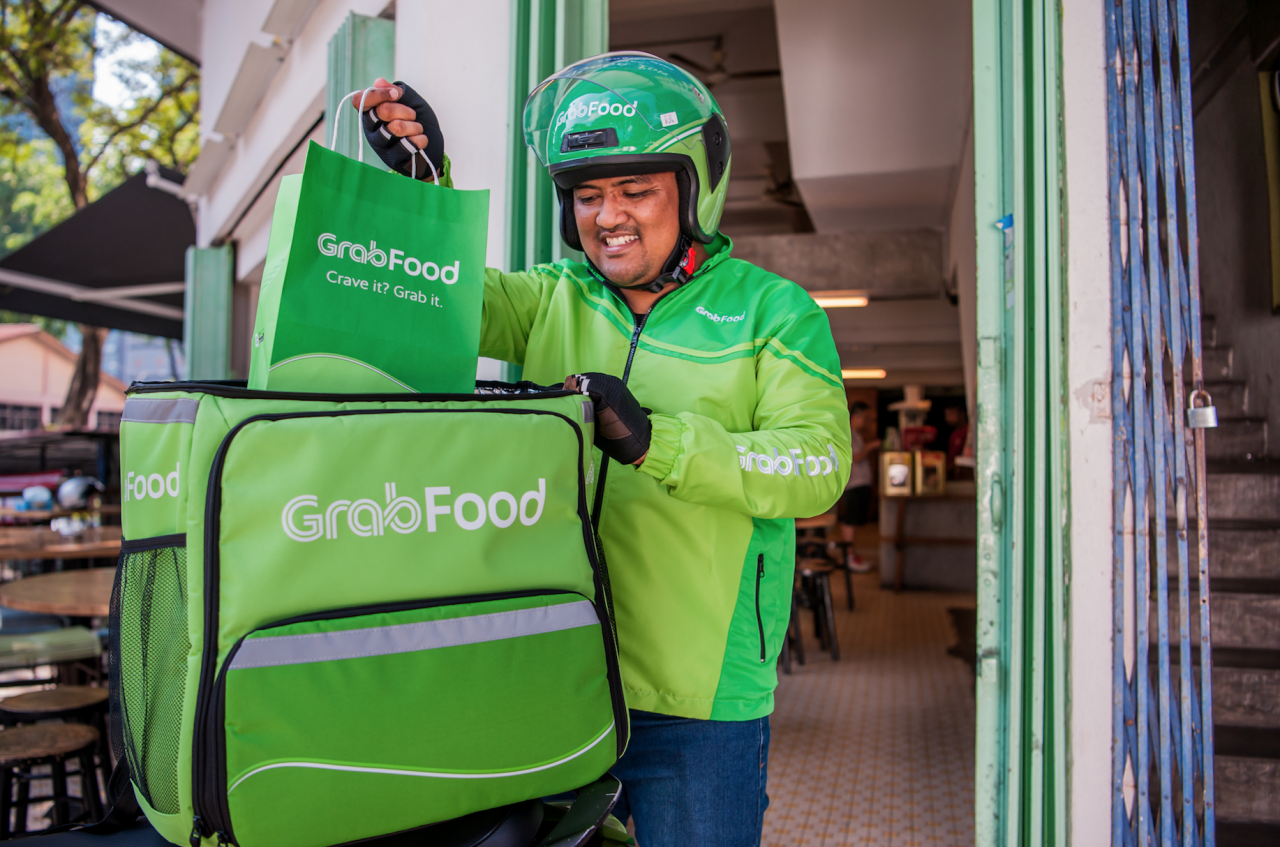
    Singapore-based ride-hailing operator Grab will reduce its maximum take from rides in Vietnam to 32 per cent from roughly 40 per cent, according to the country’s antimonopoly regulator.

    The ceiling reduction follows an official review prompted by driver complaints, which culminated in a two-day boycott in Ho Chi Minh City during September.

    Regulatory Pressure Drives Platform Changes

    Vietnam’s antimonopoly authority intervened after drivers lodged formal complaints regarding platform deductions from passenger fares. Across the broader region, fee adjustments and driver support measures are set to cost the Singapore-headquartered mobility group $115 million.

    The policy overhaul follows a similar intervention in Indonesia, where regulators capped ride-hailing commissions to shield gig workers from escalating platform fees. Southeast Asian antitrust authorities are increasingly targeting take rates that platforms expanded during their push toward profitability.

    The Cost of Driver Retention

    Aggressive fee reductions compress margins across Grab’s core mobility arm, altering unit economics in one of its key growth markets. For fleet operators and individual drivers, an eight percentage point cut in maximum platform deductions provides immediate relief against rising vehicle operating costs.

    Competitors across Southeast Asia face identical pressures. Platforms that extracted higher commissions to satisfy public market investors must now calculate whether absorbing the $115 million cost hit will insulate them from deeper statutory fee limits in neighbouring jurisdictions.

    Labor Friction Preceded Intervention

    Driver dissatisfaction boiled over into operational disruption in Ho Chi Minh City during September, when drivers staged a two-day boycott protesting excessive fees. That strike accelerated regulatory scrutiny, pushing authorities to review how the company structures driver compensation.

    Southeast Asian transport authorities are tracking whether the 32 per cent ceiling stabilizes driver supply before deciding on formal nationwide statutory caps.

  • South Korea Fines Coupang Won300.8bn over Delivery App Rules

    South Korea Fines Coupang Won300.8bn over Delivery App Rules

    South Korea’s Fair Trade Commission hit Coupang with a provisional Won300.8bn ($222.8m) administrative fine for forcing restaurant merchants into parity agreements on its food delivery platform.

    The penalty lands alongside a provisional Won331.1bn fine on market leader Woowa Brothers, operator of Baedal Minjok, bringing combined regulatory penalties across the country’s two dominant food delivery services to Won631.9bn.

    Regulators found that Coupang abused its dominant market position by forcing restaurants to offer commercial terms equal to or better than those listed on rival platforms. The company monitored six operating areas, including menu pricing and operating hours, between July 2023 and January 2026. Restaurants that failed to comply lost their status as designated WOW Stores.

    The WOW Store Squeeze

    Losing that designation carried direct commercial consequences. Coupang had restricted delivery perks for paying WOW Membership subscribers exclusively to transactions completed at WOW Stores starting in April 2023.

    The commission reported that 57,907 merchants were stripped of their WOW Store status at least once for non-compliance. The pressure worked swiftly. The share of compliant WOW Stores surged from 13.49 per cent in July 2023 to 93.78 per cent by October 2025.

    Investigators concluded that these most-favoured-nation clauses breached the Monopoly Regulation and Fair Trade Act by stifling commission competition between delivery apps. Platforms could raise take rates without fearing that restaurants would offer lower prices elsewhere to steer diners toward cheaper channels.

    Commission Calculations Under Fire

    The regulator also took aim at how Coupang calculated platform fees. Under the Coupang Eats Merchant Pricing Policy, the service calculated order amounts using pre-discount retail prices. That formula forced food vendors to pay platform commissions on price cuts they funded out of their own pockets.

    The watchdog ordered Coupang to revise the fee calculation clause within 60 days of receiving the corrective order. Additional corrective remedies cover strict prohibition of parity demands, public notification, record deletion, regular compliance reporting, and mandatory staff education.

    The watchdog also ordered a re-examination into coercive transaction conduct allegations. Differing interpretations in the examiner’s report regarding principal and secondary products had constrained deliberations during the initial hearings.

    A Duopoly Under Regulatory Siege

    Coupang and Woowa Brothers control more than 90 per cent of South Korea’s food delivery sector. The regulator argued that both operators abused their bargaining power by imposing abnormal operational terms that squeezed vendor margins and elevated consumer dining costs.

    Woowa Brothers faced penalties for similar parity demands enforced between May 2024 and October 2025, alongside sanctions for deceptively advertising estimated delivery times and coercing vendors onto its proprietary delivery fleet. For restaurant brands and food operators, the crackdown provides immediate use to differentiate pricing strategies across digital storefronts without risking algorithmic demotion.

    The antitrust action reflects a broader campaign by Seoul against platform lock-in tactics. Coupang entered the delivery sector in May 2019, initially offsetting higher commission rates against faster fulfillment before deploying membership bundling to capture market share from Baemin.

    Legal Battles Loom

    The sanction arrives while Coupang remains locked in legal battles over domestic regulatory scrutiny. Earlier this year, the US-listed firm received a record Won624.68bn fine over a customer data leak, a ruling it continues to challenge in court.

    Coupang disputed the delivery findings immediately. The company maintained that its entry into delivery had injected competition into a market where an entrenched incumbent once held an 80 per cent share, asserting that its business practices aimed to lower consumer friction.

    Coupang Eats will carefully review the final ruling and fully present its position through appropriate legal procedures.

    The Fair Trade Commission will fix the final fine amounts before issuing its written decision, while Coupang prepares its courtroom challenge and faces the 60-day deadline to overhaul merchant discount fee calculations.


  • Grab Cuts Maximum Take on Vietnam Rides to 32% from 40%

    Singapore-based ride-hailing operator Grab will reduce its maximum take from rides in Vietnam to 32 per cent from roughly 40 per cent, according to the country’s antimonopoly regulator.

    The ceiling reduction follows an official review prompted by driver complaints, which culminated in a two-day boycott in Ho Chi Minh City during September.

    Regulatory Pressure Drives Platform Changes

    Vietnam’s antimonopoly authority intervened after drivers lodged formal complaints regarding platform deductions from passenger fares. Across the broader region, fee adjustments and driver support measures are set to cost the Singapore-headquartered mobility group $115 million.

    The policy overhaul follows a similar intervention in Indonesia, where regulators capped ride-hailing commissions to shield gig workers from escalating platform fees. Southeast Asian antitrust authorities are increasingly targeting take rates that platforms expanded during their push toward profitability.

    The Cost of Driver Retention

    Aggressive fee reductions compress margins across Grab’s core mobility arm, altering unit economics in one of its key growth markets. For fleet operators and individual drivers, an eight percentage point cut in maximum platform deductions provides immediate relief against rising vehicle operating costs.

    Competitors across Southeast Asia face identical pressures. Platforms that extracted higher commissions to satisfy public market investors must now calculate whether absorbing the $115 million cost hit will insulate them from deeper statutory fee limits in neighbouring jurisdictions.

    Labor Friction Preceded Intervention

    Driver dissatisfaction boiled over into operational disruption in Ho Chi Minh City during September, when drivers staged a two-day boycott protesting excessive fees. That strike accelerated regulatory scrutiny, pushing authorities to review how the company structures driver compensation.

    Southeast Asian transport authorities are tracking whether the 32 per cent ceiling stabilizes driver supply before deciding on formal nationwide statutory caps.

  • Japan Probes 4 Major Brewers over Wholesale Price Fixing

    Japan Probes 4 Major Brewers over Wholesale Price Fixing

    Japan’s Fair Trade Commission has launched an antitrust investigation into the country’s four largest brewing groups over allegations of coordinated wholesale price increases across their domestic beer portfolios.

    Asahi Breweries, Kirin Brewery, Sapporo Breweries and Suntory Spirits together control 90 per cent of Japan’s beer market, where overall volume has dropped 40 per cent since its mid-1990s peak.

    Regulators suspect the four companies coordinated the timing and scale of price increases passed on to beverage wholesalers following rising energy and ingredient expenses. All four brewers confirmed they are cooperating with the inquiry, with Asahi Group Holdings defending its pricing adjustments by pointing to 100 billion yen ($632 million) in cumulative cost pressures accumulated across its operations in recent years.

    Stagnation in a Shrinking Home Market

    Domestic consumption patterns have shifted steadily as Japan’s population ages, younger demographics cut alcohol intake and consumers migrate toward lower-priced alternatives. Rather than consolidating at home to build global operating scale, the four brewers spent decades defending local market share through near-identical flagship five per cent lagers and fast-following seasonal product launches.

    That domestic focus left the Japanese giants outpaced by global rivals that consolidated aggressively over the same period. Combined, Japan’s big four brewers account for just 20 per cent of the production volume commanded by market leader Anheuser-Busch InBev, which built a massive portfolio including Budweiser, Corona and Stella Artois.

    Diverging Paths to Offshore Growth

    For regional retail distributors and brand operators across Asia, the regulatory action highlights the divergent survival strategies each brewer adopted as the domestic pool shrank. Kirin pivoted heavily toward healthcare and functional nutrition, reducing alcohol to less than half of its total revenue and spending $1.4 billion to acquire Canadian supplements maker Jamieson Wellness. Suntory broadened into international spirits by taking over Jim Beam.

    Sapporo faced activist pressure from 3D Investment Partners over capital allocation following troubled acquisitions of US craft producers Anchor Brewing and Stone Brewing. The company subsequently moved to divest real estate assets and partnered with Carlsberg to target beer distribution across Southeast Asia. Asahi pursued direct offshore brewing scale, acquiring European heritage brands such as Peroni and Pilsner Urquell, though its global footprint still trails the industry’s largest players.

    The Long Legacy of Failed Consolidation

    Japanese industrial sectors from regional banking to automotive manufacturing have historically resisted domestic consolidation until demographic pressures forced tie-ups. The brewing industry attempted its only major domestic combination in 2009, when Kirin and Suntory entered merger negotiations to create a top-five global food and beverage group, but those discussions collapsed over management control.

    Investigators at the Fair Trade Commission are examining historical pricing records and communications between the brewers to determine whether formal penalty notices or cease-and-desist orders will be issued against the four companies.

  • Seoul High Court Clears Coupang Probe Amid $350 Billion US Talks

    Seoul High Court Clears Coupang Probe Amid $350 Billion US Talks

    The Seoul High Court on Wednesday rejected Coupang’s bid to suspend an on-site antitrust inspection, allowing South Korea’s Fair Trade Commission to proceed with its investigation.

    The ruling complicates talks between Seoul and Washington over the next stages of a planned $350 billion South Korean investment in the United States.

    Coupang had refused to cooperate with the probe, arguing that the regulator failed to provide advance notice. Following the court’s decision, FTC Chairman Ju Biung-ghi vowed to review internal agency rules to prevent companies from using court injunctions to evade or delay investigations.

    Court Clears On-Site Fair Trade Probe

    Ju rejected claims from Washington that Korean regulators are singling out American businesses. He affirmed that the watchdog enforces competition rules equally across domestic and foreign firms. The regulator opened its on-site probe in September following months of tension over platform compliance and supplier relationships. In June, Coupang secured FTC approval for a voluntary co-prosperity scheme tied to private brand supplier contracts. Broader compliance inquiries continued anyway.

    For digital platform operators across South Korea, the ruling establishes that procedural objections will not derail regulatory sweeps. Domestic rivals such as Naver and Shinsegae-backed SSG.com, alongside foreign entrants targeting the Korean market, face strictly enforced spot checks. Suppliers and merchants gain use against platform gatekeepers as regulators examine contract terms and distribution dominance.

    Scrutiny Strains Bilateral Investment Package

    Regulatory friction is now spilling into broader trade diplomacy between Seoul and Washington. Under a bilateral framework, South Korean conglomerates agreed to commit 350 billion dollars to US industrial projects in exchange for lower US tariffs on Korean exports. The two sides have already selected a 200 billion dollar gas-fired power facility in Texas. It will power data centres and semiconductor fabrication plants.

    Subsequent tranches of the investment deal remain subject to negotiations over financing, returns and government approvals. Those talks involve capital commitments in nuclear energy, Westinghouse technology partnerships and the Alaska LNG development. Heightened scrutiny on Coupang gives American trade officials use to demand protective carve-outs for US-domiciled technology companies operating in South Korea.

    Pressure Builds in Washington

    Political pushback in the United States has mounted steadily over the summer. A US House committee accused South Korean authorities in July of discriminating against Coupang. A US lawmaker also introduced draft legislation to sanction foreign regulators deemed to be targeting American corporations. Seoul maintains that all enforcement actions adhere strictly to domestic competition statutes, targeting business conduct rather than corporate nationality.

    South Korean President Lee Jae Myung met US President Donald Trump in New York on the sidelines of the UN General Assembly to review bilateral economic cooperation.

    The platform dispute remains a persistent flashpoint as both governments work to finalize the bilateral investment framework.

    What Lies Ahead for Platform Rules

    Attention now shifts to the FTC’s findings at Coupang headquarters and the pending rewrite of procedural inspection rules. RetailNews Asia will track whether the regulator levels formal financial penalties against the platform and how Washington incorporates tech sector protections into upcoming project rounds of the 350 billion dollar pact.

  • Apple Faces Accusations Of Monopoly And Restrictive Practices From Chinese Users

    Apple Faces Accusations Of Monopoly And Restrictive Practices From Chinese Users

    A collective of 55 Chinese iPhone and iPad users submitted a grievance to China’s market regulation body on Monday, as per a lawyer representing the group. They assert that Apple is leveraging its market dominance to impose restrictive app distribution and payment systems, while also levying significant commissions.

    Allegations Against Apple

    The claimants, under the leadership of lawyer Wang Qiongfei, accuse Apple of monopolizing iOS app distribution in China. They contend that the company allows alternative payment methods and app stores in other regions due to regulatory pressures from the European Union and the United States. However, they believe this flexibility is not extended to the Chinese market.

    The complaint points out three key infringing practices by Apple that are believed to contravene China’s Anti-Monopoly Law. The first is the alleged compulsion for consumers to buy digital goods exclusively through Apple’s In-App Purchase system. The second is the purported restriction of iOS app downloads to the App Store. Lastly, the plaintiffs accuse Apple of imposing commissions of up to 30 percent on in-app purchases.

    Apple has yet to provide a comment in response to these accusations.

    Previous Legal Endeavors

    This represents the second time Wang has spearheaded a complaint against Apple. A similar lawsuit was filed in 2021, but it was ultimately dismissed by a Shanghai court the following year.

    Wang anticipates that this administrative complaint will progress more rapidly through the regulatory system compared to the preceding civil lawsuit. He is currently appealing the verdict of the previous lawsuit to China’s Supreme People’s Court. The court heard the arguments for the appeal in December, and a decision is still forthcoming.

    Recent tensions between China and Washington have prompted China to initiate a series of antitrust investigations aimed at US tech companies. This includes chipmaker Qualcomm, which is currently under scrutiny for its acquisition of Israeli firm Autotalks.

    Questions & Answers

    What are the main allegations against Apple?
    The main allegations against Apple are that it is forcing consumers to buy digital goods exclusively through its In-App Purchase system, restricting iOS app downloads to the App Store, and imposing up to 30 percent commissions on in-app purchases.

    Who is leading the complaint against Apple?
    The complaint against Apple is being led by lawyer Wang Qiongfei on behalf of 55 Chinese iPhone and iPad users.

    What precedent exists for this type of complaint against Apple in China?
    A similar case was filed by Wang Qiongfei against Apple in 2021, but it was dismissed by a Shanghai court. Wang is currently appealing this decision to China’s Supreme People’s Court.

  • Indonesia’s antitrust body looking into risks from reported Grab-GoTo merger

    Indonesia’s antitrust body looking into risks from reported Grab-GoTo merger

    The Indonesian competition authority has initiated an investigation to identify potential risks associated with a potential merger between tech behemoths Grab and GoTo, according to the head of the agency.

    Muhammad Fanshurullah Asa, the head of the agency, stated that a comprehensive review could be carried out once the merger occurs and both firms officially notify them of their actions.

    Although there is no official confirmation from either company about the speculated merger, recent months have seen an increase in speculation about this potential merger.

    It was suggested by individuals familiar with the situation last week that the two companies were aiming to finalize a deal within the second quarter of this year.

    Questions & Answers

    What is the nature of the investigation being conducted by the Indonesian competition authority?
    The investigation is designed to identify any potential risks that could arise from a possible merger between tech giants Grab and GoTo.

    Have Grab and GoTo confirmed their plans for a merger?
    No, both companies have yet to officially confirm their plans for a merger, though speculation has been rife in recent months.

    When are the two companies expected to finalize their deal?
    Sources familiar with the matter suggested that the companies are aiming to finalize the deal in the second quarter of this year.

  • India to expedite Amazon, Flipkart antitrust probe

    India to expedite Amazon, Flipkart antitrust probe

    India’s antitrust watchdog plans to expedite a restarted probe into allegations of anti-competitive behavior at Amazon.com Inc and Walmart Inc’s Flipkart, as it intensifies scrutiny of big-tech firms, two people close to the matter said.

    The comments come as major U.S. technology firms including Twitter Inc and Facebook Inc are at loggerheads with the government over issues such as data privacy bills and policies some industry executives have called protectionist.

    The Competition Commission of India (CCI) initiated a probe in January last year on the basis of a complaint alleging Amazon and Flipkart promoted select sellers on their e-commerce platforms and that deep discounts stifled competition.

    The companies have denied wrongdoing.

    Near-immediate legal challenges from the pair stalled the probe for over a year until a court last week allowed it to resume, having dismissed arguments that the CCI lacked evidence.

    Though Amazon and Flipkart are likely to appeal, the CCI plans to demand information from them related to the allegations “as quickly as possible”, said one of the people, who declined to be identified due to the sensitivity of the matter.

    The investigation “will be expedited”, the person said. Such investigations in India typically take months to complete.

    Amazon declined to comment. Flipkart and the CCI did not respond to requests for comment.

    The CCI is speeding up all cases involving big technology firms, including by deploying additional officers for some cases and working to more stringent internal deadlines, said the two people, who are familiar with the watchdog’s thinking.

    “Cases involving digital firms are getting a priority at CCI as they can have a significant impact on the economy and Indian startups,” said one of the people.

    Last year, the CCI began reviewing allegations of Google abusing the position of its Android operating system in the smart TV market, and is likely to soon order a comprehensive antitrust investigation, the people said.

    Google declined to comment.

    Such a probe would be the third against Google, with the Alphabet Inc unit already battling cases relating to Android as well as its payment app.

    The CCI is also investigating practices at MakeMyTrip Ltd and privacy policy changes at Facebook’s WhatsApp.The probe into Amazon and Flipkart is restarting at a time when both are battling accusations from offline retailers that their complex business structures allow them to circumvent foreign investment rules for e-commerce.

    Amazon, which has said it “does not give preferential treatment to any seller”, told the court here it disagreed with the report.

    The antitrust body will examine the Reuters report and could use it as part of its investigation, one of the people said.

    “The CCI’s plan to move faster on such cases is in line with other antitrust regulators globally that are investigating digital markets like e-commerce and online search, which are dynamic and evolving fast,” said an Indian antitrust lawyer who represents tech firms.

  • The EU comes after Apple with list of antitrust charges

    The EU comes after Apple with list of antitrust charges

    Apple is taking hit after hit in its continued struggle against antitrust accusations, as only last week Arizona passed a bill forcing the App Store to allow third-party payment systems within apps to circumvent the 30% commission fee.

    Reuters has revealed that EU antitrust regulators are currently finalizing a list of charges against Apple for violating antitrust laws. Apparently, Spotify, the Swedish music streaming service, had jumpstarted a set of four cases against Apple when it filed a report against the tech giant two years ago.

    Spotify had initially complained to the European Commission that Apple was giving an unfair advantage to Apple Music by restricting alternative platforms to keep them in its shadow. This has since galvanized further complaints against Apple’s 30% commission fee imposed on all apps without allowing alternative payment systems or other app stores onto the iOS.

    If Apple loses to these charges, it could spell the end of its App Store monopoly. In the US, Apple is waiting to go on trial in only two months to face Epic Games in a lawsuit for antitrust practices, which was launched last August. It looks like a freer mobile app publishing platform may loom on the horizon after all, which would be fortunate for smaller developers and businesses who have been impacted the most by this monopoly.

    Reuters states that the document listing the charges is set to be delivered to Apple sometime before this summer.

  • Google set to face record EU antitrust fine as soon as Tuesday

    Google set to face record EU antitrust fine as soon as Tuesday

    EU antitrust regulators are likely to impose a record fine on Alphabet unit Google over its shopping service as soon as Tuesday, two people familiar with the matter said on Monday, concluding one of three cases against the company.

    The European Commission’s case was triggered by scores of complaints from both U.S. and European rivals, leading to a seven-year-long investigation into the world’s most popular internet search engine.

    The EU competition authority charged Google in April 2015 with distorting internet search results to favor its shopping service, harming both rivals and consumers.

    The Commission declined to comment.

    Google said: “We continue to engage constructively with the European Commission and we believe strongly that our innovations in online shopping have been good for shoppers, retailers and competition.”

    The company has said regulators ignored competition from online retailers Amazon and eBay Inc.

    Reuters exclusively reported on June 1 that the EU competition enforcer aimed to sanction the company before the summer break in August.

    Companies found guilty of infringing EU antitrust rules can be fined as much as 10 percent of their global turnover, which in Google’s case could be about $9 billion of its 2016 turnover but it is not expected to reach this level.

    A 1.06 billion euro fine handed down to U.S. chipmaker Intel in 2009 is the highest to date.

    Apart from the fine, the Commission will tell Google to stop its alleged anti-competitive practices but it is not clear what measures it will order the company to adopt to ensure that rivals get equal treatment in internet shopping results.

    The Commission’s tough line is in sharp contrast with the U.S. Federal Trade Commission which settled its own web search case with the company in 2013 by requiring Google to stop “scraping” reviews and other data from rival websites for its own products.