Tag: anwar ibrahim

  • Johor-Singapore Economic Zone Master Plan Launch Could Coincide with December Retreat

    Johor-Singapore Economic Zone Master Plan Launch Could Coincide with December Retreat

    The launch of the master plan for the Johor-Singapore Special Economic Zone could coincide with the two countries’ bilateral Annual Leaders’ Retreat scheduled for December 4. Malaysian Prime Minister Anwar Ibrahim and Singaporean Prime Minister Lawrence Wong have committed to witness the unveiling directly, while officials evaluate whether to hold the ceremony in Ipoh, Perak.

    The joint framework aims to bind Singaporean capital and logistics networks to southern Malaysia’s industrial land, labour pool, and consumer infrastructure. Malaysia’s Economy Minister Akmal Nasrullah Mohd Nasir discussed the arrangements following community events in Johor Bahru, noting that logistical plans for the retreat are currently under review.

    Bilateral Ministerial Committee Convenes

    Before the December summit, delegations from both countries will meet in Singapore on Monday. The session represents the first formal gathering under the new Johor-Singapore Cooperation Ministerial Committee structure.

    Akmal Nasrullah leads the Malaysian delegation alongside Johor Menteri Besar Onn Hafiz Ghazi. Singapore’s delegation is headed by National Development Minister Chee Hong Tat. The discussions will review progress on operational guidelines, customs protocols, and regulatory coordination across the border corridor.

    Implications for Cross-Border Commerce

    For retailers, logistics operators, and commercial developers, the formalisation of the economic zone reduces friction across the world’s busiest land border crossing. Speeding up the movement of goods and personnel alters warehousing strategy for consumer brands operating across Southeast Asia. Singapore-based distribution centres can decentralise fulfillment and inventory staging into Johor’s industrial parks without confronting previous administrative bottlenecks.

    Commercial real estate operators face immediate operational shifts. Cross-border commercial traffic will alter retail catchments in southern Johor, drawing Singaporean household expenditure while encouraging multinational brands to treat both territories as an integrated consumer market. The principal operational risk sits with customs integration and administrative execution, where differences in regulatory clearance speeds often delay freight flows.

    Regional Framework and Preceding Agreements

    The upcoming launch follows a preliminary memorandum of understanding signed earlier to align customs, immigration, and investment incentives across the boundary. Banking institutions and trade bodies have already begun positioning capital, including formal partnerships struck by regional lenders with Singaporean manufacturing federations to fund mid-tier cross-border expansion.

    Industrial clusters in locations such as Sedenak have also begun zoning parcels to accommodate data centres, advanced manufacturing, and regional supply chain hubs. These private sector agreements anticipate the concrete policy incentives expected in the December release.

    Key Dates to Watch

    Focus shifts immediately to the outcome of Monday’s bilateral ministerial talks in Singapore. Those discussions will determine the specific administrative provisions submitted to Anwar and Wong ahead of the December 4 summit in Perak.
  • Malaysia Trade Missions Generate RM59.5 Billion in Inflows

    Malaysia Trade Missions Generate RM59.5 Billion in Inflows

    Fourteen international trade and investment missions led by Prime Minister Datuk Seri Anwar Ibrahim and Investment, Trade and Industry Minister Datuk Seri Johari Abdul Ghani generated RM59.5 billion in potential capital inflows between 2025 and September 2026. The engagements spanned twelve export destinations across Asia, Europe, Africa, and Latin America.

    Official records submitted to the Dewan Rakyat confirm that Malaysian authorities have formally approved RM14.2 billion of the total projected investments. Another RM45.3 billion remains under active negotiation across bilateral working groups.

    State bodies Malaysian Investment Development Authority (MIDA) and Malaysia External Trade Development Corporation (MATRADE) coordinated the cross-border delegations alongside Investment, Trade and Industry Minister Datuk Seri Johari Abdul Ghani. These ministerial visits yielded RM6.77 billion in exports.

    Approval Timelines and Conversion Rates

    Securing headline pledges is standard government practice, but moving capital through site acquisitions and plant construction tests real economic absorption. Miti acknowledged that industrial investments typically take 18 to 24 months to materialize, tethered to regulatory clearances and macroeconomic shifts.

    For commercial operators and supply chain vendors in Southeast Asia, the key indicator is the RM14.2 billion already approved rather than the broader preliminary figure. The gap between initial memorandums and registered capital deployment often defines whether domestic suppliers see actual procurement orders.

    Export Diversification in Emerging Corridors

    Trade missions shifted attention beyond traditional buyers in North America and Western Europe, targeting frontier regions across Africa, Central Asia, and Latin America. Shipments to these three combined regions rose 23.06 per cent to reach RM69.84 billion over the first nine months of 2026.

    Individual trade volumes revealed aggressive surges in secondary consumer and industrial hubs. Outbound trade with Namibia jumped 426.1 per cent, while shipments to Angola rose 55.6 per cent and sales to Brazil expanded 41.0 per cent.

    East African corridors mirrored that expansion pattern. Exports grew 35.9 per cent to Tanzania, 28.5 per cent to Ethiopia, and 11.6 per cent to Kenya following direct diplomatic interventions.

    Strategic Shifts for Southeast Asian Commerce

    RetailNews Asia views this geographic diversification as an operational hedge for Malaysian consumer product manufacturers and industrial distributors facing sluggish demand in legacy Western markets. Distributing export exposure into Latin America and Sub-Saharan Africa reduces vulnerability to single-market tariff shifts and consumer retrenchment.

    The policy stance marks a deliberate effort to bind outward trade promotion directly to factory-level inbound capital commitments. The risk lies in foreign counterparty financing, where volatile currencies across Sub-Saharan Africa can stall import contracts after high-level state visits conclude.

    The Trajectory of Ministerial Delegations

    The latest parliamentary accounting follows a two-year government push to re-establish Malaysia as an export hub amid shifting supply chains in the wider region.

    Ministerial delegations to heavyweights including China, Japan, South Korea, India, and the United Kingdom secured foundational supplier links. The transition during 2026 into South American and African economies broadened those legacy connections into alternative consumer goods markets.

    MIDA and MATRADE now face the operational delivery phase for the RM45.3 billion balance remaining under negotiation. Investors and domestic market suppliers await the subsequent parliamentary sitting for data on how much of that pending balance converts into registered factory groundbreakings.

  • Malaysia Allocates Cash Aid and Hikes Minimum Wage in Budget 2027

    Malaysia Allocates Cash Aid and Hikes Minimum Wage in Budget 2027

    Malaysia will disburse RM1,500 in special financial assistance to 1.3 million civil servants under the newly tabled Budget 2027. Over one million pensioners will receive RM750.

    Prime Minister and Finance Minister Datuk Seri Anwar Ibrahim announced the cash distribution in the Dewan Rakyat on October 9, 2026. The plan pairs direct handouts with broad tax adjustments.

    Civil servants in Grade Utama B and below qualify, including contract staff. Government pensioners and military veterans totaling more than one million will also receive the funds. The finance ministry will disburse the money in two equal tranches. The first lands before Hari Raya Aidilfitri. The second arrives ahead of Malaysia’s 70th Merdeka celebration. A separate allocation grants RM750 each to 70,000 religious personnel, including KAFA teachers, takmir educators, imams, bilals, and mosque staff.

    Cash Injections Target Household Spending

    The payout delivers liquidity straight into household budgets at key festive spending windows. Retailers in grocery, apparel, and consumer electronics consistently see basket sizes climb when public sector allowances land.

    Beyond the civil service payments, Budget 2027 raises individual income tax relief to RM12,000 while reducing baseline tax brackets. Treasury projections estimate these adjustments will return up to RM1,600 in extra annual disposable income to taxpayers. For fast-moving consumer goods distributors and suburban mall operators, that margin provides steadier footfall after months of cautious household budgeting.

    Wage Floor Shift Alters Retail Payrolls

    Ministers paired the cash support with a structural shift in labour costs, raising the national minimum wage to RM2,000 per month starting June 2027. Store chains, franchise restaurants, and logistics depots get eight months to adjust operational budgets.

    Supermarket chains and franchised food networks in the Klang Valley already pay near that threshold to attract staff. Secondary cities and rural retail outlets will feel immediate payroll pressure. Store operators must either lift front-line productivity through self-checkout systems and automated inventory logging, or pass cost increases into shelf prices. Last-mile logistics providers face identical pressures across their warehouse sorting floors.

    Retirement Funds and Social Safety Net Changes

    Automatic registration with the Employees Provident Fund will begin for all Malaysian citizens upon reaching the age of 18. The policy aims to bring early-career workers and gig economy couriers into standard retirement savings mechanisms.

    Officials also confirmed the 2027 launch of MediAsas, a voluntary basic medical insurance scheme. Contributors can fund premiums directly through EPF Akaun Sejahtera. This shields out-of-pocket household cash from unexpected healthcare emergencies.

    Small merchants will see regulatory adjustments under a forthcoming E-Commerce Bill. The draft law aims to protect domestic micro-traders from uneven marketplace practices and predatory pricing on digital platforms.

    Fiscal Trajectory and Policy Timeline

    This fiscal package follows targeted subsidies and progressive wage pilots rolled out over the preceding two fiscal cycles. Government planners are winding down blanket fuel and utility support. Direct cash transfers and statutory wage revisions will protect lower-income purchasing power instead.

    Parliament now takes up debate on the revenue bills and the specific draft text of the E-Commerce Bill ahead of the 2027 implementation dates.

  • Formula One Returns to Sepang After Nine-Year Gap for Bahrain Grand Prix

    Formula One Returns to Sepang After Nine-Year Gap for Bahrain Grand Prix

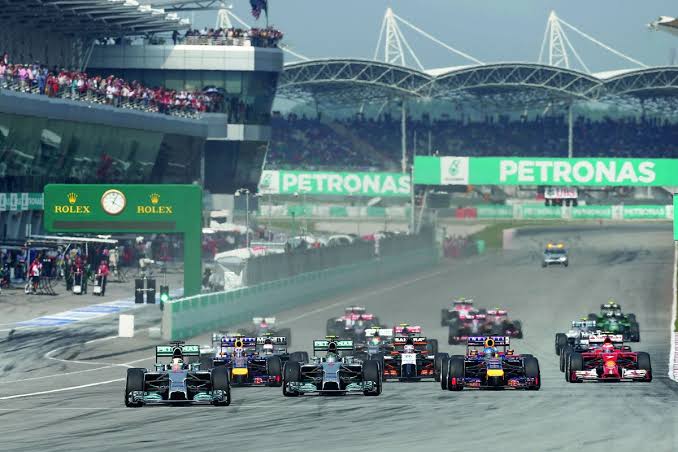
    Formula One returned to the Sepang International Circuit for the Gulf Air Bahrain Grand Prix from Oct 2 to 4, ending a nine-year absence since the venue last hosted a race in 2017.

    The event was relocated to Malaysia following an agreement involving Formula 1, the FIA, and the governments of Malaysia and Bahrain due to the situation in West Asia.

    State Leadership Inspects Paddock Operations

    Prime Minister Datuk Seri Anwar Ibrahim attended the qualifying session on Oct 3 to inspect preparations and the overall running of the race, received by Chief Secretary to the Government Tan Sri Shamsul Azri Abu Bakar, Petronas President and Group Chief Executive Officer Tan Sri Tengku Muhammad Taufik, and Sepang International Circuit Chairman Datin Anita Azrina Abdul Aziz.

    Anwar conducted a 15-minute walk-through of the Mercedes-AMG Petronas team garage. He then attended an official paddock dinner hosted by Bahrain Crown Prince and Prime Minister Prince Salman bin Hamad Al-Khalifa. The race weekend ran from Oct 2 to Oct 4, opening with Friday practice before Saturday qualifying established the starting grid.

    Emergency Calendar Shift from Sakhir

    Negotiations in July between Formula 1, the International Automobile Federation, and government representatives from both nations sealed the transfer. Bilateral talks involving King of Malaysia Sultan Ibrahim and Bahrain’s King Hamad bin Isa Al-Khalifa established the diplomatic framework. That deal transferred the commercial sanction to Southeast Asia.

    Shifting an entire Grand Prix freight contingent to Sepang on three months of notice required direct coordination between national carrier Gulf Air, local track managers, and international freight handlers. Formula One previously raced at Sepang every year from 1999 until 2017. The government ended its hosting contract after the 2017 edition due to escalating sanction fees.

    Transport Pressure on Klang Valley Infrastructure

    The return of single-seater racing tested regional transport links and event infrastructure surrounding Kuala Lumpur International Airport. Spectators faced road congestion on feeder routes into the circuit. Bus shuttle delays exceeded three hours during peak Saturday entry windows.

    Hotels and retail venues across the Klang Valley absorbed demand spikes from visiting team personnel, regional corporate sponsors, and overseas fans. Track managers operated under compressed setup schedules to reactivate paddock hospitality suites, broadcast compounds, and trackside retail villages. None of these facilities had handled Grand Prix volumes since late 2017.

    Commercial Realignment for Circuit Assets

    Petronas maintains title sponsorship rights with the Mercedes team, giving the state energy group direct brand exposure on its home circuit. Track operators in the region have adjusted commercial models toward motorcycling and regional GT championships. They moved away from multi-million dollar annual Formula One staging contracts.

    Government officials have not committed to a multi-year extension beyond this emergency hosting contract. Track executives now look to Sunday race attendance numbers and official transport debriefs to assess whether large-scale single-seater events fit the venue’s long-term commercial strategy.