Tag: apec

  • Korea Secures $9 Billion in Cloud and AI Investments from Global Tech Giants at APEC Summit

    Korea Secures $9 Billion in Cloud and AI Investments from Global Tech Giants at APEC Summit

    During the APEC Global Investment Partnership event, which was held in conjunction with the APEC CEO Summit in Gyeongju, an announcement was made that underscores the determination of Seoul to lure high-value investment into the areas of digital infrastructure and advanced manufacturing. This is part of Seoul’s drive to expedite its aspirations in the field of artificial intelligence (AI).

    Investments in South Korean Digital Infrastructure

    Matt Garman, the CEO of Amazon Web Services (AWS), disclosed a plan to invest $5 billion by 2031 in order to expand the company’s cloud data centers and enhance its AI competencies in South Korea. He pointed out that South Korea is swiftly becoming a hub of AI innovation in Asia, and the continuous investments by AWS reveal their faith in South Korea’s technological ecosystem. He also believes that these investments will bolster South Korea’s place in the global AI economy.

    President Lee Jae Myung of South Korea, who met with Garman during the event, expressed his approval of AWS’s investment, deeming it a crucial aspect of Seoul’s AI strategy. His endorsement comes on the heels of AWS’s announcement of their $4 billion AI data center project in Ulsan earlier this year. President Lee is confident that this collaboration with AWS will stimulate Korea’s AI ecosystem and solidify their mutual path to prosperity.

    Investments from Other Multinational Corporations

    Additionally, six other multinational companies, namely Renault, Amkor Technology, Corning, Air Liquide, Siemens Healthineers, and Umicore, also communicated their new investment commitments. Renault Korea is set to transform existing production lines for the manufacture of electric vehicles, designating Korea as one of its five global strategic hubs. Siemens Healthineers has plans to construct a new 9,917-square-meter facility in Pohang for the production of components for cardiovascular ultrasound systems. Amkor Technology is preparing to extend its semiconductor packaging operations, while Umicore has intentions to build a cathode materials plant to cater to Korea’s rapidly expanding battery supply chain.

    As per the Ministry of Trade, Industry, and Energy of Korea, approximately $660 million of the declared amount is to be immediately registered as foreign direct investment.

    Korea’s Leadership in AI Development

    President Lee, during his keynote speech at the APEC CEO Summit, expressed Korea’s intention to propose an AI Initiative at the upcoming APEC leaders’ meeting, advocating for inclusive and cooperative AI development in the Asia-Pacific region. He envisions a future where AI is accessible to all, hopeful that this vision will become the new standard for APEC. This places Korea in a leadership position in the Asia-Pacific region in terms of digital transformation and ethical AI governance.

    The APEC CEO Summit, organized by the Korea Chamber of Commerce and Industry (KCCI), saw a record turnout of 1,700 business and political leaders, the largest in the summit’s 30-year history. The summit boasted the attendance of top executives and heads of state, including U.S. President Donald Trump, NVIDIA CEO, Jensen Huang, and several Asia-Pacific leaders.

    The summit was represented by the chairmen of Korea’s biggest conglomerates, including Samsung, Hyundai, LG, SK Group, and POSCO, reinforcing the country’s pivotal role in shaping the region’s technological future. The summit’s sessions over the three days centered around AI, digital currencies, supply chain resilience, green transition, and economic cooperation.

    Questions & Answers

    What was the primary focus of the APEC Global Investment Partnership event?
    The event was centered around Seoul’s efforts to attract high-value investments in digital infrastructure and advanced manufacturing to accelerate its AI ambitions.

    What is AWS’s planned investment in South Korea?
    AWS announced a plan to invest $5 billion by 2031 to expand its cloud data centers and boost its AI capabilities in South Korea.

    How are other multinational corporations contributing to South Korea’s AI strategy?
    Six multinational corporations have committed to new investments in South Korea. These include Renault’s conversion of production lines to electric vehicle manufacturing, Siemens Healthineers’ construction of a new facility for cardiovascular ultrasound systems, and Amkor Technology’s expansion of semiconductor packaging operations.

  • What Justin Trudeau does in Vietnam in spare time?

    What Justin Trudeau does in Vietnam in spare time?

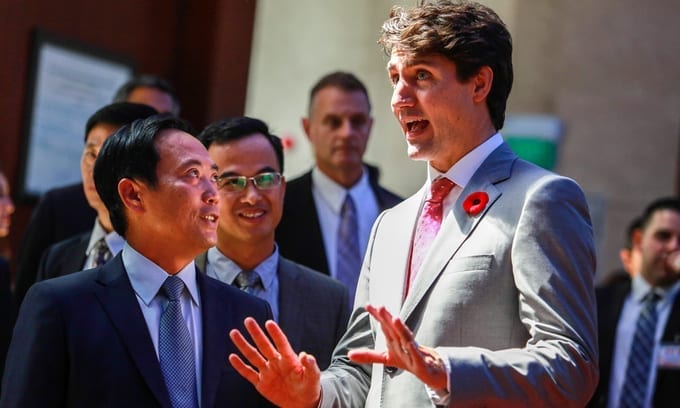
    Canadian Prime Minister Justin Trudeau capped a hectic day in Ho Chi Minh City by jogging along the Nhieu Loc-Thi Nghe Canal on Thursday evening, catching locals off-guard and setting the media abuzz.

    The charismatic prime minister was on an official visit to Vietnam’s biggest city before going for a jog along the canal, which is considered an example of smart urban development.

    According to media reports, he started jogging at around 7 p.m. With his cap on, Trudeau, flanked by several of his guards, ran past many locals who were exercising outdoors.

    “He looks so handsome and gentle,” an elderly woman who was working out along the canal said.The surprise appearance of the Canadian prime minister attracted widespread attention.

    “When I realized he was the Canadian prime minister, I was in awe of such a young, handsome and down-to-earth leader,” Nguyen Thi Thanh, 61, said.

    Last May, another photo of Trudeau jogging past a group students taking prom photos in Vacouver, Canada, also went viral, creating a made-for-meme internet sensation.

    But after it was pointed out that the shot was snapped by his official photographer, his critics blasted the media for continuing to fall for what “seems to be a constant stream of PR stunts”, The Guardian reported in May.

    The report cited Robyn Urback, a columnist for the Canadian Broadcasting Corporation, as saying that in politics, even the most spontaneous run-ins are carefully set up. “And public photobombs by politicians in their Sunday sweats usually involve some sort of prior coordination,” she said.

    in-vietnams-biggest-city-justin-trudeau-concludes-official-visit-by-jogging-past-locals-1
  • Trump to sell new Asia policy at regional summit

    Trump to sell new Asia policy at regional summit

    President Donald Trump is expected to bill a new policy for Asia during his two-day stay in Vietnam this week, but the U.S. administration needs to follow through with concrete actions to restore waning confidence in a region weary of his erratic diplomacy.

    At the Asia Pacific Economic Cooperation (APEC) this week in the central Vietnamese city of Da Nang and his state visit later on in Hanoi, Trump will promote the concept of a “free and open Indo-pacific region”. Japan first floated this idea, tailored to push the U.S. to coalesce three other maritime democracies — Japan, Australia, and India. According to American officials, this sales pitch is aimed at demonstrating America and the Trump administration’s commitment to the Indo-Pacific region.

    But political rhetoric only will not be enough to reassure a region increasingly anxious about U.S. commitment, analysts say.

    A survey in March by the Iseas Yusof Ishak Institute in Singapore that polled government officials, business representatives, academics and journalists in Southeast Asia found that around 75 percent of the respondents saw China, not the U.S., as the most influential player now and in the next decade. Two-thirds of respondents also viewed the U.S. less favorably than four months ago, according to the survey.

    “Some of Trump’s statements and actions since he came to power have undermined the U.S. strategic position in the region, but most regional countries would like to see Washington’s continued engagement with the region,” Le Hong Hiep, a research fellow at the Iseas Yusof Ishak Institute, said.

    “As such, his concept of a ‘free and open Indo-Pacific’ is likely to be welcomed by most regional countries,” Hiep said. “But again, at this stage, it is just a policy concept. Washington needs to follow up with concrete actions aimed at maintaining and strengthening economic and strategic engagement with the region to restore its strategic position in this part of the world.”

    His attendance at the APEC Summit is part of his 13-day five-nation Asia tour, the longest tour of Asia by any U.S. president since George Bush in late 1991. Trump had planned to skip the East Asia Summit, a key gathering of Southeast Asian leaders in the Philippines on November 13. He only made a last-minute change to attend apparently at the request of other leaders.

    “It is still not too late for the U.S.,” Dennis C. McCornac, an economics professor at Loyola University Maryland in Baltimore, said, “to come to its senses and understand that this so-called ‘American first’ policy is really a disguised form of isolation – a policy that will and has never really worked for any country,”

  • China is our future says Walmart Asia CEO

    China is our future says Walmart Asia CEO

    China will drive more than half the world’s retail growth over the next decade, Walmart Asia CEO Scott Price has told the Asia-Pacific Economic Cooperation (APEC) CEO Summit in Manila.

    Despite slowing economic growth, the world’s largest retailer still believes in the power of the world’s most populous nation, referring to October’s retail sales figures showing 11 per cent year on year growth, and September’s 10.9 per cent.

    The Singles Day record set last week of US$14.3 billion further underlined the spending potential of Chinese consumers.

    Price highlighted the performance of the company’s wholly-owned Chinese online retail subsidiary Yihaodian on Singles Day which he described as “great’ without revealing data.

    He said the company had opted to take full ownership of Yihaodian this year to make the most of the “gamut of opportunities” in the burgeoning online-to-offline (O2O) market where shoppers order online and collect instore.

    “We think online-to-offline is critical, as customers look for convenience, and convenience is not just one mode.”

  • PAL, Air Asia cancel 300 flights for Apec

    PAL, Air Asia cancel 300 flights for Apec

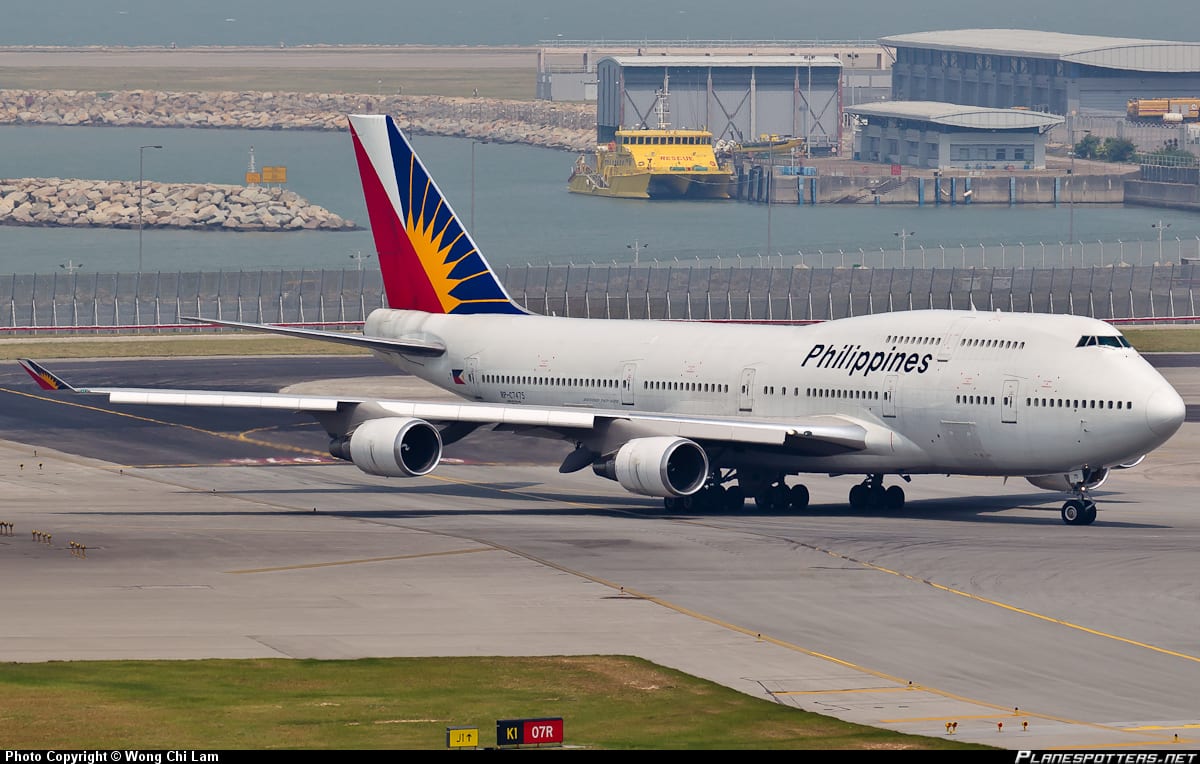
    The country’s flag carrier Philippine Airlines (PAL) and Air Asia Philippines cancelled nearly 300 domestic and international flights in anticipation of disruptions in runway operations on the week of the Asia-Pacific Economic Cooperation (Apec) Summit.

    In an advisory, PAL announced it was grounding 115 domestic and 96 international flights from Nov. 15 to 20 “to give way to the arrival and departure of Apec leaders.”

    The Manila International Airport Authority (MIAA) had announced periods of temporary runway closure at the Ninoy Aquino International Airport as part of the protocol for the arrival and departure of world leaders.

    Heads of state are expected to arrive on Nov. 16 and 17 for the summit which will be held on the 18th and 19th. They are expected to leave Manila on Nov. 19 and 20.

    “PAL assures affected passengers that the airline will reschedule their flights with rebooking and penalty charges waived,” the advisory said.

    Likewise, passengers with confirmed flights on Nov. 15, 16, 17, 18, 19 or 20 have the option to rebook within 30 days from their original schedule “for as long as the new schedule falls within the ticket validity period.”  They can also refund the full  ticket cost.

    PAL said that it may cancel more flights depending on the flight movements of the heads of state attending the summit.

    Meanwhile, Air Asia cancelled 74 domestic and 10 international flights from Nov. 17 to 20, also to give way to the arrival of heads of state.

    The airline gave passengers on the cancelled flights the option to rebook within 30 days of the date of their original flight schedule or get a refund.  Affected flyers may also avail of a credit shell within 90 days of the cancelled flight.

    A credit shell, according to Air Asia, is “a credit account where monies paid towards a booking  are stored.” The number issued, which is practically the booking number, in a credit shell account that may be used by passengers to transfer flights.