Retail News CRM

Tag: app store

  • Apple showcases Vietnamese game developers on App Store

    Apple showcases Vietnamese game developers on App Store

    Two Vietnamese developers behind the pixel-art game DreamChaser have been featured on Apple’s App Store along with other Southeast Asian talents.

    In a recent spotlight category called “Dare to Dream”, Apple hailed the duo Pham Duy Phuc and Tran Tuan Hiep for building their endless runner game which is rated 4.8 out of 5 by over 500 users.

    “My game development journey is quite rough,” said former IT major Phuc, who left university to pursue game development professionally, as cited by Apple. “I did not know how to draw, so I needed to find an artist. That was how I met Hiep.”

    Hiep took inspiration from Vietnam’s history and tradition to create the game’s colourful pixel-art which depicted the Nguyen dynasty, where the game’s protagonist runs from Hue Imperial Palace to a tranquil bamboo forest while dodging bouncing animals.

    The game became popular when Phuc discussed the experience of making it on YouTube videos. He now has more than 30,000 subscribers.

    “When I uploaded the video about DreamChaser to YouTube, a large number of users started playing it. That was also when I received a massive amount of bug reports from users,” he said. “Seeing players enjoy our game and create their own content based on our work is incredibly fulfilling.”

    Phuc now desires to open his own game studio, with around 10 staff. “I think there is still more room to grow, and that keeps me grinding.”

    Other developers featured in the category included Singapore’s Joan Low who created ThoughtFull Chat, a software which helps connect people who need mental health support.

    Indonesia siblings Andika Pradana and Anggia Lestari were praised for their chemist game Potion Permit.

    Tyme Suteesopon and Sirin (Nanny) Thamakaison from Thailand were mentioned for their creation of an app called WithU, which compiles motivating quotes and appealing artworks created by Thai artists.
  • Apple takes a long time to remove fake app posing as a popular password manager

    Apple takes a long time to remove fake app posing as a popular password manager

    Imposter app LassPass posing as the popular password manager LastPass has been removed from the App Store one day after the creators of the original app issued a warning against it.

    Apple prides itself on keeping the App Store safe by performing numerous safety checks before approving an app. It does seem to have a higher bar for security than its immediate competitor. That doesn’t mean it’s doing a perfect job of keeping the App Store safe, as the latest incident shows.

    What makes the oversight feel particularly worrisome, though, is that LastPass is a service people use to store logins and passwords for various platforms. A fake copycat app designed to trick people into revealing their master password could give the bad actors behind it access to every or most apps a person uses.

    The app in question, LassPass, had a name resembling the original app and copied LastPass’s branding and interface.

    There were some telltale signs that it was a fake that many users quickly noticed, such as misspellings and a different publisher. It also had only one rating, whereas the legitimate app has more than 52 thousand. All of the reviews for it also noted that it was a deceptive app.

    LastPass created a blog post on February 7 to warn its users against the app, which was removed from the App Store on February 8. According to the analytics platform Appfigures, the app has been on the platform since January 21. TechCrunch reports.

    It’s not known how many people fell for the app, but it can be assumed that it failed to attract many downloads, as it never made it to any of Apple’s Top Charts.

    If you have LassPass on your iPhone, not only should you delete it, but also change your LastPass password.

  • Apple announces big changes coming in March to iOS, Safari, and the App Store in the EU

    Apple announces big changes coming in March to iOS, Safari, and the App Store in the EU

    Apple is making big changes in the European Union, which will allow, among other things, iPhone users to sideload apps from third-party app stores. From the start, the late Steve Jobs intended to prevent iPhone users from sideloading apps on the iPhone for security reasons. Apps from third-party app stores are installed without Apple checking them out to see if they are security risks; apps downloaded from the App Store have been vetted for malware and other malicious behavior, although sometimes developers with evil intentions can get an app through.

    Developers will also be able to choose alternative payment platforms to handle in-app transactions in the EU across all of Apple’s operating systems including, including iOS, iPadOS, macOS, watchOS, and tvOS. The commission that Apple will take on in-app purchases that it processes through its own in-app payment platform, the so-called Apple Tax, will be reduced in the EU from the 15%-30% range seen in the rest of the world, to 10%-17%. Apple won’t see a dime from in-app transactions completed through alternative payment platforms.

    The 27 member countries of the EU benefit from the EU’s Digital Markets Act (DMA) which forces Apple to make these changes in this market. Another change being made by Apple will show users a new “choice screen” the first time they open Safari in iOS 17.4 or later. While EU iPhone users can already change their default browser away from Safari, the new “choice page” will bring to their attention that they can choose a default browser and include a list of third-party browsers to help them make that change immediately.

    Apple makes it clear that it doesn’t like being forced to put up the “choice screen” because it means “that EU users will be confronted with a list of default browsers before they have the opportunity to understand the options available to them. The screen also interrupts EU users’ experience the first time they open Safari intending to navigate to a webpage.”

    The company also said, “Inevitably, the new options for developers’ EU apps create new risks to Apple users and their devices. Apple can’t eliminate those risks, but within the DMA’s constraints, the company will take steps to reduce them. These safeguards will be in place when users download iOS 17.4 or later, beginning in March…” One of the changes Apple is making in the EU will bring additional malware protections that will prevent iOS apps from launching if they are discovered to contain malware after being installed on a user’s device.

    Changes are coming to iOS in the EU as well. EU iPhone users can choose a third-party contactless payment app to replace Apple Pay and select an alternative app marketplace as their default to replace the App Store.

    Apple Fellow Phil Schiller said, “The changes we’re announcing today comply with the Digital Markets Act’s requirements in the European Union, while helping to protect EU users from the unavoidable increased privacy and security threats this regulation brings. Our priority remains creating the best, most secure possible experience for our users in the EU and worldwide. Developers can now learn about the new tools and terms available for alternative app distribution and alternative payment processing, new capabilities for alternative browser engines and contactless payments, and more. Importantly, developers can choose to remain on the same business terms in place today if they prefer.”

    Apple says that all of these changes will take place in March with the release of iOS 17.4 in the region.

  • Apple reveals discount pricing feature for subscriptions in the App Store

    Apple reveals discount pricing feature for subscriptions in the App Store

    A post on the Apple Developer website reveals that a new “contingent pricing” feature will be available in the App Store. The subscription gets its name because customers can be given a discount on a subscription contingent on them having an active subscription to another publication. That discount will continue to be offered every month as long as the customer remains subscribed to both magazines.

    Here is what Apple told developers on the website: “Contingent pricing for subscriptions on the App Store — a new feature that helps you attract and retain subscribers — lets you give customers a discounted subscription price as long as they’re actively subscribed to a different subscription. It can be used for subscriptions from one developer or two different developers. We’re piloting this feature and will be onboarding more developers in the coming months.”

    Apple says developers should start planning how they will work contingent pricing into their App Store pricing strategies. A link on the website will allow developers to sign up to receive a notification from Apple in January, when the company will inform developers of more details related to “contingent pricing.”

    In explaining exactly what “contingent pricing” is, Apple writes, “For example, you might offer Ocean Journal premium subscribers the opportunity to subscribe to Mountain Climber for a discounted price of $4.99/month instead of the regular $5.99/month. Customers pay the discounted price as long as they remain Ocean Journal subscribers.”

    While Apple is writing to developers, the tech giant does explain how customers will be able to find publications in the App Store that offer “contingent pricing.” Apple says that customers will find the discounted pricing in a publication’s App Store listing, off-platform marketing channels, and planned placements in the App Store.

    Apple says that it will help developers manage the implementation of “contingent pricing” by offering customers “a seamless redemption and purchasing experience” based on the contingent price proposition the developers will provide.

    Obviously “contingent pricing” isn’t going to be available to App Store customers until sometime next yeear.

  • Apple to raise App Store prices in some countries in Europe, Asia

    Apple to raise App Store prices in some countries in Europe, Asia

    Apple Inc said on Tuesday it will raise prices of apps and in-app purchases on its App Store from next month in all of the euro zone and some countries in Asia and South America.

    The new prices, excluding auto-renewable subscriptions, will be effective as early as Oct. 5, Apple said in a blog post.

    The U.S. tech giant periodically adjusts its prices in different regions and reduced prices for euro zone countries last year to adjust for currencies and taxes,dropping starting prices for many apps to 99 euro cents from 1.09 euros.

    The latest price rise increases those starting prices to 1.19 euros.

    A rapid rise in inflation, interest rates and energy prices this year has hammered the yen, the euro and most emerging economy currencies. The euro has dropped to two-decade lows this year and has been languishing around parity against the dollar for weeks.

    Apart from euro zone countries, the price increases will hit Sweden and Poland in Europe; Japan, Malaysia, Pakistan, South Korea and Vietnam in Asia; and Chile in South America.

    For some countries like Vietnam, the price increase was due to new regulations relating to collecting tax from consumers, Apple said.

    Apple, which launched its latest generation of iPhones earlier this month, has been developing its services business to reduce dependency on its mainstay smartphones.

    Revenue from Apple’s services business, which includes the App Store, has been growing at a rapid pace in the last few years and now hovers around $20 billion per quarter.

  • Apple will ‘soon’ inundate the App Store with more ads

    Apple will ‘soon’ inundate the App Store with more ads

    While Apple froze third-party advertising cookies on its platform, resulting in the first revenue dip of Facebook since its inception, the App Store application shop has been showing ads in its search results as well as the respective tab for a while now.
    Brace yourselves, because these ads are now coming throughout the App Store, starting with the Today homepage tab, but they could also appear on each individual app page in the You Might Also Like section. The advertisement will allow developers to be promoting their own apps and Apple its own stuff as it sees fit according to its own privacy ground rules.
    The visible ads will be denoted as such and Apple won’t be targeting users below eighteen for personalized advertising, plus it won’t employ granular targeting by using your sensitive data like the other two ad behemoths Facebook and Google. That’s all part of Apple’s privacy and transparency policy, as it said in a dedicated statement:

    App Store developers are also happy with the ad development, as Ron Schneidermann of the app AllTrails states that “Apple Search Ads helped us attract new, more engaged customers across markets. We rely on Apple Search Ads for cost-effective customer acquisition – it’s a critical component of our growth strategy. As they become available, we plan to invest in new placements to reach even more customers on the App Store and continue to drive our business growth.”

    As for when will the new App Store advertising spree happen in earnest, Apple only said that the ad locations are now in their alpha state and it will “soon” start rolling out the testing phase, so don’t be surprised if ads appear on your iPhone application store in tabs where there were none of those pesky little nuggets were present before Apple’s move.
  • Apple removes app at Amazon’s request

    Apple removes app at Amazon’s request

    Last month, the Fakespot Secure Shopping app was launched in the App Store. With the app, users get to experience shopping on Amazon “as it should be, with genuine products and reviews, reliable sellers, great prices and fewer returns,” the app developer said. Earlier today, Apple removed the app from the App Store at the request of Amazon. The latter said that it was concerned that a new update to its iOS app allowed Fakespot to “wrap” the Amazon app without permission which could lead to the collection of data belonging to Amazon customers.

    Such data includes email, addresses, credit card info, and the browser histories of Amazon users. However, the online retailer admits that it doesn’t know for sure whether Fakespot is using this information.

    Apple never gave fakespot a reason why it removed his company’s app from the App Store. However, a few hours ago Apple disseminated a terse statement in which it said that it regretted the lack of an amicable solution to the issue and that it removed Fakespot from its iOS app storefront. Khalifah, obviously not happy with Apple’s decision, said, “Apple hasn’t even given us the ability to solve this. We just dedicated months of resources and time and money into this app.”

    Amazon says that Fakespot violates Apple guideline 5.2.2 which states that “If your app uses, accesses, monetizes access to, or displays content from a third-party service, ensure that you are specifically permitted to do so under the service’s terms of use. Authorization must be provided upon request.” Considering that Fakespot is an overlay that “wraps” around Amazon and that “hell no” is not permission, it would seem that the online retailer has a good case.

    In a statement, Amazon said, “The app in question provides customers with misleading information about our sellers and their products, harms our sellers’ businesses, and creates potential security risks. We appreciate Apple’s review of this app against its App Store guidelines.” The Fakespot is still available for Android devices from the Google Play Store.

  • Apple manipulated App Store search to favor its own apps over the competition

    Apple manipulated App Store search to favor its own apps over the competition

    Back in 2019, after investigations done by the New York Times and the Wall Street Journal, it appeared that Apple was ranking its own apps ahead of competitors’ similar apps in the App Store search feature. This is an issue that lawmakers are seriously concerned with and it has been associated with other companies that sell their own products alongside third-party brands such as Google and Amazon. Apple denied that it had done anything wrong. The company pointed to a secret algorithm it uses with 42 variables to prevent it from manipulating the App Store search results.

    But now it appears that Apple did boost App Store search results. Email that was released during the Epic vs. Apple lawsuit showed that the tech giant apparently admitted that it had boosted the placement of its own Files app above listings for the competition during a time period that lasted 11 months. Apple app search lead Debankur Naskar hinted that some hanky panky was going on at Apple when he wrote in an email “We are removing the manual boost and the search results should be more relevant now.”

    Naskar was responding to an email from Epic Games CEO Tim Sweeney who was a major Apple partner at the time. Sweeney had “confronted” Apple after the latter’s Files app landed first in the App Store’s search results when he searched for Dropbox. While you might not be able to tell the executive’s tone from written words, you can imagine Sweeney sounding incredulous when he emailed Apple to say that “Dropbox wasn’t even visible on the first page of search results.”

    Apple explained away the issue by telling The Verge that its Files app had a Dropbox integration. Thus, Apple included “Dropbox” in the metadata for its Files app and as a result, Files was always ranked ahead of Dropbox. This response doesn’t match Naskar’s comments about “removing the manual boost.”

    Dropbox has been a problem for Apple going back to 2009 when then Apple CEO Steve Jobs said that iCloud would help kill off Dropbox after Jobs could not convince Dropbox CEO Drew Houston to sell what was then a start-up company to Apple.

    One engineer at Apple changed the algorithm for App Store search in July 2019 dropping the placement of Apple’s own app in the search results. The New York Times back in September 2019 showed how those searching the App Store for “music” would see streamer Spotify at the top of the list with Pandora eighth. Repeating the same search in 2016 resulted in Apple Music appearing at the top of the list with Spotify fourth.

    Two years later, the top six results under “music” consisted of Apple’s own music-based apps. Pandora remained in eighth place. By December 2018, the first eight search results were all for Apple’s own apps, some unrelated to music: (Apple Music, Garage Band, iTunes Remote, Music Memos, Logic Remote, iTunes Store, iMovie, Clips) while Spotify was number 23.

    After Spotify complained to European regulators, the results for April 2019 were much different with iTunes and Apple Music numbers 1-2, but with Spotify fourth and YouTube Music fifth. Apple had no other apps appearing under a search in the App Store under “music.”

    Apple released a statement to The Verge that says, “We created the App Store to be a safe and trusted place for customers to discover and download apps, and a great business opportunity for all developers. App Store Search has only one goal — to get customers what they are looking for. We do that in a way that is fair to all developers and we do not advantage our apps over those of any developer or competitor. Today, developers have many options for distributing their apps and that’s why we work hard to make it easy, fair and a great opportunity for them to develop apps for our customers around the world.”

  • Criminals spread malware by getting Android users to install fake versions of popular apps

    Criminals spread malware by getting Android users to install fake versions of popular apps

    Cybersecurity firm Bitdefender points out that one of the things that separate the Google Play Store from the App Store is also a problem for Android users. While both Apple and Google collect as much as a 30% cut of in-app revenue that is run through their respective in-app payment platforms, iOS users are forced to make their in-app purchases through Apple since Apple prevents developers from offering an alternative payment platform.

    Epic offered its customers an alternative payment platform, violating Apple’s rules. This is why Epic’s big hit game Fortnite was kicked out of the App Store.

    Unlike App Store customers, Android users are technically not forced to make in-app purchases through Google. That’s because the Play Store is not a walled garden like the App Store is and Google allows Android users to sideload apps from a third-party app store. However, by tricking Android users to use such third-party app stores, criminals are persuading Android users to install apps that most likely haven’t been properly vetted leading to the spread of malware.

    Bitdefender cites two new banker trojan malware programs called TeaBot and Flubot that help trick Android users into installing what they think are legitimate apps from popular and well-known brands but turn out to be malware-infested. Bitdefender recently found five new malicious Android apps that contain the TeaBot trojan and imitate legitimate Android apps that are popular with at least one app having been installed over 50 million times.

    The cybersecurity firm discovered that the infected TeaBot apps use fake Ad Blocker apps to distribute malware. The fake apps ask permission to display over other apps, show notifications, and install apps outside of the Play Store. Once these apps are installed, their icons are hidden.

    Make no mistake about it, TeaBot has the potential to do some serious damage including “overlay attacks via Android Accessibility Services, intercept messages, perform various keylogging activities, steal Google Authentication codes, and even take full remote control of Android devices.”

    While TeaBot is dropped by an app pretending to be an ad blocker, Flubot is spread through SMS spam and according to Bitdefender, “It steals banking, contact, SMS and other types of private data from infected devices while sporting an arsenal of other commands available, including the ability to send an SMS with content provided by the CnC.”

    Flubot imitates shipping apps like DHL Express Mobile with over 1 million installs from the Google Play Store, Fedex with over 5 million Android installations, and Correos with over 500,000 downloads.

    There is actually a way to protect yourself from having this malware infect your phone. Bitdefender suggests that you never, ever sideload apps on your device, In other words, stick to the App Store and the Google Play Store when installing apps for your iOS and Android devices respectively. Also, you should never tap on links in messages, and “always be mindful of your Android apps’ permissions.”

    The fake apps containing the TeaBot payload are designed to look like the real thing although some of them have small changes in their label name and icon. For example, the real version of streaming television app Pluto TV has a label that reads “Pluto TV-it’s free TV.” The fake and infected version of the app has no space between Pluto and TV and reads “PlutoTV.”

    Nearly 93% of the fake apps trying to distribute TeaBot come from an app called MediaPlayer that tries to imitate one of the most popular titles in the Google Play Store, VLC. The latter is a “free and open source cross-platform multimedia player” with over 100 million installations. Note the big difference in the icon between the clean and infected versions of the app.

    79.5% of Teabot malware has been discovered in Spain with 11.18% disseminated in Italy and 4.6% distributed in the Netherlands.

  • Clubhouse for Android beta now in the Play Store

    Clubhouse for Android beta now in the Play Store

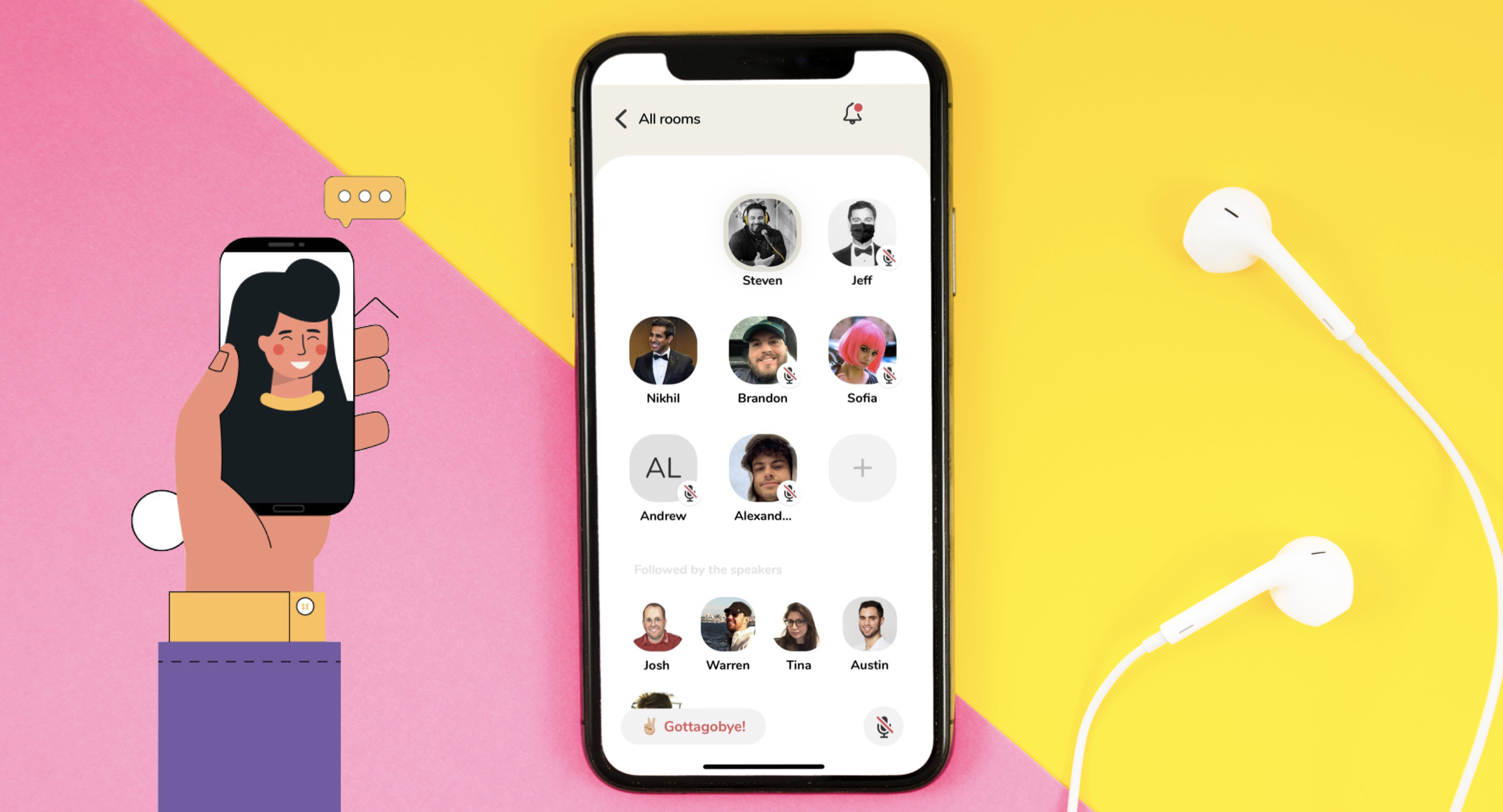
    Audio-only group chat app Clubhouse was extremely popular at the beginning of the year. At the time, the app, which requires an invitation to join, was only available in the Apple App Store. In late March, Clubhouse founder Paul Davison said that an Android version of the app was still months away, but today Clubhouse announced that a beta version of its Android app has become available on the Google Play Store.

    The app certainly needs the boost that will occur from being available on the platform that the vast majority of smartphone users around the world have installed on their devices. Consider that in February, the app was installed 9.6 million times worldwide with 2.7 million installs rung up during the following month. But in April, that number dropped to 922,000 downloads globally.

    Without the necessary invitation, all you can do with the Android app is reserve your username and get put on a waiting list. Eventually, the invitations will disappear and Clubhouse will be open for anyone to join. But at the moment, without an invite, you are not getting into the clubhouse regardless of the platform you are using.

    “With Android, we believe that Clubhouse will feel more complete. We are so grateful to all of the Android users out there for their patience,” co-founders Davison and Rohan Seth wrote in a company blog post. “Whether you are a creator, a club organizer, or someone who just wants to explore, we are so excited to welcome you to the community.”

    The early success of Clubhouse has spawned a number of copycats including Twitter’s Spaces. It seems that all of the big social media names want to have a presence in this space so the competition is going to continue to pick up. Clubhouse still has the advantage of being first although its invitation system might feel like a big turn-off to those who would love to be using the app right away.

    Still, this has been Clubhouse’s plan from the beginning. As it pointed out in today’s blog post, “We’ve always taken a measured approach to growth, keeping the team small, building in public, and getting feedback from the community along the way. When you scale communities too quickly, things can break. So we started Clubhouse on a single platform and have expanded gradually through an invite model.”

    Being placed on the waiting list can help you snag an invite, or if you know an existing user, you can ask him or her for one. The app is launching today in the U.S. followed by other English-speaking countries, and then the rest of the world. Clubhouse says that over the next few weeks, it plans to ask for feedback from the community, fix issues, and add new features such as “payments and club creation.”

    As for the invitations, Clubhouse says that it will keep “growth measured” by continuing the current system although it will open up some more during the summer. It expects millions of of more iOS users to join the more than 10 million iOS users who have already installed the app.

    You can now install the Clubhouse for Android beta from the Google Play Store, but be careful. There is already an app called Clubhouse that has nothing to do with the one we are looking for. So make sure that you search for Clubhouse: Drop-in Audio Chat. To save you some time, simply tap right here. The iOS version of Clubhouse, also using the title Clubhouse: Drop-in Audio Chat, can be installed from the Apple App Store.

    It will be interesting to see what the future holds for Clubhouse and for the format of audio-only group chat.

  • Apple practically begged Netflix to allow new subscribers to pay using the App Store’s platform

    Apple practically begged Netflix to allow new subscribers to pay using the App Store’s platform

    As game developer Epic continues its legal battle against Apple, some emails, documents and other internal communications have appeared in the courtroom. Among this treasure trove is evidence that demonstrates how Apple tried to convince video streamer Netflix to continue using Apple’s App Store In-App Payment (IAP) system. As many of you know, Apple takes a 15%-30% cut of transactions that are rung up through this platform and doesn’t allow developers to use their own IAP system (which is what Epic did).

    You might recall that in December 2018, Netflix no longer allowed new users to sign up for service via the App Store. An internal Apple email thread has come to light revealing discussions that were taking place as Netflix rolled out an A/B test to determine whether it should stop offering new subscriptions via the App Store.

    An email thread that ran from February through April of 2018 kicked off with a missive from Carson Oliver, the Director of App Store Business Management who said that subscribers paying for a Netflix subscription using Apple’s In-App Payment system were more likely to cancel their subscription than those who signed up using other platforms. Apple blamed this on those who received Netflix gift cards which forced them to pay using the Netflix website.

    Oliver wrote in one email, “Do we want to take any punitive measures in response to the test (for example, pulling all global featuring during the test period). If so, how should those punitive measures be communicated to Netflix?” Both companies tried to get together to talk things over and Apple Services Chief Eddy Cue tried to meet with Netflix CEO Reed Hastings.

    Five months before Netflix dropped support for Apple’s IAP, Apple created a presentation to show to Netflix trying to get the streamer to commit to Apple’s App Store payment platform. Apple also tried to show Netflix why it deserves the cut it takes from in-app payments run through its platform. Apple also pointed out the things that it was doing to help promote Netflix in the App Store such as featuring it more than any other partner.

    Another presentation showed how Apple and Netflix could work together if the latter would agree to use Apple’s IAP. Among the suggestions, Apple said that it would allow Netflix to determine which shows Apple would feature in Netflix promos. Apple also pointed out other things that the two firms could do together including the bundling of Netflix with an Apple service and more.

    The bottom line is that Apple could not convince Netflix to use the App Store IAP. In late 2018, Netflix said, “We no longer support iTunes as a method of payment for new members.”

  • Former Apple executive “rips” the App Store

    Former Apple executive “rips” the App Store

    Over the last few days, we’ve passed along some interesting horror stories about the Apple App Store and certain iOS apps. These were discovered by FlickType creator Kosta Keleftheriou who is having problems of his own with Apple. In fact, the company that Kleleftheriou runs with his business partner is suing Apple after the latter promoted FlickType copycat apps and scams.

    Just this past week, Kosta tweeted about a children’s app that doubled in certain countries as an online casino where gamblers had real money at risk. He also posted about XGate VPN, an app that did nothing it promised while ripping off iOS users at a rate of $5 million a year. How do these apps jive with Apple’s proclamation that “the App Store has proved to be a safe and trusted place to discover and download apps.”

    On Friday, Apple’s former Senior Director of Worldwide Product Marketing, Michael Gartenberg, tweeted some comments about the App Store. Gartenberg, who worked as a tech analyst for Gartner at one time, said yesterday about the App Store that “The ecosystem that is often praised is breaking at the seams IMHO.” He also stated that he hopes that “Apple gets its act together soon.”

    Both the App Store and the Google Play Store appear to have issues keeping malware out of their respective app storefronts and protecting their users from paying ridiculously high prices for apps that offer features available for free on other apps. Apple and Google should be doing their best to make sure that their valued customers aren’t getting ripped off by bad actors.

    The App Store in particular has been called a monopoly with users blaming Apple’s walled garden for keeping app prices higher than they should be. That’s because Apple’s 30% cut of in-app payments has lead some developers to hike their prices. And while Google also takes a 30% cut from in-app payments, Android allows users to sideload apps from a third-party app store while Apple doesn’t.

    Apple’s App Store is also the center of another legal issue involving Epic Games, the developer behind the popular Fortnite game. Players purchasing special in-app currency for the game were prompted by Epic to pay less for the currency over its own payment platform. This happened to violate Apple’s own rules that prevent apps listed on the App Store from offering its own in-app payment system.

    As a result of Epic’s actions, Apple removed the game from the App Store leading Epic to take legal action against Apple. Speaking of apps, what are the weirdest ones that you can install on your phone?

  • Apple tests a new location for ads in the App Store

    Apple tests a new location for ads in the App Store

    Besides allowing mask-wearing Apple iPhone users with an Apple Watch to unlock their handset without using a Passcode or Face ID, the iOS 14.5 beta has something else new. In an attempt to make some more money from the App Store (beyond Apple’s 30% cut of in-app revenue), Apple is placing ads on the App Store’s Search tab. The advertised app is listed as a suggested one for iPhone users to install.

    Keep in mind that since this is showing up only on the iOS 14.5 beta, there is a chance that it won’t be kept for the final version of the build. In that case, things would revert to how they used to work now with ads appearing only when advertisers bid on certain keywords. If Apple does keep the new feature, the ads appear before any type of keyword to search for is typed in by the user. It could be that Apple is using the beta period to collect important stats on how often users engage with the ads in this particular slot in order to decide whether to keep the ads in that location.

    The money generated by the ads will be included as part of Apple’s Services unit, its largest division by revenue. This group includes AppleCare+, iCloud, the App Store, Apple Music, Fitness+, Apple Arcade, Apple TV+, Apple News+, Apple One, Apple Pay, and more. Last year, the Services unit grossed $53.77 billion allowing Apple to meet and beat a goal to achieve $50 billion in revenue for the division by the fiscal year 2020.

    Apple Store search ads started in 2016. And Apple has started including ads for its Services features in the Settings app. This has upset many iPhone users who point out that they are paying over $1,000 for their phones in many cases and shouldn’t be subject to receiving ads designed to make Apple more money. But Apple likes to promote how it keeps iOS users’ data private. Soon, Apple’s App Tracking Transparency feature will demand that iOS user opt-in if they want to be tracked for advertising purposes. The average mobile app has six trackers that send user data to other apps. While most iPhone users are expected not to opt-in to be tracked, there are some who like the convenience of having ads for what they are shopping for found online.

    Facebook and Snapchat are believed to be the two apps most affected by Apple’s App Tracking Transparency (ATT) feature. Months ago, Facebook said that Apple’s moves could lead to a 50% drop in ad revenue for the year which would be an annual hit of more than $40 billion. A more recent analysis calls for quarterly declines of 2.11% to 13.59% for the second quarter of this year, when Apple’s ATT is expected to debut to all iOS 14 users. Worldwide, in the best-case scenario, this analysis sees 30% of Facebook users on iOS opting-in to be tracked, and only 10% in the worst-case scenario.

  • Apple makes a change to App Store search results to keep the feds away

    Apple makes a change to App Store search results to keep the feds away

    With Attorneys general from 48 states, the District of Columbia and Puerto Rico filing an antitrust suit today against Google, Apple might be getting a little nervous. The company is under fire for not allowing iPhone owners to sideload apps from outside of the App Store. This is one of the major complaints made by music streamer Spotify to the EU Competition Committee, which is currently investigating the claim. Android users can, if they wish, sideload apps from outside the Google Play Store.

    In May, the U.S. Supreme Court ruled that a class-action suit against Apple could proceed. By a 5-4 decision, the Court said that iPhone and iPad users purchase apps in the App Store directly from Apple and that the company is not acting as an intermediary as it claims. The plaintiffs argue that the 30% cut that Apple takes on revenue generated by app sales, subscriptions, and in-app purchases leads them to pay higher prices since they are forced to make these transactions inside the App Store.

    All of this extra scrutiny has led Apple to make a major change to App Store search results. Citing data from app analytics firm Sensor Tower, the Times says that Apple’s own apps recently ranked first for 700 search terms and some searches showed 14 Apple apps before an app from a rival developer appeared. Two Apple executives, when presented with the data, admitted that the App Store search results were loaded with Apple’s own apps. And this was the case even when the company’s own apps were less popular than the titles from other developers. But the two executives now say that Apple has adjusted the algorithms so that its own apps don’t appear so often at the top of App Store search results. These algorithms, which no company will ever explain in detail, play the biggest part in determining search results and thus, which apps get installed by consumers.

    The two Apple executives that spoke with the newspaper were Senior Vice Presidents Phil Schiller and Eddy Cue; the former is in charge of the App Store while the latter oversees many of Apple’s own apps. The two defended the company by denying that Apple had ever changed the search results to benefit its own apps over those offered by competitors. Instead, they said that the company’s apps generally get higher placement in search results because of their popularity and because the rather generic-sounding names of these apps more closely resemble the search terms being used by consumers.

    Armed with years of data, back in September 2013, searching for “music” in the App Store would usually result in music streamer Spotify showing up first with another streaming app, Pandora, number seven. After Apple launched Apple Music in 2016, searching for “music” in the App Store came back with the company’s own streaming app on top, Spotify knocked down to fourth, and Pandora down to eighth. By February 2018, the search for “music” in the App Store resulted in a list that had six Apple titles on top (Apple Music, Garage Bands, Music Memos, iTunes Remote, Logic Remote, and iTunes Store) with Spotify eighth. And by the end of last year, eight Apple apps appeared at the top of the results list when “music” was the subject being searched for. Two of those apps (iMovie and Clips) had nothing to do with music and Spotify was down to number 23.

    But this isn’t the end of the story. Shortly after Spotify complained to the EU in March, Apple had adjusted the algorithms and a search for “music” in the App Store had iTunes on top with Apple Music second. No other Apple apps were in the top 10 and Spotify was back to fourth with YouTube Music fifth, SoundCloud seventh and Pandora eighth. Meanwhile, Apple won’t admit that there ever was a problem that needed correcting. “It’s not corrected,” said Schiller. “It’s improved,” said Cue.

  • Spotify says Apple Music has unfair advantages

    Spotify says Apple Music has unfair advantages

    The founder and CEO of Spotify, Daniel Ek, announced today in a blog post that Spotify has filed a complaint against Apple with the European Commission (EC). The executive says that when it comes to Apple Music and the App Store, the company gives itself an unfair advantage, violating EC antitrust regulations. Ek says that Apple does this through the “Apple Tax.” That is the 30% of monthly subscription fees that Apple takes on subscriptions made through its payment system.

    Ek says that because Spotify is forced to pay the “Apple Tax,” it has to raise its price in the App Store above that of Apple Music. Right now, both music streaming platforms have the same prices. That would be $9.99 a month for individuals, $14.99 a month for families with up to six members, and $4.99 a month for verified students. However, if you choose to pay your subscription fee through Apple (an in-app payment), Spotify charges $12.99 a month for individuals, $16.99 a month for families and $7.99 a month for verified students.

    Apple has released a statement criticizing Spotify for using the App Store to help it grow over the years without making any contributions to that marketplace.” The company refutes some of Spotify’s claims. For example, Apple says that it has allowed Spotify to update the app over 200 times. Apple says it rejected updates when Spotify didn’t follow the App Store rules. Apple also points out that 84% of the apps in the marketplace don’t pay it a dime, and accuses Spotify of wanting all the benefits of a free app without being free.”

    Additionally, the executive says that if it bypasses Apple’s payment system, Apple will limit Spotify’s communications with its subscribers. For example, Ek says that in some cases Apple won’t let it send emails to Spotify users who use the service on an Apple device. He states that “Apple also routinely blocks our experience-enhancing upgrades. Over time, this has included locking Spotify and other competitors out of Apple services such as Siri, HomePod, and Apple Watch.”

    “It’s why, after careful consideration, Spotify has filed a complaint against Apple with the European Commission (EC), the regulatory body responsible for keeping competition fair and nondiscriminatory. In recent years, Apple has introduced rules to the App Store that purposely limit choice and stifle innovation at the expense of the user experience—essentially acting as both a player and referee to deliberately disadvantage other app developers. After trying unsuccessfully to resolve the issues directly with Apple, we’re now requesting that the EC take action to ensure fair competition.”-Daniel Ek, founder, CEO, Spotify

    All Spotify wants, says its founder, is to be treated the same as apps that don’t pay the 30% tax such as Uber or Deliveroo. The executive says that all apps should be able to compete fairly, and Apple Music shouldn’t get an advantage because Apple owns the App Store. He adds that all App Store users should have a choice of payment systems, and not be locked into using Apple’s platform. And Ek says that all app stores should not be allowed to control communications, including marketing and promotions, between services like Spotify and its customers.

    If Apple is eventually found to have violated anti-trust regulations in the EU, it can be slapped with a fine and be forced to make some changes to the App Store.