Tag: apparel supply chain

  • Better Cotton Farmers Cut Synthetic Nitrogen 69 Percent in Five-Year Audit

    Better Cotton Farmers Cut Synthetic Nitrogen 69 Percent in Five-Year Audit

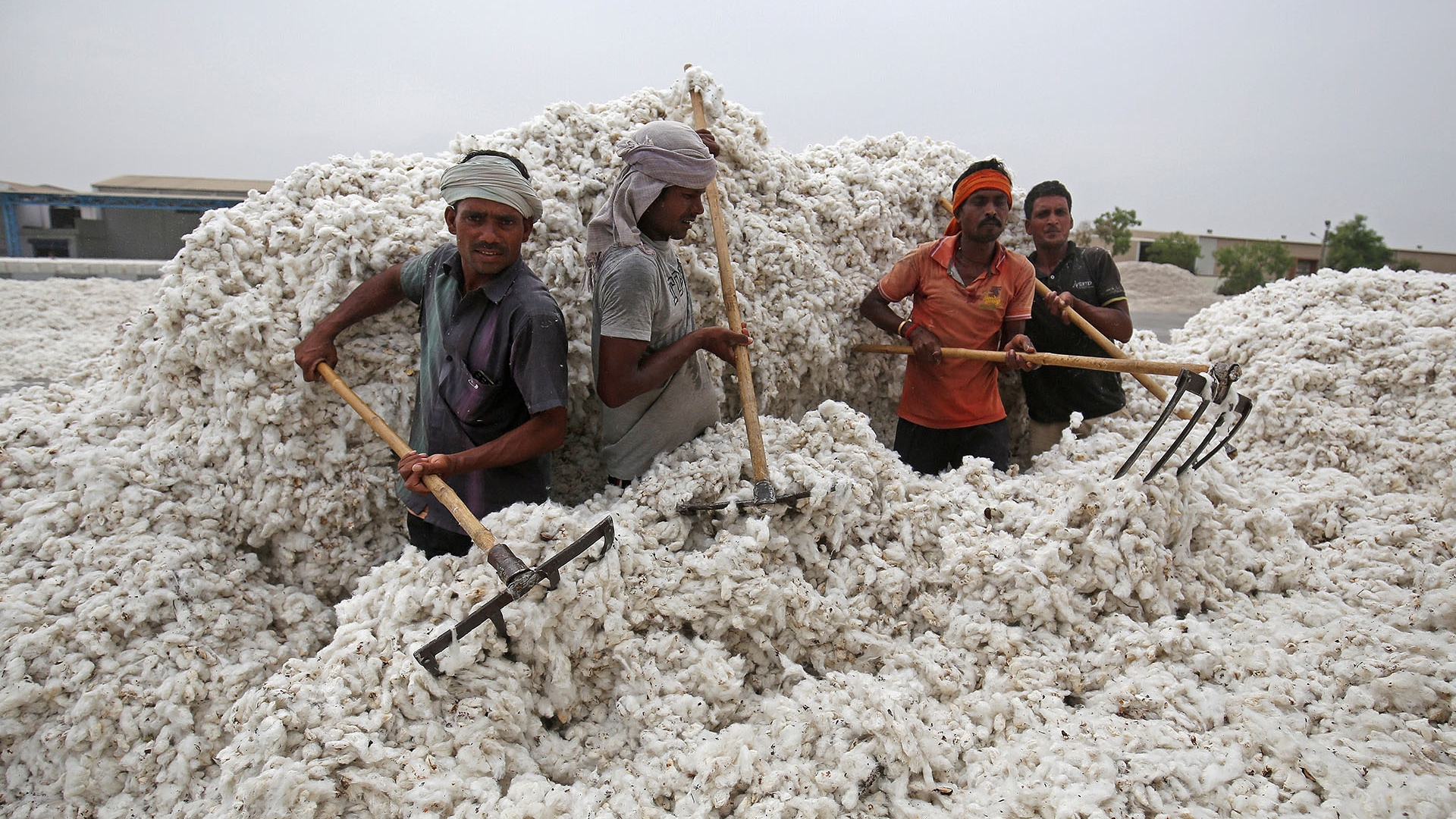
    Better Cotton member farmers cut synthetic nitrogen use per kilogram of cotton by 69 percent and pesticide volume by 65 percent, according to the group’s five-year impact audit.

    The benchmark covers field-level operations supplying roughly 24 percent of the global raw cotton crop to textile mills and apparel retailers worldwide.

    Researchers drew on more than 20 million annual data points gathered across commercial operations and smallholder plots. Alongside chemical cuts, 54 percent of licensed growers lowered their carbon footprint, while 52 percent of irrigated farms cut water use per kilogram of lint by an average of 29 percent.

    Lower input expenses delivered financial relief across rural growing belts. About 59 percent of participating smallholders lifted net farm income after adopting standard agronomic practices. These practices substitute biological controls and composting for commercial chemical inputs.

    Field Cuts Across Water and Chemicals

    Pest management shifts accounted for much of that cost drop. Across participating networks, 65 percent of growers reduced active synthetic pesticide ingredients per hectare. A network of 11,000 bio-input production and distribution centers established with local program partners supported the shift.

    Irrigation efficiency improved across arid basins through structured water stewardship training. Partner organizations conducted field sessions for 690,000 farmers and 175,000 agricultural workers. That outreach reached 65,000 female farmers and 77,000 female field workers.

    Female representation in administrative roles also rose over the five-year tracking window. Women now occupy 17 percent of field facilitation and producer unit management posts across participating organizations. Five years earlier, that figure was 9 percent.

    Pakistan Smallholders and Yield Economics

    Growers in Asia facing volatile weather and high fertilizer costs provided key proof points for the standard. In Pakistan’s Sanghar district, 37-year-old farmer Samina Khaskheli cut operating costs by 15.6 percent across three seasons. She did so by adopting botanical pest treatments, compost applications, and organic bio-fertilizers.

    Certified volumes give Asian spinning mills and garment exporters verifiable scope-3 carbon and chemical data under tighter brand procurement rules. Operational risks remain concentrated upstream. The main challenge sits with certification integrity at farm aggregators and ginning facilities along fragmented rural supply routes.

    Exporters in Pakistan and regional processing hubs face persistent scrutiny over raw material traceability. Standardized field reporting gives manufacturers defensible documentation when shipping finished textiles to regulated European and North American retail channels.

    Season Results Across Global Acreage

    Data from the single 2024 to 2025 growing season confirmed steady adoption rates. During that twelve-month cycle, 61 percent of participating growers reduced synthetic nitrogen per kilogram compared to the previous crop year. Another 49 percent cut their carbon footprint.

    Pesticide reductions continued across the single-season cohort. The report tracked 40 percent of growers lowering active synthetic pesticide usage per hectare. Meanwhile, 34 percent applied organic fertilizers such as livestock manure across their acreage.

    Local program partners ran at least 19,900 demonstration plots during the season. These trials validated alternative pest control methods before farmers risked seasonal capital on broadfield deployment.

    “BCI is committed to rigorous impact reporting, which gives confidence through diligently collected, interpreted, and disseminated findings drawn from reliable and complete data,” said Iain Gardiner, senior director of impact and development at BCI.

    Soil Health Targets for 2030

    The report represents the organization’s first comprehensive global impact assessment in five years. It follows a baseline cycle focused on expanding grower enrollment across South Asia, Africa, and the Americas.

    Attention now turns to the organization’s binding 2030 target. That benchmark mandates that 100 percent of its licensed cotton farmers document measurable improvements in soil health across their cultivated acreage.

  • Kering Partners with Reliance Brands to Bring Generation Award to India

    Kering Partners with Reliance Brands to Bring Generation Award to India

    Kering is launching its Generation Award in India with Reliance Brands this week. The initiative seeks startups working on circular fashion and resource protection.

    The R|Elan Circular Design Challenge will serve as the exclusive nominating partner, connecting a local innovation network with the global luxury group.

    An awards ceremony is planned in Delhi on October 13, giving emerging businesses a route to wider visibility and industry relationships.

    How the Partnership Operates

    Under the agreement, the R|Elan Circular Design Challenge vets and nominates applicants from across India. Finalists will present solutions addressing raw material conservation, textile recycling and low-impact processing.

    Winners receive industry mentorship alongside commercial visibility across Kering’s portfolio houses. The structure links local research facilities and young apparel designers directly with procurement teams in Paris and Milan.

    What It Means for Indian Apparel

    For Reliance Brands, the tie-up deepens relations with a key European partner. It also positions its R|Elan synthetic and recycled fabric arm at the center of sustainable textile development. Reliance already operates joint ventures and distribution pacts with several luxury labels across major Indian metros.

    Luxury operators across South Asia now treat certified sustainable supply chains as an operational priority rather than a marketing exercise. Sourcing circular materials domestically cuts logistics lead times. It also helps brands meet European Union material traceability standards before raw garments ship abroad.

    Earlier Expansion Steps

    Kering established the Generation Award in China in 2017 to discover material science ventures before expanding the format into other manufacturing territories. The Indian rollout is the first time the programme has integrated directly with an industrial conglomerate’s existing design competition.

    A joint jury will review shortlisted startups through September. The Delhi presentation on October 13 will reveal the winning enterprises and confirm their initial mentoring schedules.

  • Bangladesh Imports from India Hit $10.96 Billion Despite Port Limits

    Bangladesh Imports from India Hit $10.96 Billion Despite Port Limits

    Bangladesh increased its imports from India to $10.96 billion in fiscal 2025-26, defying land border curbs designed to restrict cross-border shipments between the two neighbours.

    The annual import bill rose 13.9 percent from $9.62 billion recorded in the previous fiscal year, according to National Board of Revenue data. Bangladeshi exports to India dipped slightly over the same period, slipping to $1.75 billion from $1.76 billion. The figures leave Dhaka with a bilateral trade deficit exceeding $9.2 billion, with India supplying more than six times what it buys in return.

    Shifting cargo from land to sea

    Bilateral trade friction escalated following political changes in Bangladesh in 2024. Dhaka restricted yarn imports across land borders in March 2025 to shield domestic spinning mills, redirecting all Indian yarn shipments exclusively through Chattogram seaport. New Delhi responded in April 2025 by halting airport transhipment facilities for Bangladeshi garments bound for third countries, later adding land port curbs on Bangladeshi processed food, jute, furniture, and apparel.

    The administrative barriers failed to dent demand for Indian textile inputs. Bangladesh Textile Mills Association president Showkat Aziz Russell said recorded yarn imports from India doubled to approximately 300 billion taka in fiscal 2026, up from 140 billion taka a year earlier. Channeling shipments entirely through seaports brought previously informal or unrecorded overland cargo onto customs registries, inflating formal totals while keeping factory order books supplied.

    Structural imbalance in regional apparel

    Textile mills and garment factories across Dhaka and Chattogram rely heavily on Indian cotton, yarn, and fabric because of shorter freight times and buyer-nominated fabric specifications. While India is Bangladesh’s second-largest overall trading partner after China, Dhaka’s outbound shipments remain heavily concentrated in ready-made garments, which face domestic competition and strict standard compliance inside India.

    Policy analysts and industry bodies note that despite duty-free access granted under the South Asian Free Trade Area framework in 2010, the two countries have yet to build integrated supply chain agreements. Bangladesh Garment Manufacturers and Exporters Association president Mahmud Hasan Khan and Knitwear Manufacturers president Mohammad Hatem have urged both governments to resolve transport frictions through high-level talks.

    Trade associations from both nations continue to push for formal negotiations on a Comprehensive Economic Partnership Agreement to clear land port bottlenecks and establish mutual certification standards.

  • Gas Shortage Shuts 80 Percent of Narsingdi Textile Mills in Bangladesh

    Gas Shortage Shuts 80 Percent of Narsingdi Textile Mills in Bangladesh

    A severe natural gas shortage has shut roughly 80 percent of textile and dyeing mills in Narsingdi, wiping out an estimated Tk 500 crore in daily output.

    The industrial hub supplies about 75 percent of domestic fabric demand in Bangladesh, leaving garment makers without essential materials as international buyers cancel orders.

    Rotting Fabric and Idled Boilers

    Narsingdi houses more than 3,000 production units, including 2,500 sizing, spinning, dyeing and weaving mills. About 400 of these operations rely on uninterrupted natural gas at 10 to 15 pounds per square inch to run steam boilers and drying machines. Gas pressure in key industrial pockets like Madhabdi and Chowala fell to zero for four straight days, leaving chemically treated fabric stranded mid-cycle. Fabric left wet beyond 16 hours rots and turns unusable.

    Local industry groups estimate between 10 million and 15 million yards of fabric have been ruined. At Tithi Textile in Madhabdi, 250,000 yards were damaged after generators and machinery stopped. Facing steep losses and wage deadlines, more than 100 mills closed indefinitely, sending workers home on unpaid leave. Others turned to burning wood in steam boilers at a cost of Tk 12,000 a day, skirting local environmental permits after the price of scrap fabric waste spiked.

    Supply Chain Bottlenecks Spread

    The disruption traces back to July 21, when a technical fault crippled an offshore floating liquefied natural gas terminal at Moheshkhali. National gas output plunged from 2,650 million cubic feet per day to 2,175 mmcfd against total demand of 3,800 mmcfd. State distributor Petrobangla lifted supply to 2,300 mmcfd on August 22, but state utility Titas Gas diverted high-pressure flows of 200 PSI to the Ghorashal-Palash fertiliser plant, starving private textile processors.

    Bangladesh remains the world’s second-largest apparel exporter, yet its supply chain faces recurring energy vulnerabilities that threaten delivery timelines for global fashion brands. While competing manufacturing hubs in Vietnam and India rely on more diversified power grids, Bangladeshi mills remain exposed to single-point infrastructure failures in offshore gas infrastructure, compounding margin pressure from rising domestic debt.

    Titas Gas engineers expect regional gas pressure to show initial signs of recovery next week as repair teams complete work on the Moheshkhali LNG terminal.