Tag: Apple stores

  • Why Is Apple Opening More Retail Stores in Emerging Markets?

    Why Is Apple Opening More Retail Stores in Emerging Markets?

    Apple continues to remain optimistic about China despite the country’s economic slowdown. As a result of this optimism, Apple plans to open a number of retail stores in emerging markets such as China and India. Apple had 28 stores in China through the end of 2015, but it plans to add 12 more by mid-2016.

    In India, Apple had depended on subdistributors for the sale of its products until now. However, Apple has sought approval from the Indian government to open its own retail stores in India.

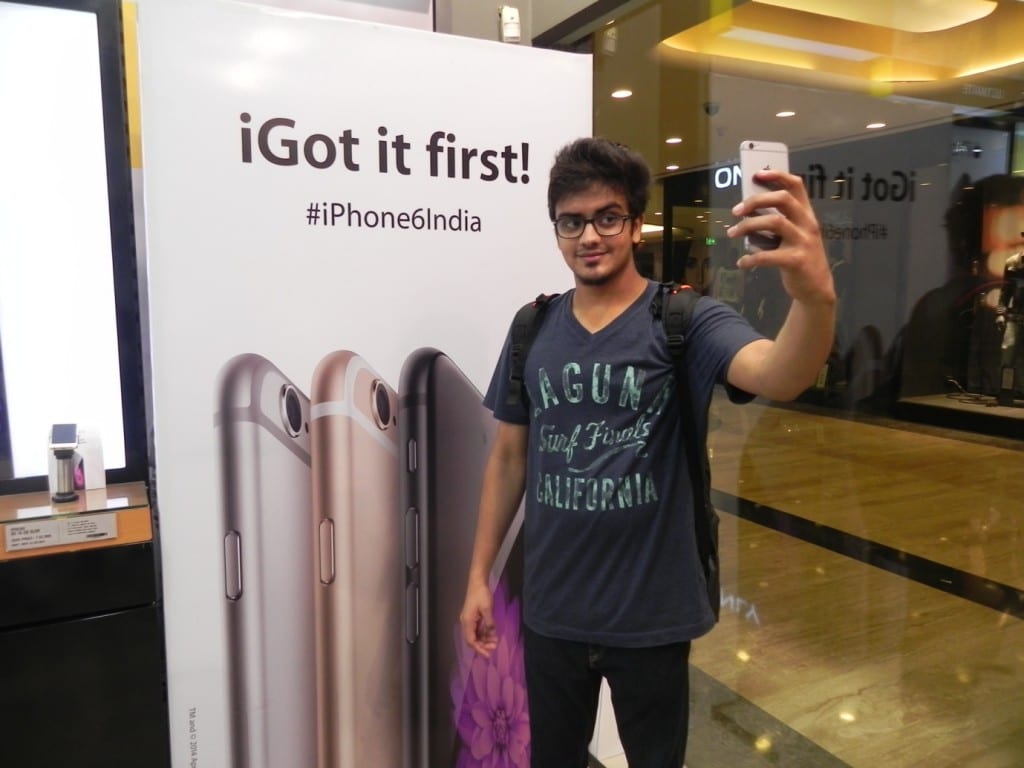
    Apple considers India to be an important market in the coming days, as the country is now the second-largest smartphone market in the world after China. Apple’s revenues in India grew by a healthy year-over-year (or YoY) rate of 38% in the quarter ended December 2015.

    Percentage of users buying iPhones from Apple US retail stores declining

    India has some positive macroeconomic factors that make it an attractive market. It is one of the fastest-growing economies with a huge young population. According to Apple’s CEO, Tim Cook, “The population of India is incredibly young. The median age there is 27. I think of the China age being young, at 36, 37 and so 27 is unbelievable. Almost half the people in India are below 25. And so I see the demographics there also being incredibly great for a consumer brand and for people that really want the best products.”

    The focus on retail in emerging markets is big for Apple, but it’s the opposite in the US. According to a report, citing research from Consumer Intelligence Research Partners, users are increasingly buying iPhones from telecom providers such as Verizon, Sprint (S), and AT&T (T) rather than its own stores. The above chart shows this trend. The main reason for this trend is that these providers offer consumers attractive leasing, installment plans, and exchange offers.

    Apple commands only 2% share of India’s smartphone market

    In the previous part of this series, we discussed the growing focus by Apple on India. According to Counterpoint, India recently overtook the US to become the second-largest smartphone market, behind only China. However, Apple still only commands a 2% share in India’s smartphone market.

    According to that report and as the chart below shows, Samsung led the Indian smartphone market last year, with Micromax, Intex, Lenovo, and Lava taking the up the remaining four positions among the top five players in this market. Microsoft lost its place among the top five players in this market due to the declining popularity of the Lumia line of smartphones.

    Apple Aims to Increase Penetration of India’s Smartphone Market

    Apple’s initiatives in India have yet to bear fruit

    Apple released the low-cost iPhone SE in March 2016, accompanied by high expectations. It released this smartphone in India in early March, but it has so far failed to garner much interest from users. The problem with the iPhone SE is that although it costs $430 in the US, it is sold at the higher price of $586 in India.

    iPhones cost more in India because Apple currently depends on third-party distributors to sell the devices in India, adding their commissions to the phone’s price. However, as discussed in the previous article, Apple plans to open its own stores in India, which could help bring down the prices of iPhones in India going forward.

    This isn’t the first time Apple has launched a cheaper version of the iPhone. In 2013, Apple launched the iPhone 5C at around $500.

    In 2015, Apple announced that it would slash the price of the iPhone 5S from $665 to $370, according to a report from the Times of India. However, all these efforts have still not helped Apple’s penetration of the Indian smartphone market. In our view, Apple would have to do much more to achieve that goal.

  • Story-i Indonesia to open Apple Stores

    Story-i Indonesia to open Apple Stores

    Two more Apple Stores will open in Jakarta as part of Story-i Indonesia’s retail strategy to expand the network to 18 locations.

    Story-i has formed a relationship with Singapore-headquartered retail giant Courts to open an initial two Apple stores within its large-format Courts Megastores in Jakarta. Story-i will follow up with two further stores within Courts outlets this quarter. Courts has more than than 70 locations across Indonesia as well as Malaysia and Singapore.

    Like Story-i, Courts has an aggressive growth strategy, with a developed pipeline of up to 20 large-format stores. As part of this roll out, Courts has a marketing strategy including a storewide cash-back promotion on sales, extended to cover Story-i stores within its megastores.

    Story-i CEO Yulius Halim says the network provides an all-important physical infrastructure for device sales and servicing that underpins its eCommerce business. As well as more stores, Story-i has been appointed the IT service centrepoint for the Courts Megastore complexes.

    Singapore-incorporated Story-I has 14 Apple and related stores in Indonesia through its 95 per cent owned subsidiary Inetindo Infocom. Story-i branded stores retail Apple products and accessories, iConnect retails Samsung and Lenovo phones, computers and lifestyle accessories, and GeekZone provides software, equipment servicing and apps.

  • Apple China bracing for fall

    Apple China bracing for fall

    Even as it announces record revenues and net profit, Apple says it has sold fewer iPhones in the first quarter and is bracing for a fall in sales in its critical Chinese market.

    “It’s becoming more apparent that there are some signs of economic softness,” says CFO Luca Maestri. “We are starting to see something that we have not seen before.”

    He admits the tech giant is working in a “very difficult macroeconomic environment” and projects a further slide in iPhone sales for the second quarter, reports the International Business Times. Apple’s projected revenues indicate the company’s sales are about to fall for the first time in 13 years.

    Apple’s sales stumble was masked by the record corporate quarterly profit. Conlumino analyst Neil Saunders takes a close look at the latest Apple report in our international section.

    Apple sold 74.8 million iPhones in the first quarter, ending December 26, which is the first full quarter of sales of the iPhone 6S and 6S Plus. The 0.4 per cent growth in shipments was the lowest since the product’s launch in 2007.

    Maestri says that although Apple China revenue rose by 14 per cent in the quarter, the company is starting to see a shift in the economy, particularly in Hong Kong.

    Apple had record figures in the first quarter for both net profit ($18.36 billion, up from $18.02 billion) and revenue (up 1.7 per cent to $75.87 billion). Greater China accounted for 24.2 per cent of the total revenue, more than all of Europe combined.

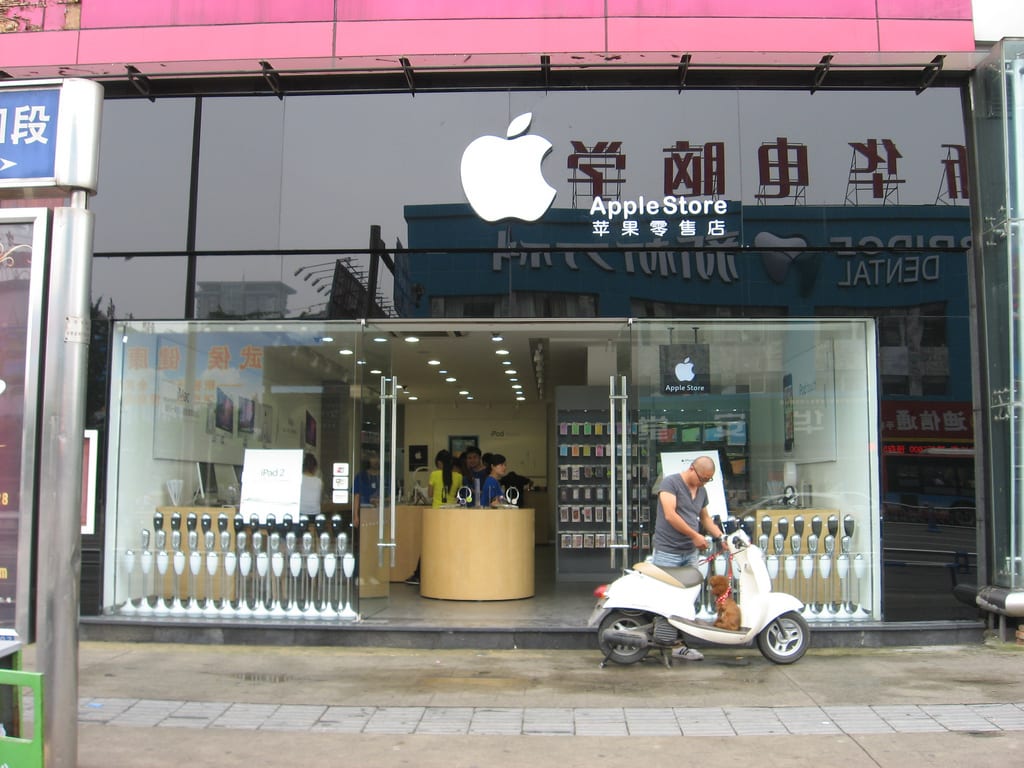
    An indication of Apple’s popularity in China can perhaps be gauged by the dwindling number of fake Apple stores in the southern city of Shenzhen, some of which have been taken over by unauthorised outlets for local phone brands.

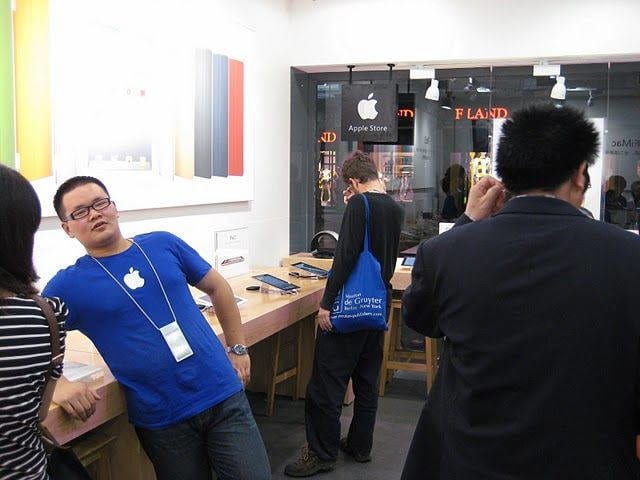
    In a street of gadget stores, copycat Apple outlets were not uncommon, complete with the latest iPhone models and accessories and uniformed staff. Only four months there were more than 30, but about a third of these have gone, reports Reuters. Instead of iPhones, some of these shops are now selling Huawei, Meizu, Oppo and Xiaomi phones.

    In fact, the iPhone has become a “street cellphone” – a Chinese term that means a widely available and popular product that lacks novelty value.

    “Using an iPhone is hardly something you can show off to people now,” a Shenzhen retailer told Reuters.

    In the US, iPhones are still popular, and 60 per cent of people who had an iPhone before the launch of the iPhone 6 have yet to upgrade, says the company.

    Meanwhile, the Indian market stands out as a rare bright spot for Apple with a growing demand for iPhones, reports The Indian Express.

    Sales of the company’s flagship smartphone climbed 76 per cent in India from the year-ago quarter, according to Luca Maestri.

    Apple CEO Tim Cook has suggested more growth lies ahead with median age in India being 27 years.

    “I see the demographics there also being incredibly great for a consumer brand,” he says. “We have been putting increasingly more energy in India.”

    India cannot immediately offset Apple’s woes in China, says analyst Neil Shah of Counterpoint Technology Market Research. Apple averaged about 450,000 smartphone shipments a quarter in India last year, compared with more than 15 million a quarter in China.

    Also, nearly 70 per cent of smartphones sell for less than $150, leaving  a slim market for Apple’s high-end phones. Its smartphone market share stands at less than 2 per cent, says Shah.

  • Fake Apple Stores In China Are On The Decline

    Fake Apple Stores In China Are On The Decline

    Due to stricter copyright laws and laws to protect intellectual property in the US, finding a fake Apple retail store is next to impossible. However over in China, such stores used to run rampant several years ago where not only did the shops look like the official Apple Store, but employees were also given similar uniforms.

    In fact there was once this story about an employee who had no idea he was working in a fake Apple Store. That being said, a report from Reuters has recently noted that the number of fake Apple Stores in China are said to be on the decline. Some claim that this is because interest in Apple products in China are on the decline, while others speculate that Apple might be working with the government to clamp down on these stores harder.

    fake apple store

    A third possibility is that with Apple expanding their official retail presence in the country, residents of China are starting to wisen up to these fake stores, leading to their decline. The third option is probably the most likely, especially since Apple will be opening its 33rd store in the country this week, with plans to expand to 40 locations by the middle of the year.

    In the meantime some of these fake stores have since been replaced by regular smartphone stores which sells local brands such as Xiaomi, Huawei, Meizu, OPPO, and etc.

  • Apple Stores set to enter India; teams up with Croma Retail

    Apple Stores set to enter India; teams up with Croma Retail

    Apple Stores will now officially enter Indian shores in partnership with Tata-owned consumer electronics chain Croma which will host Apple at six locations – five in Croma stores, Mumbai and one in Bangalore – to begin with. The locations are Juhu, Oberoi Mall, Malad, Ghatkopar, and Phoenix Mall in Mumbai. In Bangalore, it will be opened in Jayanagar. These stores will be opened by Diwali this year.

    Avijit Mitra, chief executive officer of Infiniti Retail, which owns Croma said, “We are proud to partner Apple to launch the Apple Store in India and extremely bullish about it. These stores will be modelled on the global design and will offer the best experience to consumers, showcasing the entire range of Apple products.”

    It should be pointed out that these stores will be different from Apple exclusive stores in India. Apple will not own these stores, but has franchisees who are premium re-sellers. Apple products are sold online via e-commerce portals as well.

    The Apple space will be 400-500 square feet in area and the store design, furniture, fixtures and lighting will the same as that used in Apple stores globally and the sales staff will also be trained by the company, the report added.

    Croma has stated that it has 97 stores across the country with 3.8 million customers where as Apple owns more than 460 stores in 17 countries. The company has significantly increased its retail presence in the country in the past year with five distributors in India.