Retail News CRM

Tag: apple watch

  • New Apple Watch ads replay real-life situations where the timepiece saved the user’s life

    New Apple Watch ads replay real-life situations where the timepiece saved the user’s life

    While the Apple Watch was not originally created to save lives, over the years some of the health-related features on the device have sent out timely warnings allowing users to get to the doctor or the hospital before it was too late. In other situations, the Apple Watch on a person’s wrist notified emergency services or first responders, and a timely rescue was made. If you recall, when Apple was planning to launch the Apple Watch in April 2015, the tech giant was looking at the device as a piece of luxury jewelry.

    Apple was able to get its timepiece on the cover of regional editions of Vogue months before the product was released. In early 2017, Apple started shutting luxury-themed Apple Watch pop-up stores in Europe as it moved away from promoting the Apple Watch as a luxury timepiece as reports started to come in about users having their lives saved thanks to the watch.

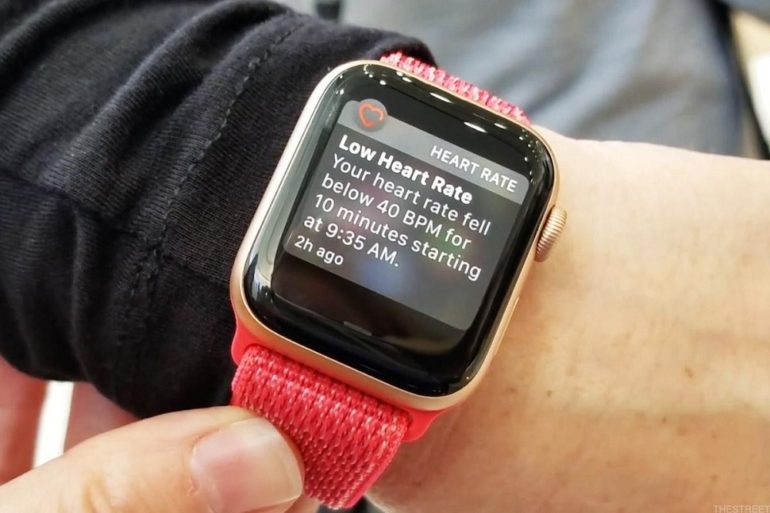
    Apple has released a couple of new television commercials for the Apple Watch, both of which are based on real-life events and focus on a specific health-related feature. The first ad, created by Apple Australia, is called “Lexie’s Heart.” A young woman Lexie Northcott started to get low heart rate notifications on her Apple Watch and after a trip to the hospital, she was diagnosed with a congenital heart block. Doctors operated and gave her a pacemaker and, as Lexie’s mom says later in the ad, “If it wasn’t for that watch, she might not be here right now.” This 30-second ad is focused on “Heart Rate Notifications.”

    The second ad, also 30 seconds in length, also from Apple Australia, and also based on a true story, is called “Bruce and the Roo.” A gentleman named Bruce Mildenhall had been knocked unconscious by…wait for it…a kangaroo while he was biking. Bruce hit the ground hard, activating the Fall Detection feature on his Apple Watch. The device called emergency services and even messaged his wife to alert her.

    When Bruce came to, he heard the sound of someone hitting the back glass of the ambulance he was placed in. He then heard his wife asking, “Have you got Bruce Mildenhall in there? Is he alive?” The first responders told her, “Yes, he’s OK.” As the ad for the Apple Watch’s Automatic Fall Detection comes to an end, Bruce says, “I still wear my watch and I’m still looking for that kangaroo with tire marks.”

    Suppose Apple does run these ads outside of Australia and adds them to its advertising rotation in the U.S.. In that case, you might see one or both appear during this weekend’s big NBA and NHL games, college basketball telecasts, and between innings or during a pitching change on MLB spring training broadcasts.
  • Software update is coming to fix annoying bug on Apple Watch Series 9 and Ultra 2

    Software update is coming to fix annoying bug on Apple Watch Series 9 and Ultra 2

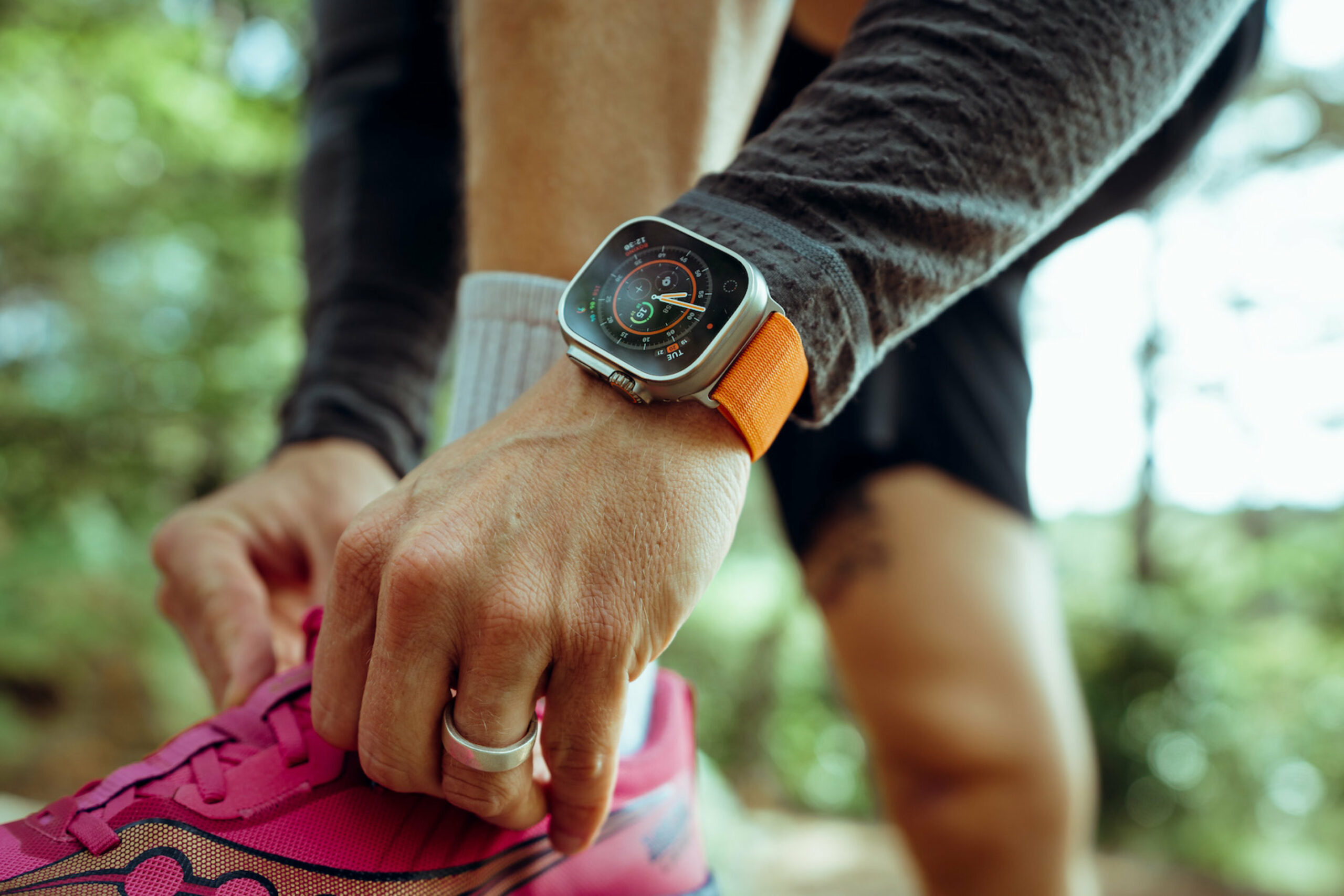
    Apple has sent out an internal memo to these authorized repair shops to let them know that the company is aware of an issue with the Apple Watch models released last year.

    The memo, which MacRumors obtained, says “Some customers may report their Apple Watch Series 9 or Apple Watch Ultra 2 is experiencing false touches on their display.” Apple adds that some customers might say that their Apple Watch model is experiencing “ghost touches.” Owners of impacted Apple Watch models say that the screen will “jump erratically” or take other actions even if the user has not interacted with the device. The problem could cause users to be unable to enter their passcode or have an accidental phone call made

    The tweet from @StellaFudge notes that Apple has told technicians working at authorized service centers and, we assume, at Apple Stores as well, not to replace any Apple Watch Series 9 or Apple Ultra 2 units exhibiting this problem. Instead, Apple is telling technicians to inform customers that Apple will soon be issuing a software update that will resolve the problem.

    With that in mind, Apple is telling Apple Watch owners to make sure that they keep their devices updated and running the latest version of watchOS, especially since the touch issue is expected to be fixed via a software update. Apple didn’t give a timeframe as to when we can expect the update to arrive. However, the company is recommending that those experiencing this problem on their Apple Watch Series 9 or Apple Watch Ultra 2 force restart their timepieces to see if that helps solve the problem before any update is sent.

    To force restart either Apple Watch model, hold down the Digital Crown and the side button at the same time for at least 10 seconds, until the Apple logo appears. If this doesn’t rid your Apple Watch of the “ghost touch” issue, you will have to be patient and wait for Apple to push out a software update aimed at exterminating this bug.

  • The Apple Watch Ultra gets an automatic “eye-saving” feature in watchOS 10

    The Apple Watch Ultra gets an automatic “eye-saving” feature in watchOS 10

    The watchOS 10 update will bring widgets to the Apple Watch that will be controlled via the timepiece’s Digital Crown. And with Smart Stack, Apple Watch widgets will bundle together based on the user’s typical schedule. For example, when the Apple Watch user gets up first thing in the morning, the weather widget will be on the top of the stack. The calendar widget could be on the top of the stack when a previously recorded appointment is drawing near.

    Another cool feature that watchOS 10 will bring to the premium Apple Watch Ultra is Auto Night Mode. Using the ambient light sensor, the watch will know when light levels are low enough to automatically warrant turning on Night Mode. In Night Mode, the Apple Watch Ultra removes the blue light that negatively affects your eyes by straining them and turns the entire interface red and black to make it more visible at night and less irritating to your eyes.

    The Night Mode currently is enabled manually by swiping to Apple Watch Ultra’s Wayfinder screen which shows elevations, location coordinates, and more. With the Wayfinder face on the watch, turn the Digital Crown to turn on Night Mode and turn it the other way to turn it off. Again, with watchOS 10, the Apple Watch Ultra will use ambient light sensors to automatically determine whether to activate the feature.
    It is important to note that the Night Mode feature works only with the Wayfinder watch face on the Apple Watch Ultra so if you plan on using Night Mode manually or automatically, you are going to need to have this watch face selected for the timepiece. It isn’t known whether having Auto Night Mode enabled will be the default setting for watchOS 10 on the Apple Watch Ultra although it probably should be. That’s because enabling Night Mode in watchOS 10 on Apple’s premium smartwatch might be more of a pain since spinning the Digital Crown in that build will control the new widgets.
    To make things easier, Apple Watch Ultra users will probably want to ensure that Night Mode using the Wayfinder face is enabled if it isn’t activated by watchOS 10.
  • Meta is pulling the Facebook Messenger app from the Apple Watch

    Meta is pulling the Facebook Messenger app from the Apple Watch

    After this month is over, Meta is pulling the Facebook Messenger app from the Apple Watch. Starting on June 1st, Apple Watch users can no longer send or receive messages using the app. The news got out after some users of the wearable spotted a notification on the Apple Watch Messenger app titled “Changes to Messenger on Apple Watch.” The notification said, “After May 31st, Messenger won’t be available as an Apple Watch app, but you can still get Messenger notifications on your watch.”
    A Facebook spokesperson confirmed the news and pointed out that those who want to send and receive messages using Facebook Messenger can still do so via the iPhone app, through their desktop, or by using the website. For some reason, Meta hasn’t shared this decision with many and it has yet to release a public statement. Apple is expected to release watchOS 10 in September, focusing on widgets instead of third-party apps.
    I also remember back in the day when Facebook had special integration so that you could make posts and upload photos directly without having to open the app. Obviously this meant people didn’t need to open the app as much, and that meant less ads, so they removed it.”
    If you use the Facebook Messenger app on your Apple Watch, you have less than three weeks to enjoy using it unless Meta changes your heart. Since its decision to eliminate the Apple Watch app might have to do with money, please don’t hold your breath hoping for Meta to reverse its decision.
  • Apple will reportedly allow Apple Watch to pair with multiple devices

    Apple will reportedly allow Apple Watch to pair with multiple devices

    When you buy a new Apple Watch, it must be paired with an iPhone. While one iPhone can be paired with multiple Apple timepieces, one Apple Watch cannot be paired with multiple Apple devices. But a Twitter tipster who made a great call last year says that the rumor mill is actively cranking out fresh speculation for mass consumption. This rumor says that Apple is developing software updates allowing an Apple Watch to pair with multiple Apple devices, including an iPhone, an iPad, and a Mac.
    Currently, an Apple Watch cannot pair with an iPad, but with the timepiece paired with an iPhone, a user can use his Apple Watch to help him view Apple Fitness+ workouts on an iPad that uses the same Apple ID. And those with an Apple Watch can unlock their Mac computers, view passwords, authenticate apps, and verify the user’s identity to complete an online Apple Pay transaction.
    “Apple Watch will sync across multiple iOS/iPadOS/Mac devices, and will no longer be tied to one single iPhone.” The tipster says that while he doesn’t know how Apple will implement this, he does know that in a future update, Apple will allow the Apple Watch to sync with more than one Apple device. Also unknown is which Apple Watch models will have this new feature and when it will be introduced.
    For example, the tipster says he is unsure whether Apple will include this new capability with watchOS 10, iOS 17, iPadOS 17, and macOS 14, all due out later this year, or if it will be delayed until then the 2024 updates.  The tipster, @analyst941, made a great call on the Dynamic Island before the feature was announced last year giving him some legitimacy.

    Recently, @analyst941 posted not to give up on seeing solid-state buttons replace the mechanical buttons on the two upcoming premium iPhone 15 models, contradicting more well-known analysts such as Haitong Tech’s Jeff Pu, and TFI International’s Ming-Chi Kuo. Pu and Kuo both say that Apple will stick with the physical buttons on the iPhone 15 Pro and iPhone 15 Ultra. But @analyst941 wrote that the two models “will still have capacitive touch buttons, {and that] contrary to rumors, the development team is working too closely with new hardware to turn back now.”

    The tipster also recently tweeted a list of new features he expects to see on iOS 17. Apple will discuss iOS 17 on June 5th, when the keynote will be held for the WWDC 2023 Developer’s Conference. The new iPhone, Apple Watch, and iPad operating systems will be released in September.


  • Apple Watch will soon help patients with Parkinson’s

    Apple Watch will soon help patients with Parkinson’s

    The Apple Watch might be one of the most popular wearables out there, and there’s no denying that it actually makes people’s lives better. You can say whatever you want about Apple and its gadgets but all the success stories surrounding the Apple Watch deserve some attention.

    Now there’s another potential use case for the wearable, as the FDA has granted approval for the Apple Watch to be used to monitor Parkinson’s patients. The approval has been granted to Rune Labs – a San Francisco-based health startup – to run a special software on the watch to track symptoms of Parkinson’s.

    The software in question can discern and track common symptoms of the disease such as tremors, involuntary or slow movement, rigidity and poor balance, etc. Apple added hard-fall detection software to its Watch Series 4 back in 2018, and subsequently released the software as a part of its open-source ResearchKit.

    This allowed developers to use the Movement Disorder API to create watchOS apps and solutions to track various diseases that manifest themselves with symptoms that involve movement abnormalities.

    Using wearables to track such disorders isn’t new but Rune Lab’s solution is the first designed for commercial applications. The idea is to track the patient’s condition over a certain period and give physicians and medical specialists access to this data.

    Of course, the app has its limitations but it is designed to serve as a supplement to the regular full-blown in-person medical exam. This isn’t the first Apple Watch feature to be cleared by the FDA – earlier this month the administration approved the watchOS’s AFib History feature, allowing people 22 and older to use the watch to monitor their heart condition.

  • Yet another streaming service beats Spotify to the Apple Watch offline listening punch

    Yet another streaming service beats Spotify to the Apple Watch offline listening punch

    Apple, Amazon, and even Google’s music streaming platforms have been in the limelight of late for a couple of different reasons, and now it’s Deezer’s turn to make headlines as it (ineffectively) tries to keep up with the world heavyweight champion of the thriving industry.

    Unfortunately for audiophiles, the French service, which is mainly popular on the old continent and less so stateside, is not ready for an Apple and Amazon Music-rivaling discount of its existing HiFi tier… just yet.

    While you still need to pay $19.95 a month (in the US) to access a library of around 36 million tracks in FLAC quality, the latest killer feature added to Deezer’s Spotify-challenging arsenal is available completely free of charge… for “premium” subscribers.

    We’re talking about offline listening functionality delivered straight to your wrist by the Apple Watch Series 6, and in case that doesn’t sound like such a big deal, you may want to know the world’s most popular smartwatch is actually not in the same boat as far as Spotify integration is concerned.

    Of course, Deezer is not breaking entirely new ground here either, following in the footsteps of Apple Music (duh) and Pandora while beating the likes of YouTube Music and Tidal in addition to Spotify to the offline punch (the latter of which doesn’t even have an official Apple Watch app to begin with).

    As long as you own the newest high-end edition of the immensely successful Apple Watch and are already paying Deezer for a Premium, Student, Family, or HiFi subscription, it should be extremely easy to start using the feature.

    All you have to do is choose the playlist you want to download to your intelligent timepiece, and depending on its amount of free storage space, you can then listen to your favorite tunes on the fly without keeping your iPhone nearby or staying connected to the internet.

    The Apple Watch Deezer app was obviously already capable of controlling your iPhone’s music streaming action, and on top of everything else, each member of a paid Family account can now download playlists and favorites from their own individual profiles.

    In case you’re wondering, Deezer also allows offline listening on select Tizen-powered Samsung Galaxy Watches while lacking the functionality on Google’s Wear OS platform, which could well change in the very near future.

  • Time to update your Apple iPhone, iPad, and Apple Watch

    Time to update your Apple iPhone, iPad, and Apple Watch

    Apple today released several updates including iOS 14.4, iPadOS 14.4, and watchOS 7.3. With the iPhone and iPad updates, the “Find My” app adds a feature called “Find My Items.” This allows users to find misplaced accessories made by third-party manufacturers who build this capability into their products. The only compatible device available at the moment is Belkin’s SoundForm Freedom true wireless earbuds.

    In addition, the update allows smaller QR codes to be read by the iPhone’s camera, the ability to put Bluetooth connections into categories and headphone type in order to prevent eardrums from getting blown out with audio notifications and delivers a notification when the camera on your iPhone 12 series model cannot be verified as a genuine Apple camera. It also uses the U1 chip in the iPhone 11 series and iPhone 12 series to determine the distance between your iPhone and HomePod mini to allow an improved transfer of music between devices.

    The update also exterminates several bugs including one that allowed image artifacts to appear on photos snapped with an iPhone 12 Pro model using HDR. Another bug fixed by the update prevented the Fitness+ widget from including updated Activity data. One issue that the new iOS 14.4 update solves is one in which the keyboard would appear with the wrong language in the Messages app. A pair of bugs that prevented word suggestions from appearing on the keyboard and delayed the results of typing on the keyboard are both gone after the installation of iOS 14.4.

    The latest iOS build also eliminates an issue that prevented phone calls from being answered on the Lock Screen when Switch Control in Accessibility was enabled. And lastly, iOS 14.4 gets rid of a bug that did not allow stories from CarPlay’s News app to resume after being placed on pause to hear spoken directions or a response from Siri. The update is available to compatible iPhone and iPad models and can be received by going to Settings > General > Software Update. It weighs in at 344.3MB.

    Apple also pointed out that the iOS and iPadOS updates include security patches that eliminated three zero-day security flaws. Apple believes that these flaws might have been exploited in the wild. A Kernel flaw might have allowed attackers to give permission for the affected phone to run certain apps. A WebKit flaw could have allowed the hackers to make an iPhone do just about anything. The watchOS update rid the device of a security flaw that could have elevated privileges on a unit under attack.

    Apple also released watchOS 7.3 today which includes a new Unity watch face based on the colors of the Pan-African flag (Black, Red, Green, and the Pan-African colors which includes the prior three hues and yellow). The shapes of the colors change throughout the day as you move thus creating a unique look. Apple Fitness+ subscribers will receive the “Time to Walk” feature that plays inspirational audio in the Workout app as you walk. The electrocardiogram (ECG) monitor that checks for abnormal heart rhythms on the Apple Watch Series 4 and later is good to go in Japan, Mayotte, Philippines, Taiwan, and Thailand following the update. Those with abnormal readings in those countries will receive a notification. And a bug that makes the Control Center and Notification Center unresponsive when Zoom is enabled will be exterminated.

    To update your Apple Watch, open the Apple Watch app on your iPhone and tap on My Watch > General > Software Update and Install. The timepiece needs to be on the charger for the update to take place and the watch needs to be in the range of your iPhone connected to a Wi-Fi signal.

  • Apple Watch picks up another update today

    Apple Watch picks up another update today

    Today is a happy day for Apple fans, as the Cupertino-based company is rolling out new software updates for three of its popular products: iPhone, iPad, and Apple Watch. If you’re rocking one of the first two, you should be able to download iOS 14.2 today.

    On the other hand, Apple Watch owners can download watchOS 7.1, a rather important update that brings some interesting new features for select users. The first one is the ability to be notified when your headphone level could impact your hearing.

    Then, we have a fix for an issue that prevented some users from unlocking Mac with Apple Watch. Another fix included in the update should address an issue where the screen may be dark on wrist raise for some people using the Apple Watch Series 6.

    The next two new features are specifically aimed at Apple Watch users in two countries: Korea and Russia. Those users living in one of the two countries will finally get support for the ECG app on Apple Watch Series 4 or later, as well as support for irregular heart rhythm notifications.

    Make sure that you check your Apple Watch app via your iPhone to see whether or not the new watchOS 7.1 update is available for download. You should find it by heading to General / Software Update.

  • Apple will continue to dominate fast-growing smartwatch market

    Apple will continue to dominate fast-growing smartwatch market

    While the global smartphone market remains stagnant as groundbreaking foldable designs need more time to “stabilize” and 5G deployment is still too slow to make a difference, smartwatch sales continue to grow at an impressive pace around the world, pushing the entire wearable device industry forward.

    It should come as no surprise that Apple is projected to stay in the lead of the smartwatch market until at least 2023, well ahead of a pack of rivals with no standout performer in sight. The International Data Corporation (IDC) expects the Cupertino-based tech giant to rack up a 25.9 percent slice of a 131.6 million unit pie in four years, with the former number actually representing a major decline from the company’s latest estimated 35.8 percent share.

    But that’s mainly because significantly more smartwatches are forecasted to be shipped worldwide in the next few years than right now. Specifically, that 131.6 million score would surge from 91.8 million units in 2019, marking a compound annual growth rate (CAGR) of 9.4 percent. And believe it or not, a different category of the wearable industry is expected to thrive at an even faster pace.

    We’re talking about earwear, aka ear-worn devices, aka AirPods and other headphones endowed with smart features. A whopping 105 million of these bad boys could be sold worldwide in 2023, up from “only” 72 million units this year, making up 34.8 percent of the overall wearable market, up from 32.3

    What’s perhaps more interesting to keep an eye on is how smartwatches and ear-worn devices will expand and evolve their feature sets and capabilities. According to the IDC, more than half of the former group will support standalone cellular connectivity in 2023 to break free from smartphones, while the latter category should focus more on allowing consumers to “cope with hearing loss” and other similarly life-improving use cases in addition to just tracking health info and interacting with a voice assistant.

    Finally, it sounds like wristband sales have largely plateaued, with this year’s 54.2 million units merely expected to rise to 55 million in 2023. Shipments will especially decline in North America and Western Europe, where the vast majority of activity tracker owners are likely to upgrade to smartwatches.

  • Apple Watch cuts more ties with the iPhone in latest watchOS 6

    Apple Watch cuts more ties with the iPhone in latest watchOS 6

    VentureBeat’s Jeremy Horwitz discovered something interesting on his Apple Watch when he installed watchOS 6 Developer beta 2 on the device. There are indications that with the latest watchOS build, the wearable will be able to directly load OTA updates without having to go through an Apple iPhone. It’s another cut in the umbilical cord that connected the Apple Watch to the iPhone when the timepiece was first released in 2015. If you’re running the latest Developer beta of watchOS, you can see how the timepiece can run OTA updates through the settings menu by going to Settings > General > Software Update.

    The first cut in the cord came with the release of the Apple Watch Series 3 (GPS + Cellular), which allowed users to make and take calls, reply to messages and receive notifications on the device even if they left their iPhone at home. Before the latest beta update, Apple Watch users needed to open the Watch app on their iPhone in order to complete the updating process.

    So this seems to be good news for those fighting for the independence of the Apple Watch. We say “seems” because for now, even if you install a software update directly from your smartwatch’s settings menu, you have to read and accept the watchOS terms and conditions from your iPhone before starting the update. That seems a little contradictory for a feature that is designed to wean Watch users off their handsets, so we have our fingers crossed that this is something that will be figured out before the final version of watchOS 6 is disseminated.

    When updating directly from the Apple Watch, the timepiece needs to be connected to Wi-Fi and resting on its charger. Once the battery is charged up to the 50% level, the update will begin.

    The next build of watchOS will feature new watch faces. Many new watch faces, according to Apple. In fact, the company says that there will be “more new faces since the very first Apple Watch.” The big news, of course, is that there will be an App Store for the Apple Watch that will host independent apps for the device. And Apple is adding some new apps for the wearable including Audiobooks, Voice Memos, and Calculator. The new Trends feature will allow Apple Watch users to get a longer-term view of their activity stats ranging from a 90-day look to a full year. If the trend shows a healthy increase in activity, that will be good for a user; if the trend shows that the Apple Watch owner is slacking off, the timepiece will pass along some hints on how to get back on track.

    The update will also alert someone if they are in danger of damaging their hearing because of some loud surrounding noises. This is done by having the microphone on the Apple Watch turn on every now and then to measure ambient sounds. If the sound registers over 80dB, the Apple Watch will show a warning. The update to watchOS 6 will also include a setting allowing your timepiece to “chime” at the top of each hour while the Taptic engine will produce a vibration at the same time. And lastly, with the latest build of Apple’s smartwatch operating system, women will be able to track the time every month when they are most fertile and more likely to get pregnant. This is actually good news for Apple. The more children that are born in homes where Apple products are prevalent, the more future customers the company can count on.

  • The future of retail has arrived

    The future of retail has arrived

    Once upon a time, the future seemed a long way off. Remember Tom Cruise in 2002’s Minority Report? And the famous shopping centre scene?

    Director Steven Spielberg recruited a panel of futurists to predict a far-off tomorrow that included responsive, personalised advertising and sales assistants, triggered by iris and facial recognition.

    Well, today, we’re living in that future. Geo-location is ho-hum, facial recognition is a feature built into our phones and Alibaba in China has already tested “smile to pay” in kiosk screens in KFC stores, that replace the need for a wallet.

    Way back in 1994 (was that really 25 years ago?) American phone carrier AT&T ran a TV ad that forecast a future where shoppers could check out “a whole shopping cart at a time” through a scanner, and you could receive “a phone call on your wrist”.

    Fast forward to today, and frictionless grocery retail is a reality with Amazon Go stores (now rolling out across the US), and when I visited one in Seattle recently the receipt was pinged to my Apple Watch along with my trip time. Shoppers are actively gamifying grocery shopping, seeing how fast they can get in and out of the store.

    AmazonGo receipts are pinged to your wrist.

    The future, as science fiction writer William Gibson famously wrote, is already here. It’s just not very evenly distributed. Or, as Matt Thompson from American grocery giant Kroger put it even more succinctly: “The future is now”.

    I see examples of the “future of retail” in the US every day. Creator Burger in San Francisco has a burger-making robot. Nordstrom’s “Local” retail concept centres around click-and-collect, and services, and has no stock in store. Amazon’s 4-Star stores stream ratings and reviews live to the shelf. Kroger is testing self-driving grocery delivery vehicles with Nuro in Arizona.

    China takes things to a whole new level. When I attended Singles’ Day in China last year, I witnessed first-hand a shopping culture that was more “Bladerunner” than suburban mall. There, the mobile rules and stores are not destinations but “nodes”, designed to be interacted with both physically and virtually as the need fits. (My colleague in China ran out of garlic while cooking at home. No problem – he jumped on his app, and had the ingredient delivered in time to finish preparing the meal.)

    As I write this, I am about to return to Australia for a visit. I can’t wait to share my experiences and observations of perhaps the most dynamic time in the history of retail. At the same time, I’m also looking forward to seeing what’s new and exciting in our part of the world. The truth is that, particularly today, the future of retail is not limited to a geographic region. From Telstra stores to innovative supermarket and convenience store design, there is a lot to learn from what’s going on in the Southern hemisphere. You just have to look. Because the future is already here.

  • Johnson & Johnson, Apple collaborate for healthcare

    Johnson & Johnson, Apple collaborate for healthcare

    Apple and Johnson & Johnson are teaming up on a study to determine whether the latest Apple Watch, in conjunction with an app from the pharmaceutical company, can accelerate the diagnosis of a leading cause of stroke. Atrial fibrillation, or AFib, is an irregular and often rapid heart rate that causes about 130,000 deaths and 750,000 hospitalizations each year in the U.S., Johnson & Johnson said. Up to 30 percent of cases go undiagnosed until life-threatening complications occur. Worldwide, about 33 million people have the condition.

    The controlled, randomized multi-year Johnson & Johnson study will start later this year and be limited to U.S. adults ages 65 years and older who wear the Apple Watch Series 4. Specific details on how to participate will be released later.

    The Apple Watch Series 4, which costs $399 or more, has an irregular heart rhythm notification feature, as well as an FDA-cleared ECG app, both of which are designed to detect AFib.

    “We are receiving thank you letters daily from Apple Watch wearers who are discovering they have AFib,” said Apple Chief Operating Officer Jeff Williams. “We want a deeper understanding about outcomes and prevention associated with early detection. We are excited to work with Johnson & Johnson, which has a long history and expertise in cardiovascular disease.”

    Paul Stoffels, Johnson & Johnson’s executive vice president and chief scientific officer, said “the goal is to identify early on AFib and prevent stroke by combining the physical know-how from Apple and what we have from the medical and scientific know-how.”

    Cardiologist Paul Burton, Johnson & Johnson’s vice president of medical affairs for internal medicine, added the watch has a good detection rate for the condition, but there can be false positives.

    If an AFib reading appears, patients are directed to seek a formal diagnosis from their medical provider. Johnson & Johnson’s goal is to collect aggregate data from study participants, rather than tracking individual patients.

    “When we do clinical trials, we always respect the privacy of patients,” Stoffels says.

    Burton believes “the study has the potential to show that there is a lot more atrial fibrillation out there in the real world in older people than we ever imagined, and if you use a tool like an Apple Watch to detect and funnel people to care, you can really drive down stroke risk in those patients.”

    Apple CEO Tim Cook recently talked about Apple’s ambitions in the health space. “I think you’ll be able to look back at some point in the future and Apple’s greatest contribution will have been to people’s health. I think it’s that big.”

    In November 2017, Apple teamed up with the Stanford University School of Medicine on an Apple Heart Study app that uses the heart rate sensor inside the Apple Watch to collect data on irregular heart rhythms. That study is ongoing.

    Apple also hopes iPhone owners will store medical records inside the Health app.

    Stoffels says wearable technology will continue to take on increased importance in the health field, from monitoring whether patients take medications to measuring sleep. “Digital and data will become part of everything we do.”

  • Apple sales plummet in Greater China

    Apple sales plummet in Greater China

    “In fact, most of our revenue shortfall to our guidance, and over 100 per cent of our year-over-year worldwide revenue decline, occurred in Greater China across iPhone, Mac and iPad,” he said.

    The Apple sales decline in China, Hong Kong and Taiwan would most likely exceed $4.3 billion, roughly equal to the company’s overall drop in revenue.

    Previously, Apple had forecast revenue of between $89 billion and $93 billion. Now it expects the figure will be closer to $84 billion, but notes final figures will not be calculated for several weeks.

    Cook said the rising tension between the US and China played a part in the declining sales, with traffic to Apple stores in the region declining as the quarter progressed. This, in turn, led to lower than expected iPhone revenue in the region, which was compounded by the stalling iPhone upgrades seen in other markets.

    “We believe there are other factors broadly impacting our iPhone performance, including consumers adapting to a world with fewer carrier subsidies, US dollar strength-related price increases, and some consumers taking advantage of significantly reduced pricing for iPhone battery replacements,” Cook explained.

    In response to these trends, the business is seeking to make it easier to trade in used iPhones at Apple stores, as well as allow payments to be made over a longer period.

    “This is not only great for the environment, it is great for the customer, as their existing phone acts as a subsidy for their new phone,” Cook said.

    Despite the slowing traffic, Apple’s other categories grew over the period, with the company’s wearables category growing by almost 50 per cent due to the popularity of Apple Watch and AirPods.

  • Time goes by for Apple Watch-exclusive

    Time goes by for Apple Watch-exclusive

    Time has run out for Japan’s Apple Watch-exclusive store.

    Inside Shinjuku’s Isetan department store, it is one of three pop-ups the tech titan built when launching the wearable in 2015. Its last day will be May 13.

    Apple shut down the other two pop-ups, in London and Paris, early last year. The Tokyo one closes a month after a fully fledged Apple Store opened opposite Isetan.

    According to 9to5mac and Gizmodo Japan, the shop has held a fire sale on Isetan’s website to sell its remaining Apple Watch Edition devices at prices as low as $700 (the 18-karat gold watches sold for at least US$10,000 and as much as US$17,000 when they first became available).