Tag: appstore

  • Google Play Store’s Major Overhaul: New Personalized Hub With Game-changing Features For Gamers

    Google Play Store’s Major Overhaul: New Personalized Hub With Game-changing Features For Gamers

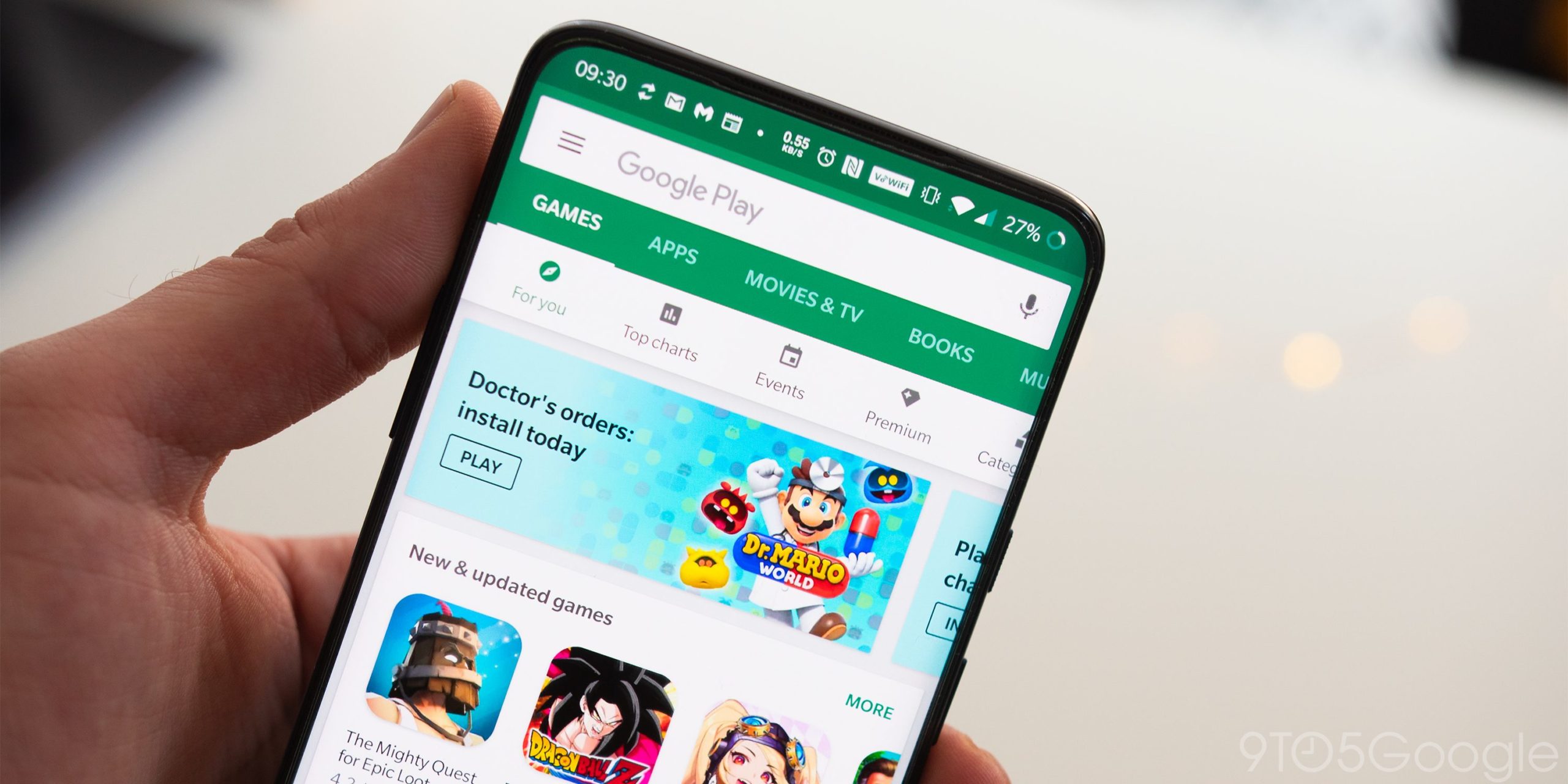
    Google Play Store is undergoing a significant update that will reimagine the platform not just as a place for app downloads, but as a personalized hub for all your content. The update will feature a new “You” tab and a “Sidekick” for gamers.

    What’s New?

    The revamp of Google Play Store features several key updates focusing on personalization and gaming. The update aims to present content without users having to seek it out.

    The primary “Apps” tab is becoming more intelligent. It will feature new sections curated for seasonal topics, visually spotlighting events such as the WNBA playoffs or Halloween, with content aggregated from various apps. The new “Guided Search” will allow users to type in a goal like “find a home,” and AI will categorize relevant apps into useful groups.

    Game-Changing Features for Gamers

    The most substantial transformations are intended for gamers. Google is creating a unified gaming platform embedded within the Play Store. The gaming platform will feature a new gamer profile that tracks stats and achievements across all your games, both mobile and PC. Users can customize these profiles with a Gen-created avatar. A new feature called “Play Games Leagues” will allow users to compete against others in games like Subway Surfers for Play Points rewards.

    The most noticeable addition is the “Play Games Sidekick.” This in-game overlay gives users access to Gemini Live using screen sharing. The feature offers verbal tips and walkthroughs without the need to exit the app.

    The “You” Tab

    All these features culminate in a brand new “You” tab. This personalized home base combines your gaming profile, rewards, and subscriptions with custom recommendations for things like audiobooks and podcasts. It allows users to quickly resume previous activities.

    Questions & Answers

    What is the new “You” tab on Google Play Store?
    The “You” tab is a personalized home base that integrates your gaming profile, rewards, and subscriptions with tailored recommendations, allowing users to resume their previous activities quickly.

    What is the “Play Games Sidekick” feature?
    The “Play Games Sidekick” is an in-game overlay that gives users access to Gemini Live using screen sharing. It provides verbal tips and walkthroughs without the need to exit the app.

    What is the purpose of the Google Play Store update?
    The update aims to transform the Google Play Store into a personalized hub for all user content, with a particular focus on enhancing the gaming experience.

  • iOS users spend more than double on subscriptions compared to Android users

    iOS users spend more than double on subscriptions compared to Android users

    A new research report has shown that subscriptions made from the App Store are more than double in terms of payment versus Google Play Store. In other words, this means iPhone and iPad users generally tend to spend more on subscriptions and buy more subscriptions in comparison to users on Android phones.

    The information comes from a Sensor Tower report that showcases subscriptions revenue for 2021. In numbers, the App Store subscriptions have generated $13.5 billion in revenue, while Google Play subscriptions — $4.8 billion, despite the fact that Google Play spending is growing at a fast rate.

    Overall, the App Store sees the most money spent on apps and subscriptions, as well as in-app purchases, compared to Google. The record-high $13.5 billion spent us for the top 100 non-gaming subscriptions globally.

    Subscription spending on the App Store grew 31% since last year when it was $10.3 billion. On the other hand, Google Play saw a whopping 78% growth to reach this $4.8 billion mark.

    These are the global numbers. However, US numbers are not that different though. The report is also giving some information on US-only spending, and the App Store has recorded $6 billion, while the Google Play Store, $2.5 billion.
    In terms of specific apps, Alphabet (Google’s parent company) is at the top of the charts with YouTube on the App Store and Google One on the Google Play Store. According to the report, YouTube generated 1.2 billion globally and $566.5 million in the U.S., while Google One achieved $1.1 billion globally and $698 million in the U.S. in 2021.
  • Apple to change App Store prices in some regions

    Apple to change App Store prices in some regions

    Apple is bumping up prices in the App Store in some regions, the company announced on Wednesday. Citing taxes and foreign exchange rate changes, Apple says that apps will become more expensive in the following regions:

    • Bahrain: Increase of value-added tax from 5% to 10%
    • Ukraine: New value-added tax of 20%
    • Zimbabwe: New digital services tax of 5%

    Furthermore, there are some changes that involve the proceeds for developers. Prices will remain unchanged in the following regions but developers’ proceeds will be adjusted to account for some tax changes

    • The Bahamas: Decrease of value-added tax from 12% to 10%
    • Oman: New value-added tax of 5%
    • Tajikistan: Decrease of value-added tax from 18% to 15%

    Finally, three other regions will be subject to changes, again this involves the proceeds that developers receive from the App Store.

    • Austria: Value-added tax rate reversion to 10% after temporary decrease to 5% for qualifying e-books and audiobooks
    • Latvia: Value-added tax rate decrease from 21% to 5% for qualifying e-books and e-publications
    • Romania: Value-added tax rate decrease from 19% to 5% for qualifying e-books, audiobooks, and e-publications

    What does it mean for you?

    If you live outside the aforementioned regions – absolutely nothing. Otherwise, expect prices of apps to go up if you live in Ukraine, Bahrain, or Zimbabwe. As for the other six countries, it would be up to the developers.

    Some might choose to bump up the prices in order to keep the same level of proceeds from the App Store, while others might leave their app prices alone. Apple leaves the choice to the developers with the following statement:

    “You can change the price of your apps and in-app purchases (including auto-renewable subscriptions) at any time in App Store Connect. If you offer subscriptions, you can choose to preserve prices for existing subscribers.”

    The changes are expected to go into effect in the following days. When this happens, the Pricing and Availability section of My Apps will also be updated.

  • ApplePay will now allow users to make purchases using Bitcoin

    ApplePay will now allow users to make purchases using Bitcoin

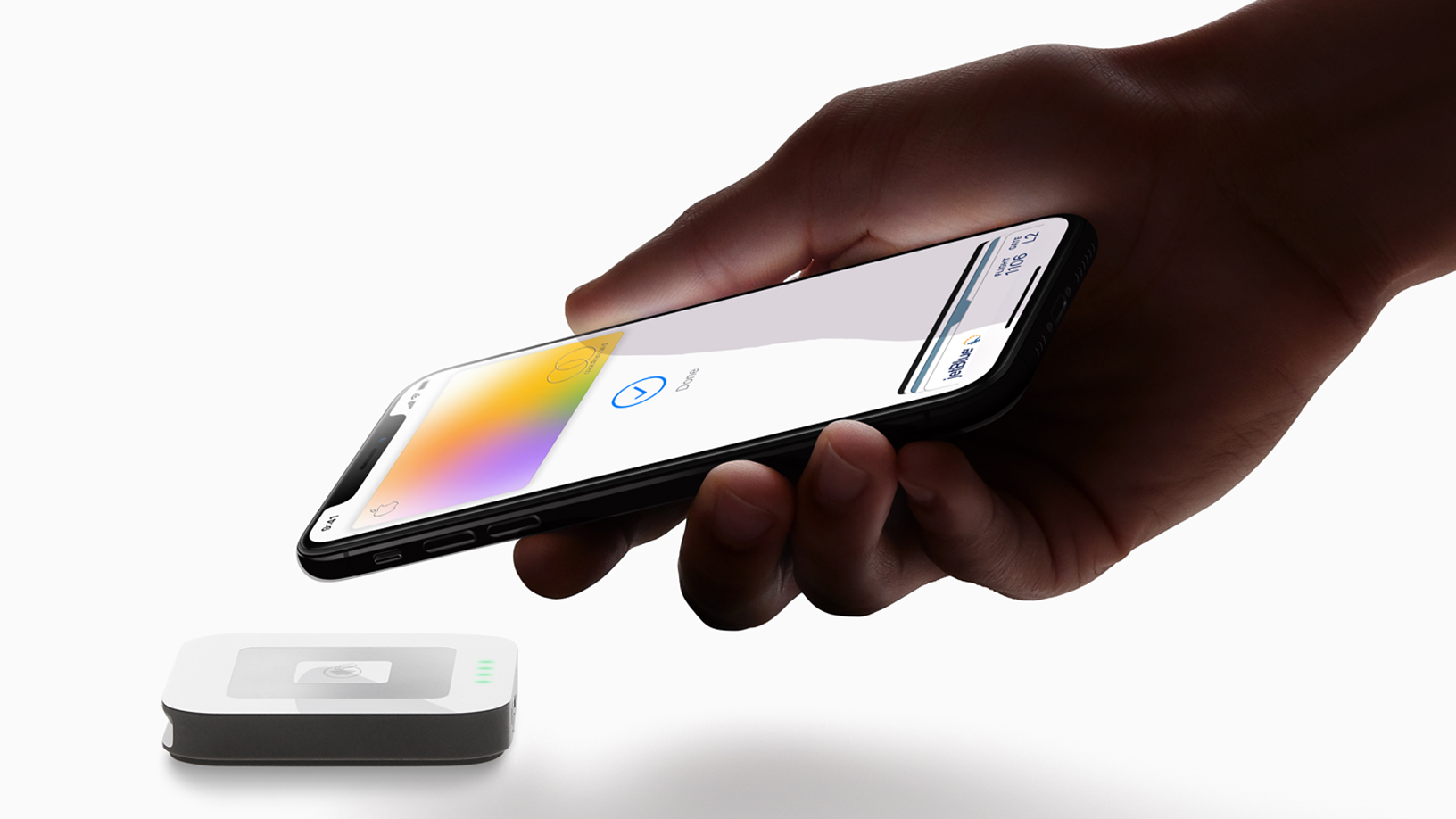
    Bitcoin is still the most famous cryptocurrency. And at Friday’s close, each Bitcoin was valued at close to $48,000, more than double the valuation of the digital currency about a year ago. Not only can you buy more with your Bitcoins, but you can also find it easier to spend thanks to the Apple Pay mobile payment service. The BitPay wallet app’s Prepaid Mastercard can be added to the Apple Wallet and Apple Pay can help Bitcoin owners spend the cryptocurrency online, through apps or in a store.

    The BitPay wallet app not only works with Bitcoin, but will also work with Ether, Bitcoin Cash and as well as the dollar-pegged stable coins USD Coin, Gemini Dollar, Paxos Standard and Binance USD. The stable coins are based on a 1:1 ratio with the U.S. Dollar. For every Gemini Dollar in circulation, there is a corresponding U.S. Dollar held by the State Street Bank and Trust Company.

    There are plans in the work to add support for the BitPay Wallet by the end of next month with other mobile payment services Google Pay and Samsung Pay. This will allow Android users to more easily spend Bitcoins and other cryptocurrencies including the aforementioned names that are pegged to the U.S. Dollar.

    To add your BitPaycard to Apple Wallet, you need to have the latest version of the BitPay app. The latter, which can help you securely store, spend, and manage Bitcoin, can be installed from the App Store and the Google Play Store. BitPay CEO Stephen Pair (both of him) said, “We have thousands of BitPay Wallet app customers using the BitPay Card. Adding Apple Pay and soon Google and Samsung Pay makes it easy and convenient to use the BitPay Card in more places.”

    Apple should do even more when it comes to digital currencies; should Apple add a cryptocurrency exchange it could generate over $40 billion. RBC analyst Mitch Steves believes that this would allow Apple’s shares to rise 25%. RBC noted that “Square takes in $1.6 billion a quarter through bitcoin-trading revenue from its roughly 30 million active users. Apple has an install base of about 1.5 billion people, signaling that it could make up to $40 billion a year from a Wallet-based crypto exchange.” The report adds that “if Apple went down this path, the USA would likely acquire the most crypto assets from a global perspective. If the USA owns the most crypto assets (be it Bitcoin or other assets), it would not make logical sense in our view to ban it. In addition, with Apple’s secure and world-class software, the USA would be able to have confidence in user information and balances if needed in the future.”

    Apple’s big move comes right after Tesla CEO Elon Musk showed interest in cryptocurrency Dogecoin. Tesla says that it soon will accept Bitcoins as payment toward the purchase of a Tesla vehicle. RBC’s Steves notes that the combination of Apple’s interest in Bitcoin and Apple’s popularity in the tech world can help the U.S. become the technological leader in cryptocurrencies for as long as the next 20 years.

    Thanks to the Blockchain technology, the method used to keep track of Bitcoin transactions, using the cryptocurrency is secure. Data on transactions is kept inside blocks and when a block is full, it is chained to the previous one. If someone wants to steal Bitcoin and hacks into the Blockchain to alter the information in one the blocks, it can’t be done without all members of the Blockchain spotting the changes. There are smartphones that can store and verify cryptocurrency transactions such as the HTC Exodus 1s.

  • Zoom sets a new App Store record during the second quarter

    Zoom sets a new App Store record during the second quarter

    If there ever was an app tailor-made for the coronavirus it is Zoom. The video conferencing app can host video chats consisting of up to 100 participants. During the three months from April through June, when COVID-19 was keeping most Americans inside, Zoom generated a new App Store record 94 million installs on iOS. During the first quarter, just before the pandemic became a major issue in the states, short-form video app TikTok had the previous record with 67 million App Store installations.

    How amazing are those achievements made by Zoom and TikTok? Before this year, no non-game iOS app ever had more than 50 million downloads in a single quarter. And when you throw in the number of downloads sourced from the Google Play Store during the second quarter, Zoom was installed over 300 million times during the three months from April through June. Also topping 300 million installs during the quarter was TikTok; the latter was downloaded 71 million times from the Apple App Store during Q2; that is a 154% gain year-over-year.

    During the second quarter, total downloads in the U.S. App Store (2.2 billion) beat out downloads in the Chinese App Store (2.1 billion) for the first time in years. On an annual basis, the number of iOS app downloads in the U.S. was up 27% compared to Q2 compared to just 2% in China. Globally, App Store downloads rose by 22.6% in the second quarter to 9.1 billion. Second-quarter downloads in the Google Play Store worldwide hit 38.7 billion, up 34.9%.

    With many Americans communicating through Zoom as the pandemic continues to wreak havoc in the states, the app should continue to show strong growth during the current quarter. TikTok also should continue to show growth in the U.S. as Americans create TikTok videos to distract themselves from all of the stress caused by COVID-19.

  • Apple’s App Store is coming to 20 new countries

    Apple’s App Store is coming to 20 new countries

    Apple announced that the App Store will be expanding to 20 new countries this year, making it available to 175 countries or regions in total. According to Apple’s Developer Agreement those countries are:

    Afghanistan, Gabon, Cote d’lvoire, Georgia, Maldives, Serbia, Bosnia and Herzegovina, Cameroon, Iraq, Kosovo, Libya, Montenegro, Morocco, Mozambique, Myanmar, Nauru, Rwanda, Tonga, Zambia and Vanuatu.

    In its announcement, Apple also informed developers on how to get their apps available in the new countries by completing steps with a recommended deadline of April 10, suggesting that the expansion may happen sometime around that date.

    The App Store – iOS users’ only Marketplace for apps and games – is now getting over half a billion visits per week. To date, developer earnings from sales and in-app purchases are over $155 billion. Between Christmas Eve and New Year’s Eve of 2019, App Store customers spent a record-breaking $1.42 billion.

    In contrast, even though Android has the vast majority of the mobile market, Google has paid only $80 billion to Android developers since the launch of its app marketplace, according to Google’s quarterly earnings reports. This reconfirms the fact that there is much more money to be made by developers on Apple’s ecosystem.

  • Apps with 440 million installs eluded Google Play Protect

    Apps with 440 million installs eluded Google Play Protect

    According to Ars Technica, adware named BeiTaAd was hidden in 238 apps found in the Google PlayStore. The apps, which had more than 440 million installs, played ads to help the hackers collect revenue. And with the hundreds of millions of screens at their disposal, the scheme certainly paid off handsomely for those behind it.

    Part of the problem is that Android users installing one of the infected apps might not have noticed anything untoward in their behavior for a period of 24 hours to as long as two weeks. Once the adware kicked in, the BeiTaAd plugin started to deliver what is known as out-of-app-ads. These appear on lock screens, not inside an app (hence the name) and run audio and video at haphazard times.

    A post in the Android Forum from November was written by someone with a friend using the Samsung Galaxy S8 on AT&T. The post noted that this person had the BeiTaAd plugin on her phone and couldn’t remove it. Another post was made by a gentleman whose wife also had the BeiTaAd plugin installed on her handset, running ads at random times. The malware, said the husband, made his wife’s phone “unusable.”

    “My wife is having the exact same issue. This will bring up random adds in the middle of phone calls when her alarm clock goes off or anytime she uses any other function o(n) her phone. We are unable to find any other information on this. It is extremely annoying and almost making her phone unusable.”-DazDilinger45, Android Forum.

    Mobile security firm Lookout noted that those behind the 238 malicious apps went to great lengths to hide the presence of the plugin. All of the apps involved were published by a Chinese-based company called CooTek and all CooTek apps contained the plugin. The lookout reported the names of the 238 apps to Google, and the latter removed all of them from the Google Play Store. Since this scheme had been running for months, we wonder how these malware filled apps managed to elude detection from Google’s Play Protect system.

  • Ex-Apple developer says its breaking its own AppStore rules

    Ex-Apple developer says its breaking its own AppStore rules

    While the reviews of Apple’s News+ have been somewhat mixed, some people think one thing is clear: Apple has a double standard when it comes to its App Store rules. One ex-Apple developer detailed how he believes that Apple News+ would be rejected by the App Store if it were submitted by anyone other than Apple itself.

    Dave DeLong, who had worked at Apple as an engineer for 7 years, said the Apple News+ app breaks App Store rules surrounding the onboarding process for subscriptions. According to DeLong, Apple’s News+ subscription page should include information on how to cancel as well as a link to the app’s privacy policy. Looking into Apple’s Developer Program License Agreement, there is a long list of items that Apple requires apps to display when a user is confronted with a subscription page (below). The list basically amounts to the fine print that you’ll be presented when being onboarded as a new subscriber, but Apple’s News+ subscription page doesn’t include any fine print, it doesn’t even tell users how long the free trial is for the service meaning there’s also no indication of when the auto-renewing subscription will flip from a free trial to paid.

    These omissions would be grounds for any other app being rejected from the App Store and DeLong says App Store reviewers are “huge sticklers about even having the smallest thing missing.” DeLong even went on to wonder if this clear double-standard could be grounds for a class action lawsuit against Apple, but we’ll have to wait and see on that.

    Of course, this isn’t the first time Apple has been accused of a double standard (and likely won’t be the last.) Previously, Apple has been caught sending users uninvited push notifications regarding Apple Music and Carpool Karaoke. This marks the fourth time in just four months that Apple has been found violating its own policies and the company has yet to comment publicly on the issues.

  • Apple Criticized by Korean Game Developers for its App Store Refund Policy

    Apple Criticized by Korean Game Developers for its App Store Refund Policy

    It took me a while to figure out what the big deal was. It’s not that people buy a $1.99 game, then get a refund and keep playing.It’s that people buy $100 in in-game “currency” using an in-app purchase, then get a refund, and keep the $100 of in-game “currency”. Then do this again. And again. And again.

    Oh, you want to have the best fort in Clash of Clans? $100 in in-game gold, and you can do it quickly! Then get a refund on that in-game gold. Want to get good Pokemon faster? $100 in in-game gold and you can lure more Pokemon to you (for a long time.) Then get a refund on that in-game gold.

    It took me a while to figure out what the big deal was.

    It’s not that people buy a $1.99 game, then get a refund and keep playing.

    It’s that people buy $100 in in-game “currency” using an in-app purchase, then get a refund, and keep the $100 of in-game “currency”. Then do this again. And again. And again.

    Oh, you want to have the best fort in Clash of Clans? $100 in in-game gold, and you can do it quickly! Then get a refund on that in-game gold. Want to get good Pokemon faster? $100 in in-game gold and you can lure more Pokemon to you (for a long time.) Then get a refund on that in-game gold.

    Not quite true. In clash of clans, if you request a refund in $100 worth of gems, the game takes the gems spent from you and you end up with thousands of gems in debt. You can still earn gems the normal way but it goes to offset that negative gem count.

    Don’t know how clash of clans can do this but Koreans can’t figure out what the refund was for…

    So… Commenters, we don’t need to be specifying “Korean developers” or calling them out by their nationality. This is a problem to *ALL* nationality of developers, it just happens that this article was in a Korean newspaper, so the developers they interviewed are Korean. Saying things like “These Korean developers whining about…” or “I wish these Korean companies would…” is unnecessarily adding nationality (and by proxy race) in to a complaint. Would you have made the same comment if the developers had been from California? Or Texas? Would you have specified “These Californian developers…” or “I wish these Texan companies…”?If not, then leave “Korean” off the description you post. Their “Koreanness” has nothing to do with the issue.

    I hate in app purchases. I disable them from my settings.So pretty simple. Get rid of in app purchases. Than they wouldn’t have an issue tracking down people who ask for refund. One time fee payment for full game.

    A non issue really. The developer has access to the receipt for each purchase and can check if it is still valid at any point in time.
    They just need to keep track of the receipts, basic in-app programming ffs.
    To be consistent Apple should have the same policy for their stores – so I can buy an iPhone/MacBook then call to request a refund without returning it. I’m sure there’ll only be a “small” number of people abusing it 😉

    And what exactly are people “stealing” by “returning” 100 gold coins in an app – a couple bytes of database space?

    I operate my own small business, a small hardware device with an online system connected – getting in on the “smart home” craze. Manufacturing is outsourced, so we don’t have to deal with manufacturing shrink, we just pay a per-unit contracted cost. The online service, as with any of these games, is practically zero cost-per-unit. If someone cancels a service, or asks for a refund (which we always offer). Yes, hardware space and bandwidth cost money, but there is no “direct cost” per-user.

    Hardware-wise, in the past month, we’ve had $2388 which I’d classify as shrink at retail price, $912 at cost price. That includes:

    – 1 unit damaged in warehouse
    – 3 units lost by couriers shipping to customer
    – 4 “change of mind” hardware returns that couldn’t be re-sold
    – 1 unit that was bought via PayPal with a stolen credit card (we had to swallow the cost)
    – 3 units that were returned as being faulty, which we determined was fraudulent – 1 had a smashed screen which couldn’t have happened during qa/shipping (impact mark), one which was obviously dropped and cracked but otherwise seemed to work fine, and 1 which was returned because apparently only the accessories were in the box, not the unit itself (even though we could see the unit was online, and connected to our service – not for long though!)

    At cost price, for us that was around 0.9% shrink vs revenue, and around 1.4% vs per-item profit margins (not taking into account operating costs here). That’s something we have to budget for – we *know* it’s going to happen, and we take that into account. 100% of our shrink costs come from hardware, not software. Out of that, only a third of shrink was down to “fraud”.

    Saying shrink can’t happen with a digital product is silly. Of course it’s going to happen. If you’re dealing with people, at some point you’re going to deal with fraud. Fact of life. The only difference is the physical cost behind it doesn’t scale the same way as with physical products.

    Here’s two examples:

    1. Company A sells a video streaming service for $10/month. Someone purchases a subscription uses a stolen credit card, and watches 50 films. The credit card company (rightfully) does a chargeback 14 days later, and the company cancels the service. A movie averages at 1.5GB, using 75GB bandwidth. They pay AWS $0.06/GB for bandwidth, which equates to $4.50. They also have to pay the rights holders $0.10 per viewing as part of their agreement. That’s $5, meaning that the total cost of the fraud is $9.50 – that’s $9.50 worth of shrink.

    2. Company B offers a mobile video game for free on the App Store, and sells packs of “100 gold coins” for $5. When a user buys coins, they can use them to buy items in the store – the transaction is purely in the game, and the only result of buying the coins is a database entry to tell the game “hey, user X bought 100 coins”. Somebody buys 100 packs of coins for $500, buying all sorts of virtual items for their character, again, all database entries. The user claims their child accidentally bought the coins, and Apple refunds the $500. Company B hasn’t lost money, other than perhaps a couple of cent in bandwidth costs. Shrink is effectively 0.

    That’s why I don’t understand them chasing so much – unless there is a physical per-unit cost behind it, it’s really not worth it. So what if someone buys a game or coins and returns them, they’ve lost a sale, sure, but they haven’t lost money.

    you work for company A and i’m another customer. i don’t give a flying f*** if Fred next door can or can’t watch the latest Star Wars movie because of his fraudulent dealings with you. it literally has no material affect on the outside world.

    you work for company B and i’m a customer on the same server as Fred. While you haven’t lost money, what you’ve done is enabled Fred to gain an unfair advantage over me and many others who have not bought the coins and got the stuff for free. of course, we don’t know that he hasn’t paid for them – perhaps he’s just a mr moneybags. but word gets out, the big spenders get upset that people competing with them are doing so by fraud and a ********* goes down on the game’s message boards. shrink isn’t measurable in terms of lost sales – yet – but is high in terms of lost reputation and goodwill. it could well have a material effect an order of magnitude higher than company A’s issues going forward.

    comparing a video streaming service which serves one end user at a time, to a MMO game where the actions of one gamer affect the others is silly.

    But you can’t *not* have a refund policy. I have, myself, gotten a refund for a game, when the game stopped working after upgrading from iOS 6 to iOS 7. The app was still installed and could still run (well, as far as it ever did after upgrading), but couldn’t be updated or re-downloaded.IMO, the amount of money they’re going to spend chasing down and suing the small % of customers who abuse it isn’t worth it. All businesses have to deal with a small % of fraud – how many retail places have had TVs returned as faulty when a new one comes out, or people had “left” their laptop in the trunk of their stolen car, or had their iPhone suddenly develop an intermittent fault just after a small scratch appears on the screen.

    It’s a cost of doing business.

    But you can’t *not* have a refund policy.
    It’s a cost of doing business.

    Very true. I wish these Korean companies would get a life and wake up. They are probably losing far more money from employee theft and laziness than a few app users.

    Every business has shrink built into their monthly costs. Shrink is everything from stuff people return that they cannot get credit for, employee theft, customer theft, stuff that gets broken on the floor, etc. You have to expect these things to occur and build it into your costs.

    I always assumed that Apple was able to remotely delete refunded apps.