Arabica PH returns! The Japanese coffee shop has announced that it will be back in the Philippines this year with upcoming new branches in Bonifacio Global City (BGC), Taguig City.
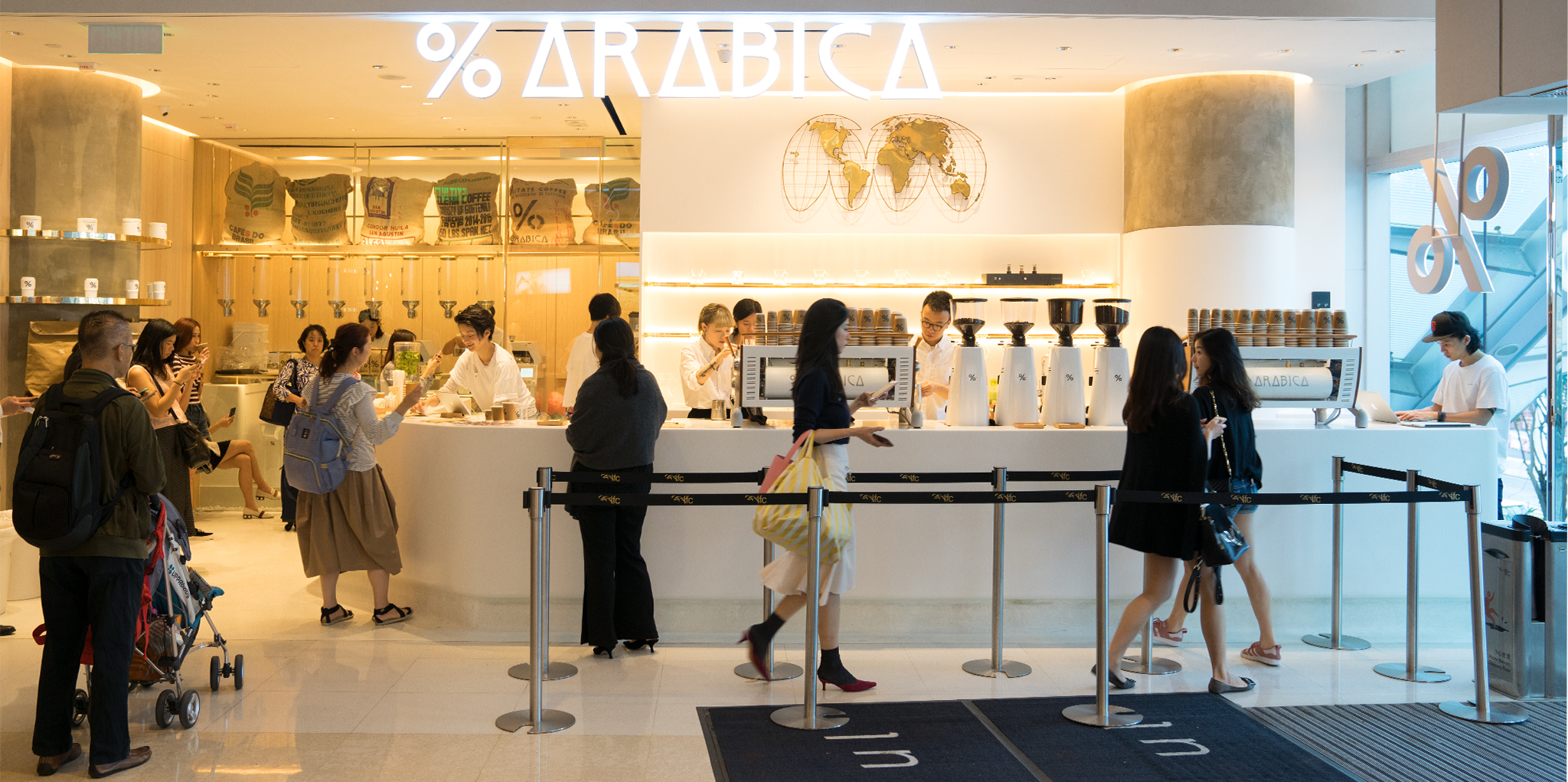
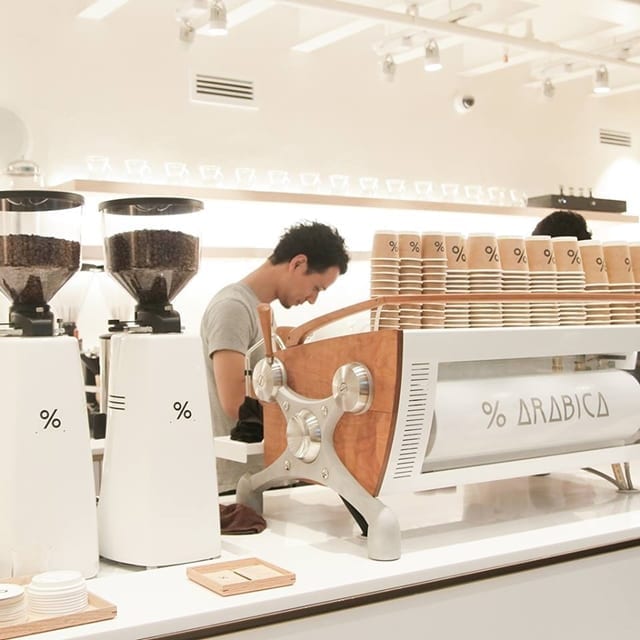
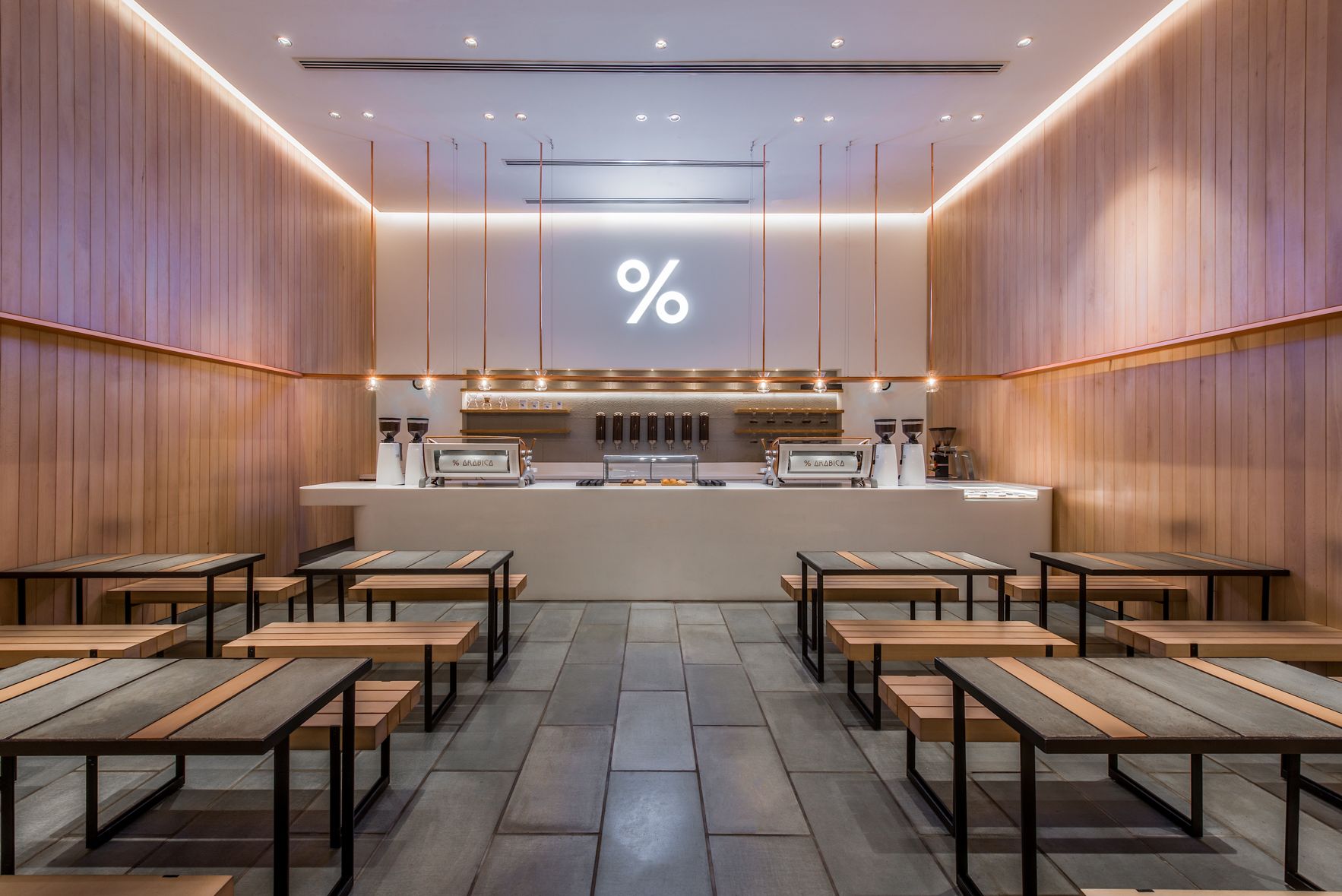
In a Thursday, January 5 Instagram post, Arabica Journal – the global account of the brand – posted rendered layout images of the two new Philippine stores as a “sneak preview,” showing minimalist, modern interiors and the brand’s iconic percentage symbol logo.
“Manila, we will restart our project this year with these stores. We cannot wait to serve our coffee from the world to you once again,” they said.
Arabica PH reposted the images on Friday, January 6, with the caption: “MABUHAY PILIPINAS! We are coming back bigger and better!” The branches’ opening dates and exact locations have yet to be confirmed.
The Philippine return of the independent coffee brand from Kyoto has been met with excitement from the brand’s former patrons, especially after three of Arabica PH’s branches suddenly closed with no warning in late January 2021. Even the brand’s Instagram page was suddenly no longer available, much to customers’ confusion and concern.
A day later, it was announced that Arabica’s franchise period and contract with its Philippine partner had already ended, and a new partner would soon be in the picture. Before this, the Arabica Headquarters had already been experiencing “communication issues” with the Philippine franchise partners. On February 2, Arabica PH was back online once again, with a new Instagram account to boot.
Arabica PH said then that expansion plans were already being discussed with new franchise partners, and the plans were not limited to just Metro Manila but would also include other Philippine regions.
Arabica PH opened its first branch in Bonifacio Global City in Taguig City in 2018, followed by a second BGC branch and another at The Podium in Mandaluyong City. The brand currently has 140 stores worldwide, and advocates a “simple love for coffee and design.”
Arabica PH’s former partners since 2017, mother-daughter duo Allue and Dr. San San Hortaleza, built a new “proudly Filipino” coffee brand called Angkan Coffee, which has branches in BGC, The Podium, and a soon-to-open one in Capitol Commons.
Boutique café group % Arabica is set to open its first outlet in Vietnam in collaboration with Hong Kong-based investment company The Kho Group.
Having mooted a Vietnamese debut in 2020, Kyoto-based % Arabica has confirmed it will open its first store in the country this month in Ho Chi Minh City’s popular Nguyen Hue ‘Café Apartments’ site.
The nine-storey building currently houses nearly 30 coffee shops, including Partea, The Maker Concept and The Letter Café, alongside fashion boutiques and other independent stores.
Vynce Nguyen, General Manager of The Kho Group, said % Arabica will offer consumers a new specialty coffee experience in Vietnam’s well-established out-of-home coffee market.
% Arabica plans to launch its second Vietnamese outlet in Ho Chi Minh City, at the Diamond Plaza shopping centre, and is exploring potential expansion in Hanoi, Hoi An and Phu Quoc.
The Nguyen Hue ‘Café Apartments’ store will be the Japanese coffee group’s 142nd globally with Vietnam its 20th market. The outlet precedes expected market entries in Spain, Mexico, Jordan and Egypt.% Arabica is also set to relaunch in the Philippines this year with two stores in Manila’s Bonifacio Global City financial business district, having exited the market in January 2022.
The Kho Group operates a portfolio of 19 brands across real estate, technology, finance and retail industries. While % Arabica marks the company’s first foray into food and beverage retail, The Kho Group also has investments in French winery Pont Des Arts and Hong Kongese food-tech company Future Salad.
Coffee may be a major casualty of a hotter planet. Even if currently declared commitments to reduce emissions are met, our new research suggests coffee production will still rapidly decline in countries accounting for 75% of the world’s Arabica coffee supply.
Arabica coffee is one of two main plant species we harvest coffee beans from. The plant evolved in the high-altitude tropics of Ethiopia, and is hypersensitive to changes in the climate.
Our research shows there are global warming thresholds beyond which Arabica coffee production plummets. This isn’t just bad news for coffee lovers – coffee is a multi-billion dollar industry supporting millions of farmers, most in developing countries.
If we manage to keep global warming below 2℃ this century, then producers responsible for most global Arabica supply will have more time to adapt. If we don’t, we could see crashes in Arabica productivity, interruptions to supply, and price hikes on our daily cup.
Most of our Arabica is grown in the tropics, throughout Latin America, Central and East Africa and parts of Asia. Brazil, Colombia and Ethiopia are the world’s top three producers of Arabica, and the crop has crucial social and economic importance elsewhere, too.
Millions of farmers, mostly in the developing world, depend on productive Arabica for their livelihood. If coffee productivity declines, the economic consequences for farmers, some of which do not earn a living income as it is, are dire.
Arabica coffee is typically most productive in cool high elevation tropical areas with a local annual temperature of 18-23℃. Higher temperatures and drier conditions invariably lead to declines in yield.
Last year, for example, one of the worst droughts in Brazil’s history saw coffee production there drop by around one-third, with global coffee prices spiking as a result.
Previous research has focused on how changes in temperature and rainfall affect coffee yields. While important, temperature and rainfall aren’t the best indicators of global Arabica coffee productivity. Instead, we found that it’s more effective to measure how dry and hot the air is, which we can do using “Vapour Pressure Deficit”.
Vapour pressure deficit tells us how much water gets sucked out of a plant. Think of when you walk outside on a hot, dry day and your lips dry and crack – the moisture is being sucked out of you because outside, the vapour pressure deficit is high. It’s the same for plants.
We built scientific models based on climate data that was linked to decades of coffee productivity data across the most important Arabica producing countries. We found once vapour pressure deficit gets to a critical point, then Arabica coffee yields fall sharply.
This critical point, we found, is 0.82 kilopascals (a unit of pressure, calculated from temperature and humidity). After this point, Arabica yields start falling fast – a loss of around 400 kilograms per hectare, which is 50% lower than the long-term global average.
Vapour pressure deficit thresholds have already been exceeded in Kenya, Mexico and Tanzania.
Unabated global warming will see the world’s coffee producing powerhouses at risk. If global warming temperatures increase from 2℃ to 3℃, then Peru, Honduras, Venezuela, Ethiopia, Nicaragua, Colombia and Brazil – together accounting for 81% of global supply – are much more likely to pass the vapour pressure deficit threshold.
While there are ways farmers and the coffee industry can adapt, the viability of applying these on a global scale is highly uncertain.
For example, irrigating coffee crops could be an option, but this costs money – money many coffee farmers in developing countries don’t have. What’s more, it may not always be effective as high vapour pressure deficits can still inflict damage, even in well-watered conditions.
Another option could be switching to other coffee species. But again, this is fraught. For example, robusta coffee (Coffea canephora) – the other main species of production coffee – is also sensitive to temperature rises. Others, such as Coffea stenophylla and Coffea liberica could be tested, but their production viability at large scales under climate change is unknown.
There is only so much adapting we can do. Our research provides further impetus, if we needed any, to cut net global greenhouse gas emissions.
Limiting global warming in accordance with the Paris Agreement is our best option to ensure we can all keep enjoying coffee. More importantly, keeping global warming below 2℃ is the best way to ensure the millions of vulnerable farmers who grow coffee globally have a livelihood that supports them and their families well into the future.
Japanese boutique coffee group % Arabica has made its debut in South Korea with a store in Seoul.
Located at Starfield Library, the store is % Arabica’s 125th location globally following recent first-time launches in Bali and Taiwan in August 2022.
Opening its first store in Kyoto, Japan, in 2014, the boutique coffee group currently operates across 19 countries, with 86 stores in Asia.
According to % Arabica’s website, the group will also soon open stores in Vietnam and the Philippines, as well as Canada, Mexico and Spain.
World Coffee Portal forecasts the South Korean branded coffee shop to exceed 30,000 outlets by 2025. Ediya Coffee is the market leader with approximately 3,500 outlets.
Japanese boutique coffee group % Arabica has made its debut in Taiwan with a store in Taipei. The Elephant Mountain store is the second % Arabica outlet to open this month following the launch of store in the lobby of the new United Overseas Bank head office in Bangkok, the group’s fourth in the Thai capital.
The boutique café group now operates 120 stores across 18 countries, including 61 in its largest market, China, and four in its native Japan.
According to % Arabica’s website, the group will soon open stores in Vietnam, South Korea, Canada, Mexico, Spain and the Philippines.
In July 2022 Lucky Ace International Ltd., which operates the group in China, was reported as seeking to raise $300m to support its expansion plans in the country.
World Coffee Portal estimates the Taiwanese branded coffee shop market exceeds 2,500 outlets and forecasts it will reach 3,200 outlets by 2025. Louisa Coffee is the coffee-focused segment leader with approximately 520 outlets.
The China operator of coffee chain % Arabica is weighing a new funding round and could seek a valuation for its business in the country of as much as $1.2 billion, according to people familiar with the matter.
Lucky Ace International Ltd., which holds the exclusive franchise of the Japanese coffee retailer in Greater China, is looking to raise about $300 million to bankroll its expansion and has reached out to potential investors for the round, the people said. Lucky Ace was valued at about $800 million to $900 million in its last funding round, said the people, who asked not to be identified as the information is private.
Deliberations are ongoing and the proposed funding size and valuation could still change, the people said. A representative for PAG declined to comment, while % Arabica didn’t immediately respond to requests for comment via email and its website.
Founded in Kyoto in 2014, the gourmet coffee brand entered China in 2017 with the opening of two Hong Kong stores, and launched in Shanghai the following year, according to the operator’s website. There are 61 locations across the country, the parent’s website shows. Private equity investors PAG and General Atlantic are among the chain’s backers.
China’s coffee market is growing, though it remains a niche beverage in a nation of tea drinkers, Bloomberg Intelligence analysts Angela Hanlee and Kai Lin Choo wrote in April. Annual consumption is just 5.3 cups per capita versus 51.1 cups elsewhere in Asia Pacific. Starbucks Corp. and Luckin Coffee. have increased coffee awareness in the country, with their more than 5,000 and 6,000 stores in China respectively.
Shanghai-based Manner Coffee, which counts ByteDance Ltd. and a venture arm of food delivery giant Meituan as backers, is considering an initial public offering in Hong Kong that could raise at least $300 million.
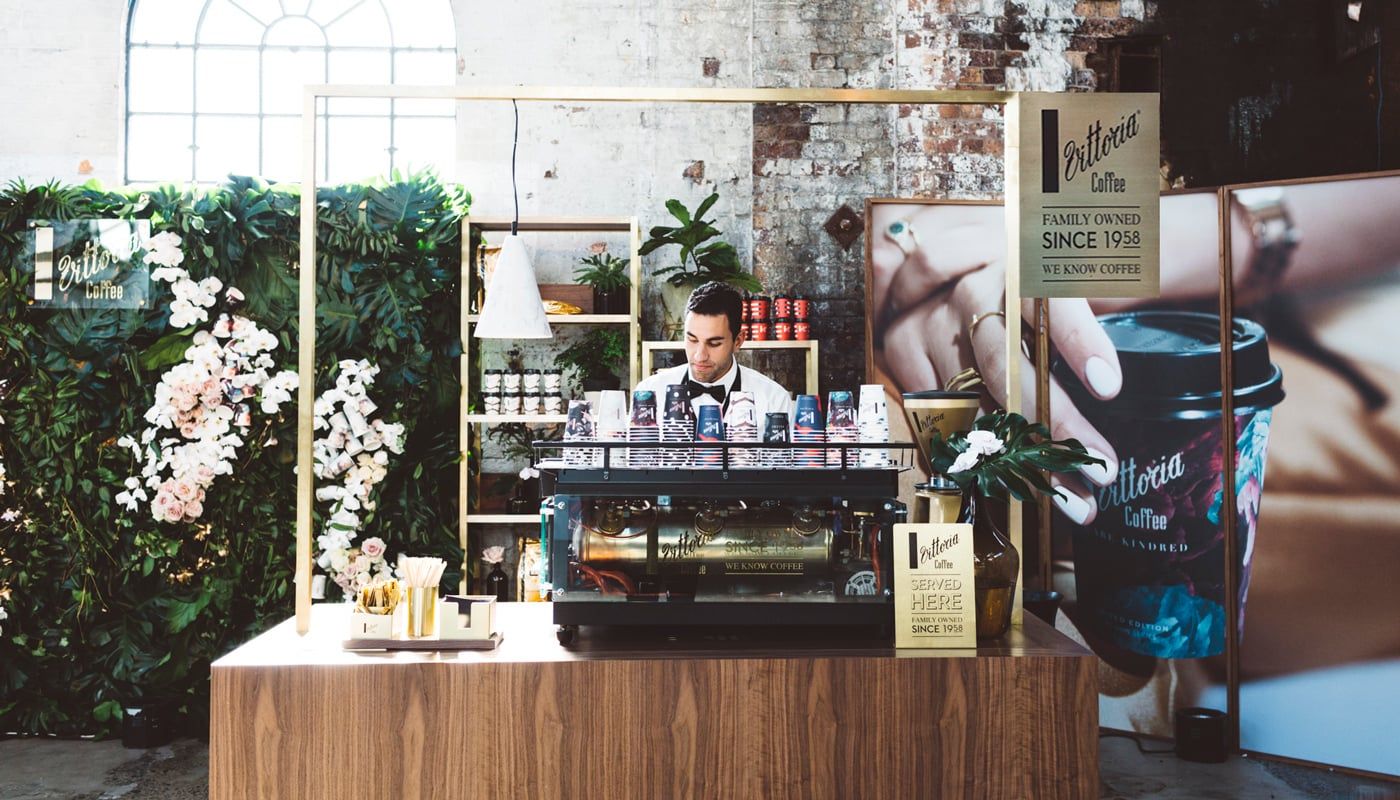
Vittoria has launched its first range of instant coffee since the company’s inception in 1947.
The company says the new range capture the richness and balance of a traditionally prepared coffee in the convenience of an instant.
Made from freeze-dried Arabica beans, Vitoria Instant Coffee is available in 100g jars or single-serve bags that roast in a 3-minute steep.
The 100g instant coffee jar comes in four different blends – Original Classic, Italian, Latte, and Mountain Grown. While the single-serve coffee bag is available in four 20-serve bags in Espresso, Italian, Mountain Grown, and Long Black.
“We set out to create new, easier coffee experiences for all our customers,” said Rolando Schirato, MD, Vittoria Coffee. “These new products deliver on the distinctive Vittoria taste and offer our customers the convenience to enjoy our legendary 100-per-cent Arabica blends”.
Vittoria Instant Coffee is available in all Woolworths supermarkets nationwide.
Japanese gourmet coffee chain % Arabica is to open its first drive-thru concept store, in Murouj, Kuwait.
The Murouj cafe is the brand’s eighth in the country and it’s first in the world to have a drive-thru facility. The launch comes just a month after the opening of the % Arabica Kuwait store in Mangaf.
Designed by Japanese architecture firm no.10 of Nomurakougeisha, the Kuwait Murouj cafe houses indoor plants and glass-house drinking spaces, creating a giant open space filled with natural light.
Besides a drive-thru lane, the store also features an outdoor drinking area for customers.
% Arabica is also planning to expand in Southeast Asian markets with Indonesia and Malaysia as their next destinations. The brand has revealed it will open its first outlet in Malaysia soon, in Kuala Lumpur.
Japanese coffee chain % Arabica is launching four locations in Indonesia.
The stores, scheduled to open in Jakarta and Bali next month, are the result of three years’ planning and were designed by German architect Alexis Dornier.
According to an Instagram post by the company’s Indonesia partner, the first store to open will be at District 8, a mixed-use development in SCBD, South Jakarta, followed by one in Central Park, West Jakarta and one in Bali’s Seminyak Village the following month. The last of the first four stores, which is set to open in Ubud in May, will be % Arabica’s Indonesian flagship.
% Arabica now operates 56 outlets in 13 countries since first opening in Kyoto in 2014. The chain has two stores in the Philippines, three in Singapore, and one in Cambodia, with a Bangkok store expected to launch shortly as well as new outlets in Malaysia and Vietnam on the horizon.
Dutch architecture studio OMA has installed a golden cube housing a cafe outside K11 Musea mall in Hong Kong.
The “Kube” kiosk, housing artisan coffee brewer % Arabica Hong Kong’s newest outlet, also features black marble furniture and is designed to resemble a traditional dai pai dong food stall.
“The Kube is a multifunction installation to connect people visiting K11 Musea and passersby who share a moment to be fully present to experience the city, and possibilities of encounters,” OMA managing partner David Gianotten said.
The kiosk is coated in an anodized aluminum cladding that appears to change hue in different light conditions.
“What David Gianotten and Rem Koolhaas’ Kube adds to K11 Musea is … more than an iconic OMA feature,” said K11 Group founder Adrian Cheng, “but a symbolic space that explores Hong Kong’s waterfront culture, coffee culture and a new way to become part of a larger community.”
OMA is hoping the installation will be used for public events and performances.
Bali, a beloved destination for tourists and popular amongst Australians has been setting up the coffee scene with Starbucks opening its largest Southeast Asian location at 20,000 sq ft earlier this year.
Now, Kyoto-based coffee chain % Arabica has announced plans to enter the Indonesian market with four new store locations by the end of next year. Announced on the company’s Instagram feed, the new franchises will be located in Jakarta and Bali, with two of the Jakarta stores opening at District 8 and Central Park Mall.
The first Bali store is planned for Ubud during the first quarter of next year, and will be designed by Ubud-based German designer Alexis Dornier, who previously created other % Arabica stores.
Meanwhile, the independent coffee chain has opened its 44th global store in Hong Kong at K11 Musea designed by Pritzker Prizer winner Rem Koolhaas and David Gianotten in the shape of a golden cube kiosk.
Lifestyle-orientated Japanese specialty coffee brand % Arabica is delighted to announce its launch into the UK, with two London outposts officially opening on 1st November 2019. % Arabica will open its flagship store in popular East London hotspot Broadway Market and Covent Garden will see its sister site situated on King Street. Covent Garden is currently in its soft launch phase.
% Arabica is a brand recognized globally thanks to its distinctive % logo (reminiscent of coffee cherries on the branch of a coffee plant), inimitable store aesthetic and most importantly the brand’s high-quality specialty coffee menu, all brewed on state of the art equipment. The brand’s international acclaim is a testament to founder Kenneth Shoji’s four core values:
#Seetheworldthroughcoffee – The notion of Kenbun (which loosely translated means ‘to see and to hear’ in Japanese) led founder Kenneth Shoji to create this brand motto. The company aims to open stores in amazing destinations globally so that young baristas can see the world, set personal goals and one day challenge the world with their own ideas. Twice a year, % Arabica invite baristas from around the world together for a program of events in different cities to give them an opportunity to travel, explore and learn more about coffee and its global reach.
Timelessness – % Arabica remains true to its brand identity of offering the best beans, the best service and the best state of the art equipment and it does not need to follow or adapt to fads and trends. Kenneth believes ‘something good does not have to change’ so the drinks menu is simple and minimal. Japan is famed for having many 100-year-old companies and remaining true to % Arabica core values it will bring sustainable long term stability to the company, customers and supply chain.
Identity – Aesthetically % Arabica spaces showcase the highest attention to detail; a minimal yet purposeful design and all original features, down to even the light switches, door handles, and amplifiers. Each store places wood-clad custom Slayer machines at centre stage, complemented by bespoke seating, mirrors and flooring. Unique to the London stores is the addition of original Smeed Dean Yellow brickwork, a nod to the traditional craftsmanship of the local community as % Arabica always aspires to achieve; celebrating the identity of every country in which new stores open.
Japanese sense of beauty – % Arabica celebrates its Japanese roots by highlighting the culture’s hardworking, simplistic and functional ideologies. Baristas are encouraged to work with Teinei (being mindful of your surroundings) and not wasting a single movement or moment in their workflow. Every cup of coffee served must be made to the best of their abilities to showcase the quality of components in the cup and of the dedication of every member of the global team that played their part in bringing % Arabica to London in 2019.
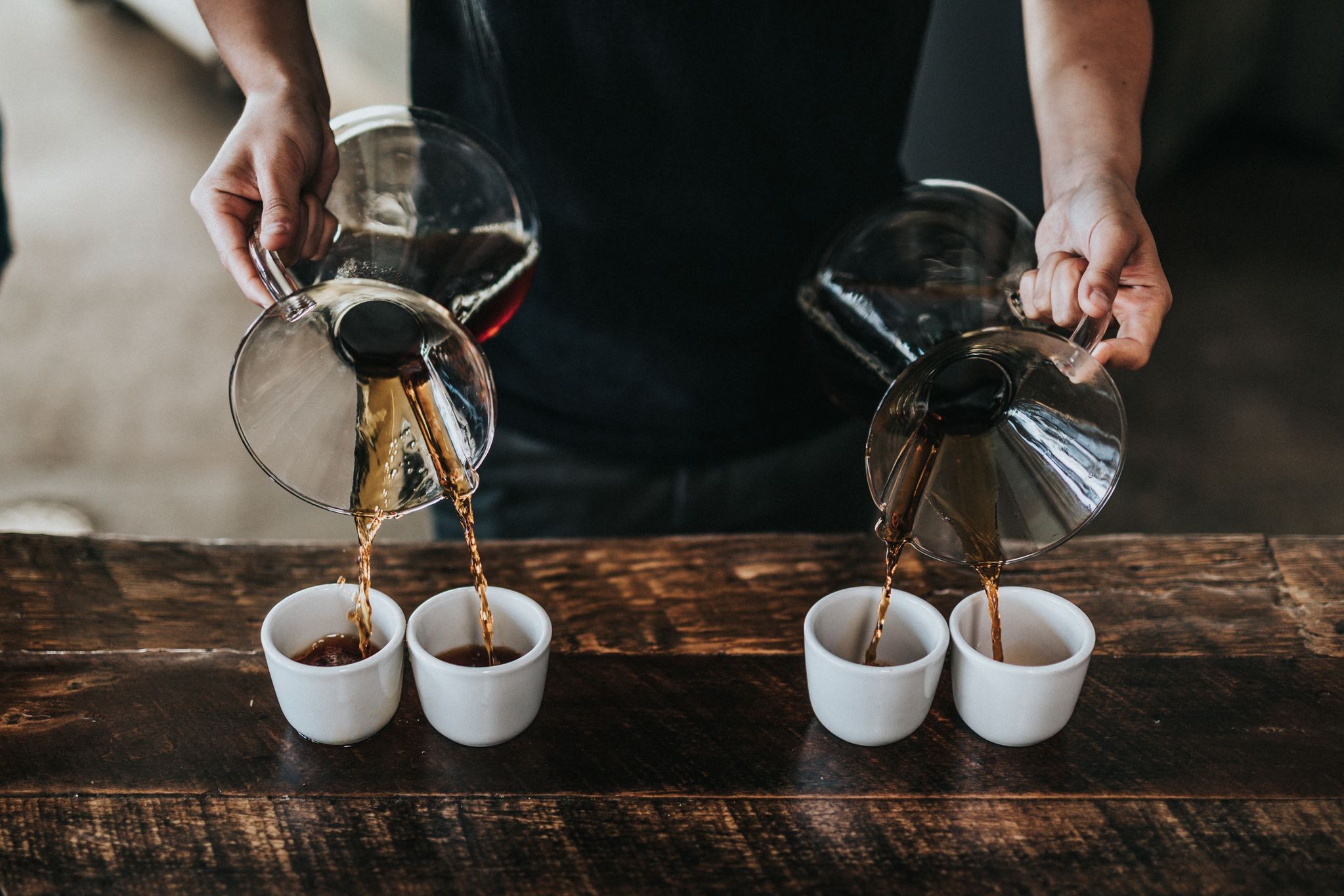
% Arabica offers a concise coffee menu placing the greatest emphasis on solely offering the world’s best beans. Customers are invited to choose between the % Arabica blend (espresso blend combining Brazilian and Ethiopian beans selected for their unique characteristics) or a rotating Single Origin offering. The London menu offers Espresso based coffees (espresso, espresso macchiato, Americano, caffe latte, caffe mocha and the brand’s unique Spanish latte) and drip based beverages by Chemex.
Leading the way in the “New Wave Coffee” movement, % Arabica produces and roasts its own coffee and the Broadway Market flagship will house its own roasting machine allowing for customers to co-create their own blend in accordance to their distinct taste profile. % Arabica is renowned for its high-performance Slayer Espresso machines which have been customized and built by hand in the USA along with offering a traditional pure Chemex serve for worldwide coffee connoisseurs. Each barista is trained in the brand’s popular Latte Art designs.
% Arabica was founded by Kenneth Shoji, who became enthralled with the emerging coffee culture whilst studying at UCLA in the early 90’s; Starbucks exploded on to the scene and brought it with a new appreciation of experimental serves and changed the way in which we consume caffeine. Kenneth progressed to training as a barista before taking it one step further and buying a coffee farm in Hawaii. His passion led him to launch a green bean trading company and become a distributor for the technologically advanced Slayer espresso machines, Marco Uber Boiler, and Chemex in Asian markets. Realising his dream to open an international brand, % Arabica was born. To this day, Kenneth remains the creative mastermind and personally selects all of the locations, designs the stores with his preferred partners and visits coffee origins to select all of the coffee beans. Through an exclusive partnership with Latorre & Dutch, they are planning to set up washing stations in coffee origins such as Ethiopia, Uganda, Colombia, and Indonesia.
Kyoto coffee chain % Arabica has made its debut in the UK with its first store in London.
Located right by Covent Garden’s piazza, a tourist destination, it is surrounded by a shopping hub and close to West End theatres.
Meanwhile, the brand has already established its presence in Paris and Berlin, with future plans of setting foot in Switzerland and Spain as part of its European strategy.
The brand opened its first-ever shop in Hong Kong at Discovery Bay in 2013 with its headquarters situated in Hong Kong, before planting its world-recognized flagship in Kyoto. Now trading in more than 11 countries, Arabica has more eight stores in the works and plans to continue to expand in new international markets.
Coffee chain % Arabica Singapore is to open three stores initially, the first at 56 Arab Street on June 28.
After many delays due to construction and interior works, the Arab Street outlet of the Japanese coffee house will opened with seating for 20 and featuring a minimalist white design.
Two other stores will follow at Chip Bee Gardens at Holland Village, and 313@Somerset on Orchard Road.
There are plans to serve food at the Chip Bee Gardens outlet.
Established in 2011, % Arabica has 16 stores in Hong Kong, Japan, Kuwait, the UAE, Oman, the Philippines and China.
Vietnam’s coffee exports can hit a record high this year because of high global demand for the robusta variety. Coffee exports this year could top over 1.8 million tons, said Do Ha Nam, deputy chairman of the Vietnam Coffee and Cocoa Association.
“The world market has consumed all the coffee shipments from Vietnam. Supply has been insufficient to meet demand,” Nam said.
The shortage comes as global’s demand for instant coffee is expected to rise this year, especially in developing markets.
Global consumption of robusta, mainly used by big companies including Nestle SA to make instant coffee, is forecast to climb to a record high this season.
The worldwide market for instant coffee is set to expand 4.7 percent a year through 2023 to $14 billion from $10.4 billion in 2017, market research firm IMARC said in a recent report.
Higher demand has boosted domestic coffee prices.
The price of coffee in the Central Highlands, Vietnam’s major coffee-growing belt, hit VND35,300-36,100 ($1.51-1.54) per kilogram in early October, higher than that VND32,500-33,300 ($1.39-$1.43) per kilogram in early September.
Coffee exports from Vietnam grew at an estimated 21.5 percent between January and October from a year ago to 1.58 million tons, according to the General Statistics Office.
Coffee export revenues for Vietnam, the world’s biggest producer of the robusta beans, rose 1.1 percent to $2.98 billion in this year’s 10-month period, the office said.