Tag: Ardent Capital

  • Lolalola closes online store

    Lolalola closes online store

    Indonesian online lingerie store Lolalola closed yesterday, but customers can still shop on its social-media platform.

    Lolalola says incoming orders will be processed “normally”.

    There has been no word yet from the startup on why it decided to close down the service, but it could be related to the increasingly tight competition among fashion eCommerce startups in Indonesia, says DailySocial. Berrybenka and SaleStock last year laid off employees in order to save their businesses, while Pink Emma temporarily shut down its service before resuming in September.

    Under CEO Donna Lesmana, Lolalola officially launched in March 2015 after being active for six months.

    Claiming to have been inspired by global lingerie brands such as Agent Provocateur and Victoria’s Secret, the startup aimed to “change the way Indonesian customers shop for lingerie” by providing products from local and international brands.

    Lolalola is backed by Ardent Capital and received logistics support from aCommerce. When the startup tested its service for Thai market, it claimed to have sold out within two weeks.

  • Indonesia’s Snapcart Turns The Humble Receipt Into Big Data For Brands And Retailers

    Indonesia’s Snapcart Turns The Humble Receipt Into Big Data For Brands And Retailers

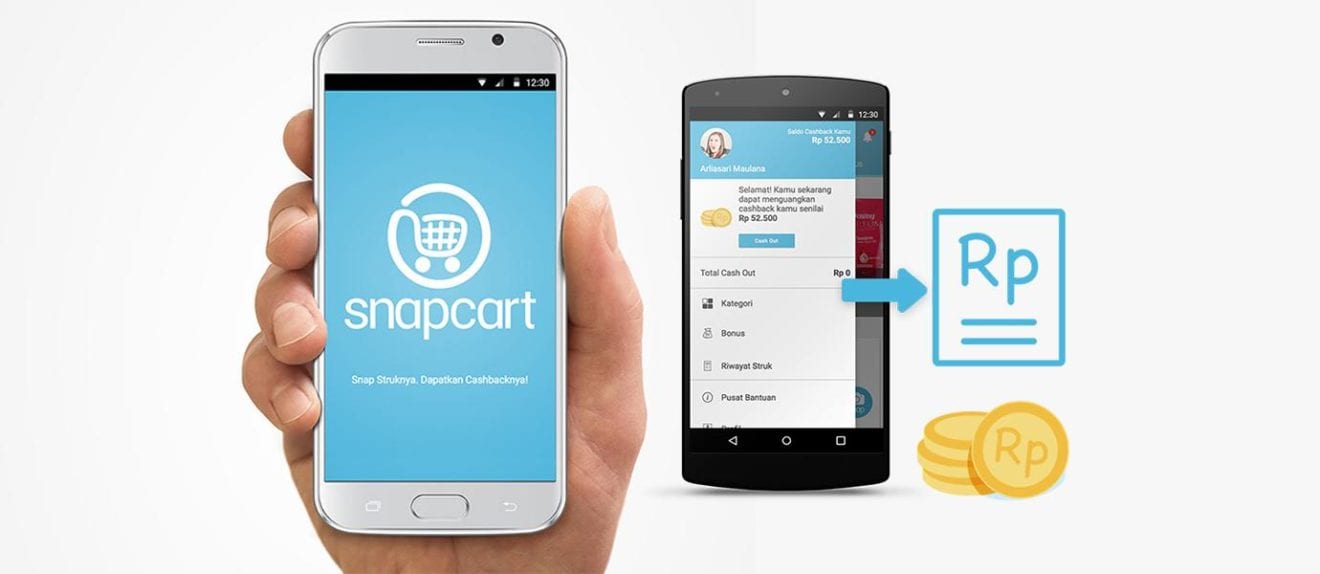
    Smartphones could give retailers and brands unprecedented insight into consumer spending and behavior just by allowing you to photograph your receipt.

    That’s the premise of a new technology startup that launched in Indonesia today. Snapcart is backed by Ardent Capital — the VC firm behind Southeast Asia’s logistics network aCommerceand numerous e-commerce startups — and it aims to turn oft-discarded receipts into data gold mines.

    The theory is simple. Physical retailers and brands know little about consumers and their shopping habits beyond survey-based data and estimates from research firms like Nielsen. Yet, the precious information is contained within a small piece of paper that shoppers typically throw away with little regard: the receipt. Snapcart is incentivizing users to take photos of their receipts and upload them into its app in exchange for cashback and rewards.

    On paper, it’s a win-win — what consumer doesn’t like free stuff? And what brand or advertisers isn’t willing to pay up (incentives) to get fresh insight into their customers?

    The concept isn’t entirely new. Ibotta, a U.S. company backed by over $20 million from investors, provides cash back for access to similar data. Unlike Ibotta, which requires users to photo both their receipt and individual product barcodes for in-store purchases, Snapcart uses artificial intelligence to pull product information right from a receipt, so users take just one photo.

    Jakarta-based Snapcart has launched with two prominent, global brands — Nestlé and L’Oréal — but says it is in talks with another 20 or so partners. Founder Reynazran Royono — formerly with Proctor and Gamble and Boston Consulting — told TechCrunch he came up with the idea when reflecting on his experience as a consultant and a spell at e-commerce firm Berniaga.com, now OLX.co.id. Online retailers have access to a treasure trove of shopper data that physical retailers can only dream of, Royono said, and Snapcart aims to help change things.

    The main challenge looks to be gaining scale among shoppers — Snapcart claims it has 12,000 pre-launch installs of its app. Snapcart said it will initially work with brands, which it is leveraging for marketing and other opportunities for exposure among consumers, and over time it plans to include physical retailers through in-store integrations. It is first focused on grocery items, because they are daily necessities, but will branch out into other verticals over time, Royono explained.

    The company is starting live in Indonesia, Southeast Asia’s biggest country with a population of 250 million and ample opportunity, but Royono said he plans to expand across Southeast Asia towards the end of 2016. Snapcart is currently raising new funding, which he said should give it a good 18 months of runway.

    “Snapcart is the most promising big data business in Southeast Asia we’ve seen so far,” Adrian Vanyl, CEO of Ardent Capital, said in a statement. “For brands, it is data they’ve fantasized about, but never had any practical way to actually collect.”

  • B2B Marketplace Bizzy.co.id Launches in Indonesia With $2.5 Million Investment

    B2B Marketplace Bizzy.co.id Launches in Indonesia With $2.5 Million Investment

    Ardent Capital today announced the launch of one of Indonesia’s first B2B ecommerce marketplaces with a $2.5 million commitment to Bizzy.co.id, amidst a growing investor gold rush to ecommerce ventures in the country.

    Bizzy will solve a pain point with procuring inventory, supplies and services from other businesses. The platform carries thousands of products from hundreds of merchants in business supplies, electronics, cleaning, pantry and services.

    “Globally B2B ecommerce has gained massive traction. In Korea we’re talking 91 percent penetration, while in Indonesia this type of ecommerce is in its infancy so the opportunity is huge. Just 11 percent of all startup endeavours in Indonesia are dedicated to B2B,” said Adrian Vanzyl, CEO of investor Ardent Capital.

    Disrupting the Traditional B2B Climate

    Bizzy CEO and co-founder Peter Goldsworthy spent the past eight years building businesses in Indonesia and saw a lack of innovation in business supplies and services.

    “I was constantly frustrated with ordering supplies and services. In particular I felt the entire process of sourcing, approval and shipping could easily be improved upon,” Peter said.

    Through market research Bizzy discovered that many distributors and principal brands were having difficulties reaching and servicing their direct B2B customers.

    “Merchants were struggling to meet the needs of businesses. What we were seeing was that the way businesses shop was much more complex than how an individual would and this was causing problems at both ends of the transaction,” Peter explained.

    Bizzy helps merchants make the shift to online and meet the logistical demands of B2B business customers, by integrating multiple shipments from multiple vendors, known as ‘crossdocking’, through the fulfilment center of partner aCommerce.

    Enticing Millennials

    The demographics of those making B2B purchasing decisions has shifted rapidly. In a Google- and Millward Brown Digital-partnered B2B marketplace report this year, data showed that between 2012 and 2014 the age of those doing B2B research increased 70 percent in the 18- to 34-year-old age group. The data also showed that by 2014 this millennial age group was also accounting for 46 percent of B2B purchasing decisions.

    “Millennials are now the key decision-makers for company sourcing. This changing of the guard means they expect the same information available for personal purchases when they search for business solutions. Bizzy addresses that need,” Peter added.

    Bizzy will actively support not just tech startups but charities, hospitals and universities by offering wholesale pricing through a complimentary year of ‘Bizzy Wholesale’ membership, entitling them to wholesale purchase rates irrespective of purchase quantity.

    With customers like Tiket.com, Traveloka, Halomoney and Grabtaxi already onboard, Bizzy is generating the buzz to make 2015 the year of B2B.

    Snapshot: Penetration of B2B Ecommerce in Asia

    In the US, B2B ecommerce represents a $1 trillion opportunity, while in mature Asian markets B2B ecommerce already accounts for a large and growing share of total online transactions:

    • In China B2B ecommerce is estimated to have a potential value of $2.1 trillion by 2020
    • In South Korea 91 percent of online transactions are B2B
    • In Thailand B2B represents more than 50 percent of all online transaction value, yet by startup founder type, captures less than 20 percent of all founders who launch businesses
    • In Indonesia the current split between B2B and B2C revenue is just 11 percent