Tag: area

  • Luk Fook upbeat despite plans to trim Hong Kong store network

    Luk Fook upbeat despite plans to trim Hong Kong store network

    Hong Kong-headquartered Luk Fook group has followed its archrival Chow Tai Fook in revealing plans to shutter stores in the territory’s tourist areas – but it sees growth opportunities in Macau.

    “The group will reduce the number of shops in areas which are considerably impacted by the social incidents in Hong Kong, and search for opportunities for opening new shops in Macau market,” chairman Wai Sheung Wong advised shareholders in a stock exchange filing.

    However, unlike Chow Tai Fook, which plans to close about 15 stores in Hong Kong when leases come up for renewal from this coming April, Luk Fook still expects to achieve a net gain of three stores this financial year in Hong Kong and Macau.

    “Rental renewal depends very much on whether profit is expected for the relevant shop under new rental,” said Wong. “A single-digit drop in the rental renewal is predicted for the current financial year and a double-digit drop for the next financial year.”

    The continuing impact of the strong gold price, US-China trade war and social incidents in

    Hong Kong on market sentiment saw same-store sales for the jeweler fall by 25 percent during the December quarter. Same-store sales of gold products fell by 20 percent and of gem-set jewelry by 32 percent.

    On a positive note, the overall decline eased when compared to the previous quarter. Sales in Hong Kong and on the mainland fell by a lower rate than in the September quarter, while the Macau market returned to growth since October. Sales in Hong Kong and Macau fell by 27 percent, which the group attributed to a high gold price and a “substantial decline” in the number of visitors to Hong Kong contributed by the recent ongoing social activities.

    In the first two weeks of January, the same-store sales decline gradually narrowed in Hong Kong and there was continued growth momentum in Macau.

    Luk Fook has responded to falling sales by reducing staff, however this has been achieved by natural turnover without the need for a redundancy scheme.

    As of December 31, the group had 1969 Lukfook shops, 45 Goldstyle shops, three Dear Q stores and three 3D-Gold shops operating on the mainland – 2020 in all.

    “Apart from actively seeking expansion opportunities in Macau, the group will also speed up expansion in Mainland, with the target of at least 300 net shop additions there for the 2020 financial year, most of which would be licensed shops at low-tier cities,” said Wong.


  • DJI Introduces DJI Terra To Capture, Visualize And Analyze Drone Data

    DJI Introduces DJI Terra To Capture, Visualize And Analyze Drone Data

    DJI, the world’s leader in civilian drones and aerial imaging technology, today introduced DJI Terra, a new software tool that transforms drone data into digital 3D models and maps for easy analysis and decision making. DJI Terra enables businesses and organizations using DJI drone technology to capture, visualize and analyze aerial images for a wide variety of applications across the public safety, construction, infrastructure, agriculture and film industries.

    “As the leader in the commercial drone industry, DJI continues to develop accessible and easy-to-use hardware and software solutions that help organizations transform their operations with drone technology and gain a competitive advantage in their industries,” said Sunny Liao, Director of Enterprise at DJI. “As an all-in-one mapping and modeling solution, DJI Terra makes it simple and efficient to extract value from drone data, generating conclusions and recommendations across multiple use cases from crash reconstructions to critical infrastructure inspections as well as agriculture field mapping and construction site modeling.”

    Automatic Flight Planning and Data Capture

    DJI Terra helps commercial drone pilots quickly plan automated flights with several easy-to-use options based on the area or objects they’d like to capture and the type of map or 3D model they’d like to create. It features three mission planning types:

    • Area – Capture a specific area quickly and easily by drawing a custom polygonal flight zone on a map. DJI Terra automatically generates efficient flight path options based on the area selected.
    • Waypoint – Create dynamic custom flight paths through an area or around objects using waypoints and adjustable parameters like aircraft altitude, speed, heading, gimbal pitch and angle. For more complex missions that require high attention to detail, the 3D Flight Visualization feature enables the design and simulation of missions on existing 3D models.
    • Oblique – Capture a rich data set by automatically flying the same route multiple times. Each flight automatically adjusts the angle of the camera to capture new details, giving an extra crisp 3D model of the object or asset from multiple angles.

    Real-time Mapping and Detailed 3D Models

    With real-time mapping capabilities, DJI Terra allows drone pilots to quickly generate 2D orthomosaic maps as the drone flies, ideal for time-sensitive missions where situational awareness is critical and decisions need to be made in minutes. DJI Terra’s fast processing capability also creates sharp and realistic representations of any environment through detailed 2D orthomosaics and 3D model reconstructions used for industrial applications like reconstructing vehicle crashes, tracking progress on construction projects or conducting large-scale critical infrastructure inspections on bridges and roadways.

    Easy Data Analysis

    In addition to map and model creation, DJI Terra helps users analyze data and generate instant insights with easy-to-use analysis tools that provide a variety of measurements including linear distance, surface area and volumetric estimations. To improve team communication and reporting throughout ongoing projects, annotation labels can be edited and shared. For detailed site inspections and accident reconstruction situations, DJI Terra’s photo inspection tool lets users closely examine every photo used to create the model so they can pinpoint and highlight critical elements.

    Availability

    DJI Terra is available today for purchase through authorized DJI Enterprise resellers worldwide and is compatible with Windows PCs and all current DJI Phantom 4 Series drones.

  • Alibaba Stimulates China’s Rural Online Retail

    Alibaba Stimulates China’s Rural Online Retail

    Using its strengths in marketplace, big data and logistics, Alibaba Group will help rural communities sell their products to cities dwellers so they can stock up on Spring Festival supplies and along the way help give rural economies a lift. At the same time, quality products from all over the world will be brought to Chinese consumers as they celebrate the most important festival on the Chinese calendar.

    Highlights of this year’s upcomg Chinese New Year Shopping Festival include:

    Promotion of two-way trade:

    To promote trade between rural and urban regions, Tmall.com’s fresh food channel will introduce fresh fruit and meat produce from abroad, such as cherries from Australia, orange roughies from New Zealand and kurobuta pork from the US, to Chinese consumers. At the same time, poultry and meat from villages, including chicken from Qingyuan County of Guangdong Province, beef from the Horqin Grassland of Inner Mongolia, organic mutton from licorice-fed lambs in Gansu Province, yak meat from Aba of Sichuan-Tibet Plateau, and mutton from Yanchi County of Ningxia Hui Autonomous Region, will be brought to dining tables in the cities.

    Live broadcasts about rural produce:

    To give urban consumers peace of mind about rural produce, 12 “village celebrities” will conduct live broadcasts via Tmall and Taobao mobile apps and show urban consumers how some of the farm produce are harvested and processed before they end up as delicacies on the dining table.

    Rural family reunion photo project:

    For rural children whose parents have gone to cities to find work, Chinese New Year is often the only time when they get to see their parents when they return home. For communities where a family photo is often considered a luxury, Rural Taobao’s local services booking platform are mobilising its merchants to give away family portrait packages to 10,000 families across 20 counties as a first step that Alibaba says is to assist bring families closer together.

    Rural employment platform:

    A one-stop village employment platform will be launched by Rural Taobao in January to provide job information for workers returning to their home villages for the Chinese new year holidays. Through the project, it is hoped that some of them will be able to find work closer to home. As a part of the project, Rural Taobao representatives will assist job seekers in completing their résumés and entering their information on the platform.

    New Year Eve’s banquet:

    For the elderly and children who are left behind in villages, Rural Taobao is organising a Chinese new year’s eve banquet for 6,000 tables of guests so they can share in a moment of warmth and togetherness.

    Sun Lijun, Vice President of Alibaba Group who oversees the company’s rural business division, said, “Alibaba strives to create closer connections between urban and rural areas in China, narrowing the wealth gap and improving the living standard of those who live in villages.”

    Alibaba Group launched Rural Taobao in 2014, mainly as a platform to promote rural online trade. Alibaba Group Holding Limited is a Chinese e-commerce company that provides consumer-to-consumer, business-to-consumer and business-to-business sales services via web portals. It also provides electronic payment services, a shopping search engine and data-centric cloud computing services. The group began in 1999 when Jack Ma founded the website Alibaba.com, a business-to-business portal to connect Chinese manufacturers with overseas buyers. 

  • Asian postal services adapt to post-mail era

    Asian postal services adapt to post-mail era

    With the pre-Christmas rush at its peak, a serpentine network of conveyor belts at Singapore Post’s new logistics centre moves parcels destined for addresses across the world in time for the festive season.

    It is a scene repeated in sorting offices around the globe in December, the busiest time of the year for postal firms with armies of workers toiling to get presents delivered on time.

    But times are changing and the explosion of online shopping is forcing traditional delivery companies such as SingPost to adapt or be damned.

    The growth of websites such as Amazon and Alibaba means customers can avoid crowded high streets and buy anything from mobile phones to sports equipment online and send them straight to loved ones.

    US-based research firm eMarketer said online sales are expected to reach $1.9 trillion this year and top $4.0 trillion by 2020.

    And traditional firms are making moves to keep up.

    The nearly 200-year-old SingPost, which is partly owned by China’s Alibaba, last month inaugurated its ecommerce sorting office capable of handling up to 100,000 parcels a day.

    It also now provides a service setting up retail websites for clients and allows for online payments while it has teamed up with brands including Adidas, Timberland and Xiaomi to help expand their online retail sales in the region.

    And last year it expanded its US and European presence by buying ecommerce technology provider Jagged Peak and ecommerce firm TradeGlobal.

    – ‘Change or die’ –

    “In this new digital age, the lives of the traditional postal companies are coming to a turning point: change or die,” said Cris Tran, an analyst with consultancy Frost & Sullivan.

    With traditional mail volumes dropping dramatically, ecommerce offers hope for national postal firms in Asia if they adapt quickly enough and do battle with giants like FedEx and DHL.

    This year’s “Singles Day” ecommerce promotion by Alibaba on November 11 grossed 120.7 billion yuan ($17.8 billion), smashing last year’s sales record of 91.2 billion yuan.

    Asian postal firms “are doing some very innovative things to take advantage of ecommerce”, said Brody Buhler, global managing director for post and parcel at consultancy Accenture.

    Japan Post has partnered with convenience stores to provide 24-hour delivery, while Pos Malaysia is boosting its warehousing, logistics and other other capabilities in a bid to become a full-service ecommerce provider, Buhler said.

    “Pos Indonesia investments in capabilities such as lockers and faster fulfillment from China are great examples of postal organisations investing to take full advantage of the opportunity ecommerce provides for growth,” he added.

    In the year ended March 2016, ecommerce-related revenues accounted for 35.8 percent of SingPost’s turnover which crossed Sg$1.0 billion ($707 million) for the first time, and that is tipped to rise further.

    Teo Chung Piaw from the National University of Singapore’s Business School said Asian postal firms must also compete with domestic startups and delivery specialists such as Japan’s Ta-Q-Bin and China’s SF Express.

    Regulation of state-owned postal firms is also slowing crucial reforms that will allow them to compete better, he added.

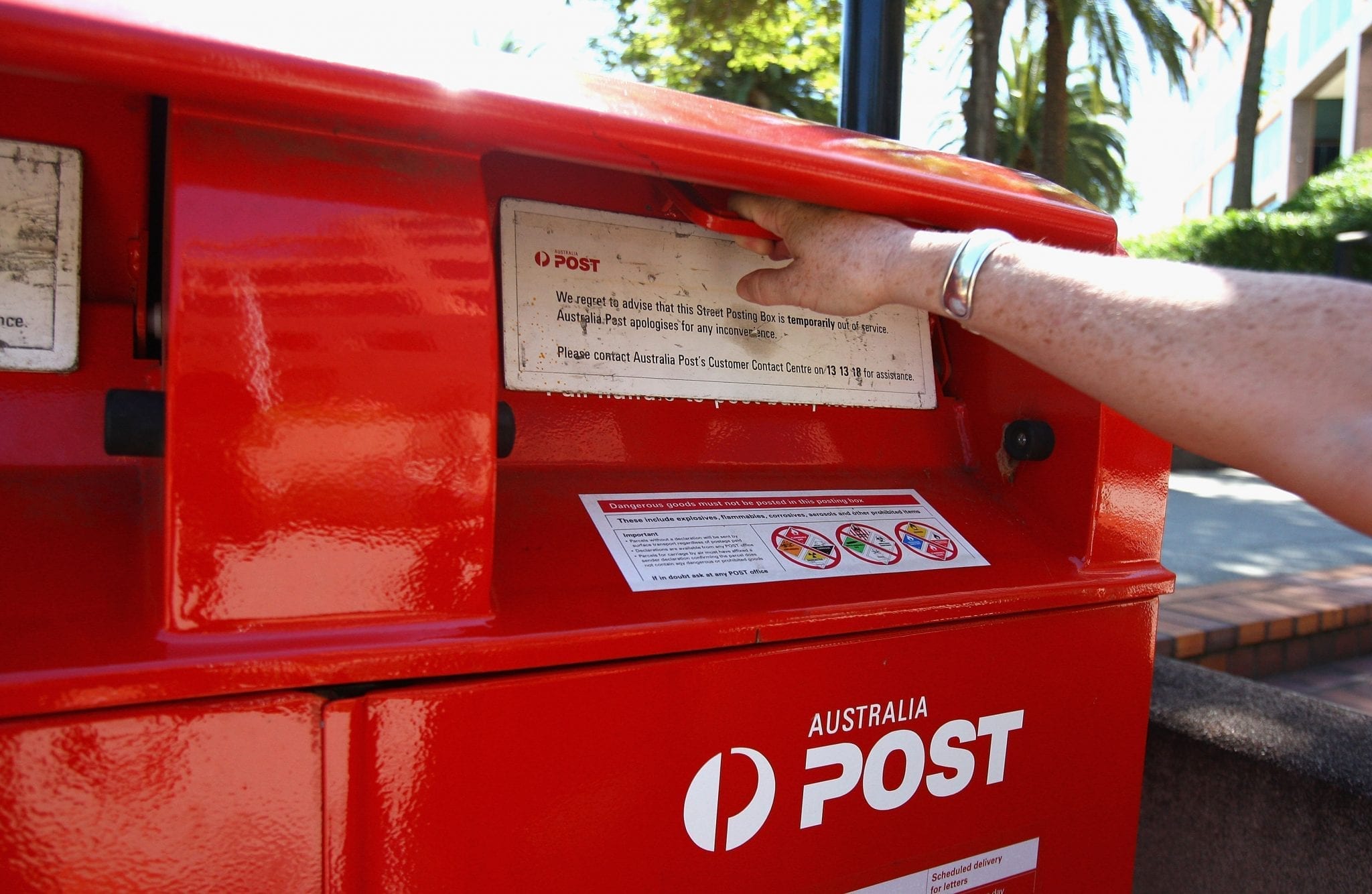
    Government-owned Australia Post needed regulatory approval to raise the cost of a basic postage stamp, a move it said was necessary to ease losses in its traditional letter business.

  • Australia plans controversial rural NBN levy

    Australia plans controversial rural NBN levy

    The Australian government is planning to impose a monthly levy on rival networks to the state-funded National Broadband Network (NBN) to help fund the roll out of the NBN to rural areas.

    Communications minister Mitch Fifield said the government will seek to pass legislation that would establish an A$40 million ($30 million) Regional Broadband Scheme.

    This scheme would be funded by a levy of A$7.30 per month for each fixed line connection provided by rival superfast broadband providers, increasing every year into 2022 when it reaches A$8 per month.

    The levy would not apply for small companies with under 2,000 customers. Australia’s largest operator Telstra and main rival Optus will also be exempt because they are transitioning their fixed line operations onto the NBN as part of separate deals with the government.

    But the government’s own advice indicates that such a levy will be passed on to consumers resulting in higher prices.

    High-speed providers have complained that the proposed levy could “cripple” their operations, destroying 30% of their revenue, the report adds. The proposal has also been slammed as extremely anti-competitive.

    The presence of competing fiber networks to the NBN has been a contentious issue since the project was first announced in 2007, with successive governments fearing that the rival services could “cherry pick” the network’s most lucrative customers in dense population centers without needing to invest large sums to reach sparse regional areas.

  • New Zealand to extend rural broadband initiative

    New Zealand to extend rural broadband initiative

    The New Zealand government has allocated a further NZ$150 million ($107.1 million) towards improving broadband connectivity in rural areas.

    The government has announced the next phase of the rural broadband initiative (RBI), a project to boost broadband coverage and speeds in the 25% of the population not due to be covered by the concurrent Ultrafast Broadband (UFB) project.

    Under the second phase of the RBI program, improved broadband will be delivered to communities unable to access broadband speeds of at least 20Mbps. The first phase of the program improved speeds for around 293,000 rural users.

    In addition, the government’s mobile black spot fund (MBSF) will improve the availability of mobile services in areas lacking coverage, including state highways and tourist areas.

    There are more than 200 blackspots listed in the government’s request for proposals, but not all locations will received coverage.

    “My aim is to provide high-speed broadband to the greatest number of under-served rural New Zealanders within the funding available, and give regional communities access to high-speed broadband. We also want to improve the reach of mobile services to support safety on State Highways and enhance the visitor experience for tourists,” communications minister Amy Adams said.

    “We’ve set an ambitious goal of ensuring that by 2025, 99% of New Zealanders will have access to broadband peak speeds of at least 50Mbps, and everyone will have at least 10Mbps. We’re interested in seeing how proposals for delivering coverage under the RBI2 and MBSF programmes show an upgrade path in line with this vision.”