Retail News CRM

Tag: arizona

  • Tesla, Lucid Supplier LGES Plans To Build $1.4 Billion Battery Factory In Arizona

    Tesla, Lucid Supplier LGES Plans To Build $1.4 Billion Battery Factory In Arizona

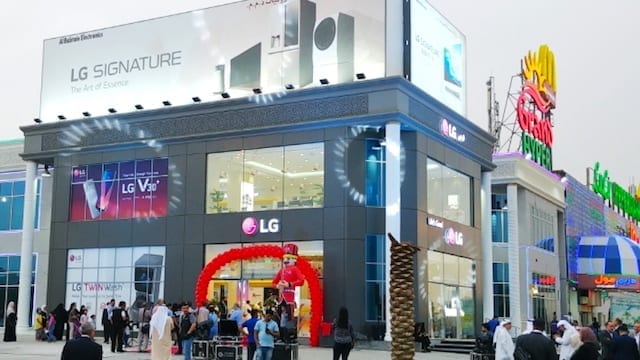
    LG Energy Solution (LGES), a supplier for electric car makers Tesla and Lucid, said on Thursday in Korea it plans to invest 1.7 trillion Korean won ($1.4 billion) to build a battery factory in Arizona by 2024 to meet demand from “prominent startups” and other North American customers.

    This will be its first U.S. factory to make cylindrical cells, a type of battery that has been used in Tesla and Lucid vehicles, LGES said. Construction will begin in the second quarter of 2022, with mass production to start in 2024 with production capacity of 11 gigawatt hours, LGES said in a statement.

    Earlier, Reuters reported that potential customers would include EV makers Tesla, Lucid and Proterra and Philip Morris, maker of IQOS heated-tobacco sticks, among others. The report cited people familiar with the matter.

    LGES said in a statement that it plans to consider securing additional production capacity at its Arizona factory in the future.

    “The Arizona factory could add further production capacity in the future as we are seeing growing demand for cylindrical batteries from various customers, including automakers and power tool makers,” said an official at LGES.

    On Tuesday, Tesla Chief Executive Officer Elon Musk said battery production would be “the limiting factor” for vehicle production in two to three years. He has called on suppliers to raise production, while Tesla starts making cells itself.

    Tesla, Lucid and Proterra did not immediately respond to requests for comment. Philip Morris declined to comment.

    Japan’s Panasonic Corp, a Tesla supplier, along with Contemporary Amperex Technology Co Ltd, is also looking to invest billions of dollars to build a factory to make a new type of electric vehicle (EV) battery for Tesla, public broadcaster NHK reported this month.

    Panasonic is looking at building the factory in either Oklahoma or Kansas, not far from Tesla’s new Texas vehicle plant, NHK reported.

    Lucid Chief Financial Officer Sherry House told Reuters last month the company, which has a car factory in Arizona, had signed multi-year supply agreements with two battery suppliers, and the agreement “does have some capacity coming from state-side cell lines.”

    She did not identify the companies. Lucid sources batteries from LGES and Samsung SDI.

    LGES, which raised more than $10 billion in its initial public offering in Korea in January, has announced a flurry of battery joint ventures with GM and Stellantis in the United States and Canada.

    In August, U.S. President Joe Biden signed an executive order aimed at making half of all new vehicles sold in 2030 electric.
  • Samsung may build $17 billion chip plant in Texas

    Samsung may build $17 billion chip plant in Texas

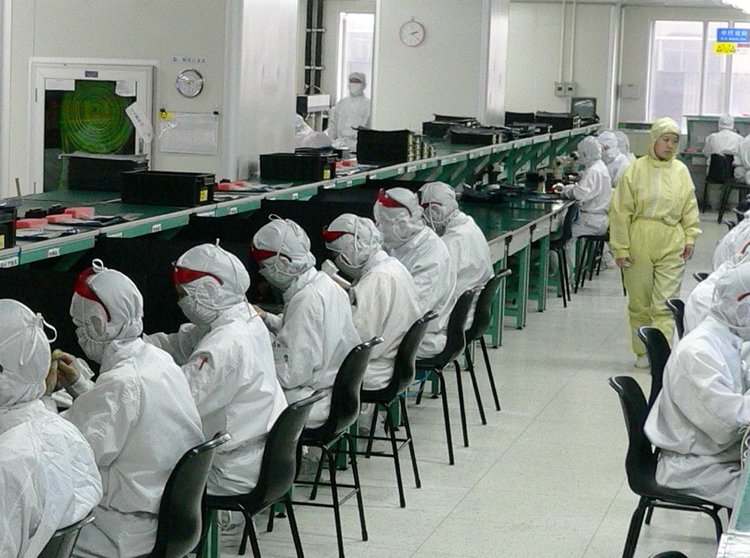
    Samsung has been searching for a prime location to set up a new multi-billion-dollar chip production plant for a while now, and it’s most certainly happening in the United States. The company already has one semiconductor chip foundry in th U.S., based in Austin, Texas.

    The Korean tech giant has already been reported to be considering Florida, Arizona, Austin, and even New York at different times for the new project, but Samsung didn’t end up sticking to any of those locations for the 17-billion plant.

    Now, we seem to have evidence that Samsung’s most recent target location falls in Taylor, Texas. While nothing has been set in stone, the city has already been offering the company powerful incentives in terms of tax breaks. And we’re talking huge tax breaks—namely 92.5% for the first decade, which will slowly decrease over time after that.

    When interviewed a Samsung spokeswoman said that “A final decision has not yet been made regarding the location.” Samsung had chosen Williamson County in Austin, Texas, for its first chip plant for the stable water and electricity sources available there, as well as similar financial incentives on offer.

    And having already considered Austin once more previously for its second plant, it seems reasonable to say that Samsung definitely seems rather inclined to begin construction in Texas. The Texan Governor, Greg Abbott, is already expected to make a big “economic announcement” at an event today (November 23), at 5PM local time—reinforcing people’s suspicions that it will be about Samsung’s new chip plant.

    The company has already confirmed to state officials that the new project will create about 1,800 jobs in the area, and plans to begin eking out chips in 2024 at the latest, once the location is chosen. We’ll update the article if tonight’s announcement in Texas does bring news of an official location for Samsung’s second U.S.-based chip foundry.

  • Apple is discovered fighting Arizona antitrust bill

    Apple is discovered fighting Arizona antitrust bill

    Recently, Apple thanked its lucky stars when North Dakota voted down a proposed bill that would have forced the company to allow 3rd-party payment processes for apps in the App Store. The bill’s objective is to let companies bypass Apple’s 15%-30% commission fee (like Epic Games did back in August, unsanctioned) on all applications and transactions on the platform. Apple has always stringently filtered the apps allowed in its store, on top of the commission which developers are calling “highway robbery.” The approval of this bill would give small businesses a much greater chance of survival, especially during the pandemic. However, the victory in North Dakota was only one small battle, and Apple’s fight is far from over.

    Not long after that, Minnesota introduced a similar bill, which Apple is currently lobbying against as well. And now, Apple has extended its efforts to Arizona—which hadn’t even introduced the proposed legislation officially yet before Apple came at them, torches and pitchforks waving. Apple and Google know well that if these bills are passed, they will lose billions of dollars which their duopoly has guaranteed them up until this point. According to them, these bills are “unconstitutional,” and Regina Cobb (the Arizona State Representative who introduced the bill) claims she is facing a nonstop onslaught from Apple and Google’s plethora of hired lobbyists over the past two weeks, as well as free-market groups and the Arizona Chamber of Commerce.

    Apple might be putting everything into fighting these small battles now, bill by proposed bill, state by state, but the deciding battle comes in May when the case between Epic Games and Apple goes to trial. If Minnesota and Arizona end up passing the bill, there’s a chance this (and consequent reactions) may affect the court’s decision, but it is not certain for now. Although much of the world is rooting for a future with a freer market, the North Dakota Senate voted off their proposed bill at a one-sided 36-11 ratio—so nothing is certain, and Apple certainly won’t stop fighting tooth and nail to keep its multi-billion-dollar app revenue from declining.