Retail News CRM

Tag: Artificial intelligence

  • Tencent-backed AI startup checks students’ math homework

    Tencent-backed AI startup checks students’ math homework

    In China, there is a big culture of ‘practice makes perfect’. As such, school homework is a battlefield not only for Chinese children, but also for their parents, and teachers, who have the task of reviewing assignments. Technology is increasingly lending a helping hand, though, and now, a Beijing-based online education startup has developed an artificial intelligence-powered math app that can check children’s arithmetic problems through a simple snap of a photo. Based on the image and its internal database, the app automatically checks whether the answers are right or wrong.

    Known as Xiaoyuan Kousuan, the free app launched by the Tencent Holdings-backed online education firm, has gained increasing popularity in China since its launch a year ago. It claims to have checked an average of 70 million arithmetic problems per day, saving users around 40,000 hours of time in total.

    Yuanfudao is also trying to build the country’s biggest education-related database generated from the everyday experiences of real students. Using this, the six-year-old company, which has a long line of big-name investors, including Warburg Pincus, IDG Capital, and Matrix Partners China, aims to reinvent how children are taught in China.

    “By checking nearly 100 million problems every day, we have developed a deep understanding of the kind of mistakes students make when facing certain problems,” said Li Xin, co-founder of Yuanfudao (which means “ape tutor” in Chinese) in a recent interview. “The data gathered through the app can serve as a pillar for us to provide better online education courses.”

    Yuanfudao is China’s second largest online education unicorn by valuation, according to CB Insights. It is behind VipKid, which uses an online platform to connect Chinese students with North America-based teachers to learn English via livestreaming.

    Yuanfudao’s flagship app covers different subjects including math, English, and chemistry. Li said the firm has built a database with student answers to 6 billion questions. He said this know-how has enabled Yuanfudao to better analyze individual students, helping it towards the ultimate goal of providing tailor-made courses and homework.

    Li said the company’s aim is to “dramatically improve education efficiency in China.”

    “Giving different homework to different students even if they study in the same class is even more difficult than providing different news to different readers based on their individual interests and tastes,” said Li. “What we do requires a more accurate profiling of students.”

    Li said that the company’s flagship online tutoring app can produce a basic profile of a student’s strengths and weaknesses based on their answers to three to five questions.

    Founded in 2012, Yuanfudao, which has 200 million users (2 million of whom are paid users) bagged US$300 million in a round of funding in late December, valuing the company at more than US$3 billion. The Chinese online education market is hot, attracting increased interest from technology giants such as Tencent, Baidu, and NetEase in recent years.

    “We don’t really need money, but investors insist […] [on offering more funds]. We still had US$100 million in our bank account before landing this round,” said Li. He said the company was immune to the so-called tech winter, which has seen the venture capital pool almost dry up in China recently.

    Despite a recent slowing of China’s economy, the country’s online education market – covering children from kindergarten age to high school – is set to triple to 150 billion yuan (US$22.33 billion) by 2022, according to data from iResearch, fueled by ambitious “tiger” parents who are prepared to invest heavily in their children’s after-school education.

    Li said it was not his intention to make children work harder.

    “We don’t want children to drown in a sea of homework,” he said. “In the old days, you needed to put in lots of work and practice to stand out. But now technology can make a change.”

    Using AI technologies, the company has already made it possible to recommend different courses to students based on their individual progress on a certain subject. Li said the company can even help to close the educational gap between developed and underdeveloped regions in China through a deep analysis of students’ homework.

    The company has another popular homework assistant app, Xiaoyuan Souti, which uses similar image recognition technology to find answers to student questions across a range of subjects, guiding them through the steps needed to solve particular problems.

    “Through the app, we know exactly what kind of questions teachers in Shanghai assign as homework to students,” Li said. “By collecting the information and studying it, we can enable students in the rest of China to have access to Shanghai’s education resources, in the long run [providing] a fair education environment for all children.”

    “At the end of the day, the only thing that matters in education is one’s curiosity and cognitive ability,” he said.

  • ViSenze AI technology helps people shop on Samsung phones

    ViSenze AI technology helps people shop on Samsung phones

    Visual commerce AI firm ViSenze has partnered with Samsung to help users easily discover and purchase products using the Shopping by Bixby Vision app on the electronics firm’s mobile devices. The partnership employs ViSenze’s automated visual-commerce technology and visual-search capabilities customised to consumers’ personalised shopping demands.

    “Consumers are exposed to countless products in their everyday lives that inspire and empower them to explore new trends,” said ViSenze CEO Oliver Tan. “Samsung is one of the first major companies to capitalise on this, recognising how essential it is to ensure the path from discovery to purchase is effortless.

    “At ViSenze, we work globally with some of the largest brands and retailers. Coupling this knowledge with our market-leading visual commerce technology, we are able to provide our partners with the insights and capabilities they need to find success with visual search and the commerce it’s driving each day.”

    According to material released by the brand, “Visual commerce solutions enable mobile shoppers to seize inspirational moments instantaneously by enabling them to find the same or visually similar products directly on their devices from top retailers such as Rakuten, Urban Outfitters and Zalora.”

    “Thanks to ViSenze, customers in this region can now take mobile shopping to new heights via Shopping by Bixby Vision, which makes shopping easier than ever, via your camera,” said head of mobile services & partnerships for Samsung Southeast Asia & Oceania Christopher Tarr.

    “From inspiration to instant gratification – it is that simple.”

  • India’s Tanishq brings its first Augmented Reality experience for its customers

    India’s Tanishq brings its first Augmented Reality experience for its customers

    From social media filters, to reshape the concept of traditional retail, Augmented Reality (AR) is rapidly growing in popularity because it brings elements of the virtual world, into the reality, thus enhancing the things we see, hear, and feel. AR has made retail engagement all the more experiential, fascinating and personal and it’s often considered to be in the middle of a mixed reality spectrum; between the real world and the virtual world.

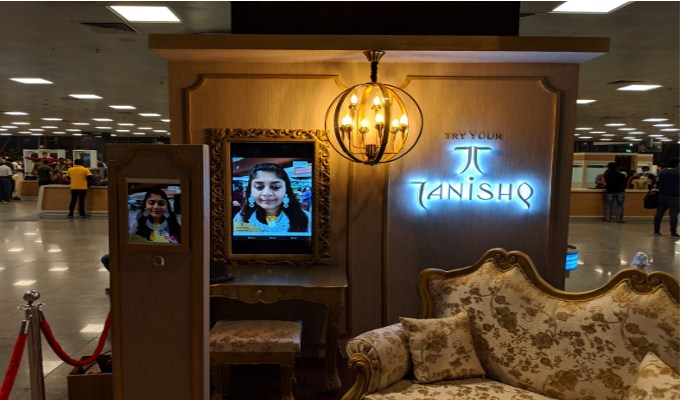
    Tanishq has taken one step further to be more accessible to its customers by launching into the Augmented Reality experience at the Bangalore and Delhi airports. For the first time in India, a jewellery brand is doing an Augmented Reality/ hybrid reality (combination of physical space Augmented Reality) campaign at an airport to engage with a large audience at a completely new level. Tanishq is leaving no stone unturned to keep their customers happy by adopting innovative ways to display their product range.

    With this technological advancement, customers will have the option of ‘Try and Buy’; trying out the jewellery virtually looking at the AR screen. Customers can benefit from this advanced jewellery experience for a month starting from February 06, 2019 at Delhi airport and February 08, 2019 at Bangalore airport.

    Tanishq is implementing MirrAR, an Augmented Reality software platform in collaboration with StyleDotMe, a startup focused in innovative application of Augmented Reality (AR) and Artificial Intelligence (AI) for providing the next generation experience to consumers who are interested in the Gems and Jewellery industry. Using the platform users can virtually try on the jewellery in real time, without actually having to wear them.

    Sharing her thoughts on the launch of AR experience, Deepika Tewari, Associate Vice President, Marketing, Jewellery Division at Titan Company Limited said, “Tanishq has always aimed at providing the best for our customers and this fascinating initiative is one such approach in achieving the objective. Consumers have the option of browsing through multiple jewellery pieces virtually with just one click. The real-time customer experience will definitely strengthen the retail connection between the brand and our esteemed consumers; a transformative step on how India will shop and purchase jewellery in the near future.”

  • Incheon Airport to add AI to security systems

    Incheon Airport to add AI to security systems

    Never mind airport security, artificial intelligence (AI) may also be rooting through your luggage in the near future at Incheon International Airport. Incheon International Airport Corporation said Wednesday it will incorporate AI into its security systems in a bid to improve accuracy in screening passenger luggage for prohibited items.

    The airport has already started working on the project to develop an AI-based X-ray screening system to be tested in the second half of next year.

    Instead of the existing system that relies on X-ray scanning, manual image checking by security officers and a final physical check, artificial intelligence will crosscheck the X-ray scan and the analysis will be available to officers along with the X-ray image.

    The first-stage AI scan is expected to complement and improve the accuracy of the security check as an officer will continue to be responsible for the final call to physically inspect luggage.

    The airport said it will apply deep-learning technology on over 600,000 pieces of footage of around 20 prohibited items and 20,000 commercially sold liquid products to develop an algorithm for imagery interpretation and improve the AI’s screening accuracy.

    The development project is expected to take two years overall, with a proof-of-concept system to take 10 months to develop.

    “By preemptively incorporating AI technology into security, [we] will strengthen airline security and plan to provide a safer and more convenient environment for passengers,” said Chung Il-young, CEO of Incheon International Airport Corporation.

    This will be the country’s first large-scale practical application of the technology, according to the airport.

    It is part of broader efforts to introduce a “Smart Security System” with the Ministry of Land, Infrastructure and Transport.

    The airport is also planning to introduce a tunnel security search system, the first of its kind, which will allow passengers to simply go through security checks by walking through a tunnel.

    The airport screened around 60 million pieces of luggage last year through the conventional X-ray system and found 3 million prohibited items such as firearms and swords.

  • Vietnamese startup launches platform for hiring blockchain talents

    Vietnamese startup launches platform for hiring blockchain talents

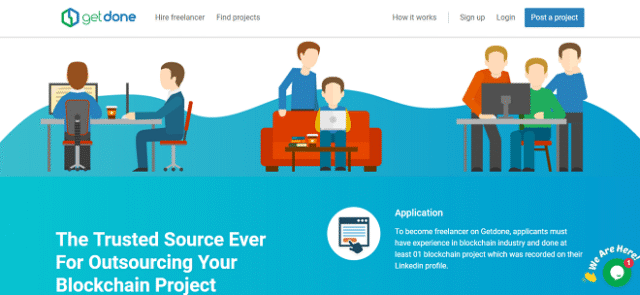
    Getdone is a platform that connects blockchain talents, who can work as full-time employees or freelancers, to global clients in blockchain industry. This platform is the universal version of freelancerviet.vn, a leading freelancer platform in Vietnam. It lists 300,000 freelancers in various categories, with a focus on blockchain and AI technology. Getdone provides innovative solutions based on a combination of the two emerging technologies to improve security and payment speed, transaction fees and reliability of talent profiles and overcome the language barrier.

    In Vietnam, the number of job searches related to cryptocurrency and blockchain doubled in 2018. However, blockchain engineers and developers currently account for only 2-5 percent of the IT workforce, according to TopDev’s annual report last August.

    Upwork’s newest quarterly index of the hottest skills in the U.S. freelance job market ranks blockchain first out of 20.

    For this reason, Getdone entered the market with the mission to be a part of the solution of hiring blockchain talent including engineers, developers, and others.The shortage of blockchain developers continued in the fourth quarter of last year even as blockchain products doubled. The demand for employees in blockchain is so high that employers and clients need to find ways to work around a shortage.

    The smart contract on the Getdone platform cuts off third parties’ intermediary role to reduce commissions and ensure security and quick payment.

    Besides, AI technology with self-recommendation function based on automatic data analysis will help connect clients and qualified job seekers.

    AI also proposes an average budget for a project to help clients understand reference budgets when they need to hire blockchain talents, and an average rate per hour of work based on a candidate’s profile.

    It will create a standard framework for the freelance job market, avoid devaluation and protect the benefits of both blockchain talents and clients.

    The new-user-support tool will help new applicants find jobs more easily through the test system. A new talent who joins the site and gets a high-test score will still get a job despite having no previous work history on Getdone.

    Getdone will provide a live language translation tool to break the language barrier and help talents work across the world. Getdone accepts payments in more than 20 cryptocurrencies and foreign currencies.

    A hedging mechanism helps stabilize the value of cryptocurrencies used at Getdone. When choosing a talent, the company deposits a sum of money with the crypto token by the time talents complete their work within a few days to several months.

    In 2018 freelancerviet won Ho Chi Minh City’s Best Innovation Project award and the Asian Rice Bowl Startup Award in the Best AI and Machine Learning Application category from NEF (New Enterprises Foundation) and MaGIC (Malaysian Global Innovation & Creativity Center).

    Getdone is also one of three Vietnamese representatives to beat thousands of competitors from across the world to qualify for the Elevator Pitch Competition, a global contest organized by the Hongkong Science and Technology Center.

  • Telenor Pakistan hosts “The future of Machine Leaning & Artificial Intelligence”

    Telenor Pakistan hosts “The future of Machine Leaning & Artificial Intelligence”

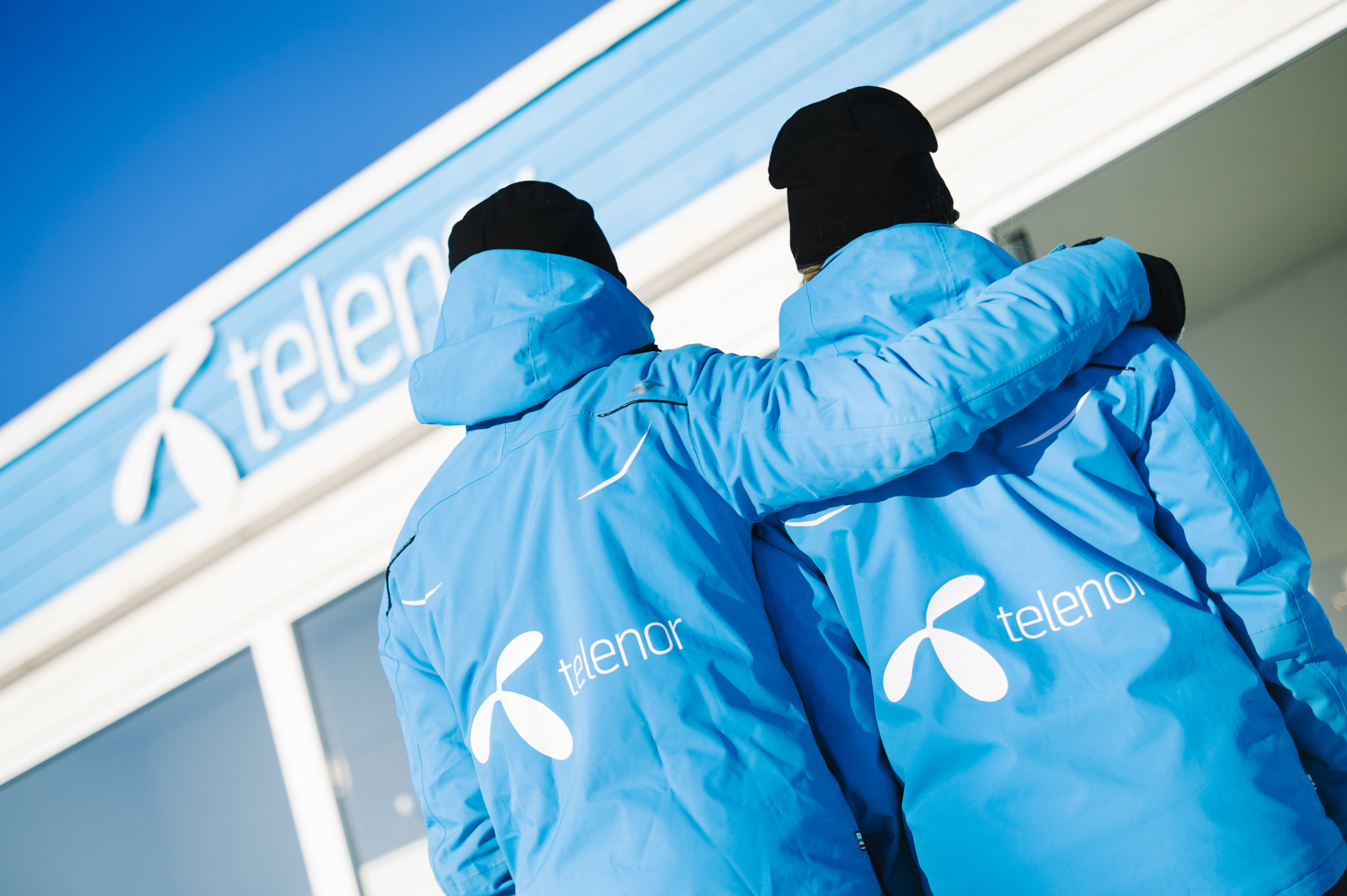
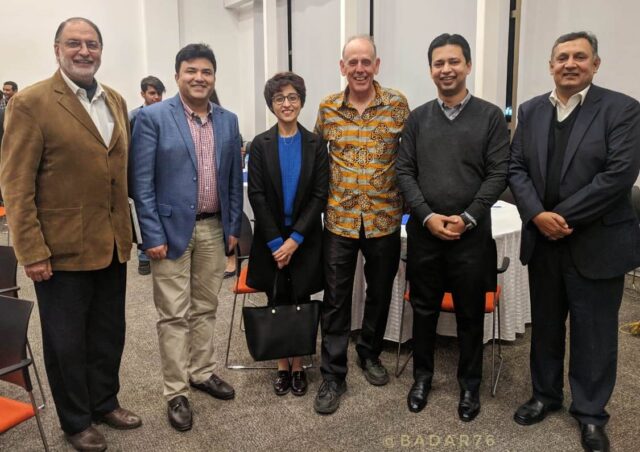
    Stephen Brobst, CTO of Teradata, conducted an enlightening session on the future of Machine Learning (ML) &Artificial Intelligence (AI) at Telenor Pakistan headquarters ‘345’ in Islamabad. The session was attended by Telenor Pakistan employees and executives from across industries including Irfan Wahab Khan, CEO Telenor Pakistan and President OICCI, Haroon Bhatti, Chief Business Officer (CBO) at Telenor Pakistan, BadarKhushnood, Cofounder & VP at Bramerz, QazafiQayyum, Country Manager Teradata, Khimde Ando, CEO Mitsubishi Corporation, Brig. Tahir Mehmood, Director ISPR, AVM Faaiz Amir, Vice Chancellor Air University, Barkaan Saeed, Ex-Chairman PASHA and Retd. Brig. Saleem Ahmed Moeen, CEO SecureTech.

    The participants learned about the future of artificial intelligence, the role of emerging technologies, differences between deep and shallow learning and their application techniques, and the opportunities of using advanced analytics to create high-value outcomes.

    “We have entered a new era of analytics with machine learning and artificial intelligence algorithms beginning to deliver on the long-promised advancement into self-learning systems,” Brobst told the audience. “These approaches allow us to solve previously intractable problems with completely new attack plans.  The appetite of deep learning algorithms for vast amounts of data and the ability to derive intelligence from diverse sets of noisy data allows us to go far beyond previous capabilities in what we used to call advanced analytics,” he added.

    Brobstinformed that in order be successful with the use of new technologieswe need to fully understand their capabilities and limitations. He also stressed the need to develop new skill sets in order to harness the power of deep learning to create business value in an enterprise.

    “In our times of Siri, Alexa, and Google, Machine Learning & Artificial Intelligence are not a part of science fiction anymore; they are our reality,” remarked Irfan Wahab Khan. “For tech companies like Telenor and Terada, the real charm of AI and ML technologies is their ability to recognize patterns and synthesize large amounts of data. Telenor is not only harnessing the strength of AI and Advance Analytics for its own commercial use but is also enabling other organizations to benefit from the technology by offering incisive Market Research insights and ability to run targeted campaigns on its diverse Advertising  assets. The fact that these technologies get smarter with time as increased amounts of data is fed to them makes them acornerstone for all future technologies,” he added.

    Impressive progress is being made in ML & AI technologies globally. From self-driving and learning cars to flying drones circling the skies, the technological advancements of today could already be perceived as something out of a futuristic novel. Gartner, the world’s leading research and advisory company,also predicts that by 2020, AI will become one of the top five investment priorities for at least 30 percent of Chief Information Officers. Being the country’s technology leader, Telenor Pakistan is keeping its people abreast of the latest technological developments to realize its ambition of digitally empowering Pakistan.

  • LG claims to have wowed the industry at Vegas’ CES

    LG claims to have wowed the industry at Vegas’ CES

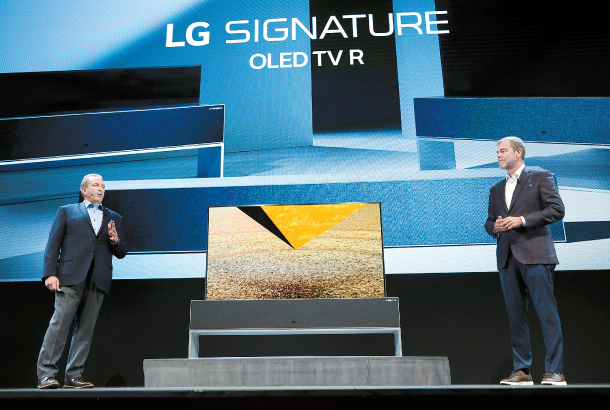
    LG Electronics, one of the leading home appliance manufacturers in the world, said Sunday it received a total of 132 awards at this year’s Consumer Electronics Show (CES) in Las Vegas. It said its products received the coveted CES top innovation title announced by the Consumer Technology Association. LG, which has been a major player in big-screen TVs and is a global leader in the field of organic light-emitting diode (OLED) screens, unveiled the world’s first mass production-capable rollable TV at the gathering that ran from Tuesday through Friday.

    The LG Signature OLED TV R received considerable attention, with Engadget, a multilingual blog network and the official award partner at CES, naming it Best TV Product.

    The innovative TV that allows the big OLED screen to vanish into a long box with embedded speakers was also noted by some 50 media outlets, such as the Wall Street Journal and Cnet.

    The company said its 8K resolution OLED TV and Super Ultra HD TV, as well as an artificial intelligence-equipped TV set, were praised by tech experts from around the world.

    Media outlets and online publications like USA Today and TechRadar, also gave LG HomeBrew, a craft beer making machine, their highest awards, while the waterfall OLED display at the entrance of the company’s booth – made up of 260 flexible panels – won recognition from numerous international IT outlets.

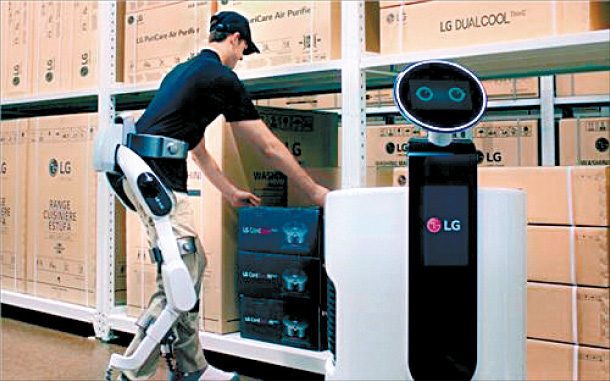
    Beside such products, the company’s LG SuitBot, an exoskeleton that can help physical laborers, and Styler, a clothing care system, received praise at this year’s CES.

    Song Dae-hyun, who heads LG’s home appliance business, said in a press conference over the weekend that the company is aiming expand its presence in the United States through the marketing of premium products.

    He said in the built-in appliance market in North America, LG is targeting high income earners.

    “If LG competes in mid-range consumer appliances, it will struggle and not turn a lot of profit so it makes sense to shift to premium products,” the senior executive said.

    He said that, in particular, the U.S. market is attractive because it has considerable growth potential.

    The executive said to better engage prospective clients, LG opened its first overseas Signature Kitchen Suite showroom in California’s Napa Valley.

    The Experience and Design Center is the second of its kind after one in southern Seoul, with another to be built in New Jersey.

    Unlike other countries, the United States has always been a so-called builder’s market with the customer having greater say in what kind of appliances go into a home, making it ideal for high-end products.

  • Korean start-ups also shine at CES in Las Vegas

    Korean start-ups also shine at CES in Las Vegas

    Industry big boys aren’t the only companies exhibiting at this year’s Consumer Electronics Show (CES). Over 1,200 start-ups have set up at the event’s Eureka Park, reserved for smaller companies, to capture the attention of consumers and possibly become the next unicorn (a start-up valued at over $1 billion).

    Of the start-up companies from Korea, those that developed through the “Israeli start-up” model have grabbed the most attention from the media. The model refers to companies with a weak capital base that grows with investment from other IT companies or venture capital firms. Many Korean start-ups that took part in CES this year got investments from IT giants such as Naver or Kakao.

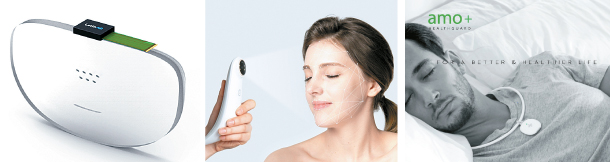
    Augmented reality (AR) and virtual reality (VR) company LetinAR is one of the hottest start-ups. LetinAR produces smart glass lenses that makes use of “Pin Mirror” technology. The company incorporates the pinhole effect, which makes vision clearer by looking through a small hole, and applies it for use in VR and AR.

    LetinAR also created a lens that provides vision of up to 80 degrees. While humans can see up to 150 degrees, existing products are typically limited to 50 degrees.

    “The 80-degree vision is like looking at a 120-inch TV from a meter away [3.28 feet],” said Choi Kyung-on, a director at the company. “If our product becomes commercialized … we will be able to release smart glasses the size of large conventional glasses within three years.”

    While smart glasses got a lot of headline in 2013 with the introduction of Google Glass, the product failed due to the difficulty of developing a lens with a wide-viewing angle.

    Meanwhile, beauty artificial intelligence (AI) start-up lululab won the CES Innovation Award in the biotech sector for its AI skin care assistant Lumini.

    The device analyzes skin conditions such as its wrinkles and pores and provides product information and recommendations personalized for a user.

    “[Users] can use personalized AI skin analysis service without the help of a store employee,” explained Choe Yong-joon, CEO of lululab.

    The company was born in Samsung Electronics’ start-up incubator, C-Lab.

    AMO Lab is another promising start-up from Korea. The company, which got investment from Naver last September, specializes in products that improve users’ quality of sleep.

    The company recently developed AMO+, a device worn like a necklace, which sends out minute electrical signals to the body to improve sleep.

    According to recent test results, users’ parasympathetic nervous systems became active when wearing the device.

    “We are currently discussing collaboration with U.S. and European companies after prototype development,” said Kim Min-kyu, CEO of AMO Lab.

    WELT, another alumnus of Samsung’s C-Lab, gained attention for releasing a smart belt in collaboration with French luxury brand S.T. Dupont. WELT’s smart belt can be used for two months with a single charge and provides basic health information.

  • LG and Naver are teaming up to make robots better

    LG and Naver are teaming up to make robots better

    LG Electronics and Naver are cooperating on the development of robotic capabilities.

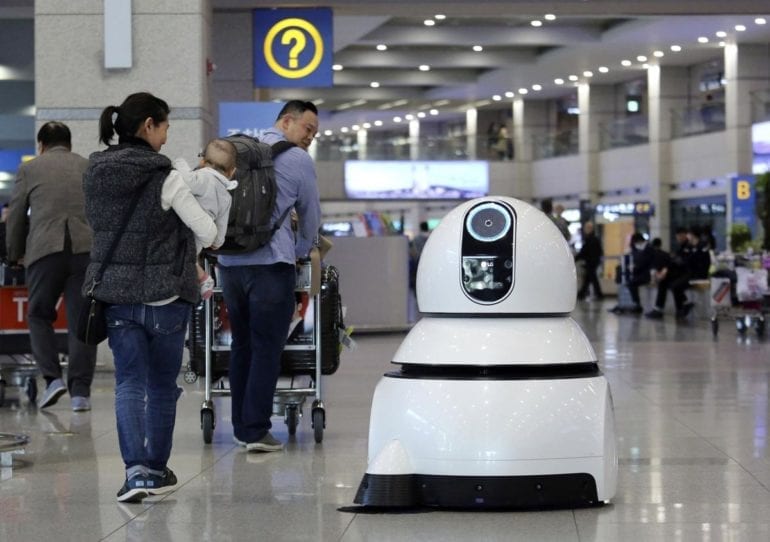
    Their first project will use Naver’s mapping and navigation technology to improve the functionality of LG’s CLOi GuideBot.

    LG’s guiding robot is currently in operation at Incheon International Airport. It escorts travelers to certain destinations within the facility.

    Naver Labs, the research and development arm of the Korean internet portal company, said its eXtended Definition & Dimension Map (xDM) solution will enable LG robots to self-drive indoors even when equipped with low-end sensors.

    The solution integrates Naver’s mapping, navigation and positioning technology to support various location-based services, such as augmented-reality walking navigation and autonomous driving, according to the company. Naver hopes to improve this by using big data collected by LG robots.

    The two companies said they will gradually expand collaboration to other areas of robot development after the first project. The agreement was reached during the Consumer Electronics Show (CES) in Las Vegas and announced Thursday. Both LG and Naver demonstrated their latest robot technologies at the exhibition.

    “One of our biggest achievements during CES was to reach an agreement with LG,” said Seok Sang-ok, head of the robotics team at Naver Labs. “With LG, we will find ways to develop technologies that improve lives.”

    LG has already announced other deals at CES, including a plan to work with Microsoft on autonomous car technology development and an agreement with Apple to source television programming.

  • Samsung plans to release robots this year

    Samsung plans to release robots this year

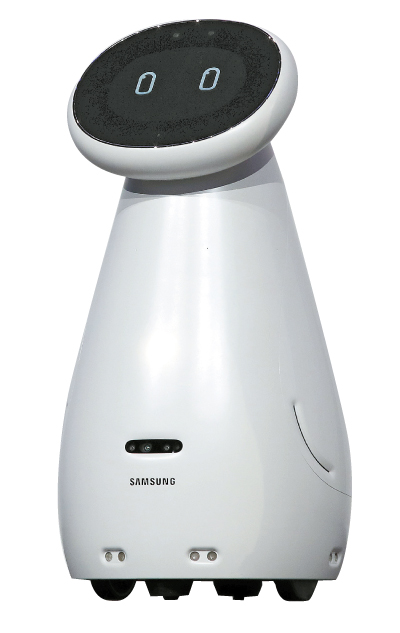
    Samsung robots are coming this year. Kim Hyun-suk, president and head of Samsung Electronics’ consumer electronics division, said the company has been conducting research on the robotics market and is now preparing to launch several robots this year during a press conference with reporters on Monday, a day prior to the opening of the Consumer Electronics Show (CES) in Las Vegas.

    Until now, Samsung Electronics has stayed mum on whether it is making robots. “To develop robots, it’s important to have an artificial intelligence [AI] platform ready [to mount on the robots],” Kim said. “That AI platform is almost ready.”

    Samsung unveiled three variations of its AI-based robot, dubbed Samsung Bot, at the briefing, revealing its robotics technology for the first time.

    The three Samsung Bots, labeled Care, Air and Retail, are designed to aid people’s health, and improve air quality and retail shop management. Samsung Bot Care, for instance, monitors users’ vitals like blood pressure and heartbeat and helps people take medicine at the right time. The robot can also call 119 and contact family members when it senses an emergency such as a heart attack.

    The electronics giant also introduced its wearable robot, dubbed GEMS. It assists people with difficulty walking due to weak muscles or injuries and reduces physical pain in the knees and ankles.

    “I can’t say for sure when the products introduced today will be commercialized,” Kim said. “There are possibilities that robot products not introduced yet could be commercialized first.”

    Kim added that demand for robots is expected to increase, especially due to societal aging, pointing out that robots like Samsung Bot Care will be useful for the elderly.

    “By exploiting Samsung’s know-how in AI, Internet of Things and developing multiple devices, we are considering our options for various types of robots,” Kim said.

    On concerns of whether Samsung’s own AI engine Bixby is losing ground due to the company’s AI partnerships with tech giants like Google and Amazon, Kim said that is a “misunderstanding.”

    Though Amazon’s Alexa AI assistant and Google Assistant may be a step ahead of Bixby in terms of technology and presence in the global market, Kim said partnerships make Bixby stronger, not weaker.
    The important thing, according to Kim, is that when people ask Bixby a question, the AI will be able to give out answers based on its own knowledge or by utilizing data from Google or Amazon.

    “No company has strengths in every aspect of business,” Kim said. “Though Bixby is a latecomer [to the AI assistant market], Samsung has relative strength in making devices compared to other tech companies, and Google and Amazon will focus on what they are good at.”

    Kim also commented on LG Electronics’ rollable TV that made headlines globally. LG’s rollable TV prototype can roll itself into a storage box that becomes a table with speakers.

    According to the Samsung president, there needs to be considerations on whether the product can be “economical.” He added that without the economic feasibility to commercialize the product, the prototype is a lot less meaningful.

    Brian Kwon, head of LG’s home entertainment division, said in a separate press briefing Tuesday in Las Vegas that the company will make rollable TVs its future growth engine.

    On concerns about the product’s cost, Kwon said while the price may be a barrier in widely expanding sales of the product right after launch, the company will strive to quickly improve the TV’s cost competitiveness.

  • How technology will play a big role in retail in 2019

    How technology will play a big role in retail in 2019

    Technology has penetrated in every sphere of our lives. We live, love, eat and sleep on #technology now. Each year, we see technology moving deeper and deeper into our existence. It’s good and bad – both. Good because it helps us in doing more in less time and efforts. Bad because interweaving of tech in our lives has left us dependent, vulnerable and very anxious. Let’s see what 2019 has in store for us – specifically 5 technology leaps to look out for in retail.

    Omnichannelisation – The technology approach to seamlessly tie all sales channels in a see-anywhere-buy-anywhere way in picking up steam with mainstream brands and retailers. Omni channel technology is also being used as a strategic advantage by multichannel stores and small brands/retailers to scale their operations while centralizing the inventory. The main advantage is higher brand loyalty due to “all touch point” approach – and much lower active inventory requirements. In 2019, we expect omni channel to penetrate deeper into all spheres of retail through simplification and customization of omni-tech.

    Cashier-Less Shopping – Yes, it all started with #Amazon GO, a proprietary technology that eliminates the need of checkout registers and cashiers. Customers can activate a geo-sensed resident app (Amazon GO app), walk in, pick up what they need and walk out – and all transaction happens in the backdrop through something what Amazon calls “Just Walk Out” (JWO) Technology. Ease of use, time savings and low cost operations are at the core of this technology. In 2019, you’ll see Amazon and a few other technology providers opening more of these JWO stores worldwide.

    Virtual Retail Experience – According to #emarketer report, two thirds of US customers were interested in using Virtual retail experience – where you could get near-real brand and store experiences using head mounted or holographic hardware. 2019 could see a surge in virtual-reality based retail experiences. The upside? No (or very low) rentals and really easy reconfiguration of virtual stores.

    Hyper-Local Retail – Hyperlocal retail refers to the technology where consumers can find and buy products near to them using an app that runs on geolocation. A catalog of products from local stores is uploaded on the app and the customers can discover and buy products from nearby stores. It’s a great cusp between purely online and purely offline retail experience. This is very useful for daily needs products, appliances and electronics. It’s awesome for the retailer since it allows for expansion of product-discovery while minimizing store footfall. Overall, a win-win for retailer and consumer. In 2019, watch out for companies like #nearbuy and #zopper making it big in India.

    AI-based Consumer Insight – Artificial intelligence and machine learning is growing leaps and bounds in almost every segment. Retail is no exception. In 2019, AI and ML is expected to grow manifold in terms of demand forecasting, inventory planning, customer service bots, natural language based customer engagement and customer’s next purchase (and time) prediction. Though it may sound a bit nerdy, but the more data flows through the AP engines, the more powerful they get at predicting consumer behavior; and provide more powerful strategic advantages to the brands and store. Watch out! If you have that weird feeling that your phone purchase was somehow orchestrated – but cannot put a finger on anything concrete, you may have been Artificially Driven into that purchase!

  • Vietnam struggles with paucity of AI engineers

    Vietnam struggles with paucity of AI engineers

    IT firms are offering artificial intelligence (AI) engineers salaries of $22,000 a year, but are still struggling to recruit enough people. IT recruiting firm TopDev said in a recent report that companies are having difficulty finding the right people due to a paucity of talents. Salaries are going up as a result. An AI/machine learning engineer could earn up to $1,678 a month, or around $22,000 a year including bonuses and benefits.

    This is higher than what a data scientist ($1,537 a month) or DevOps engineer ($1,505) gets. The latter handles both the development and operations of a product.

    The report said the IT sector generally faces a big shortage as demand is set to go up from 320,000 engineers this year to 400,000 in 2020. The shortfall is 75,000 this year, and set to increase to 100,000 in 2020.

    But they face a struggle as 53 percent of 15,000 IT employees polled for the report are happy with their current job, and 59.8 percent do not want to change their job. This leaves employers considering paying higher salaries to lure away people. The average salary for experienced IT engineers now is $1,318.

    Managers with over five years’ experience can earn from $1,550 to $2,350, while directors with over 10 years’ experience earn at least $2,300.

    But there is a dearth of quality managers and engineers, the report added.

    Gaku Echizenya, general director of Navigos Group, a leading recruitment company, recently said: “The market is experiencing major changes with the fourth industrial revolution. Therefore, businesses need to keep up-to-date with market information from reputable sources to respond promptly to changes, allowing them to set out a strategy to recruit and attract talented people.”

    Employees need to actively educate themselves in IT and digital knowledge, and develop crucial skills such as cooperation with others and people management to increase their competitiveness, he added.


  • Artificial intelligence is $300 billion cost-saving opportunity

    Artificial intelligence is $300 billion cost-saving opportunity

    The use of artificial intelligence in the retail sector is a $300 billion cost-saving opportunity for retailers which are able to scale and expand the technology, though just 1 per cent of retailers have achieved the necessary level of development, according to research from Capgemini Research Institute. The study looked at 400 global retailers, and how they are implementing the burgeoning technology at different stages of maturity, and found that over a quarter of retailers are deploying AI in their businesses – a seven-fold increase from 2016.

    “For global retailers, it appears reality has kicked in regarding AI, both in terms of what the technology can achieve and what they need to do to get there,” Capgemini vice president global consumer products and retail sector Kees Jacobs said.

    “Of course, deploying and scaling will be the next big objective, but retailers should be wary not to chase ROI figures without also considering the customer experience.”

    According to the research, retailers deploying AI systems were eight times more likely to be working on high-complexity projects rather than smaller projects which are easier to scale, and generally lack a focus on customer usability.

    Only 10 per cent of such retailers noted customer experience as a driving factor of these developments, and only 7 per cent noted customer pain points as a priority. Meanwhile, cost (62 per cent) and ROI (59 per cent) are driving most investment into the space.

    Despite this, 98 per cent of retailers surveyed expect customer complaints to decrease, while 99 expect to see an increase in sales, as a result of investment into AI – far ahead of the more contrasted expectations noted in 2017.

  • Number of AI speakers in Korea to hit 8 million

    Number of AI speakers in Korea to hit 8 million

    The number of artificial intelligence (AI) speakers in Korea is expected to reach the 8 million mark in the new year as the devices gain popularity, a report by a local digital media lab said Sunday. According to the findings by KT Group affiliate Nasmedia, some 40 percent of the country’s 20 million households will likely have an AI speaker in 2019. The numbers represent a sharp increase from just 1 million units supplied in 2017 and the nearly 3 million that have reached the market this year.

    “The rise in demand comes from greater choice in terms of the products being offered, as well as more upgraded features that have made the AI speakers more attractive to ordinary consumers,” the 2019 digital media and marketing forecast report claimed.

    It added that greater competition among manufacturers to secure the growing market is fueling the spread of such smart devices.

    Korean companies – such as SK Telecom, KT, Naver and Kakao – have all rushed to release new AI speakers.

    Nasmedia said that, in particular, there has been considerable competition in the area of children-related content and audio shopping services with companies vying with one another to “lock” customers into their ecosystem.

    The speakers have been marketed as personal home assistants for adults and even as private tutors for small kids.

  • Samsung to take eight C-Lab start-ups to CES

    Samsung to take eight C-Lab start-ups to CES

    Samsung Electronics will introduce eight in-house artificial intelligence (AI) start-ups at the Consumer Electronics Show (CES) 2019 to take place next month in Los Angeles, the company said Wednesday. All eight start-ups are under Samsung’s C-Lab, an in-house incubating program that allows employees to embark on a one-year project to realize a business idea. Samsung will organize an independent booth to present their products and services at the four-day exhibition scheduled to take off on Jan. 9.

    All eight of the projects use AI as a core part of their business.

    For example, the mobile app SnailSound uses AI technology to remove background noise and provide clear human voices in a tailored way based on the app’s test results of the user’s hearing abilities.

    Another app called Medeo uses AI to select the best shots in a video while it is being shot.

    Prismit is an AI-based news app that shows news articles of the same topic automatically aligned in the form of a timeline.

    The list also includes Girin Monitor Stand, which helps to correct posture while sitting in front of computer screens, and the Alight desk light, which adjusts light in the best way to enhance one’s concentration.

    The Perfume Blender suggests the best perfume recipe based on a user’s preferences and also comes with a device to make the personalized perfume.

    As well as the eight in-house start-ups that are currently working under Samsung’s C-Lab, eight groups that have already graduated from the scheme will take part in CES 2019 to set up booths of their own.

    Among them, three have earned awards from this year’s CES. Since the program’s launch in 2012, C-Lab has produced 36 spin-offs that now conduct business as start-ups outside of Samsung.