Tag: Ascend

  • Huawei Cloud Retires 2 openPangu Models from Model-as-a-Service Platform

    Huawei Cloud Retires 2 openPangu Models from Model-as-a-Service Platform

    Huawei Cloud will shut down commercial access to its openPangu-2.0-Flash and openPangu-2.0-Pro AI models on its Model-as-a-Service platform, ending sales on November 6 and terminating all hosted calls on November 30.

    The cut comes four months after Huawei open-sourced the 505-billion-parameter Pro version, forcing enterprise customers running consumer analytics and internal search workloads in its Southwest Guiyang cloud region to switch tools before December.

    New customers cannot buy or activate either model service after midnight on November 6, while existing accounts retain operational access only through the end of the month. Huawei Cloud directs accounts using openPangu-2.0-Flash to DeepSeek-V4.1-Flash-1017 as their replacement, while routing openPangu-2.0-Pro users to Zhipu AI’s GLM-5.3.

    Migration Demands and Technical Friction

    Engineering teams face immediate rewrite costs. Huawei Cloud noted that the replacement models carry different API parameters, cost structures and output profiles, requiring developers to retest task pipelines rather than swap endpoints blindly.

    Software setups built on the company’s early MaaS standard API V1 must be rewritten to work with an OpenAI-compatible endpoint. Teams already on API V2 or an OpenAI-style interface need to alter model identifier calls.

    Retail commerce platforms relying on openPangu for live inventory categorisation or chatbot assistance now have less than a month to validate replacement models. Changing baseline models often alters latency profiles and customer response formats across live digital storefronts.

    Rival Platforms and Vendor Strategy

    The decision to retire homegrown models while recommending independent rivals highlights the fierce pace of platform rationalisation across China’s cloud ecosystem. Rather than carrying the operational cost of maintaining earlier foundation models, cloud providers now drop their own releases rapidly in favour of top-performing external open weights.

    DeepSeek and Zhipu AI gain immediate enterprise volume from the shift. Huawei Cloud’s public embrace of DeepSeek-V4.1-Flash and GLM-5.3 confirms that third-party open architectures are setting operational benchmarks on Chinese sovereign server hardware, even inside Huawei’s proprietary Ascend computing clusters.

    Platform developers bear the stability risk. By cycling through model versions within single-digit months, platform operators transfer the cost of code maintenance, integration testing and deployment downtime onto enterprise software clients.

    Rapid Model Turnover on Ascend Hardware

    Huawei made openPangu-2.0-Flash public on June 30 with 92 billion parameters, followed by the 505-billion-parameter openPangu-2.0-Pro sparse model on July 31. Both variants were tailored for Ascend neural processing units, accompanied in late September by the release of complete pretraining, supervised fine-tuning and reinforcement learning source code.

    The company’s hosted platform has cleared out earlier systems at a comparable pace throughout the autumn. Huawei Cloud scheduled GLM-5.1 for removal on November 16, switched DeepSeek-V4-Flash accounts to version 4.1, set Kimi-K2.6 for retirement on November 8, and pulled DeepSeek-V4-Pro from hosting in September alongside older Qwen and Wan models.

    The retirement schedule applies strictly to managed API services hosted out of the Guiyang data centre, leaving the underlying open-source weights and training code available in public repositories for teams running their own compute stacks.

    Software teams on Huawei Cloud must finish transitioning their active workloads to the DeepSeek and GLM services before the Guiyang cluster unplugs both openPangu endpoints at midnight on November 30, while Huawei prepares a successor generation of Pangu models without a public release date.
  • Singapore’s Top Banks Hit Record Highs as DBS, OCBC and UOB Ascend Together

    Singapore’s Top Banks Hit Record Highs as DBS, OCBC and UOB Ascend Together

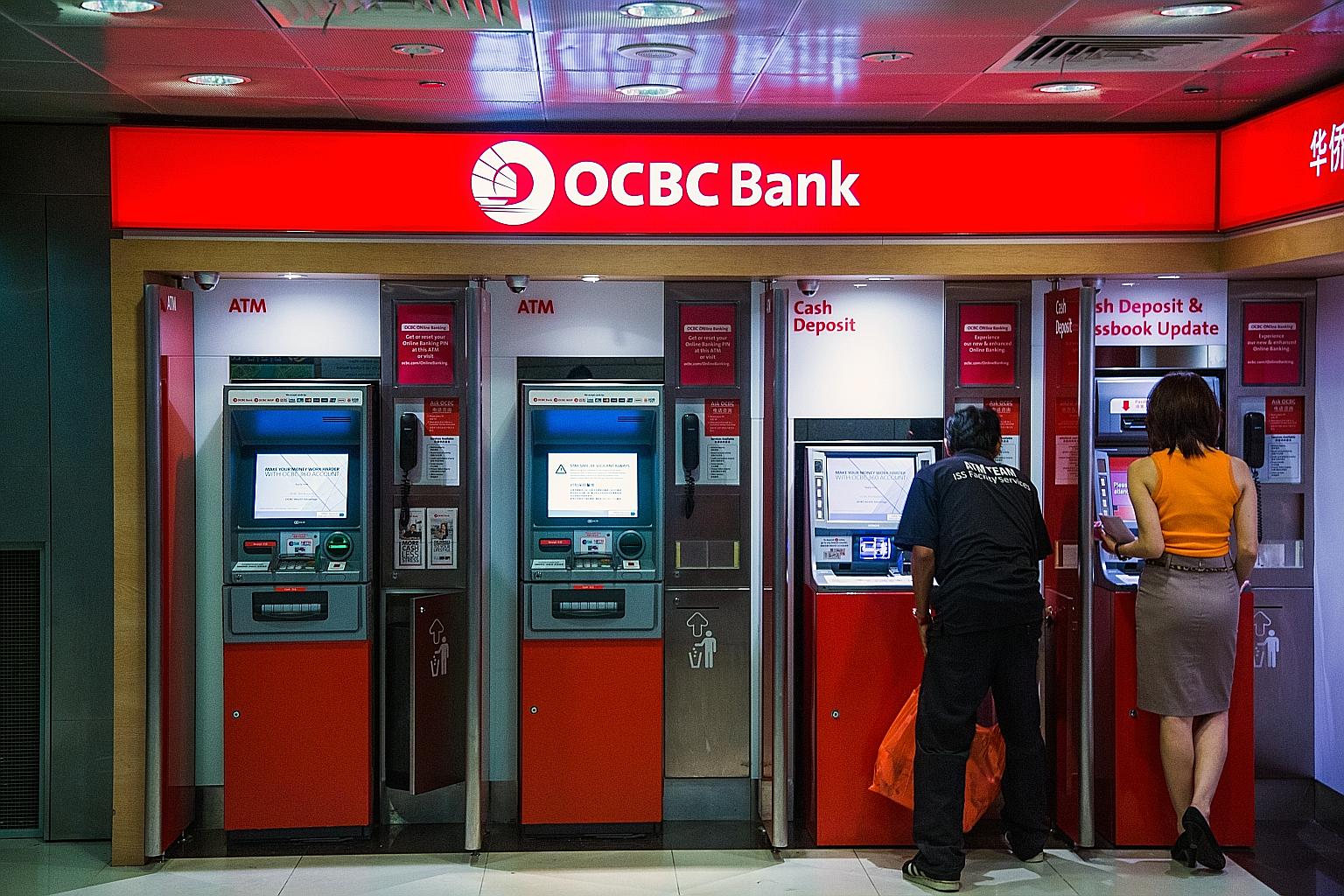
    In the latest trading session, Singapore’s three major banks, DBS, OCBC, and UOB, all witnessed record high closures. Spearheading gains on the Straits Times Index, OCBC saw a 3.3% rise, closing at S$26.34 (US$20.39). UOB climbed 2.9% to S$41.69, and DBS increased by 2.6%, closing at S$68.64.

    Bank Ratings Solidify Their Stance

    DBS was singled out as a preferred local bank in a recent research note by Citi. The choice was based on the bank’s strong dividend per share visibility and its position as a distinguished Asia wealth proxy. OCBC received a “buy” rating, with Citi concurring that the bank should continue its growth and lessen the return on equity gap with DBS.

    Contrarily, UOB maintained a “neutral” rating. The bank’s wealth and loan-growth trajectories reportedly trail those of its peers, while its earnings forecasts align strictly with market expectations.

    The Straits Times Index ended Tuesday with a 1.57% increase, closing at 5,342.240.

    Record Highs Continue to Rise

    On Wednesday, UOB reached a fifth consecutive record intraday high, increasing by 4.65% to S$43.63 by midday, after touching S$43.79 earlier in the session. DBS and OCBC also experienced growth, with DBS rising 1.5% to S$69.67 and OCBC climbing 2.9% to S$27.10.

    Investment bank Macquarie Capital upgraded DBS and UOB from “neutral” to “outperform.” The target price for DBS was raised from S$52.38 to S$70.86, and UOB’s target price increased from S$36.78 to S$45.16. Macquarie Capital also retained its “outperform” rating on OCBC, boosting its target price from S$24.25 to S$27.76.

    Jayden Vantarakis, head of Asean equity research at Macquarie Capital, suggested that further re-rating is still possible, supported by an improved sector outlook where both net interest income and non-interest income can grow simultaneously, whilst the Singapore dollar remains a preferred currency amidst broad U.S. dollar strength.

    Questions & Answers

    What led to the record high closures of Singapore’s three major banks?
    Dividend per share visibility and Asia wealth proxy positioning were among the reasons for the banks’ record high closures. Also, they are expected to maintain growth, and the Singapore dollar remains strong amidst broad U.S. dollar strength.

    How did Citi rate the three major banks?
    Citi gave DBS a preferred local bank pick with a “buy” rating. OCBC also received a “buy” rating, while UOB retained a “neutral” rating.

    What is the potential for further re-rating according to Macquarie Capital?
    Macquarie Capital suggests that further re-rating is still possible, supported by an improved sector outlook where net interest income and non-interest income are expected to grow simultaneously.

  • Ant Financial teams with Thailand’s Ascend Mobile

    Ant Financial teams with Thailand’s Ascend Mobile

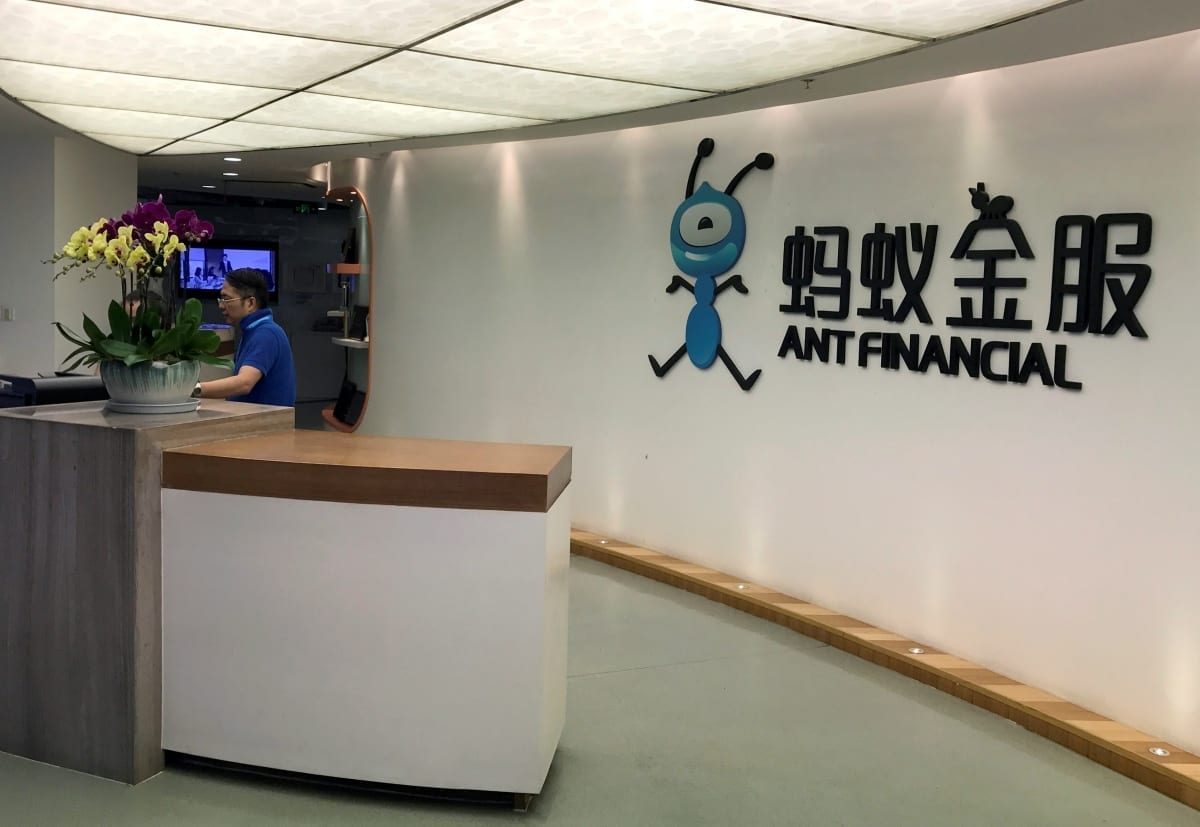
    Ant Financial Services Group has announced a strategic agreement with Thailand fintech company Ascend Money.

    Under the agreement Ant Financial will invest in Ascend Money, with the aim of accelerating the growth of a mobile lifestyle and digital financial services platform in Thailand and support the company’s growth in Southeast Asia.

    Headquartered in Bangkok, Thailand, Ascend Money operates in six countries, including Thailand, Indonesia, the Philippines, Vietnam, Myanmar and Cambodia. Ascend Money targets two under-served groups, including digital consumers with its innovative mobile wallet application and the under-banked with its massive agent network.

    It currently provides payment services such as domestic and international remittance, bill payment, top up services, online and offline payments and payroll services. Future services will include lending, insurance and investment.

    Together with Ant Financial, Ascend Money will grow its online and offline payment and financial services ecosystem and strengthen its payment services for users and merchants. The deal represents Ant Financial’s first-ever investment in a Thailand-based company. With this partnership Ant Financial, which also runs Alipay, the largest mobile lifestyle and payment app in China, will provide Ascend Money with strategic and technical support for the growth of its business.

    Leveraging Ant Financial’s capabilities in payment, Big Data, risk control and cloud computing capabilities, the partnership with Ascend Money aims to offer Thai consumers comprehensive and equal access to financial services. Ascend Money is Ant Financial’s first partner in Southeast Asia and second globally after Paytm in India.

    “Ascend Money’s mission is to enable everyone access to innovative financial services, leading to better lives,” said Suphachai Chearavanont, Chairman of Ascend Group. “The shared vision of financial inclusion and company values in creating opportunity and sustainability have lead us to this partnership.”

    “Ant Financial is setting its footprint worldwide, not only to provide services for its Chinese users, but to promote equal access to financial services globally,” added Ant Financial SVP Douglas Feagin.

    “Partnerships are vital for Ant Financial’s growth and we want to work alongside companies around the world who share our missions.”

    In early 2015 Ant Financial joined forces with Paytm, the world’s fourth largest e-wallet, to promote secured digital payment to local users in India. Ant Financial is also working with dozens of global payment partners, including Concardis, Ingenico, Wirecard and Zapper in Europe, First Data and Verifone in North America, Paysbuy and Counter Services in Southeast Asia, Recruit in Japan and KICC and ICB in Korea.

  • Huawei Ascend G7 Plus is now Available in Thailand for 12000 Baht

    Huawei Ascend G7 Plus is now Available in Thailand for 12000 Baht

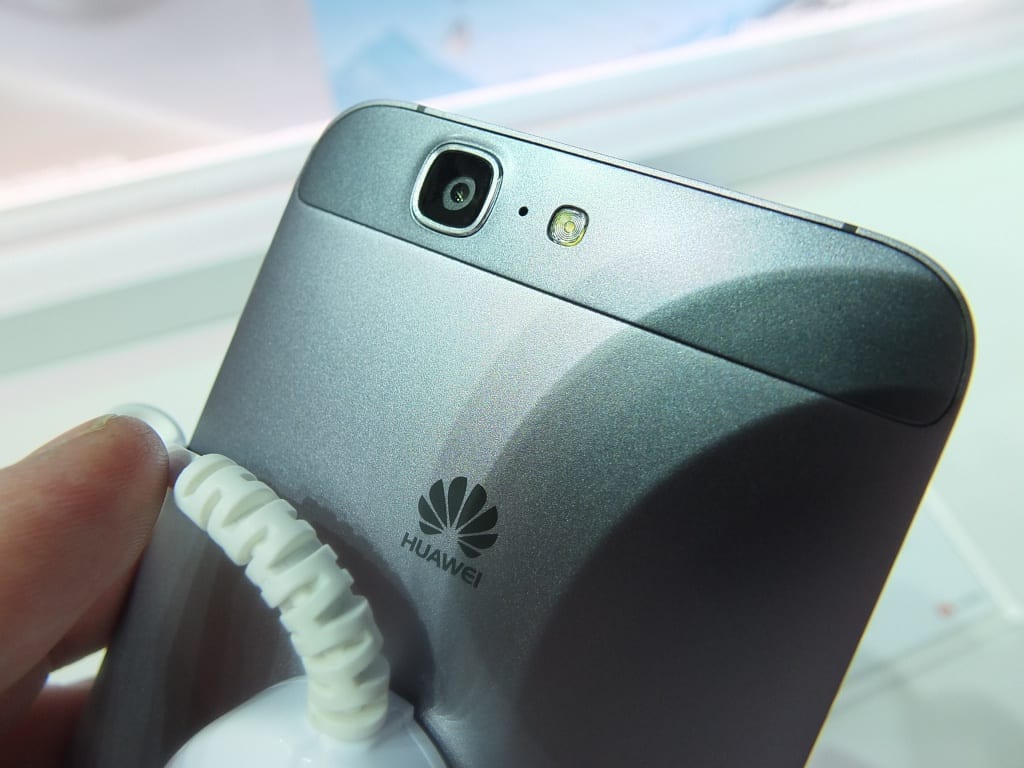
    The Huawei G7 Plus is now on sale in Thailand with the retail price of 12,000 Baht.(Photo : YouTube)

    Chinese smarpthone maker Huawei has announced that their latest device called the Ascend G7 smartphone is now available in Thailand for 12,000 Baht. The Huawei Ascend G7 Plus smartphone is the follow up to Ascend G7.

    This device is one the Chinese tech giant’s latest offering in the ever increasing competitive mid-range smartphone market.

    In terms of the specification of the device, the G7 Plus smartphone features an improved 5.5 inch display screen and processor compared to its older predecessor. The handheld device has a new full HD IPS screen making the display more vibrant and crisp. The handset is powered by an octa-core qualcomm 615 snapdragon processor paired with 3GB of RAM.

    The Huawei Ascend G7 Plus comes with a built-in 32GB internal storage, which can be further expanded up to 128GB via a microSD card. When it comes to the camera, the device is equipped with 13-megapixe rear shooter with fingerprint sensor and 5-megapixel front snapper camera for much selfies and video calling.

    The smartphone is powered by a 3000mAH capacity battery and runs on Huawei’s own flavour of Android 5.1 operating system. Other feature the device has to offer includes LTE connectivity, Wi-Fi, Bluetooth, and GPS. In addition, the Huawei Ascend G7 Plus smartphone is also equipped with dual SIM card slot.

    The Huawei Ascend G7 Plus smartphone is recommended for anyone who is looking for a mid-range Android handset. The overall main highlight of the device is its design, the body structure of the handset is slim and looks great. Another thing is the fact that it is fueled with a powerful 3000mAH battery and Huawei’s lighting fast fingerprint scanner.

  • Ascend expands its Asean reach

    Ascend expands its Asean reach

    “The move is to drive Ascend, both iTrueMart and Weloveshopping, to be the e-commerce market leader in the AEC by 2018,” Punnamas Vichikulwongsa, president of Ascend Group, said yesterday.

    According to Euromonitor 2015, the report of Euromonitor International, a business-intelligence research house, the business-to-consumer e-commerce market in the AEC will grow by 20 per cent per year to US$7 billion (Bt249 billion) in 2017 from nearly $5 billion this year.

    Thailand’s e-commerce market is worth about Bt42 billion with annual growth of 20 per cent.

    The company will engage in operating, fulfilment including warehousing and logistics, and marketing actives in seven countries in the AEC – the Philippines, Indonesia, Malaysia, Vietnam, Singapore, Myanmar and Cambodia.

    It will start with the Philippines by the end of this year and follow with the other six countries in 2016.

    The AEC market should help double its sales to Bt6 billion next year from Bt3 billion this year, which all comes from the Thai market.

    E-commerce in Thailand and the AEC has high potential since it now accounts for only 1 per cent of total retail shopping. In five years, it will be about 7-8 per cent of the retail industry in Thailand.

    E-commerce makes up 9 per cent in the United States and 13 per cent in the United Kingdom.

    “E-commerce is a market for the big boys, since it needs huge capital. In each market, there are only one or two e-commerce players dominating the market. We want to be ‘top of mind’ in the e-commerce business in the region,” he said.

    The business model of iTrueMart is different from Weloveshopping. iTrueMart acts as an online shopping department while Weloveshopping serves as a e-commerce marketplace.

    Ascend claims itself as the e-commerce leader in Thailand with 14,000 orders per day, split evenly between the two websites.

    Seubsakol Sakolsatayadorm, general manager of the iTrueMart division at Ascend Commerce, said iTrueMart’s conversion rate of 4.2 per cent of visits was higher than the market average of only 2 per cent.

    At iTrueMart, information-technology gadgets and accessories are still the largest contributor at 70 per cent. Orders have gone up fivefold this year since product categories were diversified from hard lines to soft lines, such as personal care and beauty products, and home lines such as household appliances.

    “The latest is a mum-and-kids category, since it is one of the largest in e-commerce in many countries,” he said. ITrueMart has invested heavily in fulfilment, warehouses and logistics. It has more than a million products, or more than 20,000 stock-keeping units, stored in its warehouse. The company delivers products through its own distribution system in Greater Bangkok with a 20-vehicle fleet and outsourcing to logistics partners.