Tag: asia retail

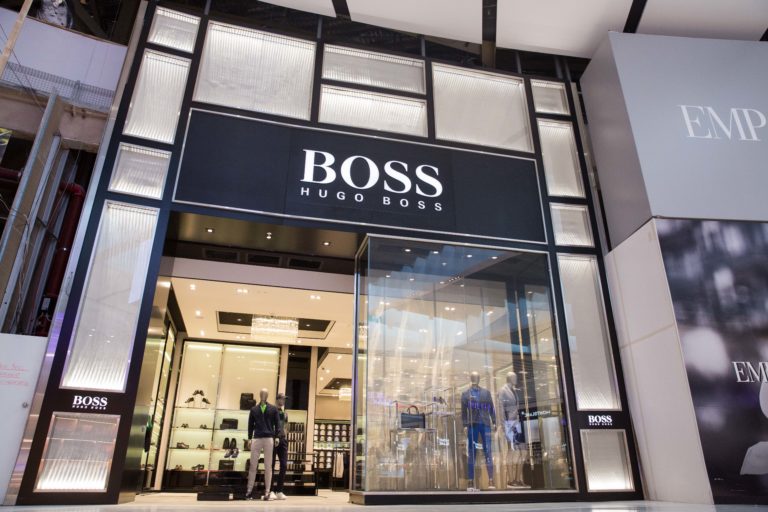
  • Hugo Boss Slashes Earnings Outlook as Q3 Profit Slumps 15%

    Hugo Boss Slashes Earnings Outlook as Q3 Profit Slumps 15%

    Hugo Boss lowered its full-year earnings guidance after third-quarter revenue fell 5 per cent to 946 million euros, dragged down by European weakness and flat sales across Asia-Pacific.

    Operating profit dropped 15 per cent to 81 million euros in the three months to Sept. 30, pulling the group operating margin down to 8.6 per cent from 9.6 per cent a year earlier.

    Currency-adjusted group revenue fell 4 per cent. Group management cut its full-year operating profit expectation to between 250 million euros and 300 million euros, down from an earlier target band of 300 million euros to 350 million euros. Full-year sales are now projected to decline in the high single digits, compared with prior expectations of a mid- to high-single-digit drop.

    Flat Demand Across Asia and Regional Pressure

    Performance across Asia-Pacific generated zero top-line growth during the quarter, mirroring flat results in the Americas and offering no counterbalance to the downturn in Europe. The core European, Middle Eastern and African operations saw revenue fall 7 per cent to 598 million euros, with deep declines in Britain and France outpacing relative resilience in Germany.

    For retail landlords and department store operators across key Asian shopping hubs, stagnation at the German brand points to stubborn hesitation among upper-middle-income apparel buyers. Premium fashion labels positioned just below traditional luxury houses face a specific squeeze. Shoppers either trade down to fast fashion or hold back discretionary spending entirely, leaving mid-tier luxury square footage exposed to lower inventory turns.

    The slowdown puts immediate operational pressure on Asian concession partners and franchise operators who committed to expanded floor space during earlier expansion drives. Holding inventory that moves slowly through high-rent retail corridors eats into working capital, forcing local merchants to reconsider promotional timing and order sizes for upcoming seasons.

    Casual Lines Suffer as Formal Wear Holds Up

    Core Boss collections eased 2 per cent to 813 million euros. Menswear maintained stronger footing, while Boss womenswear continued to feel the disruption of an operational reboot initiated ahead of the fall 2027 collection.

    Casualwear took the heaviest beating across global retail networks. Sales for the youth-oriented Hugo label tumbled 16 per cent during the three-month period, reflecting what management characterized as an ongoing strategic refinement of the brand footprint.

    “In the third quarter, our top line performance reflected both the deliberate strategic realignment of our business and a persistently subdued consumer environment,” Hugo Boss chief executive officer Daniel Grieder said in a statement, referring to a strategic “quality over quantity” reset initiated late last year. “At the same time, we made further progress in improving our gross margin and operating efficiencies.”

    Shift Away From Promotional Spending

    The revised full-year numbers follow a deliberate pivot away from aggressive marketing outlays that drove post-pandemic revenue spikes on soft historical comparables. The company had previously warned that 2026 would be difficult, pointing to 2027 as the earliest window for a return to meaningful expansion.

    Earlier quarters showed initial signs of operational discipline, which won over institutional backers including majority owner Frasers Group. The 100 million euro change in operating profit guidance tests that patience and increases pressure on management to protect store-level profitability rather than chasing top-line volume.

    Store networks across the region now face tighter merchandising budgets as the company manages inventory levels heading into the final quarter. The primary figure to track is whether full-year operating profit can clear the bottom of the revised 250 million euro floor when annual results close.


  • China Economic Slowdown Weighs on LVMH Luxury Fashion Business

    China Economic Slowdown Weighs on LVMH Luxury Fashion Business

    A broader economic slowdown in China has started weighing on LVMH’s core luxury fashion operations across key Asian retail hubs. Weak consumer confidence in the mainland market is curbing discretionary purchases for top-tier apparel and leather goods.

    Shoppers across tier-one Chinese cities are pulling back on aspirational luxury purchases, hitting store footfall and transaction values. The pullback directly affects revenue momentum across flagship fashion houses within the French conglomerate’s portfolio.

    Slowing Momentum in Mainland Stores

    Department stores and high-end shopping complexes in Shanghai and Beijing report softer traffic among local buyers. Domestic consumers who previously drove double-digit retail gains are deferring non-essential purchases or turning toward alternative spending categories.

    Footfall declines have spread into secondary luxury corridors where premium labels expanded floor space over recent years. Landlords operating high-end properties now face slower turnover across fashion and accessories concessions.

    Regional Shifts in Luxury Spending

    Part of the slowdown reflects Chinese travelers shifting luxury purchases abroad rather than buying in domestic boutiques. Currency differences in markets like Japan continue to divert transaction volume away from mainland counters.

    This spending diversion complicates inventory management for regional operators who stocked high volumes across Chinese city flagships. Operators must balance localized retail expenses against shifting consumer travel flows across East Asia.

    Pressure Across Fashion and Leather Portfolios

    Fashion and leather goods represent the largest profit engine for luxury conglomerates operating in Asia. When demand softens in mainland China, the impact spreads rapidly across broader regional wholesale and retail networks.

    Rival European luxury houses face identical headwinds as middle-class consumers reassess discretionary budgets. Price increases implemented over previous quarters have also met increased resistance from domestic buyers seeking value retention.

    Next Steps for Asian Retail Networks

    Luxury groups are reviewing capital spending on new boutique openings across Greater China. Attention is turning toward clienteling programs and exclusive VIP experiences to retain high-net-worth shoppers while mass-affluent spending remains subdued.

    Retail property owners and brand managers will track consumer footfall data through upcoming holiday travel seasons to gauge whether promotional initiatives can stabilize store volumes across the region.

  • Pandora Opens Asia Regional Headquarters in Singapore for 50-Person Team

    Pandora Opens Asia Regional Headquarters in Singapore for 50-Person Team

    Pandora opened its new Asia regional headquarters in Singapore today, setting up a 50-person commercial hub in Marina Bay to oversee key retail markets across the region.

    The central office manages the group’s Asia Cluster, covering company-owned retail operations and distributor territories in markets including Japan, South Korea, India, and Indonesia.

    Marina Bay Hub and Regional Hiring

    Supported by the Singapore Economic Development Board, the new office consolidates commercial direction, branding, regional marketing, and supply operations under one roof. Recruitment for the roughly 50 corporate positions begins in the coming months.

    “Asia presents a tremendous opportunity for Pandora,” said Massimo Basei, chief commercial officer at Pandora. “With dynamic markets like India, Japan, Indonesia and South Korea poised for expansion, Singapore’s strategic location and vibrant business environment make it the ideal base for our expansion in the region.”

    Shifting Operational Weight to Regional Hubs

    Establishing direct management in Singapore shifts operational oversight closer to East and South Asian retail corridors. For years, European luxury and accessible jewellery labels managed Asian expansion either through remote European headquarters or fragmented local distributor networks. Centralising retail oversight in Singapore allows Pandora to standardise store design, inventory distribution, and promotional calendars across both wholly owned flagships and partner-run doors.

    Landlords and department store operators across Tokyo, Seoul, and Mumbai gain a single regional counterpart for lease negotiations. The primary operational risk sits in managing vastly different retail dynamics from one desk: South Korea’s digital-first consumer base demands fast local product turnarounds, while India’s fine jewellery sector requires navigating steep import tariffs and entrenched local gold preferences.

    Expansion Trajectory in Asian Jewellery

    The establishment of the Singapore office follows years of retail adjustments across Asia, where the brand has selectively bought back distributor territories and upgraded store footprints in major tier-one shopping malls. Singapore itself has served as a critical testing ground for the label’s retail concepts, backed by long-standing state support from the Economic Development Board to attract European consumer groups.

    Hiring for the Marina Bay office begins over the next quarter, with initial appointments focused on regional marketing heads and supply chain directors across the East Asian and Indian retail networks.

  • Vietnamese Online Shopping Soars: Consumers Shell Out $16B, Leading Southeast Asia’s Retail Surge!

    Vietnamese Online Shopping Soars: Consumers Shell Out $16B, Leading Southeast Asia’s Retail Surge!

    Vietnamese consumers spent an estimated US$16 billion on online purchases via platforms such as Shopee, Lazada, and TikTok Shop in 2024, placing the country among the top three e-commerce markets in Southeast Asia.

    The recently unveiled Southeast Asia E-commerce 3.0 report from Momentum Works highlights a booming digital shopping landscape in the region, which saw a total gross merchandise value (GMV) of $128.4 billion in 2024—marking a 12% year-on-year increase. Remarkably, Southeast Asia processed an average of 43.6 million online orders daily, nearing the scale of the U.S. market, a fact that could make any retailer’s heart race.

    Shopee, Lazada, and TikTok Shop dominate the market, accounting for over 90% of all orders, while Vietnam joins the ranks of top five e-commerce powerhouses, alongside Thailand, which leads with $23.5 billion, Malaysia at $11.5 billion, the Philippines matching Vietnam at $16 billion, and Singapore standing at $4.9 billion. Thailand and Malaysia stand out for their impressive growth figures, with increases of 22% and 20%, respectively.

    Indonesia remains the titan of the region, boasting a staggering $56.5 billion in GMV and a commanding 44% market share. However, its growth has tempered to just 5%, a reflection of ongoing platform mergers that have caused a few hiccups.

    In Vietnam, e-commerce is predominantly led by three major platforms. Shopee significantly leads the charge with a 65% market share, translating to about $10.4 billion in GMV. TikTok Shop follows with a growing presence at 28% ($4.5 billion), while Lazada holds 6% ($1 billion) and Tiki trails with 1% ($200 million). This online tussle illustrates a dynamic market, indicative of a region that is rapidly evolving.

    Beyond these major players, other digital channels like brand websites, multi-brand retailers, and social media platforms, including WhatsApp, have contributed an impressive $16.8 billion to the region’s total e-commerce value.

    The report also indicates a noteworthy comeback for Chinese consumer brands in Southeast Asia. These businesses are returning with revitalized products and localized strategies aimed at seizing essential market segments, proving that what goes around comes around—especially in retail.

    Looking ahead, Momentum Works projects that Southeast Asia’s e-commerce sector could generate an additional $131 billion in transaction value by 2030 if companies effectively leverage artificial intelligence across sales, operations, logistics, and customer service.

    Questions & Answers

    How much did Vietnamese consumers spend on online shopping in 2024?
    Vietnamese consumers spent approximately US$16 billion on online purchases in 2024.

    Which platforms dominated e-commerce in Vietnam?
    Shopee, TikTok Shop, and Lazada were the dominant platforms, accounting for over 90% of the total order volume.

    What future growth is anticipated for Southeast Asia’s e-commerce sector?
    Momentum Works forecasts that the sector could generate an additional $131 billion in transaction value by 2030, driven by the adoption of artificial intelligence.