Retail News CRM

Tag: asias

  • CIMB Expands Wealth Services into Singapore and Thailand, Targeting Southeast Asias Rising Affluent Class

    CIMB Expands Wealth Services into Singapore and Thailand, Targeting Southeast Asias Rising Affluent Class

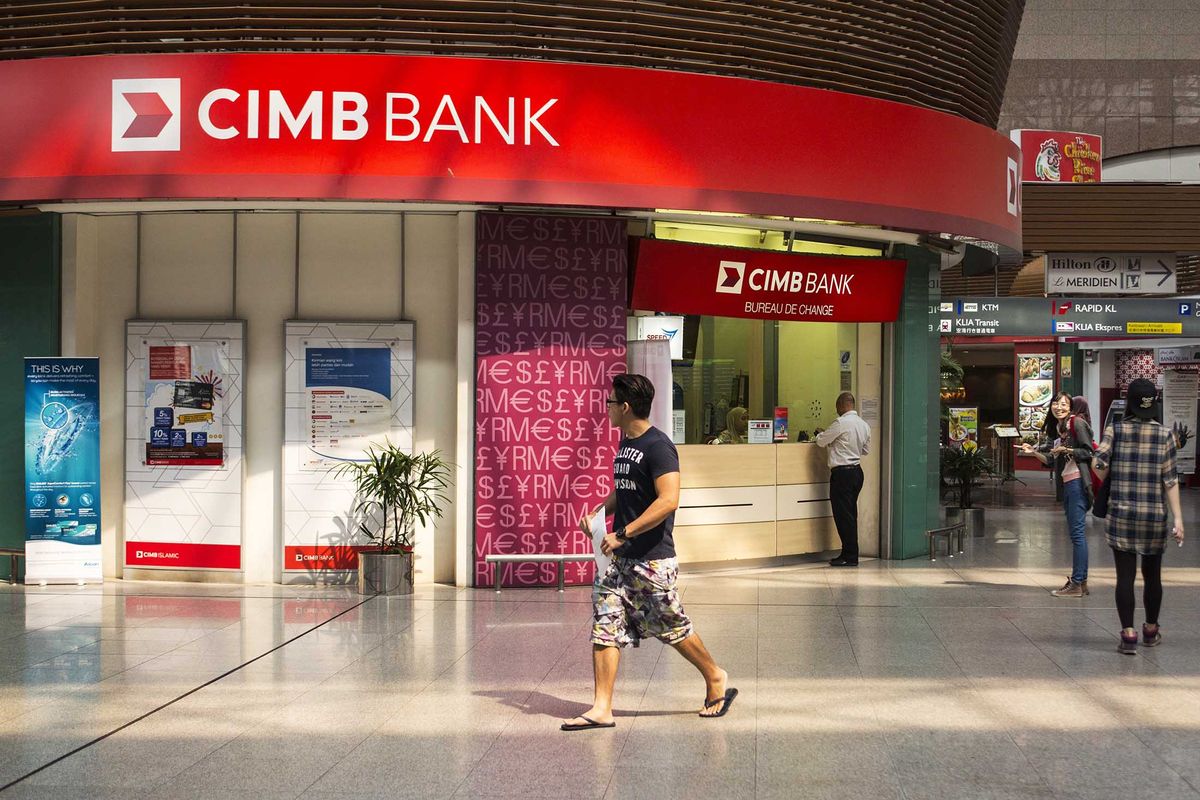
    CIMB Group, Malaysia’s second-largest bank in terms of assets, has announced its intention to expand its private wealth business to Singapore and Thailand by the end of the year. This move is part of a larger plan to double the bank’s wealth assets under management by 2030.

    Targeting Southeast Asia’s Growing Affluent Segment

    Haniz Nazlan, the CEO of group consumer banking at CIMB, revealed on Monday that this expansion activity is targeting the rapidly increasing affluent segment in Southeast Asia. This strategic move follows the successful launch of the bank’s private wealth business in Indonesia earlier in the year and in Malaysia on the same day.

    According to Nazlan, the ASEAN economy, worth US$4 trillion, has been experiencing robust annual economic growth rates of approximately 4%, which is significantly higher than many developed markets. This economic dynamism is expected to stimulate a 5% to 6% annual increase in the region’s affluent population. Furthermore, the middle class is projected to comprise between 65% and 70% of the ASEAN population by 2030.

    Factors such as growing incomes, escalating cross-border investments, and a notable surge in intergenerational wealth transfers are propelling the market.

    A New Service for High Net-Worth Clients

    Daniel Cheong, CIMB’s head of consumer banking for Malaysia, revealed that the new private wealth service is tailored to clients who have at least RM1 million ($244,612) in assets under management. This offering is positioned above CIMB Preferred, the bank’s mass-affluent priority banking segment, which requires a minimum of RM250,000 in assets.

    CIMB’s Private Wealth service offers clients dedicated relationship managers, treasury solutions, investment advisors, customized investment products, succession planning, and digital wealth capabilities.

    Nazlan noted that affluent clients are progressively seeking advice that goes beyond mere investment product selection. He explained that they want guidance on wealth protection, preparation of their children’s futures, access to global opportunities, and making informed decisions in an unpredictable world.

    Nazlan disclosed that CIMB’s wealth assets under management (AUM) were approximately RM250 billion in the preceding year. However, he refrained from providing interim growth targets or customer acquisition figures, stating that it is still the early stages of the Private Wealth proposition’s rollout.

    Questions & Answers

    What is CIMB Group’s plan for its private wealth business?
    CIMB Group plans to expand its private wealth business to Singapore and Thailand by year-end, aiming to double its wealth assets under management by 2030.

    Who are the target clients of the new CIMB private wealth service?
    CIMB’s private wealth service targets high net-worth clients who have at least RM1 million ($244,612) in assets under management.

    What are the key services offered by CIMB’s Private Wealth service?
    CIMB’s Private Wealth service offers dedicated relationship managers, investment advisors, treasury solutions, succession planning, customizable investment products, and digital wealth capabilities.

  • Bangkoks Ultra-Rich Population on Pace to Lead Southeast Asias Wealth Boom

    Bangkoks Ultra-Rich Population on Pace to Lead Southeast Asias Wealth Boom

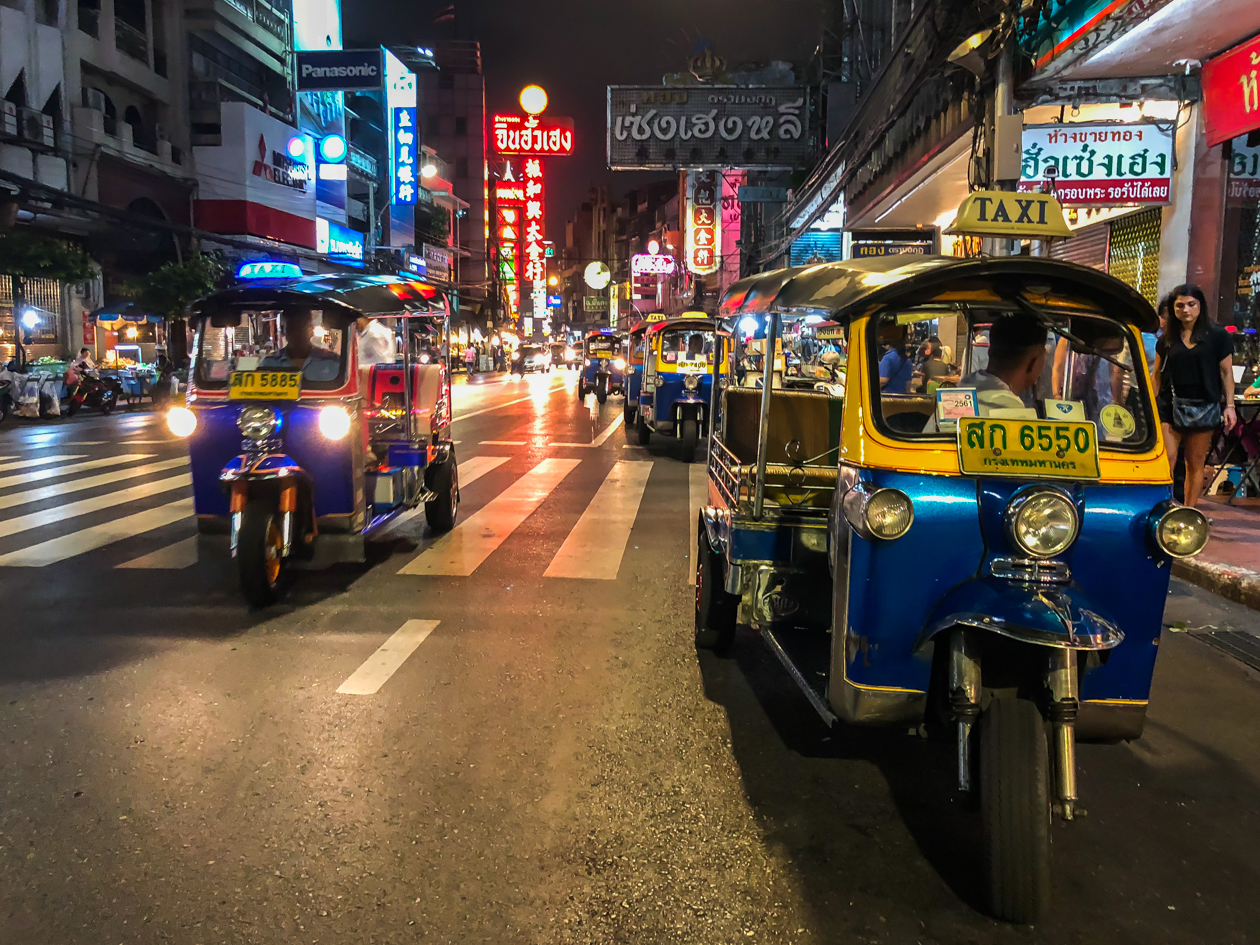
    Bangkok is emerging as Southeast Asia’s most dynamic hub for ultra-high-net-worth (UHNW) individuals, illustrating Thailand’s increasing allure for global wealth despite ongoing economic and geopolitical instability. The UHNW populace in Thailand’s capital is anticipated to expand to approximately 1,840 by 2030, up from 1,210 in 2025. This growth represents a surge of over 50%, equating to an average yearly increase of 8.7%.

    In 2025, Thailand recorded 2,090 UHNW individuals, with 1,210 primarily residing in Bangkok. UHNW individuals are classified as those possessing net assets exceeding US$30 million. This predicted growth positions Bangkok as the twelfth fastest expanding major UHNW city globally among the 100 largest urban economies by nominal GDP, rendering it the quickest growing wealth center in Southeast Asia, surpassing Jakarta.

    Bangkok’s Wealth Creation: A Unique Blend

    Bangkok’s wealth generation is notable not just for its speed but also for its unique blend of robust domestic entrepreneurship and increasing international appeal. Predictions suggest that, among major global cities, Bangkok will experience one of the swiftest increases in its ultra-wealthy population over the next five years. This growth will further consolidate its position as an emerging global wealth center.

    Most UHNW individuals based in Bangkok are self-made entrepreneurs. However, many benefitted from inherited capital during their businesses’ early development stages. The global UHNW population reached an all-time high of 556,850 individuals in 2025, a 14.4% rise from the previous year. This growth marked the second successive year of double-digit expansion and the strongest growth since 2017.

    In Asia, Hong Kong has the highest number of UHNW people, with 18,290, ranking second only to New York globally, which boasts 23,785 individuals. By 2030, the global UHNW population is expected to reach 746,570, with total wealth swelling to $85 trillion.

    Questions & Answers

    What is the projected number of ultra-high-net-worth individuals in Bangkok by 2030?
    The number of ultra-high-net-worth individuals in Bangkok is predicted to rise to about 1,840 by 2030, up from 1,210 in 2025.

    What factors contribute to Bangkok’s wealth generation?
    Bangkok’s wealth generation is characterized by robust domestic entrepreneurship and an increasing international appeal, making it a global wealth center.

    How does Bangkok’s ultra-high-net-worth population growth compare globally?
    Bangkok is projected to have the twelfth fastest-growing major ultra-high-net-worth population among the 100 largest urban economies by nominal GDP. This places it as the quickest growing wealth center in Southeast Asia.

  • Bang & Olufsen Unveils Asias Largest Flagship Store in Singapore: A New Era of Luxury Electronics Experience

    Bang & Olufsen Unveils Asias Largest Flagship Store in Singapore: A New Era of Luxury Electronics Experience

    Established Danish electronics manufacturer, Bang & Olufsen, recently unveiled its flagship store at Singapore’s Scotts Square shopping complex. With a retail area of approximately 2853 square feet, this site represents the company’s first Culture Store in Southeast Asia and the grandest in the Asia Pacific region. The inauguration follows their centennial celebration in the previous year.

    The innovative store design mirrors a high-end home, offering patrons the unique opportunity to explore Bang & Olufsen’s product range in a realistic setting, rather than on traditional display shelves. Amongst the features of this space are exclusive listening suites and personal consultation areas. These have been specifically designed for customers to assess the products in various acoustic conditions.

    Why Singapore?

    Bang & Olufsen’s CEO, Nikolaj Wendelboe, stated that Singapore was chosen as the location for their flagship store due to its status as a design, cultural, and commercial nexus in the region. The store was established through a collaborative effort with Design Collection Denmark. This partnership has been a key part of Bang & Olufsen’s operations in Singapore for the past two decades.

    Originally founded in 1925 in Struer, Denmark, Bang & Olufsen has made a name for itself with its premium audio equipment, televisions, and headphones. Globally, the brand has a commercial presence extending over more than 70 countries.

    Questions & Answers

    What is the significance of the new Bang & Olufsen store in Singapore?
    This store is the first Culture Store in Southeast Asia for Bang & Olufsen and is the largest of its kind in the Asia Pacific region.

    What differentiates this store from traditional retail spaces?
    Instead of standard display shelves, the store is designed to resemble a luxury home, allowing customers to experience the products in realistic living environments. There are also dedicated listening rooms and private consultation spaces.

    Why was Singapore chosen as the location for this flagship store?
    According to the CEO of Bang & Olufsen, Nikolaj Wendelboe, Singapore’s position as a regional hub for design, culture, and commerce made it an ideal location for their flagship store.

  • Allianz GI Sets Eyes on Asias Potential: The Future of Asset Management in Rising Eastern Economies

    Allianz GI Sets Eyes on Asias Potential: The Future of Asset Management in Rising Eastern Economies

    The Asia-Pacific region is becoming a major focus for Allianz Global Investors (Allianz GI) as global growth trends shift eastward. The firm’s CEO, Tobias C. Pross, asserts that Asia remains one of the few regions where structural growth opportunities are still present despite geopolitical challenges and the slowing growth of Western economies.

    Allianz GI’s Growing Presence in Asia

    Allianz GI has been continually expanding its footprint across the Asia-Pacific region, as the firm sees the area’s growth dynamics moving away from conventional Western markets. Pross highlights that whenever growth is discussed in an inflationary context, the Asia-Pacific region stands out prominently.

    The firm has seen a promising start to 2026, reporting approximately €8 billion in net inflows during the first quarter, which has pushed the assets under its management above €600 billion for the first time.

    The company’s recent initiatives include investments in China, Indonesia, and Taiwan, launching new active ETF capabilities, and inaugurating a new office in South Korea. Julie Koo, former Citi executive, has been brought onboard as the Head of Asia Pacific to further strengthen Allianz’s leadership team in the region.

    Investment Opportunities and Market Expansion

    Allianz GI perceives Asia as a long-term source of investment opportunities and client growth, rather than just a distribution market. While some global investors have started to tread cautiously in the China market, Pross affirms that Allianz GI is still dedicated to China, seeing periods of geopolitical uncertainty as opportunities for active managers.

    Allianz GI is also expanding its private markets platform to offer access to infrastructure, private credit, and private equity strategies to a broader range of investors. Pross noted that demand is growing across Asia, as private banks, insurers, and wealthy individuals explore alternative income sources and diversification.

    Furthermore, Allianz GI views artificial intelligence as a significant investment area. The company is developing a global data platform and proprietary large language models to enhance investment research and portfolio management.

    Questions & Answers

    What is Allianz GI’s growth strategy for the Asia-Pacific region?
    Allianz GI aims to expand its presence by investing in key markets such as China, Taiwan, and Indonesia, and by launching new active ETF capabilities. The firm also plans to strengthen its leadership team in the region.

    How does Allianz GI view the China market?
    Despite some investors’ growing caution, Allianz GI remains committed to the China market. The firm believes that periods of geopolitical uncertainty often create opportunities for active managers.

    What role does artificial intelligence play in Allianz GI’s strategy?
    Allianz GI is significantly investing in artificial intelligence. The firm is developing a global data platform and proprietary large language models to enhance its investment research and portfolio management.

  • UOB Private Bank Taps Dennis Hong to Fuel North Asias Wealth Management Expansion

    UOB Private Bank Taps Dennis Hong to Fuel North Asias Wealth Management Expansion

    United Overseas Bank (UOB) Private Bank has announced the appointment of Dennis Hong to the position of Regional Market Head for Greater China and North Asia, commencing in September 2026. This decision aligns with UOB’s ongoing plan to fortify its wealth management sector and tap into the increasing cross-border wealth traffic between Greater China and ASEAN.

    Hong’s Role and Responsibilities

    Hong’s new assignment will see him spearheading the advancement and strategic planning of UOB Private Bank’s operations in Greater China and North Asia. He will be managing principal markets such as China, Hong Kong, Taiwan, and Japan. Hong’s responsibilities will encompass the formulation of market strategies, expansion of client base, enhancement of advisory services, and supervision of regional teams. All these efforts are directed towards fostering client relationships and facilitating consistent business growth.

    Hong enters his new role at UOB Private Bank with a wealth of knowledge and experience in private banking and wealth management. His most recent position saw him guiding an Asia-Pacific private banking division, which emphasized the Greater China and North Asia markets. Hong has demonstrated his skills in building and managing significant teams, creating market propositions, and promoting business growth across major regional markets throughout his career. Hong will be stationed in Singapore, reporting directly to Chew Mun Yew, the Head of UOB Private Bank.

    UOB Private Bank’s Growth Strategy

    UOB Private Bank has confirmed that the Greater China market will continue to be a fundamental component of its regional growth strategy. This approach is particularly relevant as clients are increasingly seeking integrated wealth, investment, and financing solutions across various jurisdictions.

    The bank also intends to bolster its value proposition for high-net-worth (HNW) and ultra-high-net-worth (UHNW) clients, demonstrating its commitment to providing superior financial services and ensuring customer satisfaction.

    Questions & Answers

    What is the role of Dennis Hong at UOB Private Bank?
    Dennis Hong has been appointed as the Regional Market Head, Greater China and North Asia. His responsibilities include leading the growth and strategic development of the bank’s operations in these regions.

    What experience does Dennis Hong bring to his new role at UOB Private Bank?
    Hong has extensive experience in private banking and wealth management. He has previously led an Asia-Pacific private banking franchise with a strong focus on Greater China and North Asia.

    What is UOB Private Bank’s growth strategy for the Greater China market?
    UOB Private Bank has identified the Greater China market as a key pillar of its regional growth strategy. The bank aims to meet the growing demand for integrated wealth, investment, and financing solutions across multiple jurisdictions.

  • Singapore Triumphs over Indonesia as Southeast Asias Dominant Stock Market

    Singapore Triumphs over Indonesia as Southeast Asias Dominant Stock Market

    Singapore has taken over from Indonesia as the leading stock market in Southeast Asia. This shift has come as Indonesia’s market capitalization has dropped dramatically due to an uncertain future outlook. From its peak in January, the total market capitalization of Indonesian businesses has fallen by over 30% to US$618 billion. In contrast, the market value in Singapore has increased to $645 billion.

    Investor confidence in Indonesia has seen a decline in recent months due to the possibility of its equities market being downgraded to frontier status. This uncertainty is coupled with Fitch Ratings and Moody’s Ratings both downgrading the country’s credit outlook to negative. The Indonesian stock index is currently among the most underperforming globally, and the rupiah has hit record lows repeatedly.

    Indonesia’s Struggles and Singapore’s Strength

    Despite these setbacks, Soh Chih Kai of Lion Global Investors believes that a future recovery should not be dismissed. However, he notes that the current momentum is not in Indonesia’s favor. In contrast, he points out that Singapore’s market has further strengthened its position as capital flows continue to seek certainty amid global policy ambiguity.

    In an attempt to bolster the economy, Indonesia’s central bank recently increased its policy interest rates for the first time in two years. This move aims to support the rapidly falling rupiah currency. Governor Perry Warjiyo explained that the increase is a further step to stabilize the rupiah exchange rate in the face of global volatility.

    On the other hand, Singapore’s equities have been boosted by political and economic stability, along with government-led market reforms. The Straits Times Index reached a record high this week, as investors looked for safe investments amid the instability caused by the Iran war.

    Head of research at Maybank Securities, Thilan Wickramasinghe, noted that Singapore’s equity market has remained resilient despite ongoing global volatility. This resilience is due to its defensive sector composition and consistent inflows, putting the market in a relatively advantageous position.

    Future Trends and Predictions

    Singapore’s equities are projected to outperform Indonesian stocks by a record margin in 2026. Carmen Lee, head of equity research at OCBC, attributes this to wealth being a significant driver for earnings growth. Paired with a strong Singapore dollar, Lee expects more funds to flow into the market.

    Questions & Answers

    What has led to the decline in Indonesia’s market capitalization?
    Investor confidence in Indonesia has deteriorated due to the potential reclassification of its equities market to frontier status and negative revisions in the country’s credit outlook.

    What steps has Indonesia’s central bank taken to support the economy?
    Indonesia’s central bank has raised its policy interest rates for the first time in two years in order to support the rupiah currency, which has fallen to record lows recently.

    What factors have contributed to the strength of Singapore’s equities market?
    Singapore’s equities have been boosted by the country’s political and economic stability, along with market reforms driven by the government.

  • Dhl Express Recognized As Second Best Workplace In Asia Amidst Industry Challenges

    Dhl Express Recognized As Second Best Workplace In Asia Amidst Industry Challenges

    DHL Express has once again secured a commendable position as one of Asia’s top employers, landing the second spot on the coveted 2025 Great Place to Work® Best Workplaces in Asia™ list. This triumph marks the express logistics provider’s continued success in maintaining a people-centric culture amidst an ever-changing and challenging external landscape.

    Standing Strong Amid Challenges

    Despite the presence of external obstacles, DHL Express has remained unwavering in its commitment to uphold a resilient and cohesive culture. Such an achievement reiterates the organization’s steadfast focus on being an employer of choice, prioritizing the health and welfare of its personnel.

    At the heart of DHL Express is its people-centric ethos. “The team’s dedication, passion and innovation ensure every employee has access to the resources and opportunities necessary to succeed. We remain focused and adaptable, ensuring the safety and overall wellbeing of our people,” stated Ken Lee, CEO for Asia Pacific at DHL Express.

    Empowerment Through Strategy 2030

    The award comes at a time where the logistics industry faces increasing challenges brought on by shifting workforce dynamics. DHL Express remains committed to future-proofing its organization, focusing on improving skills, promoting diversity and inclusion, and embracing digitalization.

    As part of this, the firm has been investing in and deploying advanced technology platforms to enhance the productivity and quality of their sales and customer service operations.

    Celebrating Excellence: Employee of the Year Awards

    DHL Express understands the importance of celebrating and recognizing the exceptional contributions of its employees. The annual Employee of the Year awards provides a platform to honor employees across the Asia Pacific region who embody DHL’s values. More than 200 employees were recognized this year for their exceptional performance and commitment.

    Commitment to the Future

    As DHL Express progresses, its dedication to its people, purpose, and planet remains unwavering. The company will continue to utilize its internal Smart Connect platform to encourage collaboration, enable personalized learning, and foster a strong sense of community among its employees.

    Questions & Answers

    What has DHL Express recently achieved?
    DHL Express has been recognized as one of Asia’s top employers, securing the second position on the 2025 Great Place to Work® Best Workplaces in Asia™ list.

    What strategies does DHL Express employ to strengthen its workforce?
    DHL Express is committed to improving skills, promoting diversity and inclusion, and embracing digitalization. It invests in advanced technology platforms to enhance the productivity and quality of its operations.

    What does DHL Express do to honor its employees?
    DHL Express hosts the annual Employee of the Year awards to celebrate and recognize employees who embody the company’s values and go beyond their job responsibilities.

  • CB2 to close outlet in Singapore

    CB2 to close outlet in Singapore

    Three years after its Singapore debut, CB2 – the sister store of American furniture and homeware brand Crate & Barrel – is closing shop for now.

    Its management is looking for a new shop space in a mall, which is likely to be in Orchard Road, says Mr Yung Ong, 36, executive director for the Singapore branches of Crate & Barrel and CB2.

    He says it is time to move as the current store is “not in the right location”.

    CB2 is housed in a 557 sq m space on the second level of Peranakan Place, a row of shophouses next to The Centrepoint mall in Somerset.

    Its entrance on the first level is sandwiched between bak kwa shop Bee Cheng Hiang and coffee joint TCC. Around the corner, there are bars such as Alley Bar, Acid Bar and Odd One Out.

    Crate & Barrel has two outlets here – a five-storey flagship store in Orchard Gateway and a smaller store in Ion Orchard. There are no plans to open new Crate & Barrel outlets here.

    Mr Ong, whose family owns Peranakan Place, says CB2’s owners had picked the building because they loved its architecture and the space’s expansive, loft-like feel also matched the style of furniture the brand carries.

    CB2 targets young adults and its furniture is designed for small spaces and those on a limited budget. Prices range from $1.95 for a beaker glass to $2,999 for a dining table.

    When CB2 opened here in 2013, it was its first store outside North America and the vibe at Peranakan Place is similar to the neighbourhoods in which the American stores are located.

    Mr Ong says: “CB2 stores have always been in different, hipster- type neighbourhoods and not traditional retail locations.

    “However, we aren’t getting the right (customers) at Peranakan Place. The mindset of people who walk by here is a little different – they are not stopping to look at furniture.

    “It’s strange because Crate & Barrel is just a few doors down at Orchard Gateway and you would think that we would attract buyers from there, but we don’t. But that’s just the market – the consumer behaviour is different.”

    While the other businesses in Peranakan Place are doing well, he says CB2 is not making money. Sales figures grew from the first to second year – although it was not making money yet – but declined in the third year.

    CB2’s hiatus – it will shut next month after holding its closing-down sale – comes after home-grown furniture and home accessories retailer iwannagohome announced in February that it was closing its two stores in Tanglin Mall and Great World City, amid a retail slowdown.

    Other homefurnishing stores have pulled out of Singapore in recent years – Japanese brand Francfranc left in 2014 after two years, while Goods of Desire, a cult Hong Kong lifestyle retailer, exited last year after three years.

    But Mr Ong is optimistic about CB2’s future in Singapore.

    A new store will likely be ready by next year.

    He says: “We’re just in the wrong spot, but that’s part of business. While this type of location might have worked for CB2 in the past, we’re now changing our impression of what’s the right real estate for the brand.”

    CB2 will conduct a sale from April 15 to May 14, with discounts of up to 75 per cent.