Tag: asioa

  • TSMC shows off 2nm chip prototype to Apple

    TSMC shows off 2nm chip prototype to Apple

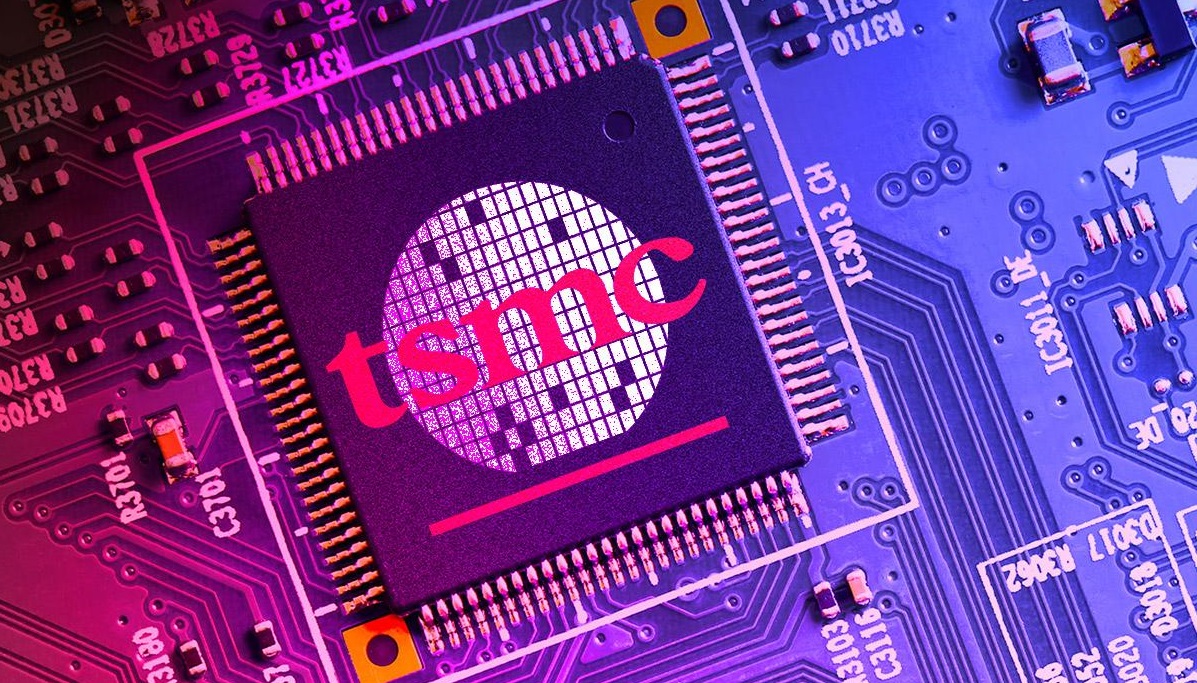
    TSMC is the largest foundry in the world and Apple is its biggest customer. Apple was able to reserve most of TSMC’s initial 3nm production for the A17 Pro chipset which is being used to power the iPhone 15 Pro and iPhone 15 Pro Max. To keep things simple, just remember that as the process node number gets lower, the transistors used by a chip get smaller in size which means that more of them can fit into the small space inside an SoC. The higher a chip’s transistor count, the more powerful and/or energy-efficient it is.

    Looking at the iPhone as an example, the iPhone 11 series was powered by the 7nm A13 Bionic which carried 8.5 billion transistors. The 3nm A17 Pro has 19 billion transistors. And since it takes a few years to build the fabs and order the machinery needed, we’ve known for some time that TSMC is working toward 2nm chip production. Apple has already had a chance to check out 2nm prototypes built on TSMC’s N2 node. The report noted that another huge TSMC customer, NVIDIA, also was able to view the 2nm prototype chip.

    TSMC previously said that it would start 2nm volume production in 2025 and in a statement to The Financial Times, the company said that it is “progressing well and on track for volume production in 2025, and will be the most advanced semiconductor technology in the industry in both density and energy efficiency when it is introduced.” Assuming that there are no delays, the iPhone 17 Pro and iPhone 17 Pro Max could be the first Apple handsets to be powered by a 2nm application processor (AP), possibly the A19 Pro.

    At 2nm, TSMC will debut its new Gate-all-around (GAA) transistors which cover the channel on all four sides reducing current leaks and delivering gains in power efficiency. Samsung Foundry already uses GAA with its 3nm production.

    Speaking of Samsung Foundry, the latest word is that Qualcomm will be switching from TSMC to Samsung to produce the 3nm Snapdragon 8 Gen 5 AP in 2025. Qualcomm left Samsung Foundry in 2022 after the latter reported low yields building the Snapdragon 8 Gen 1. TSMC took over to produce the Snapdragon 8+ Gen 1 and has had the business ever since, although that seems likely to change in 2025. Samsung Foundry’s yield is about 60% for the most basic of 3nm production. The yield is expected to drop when building APs for smartphone.

    At a 60% yield, 40 out of every 100 dies cut from a wafer fails to meet quality control. And since the foundry’s customers are usually responsible for the cost, yield is a major factor when determining which foundry a chip designer does business with.

    Samsung says that it is ready for 2nm production. “We are well-equipped to set up for SF2 mass production by 2025,” Samsung said. “Since we were the first to take the leap and transition to GAA architecture, we are hoping the progress from SF3 to SF2 will be relatively seamless.” While Apple and NVIDIA were able to get a look at their future, TSMC is putting together the final list of its 3nm and 2nm clients according to DigiTimes.

    Intel is also looking to grab some contract business away from TSMC and Samsung Foundry. Intel’s next-gen 18A node (1.8nm) could take process leadership away from the pair and it is offering chip design firms free test production. Intel could shake up the market. Longtime TSMC customer AMD said in July that it would “consider other manufacturing capabilities.”

    Leslie Wu, chief executive of consulting firm RHCC, said that companies looking to manufacture their chip designs using a 2nm node might start having their chip production spread across multiple foundries. With the concern about China invading Taiwan always something to worry about, Wu said, “It’s too risky to rely on TSMC solely.” Yet Apple has been relying solely on TSMC for years.

  • Bookstore chain Fahasa says profits rise 65%

    Bookstore chain Fahasa says profits rise 65%

    Leading bookstore chain Fahasa saw its first half profits surging 65% to VND15.4 billion (US$657,000).

    Revenues rose by 10.8% to VND1.77 trillion.

    It had an excellent second quarter with profits of VND11.05 billion on sales of VND1.13 trillion.

    For the full year it targets profits of VND18 billion and revenues of VND3.5 trillion, up 3,051% and 125%.

    Last year, since it had to close many of its stores due to Covid-19 restrictions, its profits were down to just VND590.5 million on sales of VND2.79 trillion.

    Fahasa was established in 1976 and went public 30 years later. It has 71 stores across the country now, down from 115 at the end of 2020.

  • Photo shows that Google is testing Material You design for Android’s YouTube app

    Photo shows that Google is testing Material You design for Android’s YouTube app

    Some new buttons that Google is testing for the Android version of the YouTube app point toward the release of a Material You update for the popular video streamer. According to Google, Material You is “a radical new way to think about design. Material You will transform design for Android, for Google, and for the entire tech industry.”

    New look for YouTube buttons currently being tested hints at Material You update for YouTube in the near future

    The Google News-Telegram group has posted a photo revealing that Google is testing a new look for the row of buttons found under a YouTube video that appears to have been taken from the Material Design 3 guidelines that Google released in October. The revised Material You look adds pill-shaped buttons under the video. One button shows the combined number of likes and dislikes. Three weeks ago, Google did away with showing the number of dislikes that YouTube videos have garnered in order to protect their creators.

    You might notice that the text revealing the title of each button is now placed next to the icon instead of underneath it which forces the bar to be longer. It isn’t known just yet when Android users can expect to receive the new button design which would be the first sign of an impending Material You update for the app.

  • Fuji Xerox changes name to FUJIFILM Business Innovation

    Fuji Xerox changes name to FUJIFILM Business Innovation

    Brand change reflects corporate strategic direction and ongoing commitment to innovation. FUJIFILM Business Innovation Vietnam Company Limited (formerly known as ‘Fuji Xerox Vietnam’) today announced it had changed its name as part of a region-wide rebranding initiative, following the name change of its parent company, Fuji Xerox Co., Ltd., to FUJIFILM Business Innovation Corp.

    The move follows Fuji Xerox’s decision to end its technology agreement with Xerox corporation on the agreement’s expiration date of March 31, which provided for brand licenses, technology and sales territories. The name change takes place with immediate effect.

    As FUJIFILM Business Innovation Vietnam Co., Ltd, the company will continue to offer its core printing and document technologies and services, in addition to an expanding portfolio of enterprise software solutions and managed print room services.

    While the company will continue to sell existing products under the Fuji Xerox brand, it will also commence sales and marketing activities of new products under the Fujifilm brand.

    Over the years, Fujifilm’s considerable research and intellectual property has yielded an array of new applications for its technologies, such as using microporous photographic film technology to create yeast filters used in brewing beer, or creating lightweight sensors from the company’s Fujinon lens technology designed especially for outer space and carried aboard satellites.FUJIFILM Business Innovation is one of more than 300 subsidiaries in the FUJIFILM Holdings portfolio, including leaders in diverse fields such as healthcare, biotechnology, imaging, and photography.

    FUJIFILM Business Innovation offers innovation to businesses globally to help maximize their organizational strengths. The company has pioneered numerous technologies and accumulated expertise since being established as Fuji Xerox in Tokyo in 1962.

    As a $9 billion enterprise with approximately 40,000 employees globally, the company portfolio includes R&D, manufacturing and sales of world-class multifunction printers, production printers and IT solutions, and business process outsourcing services.

  • Mercedes-Benz India Sells 2386 Units In Q1 2020

    Mercedes-Benz India Sells 2386 Units In Q1 2020

    Mercedes-Benz India announced that it managed to sell 2386 units in the January-March 2020 period. The company clocked these sales numbers even as it continues to face strong market challenges including the current lockdown due to COVID-19 pandemic.

    The company already kick-started with its new car launches in January 2020 with the GLE and then we saw it showcase its upcoming product line-up at the Auto Expo 2020 in February. Martin Schwenk, Managing Director & CEO, Mercedes-Benz India commented, “We started 2020 on a high note and our existing, as well as newly launched products, continued to draw customer traction till the time sales came to a complete stop, due to the current COVID-19 pandemic situation. At Mercedes-Benz, we are doing our best to support all our stakeholders through varied initiatives and measures, so that all of us can emerge stronger than ever before, especially during this period of crisis.”

    The company was the first carmaker in the country to make the transition to BS6 last year with the launch of the S-Class and now the company has made the complete transition to BS6 products. Though the GLC facelift, GLC Coupe and the GLE continue to rake in sales for the company, it’s the A-Class Limousine which was showcased at the Auto Expo in February that’s getting most of the attention. The company has said that it is ‘overwhelmingly popular and has already received a number of pre-bookings received for the car.

    However, given the current lockdown due to the coronavirus pandemic, Mercedes-Benz India’s focus is on strengthening its online presence. Therefore, the company is collaborating closely with its retail partners to jointly address this challenging situation and to offer them advice and support in order to best serve Mercedes-Benz customers. Customers can now book their cars online and also receive delivery of their cars at their doorstep.