Tag: asiua

  • Chilean cherry prices plunge to less than $6 per kilogram

    Chilean cherry prices plunge to less than $6 per kilogram

    Cherries imported from Chile are at their lowest prices in years, with small-sized fruits selling for VND149,000 (US$5.9) per kilogram at markets and online retailers.

    Bigger ones cost VND180,000-220,000 per kilogram. These prices are 20-25% lower than a year ago and down from VND350,000 last month.

    Lan, a vendor at Ba Chieu Market in HCMC’s Binh Thanh District, said she has never seen Chilean cherries as cheap as this.

    Nguyen Van Thanh, a fruit importer in HCMC, said China, the main market for Chilean cherries, recently tightened quality regulations. As a result, exports to the market have been reduced, creating a supply overhang, causing exporters to offload the fruits to other markets, including Vietnam, at competitive prices.

    Saltoro, a ship that was delivering 1,300 containers of Chilean cherries to China, encountered a technical issue near Micronesia on Jan. 13, which delayed its journey until after the Lunar New Year.

    Demand for the fruit in China usually peaks during the holidays. This incident also contributed to the decline in prices.

    This year Chile’s cherry production was 60% higher than in 2024. According to customs data, Vietnamese im

  • Mattel to make most of its range colorblind accessible by year’s end

    Mattel to make most of its range colorblind accessible by year’s end

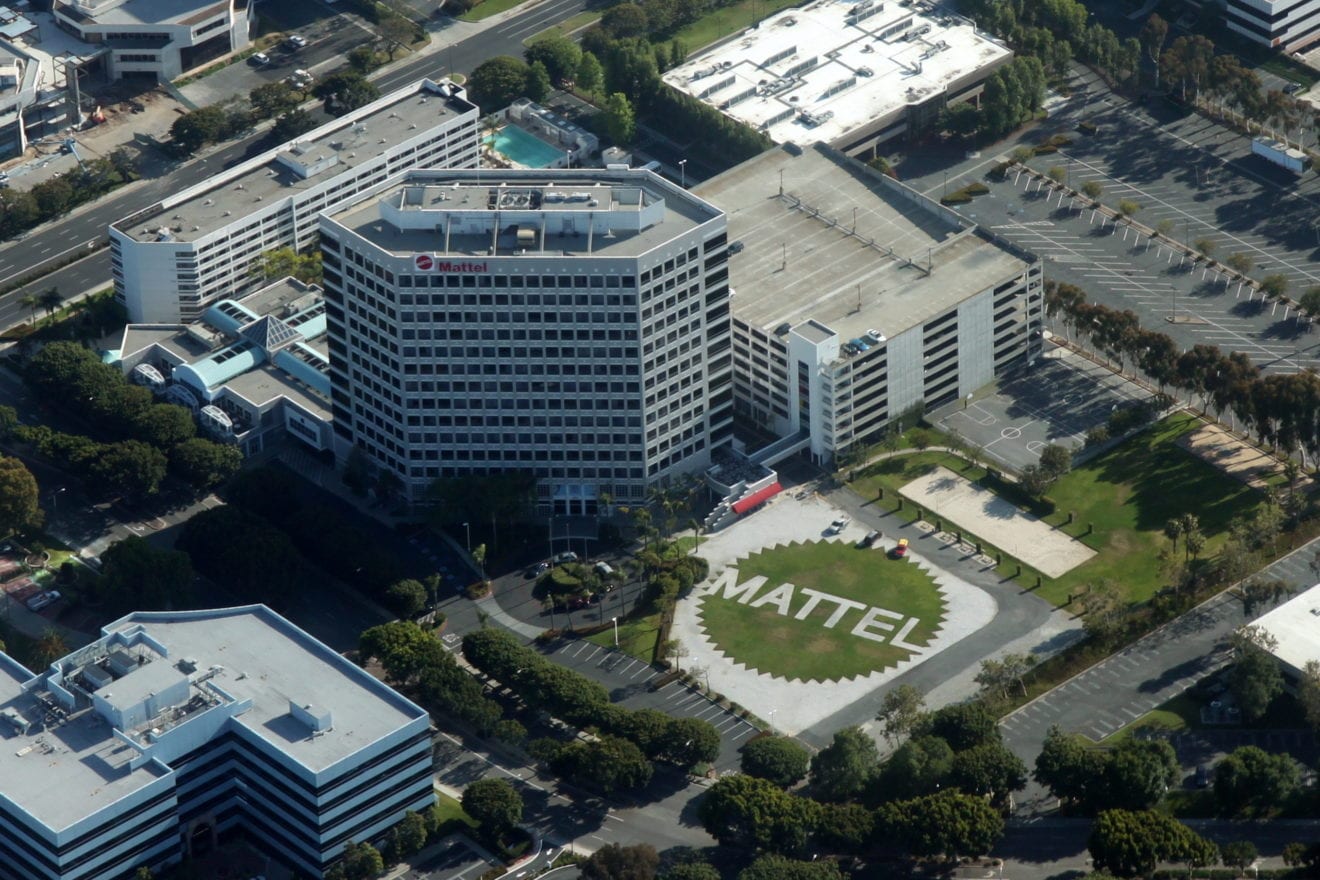
    Mattel says 80 per cent of its game portfolio will be colorblind accessible by the end of the year and 90 per cent by next year, as part of the brand’s commitment to creating more inclusive play experiences.

    To produce these new portfolio-wide changes, Mattel has collaborated with specialists in the field of color vision deficit and colorblind individuals. The debut follows the launch of Uno ColorADD in 2017, which was developed for colorblind people.

    “At Mattel, we are proud that our portfolio of games continues to bring people together – transcending languages and cultures – and this initiative to offer more colorblind accessible games is another proof point on our inclusivity journey,” said Ray Adler, VP and global head of games at Mattel.

    “We’re proud to help spread awareness for the colorblind community and make our products accessible for more people, so that all fans can come together and enjoy universal gameplay.”

    Mattel will donate colorblind-accessible games to local YMCA summer camps across the US. According to the brand, the donation will be a resource in celebrating this milestone and empowering children to attain their full potential via inclusive play.

    Mattel, founded in 1945, is a global toy retailer that owns brands including Barbie, Hot Wheels, Fisher-Price, and American Girl.

  • Central Group unveils US$825m Vietnam expansion plan

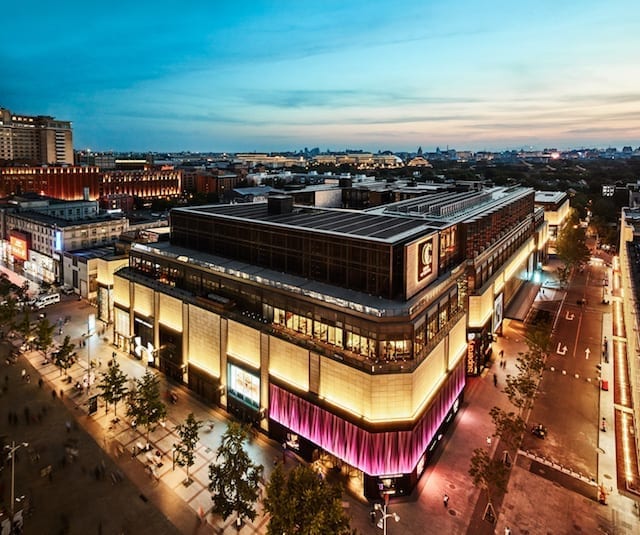
    Central Group unveils US$825m Vietnam expansion plan

    Alibaba’s grocery store chain Freshippo is searching for to boost funds at a valuation of about $6 billion, a lot decrease than a hoped-for valuation of as much as $10 billion earlier this 12 months, three individuals accustomed to the matter informed Reuters.

    The corporate needed to reduce its valuation expectations after China’s COVID-19 restrictions, specifically a draconian lockdown within the financial hub of Shanghai, badly dented enterprise, they stated.

    Traders are additionally sceptical about whether or not loss-making Freshippo can continue to grow and switch a revenue anytime quickly given the corporate’s bleak outlook because the world’s second-largest economic system continues to pursue a strict coverage of stamping out COVID-19 instances, stated two of the individuals.

    The grocery store chain, generally known as Hema in Chinese language, is aiming to boost $400 million to $500 million from outdoors buyers, two of the sources stated.

    The fundraising is much from being finalised and monetary phrases may change, cautioned two of the individuals and a separate fourth supply with information of the matter. The entire sources declined to be recognized as the data was confidential.

    The fourth supply stated Freshippo would welcome good buyers to assist it develop however added it had a wholesome money stream and was underneath no fast stress to boost recent funds.

    Alibaba and Freshippo didn’t reply to Reuters requests for remark.

    Freshippo’s lowered ambitions for its first impartial personal fundraising spherical come amid a drop-off in investor curiosity globally in tech ventures which have but to show a revenue.

    Highlighting tumbling valuations globally, Swedish funds agency Klarna Financial institution AB stated on Monday it had raised $800 million of funds at a valuation of $6.7 billion, down round 85% from the $46 billion valuation it attracted final 12 months.

    Personal fundraising in China has additionally slowed since final 12 months as a result of a sweeping regulatory crackdown on the tech, tutoring, gaming and different sectors.

    Regardless of indicators that Chinese language regulators could possibly be easing up on regulatory crackdowns, dealmakers do not anticipate to see any fast funding surge within the nation given a downbeat outlook for the economic system.

    Based in 2015 and wholly owned by e-commerce behemoth Alibaba, Freshippo has 300 shops in 27 cities that present grocery supply companies, based on its web site.

    Shanghai is its largest market with 73 shops. Though residents in Shanghai relied closely on supply companies through the metropolis’s two-month lockdown this 12 months, grocers like Freshippo struggled to fulfill demand as a result of COVID-19 restrictions and disruptions to the nation’s provide chain.

  • Vietnamese buy Bitcoin in hope it has bottomed

    Vietnamese buy Bitcoin in hope it has bottomed

    Many investors are buying Bitcoin after the cryptocurrency’s price fell to US$20,000, its lowest level since December 2020. Thanh Binh of HCMC says he turned off notifications on his crypto trading app after buying it at $38,000 and losing over VND40 million ($1,720).

    But he has returned and bought a 10th of a token after prices dropped below $20,000.

    “The market has bottomed out and will recover by the end of this year, and so this is the right time for buying in,” he says hopefully.

    Hai Ly of the southern province of Dong Nai has invested VND70 million in Bitcoin and Ethereum, the two largest tokens by market cap. She wanted to diversify her portfolio and thinks their current prices are reasonable.

    She says Bitcoin operates in four-year cycles, and prices fall sharply at the end of each cycle before scaling new peaks.

    “The current cycle started in January 2019 and ended between May and July this year. Considering other factors, the current crypto slump is not abnormal.”

    Prices will recover and hit a new peak by mid-2023, she says.

    Many investors see an opportunity in the current fall in cryptocurrency prices though the recent sell-offs wiped billions of dollars from the market.

    Search related to Bitcoin has surged to the highest levels in a year according to data from analytical website Google Trends.

    Hope is also fueled by rumors that Binance, the largest cryptocurrency exchange, has quietly bottom fished a large amount of Bitcoin.

    Over 100,000 tokens have been added to the exchange’s cold wallet (physical device that keeps cryptocurrency completely offline), crypto-focused site Coingape has discovered from on-chain data.

    They amount to 0.5 percent of all mined Bitcoin and are worth over $2 billion at current prices. But CEO Changpeng Zhao denies it, saying the increase “means more users deposited in Binance.”

    Money is also coming into crypto-centric investment funds. They have raised over $125 million in the week ended June 6 and $506 million in the year-to-date, asset management company CoinShares reported.

    Short-term Bitcoin funds, mainly used for speculating on the cryptocurrency’s slump, received $1.3 million. Bitcoin is being traded the fastest in a year, Yahoo Finance said.

    But there are risks associated with bottom fishing Bitcoin and other cryptocurrencies, experts warn.

    Le Sy Nguyen, ASEAN regional manager of crypto exchange Bybit, says current prices are not attractive.

    The collapse of cryptocurrency Luna and its paired stablecoin Tether, and recent interest hikes in the U.S. have greatly affected market sentiments, with many investors opting out trading on extreme fear.

    “Anything can happen in this [volatile] period, which poses great risks to investors who try to benefit from bottom fishing in the short term.”

    He says investors should invest for the long term or wait until the market stabilizes. “But no one can be sure whether it has hit bottom.”

    The slump could prolong until the end of this year, he says.

    The founder of a digital assets startup, who does not want to be named, says it is impossible to give advice on whether to buy or not at the “current sensitive time.”

    “It is inappropriate to evaluate digital assets using methods used for stocks, as they do not generate income like companies The number of wallets, users and transactions are key indicators of this market.”

  • Singaporean logistics unicorn eyes Vietnam as key expansion market

    Singaporean logistics unicorn eyes Vietnam as key expansion market

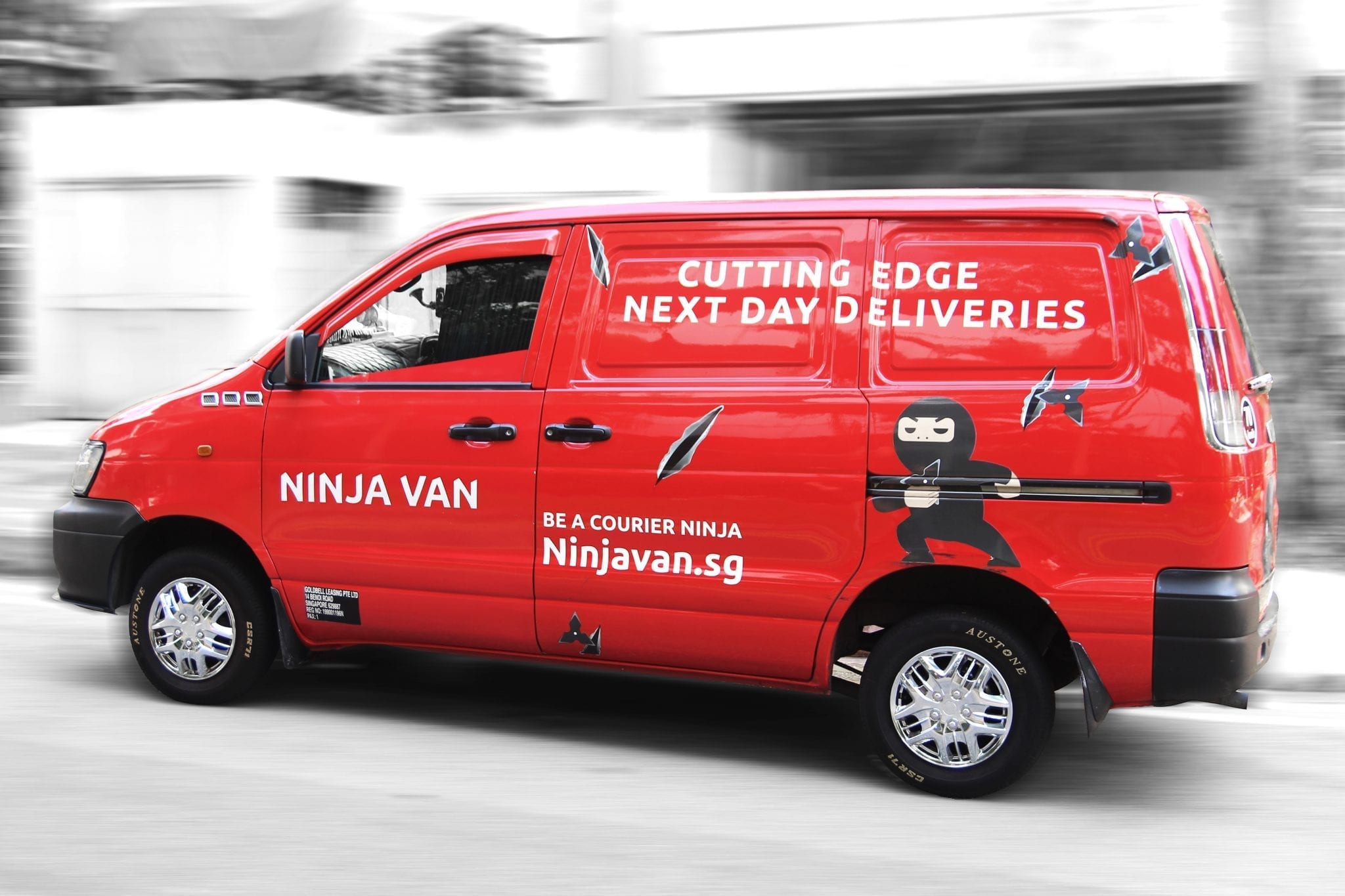
    Ninja Van, a Singaporean logistics startup and new ASEAN unicorn, is set to drive a broad strategy in Vietnam to benefit from the country’s strong e-logistics market growth.

    After successfully raising $578 million in Series E funding, Ninja Van has officially become an ASEAN “unicorn,”.Dzung Phan, president of Ninja Van, said while revealing the startup’s expansion plans for Vietnam and his assessment of its e-logistics market.

    Why did Ninja Van choose Vietnam as a key investment market?

    We believe Vietnam is ready for a new phase of growth in e-logistics. According to Agility, Vietnam ranks 8th among the top world’s fastest-growing logistics markets and 3rd among ASEAN in 2021. Vietnam E-commerce Association (VECOM) also stated the number of postal parcels sent through express delivery services shot up by 47 percent last year.

    Also, e-logistics is strongly driven by the rapid growth of e-commerce. Vietnam’s e-commerce market expanded an average of 30 percent per annum during the period 2016-2019, from $4 billion (2015) to $11.5 billion (2019). According to VECOM, the market will grow at 29 percent annually in 2020-2025, to reach $52 billion (2025).

    The strong potential of Vietnam’s e-logistics market is a good foundation for our ambitious plan. A market with 600,000 sellers and 49.3 million buyers across e-commerce platforms and social networks will generate significant demand for logistics.

    Leading a new unicorn in the e-logistics industry, how do you assess its competitive advantage in Vietnam?

    The domestic e-logistics market is competitive with several “deep pocket” players. The market comprises three main segments: local shipping companies, international shipping companies, and e-commerce platforms with their own in-house shipping ecosystems.

    Domestic enterprises only account for 20 percent of the logistics market share; the remaining 80 percent belongs to international firms with strengths in capital, technology, and experience. Local firms may be backed by international groups, including GHTK by Kerry and AhaMove by Temasek.

    Although the e-logistics market is vibrant, its growth potential is not fully invested in. A survey showed that 60 percent of sellers and 80 percent of buyers are not satisfied with the current quality of express delivery services. Buyers are frustrated by late delivery or the inability to track the flow, while sellers expect more parcels to be delivered.

    Is pricing a major competitive edge in the current e-logistics market?

    Except for the inhouse shipping units of e-commerce platforms, domestic and international players are using price competitiveness to acquire customers quickly. Whenever there is a “newcomer”, delivery costs will drop significantly to maintain the market share and retain customers. Notable discounts were given at the entry of J&T in 2018 and Best in 2020.

    The average shipping price in the Vietnam market fell continuously by 15-20 percent per year from 2017 to 2020. The trend has a negative impact on smaller domestic players, for example, GNN in 2017 suffered a sharp drop in revenue that led to its liquidation. Even international players without strong financial support cannot survive this market, with DHL e-commerce ceasing operations in Vietnam during 2021.

    How does Ninja Van improve the customer experience? Ninja Van focuses on providing a quality and authentic service experience to customers, rather than on pricing alone. Parcel tracking and recovery services for lost or damaged parcels need to be improved.

    Given a tech-enabled personalization of the customer experience, Ninja Van’s nationwide personal delivery service on the Grab app has stepped up during the Covid-19 pandemic. Additionally, we are strengthening our partnership with e-commerce giants including Shopee, Lazada, Tiki, and Sendo.

    With more than 300,000 orders per day, Ninja Van is among the top three partners on all major platforms in Vietnam. These collaborations brought Ninja Van into the top growth 15 companies in the Asia-Pacific region in 2021 as reported by Financial Times.

    To gain trust, we do all possible to help our customers succeed, such as ensuring timely pickup, prompt delivery without loss. In addition, we understand that our partners are working at a large scale, so we do our utmost to optimize our cost structure and provide an attractive rate.

    As a result, we became the most active provider by offering various value-added services, such as return pickup to Lazada, bulky and super bulky delivery for Tiki, or installation services for Shopee.

    With an additional $578 million in Series E, what is the level of ambition in terms of your expansion strategy?

    – Ninja Van is committed to driving a broad strategy in Vietnam in particular and in ASEAN in general. This strategy will cover all three sectors: operations, technical systems, ecosystems for small and retail customers.

    Specifically, Ninja Van will increase its coverage in 63 cities and provinces to reach 100 percent of the Vietnamese population. We will also prepare an automatic sorting system with a capacity of two million packages at five major cities to increase delivery speed.

    We will build and improve web and mobile application platforms to enhance customer experience. We seek to enable both sellers and buyers to track parcels and make inquiries in real-time.

    Notably, we will broaden our cross-border delivery with two new services: Ninja Direct, which helps Vietnamese sellers look for better sourcing with better rates in multiple countries; and Ninja Crossborder, which helps Vietnamese manufacturers reach out to buyers all over the world.

    Moreover, we will complete business activities for the fourth quarter of 2021. For example, based on our big data analytics, we have opened training courses to detect anomalies and outliers to provide timely resolutions for all customers. In 2020, we created 40 different training modules for our shippers and warehouse staff to avoid recalcitrant buyer behavior on COD free delivery services.

    Ninja Van will launch a promotional campaign in Vietnam “Giao thong suot, Nhan ven nguyen” (Smooth delivery, Parcel intact) to support sellers in the fourth quarter. With all staff vaccinated against Covid-19, Ninja Van will maintain its service delivery price during the pandemic to support hard-hit customers.

  • Home market hurts Sa Sa International sales

    Home market hurts Sa Sa International sales

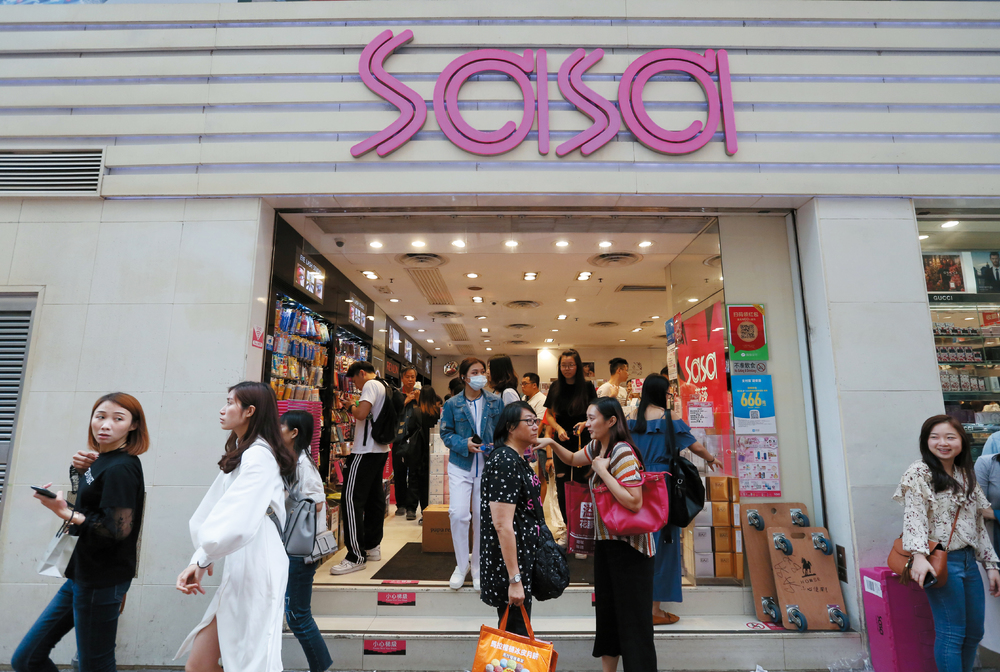
    Hong Kong beauty products retail Sa Sa International has reported a 7.2 per cent decline in sales for the March quarter.

    The company’s home market and Macau were to blame, with same-store sales falling 10.8 per cent and combined retail and wholesale turnover down 8.4 per cent.

    Sa Sa is one of the bellwethers of the broader Hong Kong market because it serves both local consumers and tourists, appealing to more mainstream clients than the luxury watch and jewellery retailers which often disproportionately affect total Hong Kong retail sales figures.

    In a stock exchange filing, Sa Sa International blamed the sales decline on a 6 per cent fall in total transaction volume, of which the number of transactions of local customers and mainland tourists decreased by 8.8 per cent and 3.7 per cent respectively.

    “The average sales per transaction of local consumers and mainland tourists decreased by 0.7 per cent and 5.9 per cent respectively, which resulted in a 3.5 per cent decline in total,” the company said.

    “The weaker sales performance was mainly due to high base effect. The hot trend of some trendy product categories last year has been weakening while the group’s newly launched products could not fully compensate their sales decline. In addition, a number of new pharmacy stores selling skincare and cosmetic products have opened new stores in tourist hot spots aggressively, resulting in intensified competition and lower-than-expected sales at Sa Sa.”

    The company says it plans to open new stores to enhance its store network and boost its competitiveness “under reasonable rental condition”.

    “The group is adjusting its business strategies to adapt to the changing consumer preferences and competitive landscape. The first action is to change towards a more balanced product mix.”

    Sa Sa International says it will also increase its range of high-end products and focus on its own-label products which offer better margins.

    Another step Sa Sa plans to arrest falling sales is speeding up its investment in digitalisation and IT, using big data to formulate better product strategies.

    The new Express Railway Link and Hong Kong-Zhuhai-Macau bridge have so far failed to bring about the expected stimulus to the retail industry, the company said.

    “Looking ahead, the group believes the benefits of the two mega infrastructure projects will gradually emerge under the favourable policy of the Greater Bay Area. The group remains cautiously optimistic about the outlook of Hong Kong and Macau markets in the long run.

  • BMW Luxury Lounge Showcases Future Products

    BMW Luxury Lounge Showcases Future Products

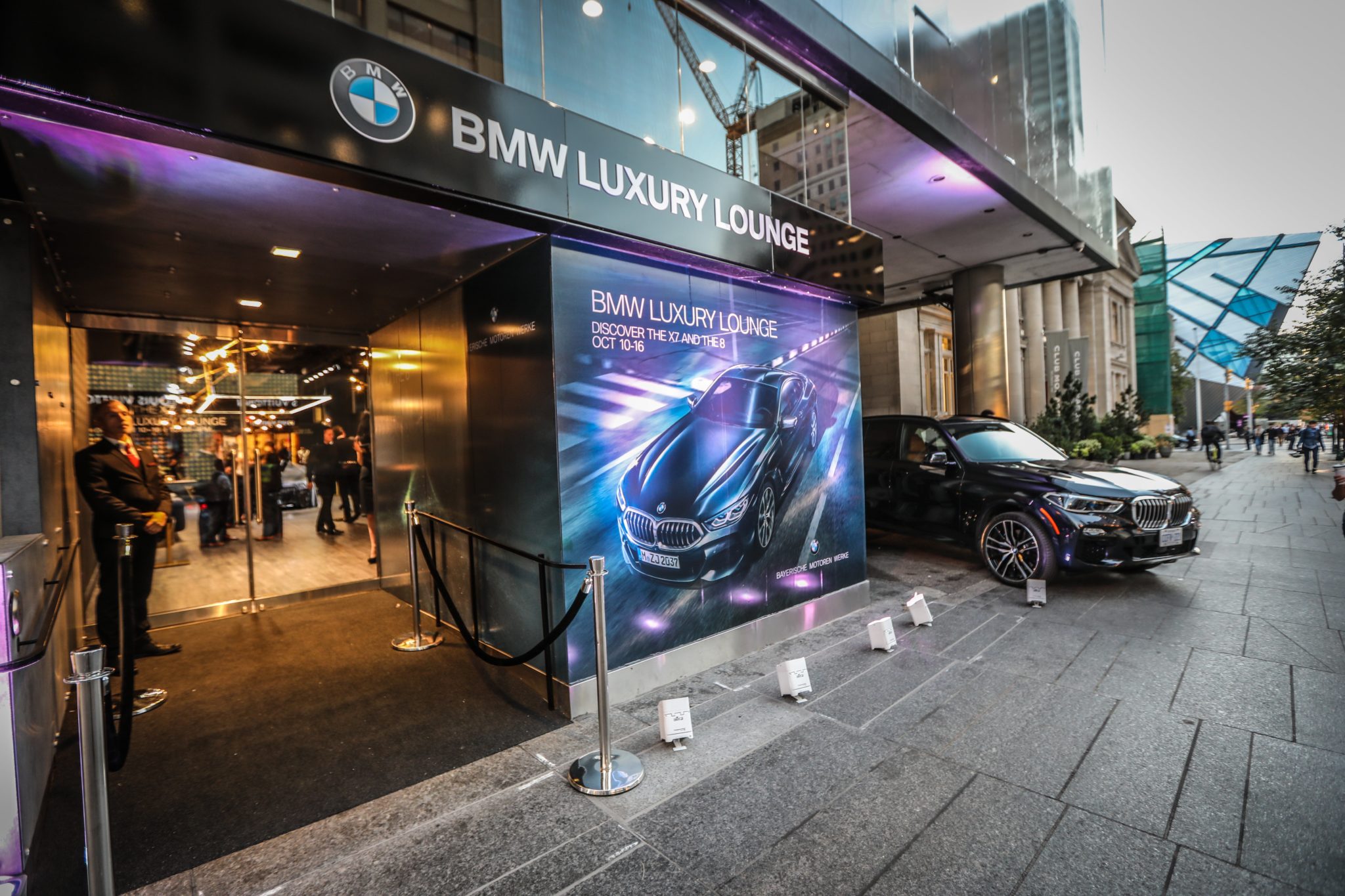
    In the midst of a product offensive that will see many new and refreshed models join its lineup in the coming months, BMW recently staged a limited-run brand experience in Toronto’s Yorkville neighbourhood to showcase two forthcoming models. The display, which has a pop-up feel to it, is known as the BMW Luxury Lounge, a venue open to the public during the day and invite-only events in the evening. As its name would suggest, the point is to generate interest in the brand and get attendees excited for a slew of new BMWs on deck.

    The site of the Luxury Lounge – Bloor St. W. near Avenue Rd. – is fertile ground not only for luxury automotive manufacturers but makers of other luxury goods as well, which is why BMW is partnering with Hugo Boss, Montblanc and Roche Bobois. These brands, along with Samsung Canada and art gallery LUMAS Canada have also contributed to furnishing the space which, with its black and glass walls, wood grain floors and leather sofa, has the feel of modern, minimalist luxury.

    “We’ve taken on this initiative because we believe customers’ expectations of luxury are evolving,” said Sebastian Beuchel, director, BMW brand management, said in a statement. “This beautifully designed space is a showcase for our interpretation of modern, contemporary luxury.”

    Last October, BMW hosted a similar limited engagement exhibit known as the Luxury Excellence Pavilion on Bay St. in the heart of Toronto’s financial district that not only showcased the Munich-based carmaker’s wares, but also those of other several other luxury brands. The feature attraction was the BMW X7 iPerformance, a concept vehicle first shown about a month earlier at the 2017 Frankfurt Motor Show.

    Fast forward a year, and it’s time for the Luxury Lounge, a similar exhibit but with some noteworthy differences.

    Whereas the Luxury Excellence Pavilion ran for almost two weeks (Oct. 16-29), the Luxury Lounge was around for just six days (Oct. 10-16) and there were no test drives from the BMW fleet available.

    In its place are two main attractions that represent the future of BMW and are bound to cause a bit of a stir.

    First up is a vehicle that can’t be discussed in detail but was available for viewing so long as visitors surrendered their mobile phones before entering the curtained-off backroom where it was being shown. A strict no-photo policy was in effect.

    I’m talking about the full-size, three-row 2019 X7 SUV, a vehicle BMW and its dealers are very excited about. The production X7 will make its world premiere at the Los Angeles Auto Show next month and will go on sale early next year. The one being shown in Toronto was an uncamouflaged pre-production copy. Getting it to Toronto took some doing, but its presence made a visit to the Luxury Lounge even more worthwhile.

    Now, in accordance with the wishes of BMW Canada’s communications team, I’ll move along… to the 8-Series coupe which is returning to the lineup after a 20-year hiatus. I have clearance to talk about this one freely.

    Centred in the middle of the Luxury Lounge floor plan was a Dravit (metallic) grey 2019 850i xDrive, trimmed in factory option carbon fibre accents (roof, mirror caps, lip spoiler, rear diffuser, etc.) and optional M Performance 20-inch wheels finished in a metallic gold tint.

    Conceived as a flagship model, the 8 Series is a design and technology carrier and, as such, has features that will eventually spread across the BMW family.

    On this front, a few things stand out. The first thing that caught my eye are the new LED headlights the 8 Series is wearing, which feature standard high beam LaserLight technology (to comply with North American laws they’ll only work at speeds above 60 km/h) along with a more angular shape with two separate elements that still look like BMW headlights when viewed from a distance. Clever.

    Other new design elements include a revised kidney grille that is attached at the centre, a callback to the grilles of 1970s-era BMWs. Also, a BMW rep told me that customized paintwork will be offered on the 8 Series though the company’s Individual program. While they can’t guarantee they’ll be able to match every paint chip or swatch a customer has, BMW aims to make the 8 Series available in more exciting colours than those offered on a traditional list of set finishes.

    Inside, the cabin receives some noteworthy advances headlined by the company’s all-new Operating system 7.0 software, which powers the infotainment and instrument cluster screens. My eye was also drawn to the available glass crystal shift knob and iDrive controller.

    Finally, I’d be remiss if I didn’t mention the powertrain. The 8 is being offered with an overhauled variant of BMW’s 4.4-litre twin-turbocharged V8, which packs 523 horsepower and 553 lb-ft. of torque that is mated to a standard 8-speed automatic and xDrive AWD system.

    Fast? You bet. BMW has the 8 Series’ 0-100 km/h time pegged at 3.7 seconds.

    The best part for consumers and interested auto journalists alike is the wait for the 8 Series arrival won’t last much longer. Customer orders begin on December 8, with deliveries likely to begin in the new year. Pricing info hasn’t been released but will be announced closer to on-sale.

    As for the X7, look for more info when it’s revealed during the media preview days at the Los Angeles Auto Show on Nov. 28-29.