Tag: assia

  • China Telecom’s license revoked in the US

    China Telecom’s license revoked in the US

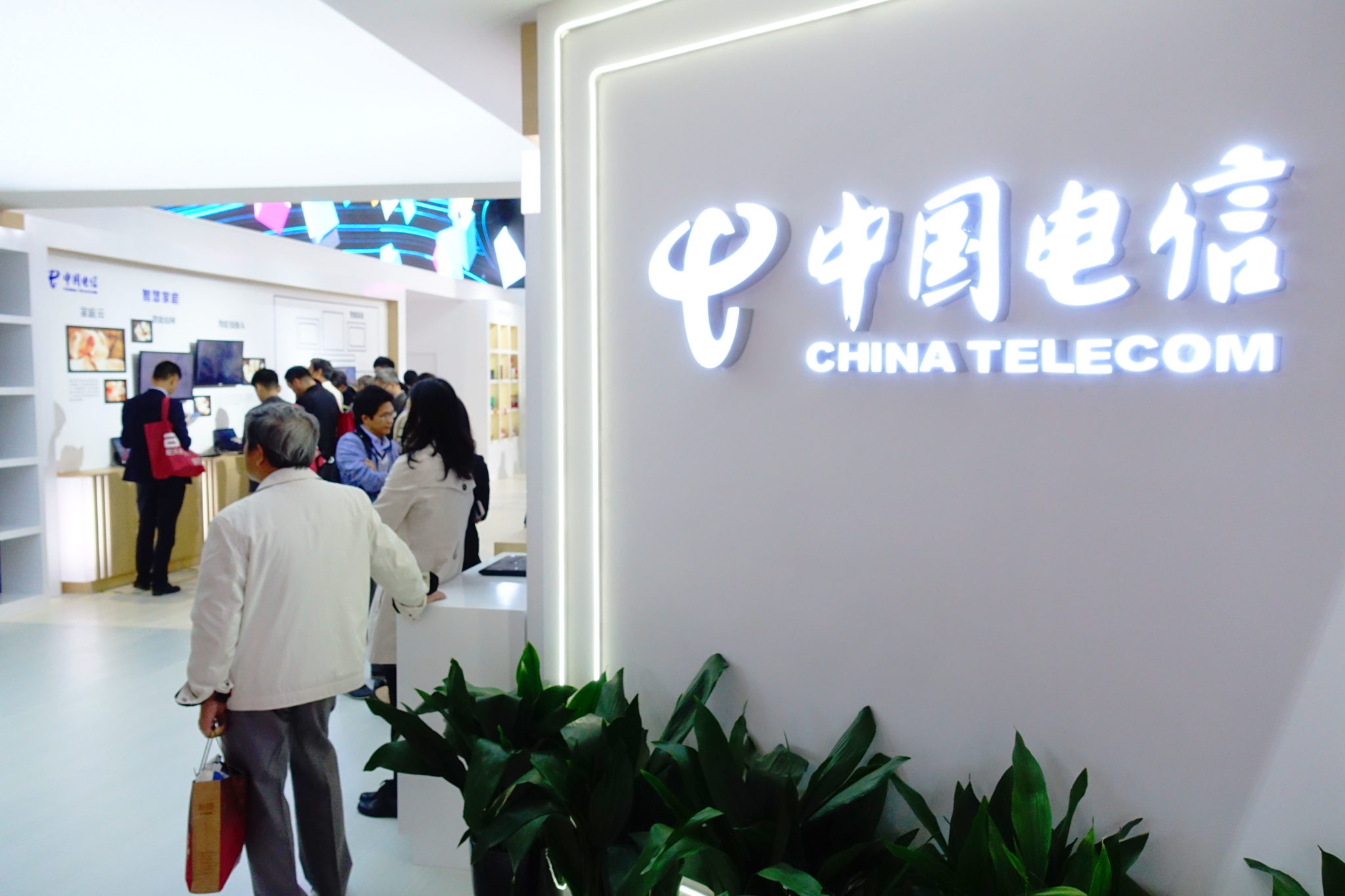
    The US Federal Communications Commission (FCC) has voted to revoke the authorization for China Telecom’s subsidiary in the US.

    Citing national security concerns, officials ordered China Telecom Americas to discontinue its services in the US within 60 days. The subsidiary has been operating in the US for nearly two decades.

    In a statement released, the FCC said, “China Telecom Americas, a U.S. subsidiary of a Chinese state-owned enterprise, is subject to exploitation, influence, and control by the Chinese government and is highly likely to be forced to comply with Chinese government requests without sufficient legal procedures subject to independent judicial oversight.”

    China Telecom has expressed disappointment over the decision and intends to “pursue available options” in hopes of continuing serving its customers.

    During the first nine months of this year, China Telecom added 69 million 5G subscribers in China, bringing it total mobile base in China is 369 million subscribers.

  • JV arrives to create US$7.9bn Chinese pharmacy giant

    JV arrives to create US$7.9bn Chinese pharmacy giant

    China’s Laobaixing and Yixintang Pharmaceutical Group are in advanced talks to create the country’s biggest drugstore chain via a share swap, three people familiar with the matter said.

    Laobaixing’s founders, Xie Zilong and Chen Xiulan, are expected to have a bigger stake in the merged firm than Yixintang’s founder Ruan Hongxian, said two of the people. Shanghai-listed Laobaixing, formally known as LBX Pharmacy Chain Joint Stock Company and which boasts Tencent Holdings as a backer, has a market value of around US$4.4 billion, while Shenzhen-listed Yixintang is valued at about $3.5 billion.

    The talks have been ongoing for more than three months, the two people said. One person said the firms are aiming to finalize and announce the deal in the coming days, adding that Laobaixing would remain the listed entity.

    The sources declined to be identified as the discussions were not public. Laobaixing, Yixintang did not immediately respond to requests for comment.

    Tencent, which took a 1-per-cent stake in Laobaixing to become a strategic partner this year, has endorsed the merger and is planning to work with the combined firm to speed up implementation of a “smart retail” strategy, according to two people.

    The tech giant is looking at helping with the integration of their online and physical store businesses and will help drive traffic through its messaging service WeChat as well as other platforms, said one person.

    Laobaixing, also backed by private equity firms FountainVest Partners and Primavera Capital, had 6.7 billion yuan ($1 billion) in revenue for the first half, while Yixintang had 6 billion yuan, filings show.

    Together they exceeded the 8.6 billion yuan in first-half sales for a current industry leader, state-backed Sinopharm Holding Guoda Drugstores. Their combined number of stores at around 13,100 would also be more than double Guoda’s.

    China’s drugstore market is, however, highly fragmented. According to market research firm Qianzhan, Guoda had a market share of 2.9 percent last year, ahead of Laobaixing with 2.6 percent and Yixintang with 2.4 percent.

    Both Laobaixing and Yixintang sell pharmaceuticals, traditional Chinese medicine, nutritional supplements, and medical equipment. They also complement each other geographically with Laobaixing strong in central and eastern China while Yixintang has focused on the southwest of China, particularly it’s home province of Yunnan.

    Laobaixing, established in 2001, is 33-per-cent held by its founders. For years it counted EQT as a key backer but the Swedish private equity firm sold its 25 percent stake to FountainVest and Primavera for $557 million a year ago.

    Yixintang, founded in 1981, is 31-per-cent owned by founder Ruan.

  • Kia XCeed Revealed

    Kia XCeed Revealed

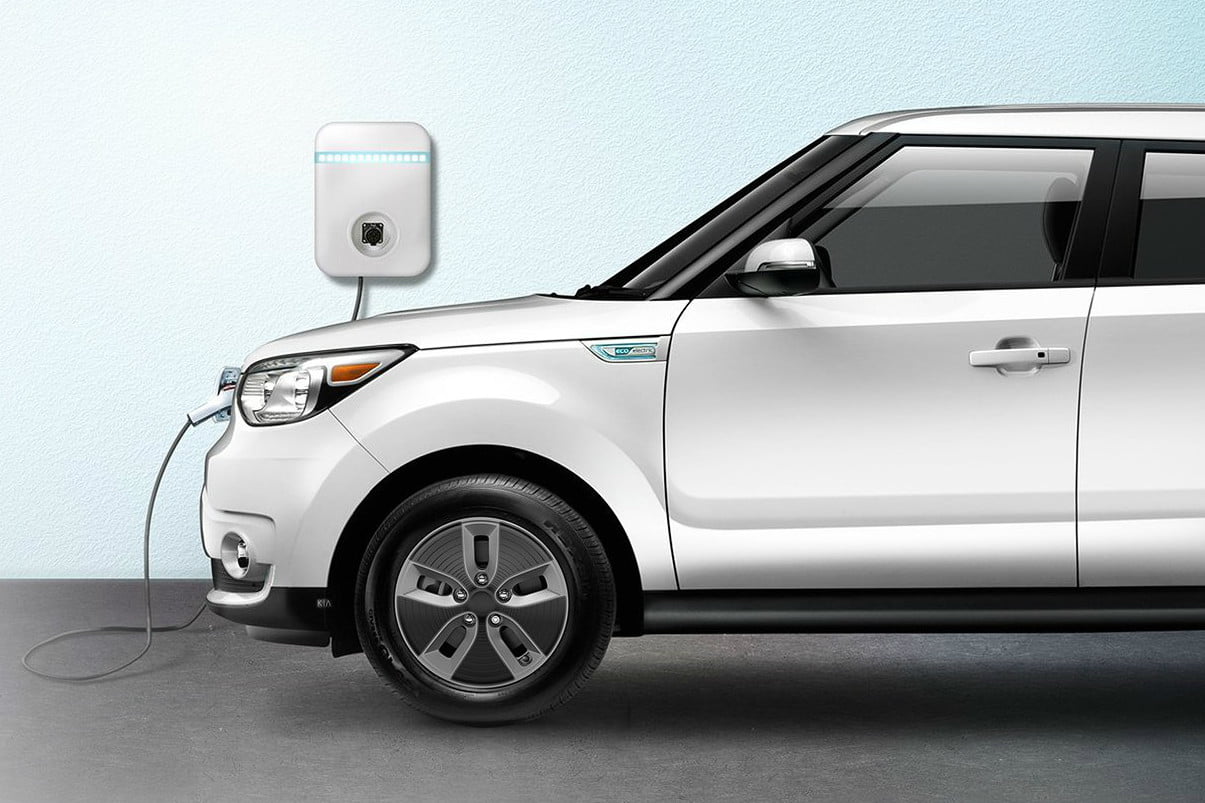
    Kia Motors took the wraps off the 2020 XCeed, which is an urban crossover utility vehicle. Kia says that it is an alternative to regular SUVs and is as practical as an SUV and as engaging as a hatchback. It will be launched in Europe in the third quarter of 2019 and will be positioned between the Kia Stonic and the Kia Sportage. The Kia XCeed has a sporty design which is all-new. The only the body panels were carried over from its five-door hatchback sibling are the front doors. While the wheelbase remains the same as other models in the Ceed line-up 2,650 mm, the Kia XCeed’s front and rear overhangs are extended over the five-door hatchback model by 25 mm at the front to 905 mm and 60 mm at the rear to 840 mm. The headlamps are newly-designed, with the Ceed’s ‘ice cube’ LED light signature sitting within a more angular shape along with slim indicators. The rear gets newly designed tail lamps which have the company’s signature styling.

    Kia will offer a range of turbo-charged engines on the XCeed. There will be a 3-cylinder 1.0-litre turbo petrol which makes 118 bhp and 172 Nm. The 1.4-litre turbo petrol makes 138 bhp and 242 Nm while the 1.6-litre turbo petrol pumps out 201 bhp and 265 Nm of peak torque. The XCeed is also available with a choice of a 1.6-litre Smartstream diesel engine in two states of tune which make 113 bhp and 134 bhp. Except for the 1.0-litre T-GDi, all engines can be paired with a choice of six-speed manual or seven-speed dual-clutch transmissions. The 1.0-litre engine is paired with a six-speed manual transmission. Kia will introduce low-emissions electrified powertrains, including 48V mild hybrid and plug-in hybrid options, will be launched into the Kia XCeed range later in 2020.

    The XCeed has a busy dashboard which is angled towards the driver. The interior gets soft-touch material and a satin chrome trim on the dashboard along with multiple upholstery options. Like the Kia Seltos, the XCeed too will get Kia’s UVO Connect and telematics system. There will be Apple CarPlay and Android Auto on offer as well. Other optional features include a JBL premium audio system with Clari-Fi technology, dual-zone air-conditioning, heated electric folding door mirrors, heated steering wheel, heated windscreen, heated and ventilated front seats and heated rear seats.

    Kia will manufacture the XCeed at its manufacturing facility in Zilina, Slovakia along with the Ceed, Ceed Sportwagon and the ProCeed Shooting Brake.

  • Thailand’s AIS faces $71k fine per day

    Thailand’s AIS faces $71k fine per day

    Thailand’s National Broadcasting and Telecommunications Commission has written to AIS warning of $71,114 (2.5 million Baht) a day fines unless they complete the handover of 300,000 subscribers to TrueMove under the mobile number portability system by May 10th.

    Thai language daily Thairath reported that AIS has refused to release the subscribers due to incomplete or erroneous documentation. The story also said that AIS had no problems with Dtac all valid Dtac porting requests had been completed.

    Earlier we reported on how the government was trying to force AIS to sign an MOU with True and allow the NBTC to step in with the final say on MNP with no recourse of appeal.

    AIS did not respond to request for comment by the time of going to press.

  • Central Group sees flat spending in Thailand

    Central Group sees flat spending in Thailand

    As Thai retail conglomerate Central Group suffers a sluggish domestic economy, its owners the Chirathiwat family worry that premium customers are spending overseas rather than at home.

    “The upper class group is still spending money,” Chief Executive Tos Chirathiwat told reporters in Bangkok on Wednesday. “The problem is that they are spending outside of Thailand.”

    In 2015, roughly 7 million Thais travelled abroad, up 9% year on year. Tos said that these outbound travelers spent some 170 billion baht ($4.76 billion).

    “What’s worrying is that the figure is growing at 10% every year, while domestic consumption is expanding at only 2%,” he said. At this rate, the spending leak from Thailand will reach 300 billion baht in five years.

    The number of inbound tourists meanwhile hit a record 29.88 million in 2015, up 20% year on year from a low base in 2014 following political turmoil. But according to Tos spending has not kept pace, rising just 2% last year. He called for Thailand to promote domestic consumption and tourism.

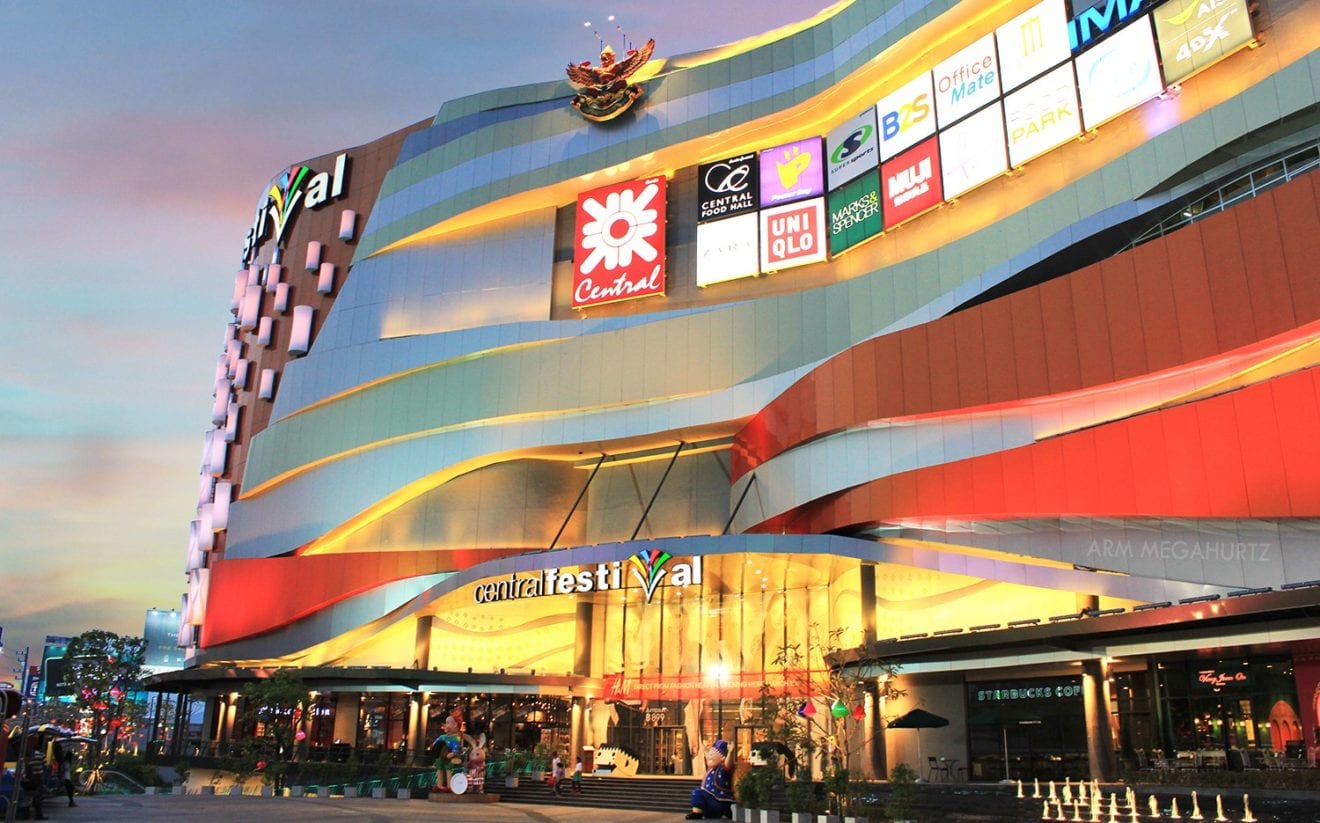
    Central Group is Thailand’s largest retail company with subsidiaries including property development arm Central Pattana. Wearing another hat, Central is itself expanding overseas where operations now account for nearly 20% of group revenue. The company plans to more than double revenue in Europe to 2 billion euros ($2.17 billion) by 2020 — aided by custom from Asian tourists, including China and Thailand.
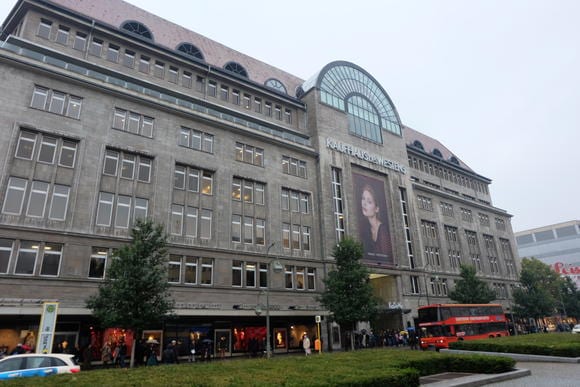
    Some 10.4 billion baht has been earmarked for renovating five department stores Central has acquired in the region. “We want the stores to be not only a shopping destination but also a tourism destination,” said Tos.

    Central began its shopping spree in Europe in 2011 buying Italy’s La Rinascente chain, which has a 150-year history. Revenue from Europe has been growing an average 40% each year since. This year, it is expected to jump 70% to 51 billion baht as three German department stores acquired in mid-2015, including KaDeWe in Berlin, start contributing.

    Tos said further mergers and acquisitions in Europe are being put off for now. “We have quite a large coverage in Europe now, and there’s a lot of work to do,” he said.

    A more immediate focus is Southeast Asia, particularly neighbors Cambodia, Laos, Myanmar, and Vietnam. In Vietnam, France’s Casino Group is selling off its Big C supermarket chain, and Central already has 25% of Big C in Thailand.

    “We are interested but we have not decided yet whether to join the bidding,” Tos said. “The acquisition will require a substantial amount of money which could be used to acquire something else.”

    TCC Group, the parent company of Thai Beverage, is also reported to be looking at Big C in Vietnam. It recently acquired Casino’s 58.56% stake in Thailand’s Big C for 3.1 billion euros.

    Bidding for Big C in Vietnam is expected to conclude next week. Tos said that if Central acquired the chain, its sales in Vietnam would double from $600 million at present. The company already has two Robins department stores there, and acquired Nguyen Kim, an electronics retail chain, last year.

    Tos said Central has no plans to reenter China after recently exiting. “China was a difficult market,” he said, noting the need for good government connections. “We learnt a lot.”

    Central’s group revenue in 2015 was over 283 billion baht, up 13.5% on 2014. It is targeting growth of 18.9% this year, with international sales contributing the lion’s share of the increase. Revenue from abroad will contribute 24% of the total, up from 18% in 2015.