Tag: assistance

  • Tesla Leads In Driver-Assisted Technology Crashes

    Tesla Leads In Driver-Assisted Technology Crashes

    Tesla Inc reported 273 vehicle crashes since July involving advanced driving assistance systems, more than any other automaker, according to data U.S. auto safety regulators released on Wednesday.

    Automakers and tech companies reported more than 500 crashes since June 2021, when the National Highway Traffic Safety Administration (NHTSA) issued an order requiring the information. Two U.S. Senators called for a deeper probe of the “out-of-control industry,” and a U.S. safety board said the data was not standardized so it was hard to evaluate performance of each carmaker’s system.

    Car companies are rushing to add driver assistance systems, saying these improve safety by handling some maneuvers. U.S. regulators are trying to understand the practical effect of the changes. But automakers collect and report data in different ways, making it difficult to evaluate systems performance.

    Democratic Senators Ed Markey and Richard Blumenthal told NHTSA in a letter that “publicizing the data alone is not enough. We urge NHTSA to … shed needed light on this out-of-control industry and impose guardrails to prevent more deadly crashes.”

    The current report contains “a ‘fruit bowl’ of data with a lot of caveats, making it difficult” to understand, National Transportation Safety Board (NTSB) Chair Jennifer Homendy said in a statement. “Tesla collects a huge amount of high-quality data, which may mean they’re overrepresented in NHTSA’s release.”

    Tesla’s advanced driver assistant software dubbed “Full Self Driving” has also created confusion about vehicle capabilities.

    The senators raised alarm about the high number of Tesla crashes. “We worry that some drivers today are using the technology as a convenience feature and are placing themselves and other road users in danger,” Markey and Blumenthal wrote.

    NHTSA ordered companies to quickly report all crashes involving advanced driver assistance systems (ADAS) and vehicles equipped with automated driving systems being tested on public roads.

    Of the 392 such crashes reported by a dozen automakers since July, six deaths were reported and five serious injuries. Honda Motor identified 90 crashes.

    Companies also reported 130 crashes involving prototype automated driving systems, while 108 involved no injuries and one was a serious injury crash.

    NHTSA said Alphabet Inc’s self-driving car unit Waymo reported 62 crashes involving automated driving systems, while General Motors’ Cruise had 23.

    Waymo said its crashes were not high severity and one-third were in manual mode. Airbags deployed in only two crashes.

    Cruise said it “has logged millions of miles in one of the most complex urban driving environments because saving lives is our chief aim.”

    The NTSB reiterated a five-year-old recommendation that NHTSA require automakers to provide standardized crash and usage data. It made the recommendation after the a 2016 crash killed a Tesla driver using the company’s Autopilot system, which the company website says “enables your car to steer, accelerate and brake automatically within its lane” but still requires the driver’s attention.

    NHTSA said the first batch of data has already been used to trigger investigations and recalls and helped inform existing defect probes.

    The data “will help our investigators quickly identify potential defect trends,” NHTSA Administrator Steven Cliff said, cautioning the raw number of incidents reported per manufacturer “is by itself inadequate to draw conclusions.”

    The agency emphasized crashes are tracked by individual automakers in different ways and discouraged comparisons in part because there are no comprehensive metrics on how widely each system is used.

    Tesla did not respond to requests for comment.

    Honda told Reuters it had found no defects in the systems and its crash reports were based on unverified customer statements “to comply with NHTSA’s 24-hour reporting deadline.”

    No other automaker reported more than 10 ADAS crashes during the period.

    Despite the limitations, NHTSA said the data was essential to quickly spot potential defects or safety trends. Incidents that occur when an advanced system was engaged within 30 seconds of a crash must be reported within 24 hours to NHTSA.

    The agency plans to release new data monthly.

    NHTSA has been scrutinizing Autopilot and said last week it was upgrading its probe into 830,000 Tesla vehicles with the system, a required step before it could seek a recall. The regulator had opened a preliminary evaluation to assess the performance of Autopilot after about a dozen crashes in which Tesla vehicles struck stopped emergency vehicles.

    Separately, NHTSA has opened 35 special crash investigations involving Tesla vehicles in which ADAS was suspected of being used. A total of 14 crash deaths have been reported in those Tesla investigations, including a May California crash that killed three people.
  • Tesla Launches Subscription Service For Advanced Driver Assistance Software

    Tesla Launches Subscription Service For Advanced Driver Assistance Software

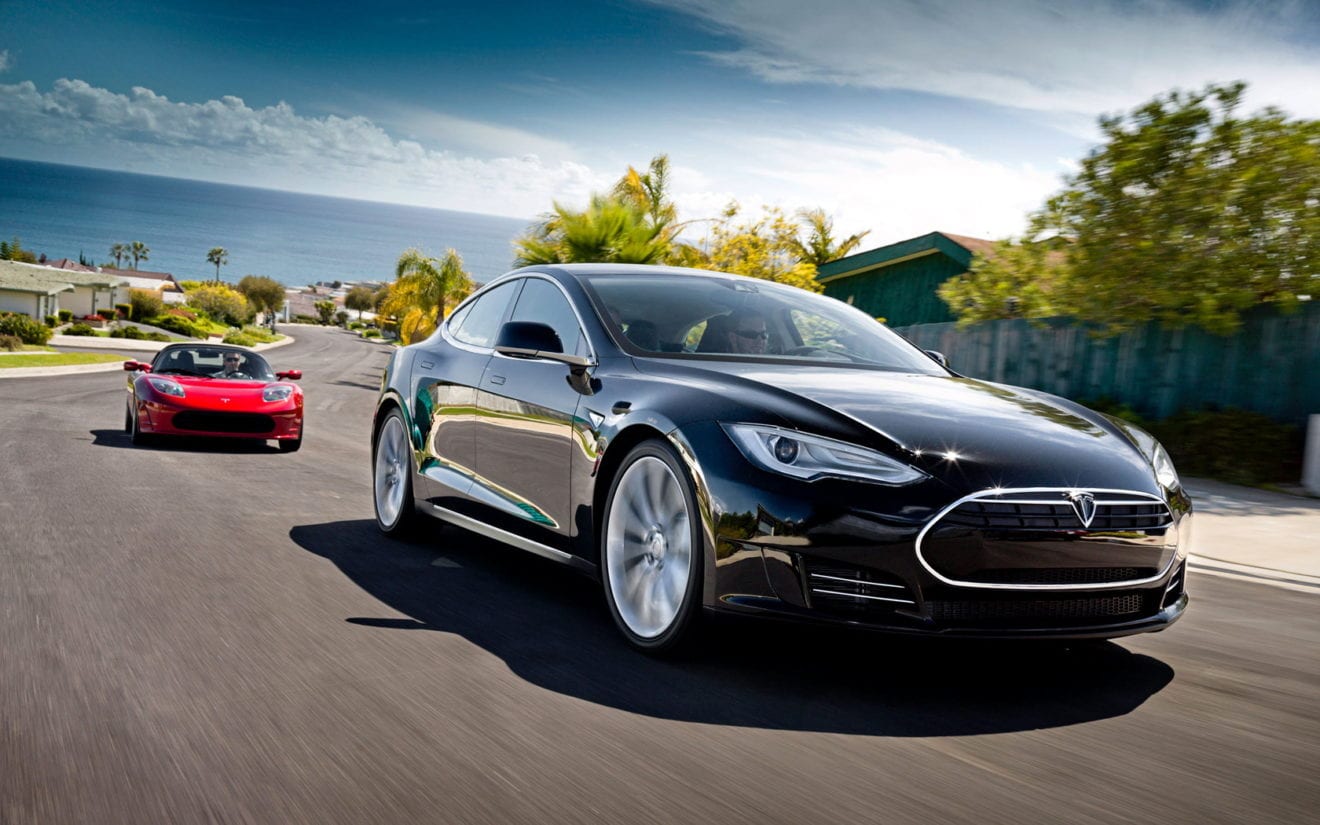
    Tesla Inc said on Saturday it has introduced an option for some customers to subscribe to its advanced driver assistance software, dubbed “Full Self-Driving capability”, for $199 per month, instead of paying $10,000 upfront. Tesla has previously said its subscription service would generate recurring revenue and expand the customer base for pricy features including lane changing on highways and parking assistance.

    But the U.S. electric carmaker reiterated on Saturday that the current features “do not make the vehicle autonomous,” adding they “require a fully attentive driver, who has their hands on the wheel.””FSD capability subscriptions are currently available to eligible vehicles in the United States. Check your Tesla app for updates on availability in other regions,” Tesla said on its website.

    Tesla’s CFO Zachary Kirkhorn said in April that its planned subscription service would generate recurring revenue for the company, although “there could be a period of time in which cash reduces in the near term.”

    “If … you look at the number of customers who did not purchase FSD upfront or on a lease and maybe want to experiment with FSD, this is a great option for them,” he said during an earnings call in April.

    Tesla said the subscription service is available in vehicles equipped with Full Self-Driving computer 3.0 or above. It told customers that upgrading to the new hardware will cost $1,500.

    Tesla Chief Executive Elon Musk forecast in 2019 that robotaxis with no human drivers would be available in some U.S. markets in 2020. In March, Tesla told a California regulator that it may not achieve full self-driving technology by the end of this year.

    Tesla has been testing its new semi-autonomous driving software for city streets and last week released “FSD Beta v9” to a limited number of customers.

  • MG Hector’s Connectivity Features Unveiled

    MG Hector’s Connectivity Features Unveiled

    MG Motor India today unveiled the cabin features of its upcoming SUV MG Hector. Touted as the company’s first internet car, the upcoming MG Hector will come with a new advanced connectivity system called i-Smart next-generation system, a complete integrated solution that combines software, hardware, connectivity, services and application. The system has been developed in collaboration with several technological partners like Cisco, Unlimit, and Microsoft among others. The iSmart connectivity system comes with advanced technology, smart application, built-in Apps, Artificial Intelligence (AI), Smart Features, Voice Assist, and Infotainment.

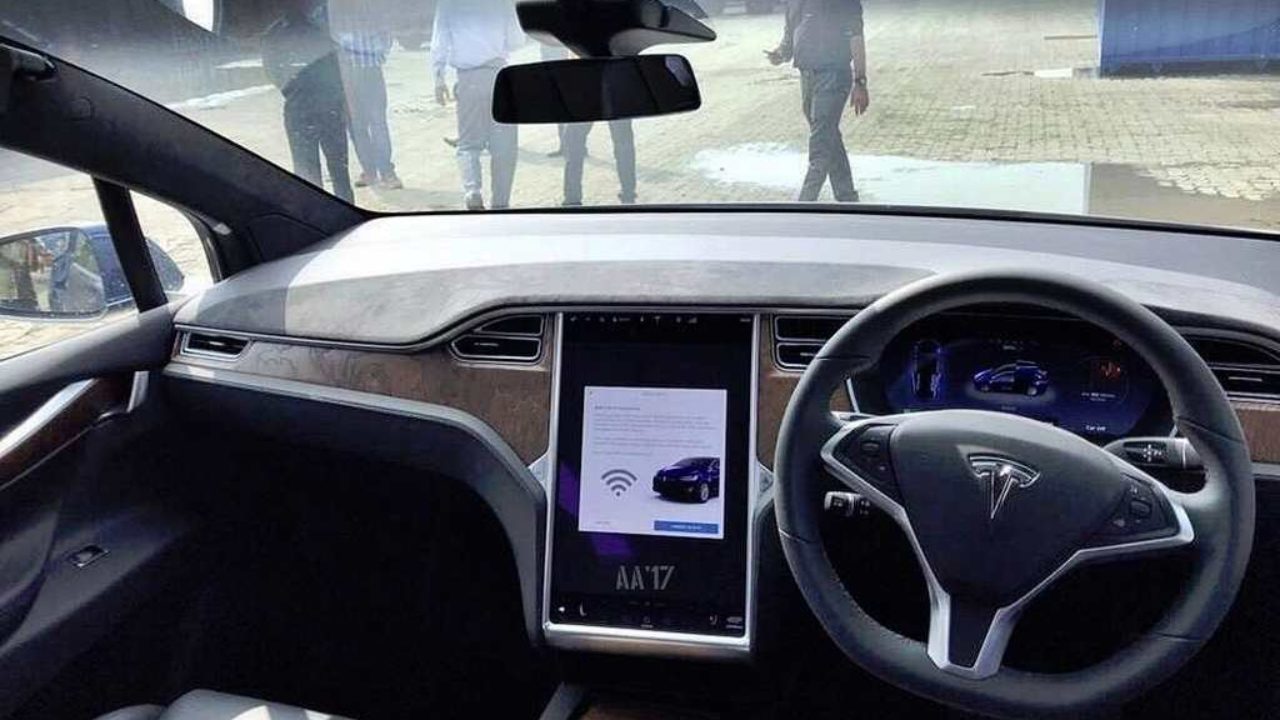
    The command centre of the system is a vertically-mounted 10.4-inch ultra large Full-HD infotainment display that comes with pre-loaded entertainment content and allows you to manage complete vehicle settings. MG says that the display screen can withstand the high temperatures of Indian weather conditions. For full-time connectivity, the system also comes with a first machine to machine embedded sim, along with the SUV Internet Protocol version 6 makes it 5G-ready, making it future-proof. The system offers features like – Real-Time Navigation, Remote Location, Geo-Fencing, Emergency Response and much more.

    Furthermore, with smart connectivity, the MG Hector will also be getting software updates via over-the-air (OTA) downloads, like firmware and features updates much like any smartphone. Also, as mentioned earlier, the car will come with pre-loaded apps like – TomTom IQ Maps, Gaana Premium, and AccuWeather app among others. In fact, MG Motor India will be offering its customer free data too for the first few years. The system itself is well-secured by Microsoft, which will be the Cloud provider for MG Motor.

    One of the key features and most important features offered in the MG Hector is its voice command system. Powered by China’s conversational AI provider Nuance, the system is designed to use voice commands to access multiple in-car functions like close or opening sunroof, control climate control, navigations and more. In fact, the system can even understand the Indian accent to make it suitable for the Indian market. Like Google Assistance, the Voice Assist system can be accessed by saying ‘Hello MG’ and is capable of handling over 100 functions. The Hector also comes with an eCall emergency response system that sends an emergency alert to MG’s customer management centre, called Pulse Hub and any registered phones, in the case of an accident. Also, in the event of the airbags being deployed, the system triggers a series of emergency response actions.

    The iSMART Next Gen is supported by the iSMART mobile App. MG iSMART App is feature-rich like none other in the Indian market. The car gets scanned each time the App is opened, and information includes location of car, tyre pressure, or if the doors are locked or not. Owner can use the remote app to directly lock or unlock doors, turn on ignition and switch on the air-conditioner.

    The all-new MG Hector is slated to be launched in second quarter of 2019. The SUV will come with premium interior and features like – with power adjustable seats, cruise control, electronic parking brake, and 360-degree camera. We also know that the SUV will come with a panoramic sunroof, which the company claims will be the largest in the segment. The SUV will come in both petrol and diesel powertrains – 1.5-litre petrol engine and a 2.0-litre diesel motor.

  • Nokia launches a digital assistant for telcos

    Nokia launches a digital assistant for telcos

    Nokia has announced the launch of MIKA, the first digital assistant customized for the telecommunications industry.

    MIKA (multi-purpose intuitive knowledge assistant) is designed to provide voice-activated access to information for telecoms engineers, to reduce the time needed to find essential information needed to maintain complex multi-technology network environments.

    MIKA is powered by the Nokia AVA cognitive services platform, and provides access to the AVA knowledge library of best practice gathered from Nokia’s network projecs around the world.

    The platform combines augmented intelligence with automated machine learning based on Bell Labs learning algorithms.

    “Finding the right information is a daily challenge for telco engineers tasked with boosting network quality,” Nokia head of global services Igor Leprince said.

    “MIKA taps into the power of the Nokia AVA platform to provide quick and accurate answers, avoiding time wasted on fruitless searches. MIKA is customized to support the specific needs of telecoms, and can deliver recommendations based on experience from networks around the world.”

    Nokia also introduced a new predictive repair service, which will enable operators to reduce costs by predicting hardware failures and recommending replacements up to 14 days in advance. The vendor said the service can achieve up to 95% accuracy.

    Predictive repair will be available to operators using Nokia’s 3G and 4G equipment.