Tag: astana

  • Broekman Logistics Highlights Middle Corridor for Europe-Asia Project Cargo

    Broekman Logistics Highlights Middle Corridor for Europe-Asia Project Cargo

    On 13 October 2026, Broekman Logistics highlighted the growing strategic importance of the Middle Corridor as European and Asian shippers seek alternative transport routes for project cargo, industrial equipment and high-value freight.

    The Netherlands-based logistics company said continued investment in rail infrastructure, ports and terminals along the Trans Caspian route is improving connectivity and creating new options to reduce dependence on established maritime corridors.

    Multimodal Links Across the Caspian Sea

    Running through Turkey, Georgia and Azerbaijan, the corridor crosses the Caspian Sea to reach Kazakhstan, Turkmenistan and Uzbekistan. Shippers combine short-sea shipping, rail freight and road haulage to bypass maritime bottlenecks and geopolitical flashpoints.

    Moving breakbulk cargo across the route requires coordination across multiple rail gauges, seaports and customs jurisdictions. Broekman Logistics focuses on synchronised route surveys, transit permits and heavy-lift transfers at Caspian terminal interchanges.

    Transit Coordination and Gateway Roles

    Turkey serves as the western anchor for the corridor, feeding European traffic through rail and highway links toward the South Caucasus. Turkish ports handle transshipment for landlocked Central Asian destinations that lack direct maritime access.

    Route selection depends on physical constraints along the way. Axle-load limits, bridge clearances, rail tunnel dimensions and Caspian port crane capacities dictate whether oversized equipment can move intact or requires disassembly before crossing inland borders.

    Operational Bottlenecks for Project Cargo

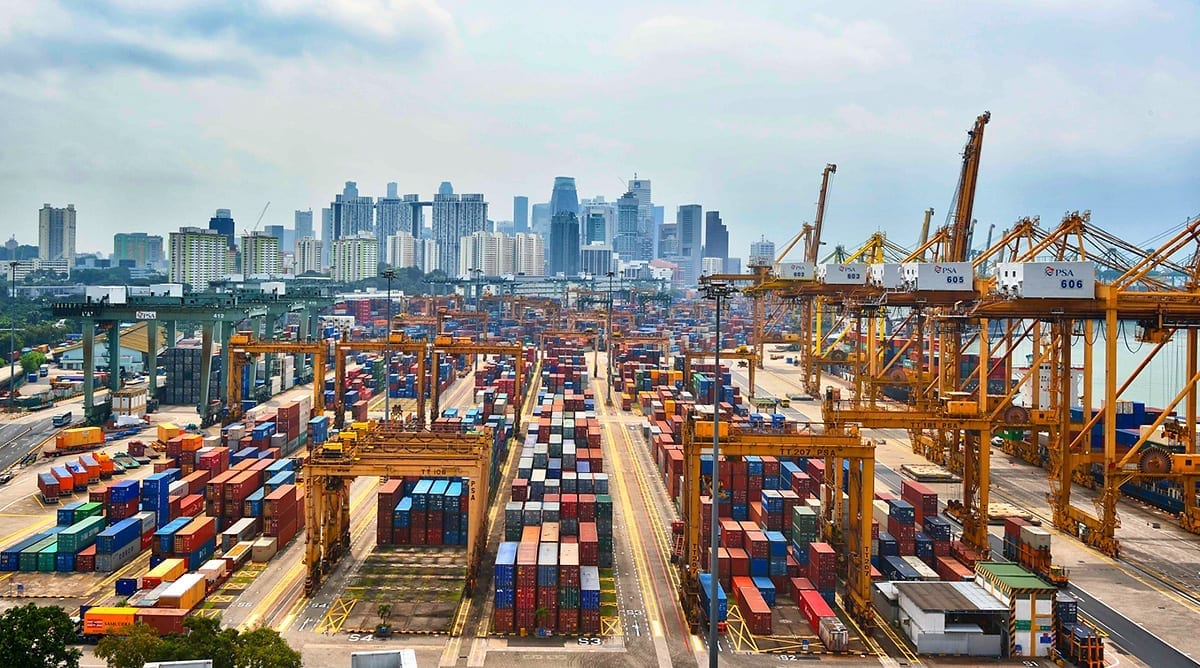
    Terminal upgrades along the Trans-Caspian line have expanded container handling, yet breakbulk cargo faces different operating realities. Transporting industrial machinery requires dedicated roll-on/roll-off vessel capacity and heavy-lift handling gear, which remain limited across Caspian Sea crossings.

    Customs alignment across five transit countries is the primary variable for schedule reliability. For equipment suppliers and engineering contractors, single-point delays at rail-to-ship transfer points can disrupt installation timelines at Central Asian mining and energy developments.

    Border Clearances and Caspian Vessel Capacity

    Infrastructure authorities along the corridor have invested in rail sidings and port berths across Baku, Aktau and Kuryk to improve transfer speeds. These terminal projects aim to establish predictable transit intervals for industrial shippers evaluating overland options against long-haul sea routes.

    Commercial viability for heavy freight now rests on the delivery of scheduled Caspian ferry slots and standardised customs transit documentation across Kazakh and Azerbaijani border points.
  • Astana Panel Explores Hong Kong Capital Routes for Central Asian Firms

    Astana Panel Explores Hong Kong Capital Routes for Central Asian Firms

    In September 2026, financial leaders and exchange executives gathered in Astana to discuss how Central Asian companies can connect with international capital through Hong Kong.

    The panel, titled “Capital Pathways for Central Asia, Dual Listings, RMB Funding, Private Capital and the Astana-Hong Kong Route,” featured Assel Mukazhanova of AIX, Johnson Chui of HKEX, Askar Bilisbekov of Alem Capital Management, and Thomas G. Tsao of Gobi Partners, with SCMP’s Eugene Tang moderating.

    Mukazhanova noted that Kazakhstan’s domestic market cannot fully meet regional financing demand, while Bilisbekov highlighted that Alem Capital Management is operating two funds, including a venture capital fund investing regionally and globally, alongside plans for an infrastructure fund.

    Hong Kong Listing Halo

    Venture capital firms operating between East and Central Asia view Hong Kong regulatory scrutiny as a vetting mechanism for international fund managers hesitant about frontier markets. Thomas G. Tsao, founding partner of Gobi Partners, pointed out that Hong Kong listings provide emerging Central Asian companies with regulatory credibility similar to how early Chinese tech firms used Nasdaq listings to establish trust with global institutional backers.

    For institutional investors across Asia, the channel offers exposure to Central Asia’s tech and natural resources sectors without navigating fragmented local legal structures. The primary operational risk rests on liquidity: smaller Central Asian tech firms must demonstrate sufficient scale and recurring revenue to attract trading volume once listed in Hong Kong, rather than becoming dormant secondary listings.

    Talent and Regional Trade Routes

    Central Asian founders increasingly build software and services designed to interface across Chinese, Russian, and Western commercial systems. Tsao noted that the region’s multilingual, mobile-first workforce gives early-stage companies an advantage in operating across multiple trade jurisdictions simultaneously.

    The push to build financial corridors follows years of physical trade expansion between China and Central Asia along traditional overland freight routes. Financial institutions in Astana now aim to match those physical supply chains with institutional capital flows, moving Central Asian funding beyond bilateral state debt into equity markets.

    Broadening the Investor Base

    Market participants also view the Hong Kong link as a way to diversify capital sources, reducing concentration risk from single-nation strategic investors in resource extraction and mining. Channelling investments through public equity and institutional funds brings a wider mix of global asset managers into Central Asian enterprises.

    AIX and its regional partners are now screening candidate companies for initial dual-listing pipelines and private rounds, with the first wave of cross-border listings targeted as market benchmarks.