Retail News CRM

Tag: asus

  • Ikea teams with Asus to launch furniture for gamers

    Ikea teams with Asus to launch furniture for gamers

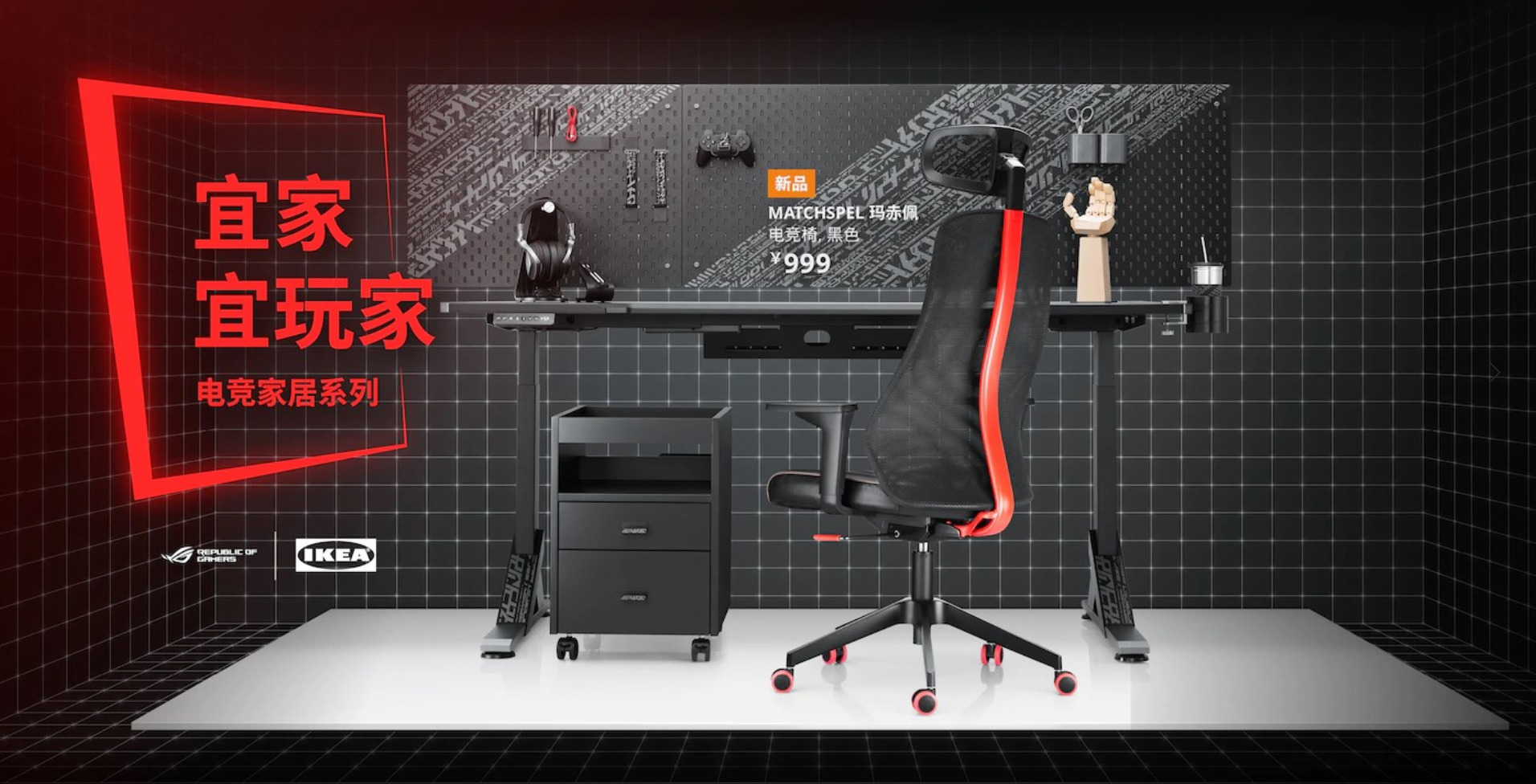
    KEA announced a partnership with ASUS Republic of Gamers in September 2020, and the fruits of that team-up are now appearing, right on schedule.

    As expected there is a wave of products releasing for customers in China, ahead of an expected launch for Western markets in around October of this year.

    The range includes everything from gaming chairs and adjustable desks, the sort of furniture you might expect, alongside even more gaming-focused accessories like headset stands, a ring light for streamers, a CPU stand with its own castors, and more.

    It’s an impressive list of options, but the most exciting part of it, as was expected, are the prices, which trend low. The MATCHSPEL gaming chair, for example, is set at ¥999.00, which converts to around £112, a price that beggars belief compared to what some on the market are asking for.

    Best PS5 games 2021: Amazing PlayStation 5 titles to pick up By Max Freeman-Mills: 5 February 2021

    There are desks specifically aimed at gamers that cost even less, and that’s before you get to the likes of the accessories, which are all slapped with low price tags too.

    That makes the line an exciting prospect, given that we know that it’s planned for a more global expansion later this year. You can view the whole range on Ikea’s Chinese website here, for now, to get a sense of what it looks like, although we don’t know which exact products will make the leap, or whether they all will.

  • Asus Experience Store opens in Singapore

    Asus Experience Store opens in Singapore

    Singapore’s first Asus Experience Store has opened on the third level of Bugis Junction.

    The 3000sqft concept area contains three separate areas: a Republic of Gaming-branded store for gaming equipment, the main showcase space for laptops and peripherals and an assistance centre for service and technical advice.

    The gaming store contains a six-station gaming network called the Battlezone, which visitors can book online to use for free. The brand hopes to hold regular events in the space to help foster the local gaming community.

    The Asus computer outlet contains the brand’s full range of workstations and hosts workshops in image and video post-production.

    Included in the Asus Experience Store is space specially dedicated to workshops where customers can learn how to post-produce images and videos or hear professional talks about Asus products.

  • Asus ZenFone 6 first update brings important camera improvements

    Asus ZenFone 6 first update brings important camera improvements

    The ZenFone 6 hasn’t even been released in the United States and Asus is already pushing out a major update that brings important camera enhancements. If you plan on getting one when Asus will launch the ZenFone 6 in the US in July, here is what to expect from the first ZenFone 6 update.

    If you didn’t know, Asus ZenFone 6 packs a so-called motorized flip camera, which allows users to take both selfies or regular photos. It basically acts as both rear and front cameras to ensure that you take the best pictures in every scenario.

    Well, it looks like the ZenFone 6’s camera needs some adjustments, so Asus has decided to address that in the first update, which focuses exactly on this aspect. First and foremost, the camera Super Night Mode and HDR+ Enhanced mode received considerable improvements on image processing speed and image quality.

    Furthermore, the update should add volume key functions, which will allow users to control the flip camera rotation. Basically, you can set the volume key as shutter, zoom, or flip camera in the Asus Camera app settings manually.

    The smart key can now be used as a shutter to take pictures in Camera mode, and the camera rotation stability has been improved as well. Also, the default wallpaper and ringtone have been updated too, while the translation strings in Settings have been optimized.

    According to Asus, its server pushes out the update in batches, which means that it will take some days before everyone will receive the notice. However, you can manually check for it by heading to System settings in the Settings / System.

  • Asus delivers Android 9.0 Pie to another ZenFone smartphone

    Asus delivers Android 9.0 Pie to another ZenFone smartphone

    Asus promised a few months ago that it will update some of its ZenFone smartphones to Android 9.0 Pie, but only partially delivered. Today is the day that another part of the promise is fulfilled, as the ZenFone Max M2 is now receiving the long-awaited Android 9.0 Pie update.

    Initially slated for an April 15 rollout, the Asus ZenFone Max M2 Android 9.0 Pie update is now being deployed in the United States. If you own the budget-friendly smartphone, you can head Settings / System / System updates and check if there’s a new firmware available.

    Besides all the changes that Android 9.0 Pie brings, the update adds the May security patch and a new version of the Google Mobile Services (GMS). As Asus points out, the servers are pushing the update in batches, so it may take some days for everyone to receive it.

    Asus announced two months ago that two other ZenFone smartphones aside from the ZenFone Max M2 will receive Android 9.0 Pie updates by mid-April: ZenFone Max Pro M1 and ZenFone Max Pro M2.

    As a matter of fact, the majority of ZenFone 4 and ZenFone 5 smartphones are expected to receive Android 9.0 Pie updates this. Of course, the ROG Phone will get the software upgrade as well, we just don’t know when.

  • Asus tipped to launch second-generation ROG gaming smartphone

    Asus tipped to launch second-generation ROG gaming smartphone

    The ROG Phone, Asus’ first gaming smartphone was quite expensive at launch, even when compared to other flagships released on the market around the same time. The cheapest Asus ROG Phone could be yours for $900 in the United States, while the most expensive model, which packs 512GB storage, was priced at $1,100 outright.

    Apparently, Asus plans to launch a sequel later this year, but the company will mainly focus on the Chinese market this time. Digitimes reports the second-generation ROG Phone will be launched in Q3 2019, and that Asus will team up with Tencent to advertise the flagship in China.

    Back in December, Asus outlined its new strategy to focus on gaming and premium smartphones rather than entry-level and mid-range models, which is meant to reduce the losses of its smartphone business.

    The report also claims Asus has a big chance of revitalizing its smartphone division if the partnership with Tencent goes through, even though gaming smartphones remain niche products that don’t generate significant profits.

    Although Asus plans to focus on the Chinese market with the next ROG Phone, there’s no reason not to sell the device in other markets like Europe and the United States.

  • ASUS Handpicks SmartOSC for Its Ecommerce Push in Singapore

    ASUS Handpicks SmartOSC for Its Ecommerce Push in Singapore

    ASUS, one of Fortune magazine’s World’s Most Admired Companies, that is dedicated to creating products for today and tomorrow’s smart life, has appointed SmartOSC to be its ecommerce partner, following a competitive pitch in April. The event marked an important milestone in ASUS strategy to differentiate and enhance its offering for the Singapore market.

    Emma Ou, Country Manager of ASUS Singapore shared: “The current ASUS’s website is the best place to explore our wide range of products. Adding the ecommerce site will deliver a more convenient and immediate shopping solution in addition to all our brick and mortar stores at our brand stores and authorised retailers. Hosting our own ecommerce site is also align with our ongoing effort in providing our customers a seamless O2O shopping experience and an attractive rewards programme. Throughout the entire pitching process, SmartOSC demonstrated a holistic view of our requirement and passion for our brands. We get great ideas and constant feedbacks from their team for realizing our vision”.

    According to research firm Statistica’s report on Singaporean consumer ecommerce market, electronics & media is currently one of the leading ecommerce verticals accounted for 26% of total revenue. With user penetration is at 68% in 2018 and is expected to hit 72% in 2022, ecommerce is a captivating opportunity for any brands and retailers. Moreover, the research firm also reports that Asia contributed for almost 80% of all B2B e-commerce volume worldwide in 2017 and Southeast Asia is proving itself to be an attractive B2B procurement market in the region.

    SmartOSC will work closely with ASUS team to provide consulting, user-centric experience design, technical implementation and integration services. After launch, the website will be the one-stop shopping destination for both B2B and B2C customers. Customers will be able to order a wide range of product available across ASUS distribution network, and there will be options build customized gaming hardwares from its famous Republic of Gamers (ROG) product line.

    “ASUS is exactly the kind of ambitious partner SmartOSC is excited to work with. It gives us the opportunity to think out of the box and work on a project that goes beyond conventional requirements. We are confident that our ecommerce expertise and technical capability will make us a genuinely valued partner to ASUS.” Thai Son, CEO of SmartOSC, said.


  • Courts Singapore getting serious with flagship store

    Courts Singapore getting serious with flagship store

    Courts Singapore has redesigned its flagship megastore in Tampines, offering a new immersive experience for customers.

    For the upgrade, the retailer of home electronics, IT and furniture products has put a particular focus on the needs of modern apartment living.

    With its official grand opening on Saturday, the store offers 136,000sqft (12,600sqm) over three floors, with experiential areas making up most of the space.

    In conjunction with the makeover, Courts has also unveiled its relaunched online store which now seamlessly unifies the offline/online shopping experience. The webstore is the largest in its network, offering more than 17,000 SKUs as well as introducing intuitive navigation, search and a faster check-out experience. There is also the option to collect purchases in its physical stores.

    Courts Singapore - Tampines flagship - The newly redesigned Level 1 atrium at COURTS Megastore Tampines

    “We are making good living and great in-store experiences accessible and affordable to all Singapore homeowners – a vision we’ve stayed true to since we first opened 43 years ago,” says group CEO Dr Terry O’Connor.

    Courts Singapore - Tampines flagship - 50 per cent of COURTS online shoppers choose to buy online and collect in-store, at convenient Click and Collect counters

    $10 million investment

    The flagship upgrade is part of Courts Singapore’s S$10 million (US$7.3 million) investment into a series of store refurbishments for the financial year with a focus on new retail concepts and experiential areas. Courts has also launched a new brand slogan, “Better Living, Better Prices”.

    “The Courts Megastore transformation is the result of a year of planning and two months of renovation work, combining the expertise of the commercial, visual merchandising and store operations teams,” says Courts Singapore country CEO Ben Tan.

    Courts Singapore - Tampines flagship - Four new chef demonstration areas bring culinary delights and in-store theatre to shoppers

    “We’ve curated every aspect of the shopping journey,” he says. This includes online integration, a new range for lifestyle and smart technology trends, complementary furniture customisation and three-week delivery.

    Courts Singapore - Tampines flagship -Smart home link-up is demonstrated at Design Studio by COURTS, and available for purchase at COURTS' one-stop solutions provider GURU

    Courts Singapore - Tampines flagship -Customising your sofa is as easy as 1-2-3 with over 2,500 COURTS-exclusive fabrics and over 150 leather and half-leather options to pick from

    With every furniture consultation customers are offered a free cup of artisanal coffee. Bespoke options are available for every furnishing need from sofas, curtains and blinds to wardrobes, bedding and dining tables.

    In its bedding department Courts offers more than 1000 types of mattresses from 23 brands. Shoppers can customise their bed frames and headboards. The revamped bedding area has 11 galleries including new brand for healthy living.

    Courts Singapore - Tampines flagship- A wide array of dining tables in various materials, finishes and bases are offered on the floor

    Design services

    For new homeowners, the Courts Design Studio offers services covering interior design, renovation, furnishing, flexible finance and smart-home connectivity. Consultants are on hand from two award-winning interior-design firms. The studio houses a full-size four-room HDB apartment and studio apartment showroom, integrated with smart-home automation.

    Courts Singapore - Tampines flagship - COURTS is the largest bedding retailer with over 1,000 mattresses from 23 brands

    On the same level, the new Home Gallery is an adaptable showroom space that will be regularly refreshed with room settings and also doubles up as a furniture photoshoot studio. The showroom has two movable walls.

    There is also a Dulux Paint Experience area where shoppers can experiment with colours.

    Four new interactive cooking demonstration stations will feature chefs and cooking hosts. Hungry shoppers have the new Mo Cafe for single-origin coffee and cakes, and a Subway with a window overlooking the third level.

    Samsung Open House 2.0 is an experiential retail concept offering an interactive and connected smart-home experience. It showcases the brand’s range of digital appliances on a 85in. UHD display, allowing shoppers to visualise how each appliance might look in their home. The neighbouring LG Home Entertainment area showcases a range of setups.

    Hands-on gaming

    Courts Singapore - Tampines flagship - The new Gaming Zone at COURTS is a space hosting multiplayer gaming tournaments and a key experiential zone in the store

    Courts has also expanded its gaming zone with such brands as Acer Predator, Alienware, Asus Republic of Gamers, Lenovo Legion, MSI and Razer. shoppers can try out the latest PC games, and there is a space designed to host multiplayer gaming tournaments.

    Also launched at the megastore is Guru, which offers more than 100 repair and maintenance services for more than 20 home-product categories. It will be open 365 days a year with its own in-store service counter as well as a phone hotline, and will also offer home cleaning, painting and fix-it services with warranties.

    COURTS has expanded its gaming retail area with nine PC, console and augmented reality gaming brands

    To mark the flagship’s official opening, a four-week celebration will offer discounts of up to 90 per cent, and deals such as a free Xbox One, worth $499, with the purchase of any gaming laptop computer.

    There will also be a celebrity line-up including Arsenal and Liverpool football stars, singer Joanna Dong, Running Man star Kim Jong Kook and Singapore’s first boxing champion, Muhamad Ridhwan.

    Free public Wi-Fi as well as complimentary parking are also available.

  • Asus Philippines pinning hopes on new smartphone

    Asus Philippines pinning hopes on new smartphone

    Asus Philippines has launched the Zenfone 4 series as is seeks to carve out more market share.

    Country manager George Su says the Taiwanese smartphone maker is seeking higher second-half growth after posting a 42 per cent hike in  smartphone sales during the first six months.

    “My boss gave me a much higher target for the second half,” he says, noting Asus is ranked fifth in the Philippine smartphone market. “We hope to be number four by the end of the year.”

    Asus CEO Jerry Shen says the firm is upbeat the Zenfone 4 series with its improved design, camera and audio.

    He says it is also easier to use and faster.

  • Samsung Maintains its Market Dominance followed by OPPO and ASUS in Indonesia

    Samsung Maintains its Market Dominance followed by OPPO and ASUS in Indonesia

    According to International Data Corporation’s (IDC) latest Quarterly Mobile Phone Tracker, total smartphone shipment in Indonesia in 2016Q3 recorded a slight Quarter-On-Quarter (QoQ) drop of 7% but still showed a moderate increase of 4% over the same period last year. “After the peak season of Lebaran ended, a stretch of quiet business begun in 2016Q3 which forced smartphone vendors to lower their shipment and focus more on improving the sales performance as well as laying the groundwork in anticipation of the peak shopping season in 2016Q4.” Says Reza Haryo, Senior Market Analyst, Client Devices, IDC Indonesia.

    Key highlights in the Indonesian smartphone market in 2016Q3 include: 

    US$250<US$300 price band segment grew significantly, which was contributed by the traction of OPPO’s F1s and Samsung’s Galaxy J7. However, when considering the Indonesian market as a whole, the US$100<US$200 segment remained the sweet spot, thanks to the demand for entry level 4G phones which usually offers the combination of 2GB ram and 16 GB internal storage.

    The share of 4G phones have also increased from 58% in 2016Q2 to 68% in 2016Q3 and had 8% sequential growth. This is largely due to the fact that telco service providers have been competing to expand their market share in a bid to capitalize on the growing number of smartphone users in the country through data bundling packages. In line with this expansion, the portion of smartphones sold in telco channel has also increased 22% YoY.

    “Indonesians use smartphones for entertainment purposes such as social messaging, video streaming, gaming, as well as browsing. Hence, there is a demand for the larger screen sized phones and the share of phablets have increased from 11% in 2015Q3 to 16% in 2016Q3. Most of the volumes came from major vendors such Samsung, OPPO and Asus. Samsung’s Galaxy J7, OPPO’s F1s and ASUS’ Zenfone Selfie were among the most popular models.” Adds Haryo.

    Top Five Vendor Highlights in 2016Q3 

    Samsung’s consistent marketing campaigns in retail shops enabled the vendor to increase shipments despite having a slower demand. This also extended the gap between the market leader and its competitors. The fallout from the Note 7 incident had relatively little impact on its brand perception in Indonesia.

    OPPO decreased sequentially relative to the non-peak period but still maintained its aggressive online and offline marketing activities. OPPO’s direct to retail strategy with various marketing supports continued to allow OPPO to increase its retail presence.

    Asus continued to rely heavily on the affordable Zenfone Go but the lack of marketing efforts throughout the quarter brought about its decline in the market.

    Advan introduced 8 low-cost 4G models in 2016Q3 alone. 4G models have been quick to pick up, partly thanks to the local vendor’s marketing activities heavily focusing on retail channels.

    Smartfren. As a local vendor that also operates as a telco provider, Smartfren tried to book more revenue from data services and recorded a 17% sequential decline for its smartphone shipment. Aside from bundling programs with leading smartphones such as the Samsung J Series, Smartfren have been consistent in promoting their Mifi product with attractive bundling program.

    Lenovo decreased sequentially relative to the non-peak period choosing to focus on sell-out instead. A6000, A1000 and A2010a were their top 3 models shipped in 2016Q3 in terms of units.

    Overall Positive Outlook for Indonesia

    IDC maintains the forecast for 2016 as the market is expected to expand significantly in Q4 and high demand during the festive season will allow vendors to increase shipment volume to reach targets. In addition, the continuous economic improvement from heavy infrastructure investment will continue to boost the Indonesia economy.

    The Local Content regulation (TKDN) is getting more accepted in a sense of clearer approach. A number of vendors including Xiaomi, LG, and Blackberry have now showed commitment to comply with this regulation. In the short term, it is expected that the industry will be focusing on local assembly but the challenge remains from the inadequate component supply chain ecosystem. But in the longer term, depending on the effectiveness of incentives provided by the government, more component manufacturers could move to Indonesia. This means that vendors would need to be prepared to have end-to-end manufacturing in Indonesia instead of just assembly. Hence, we expect that the future outlook will remain positive for 2017 onwards,” ends, Haryo.

    Channel dynamics

    With the intense competition and relatively low demand in 2016Q3, it caused vendors to put their utmost focus on liquidating stocks through improvement to their channels. The Direct to retail approach by cutting down the intermediaries has proven to help the sell-out of OPPO. IDC believes smartphone vendors will try to replicate this distribution strategy soon but this will require a strong retail relationship which only the larger vendors will be able to execute given the large volumes that they have and that they are more established in the market.

    Telco collaboration

    “Telco providers need to challenge the status quo and find ways to innovate as their core business continues to be pressured by over the top players which could be significant threats in revenue loss even as mobile data traffic grows exponentially. With an advanced network infrastructure and strategic partnership between telco providers, over the top players and hardware vendors, IDC believes that Telco providers and smartphone vendors can leverage the increasing demand for over the top players to drive up ARPU as well as brand exposure,” ends, Haryo.

  • Lippo Group expands into online wholesaling

    Lippo Group expands into online wholesaling

    After launching its Matahari Mall online shop in October, Indonesia’s Lippo Group is expanding its eCommerce activity into wholesale services.

    It is set to launch Mbiz.co.id next month, targetting businesses and government institutions. It digitises the procurement process, which Lippo Digital Group CEO Adrian Suherman says translates into efficiency.

    To offer its customers more choice, Mbiz is hoping to attract a wide range of vendors to join its platform as suppliers. The aim is to offer an easy alternative to cumbersome conventional procurement, where a business has to find vendors and compare them one by one, negotiate prices and record transactions manually. Mbiz wants to expedite procurement by making vendor information easily available, comparable and transparent, as well as offering flexible payments.

    Meanwhile, the eCommerce site has been selling products from 12 main categories, including electronics, furniture, office supplies and packaging. Its vendors include Asus, HP, Philips, Samsung, Sony and other blue-chip companies.

    Mbiz intends to start selling heavy machinery and agricultural goods as well as maintenance, repair and overhaul items for businesses and government institutions.

    “If we talk about fashion in B2C business, it is going to be the clothing itself, but in B2B or B2G business, the items are yarn, loom, sewing machines, embroidery machines and fabrics,” says Mbiz co-founder Ryn Hermawan.

    As many businesses have their own particular procurement systems, Mbiz uses a direct-selling strategy, giving individual presentations to companies and organising events to introduce its services. A follow-up team is available to train businesses and help them evaluate their performance.

    Mbiz can also offer clients product recommendations and input on when they need to buy goods based on their historical data.

    For the largely untapped government institution market, Mbiz will play the role of vendor by providing its e-catalogue to the Government Procurement Regulatory Body (LKPP). Co-founder Andrew Mawikere says the potential for the procurement of government goods and services in Indonesia last year was Rp31 trillion (US$2.36 billion) without e-tendering.

    Mbiz has fewer than 100 employees and is funded by Lippo, but says it is open to foreign investment in the future. The unit is run by Brilliant E-Commerce, part of the Lippo group. Matahari Mall is run by Global Ecommerce Indonesia, in which Investama Digital Ventura holds a majority stake.

  • Asus ZenWatch 2 priced in Singapore, aims for mass market

    Asus ZenWatch 2 priced in Singapore, aims for mass market

    Taiwanese PC giant Asustek Computer Inc is taking the price of smartwatches, specifically those running on Google’s Android Wear platform, to a new low.

    Launching the Asus ZenWatch 2 smartwatch in Singapore on Oct 29, the company announced the wearable will begin shipping in Singapore from Nov 14 and retail for S$229 (US$165).

    As the name implies, this product is the follow-up to the original ZenWatch launched back in 2014.  That wearable wasn’t officially sold in Singapore, but was (belatedly) made available in Malaysia.

    Asus’ country manager for Singapore, Leo Tseng, told Digital News Asia (DNA) at the sidelines of the launch event, the decision not to introduce the original ZenWatch to Singapore was due to timing.

    “At that time [early 2015], the price was high and consumers weren’t educated about smartwatches, so if we brought that product in, there would be trouble for us.

    “Now, Apple has since launched their smartwatch, so consumers have a better idea and feelings towards this type of product,” he said, alluding to improved consumer awareness about  smartwatches thanks to the buzz generated by the Apple Watch.

    Tseng also noted that there was a clear directive from Asustek’s chief executive officer Jerry Shen to the product team to improve on the wearable and make it more affordable for consumers without sacrificing on quality.

    Compared to the recently launched Huawei Watch which starts at S$549, or even the Tizen-powered Samsung Gear S2 which retails for S$448, the Asus ZenWatch 2 looks like a sweet deal.

    And unlike its rivals, Asus is sticking to one price for its watch, even though it comes in two different sizes “to cater to both female and male users”, according to its press materials.  When asked for the reason behind offering just a single price point, Tseng said it was to reduce consumer confusion.

    The 1.63 inch ‘Sparrow’ model is similar in size to the previous ZenWatch, while the 1.45-inch ‘Wren’ version will suit smaller wrists.  Those measurements refer to the size of the display.

    To provide some design variety, Asus is also making available a number of interchangeable straps for the watches, priced at S$39 (US$28) each.  The bands will come in both rubber and plastic options, and will be available at the end of November.

    The original model was critically well-received, partly due to its sleek design and leather band.  In this regard, Asus hasn’t strayed too far from that design philosophy.

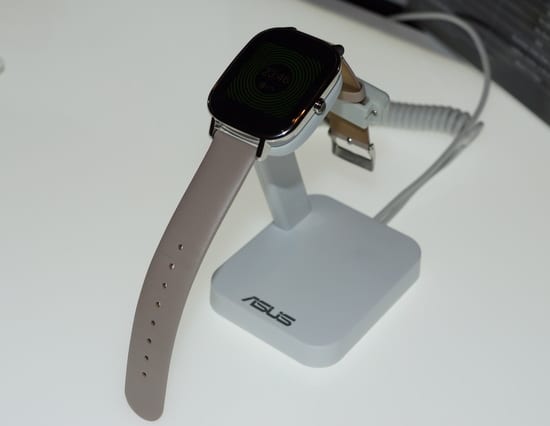
    Rather than going for a circular face, the company is continuing with a rectangular-shaped stainless steel watch case design with rounded edges, leather bands and metal buckles.

    A metal crown button is fitted on the right, similar to wristwatches and provides a way to access apps and turn the screen on or off.

    The watch display has a slightly curved surface which Asus claims improved usability and is protected against scratches with Corning’s Gorilla Glass 3.

    One marked change over its predecessor is the design of the watch clasp. The original model utilised a large metal clasp that joined both sides of the band together. The new ZenWatch opts for a more traditional buckle and is less conspicuous and looks more refined by comparison.

    One area which Asus didn’t iterate on however, is the internal hardware specifications. This smartwatch continues to rely on the same Qualcomm Snapdragon 400 processor, with 512MB of memory and 4GB  of storage.

    The display resolution on the ‘Sparrow’ model is also similar at 320 x 320 resolution, while the smaller ‘Wren’ model comes with a lower 280 x 280 resolution.  Asus is also utilising the same high-contrast AMOLED screen found in the original watch.

    In terms of battery life, the company claims the new watch is fitted with an enhanced battery (400mAh for Sparrow, 300mAh for Wren) which will provide up to two days of use on a single charge.

    It said it made some improvements to the charging mechanism, utilising a magnetic charger which takes slightly more than half an hour to charge the unit from zero to 50 percent capacity.

    Like most smartwatches today, the ZenWatch 2 comes with a number of different sensors to track your activities and how long you’ve stayed sedentary, but unfortunately it dropped the heart-rate sensor from this model.

    Tseng said few people used the heart-rate sensor found on the original ZenWatch, so it decided to focus on other areas, like being able to track a larger variety of activities, including push-ups and sit-ups, aside from the usual walking and running motions, as part of its updated ‘Wellness Manager’ software.

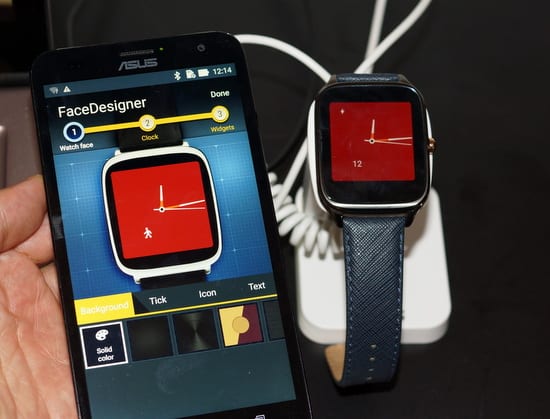
    Compatible with Android smartphones and iOS devices, this wearable also includes new apps like  ‘FaceDesigner’ (pic above)  which lets you create your own watch face from your smartphone, and ‘Business Helper’ which helps users keep track of their agendas, manage their emails and viewing call logs, without having to check their smartphone.

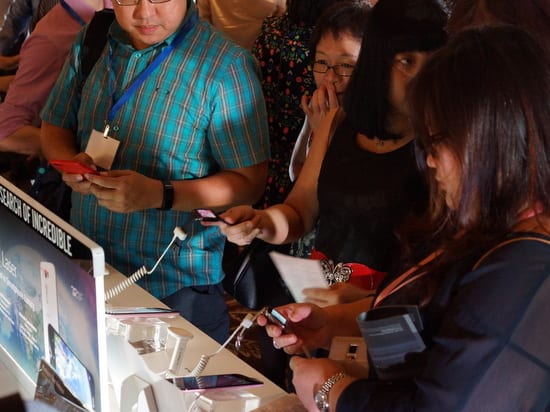
    Speaking with several of the trade partners and members of the media who were present at the launch, DNA found the reaction to be generally positive, especially when it came to the price of the watch.

    Some believed this would help to encourage users to try on the watch for size, and since the ZenWatch 2 is available in two sizes, it would hopefully meet the needs of the fashion conscious as well.