Retail News CRM

Tag: AT&T

  • Google Messages will become the default messaging app for AT&T Android users

    Google Messages will become the default messaging app for AT&T Android users

    RCS (Rich Communication Services) is not something new, it’s just that many smartphone users don’t have access to the feature. AT&T and Google want to change that by making Messages the default messaging app for all the carrier’s customers in the United States who use Android phones.

    Google announced that it has teamed up with AT&T to upgrade the SMS experience with enhanced messaging features included in Messages. That means that AT&T Android users will benefit from expanded chat features based on RCS, as well as other enhanced features.

    Just to recap, RCS makes it possible for users to send higher-quality videos, share full-resolution pictures, send and receive messages over Wi-Fi or data, as well as participate in group chats that are easy to manage. Also, with the Messages app, users can see when someone is replying to a text.

    But wait, there’s more! Google confirmed that it’s now rolling out end-to-end encryption for one-on-one RCS conversations between people using Messages and those who have chat features enabled, another step forward to making messaging more secure for everyone using Android devices.
  • AT&T to move its 5G mobile network to Microsoft’s Azure cloud

    AT&T to move its 5G mobile network to Microsoft’s Azure cloud

    Microsoft and AT&T announced they inked a deal to provide the carrier with increased productivity and cost-efficiency of its 5G network services. Under the new partnership, AT&T will move its 5G mobile network to the Microsoft Azure cloud, while the Redmond-based company will gain access to the carrier’s intellectual property and technical expertise to grow Azure for Operators, its top-tier telecom offering.

    Furthermore, Microsoft confirmed that it will purchase AT&T’s Network Cloud platform technology, which the carrier’s 5G core network runs on. Furthermore, Microsoft will buy AT&T’s engineering and lifecycle management software that is typically used to design and deploy network cloud platforms specifically made for carriers.

    Regardless of the acquisitions announced today, AT&T will continue to operate its network and manage customer relationships, it’s just that it will now use Microsoft’s infrastructure.

    Naturally, Microsoft will be responsible for deploying both the software development and the carrier’s Network Cloud, as well as for bringing AT&T’s existing network cloud to Azure over the next three years. The announcement mentions that neither company is disclosing details on financial terms.

  • AT&T starts rolling out a potentially game-changing 5G technology

    AT&T starts rolling out a potentially game-changing 5G technology

    There’s been a lot of talk over the last few months about T-Mobile’s great progress in terms of 5G coverage and speeds, as well as Verizon’s early (and impressive) lead in the latter department. Meanwhile, Sprint’s own early 5G rollout efforts and development resources are now in Magenta’s hands, positioning “New T-Mobile” as an industry trendsetter and possible market leader in the not-so-distant future.

    But where does that leave AT&T in the grand scheme of the nation’s 5G deployment equation? The short answer is… in a pretty awkward place. We’re talking about a carrier that technically offers three different flavors of commercial 5G services, nonetheless ranking behind Verizon and Sprint in average download speeds and behind T-Mobile and Sprint in 5G availability in the latest in-depth Opensignal report.

    That’s because Ma Bell’s 5G Evolution technology is little more than a publicity stunt (and a misleading one at that), the “standard” 5G signal is based on low-band spectrum and therefore not very fast, while the 5G+ network suffers from the same coverage limitations and problems as Verizon’s 5G “Ultra-Wideband” service. On top of everything, AT&T also doesn’t own as much dedicated 5G low-band spectrum as T-Mobile, making it impossible for America’s second-largest carrier for the time being to challenge Magenta’s 5G availability numbers.

    Fortunately, that’s where a groundbreaking technology dubbed Dynamic Spectrum Sharing (DSS) comes in. Unfortunately, this is not ready for nationwide primetime just yet either. The way DSS works is essentially by allowing mobile network operators to, well, dynamically share spectrum. In other words, AT&T can now use the same “channel” for both 4G and 5G users “dynamically”, aka simultaneously.

    Even simpler put, the carrier doesn’t need to permanently switch off its 4G LTE signal and repurpose said spectrum to exclusively serve 5G-enabled smartphones. Instead, DSS is what AT&T calls a “traffic-aware” technology, instantly responding to changes on its network to allocate and split 4G and 5G resources depending on demand.

    In theory, that sounds like an absolute game-changer with the potential to significantly shorten AT&T’s path to nationwide 5G, but in reality, there are still a number of kinks to iron out, as well as many important unanswered questions.

    Although both Verizon and T-Mobile plan to embrace Dynamic Spectrum Sharing… eventually to help with their own 5G support expansion efforts, the “Un-carrier” has been very vocal about its skepticism regarding the technology’s wide-scale implementation in the short run.

    T-Mobile President of Technology Neville Ray anticipated “a tough year on DSS” back in February, further highlighting that the potential industry game-changer was “still bumpy” just last month due to a previously unforeseen delay in the rollout schedule of one unnamed major network equipment vendor.

    While AT&T didn’t care to elaborate what equipment vendors made its recent DSS launch possible, it’s definitely worth pointing out that the software-based technology is currently only live in “parts” of Ma Bell’s network in North Texas.

    Obviously, the carrier hopes to “continue expanding” its 5G coverage “throughout the year, bringing the power of 5G to more customers from coast to coast”, but at least for the time being, there are no other details to share on actual dates or places.

    The list of “5G devices already upgraded in the field” to support Dynamic Spectrum Sharing is also disappointingly short, merely including Samsung’s Galaxy S20, S20+, S20 Ultra, and Galaxy Note 10+ 5G, as well as LG’s V60 ThinQ.

    Last but certainly not least, there’s the question of the actual user benefits DSS is expected to facilitate. The answer is unlikely to make AT&T customers very happy, as the mobile network operator anticipates significant improvements in speed… further down the line. Until the technology is refined, upgraded, and deployed on a larger scale, you’ll have to settle for pretty much the same download numbers you usually get on LTE.

  • AT&T offers three months free service to medical professionals with priority over other service plans

    AT&T offers three months free service to medical professionals with priority over other service plans

    The coronavirus pandemic is still ongoing and as we all know, tech giants are trying to help as much as they can. Phone carriers are on it as well. Now, CNET reports that AT&T has announced it is going to give three months of free service of its FirstNet program to doctors and medical professionals.

    According to the announcement, in order to be able to benefit from the program’s free service, you have to be registered on AT&T FirstNet first responder plans. However, the service is available to all state-licensed nurses and doctors in America and American territories, even if they are existing AT&T customers or new ones. The doctors and nurses, who are already AT&T customers, will have to switch to FirstNet subscription and send proof of their profession within a 30-day activation period and all of this can be done online.

    The FirstNet plan, that is now offered for free for medical practitioners, is usually $40 a month and offers one line of unlimited talk, text and mobile data. Additionally, users desiring unlimited mobile hotspot have to pay $45 per month for the subscription.

    In addition to the free service, AT&T is also offering a $200 discount on a FirstNet-ready smartphone. At the moment, iPhone 11, 11 Pro and 11 Pro Max, as well as Samsung Galaxy S20 5G series can benefit from FirstNet, however, other 5G phones are still limited to the 4G LTE network, offered by AT&T.

    The service also offers medical professionals priority to the carrier’s 4G LTE network and their service will be prioritized during times of emergency. Reportedly, FirstNet phones are going to be faster, connectivity-wise, than normal AT&T phones.

  • AT&T continues its 5G expansion to 13 new markets

    AT&T continues its 5G expansion to 13 new markets

    It looks like AT&T is expanding its 5G network to new markets every week. Early this month, the carrier added more than a dozen cities to its 5G service map and just a week ago another 13.

    Today, the carrier announced another expansion of its 5G network to 13 markets. Of course, we’re talking about AT&T’s low-band 5G, not the uber-fast 5G+ that’s only available in 35 cities in the United States at the moment.

    Anyway, here are all 13 new markets that now benefit from AT&T’s 5G mobile service: Chattooga County, GA, Hunterdon County, NJ, Las Cruces, NM, Long Branch, NJ, New Brunswick, NJ, New Haven, CT, Ocean County, NJ, Orange County, NY, Portland, OR, Utica-Rome, NY, Vallejo, CA, Whitefield County, GA, and Wilmington, DE.

    With the addition of the 13 new markets announced this week, AT&T now provides 5G mobile service in 58 cities across the US. Truth be told, you’ll only get 5G data speeds in parts of these cities, but it’s better than nothing.

    Hopefully, you already own a Samsung Galaxy Note 10+ 5G or plan to buy a 5G-enabled Galaxy S20, otherwise, you won’t be able to take advantage of AT&T’s 5G service.

  • AT&T continues to expand its 5G+ network to 10 more cities

    AT&T continues to expand its 5G+ network to 10 more cities

    AT&T is the US carrier that calls its 5G network for business customers 5G+. Until earlier today, the 5G+ service was available in 25 cities, but AT&T announced 10 more cities benefit from 5G+ network coverage starting today.

    Unlike 5G network that runs on the carrier’s 600MHz spectrum, 5G+ runs over ultra-high band mmWave spectrum, which has both benefits and downsides. While 5G+ offers blazing-fast download data speeds, it has issues penetrating buildings.

    Here are the 10 cities that are now partially covered by AT&T’s 5G+ network: Cleveland, OH, Menlo Park, CA, Miami, FL, Miami Gardens, FL, Oakland, CA, Ocean City, MD, Phoenix, AZ, Philadelphia, PA, Redwood City, CA, and San Bruno, CA.

    These add to the 25 cities that already benefit from AT&T’s 5G+ service: Atlanta, Austin, Baltimore, Charlotte, Dallas, Detroit, Houston, Indianapolis, Jacksonville, King of Prussia, Las Vegas, Los Angeles, Louisville, Nashville, New Orleans, New York City, Oklahoma City, Orlando, Raleigh, San Antonio, San Diego, San Francisco, San Jose, Waco, and West Hollywood.

    If you’re not a business customer, you can get 5G data speeds on AT&T’s network in 19 cities: Baltimore, Birmingham, Ala., Bridgeport, Conn., Buffalo, Detroit, Indianapolis, Las Vegas, Louisville, Ky., Los Angeles, Milwaukee, New York City, Philadelphia, Pittsburgh, Providence, R.I., Rochester, N.Y., San Diego, San Francisco, San Jose, Calif., and Washington D.C.

  • AT&T launches 5G service in New York City

    AT&T launches 5G service in New York City

    After Sprint and Verizon, it’s AT&T’s turn to bring 5G to another US city. The carrier has just announced that starting today, customers in New York City will be able to use its 5G service if they own a compatible device.

    However, AT&T’s 5G network won’t cover the entire city and it will be available in limited areas initially. Sadly, unlike other US carriers, AT&T wouldn’t list areas in New York City where customers will be able to access its so-called 5G+ network.

    For the time being, select customers in NYC can access AT&T’s 5G+ network using the Samsung Galaxy S10 5G on the carrier’s AT&T Business Unlimited Preferred plan. As such, the AT&T 5G service is only for business customers, at list initially.

    NYC is the 21st city in the US with AT&T 5G, but the carrier announced plans to offer nationwide 5G in the first half of 2020, so there’s more to come.

  • US DOJ likely to reject T-Mobile and Sprint merger

    US DOJ likely to reject T-Mobile and Sprint merger

    One year after US operators T-Mobile and Sprint finally finished the preliminaries and announced a merger, the proposed deal is under fire. Few ever thought the deal would get through regulators unscathed, but now we’re finally getting to the details.

    DOJ has told the two carriers that it is ‘unlikely’ to approve the deal as currently structured, or at least people at the DOJ involved in the approval did, as this doesn’t appear to be a formal thing. The news adds to a growing list of regulatory objections from the states and from the FCC.

    T-Mobile CEO John Legere is disputing the reports, and there is certainly sufficient motivation to adjust the deal enough to push it through. However, there is enough doubt right now that the markets didn’t take it well and sent the stock of both companies falling.

    Perhaps like AT&T did for the Time Warner deal they will at some point take things to the courts.

  • Hulu now valued at $15 billion

    Hulu now valued at $15 billion

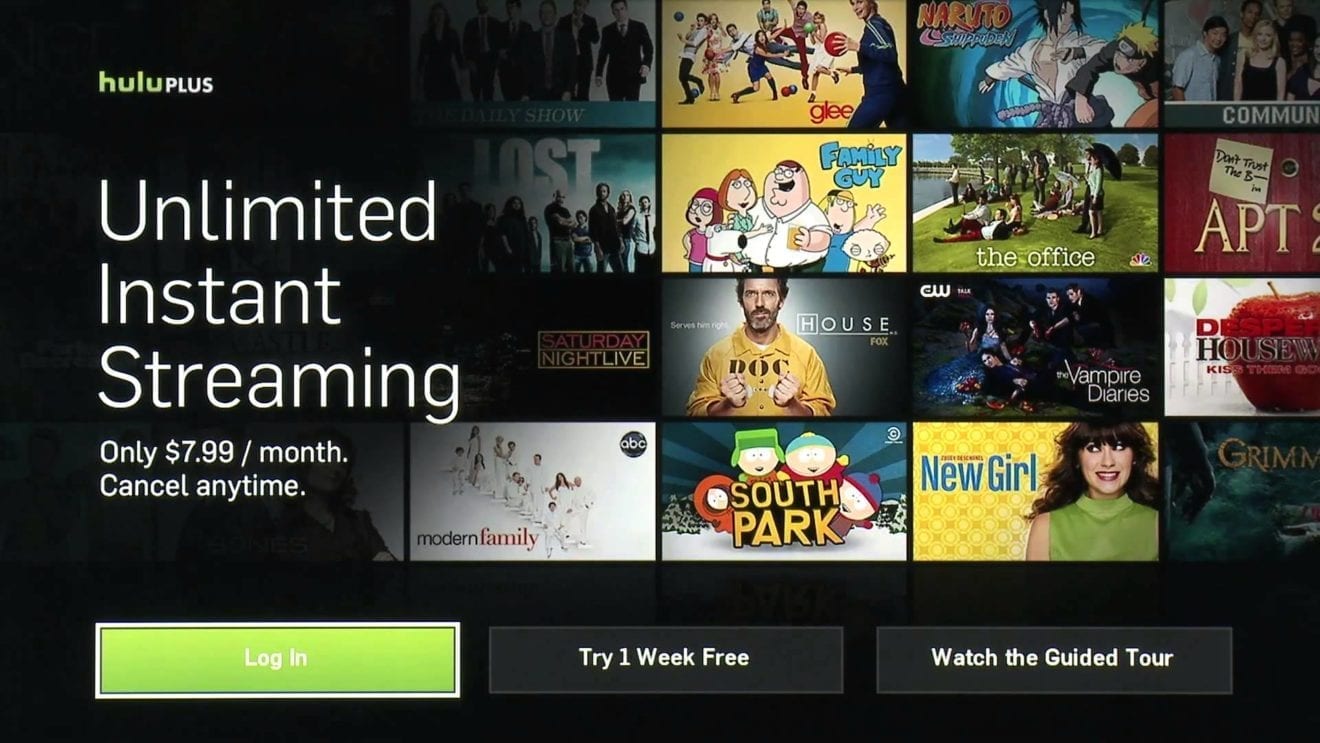
    Hulu is now valued at $15 billion following the company’s repurchase of a 9.5% stake owned by AT&T.  The telecommunications giant received $1.43 billion for its stake in the video streamer. Before the deal was announced, entertainment giant Disney owned 60% of Hulu via a joint venture. Comcast’s NBC Universal unit owns 30% of Hulu. Both Disney and Comcast will decide how to split up the chunk of equity that was just bought from AT&T.

    AT&T acquired the 9.5% ownership of Hulu when it purchased Time Warner last year. The company said that it plans on using the proceeds of the sale to pay down some of the $176.5 billion in debt on its books as of the end of last year. Because the deal did not require regulatory approval, it has already closed. Based on the price paid for AT&T’s 9.5% stake in Hulu, the latter has risen in valuation from $5.8 billion in 2016 to $15 billion. During the same time period, Hulu competitor Netflix has seen its value explode from $41 billion to $152 billion. Disney expects Hulu to turn a profit by 2023, and have 40 million to 60 million subscribers by fiscal 2024.

    “Warner Media will remain a valued partner to Hulu for years to come as we offer customers the best of TV, live and on demand, all in one place.”-Randy Freer, Chief Executive Officer, Hulu.

    Even though Disney owns a majority of Hulu, it’s not stopping the company from launching Disney+ this coming November. Priced at $6.99 per month, the service will feature 500 films from the Disney library along with 7,000 episodes of television shows from the Disney Channel and some original programming.

  • Military-grade rugged Kyocera DuraForce PRO 2

    Military-grade rugged Kyocera DuraForce PRO 2

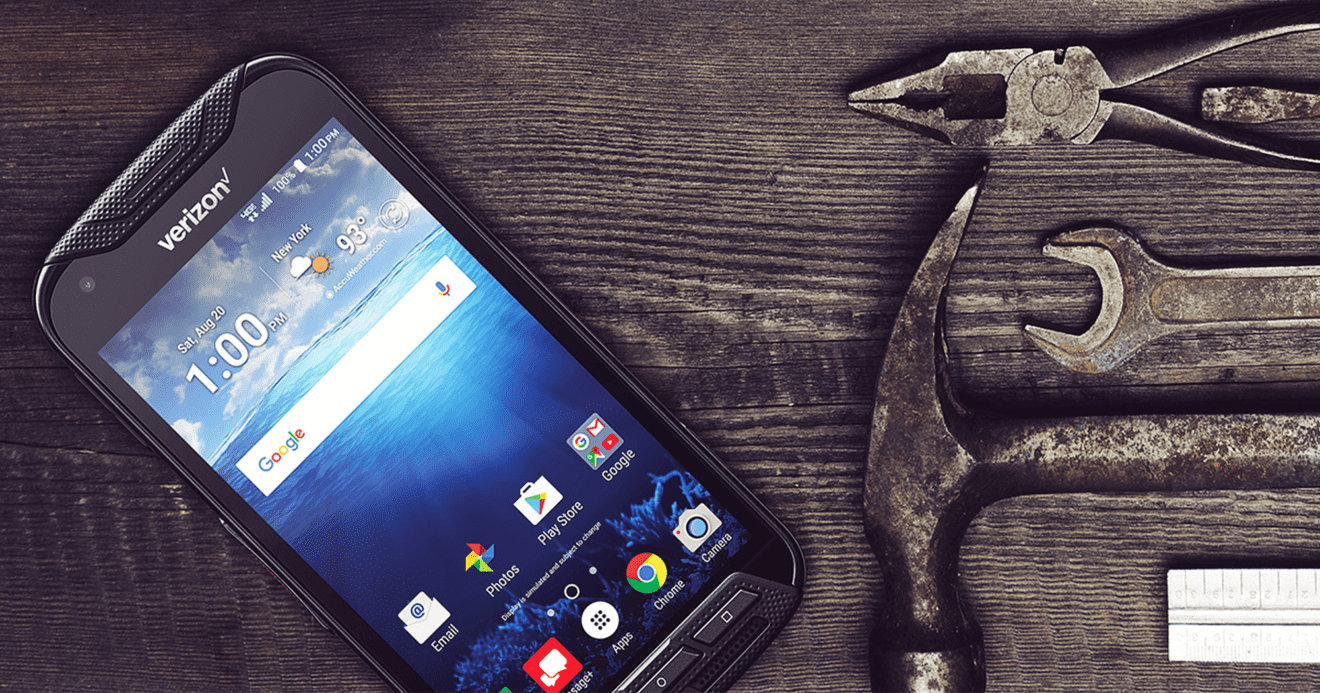
    Kyocera’s DuraForce PRO 2 is not a new phone and AT&T is not the first carrier that sells it in the United States. Verizon has already added the rugged smartphone to its offering back in November, but AT&T is doing it a little bit differently.

    First off, the DuraForce PRO 2 is an unusual smartphone in the fact that it features IP68 waterproof and dustproof certification and Military Standard 810G for protection against shock, vibration, temperature extremes, blowing rain, low pressure, solar radiation, salt fog, humidity, immersion, temperature shock, and icing or freezing rain. On top of that, the phone’s display is protected by Dragontrail PRO, a scratch and crack-resistant glass.

    However, Kyocera and AT&T announced that the phone is also FirstNet Ready, which means it’s been tested and certified to work on FirstNet, the nationwide public safety broadband communications platform. This makes the Kyocera DuraForce PRO 2 perfect for first responders and those critical to their emergency response.

    DuraForce PRO 2 includes HD Voice and Wi-Fi calling support, as well as dual front speakers and four noise-canceling mics that feature Qualcomm’s Fluence PRO technology. The latter makes Enhanced Push-To-Talk (EPTT) calls, speakerphone use, music, and calls crystal clear regardless of background noise.

    The ultra-rugged smartphone includes enhanced security features like a biometric fingerprint sensor. It’s not an in-display or rear-mounted fingerprint sensor, as Kyocera put it under the power button.

    Unlike previous Kyocera ultra-rugged smartphones that don’t focus on hardware, the DuraForce 2 PRO comes with double the amount of memory: 4GB RAM and 64GB internal memory. Also, the back side features a dual-camera setup.

    As far as the pricing goes, Kyocera DuraForce PRO 2 is now available for purchase for just $15 per month on AT&T Next pricing (for 30 months), $170 with a two-year agreement or $445 outright. Of course, the phone comes with a two-year standard warranty.

  • AT&T joins Global Telco Security Alliance

    AT&T joins Global Telco Security Alliance

    The Global Telco Security Alliance, the industry alliance founded by Singtel, SoftBank, Etisalat and Telefónica. has welcomed a new member in US telecoms giant AT&T.

    The inclusion of AT&T will significantly increase the global presence and resources available to the alliance, which was first launched in April 2018.

    AT&T, which has joined the group as an equal member, has become the first North American member of the alliance.

    AT&T recently enhanced its cybersecurity capabilities and technologies though the acquisition of cybersecurity solutions provider AlienVault for an undisclosed sum. The acquisition target was converted into a wholly-owned subsidiary of AT&T named AT&T Cybersecurity.

    Globally, the alliance now has access to the expertise of more than 6,000 security experts and a global network of more than 28 Security Operations Centres. Combined, the members of the alliance have more than 1.2 billion customers in more than 60 countries across APAC, Europe, the Middle East and the Americas.

    “We are thrilled to be the first telco in North America to join the alliance, and to do so as a founding member,” AT&T Cybersecurity president Barmak Meftah said.

    te“Hackers have well established and organized communities that cooperate to produce cyber threats and it’s time large network operators work together to help deliver disruptive innovations and enable our global customers to detect and respond to threats faster and protect their digital footprint.”

  • China Telecom to expand JV with AT&T

    China Telecom to expand JV with AT&T

    China Telecom has agreed to extend its partnership with AT&T to cover the development of more advanced network services for multinational companies operating in China.

    The operators have signed a framework agreement to explore ways to develop new IoT, cloud-based big data, VoLTE roaming and SDN based services.

    AT&T, China Telecom and Shanghai Information Investments entered a joint venture in 2000, Shanghai Symphony Telecommunications (SST). The companies now plan to expand the scope of SST as well as the locations it serves.

    Under the agreement, China Telecom and AT&T aim to help establish industry standards for SDN, explore ways to collaborate on IoT platforms and solutions, launch bilateral roaming tests and explore the potential of VoLTE roaming.

    “Working with AT&T, China Telecom is creating future business solutions that use enterprise mobility, cloud, IoT and other technologies,” China Telecom executive director and EVP Gao Tongqing commented.

    “Global businesses have to be innovative and agile to succeed today. Growing our relationship with China Telecom, AT&T is helping multinational customers have consistent access to the advanced solutions they need in China,” added Thaddeus Arroyo, CEO of AT&T Business Solutions and International segment.

  • AT&T and Akamai extend their global alliance

    AT&T and Akamai extend their global alliance

    Akamai and AT&T have renewed their global alliance, extending it through 2019.

    The agreement will keep Akamai’s CDN and web security services on AT&T’s business solutions menu, including the addition of DDoS capabilities. Akamai will also be able to further extend it’s server footprint out onto AT&T’s edge.

    The partnership between AT&T’s IP network and Akamai’s CDN and cloud networking infrastructure was put in place just over four years ago. AT&T moved its own CDN infrastructure onto Akamai’s platform, and gained access to AT&T’s network. Things seem to have gone pretty well since.

    There was a time not so many years ago that every network out there wanted to have its own CDN infrastructure. It seemed like the two industries were about to merge, but it never fully happened and Akamai is still going strong.

    The fact that CDNs and networks remained separate in most cases was perhaps a sign that the more general cloud opportunity would also not gel that well purely within telecoms walls.