
Retail News CRM

Tag: aussie

  • Aussie Swimwear Sensation Seafolly Dives into China Market: A Global Expansion Milestone

    Aussie Swimwear Sensation Seafolly Dives into China Market: A Global Expansion Milestone

    Seafolly, the renowned Australian swimwear brand, has officially entered the Chinese market, marking another significant milestone in its ongoing global expansion. This move trails closely behind the brand’s recent launches in the United States and the United Arab Emirates.

    Engaging the Chinese Market with a Tailored Strategy

    Recognizing the increasing demand for high-quality swimwear in China, Seafolly has developed a unique ‘go-to-market’ strategy. This approach is designed to facilitate consumer discovery and engagement with the brand while promoting its shopping experience.

    To bolster this expansion, Seafolly has laid the groundwork by inaugurating an office in Shanghai. This move equips the brand with an on-site team to manage local operations, forge partnerships, and steer the brand’s development in the Chinese market.

    In addition, Seafolly has marked its presence on popular Chinese social commerce platforms such as Rednote, Douyin, and Tmall. This digital outreach aims to leverage the advantages of these platforms to introduce the brand to potential customers and engage with them effectively.

    Creating Connections through Influencer Partnerships

    As part of its introductory phase, Seafolly has partnered with influencers and launched livestream campaigns. These initiatives have already garnered high engagement rates and positive consumer sentiment, paving the way for a successful official launch.

    Brendan Santamaria, CEO of Seafolly, commented on the expansion, stating that their international markets have demonstrated impressive momentum, and there is a growing affinity for premium Australian lifestyle brands in China. He further added that having a local base in Shanghai enables the brand to establish an authentic connection with its consumers and build the brand effectively.

    In the coming months, Seafolly plans to launch physical stores in China, providing a tangible, immersive experience to its customers.

    Questions & Answers

    What is Seafolly’s strategy for its expansion into China?
    Seafolly’s approach is a locally tailored ‘go-to-market’ strategy, aimed at helping Chinese consumers discover and engage with the brand. The company has also opened an office in Shanghai to manage local operations and brand development.

    How is Seafolly leveraging digital platforms in its Chinese market entry?
    Seafolly has marked its presence on multiple Chinese social commerce platforms, including Rednote, Douyin, and Tmall. It has also established partnerships with influencers and launched livestream campaigns, which have generated strong consumer engagement.

    What are Seafolly’s future plans in China?
    In addition to its digital outreach, Seafolly plans to establish physical stores in China later this year, providing customers with a more immersive, tangible brand experience.
  • Aussie Beverage Sector Toasts to a Profitable Summer Despite Economic Hurdles

    Aussie Beverage Sector Toasts to a Profitable Summer Despite Economic Hurdles

    Despite global economic instability and the strain of domestic living costs, Australia’s food and beverage manufacturers experienced a surge in revenue during last summer, according to the most recent Manufacturing Health Index published by Unleashed Software. This upturn in profits, especially during the holiday season, highlights the continued demand for premium Australian-made consumer goods.

    Boost in Manufacturing Sector

    The survey, which compiled data from over 500 local manufacturing companies spanning various sectors, including food and beverage, clothing and fashion, and construction, revealed a significant increase in average earnings for beverage manufacturers. The final quarter of the year saw an average revenue of $627,000, marking an almost $200,000 rise from the previous quarter. This peak in earnings is the highest ever reported since Unleashed Software began its data collection. Simultaneously, the gross profit margin also experienced a surge, climbing to 35.9% from 31.9% in the previous quarter and 27.8% in the same period of the prior year.

    In the food sector, the average revenue reached $709,831, slightly lower than the $733,000 recorded in the third quarter but significantly higher than the $546,229 reported in the same quarter of the previous year.

    Shifting Inventory Strategies

    The report also indicates that Australian manufacturers are modifying their inventory strategies to accommodate tightening supply cycles. While businesses in Australia are fine-tuning inventory levels, their counterparts in the UK and New Zealand are boosting restocking.

    Jarrod Adam, the head of product at Unleashed Software, explains that there is a noticeable shift towards just-in-time replenishment in Australia. Companies are not hoarding cash in inventory but are buying precisely what they need to meet immediate demand. The construction sector, in particular, shows a marked shift towards this inventory model.

    Adam further highlights the critical role of technology in enhancing productivity and managing these tighter cycles to prevent stock shortages during periods of heightened demand without compromising efficiency.

    The Continued Impact of Interest Rates and Energy Costs

    The manufacturing sector’s performance in the coming year is expected to be influenced significantly by interest rates. In February, the Reserve Bank of Australia (RBA) hiked the cash rate to 3.85%, marking the first increase since a period of consistent rate holding or reduction in 2025. The RBA anticipates inflation to top out at about 4.2% mid-year before settling back down to the 2.5% midpoint target by mid-2028.

    Rising energy costs might also lead to higher material and transportation expenses, exerting additional pressure on company margins. Modifications to shipping operations could potentially impact lead times. Despite these challenges, manufacturers are shifting their focus from cost management to the expansion of operations. Firms are increasingly employing automation and real-time data systems to manage purchasing cycles. While smaller companies may be more susceptible to global economic fluctuations, they may also be better positioned to adapt their operations swiftly.

    Questions & Answers

    What caused the rise in revenue for Australia’s food and beverage manufacturers during the previous summer?
    The increase in revenue for Australia’s food and beverage manufacturers during the previous summer was primarily due to the continued demand for high-quality, Australian-made consumer goods, despite global economic instability and domestic cost-of-living pressures.

    How are Australian manufacturers adjusting their inventory strategies?
    Australian manufacturers are modifying their inventory strategies to cope with tightening supply cycles. The shift towards just-in-time replenishment allows companies to avoid keeping cash tied up in inventory by purchasing precisely what they need to meet immediate demand.

    What factors are expected to influence the performance of the manufacturing sector in the future?
    The future performance of the manufacturing sector is expected to be significantly influenced by interest and energy rates. Rising energy costs might lead to higher material and transportation expenses, exerting additional pressure on company margins. Interest rates are also expected to remain a key factor, with the Reserve Bank of Australia recently increasing the cash rate.

  • Aussie yogurt brand Yo-Chi kicks off global expansion in Singapore

    Aussie yogurt brand Yo-Chi kicks off global expansion in Singapore

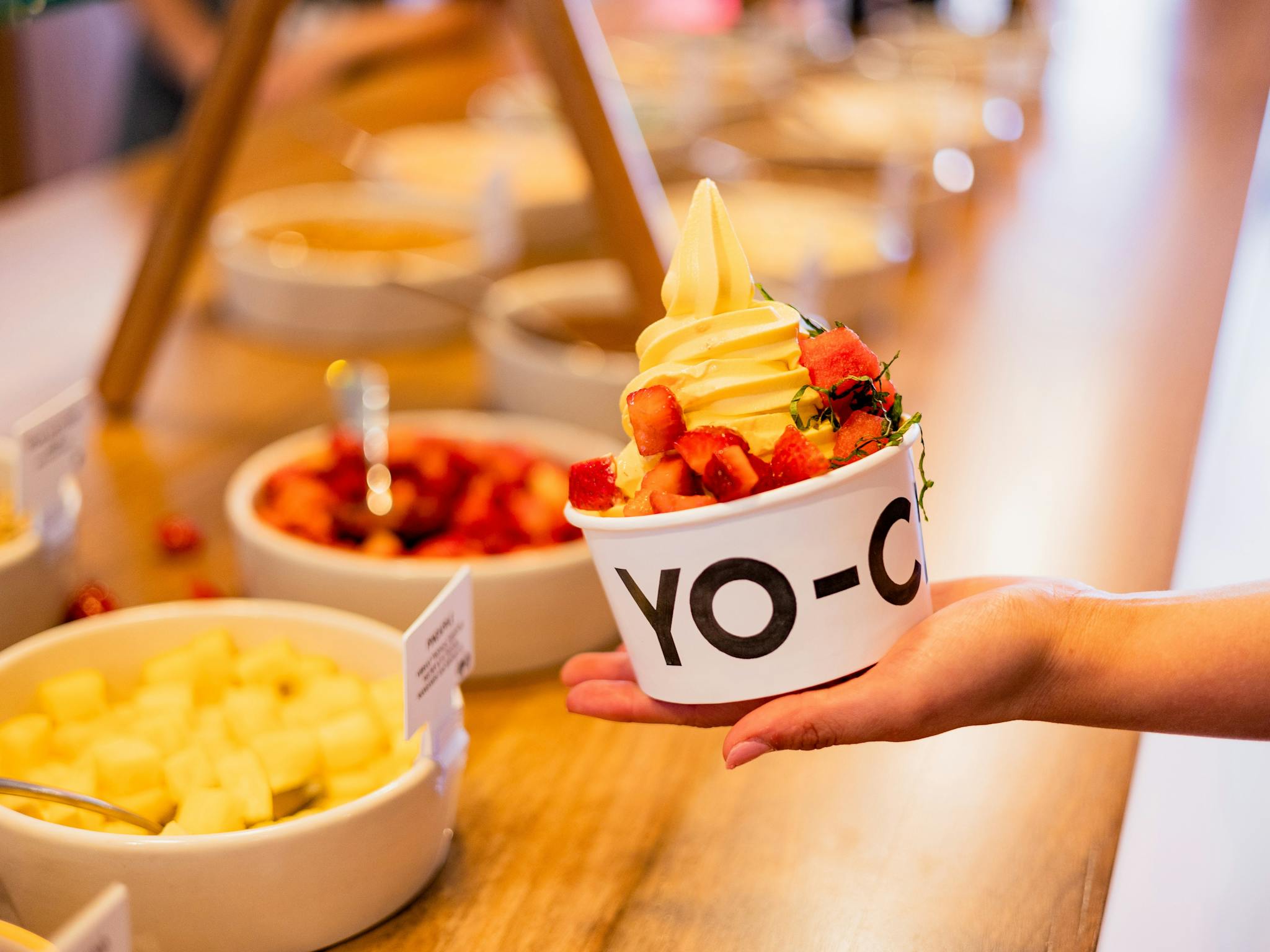
    Melbourne-based frozen yogurt and acai chain Yo-Chi has established its first international outpost, a 60-seat shop located in Singapore’s Orchard Central. This move represents Yo-Chi’s first venture outside of Australia, where it boasts over 30 locations.

    Yo-Chi was established in Melbourne in 2012 and has steadily grown on the strength of its customizable model. This model allows customers to create their own concoctions of frozen yogurt or acai bowls, adorned with a variety of toppings.

    Customization and Quality Ingredients

    The newly-opened Singapore branch has retained the pay-by-weight, self-serve method adopted by its Australian counterparts. This enables consumers to craft their unique bowls or cones using a selection of frozen yogurt or acai and a multitude of toppings.

    Another distinctive feature of Yo-Chi is its commitment to using authentic Australian cow milk instead of powdered substitutes in its yogurt production. The result is a 98% fat-free yogurt infused with beneficial probiotics.

    A Wide Range of Toppings and Flavors

    Patrons of Yo-Chi are spoilt for choice with approximately 35 toppings to choose from, including fruits, jellies, mochi, chocolates, and sauces. The Singapore branch offers local specialties such as coconut jelly and nata de coco. Seasonal rotations ensure that the topping offerings remain fresh and exciting.

    The Singapore outlet also delivers nine yogurt flavors to customers. These include the signature tart, salted butterscotch, cookies and cream, mango, matcha, strawberry cream, classic vanilla, chocolate, and coconut.

    Future Expansion Plans

    According to Yo-Chi’s brand director, Oliver Allis, the company views Singapore as a strategic launch pad for its Asian expansion. He expressed his belief that succeeding in Singapore would establish a solid foundation for further growth in other Asian countries, including Thailand, China, and Japan.

    Customers can enjoy Yo-Chi’s offering at a starting price of SGD$3.50 per 100 grams.

    Questions & Answers

    What is Yo-Chi’s business model?
    Yo-Chi operates on a pay-by-weight, self-serve model which allows customers to create personalized bowls or cones of frozen yogurt or acai, topped with a variety of ingredients.

    What differentiates Yo-Chi’s yogurt from others?
    Yo-Chi emphasizes the use of real Australian cow milk instead of powder in its yogurt production, resulting in a product that is 98% fat-free and contains probiotics.

    What are Yo-Chi’s expansion plans?
    Yo-Chi has identified Singapore as a strategic starting point for its expansion into Asia. Successful operation in Singapore will pave the way for growth into other Asian markets such as Thailand, China, and Japan.

  • Playboy owner to acquire Aussie lingerie brand Honey Birdette

    Playboy owner to acquire Aussie lingerie brand Honey Birdette

    PLBY Group is to buy racy Australian luxury lingerie brand Honey Birdette for approximately US$333 million. PLBY Group CEO Ben Kohn said he is “thrilled by the brand’s potential to become a multi-million-dollar luxury lifestyle franchise”.

    “Our plan is two-fold: to leverage PLBY Group and the Playboy brand’s global operations to accelerate Honey Birdette’s expansion into new territories and product categories, and to take advantage of Honey Birdette’s superior product design, sourcing, and direct-to-consumer capabilities to accelerate our Playboy-branded lingerie, loungewear, swimwear, and sexual wellness go-to-market plans targeting the masstige consumer,” Kohn said.

    “This acquisition is expected to further our mission to become the leading pleasure and leisure lifestyle platform and our commitment to deliver long-term value to our shareholders.”

    Honey Birdette is forecast to generate $73 million in revenue this financial year, representing growth of over 40 percent. The acquisition will help the brand expand its leadership in the sexual wellness category and its shared sourcing and product design capabilities. The transaction is expected to close in the third quarter of 2021.

    Honey Birdette was first launched in 2006, when its first boutique opened in Brisbane, selling glamorous lingerie and adult toys. It has since expanded to more than 60 stores across Australia, the US, and the UK, and flagship stores are slated to open in the coming months in Dallas, Miami, and New York. Meanwhile, loungewear and swimwear will soon be added to the Honey Birdette product range.

    “When I founded Honey Birdette 15 years ago, my ambition was to build a brand for women, by women; a brand that would serve as a platform for confidence and sexual and body empowerment,” said Eloise Monaghan, founder and managing director of Honey Birdette.

    “Today is a momentous and proud day for the Honey Birdette team as we enter into partnership with one of the world’s most iconic brands and the lifestyle platform it represents. I’m thrilled to join Ben and the whole PLBY Group team on a mission to build a lifestyle of pleasure for all.”