Tag: authentication

  • Luxury Evermore Flags Cloned Chanel Serial Code Found 127 Times Across 36 Countries

    Luxury Evermore Flags Cloned Chanel Serial Code Found 127 Times Across 36 Countries

    Singapore resale platform Luxury Evermore found a single Chanel serial code repeated 127 times across 36 countries in its authentication database, exposing widespread counterfeit production.

    The code, 10218184, showed up on multiple bag models submitted to the firm’s free authentication screening tool, directly contradicting the brand’s rule that each code belongs to one specific bag.

    Database Flags Cloned Code

    Submissions came through Luxury Evermore’s consumer review service, which screens pre-owned luxury items to weed out fakes in the secondary market. Counterfeiters routinely duplicate legitimate serial strings because they lack access to internal luxury brand databases.

    “There are specific patterns and details on these tags that are very difficult to replicate,” Luxury Evermore founder Mingchuan Tian said. The company noted that while a single code match does not automatically prove a bag is fake, any pre-owned piece bearing the 10218184 string requires physical inspection before purchase.

    Shift to Microchip Authentication

    Chanel changed its authentication architecture in 2021, replacing physical authenticity cards and interior sticker tags with embedded microchips and metal plaques. Bags made before that transition remain heavily traded across Asian consignment platforms, leaving older serial numbers exposed to industrial-scale cloning.

    Secondary luxury platforms across Southeast Asia and East Asia face rising costs as authentication moves from simple serial checks to multi-point material inspections. As counterfeit operations replicate physical tags across multiple product lines, resale operators are tightening screening protocols on legacy inventory to protect platform credibility.

    Resellers tracking the 10218184 code are now screening pre-2021 inventory for matching batch anomalies across regional intake hubs.
  • India To Implement Facial Recognition, Fingerprint Verification For Upi Transactions From October 8

    India To Implement Facial Recognition, Fingerprint Verification For Upi Transactions From October 8

    Starting October 8, India will incorporate facial recognition and fingerprint verification as methods for approving transactions carried out through the nationally renowned Unified Payments Interface (UPI), according to insiders with direct knowledge of the situation.

    The authentication process will employ biometric data stored within Aadhar, the Indian Government’s singular identification system, an anonymous source disclosed.

    This initiative comes after the Reserve Bank of India issued new guidelines allowing for alternative means of authentication. This marks a significant shift from the existing system, which necessitates a numeric PIN for transaction verification.

    The National Payments Corporation of India (NPCI), the entity responsible for operating UPI, intends to unveil this novel biometric attribute at the ongoing Global Fintech Festival in Mumbai, stated the sources who requested anonymity due to not being permitted to speak to the press.

    The NPCI has not responded immediately to requests for comment.

    Questions & Answers

    When will the new biometric features for payment approval through the UPI be introduced in India?
    The new features for payment approval which include facial recognition and fingerprint verification will be introduced starting October 8.

    What is the current system for approving transactions carried out through the UPI?
    The existing system of approving transactions carried out through the UPI requires a numeric PIN for transaction verification.

    Who operates the UPI and who intends to showcase the new biometric feature?
    The UPI is operated by the National Payments Corporation of India (NPCI), which plans to debut this novel biometric feature at the ongoing Global Fintech Festival in Mumbai.

  • New Google Authenticator update enables one-time codes to be stored in your Google Account

    New Google Authenticator update enables one-time codes to be stored in your Google Account

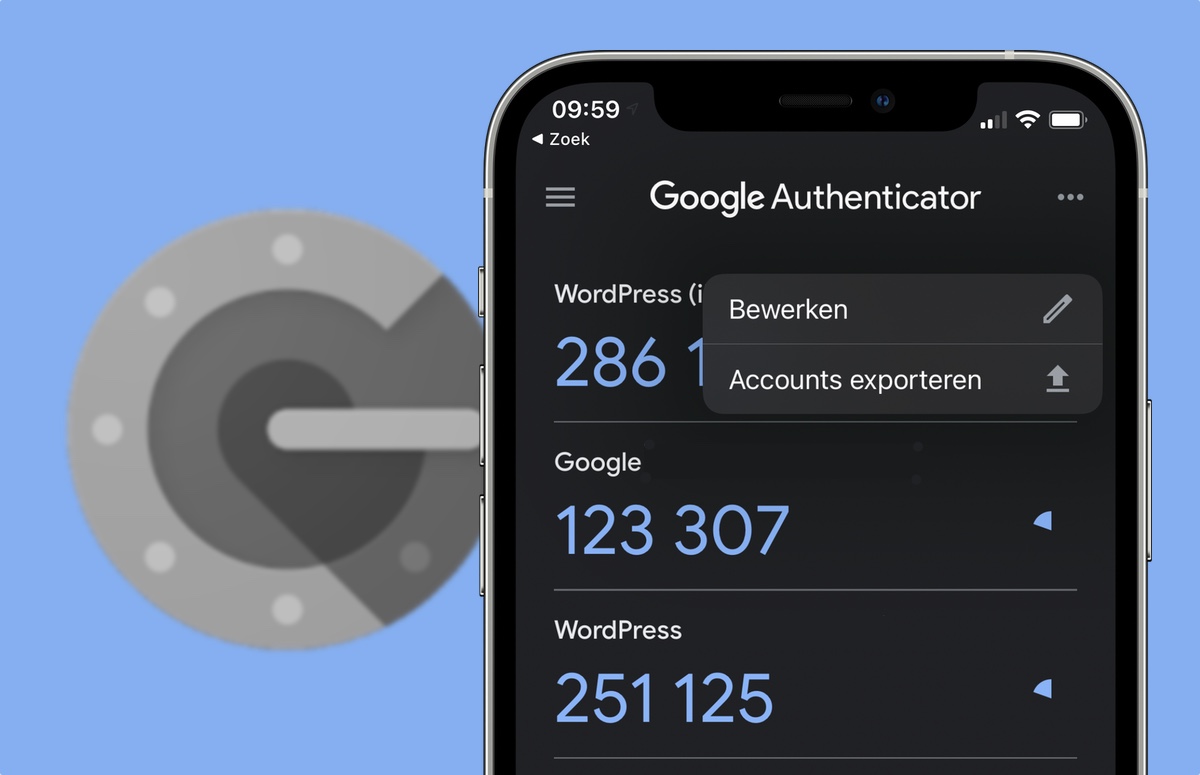
    Google Authenticator, the widely used two-factor authentication app, now allows users to sync their one-time codes in the cloud. This update aims to make it easier for users to switch between devices without losing their authentication data.
    The update was announced today via the Google Security Blog and it affects both the iOS and Android app. Previously, users had to manually transfer their codes from one device to another or disable and re-enable two-factor authentication when switching devices. This process could be cumbersome, especially for users who frequently switch between devices, replace their phones, or had their device stolen.
    The new cloud sync feature will automatically store users’ authentication data in the cloud, allowing them to access it from any device with the Google Authenticator app installed. To enable Google Account synchronization in Google Authenticator, users will need to open the app, tap the menu icon, select “Settings” and tap “Backup to Google Account,” then follow the on-screen instructions to sign in to their Google Account and enable backup.

    Once backup is enabled, one-time codes will be stored securely in the users’ Google Account, so if their device is lost or stolen, they can be restored simply by signing in on a new device and requesting to “Restore codes.”

    Google explains that with this update the company is making one-time codes more resilient by securely keeping them in users’ Google Accounts, improving user lockout protection and allowing services to rely on users maintaining access, which boosts convenience and security.

    Google has long promoted a number of methods for safe authentication across the web in addition to one-time codes from Authenticator, such as Google Password Manager and “Sign in with Google” options across the web. Additionally, Google has been collaborating with the FIDO Alliance to facilitate the move to using passkeys, instead of passwords, which will provide users with even more practical and secure authentication options.

  • Twitter is cutting ties with its two-factor authentication message provider

    Twitter is cutting ties with its two-factor authentication message provider

    Twitter is ending its business relationship with the company that sends its two-factor authentication messages to its users. In a disclosure to U.S. Senator Ron Wyden, Twitter wrote that it is ‘transitioning’ from working with Mitto AG, a tech company based in Zug, Switzerland, and backed up its decision with some reports from the media.

    But why Twitter decided to stop working with Mitto AG? Well, according to some media reports, the reason is that a co-founder of the Swiss firm has been assisting governments in discreetly tracking and monitoring the phones of people to whom the company sends text messages. There were even cases when he obtained the call logs of some individuals.

    A spokesperson for Mitto said in a statement that Mitto AG “does not disclose information about its business partners, through any channel – official or unofficial – full stop. Generally, such agreements are mutual in nature, with both parties agreeing to protect the privacy and integrity of the other.”

    Mitto AG works with telecommunication and software companies to send text messages like sales promotions, appointment reminders, and two-factor authentication codes to people from all over the world. Mitto AG works with companies such as Google, WhatsApp, Telegram, TikTok, and Alibaba. There is yet no word from these firms on whether they will also follow Twitter in terminating their business relationships with Mitto AG.

  • Singaporeans interested in biometric authentication

    Singaporeans interested in biometric authentication

    Singaporeans are interested the use of biometric methods to verify identity (97%) and make payments (96%), while recognizing that biometrics are faster, easier and more secure than traditional passwords, according to a recent Visa survey on biometric authentication for payments.

    The survey titled “Biometrics in Payments: Singapore” was conducted by AYTM Market Research late last year. Respondents consisted of 500 adult consumers in Singapore who used at least one credit card, debit card and/or mobile payment method.

    According to the survey, more than half of the respondents have already used at least one form of biometric authentication including fingerprint recognition (88%), facial recognition (56%), iris scanning (50%) and voice recognition (49%). Among the range of biometric solutions, consumers were most familiar with fingerprint recognition, with 51% of them using it regularly.

    Survey results showed one in five Singaporeans currently use fingerprint authentication or facial recognition from their respective banks or mobile phone providers. For those who have not used biometric authentication, 91% stated that they would be likely to use fingerprint or facial recognition authentication from their banks in future.

    More than half (55%) of the respondents agree that the use of biometrics eliminates the need to remember and key in multiple passwords, and PINs, for their respective accounts. Forty one per cent said that biometric authentication is more secure compared to passwords and PINs as they can better confirm individual identities.

    Singaporeans believe that fingerprint recognition is the most desired biometric authentication, followed by eye scanning and facial recognition for both online payment and in-store purchases. For online payment authentication, Singaporeans are keen to use it for large purchases (more than $100) and small purchases (under $100), and transfer of funds to family. The preference is similar for in-store purchases, including using biometric authentication to pay for a meal at the bar or restaurant and buy tickets for transportation.

    Mandy Lamb, Group Country Manager, Regional Southeast Asia for Visa, said, “Singaporeans are early adopters of technology and many of them already have experience with biometrics authentication. With the proliferation of biometric authentication solutions used by mobile providers and banks, Singaporeans recognize the value these new technologies bring to their everyday lives. As the country continues its Smart Nation journey, we believe more people will start to adopt biometric authentication.”