Tag: automotive manufacturing

  • Li Auto Deliveries Fall to 29,025 in October

    Li Auto Deliveries Fall to 29,025 in October

    Li Auto delivered 29,025 vehicles in October, down 8.63 per cent from a year earlier as monthly volumes hit their lowest point since February. The figure slipped 8.78 per cent from the 31,817 units handed over in September, marking a second consecutive month of year-on-year contractions.

    Over the first ten months of 2026, the Chinese automaker delivered 322,461 vehicles, a 1.96 per cent drop compared to the same period last year. Total cumulative deliveries reached 1,862,676 units by October 31.

    Production Squeeze on Updated i6

    Li Auto launched the refreshed 2026 Li i6 on October 28 and started customer handovers the following day. The five-seat pure electric SUV keeps an unchanged sticker price of 249,800 yuan ($37,210), though early buyers securing allocations before November 30 receive promotional incentives lowering the cost to 239,800 yuan.

    Hardware updates include the proprietary Mach M100 driver-assist chip and a 96-kilowatt-hour Lianshan lithium iron phosphate battery pack. That combination yields a CLTC driving range of 780 kilometres on rear-wheel-drive configurations. Li Xinyang, head of the Li Auto product line, confirmed on October 30 that cumulative production of the i6 reached 200,000 units, but consumer wait times currently span seven to eight weeks.

    Flagship MPV Repositioning and In-House Tech

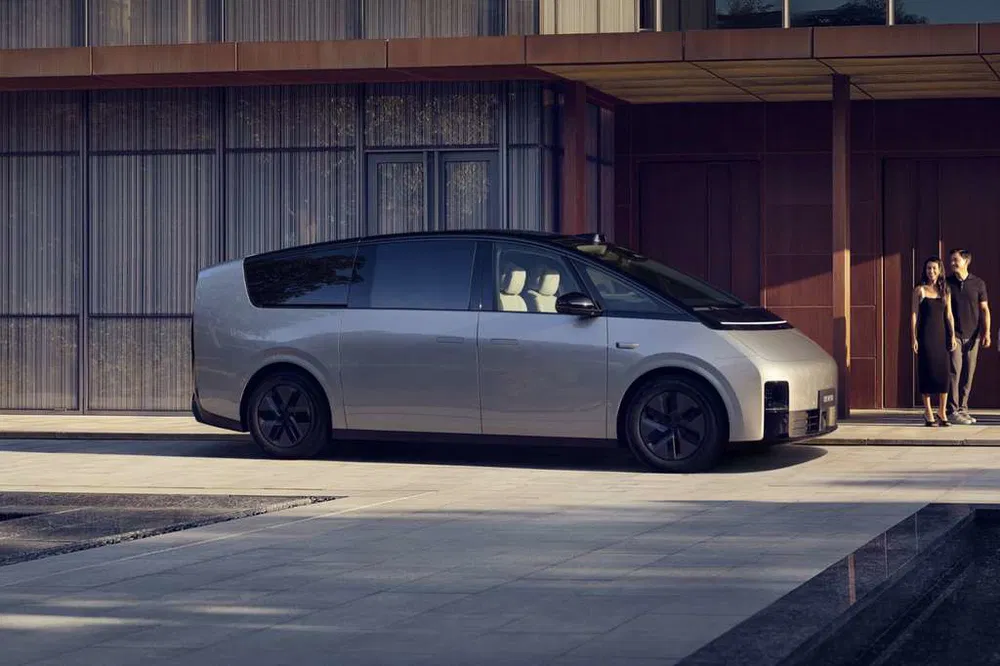
    Demand for the larger Mega multipurpose vehicle showed moderate recovery, topping 3,000 deliveries during October. Li Auto introduced the revised flagship electric van on September 2 with hardware revisions and a lower retail price designed to revive commercial momentum after a sluggish initial rollout.

    October also brought commercial deployments of Li Auto’s self-developed powertrain hardware, including the Lianshan drive system and dedicated traction pack warranty schemes. An over-the-air software upgrade, version 9.2, rolls out to owners in November to introduce Mach VLA 2.5 driver-assist functions alongside refreshed cockpit voice systems.

    Rivalry Shifts to Showroom Productivity

    Premium Chinese electric vehicle makers face an aggressive pricing war that penalises pauses in model renewal cycles. Rivals have expanded their sub-brands to defend entry-level volumes, while Li Auto relies on concentrated showroom throughput to protect dealer margins. The recent delivery dip demonstrates that consumer interest falters quickly when factory retooling delays customer handovers.

    Suppliers also face cash constraints as automakers bring proprietary silicon and battery assembly under direct control. Li Auto’s switch to its internal Mach processors and Lianshan battery platforms shifts margin risk straight to its balance sheet, raising the capital threshold required to compete in Tier 1 cities.

    Retail Expansion Ahead of Year-End Target

    The October setback follows a peak run in late 2024, when monthly deliveries crossed 50,000 units before market competition tightened across China. Li Auto responded by building out physical touchpoints in lower-tier regions while pruning low-traffic mall sites.

    By the end of October, the company’s retail network spanned 481 stores across 159 cities, supported by 527 service facilities in 217 cities. Its proprietary charging infrastructure expanded by 18 stations and 86 stalls in October, bringing totals to 4,206 supercharging stations and 23,163 plugs across China.

    Factory planners target monthly i6 assembly output of 20,000 units in November before pushing line rates higher in December to clear backlogs before the annual tax cut window closes.
  • Toyota Plans 400,000 Range Extender Vehicles Annually in China by 2028

    Toyota Plans 400,000 Range Extender Vehicles Annually in China by 2028

    Toyota plans to produce 400,000 range-extender electric vehicles annually in China by 2028. The program pushes the carmaker into a powertrain segment long dominated by domestic brands.

    Initial manufacturing starts in April 2027 at a rate of several hundred vehicles a month. Output will climb to an annualised volume of 200,000 units by December 2027. This project is the Japanese carmaker’s first range-extended electric vehicle (REEV). The setup pairs an electric motor and battery pack with a small petrol generator that recharges the cell rather than driving the wheels.

    How the Powertrain Operates

    The system relies entirely on electric drive for the axles. During long trips, the onboard combustion engine fires up once battery charge drops below a set threshold. It runs strictly to generate electricity. That setup removes range anxiety along rural routes where fast chargers remain scarce.

    Chinese consumer demand for extended-range vehicles has surged over the past two years. Buyers in second-tier and third-tier cities frequently choose REEVs. The format combines daily battery-only urban commuting with fuel-station flexibility on highways.

    Chasing Domestic Specialists

    Toyota is stepping onto territory carved out by Li Auto, which built its brand around extended-range luxury SUVs. Other Chinese manufacturers followed quickly. Seres-backed Aito, Leapmotor, Xpeng and Xiaomi’s SkyNomad sub-brand all rolled out range-extender platforms to maintain sales.

    Foreign legacy automakers have struggled to match the pace of Chinese rollouts. Volkswagen introduced a China-exclusive range-extender model earlier this year. Li Auto publicly mocked the German brand for its late entry. Offering extended-range powertrains has become critical for foreign joint ventures trying to stem market-share losses against local rivals that undercut them on price and interior digital tech.

    Tightening Regulatory Oversight

    Regulators in China are tightening scrutiny across the segment. In June 2026, government authorities introduced stricter technical requirements and standard testing protocols. These rules specifically target range-extender fuel consumption and emissions once the traction battery is depleted.

    Automakers entering the segment must meet higher energy-conversion efficiency targets to qualify for local green-vehicle incentives. Toyota engineers must now design a generator package that satisfies those consumption rules. It must also preserve enough cabin space to compete with software-heavy Chinese rivals.

    Building on Joint Venture Electrification

    Earlier electrification efforts by Toyota in China began cautiously with the global bZ4X electric SUV in 2022. Partnerships with local manufacturers followed to develop market-specific vehicles. The carmaker released the bZ3 electric saloon with BYD and FAW, followed in 2025 by the bZ3X with GAC and the bZ5 SUV coupé with BYD and FAW.

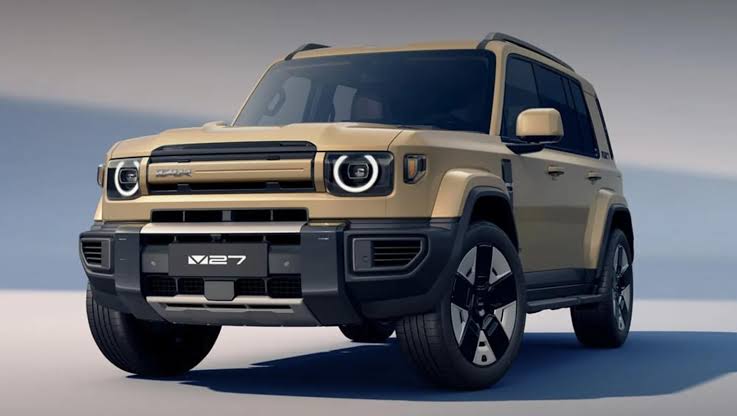
    Lineup expansion continued in early 2026 with the GAC-built bZ7 electric saloon. The 2027 range-extender model adds a separate propulsion option to that joint-venture portfolio as factories prepare to hit the 400,000-unit target by 2028.

  • Dongfeng Motor to Begin Trial Humanoid Robot Production at Year-End

    Dongfeng Motor to Begin Trial Humanoid Robot Production at Year-End

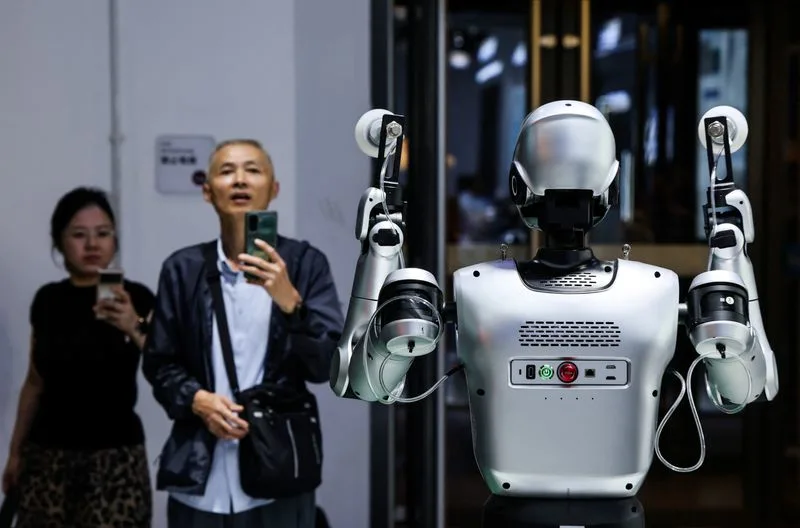
    Dongfeng Motor plans to begin small-batch trial production of its humanoid robot at the end of this year, aiming to bring its working capabilities on par with human workers by the end of next year.

    The humanoid robot will enter manufacturing factories in October to handle sorting and quality inspection tasks, according to Zhang Zhenlin, chief engineer of intelligent technology at Dongfeng.

    Factory Sorting and Showroom Patrols

    Development covers two distinct platforms: a bipedal humanoid named Xiaodong and a quadruped model called Yuanzai. Both debuted at the 2026 World Robot Conference in August this year.

    Xiaodong handles material sorting inside automotive manufacturing plants. Over time, the system will move from single repetitive tasks to autonomous factory floor operations.

    Commercial rollout begins earlier for Yuanzai. The quadruped will handle customer guidance in auto dealerships, campus patrols, and facility monitoring through onboard multimodal perception and autonomous navigation.

    Cross-Sector Technology Sharing

    Chinese automakers are applying EV software architectures and artificial intelligence models directly to robotics hardware. Dongfeng chief engineer of intelligent technology Zhang Zhenlin said developing embodied intelligence lets teams reuse automotive large-model technology and speed up commercialization.

    Automakers’ development of embodied intelligence products allows technology to be reused across multiple areas such as automotive large models, thereby speeding up commercialization and mass production.

    Overlapping supply chains give carmakers immediate access to batteries, vision sensors, and assembly infrastructure. Factory operators expect the humanoid units to reduce assembly costs while running round-the-clock inspections on vehicle lines.

    The Competitive Field in China

    Dongfeng is not alone in the push. Several domestic EV makers have built dedicated robotics divisions to automate shop floors and sell commercial hardware.

    Xpeng opened a humanoid robot production line on September 8, 2026. It plans mass production of its Iron robot by late 2026, with customer deliveries starting in 2027. Chery-backed Aimoga Robotics has shipped more than 3,000 units globally and is preparing an IPO. Li Auto, Seres, and Leapmotor have also put capital into embodied AI development this year.

    Capital Allocation and Global Goals

    Robot deployment fits into a wider overseas expansion budget. Dongfeng plans to invest 50 billion yuan ($7.41 billion) internationally to launch more than 50 vehicle models.

    Under a roadmap presented by deputy general manager Zhou Feng, the company will build 10 assembly plants and five research hubs outside China. Dongfeng targets 1.5 million overseas vehicle sales annually by 2030, using Xiaodong’s 15-month trial run as the baseline test for broader automation.

  • Toyota Trims Philippine Production Target to 60,000 Units

    Toyota Trims Philippine Production Target to 60,000 Units

    Toyota Motor Philippines expects assembly at its Santa Rosa plant to drop to roughly 60,000 units in 2026. That falls short of last year’s record volume. Weak consumer demand and macroeconomic pressures have slowed sales across the country. As a result, the carmaker is scaling back factory runs in Laguna.

    Plant output reached 63,804 vehicles in 2025, an all-time high for the local unit. Through August this year, assembly lines built 38,221 vehicles. That represents a 10 percent drop from the 42,469 units assembled during the same eight-month period last year.

    Production Mix Shifts at Santa Rosa

    Workers at the facility build three models: the Vios sedan, the Tamaraw utility vehicle, and the Innova compact multi-purpose vehicle. The Vios accounted for 18,321 units, or 48 percent of local output through August. The Tamaraw followed with 12,468 units, or 33 percent. Innova production dropped to 7,432 units, making up the remaining 19 percent.

    Output rebounded briefly in July to 5,540 units before sliding to 4,540 units in August. Deliveries mirrored the slowdown. Total sales declined from 17,797 units in July to 14,594 units in August.

    Rebalancing factory lines is difficult. Santa Rosa shares capacity across all three nameplates simultaneously. Because of that shared setup, the plant cannot easily raise volume for one model when demand for the other two cools.

    Commercial Segment Drops While Sedans Hold

    Overall sales dropped 9 percent year on year during the first eight months to 133,300 vehicles, down from 146,357 units a year earlier. Commercial vehicle deliveries fell 15 percent to 98,531 units. Passenger car retail sales told a different story, rising 15 percent to 34,769 units over the same period.

    Shifts occurred within the passenger car lineup as well. Toyota introduced the imported Yaris Ativ to capture buyers who previously chose higher-specification Vios variants. That change protected overall sedan market share while reducing assembly pressure on the locally built Vios.

    Even with lower volumes, the brand maintained its commanding market lead. Through July, Toyota sold 118,706 vehicles, capturing nearly half of the Philippine automotive market. Mitsubishi Motors Philippines Corp placed second with 42,592 units sold.

    Expanding Tamaraw Conversions for Fleets

    Management has positioned the Tamaraw as a core pillar of its local manufacturing plan. The model has already overtaken the Innova in total units assembled this year. Steady orders from commercial businesses and local government fleets fueled the climb.

    To broaden customer appeal, Toyota Motor Philippines developed 13 body conversions with seven accredited local body builders. These configurations target delivery operators, municipal public services, and utility fleets across regional provinces.

    Commercial buyers are now weighing whether local conversions reduce acquisition and maintenance costs compared to imported platforms. High domestic fuel prices have forced logistics companies and distributors to trim replenishment budgets. Modular utility vehicles offer an economical alternative.

    Policy Support and Assembly Outlook

    Government policy will shape the next phase. The carmaker plans to enroll the Tamaraw under the revived Revitalizing the Automotive Industry for Competitiveness Enhancement program once officials finalize the framework. Qualifying for state manufacturing incentives will dictate whether Toyota expands local parts procurement for the platform.

    Meeting the year-end goal will require a steep ramp up. Toyota Motor Philippines must assemble nearly 22,000 vehicles between September and December to hit its revised 60,000-unit target. The final outcome hinges on whether commercial fleet orders pick up in the fourth quarter.

  • Hyundai Targets 9 per Cent Margin and Adds 1.27 Million Units of Capacity

    Hyundai Targets 9 per Cent Margin and Adds 1.27 Million Units of Capacity

    Hyundai Motor will add 1.27 million units of global vehicle production capacity by 2030 as it lifts its operating profit margin target above 9 per cent.

    The South Korean group plans to refresh or introduce more than 100 models over the next four years, directing more than half of those releases to North America. The product roadmap includes the Santa Fe extended-range electric vehicle (EREV), which the company will manufacture at its assembly plant in Alabama, alongside a new luxury hybrid vehicle.

    Management raised the group’s 2030 consolidated operating margin guidance from an earlier band of 8 per cent to 9 per cent. It left its 2026 operating margin forecast unchanged at 6.3 per cent to 7.3 per cent, while reaffirming an annual target of 5.55 million vehicle sales by 2030, representing roughly 6 per cent global market share. Electrified vehicles are projected to make up 60 per cent of those deliveries by the end of the decade, up from 23 per cent in 2025.

    Hybrids and US Production Footprint

    Surging fuel prices tied to geopolitical conflicts have steered American consumers back toward hybrid powertrains. Cox Automotive survey data shows 56 per cent of prospective US car buyers are more inclined to choose a hybrid due to high pump prices, while research group Omdia tracked a 19 per cent rise in overall hybrid sales across the first half of 2026. Hyundai reported its own quarterly hybrid volume surged 71 per cent in the second quarter.

    Trade policy remains a major operational hurdle for the Seoul-based manufacturer. The pending review of the United States-Mexico-Canada Agreement has introduced friction into North American parts logistics, as US trade officials resist automatic treaty extensions in favor of tighter annual oversight across cross-border automotive supply chains.

    Factory Automation and AI Compute

    Beyond vehicle assembly lines, the carmaker is pushing capital into industrial robotics and autonomous driving platforms. Commercial deliveries of IONIQ 5 electric crossovers to Alphabet’s autonomous fleet unit Waymo begin in the fourth quarter of 2026, while driverless passenger operations run by Hyundai’s Motional joint venture start in Las Vegas later this year.

    Robotics manufacturing will begin in the US in 2028 with a planned annual run rate of 30,000 units. The company will deploy Boston Dynamics’ Atlas humanoid robots at its Georgia Metaplant facility in 2028 after completing factory floor simulation testing. Supporting its software-defined vehicle pipeline, Hyundai will also bring a 100-megawatt artificial intelligence data center online in 2029 equipped with more than 50,000 graphics processing units.

    For Asian automotive majors balancing choppy electric vehicle demand, shifting output toward high-margin hybrid platforms and domestic US manufacturing has become the primary playbook to protect operating cash flow.

    Investors reacted cautiously to the capital expenditure plans, sending Hyundai Motor shares down 3.3 per cent in Seoul against a 1.3 per cent gain on the benchmark KOSPI index. The company will cancel 789 billion won ($570 million) worth of treasury shares while maintaining a minimum 35 per cent shareholder payout ratio.