Tag: autopilot

  • Apple Hires Tesla’s AutoPilot Software Pilot Boss

    Apple Hires Tesla’s AutoPilot Software Pilot Boss

    Apple has hired CJ Moore who was Tesla’s head of software for its AutoPilot autonomous driving system. CJ Moore recently had disputed Elon Musk’s claims around AutoPilot and said that it was fundamentally a level 2 ADAS system while Musk has been pitching it as an autonomous driving system. CJ Moore will be reporting to another ex-Tesla executive Stuart Bowers who is the Vice President of engineering at Apple.

    In January Musk had claimed that Tesla’s autopilot will be able to operate reliably to a level better than that of a human driver. Tesla’s FSD driving beta went live only earlier this year but still, it doesn’t make Tesla’s cars fully autonomous. Tesla is also facing an investigation from authorities in the US in relation to crashes while its cars have been in AutoPilot mode. Moore was called in as a witness after a Tesla crash that left two people dead in April.

    The Apple Car project which has been called Project Titan has been in the works for more than half a decade – and has been riddled with issues. Apple recently lost its day-to-day chief of the project Doug Field who also left for Ford. Apple placed operational control in hands of Kevin Lynch the former Apple Watch software chief.

    Apple has also hired Ulrich Kranz, the co-founder of Canoo, and the former Vice President at BMW who helped create its electric cars. Apple has also poached Tesla’s Andrew Kim, Michael Schewkutsch, and Steve MacManus.

    Apple has been struggling to close battery supply from the likes of BYD and CATL while it also still doesn’t have a manufacturing partner having spoken to many players like Magna and Nissan.

  • Tesla AutoPilot Stops Car After Driver Passes Out At The Wheel

    Tesla AutoPilot Stops Car After Driver Passes Out At The Wheel

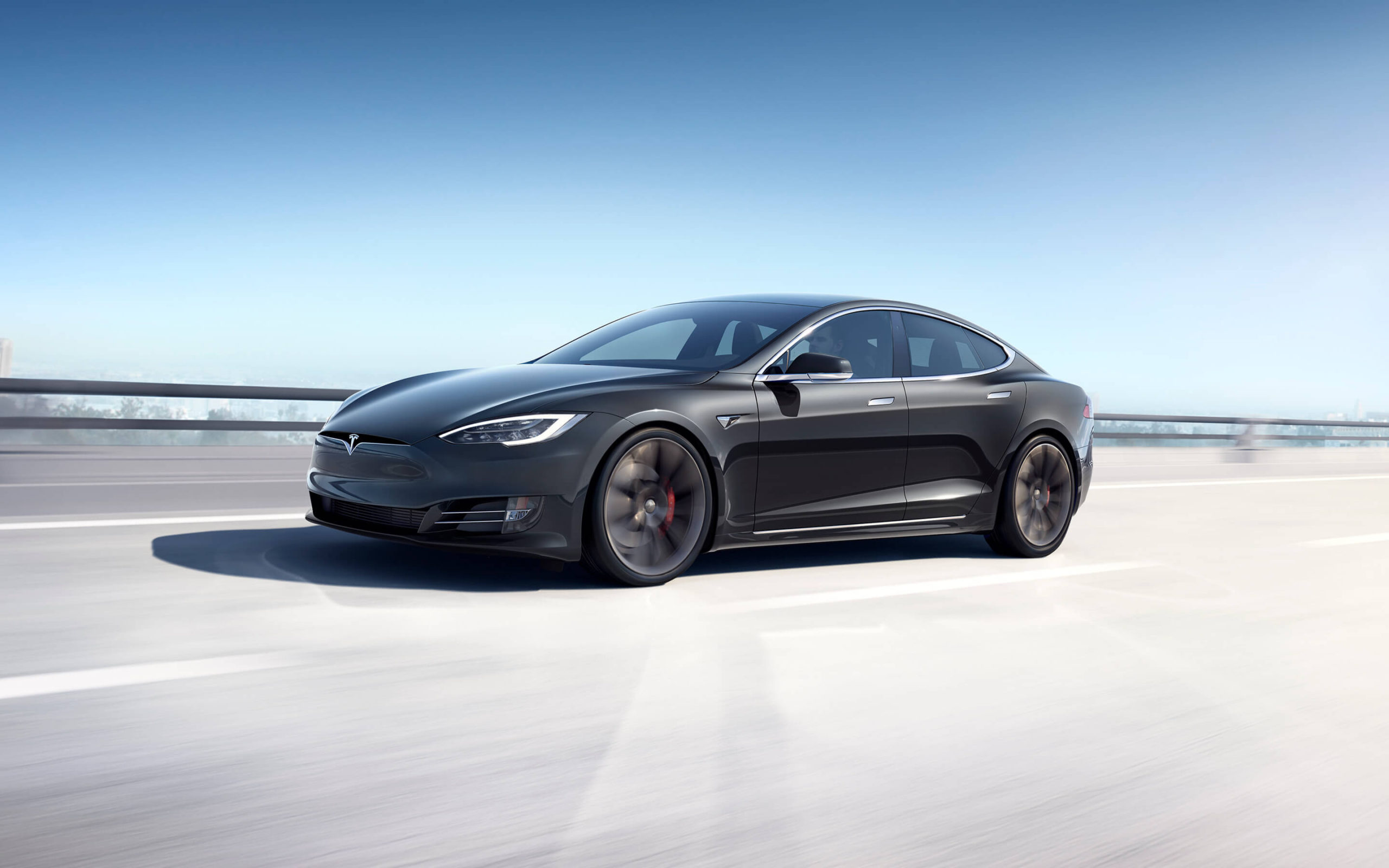
    Tesla has been talking about its AutoPilot level 2 autonomous driving technology for years. It is also transitioning to Tesla Vision which will just use cameras and its computer vision algorithms. Now, its driver-assist system has done it again – this time around stopped the car after a drunk driver in Norway passed out on the wheel. The incident happened on July 30. Many motorists passed the Tesla Model S which was on the road when the driver was unconscious on the wheel. The car was followed and filmed while he had his head down for over a minute before AutoPilot kicked in and stopped the car itself. Many motorists stopped by the car who tried to wake up the driver but he was still unconscious.

    Then the police came to the scene and found that the 24-year-old driver was unconscious because he was drunk. The police also revealed that the driver denied driving.

    “At 0540; a Tesla stops in the tunnel. It turns out to be a man 24 years old who has fallen asleep behind the wheel. He is also drunk but stubbornly denies driving. Although there is a video of him from the car … Necessary samples have been taken,” the police said in a statement. Many times before drunk drivers have used AutoPilot as an excuse to avoid drunken driving charges by claiming the system was driving the car not them. Tesla needs the driver’s hands to be on the steering wheel to make sure they are conscious of the wheel.

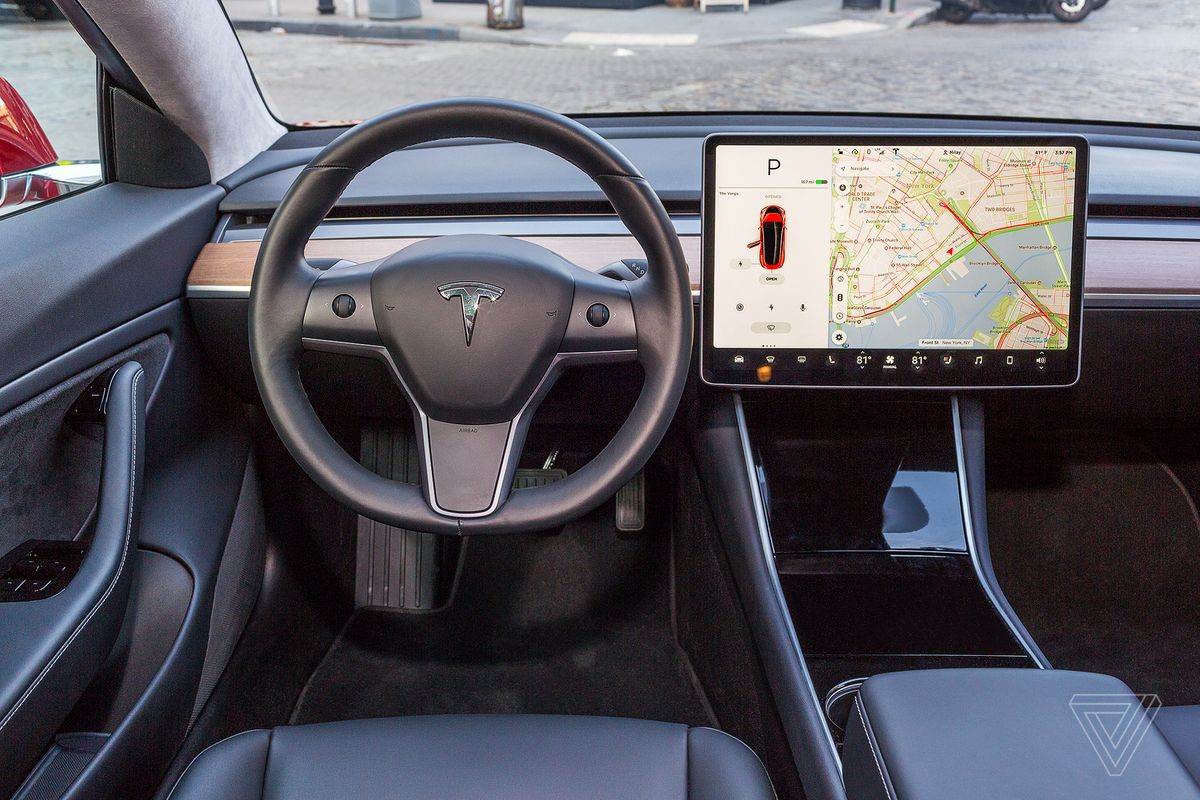
    It has also cameras inside the car to make sure that the driver is paying attention to the road. It also sends out alerts to the driver and if the vehicle detects torque isn’t being applied to the wheel – but when alerts are repeatedly ignored it slows down the car makes it stop at the side of the road.

  • Elon Musk Says Next Self Driving Beta Update Will Blow Minds

    Elon Musk Says Next Self Driving Beta Update Will Blow Minds

    Elon Musk is well known for his hyperbole, especially when it comes down to Tesla and its AutoPilot technology. For the last couple of months, Tesla has been beta testing a fully self-driving feature that is available to just a few 1,000 customers as a part of its early access program. Now, the world’s second-richest man says, an incoming update to the full self-driving beta will “blow your mind”. Musk in his typical style dropped nuggets of information while replying to tweets. He said the update will come in two weeks and he said the safety would also be higher with pure vision.

    “Gating factor in achieving & proving higher safety with pure vision than with vision+radar. We are almost there. FSD Beta V9.0 will blow your mind,” Musk tweeted to a Twitter handle called @teslaownersSV.

    To another user, he even said that the feature was also coming to the Canadian market in a couple of months. He cited the delay due to the differences in driving conditions between the US and Canada.

    The incoming update called version 9 will remove reliance on radars and instead will be fully dependent on cameras that are installed in the cars. Musk for the longest time has been against radars and LiDARs stating that they are too expensive and not required.

    Tesla has been often criticised for its AutoPilot technology as experts believe that it is not fully self-driving tech. For this Tesla has also developed its chipset based on the ARM architecture and trained algorithms on the DOJO supercomputer. Musk is optimistic that he has the holy grail of self-driving, but he often overestimates things especially when commenting on Twitter.

    Recently, Tesla has also been in the news for all the wrong reasons as a Model S crashed with two fatalities while it was on AutoPilot.

  • Tesla Autopilot Scores Low For Driver Engagement In European Safety Rating

    Tesla Autopilot Scores Low For Driver Engagement In European Safety Rating

    Tesla’s Autopilot has ranked sixth in 10 driver assistance systems evaluated in a European safety assessment, scoring low on its ability to keep drivers engaged. The Tesla Model 3’s Autopilot scored just 36 when assessed on its ability to maintain a driver’s focus on the road. But it gained the highest marks for performance and ability to respond to emergencies, receiving an overall score of 131 and a rating of ‘moderate’.

    In contrast, the Mercedes GLE’s system, which had the highest overall score of 174 and received the top rating of ‘very good’, received a score of 85 for driver engagement. Most other vehicles had scores of 70 or above for driver engagement.

    The European New Car Assessment Program (NCAP), which worked with UK insurance group Thatcham Research, called the assessments the first consumer ratings specifically focused on driver assistance systems – technology that automates some tasks, including acceleration, braking and steering support.

    Safety and insurance researchers have frequently warned of the risks of consumers overestimating the systems’ abilities, a misconception increased by some automakers calling their products Autopilot, ProPilot or CoPilot.

    Tesla’s Autopilot has been criticized by the U.S. National Transportation Safety Board for allowing drivers to turn their attention from the road and U.S. regulators have investigated 15 crashes since 2016 involving Tesla vehicles equipped with Autopilot.

    “Unfortunately, there are motorists that believe they can purchase a self-driving car today. This is a dangerous misconception that sees too much control handed to vehicles that are not ready to cope with all situations,” said Matthew Avery, a Euro NCAP board member and research director at Thatcham Research.

    In addition to the Mercedes GLE, the BMW 3-Series and the Audi Q8, received the highest rating of ‘very good’ while two models, the Renault Clio and the Peugeot received the lowest rating of ‘entry’.

  • Driver Arrested For Sleeping While Tesla Was On Autopilot At 140 kmph

    Driver Arrested For Sleeping While Tesla Was On Autopilot At 140 kmph

    A Tesla driver in Alberta, Canada was arrested for sleeping while the car was cruising at 140 kmph on the Autopilot. “Alberta RCMP received a complaint of a car speeding on Highway 2 near Ponoka. The car appeared to be self-driving, traveling over 140 km/h with both front seats completely reclined & occupants appeared to be asleep,” posted the official RCMP twitter account.

    “The driver received a Dangerous Driving charge & summons for court,” tweeted the RCMP. In a more detailed report on its own website, it was revealed that the driver was a 20-year old whose license was suspended for fatigue. “Although manufacturers of new vehicles have built-in safeguards to prevent drivers from taking advantage of the new safety systems in vehicles, those systems are just that – supplemental safety systems,” Superintendent Gary Graham of Alberta RCMP Traffic Services stated in the RCMP report. It also noted that Tesla’s didn’t come equipped with self-driving systems and onus is still on the driver to drive the car.

    Tesla itself doesn’t allow its users to implement the Autopilot feature for full autonomous use. It also adds a number of safeguards such as reminders and requires the driver’s hand on the steering wheel frequently for staying enabled. That being said, many users have proven the ability to manipulate the system and the same has been pointed out by many on Twitter who noted that this was probably a prank.

    This comes at the backdrop of Tesla’s founder claiming that a big update for its autonomous capabilities is in the works thanks to the neural network it is running on the DOJO supercomputer. The latest Tesla’s run its FSD chips for its autopilot capability while the older ones are based on Nvidia’s semiconductors. Next week, Tesla is also slated to announce some big updates related to its battery tech at its battery day event.

  • U.S. Senator Slams Tesla’s ‘Misleading’ Name For Autopilot Driver Assistance System

    U.S. Senator Slams Tesla’s ‘Misleading’ Name For Autopilot Driver Assistance System

    A U.S. senator on Friday urged Tesla Inc (TSLA.O) to rebrand its driver-assistance system Autopilot, saying it has “an inherently misleading name” and is subject to potentially dangerous misuse.

    But Tesla said in a letter that it had taken steps to ensure driver engagement with the system and enhance its safety features.

    The electric automaker introduced new warnings for red lights and stop signs last year “to minimize the potential risk of red light- or stop sign-running as a result of temporary driver inattention,” Tesla said in the letter.

    Senator Edward Markey said he believed the potential dangers of Autopilot can be overcome. But he called for “rebranding and remarketing the system to reduce misuse, as well as building back up driver monitoring tools that will make sure no one falls asleep at the wheel.”

    Markey’s comments came in a press release, with a copy of a Dec. 20 from Tesla addressing some of the Democratic senator’s concerns attached.

    Autopilot has been engaged in at least three Tesla vehicles involved in fatal U.S. crashes since 2016.

    Crashes involving Autopilot have raised questions about the driver-assistance system’s ability to detect hazards, especially stationary objects.

    There are mounting safety concerns globally about systems that can perform driving tasks for extended stretches of time with little or no human intervention, but which cannot completely replace human drivers.

    Markey cited videos of Tesla drivers who appeared to fall asleep behind the wheel while using Autopilot and others in which drivers said they could defeat safeguards by sticking a banana or water bottle in the steering wheel to make it appear they were in control of the vehicle.

    Tesla, in its letter, said its revisions to steering wheel monitoring meant that in most situations “a limp hand on the wheel from a sleepy driver will not work, nor will the coarse hand pressure of a person with impaired motor controls, such as a drunk driver.”

    It added that devices “marketed to trick Autopilot, may be able to trick the system for a short time, but generally not for an entire trip before Autopilot disengages.”

    Tesla also wrote that while videos like those cited by Markey showed “a few bad actors who are grossly abusing Autopilot” they represented only “a very small percentage of our customer base.”

    Earlier this month, the U.S. National Highway Traffic Safety Administration (NHTSA) said it was launching an investigation into a 14th crash involving Tesla in which it suspects Autopilot or other advanced driver assistance system was in use.

    NHTSA is probing a Dec. 29 fatal crash of a Model S Tesla in Gardena, California. In that incident, the vehicle exited the 91 Freeway, ran a red light and struck a 2006 Honda Civic, killing its two occupants.

    The National Transportation Safety Board will hold a Feb. 25 hearing to determine the probable cause of a 2018 fatal Tesla Autopilot crash in Mountain View, California.

  • Tesla’s Musk says new Autopilot likely would have prevented death

    Tesla’s Musk says new Autopilot likely would have prevented death

    Tesla Motors Co Chief Executive Elon Musk said on Sunday the automaker was updating its semi-autonomous driving system Autopilot with new limits on hands-off driving and other improvements that likely would have prevented a fatality in May.

    Musk said the update, which will be available within a week or two through an “over-the-air” software update, would rely foremost on radar to give Tesla’s electric luxury cars a better sense of what is around them and when to brake.

    New restrictions of Autopilot 8.0 are a nod to widespread concerns that the system lulled users into a false sense of security through its “hands-off” driving capability. The updated system now will temporarily prevent drivers from using the system if they do not respond to audible warnings to take back control of the car.

    “We’re making much more effective use of radar,” Musk told journalists on a phone call. “It will be a dramatic improvement in the safety of the system done entirely through software.”

    Tesla’s Autopilot, introduced in October, has been the focus of intense scrutiny since it was revealed in July that a Tesla Model S driver, Joshua Brown, was killed while using the technology in a May 7 collision with a truck in Florida.

    The National Highway Traffic Safety Administration (NHTSA) has been investigating Tesla’s Autopilot system since June because of the fatal accident. The agency had been briefed on the changes by Tesla and would review them, spokesman Bryan Thomas said. He declined to offer an update on the Tesla investigation.

    Musk said it was “very likely” the improved Autopilot would have prevented the death of Brown, whose car sped into the trailer of a truck crossing a highway, but he cautioned that the update “doesn’t mean perfect safety.”

    “PROBABILITY OF SAFETY”

    “Perfect safety is really an impossible goal,” Musk said. “It’s about improving the probability of safety. There won’t ever be zero fatalities, there won’t ever be zero injuries.”

    One of the main challenges of using cameras and radars for a braking system is how to prevent so-called false positives, in which a car might think an overhead highway sign, for example, was an obstacle to be avoided.

    Using radar and fleet learning, rather than relying primarily on cameras, would solve that problem, Musk said.

    “Anything metallic or dense, the radar system we’re confident will be able to detect that and initiate a braking event,” he said.

    Silicon Valley-based Tesla is known for its innovation in luxury electric vehicles but some critics, including rival carmakers, have said it was hasty in rolling out Autopilot. Tesla stood by Autopilot after the fatality.

    The revised system will sound warnings if drivers take their hands off the wheel for more than a minute at speeds above 45 miles per hour (72 kph) when there is no vehicle ahead, Musk said.

    The warning will sound after the driver’s hands are off the wheel for more than three minutes when the Tesla is following another car at speeds above 45 mph. The dashboard also will flash a pulsing light.

    If the driver ignores three audible warnings in an hour, the system will temporarily shut off until it is parked, Musk said.

    Advanced Autopilot users, rather than new users, were most likely to ignore warnings to put their hands back on the wheel, Musk said.

    Besides the fallout from the fatality, Musk has had to prepare for the Model 3 mass-market vehicle due late next year and completion of its Nevada battery factory, while trying to sell skeptical investors on the merits of a proposed acquisition of SolarCity.

    On Sept. 1, SpaceX, where Musk serves as CEO, sustained what he later called “the most difficult and complex failure” in the commercial space company’s history when a Falcon 9 rocket exploded on its launch pad in Cape Canaveral, Florida.

    “One of the worst weeks ever, really,” he told reporters.

    Musk said he had wanted to improve Autopilot’s capabilities last year but was told it was impossible to do so without incurring more “false positives,” such as a car braking suddenly for a harmless tin can.

    In July tweeted publicly that he was encouraged by talks with supplier Bosch about improvements to radar.

    “I wish we could have done it earlier,” he said on Sunday. “The perfect is the enemy of the good.”