Tag: aws

  • Hyundai teamed up with Amazon to plan new retail model

    Hyundai teamed up with Amazon to plan new retail model

    Hyundai and Amazon plan to develop a “next-generation” retail model amid South Korean retailers’ push to adopt the latest technology to their online and offline platforms.

    Under the strategic collaboration agreement with Amazon Web Service (AWS) Korea signed on Friday, Hyundai Department Store Group said it will also establish a system to analyse customer activity and expand the partnership between its information technology arm and AWS, the US retail giant’s cloud-computing platform.

    Their joint research will focus on developing the Korean version of Amazon Go – the US e-commerce firm’s checkout-free offline mall – as well as using drones to deliver food and beverages, and applying artificial intelligence technology for automated concierge service, according to Hyundai.

    The Korean retailer’s aim is to implement Amazon’s cutting-edge technologies to its department store set to open in Yeouido, Seoul’s financial district, in 2020.

    “We will partner with Amazon to find a medium- and long-term roadmap to provide a new shopping experience to our customers,” a company official said.

    The deal was made as South Korean retailers are moving to secure competitiveness through the use of new technologies.

    Last Friday, E-Mart Everyday, another major South Korean retailer and Shinsegae’s supermarket-chain operator, opened a “cashier-less” store in Seoul where customers can pay via the firm’s mobile payment service app without going through a checkout counter.

    The 212sqm Gangnam store is expected to increase the company’s competitiveness in the market, allowing customers to use Shinsegae’s SSG Pay mobile payment system to make their purchases. It is the latest in a series of technological advances made by the company, including electronic price labeling and the use of robotic concierges and autonomous shopping carts.

    The new store will include a self-checkout counter as an alternative to using the app, and a cashier for age-verification sales of alcohol and tobacco products.


  • Amazon expands tech hub

    Amazon expands tech hub

    Amazon is creating an additional 2,000 technology jobs in fields such as machine learning, speech science, cloud computing and robotics engineering, as it looks to ramp up its Alexa offering.

    The new jobs will be based in the company’s Boston technology hub, one of more than a dozen Amazon tech hubs in the US, where 1,200 software developers and scientists primarily focus on Alexa, Audible and Amazon Web Services.

    In particular, the Boston team contributes to the Alexa customer experience, leading the industry in its shift toward conversational artificial intelligence through cutting-edge research and development in machine learning.

    “Amazon is excited to create 2,000 more jobs in greater Boston,” said Amazon’s vice president and head scientist of Amazon Alexa, Rohit Prasad, who is based in the Boston area.

    “In just a few years, we’ve grown from a handful of software developers and scientists to a team of more than 1,200, inventing new capabilities and products on behalf of millions of customers around the world.”

    To accommodate the new job creation, Amazon will be expanding into 430,000 square feet (approximately 40,000sqm) in the WS Development in Boston’s waterfront Seaport district. The new space, which will open in 2021, will allow the company to double its tech workforce in the region.

    Amazon is committed to strengthening the talent pipeline for careers in the technology sector, and the construction of the facility is expected to generate additional funding for job training programs in Boston.

    The company offers a wide range of programs to support job seekers in gaining skills for jobs of the future, from paid cloud computing apprenticeships specifically designed for military veterans, to a technical academy that helps employees gain fundamental coding and problem skills for software engineering roles.

    Amazon’s customer fulfilment associates can also take advantage of its Career Choice initiative, which prepays 95 percent of the cost of tuition to pursue continuing education courses in certain in-demand fields. To date, more than 16,000 of Amazon’s 566,000 employees worldwide have taken advantage of its job-retraining programs.

  • AWS launches Aurora via Singapore cloud region

    AWS launches Aurora via Singapore cloud region

    Amazon Web Services has announced the availability of Amazon Aurora in the AWS Asia Pacific (Singapore) region.

    Amazon Aurora is a MySQL and PostgreSQL compatible database engine for the Amazon Relational Database Service (Amazon RDS) that aims to combine the speed and availability of high-end commercial databases with the simplicity and cost-effectiveness of open source databases.

    Amazon Aurora provides up to five times better performance than the typical MySQL and is three times faster than standard PostgreSQL databases. Customers pay a simple hourly charge for each Amazon Aurora database instance they use and Amazon Aurora can automatically scale storage capacity with no downtime or performance degradation.

    “Historically, customers have had to choose between performance and price when evaluating database solutions. Our customers have consistently told us that they wished for an easier way to get the performance of commercial databases, at the price of open source engines,” said Nick Walton, Managing Director, ASEAN, AWS.

    “Amazon Aurora is a database engine that gives customers the best of both worlds – the performance and availability of the highest-grade commercial databases at a cost more commonly associated with open source.”

    Amazon Aurora automatically replicates data across multiple Availability Zones and continuously backs up data to Amazon Simple Storage Service (Amazon S3), which is designed for 99.999999999% durability without performance impact.

    Amazon Aurora is designed to offer greater than 99.99% availability, and to automatically detect and recover from most database failures in less than 60 seconds, without crash recovery or the need to rebuild database caches. Amazon Aurora continually monitors instance health and if there is a failure, it will automatically failover to a read replica without loss of data.

  • AWS to open Hong Kong infrastructure region next year

    AWS to open Hong Kong infrastructure region next year

    Amazon Web Services (AWS) is planning to open an infrastructure region in Hong Kong in 2018, making the city the eighth AWS Region in Asia Pacific.

    AWS’ launch of the Hong Kong infrastructure region will allow Hong Kong customers to store their data locally, and to build flexible, scalable, secure, and highly available applications.

    It will also enable Hong Kong customers to enjoy fast, low-latency access to websites, mobile applications, games, SaaS applications, big data analysis, Internet of Things (IoT) applications, and more.

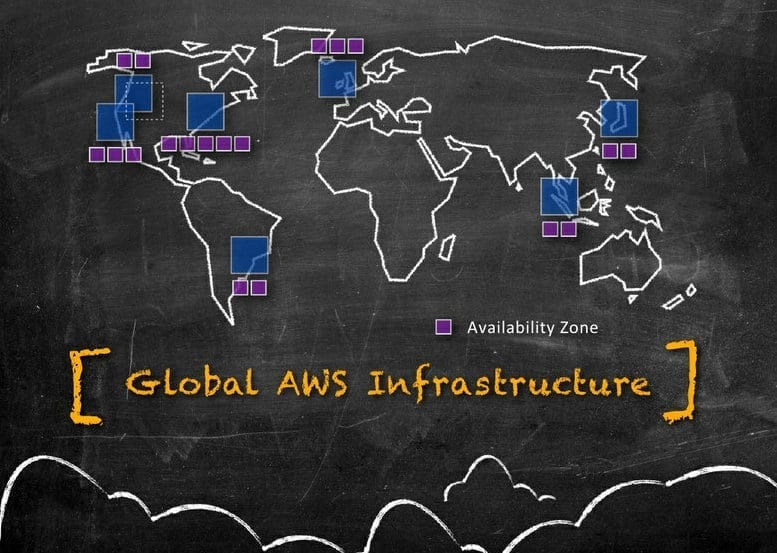
    At launch, the new AWS Region will comprise three Availability Zones, said Alex Yung (pictured), corporate vice president and managing director of AWS Greater China, at the first AWS Summit hosted in Hong Kong today.

    According to an AWS spokesperson, Availability Zones (aka AZs) are isolated locations and are what each Region is made up of. AWS has three locations in Hong Kong for its AZs.

    “AZs allow customers to build highly available applications. They are distinct locations that are engineered to be insulated from failures in other AZs and provide inexpensive, low latency network connectivity to other AZs in the same region,” said the AWS spokesperson.

    “AZs are made up of one, and sometimes more, datacenters. AZs are also designed in such a way that if one AZ were to fall off the face of the earth for some reason, the other AZs would continue to function normally. This means customers can build their applications across multiple AZs so they are designed to handle failure and continue to operate uninterrupted.”

    Including Hong Kong, there will be eight AWS Regions in the Asia Pacific: Singapore, Tokyo, Sydney, Beijing, Seoul, and Mumbai, and an additional Region in China (Ningxia) which is expected to launch in the coming months. Together, these Regions will provide AWS customers with a total of 19 Availability Zones, and allow them to architect highly fault tolerant applications. (Click here to view AWS’ global infrastructure.)

    In 2008, two years after AWS made its global launch, the cloud company opened a CloudFront Point of Presence (PoP) in Hong Kong to enable customers to serve content to end users with low latency. Since then, AWS has added two more PoPs in Hong Kong, the latest going live in 2016.

    In 2013, AWS opened an office in Hong Kong which is staffed by a wide range of functions including sales, support, technology evangelists, and marketing.

    Hong Kong has a dynamic and vibrant business environment and is making progress toward becoming a digital city. An AWS Region here will enable our customers — from start-ups to large enterprises, and from financial institutions to government organizations — to enjoy cost and agility advantages across their entire IT operations, in compliance with local data regulations,” Yung said.

    Nicholas Yang, secretary for Innovation and Technology, Hong Kong government, welcomed AWS’s plan to open an infrastructure region in Hong Kong in 2018,” AWS’s global infrastructure coming to Hong Kong reaffirms Hong Kong’s status as the prime location for setting up data center facilities in the region and also a recognition of Hong Kong’s edge and strengths as an Asia hub for doing business and a regional data hub.”

    “The new AWS Region in Hong Kong will further accelerate cloud computing adoption and cloud-based system development in Hong Kong, facilitating the digital transformation of businesses in this city. Hong Kong is well-positioned to become a premier global data hub in the region. We will continue to promote our competitive advantages and encourage prospective operators to establish a presence in Hong Kong,” Yang added.

  • AWS dominates public cloud market in Q4, says report

    AWS dominates public cloud market in Q4, says report

    Amazon Web Services (AWS) is maintaining its dominant share of the burgeoning public cloud services market at over 40%, new fourth quarter data from Synergy Research Group showed.

    The research firm also said that the three main chasing cloud providers – Microsoft, Google and IBM – are gaining ground but at the expense of smaller players in the market.

    In aggregate, the three have increased their worldwide market share by almost five percentage points over the last year, helped by particularly strong growth at Microsoft and Google, and together now account for 23% of the total public IaaS and PaaS market.

    The next ten cloud providers in the ranking have slipped off the pace a little, though this group does include Alibaba and Oracle who continue to grow at impressive rates. There is then a very long tail of small-to-medium sized cloud service providers, whose collective market share has now dropped to just 18%.

    With most of the major operators having now released their earnings data for Q4, Synergy estimates that quarterly public cloud infrastructure service revenues (including both public IaaS and public PaaS) have now reached well over $7 billion and continue to grow at almost 50% per year.

    If managed private cloud services are included, quarterly cloud revenues are now well over $9 billion. The cloud providers and rankings are very different in the managed private cloud, where IBM continues to lead while Rackspace and traditional IT service providers feature more prominently than they do in public cloud.

    “While a few cloud providers are growing at extraordinary rates, AWS continues to impress as a dominant market leader that has no intention of letting its crown slip,” Synergy Research chief analyst and research director John Dinsdale said.

    “Achieving and maintaining a leadership position in this market takes huge ongoing investments in infrastructure, a continued expansion in the range of cloud services offered, strong credibility with the large enterprise sector, consistently strong execution, and the wholehearted and long-term backing of senior management. AWS is checking all of those boxes and any serious challengers need to do likewise.”

  • VMware, AWS to launch joint hybrid cloud service

    VMware, AWS to launch joint hybrid cloud service

    VMware and AWS have teamed up to provide an integrated hybrid offering that promises to give customers the full software-defined data center (SDDC) experience.

    VMware Cloud on AWS will enable customers to run applications across VMware vSphere-based private, public, and hybrid cloud environments.

    To be available in mid-2017, the service will be delivered, sold, and supported by VMware as an on-demand, elastically scalable service. VMware Cloud on AWS will allow VMware customers to use their existing VMware software and tools to leverage AWS’s global footprint and breadth of services, including storage, databases, analytics and more.

    VMware Cloud on AWS is powered by VMware Cloud Foundation, a unified SDDC platform that integrates VMware vSphere, VMware Virtual SAN and NSX virtualization technologies, and will provide access to the full range of AWS services.

    This new service will run on next-generation, elastic, bare metal AWS infrastructure.

    Pat Gelsinger, CEO of VMware, said the new service will make it easier for customers to preserve their investment in existing applications and processes while taking advantage of the global footprint, advanced capabilities, and scale of the AWS public cloud.

    “Our customers continue to ask us to make it easier for them to run their existing datacenter investments alongside AWS,” said Andy Jassy, CEO of AWS.

    “Most enterprises are already virtualized using VMware, and now with VMware Cloud on AWS, for the first time, it will be easy for customers to operate a consistent and seamless hybrid IT environment using their existing VMware tools on AWS, and without having to purchase custom hardware, rewrite their applications, or modify their operating model.”

  • AWS opens first Indian region

    AWS opens first Indian region

    AWS has launched two data centers in Mumbai, taking the total number of Availability Zones to 35 across 13 technology infrastructure regions globally. With these data centers, Mumbai becomes AWS’ sixth region in Asia Pacific.

    The new AWS Mumbai Region consists of two separate Availability Zones at launch. Availability Zones refer to data centers in separate, distinct locations within a single region that are engineered to be operationally independent of other Availability Zones, with independent power, cooling, and physical security.

    AWS customers focused on high availability can architect their applications to run in multiple Availability Zones to achieve even higher fault-tolerance.

    According to Andy Jassy, CEO of AWS CEO Andy Jassy said more than 75,000 customers in India are using other AWS Regions.

    “These same 75,000 Indian customers, along with others interested in starting use of AWS, have asked for an AWS India Region so they can move their applications that require low latency and data sovereignty,” he said.

    “We’re excited to make this available today, with the same pay-as-you-go pricing, ability to get started immediately without having to negotiate enterprise agreements or wait days for access, and unmatched functionality that customers enjoy in AWS Regions worldwide.”

    AWS is also partnering with India’s National Institute of Electronics and Information Technology to train 25,000 people on cloud technologies.

  • Amazon To March Into Indonesia With $600 Million: Winners And Losers

    Amazon To March Into Indonesia With $600 Million: Winners And Losers

    Amazon.com has said it plans to expand its e-commerce empire to Indonesia, with a $600 million investment for the first year.
    It makes perfect business sense. Indonesia’s e-commerce space is only about $3.2 billion in sales, a tiny fraction of its $150 billion retail market. Indonesia is also the world’s 4th most populous country with 250 million population.

    When Amazon moves in, the market shudders. Who are the movers and shakers in the Indonesian e-commerce space right now?

    It turns out Amazon will be competing with start-ups backed by Alibaba Group and its buddy SoftBank.

    Lazada, a direct-sales marketplace that spans the entire ASEAN, has 75% of its transactions coming from Indonesia. It was founded by Rocket Internet and was recently valued at $1.5 billion through an investment from Alibaba. It generated $1 billion GMV last year and made $275 million in sales.

    Tokopedia is an Indonesian pure play. It is backed by SoftBank and Sequoia Capital.

    Bukalapak is smaller than Tokopedia and is 49% owned by local media conglomerate PT Elang Mahkota Technologi, or Emtek Group.

    Warehouse logistics companies can benefit if Indonesia’s e-commerce picks up. Mega Manunggal Property  is one stock we can look at.

  • AWS to be anchor customer for Hawaiki cable

    AWS to be anchor customer for Hawaiki cable

    In March, the Hawaiki cable project announced its contract with TE Subcom had come into force. They had raised the necessary funds to kick off the construction phase, and yesterday we learned where some of those funds came from.

    Amazon’s AWS division has stepped up for a large chunk of capacity on the system, becoming a high profile anchor customer on a submarine cable system for the first time.

    The Hawaiki cable is the latest project aimed at hooking up Australia and New Zealand directly with the west coast of the USA, stopping in Hawaii and branching off to American Samoa with options to reach several more.

    It’s a route dominated today by the longstanding Southern Cross cable system, and one on which we have seen several failed attempts to build an alternative – especially by partisans on the New Zealand side. This is the first time the money has finally added up though. As currently planned, the cable will stretch 14,000km and deliver as much as 30Tbps of capacity.

    Amazon AWS joins Vodafone, REANZ, and American Samoa Telecom as anchor customers. It’s Amazon’s first foray into the world of submarine cable systems, but surely not its last.

    The cloud giant is merely joining its tech brethren like Google, Facebook, and Microsoft in taking an active role in the underlying infrastructure they all depend on, taking up some of the slack as global telecommunications operators themselves continue to shy away from undersea investments in favor of wireless and terrestrial fiber.

  • AWS still dominates cloud infrastructure market

    AWS still dominates cloud infrastructure market

    Amazon Web Services (AWS) continues to dominate the cloud infrastructure services market with a 31% worldwide market share, dwarfing the chasing pack, according to new Q1 data from Synergy Research Group.

    The big three followers – Microsoft, IBM and Google – in aggregate accounted for 22% of the market, while the next 20 top-ranked cloud providers accounted for another 27%. The good news for Microsoft and Google is that they both achieved growth rates of well over 100% so they are at least slowly gaining some ground on the market leader.

    Outside of the big four, the next 20 cloud providers are growing at an average 41% per year, but in a market that is growing at over 50% that means that most of them are losing market share.

    The next 20 providers include Alibaba, CenturyLink, Fujitsu, HPE, NTT, Oracle, Orange, Rackspace, Salesforce, and Vmware.

    With most of the major operators having now released their earnings data for Q1, Synergy estimates that quarterly cloud infrastructure service revenues (including IaaS, PaaS and private & hybrid cloud) have now comfortably passed the $7 billion milestone.

    Growth rates remain somewhat similar across the major regions meaning that the United States continues to account for around half of the worldwide market.

    “This is a market that is so big and is growing so rapidly that companies can be growing by 10-30% per year and might feel good about themselves and yet they’d still be losing market share,” said John Dinsdale, a Chief Analyst and Research Director at Synergy Research Group.

    “The big question for them is whether or not they are building a sustainable and profitable business. This can be done by focusing on specific regions or specific services, but the bulk of the market demands huge scale, a broad footprint, very deep pockets and a long-term corporate focus.”

  • Telstra to launch Cloud Gateway in June

    Telstra to launch Cloud Gateway in June

    Australia’s largest operator Telstra will launch a product for businesses needing to connect to multiple cloud environments.

    The company has also added Amazon Web Services (AWS) to its list of supported cloud platforms. The service, named Cloud Gateway, will launch in June 2016.

    Cloud Gateway aims to provide private and secure connectivity directly into multiple public cloud platforms. This one-to-many “gateway” model connects an IP network service to the cloud with data carriage, cross connect in the hosting data center, configuration and support.

    Organizations are expected to be able to access their chosen cloud platform from around the world simply and securely, with increased application performance via Telstra’s IP network.

    Initially, Cloud Gateway will offer customers around the world connectivity to AWS and IBM SoftLayer, while Australian customers can also connect to Microsoft Azure, Office365 and VMware vCloud Air. More infrastructure and SaaS platforms are expected to join over time.

    Telstra executive director for global products and solutions Philip Jones said Cloud Gateway aims to help customers take full advantage of multiple cloud-based workloads.

    “Most organizations don’t realize the full value of cloud out of a single service. Instead, our customers are investing in sophisticated hybrid cloud environments, which come with their own range of fragmented networking challenges,” said Jones.

    “These include managing multiple vendors, portals and contracts, while trying to maintain a high level of security, performance and operational efficiency. We believe that just because these solutions are sophisticated, doesn’t mean that they should also be complex. Cloud Gateway is Telstra’s simple way to connect multiple clouds, and create hybrid environments.”

  • Amazon opens web services in Korea

    Amazon opens web services in Korea

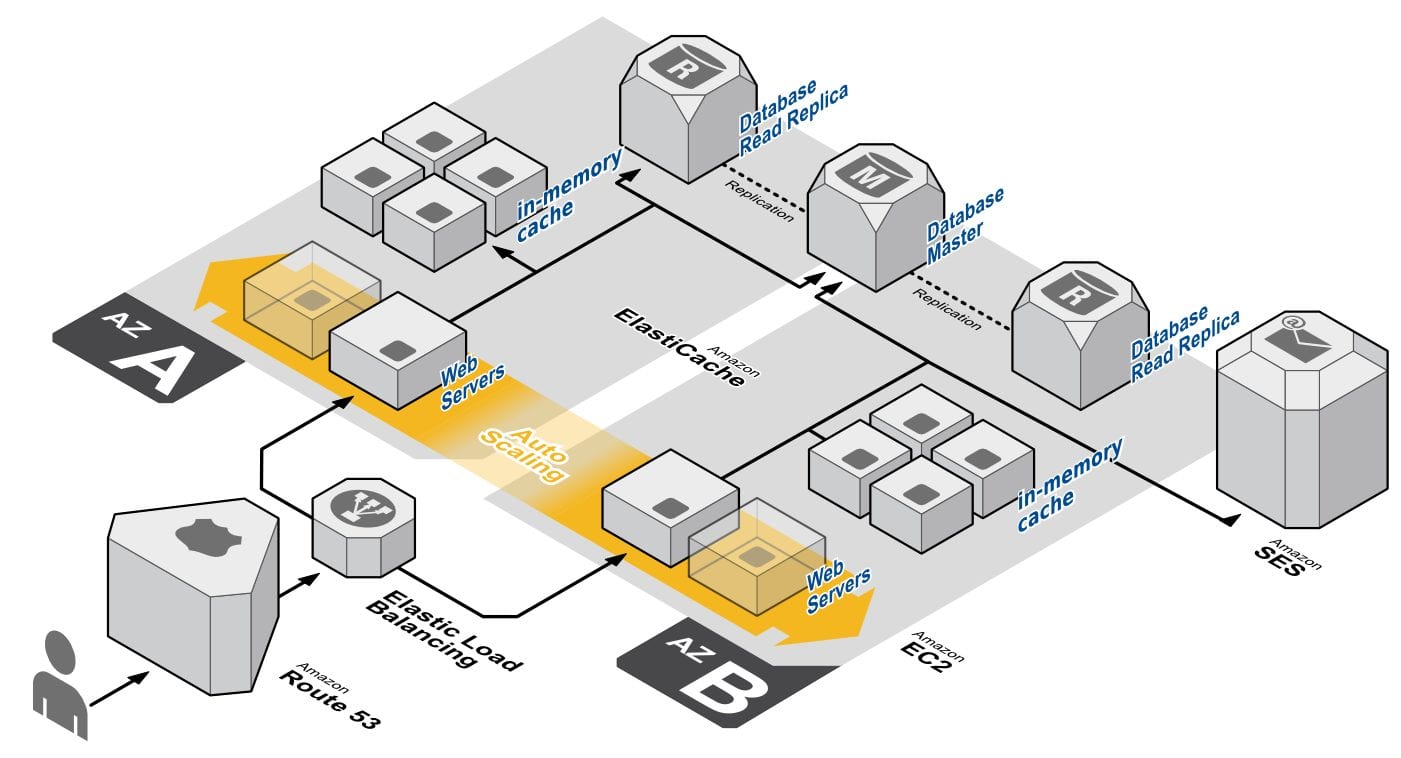
    Amazon Web Services has reported the opening of its twelfth geographic locale in Korea bringing the number of accessibility zones to 32. There are two new accessibility zones accessible in Seoul giving Korean clients the power alternative that they have been asking for quite a while.  The new zones bolsters Amazon EC2 , T2, M4, C4, I2, D2, and R3 occurrences . Other services incorporate Amazon Elastic Block Store (EBS), Amazon Virtual Private Cloud, Auto Scaling, and Elastic Load Balancing. A full posting is accessible in a site by Jeff Barr, Chief Evangelist at Amazon Web Services.

    The service is accessible now and developers can get to the zone details from https://aws.amazon.com. Itemized data relating to the zones was not made accessible but rather every zone comprises of one or more server farms. For Korean clients these will convey low dormancy arrangements anyplace in Korea, conveying under 10 millisecond service the nation over, something that was not accessible before to Amazon clients.

    The Act on the Development of Cloud Computing and Protection of Users (Korean Cloud Act) came into action on 28th September 2015 and was the first Cloud processing law to be passed in the world. With two zones accessible, adaptation to internal failure and failover between the two zones inside of the single national fringe is additionally ensured. The accessibility zones have been produced to be profoundly adaptable so that if request develops AWS will have the capacity to meet it.

    Andy Jassy, Senior Vice President, Amazon Web Services remarked: “Customers continue to choose AWS as their infrastructure technology platform because we have a lot more functionality than any other cloud provider, a significantly larger partner and customer ecosystem built around AWS, and unmatched maturity, security, and performance.”

  • Amazon is Secretly Testing Air Cargo Operations

    Amazon is Secretly Testing Air Cargo Operations

    Amazon.com, Inc. has been conducting secret trial flights that have carried thousands of packages to and from its fulfillment centers in the United Kingdom. Evening Standard reports that the tech-giant has chartered a Boeing 737 aircraft, which has been flying on routes between Poland, Germany, and England since mid-November.

    The online-retail giant has reportedly chartered the aircraft from DB Schenker, a German logistics company. Five weekly flights have been determined so far, on which the planes travel first from Katowice, Poland to Kassel, Germany. Katowice and Kassel are both significant stops, as the airports in these towns are within close proximity of the e-commerce giant’s huge warehouses in the two countries, respectively.

    The flight then continues from Germany to England, where the plane finally lands at one of the airports in Luton, Doncaster or East Midlands. The packages are dispatched from these airports to Amazon’s various fulfillment centers, including its biggest one at Dunfermline and another in Hemel Hempstead. The company is also rumored to extend the trials by chartering more planes and include its centers in Italy and Spain in this network.

    The move highlights Amazon’s urgency to limit reliance on traditional courier firms. The company has already built its own van delivery fleet in the UK this year, after one of its couriers, CityLink, went bankrupt. On a global-scale, the company has locked horns with its chief carrier UPS. Amazon provides business worth around $1 billion to UPS, but its dissatisfaction has risen due to the increasing shipment charges. Shipping cost has increased 10.4% in a year, compared to revenues growth of 11.7% in the same period.

    This means generating higher revenues did not have the expected positive impact on earnings, if supply chain costs had been further streamlined. Amazon was further unhappy with UPS services, when during last two Christmas periods the courier services was unable to deliver consumer packages on schedule, due to delivery overload. Consequentially, the e-commerce giant has sought to build its own distribution network to restrict costs, and have more control over its distribution network.

    Even within the US, recent reports suggest Amazon is looking to lease 20 Boeing 767 freight aircrafts. While these are positive cost control strategies for the online-retail firm, its air cargo expansion spells trouble for traditional freight carriers such as UPS, FedEx, and DHL. These couriers will likely lose a great chunk of business when Amazon starts carrying its own inter and intra-continental freight.

    An Amazon spokesman was quite tight-lipped when the Evening Standard asked for a comment over the European flights, and did not reveal information beyond the fact that the retail-firm employs various distribution and fulfillment modes, including air transport. No other official statement was made by the company.

  • iTrueMart Grows 1000% with the Help of AWS e-commerce Platform

    iTrueMart Grows 1000% with the Help of AWS e-commerce Platform

    iTrueMart, a leading e-commerce destination for quality brands for home appliances, electronic products, and best value merchandises, announced its expansion throughout all 10 ASEAN countries. The online retailer is one of the fastest growing e-commerce websites with 1000% growth in 2014. iTrueMart has been able to double its online users every 3 months this year and has grown from 100,000 users per month during its inception to its current 1.6 million users per month.

    iTrueMart runs its e-commerce platform using Amazon Web Services (AWS), which provides a low cost set-up with flexibility and full capacity to serve customers. With AWS as its partner, iTrueMart is able to focus on delivering better services to happier customers. AWS allows the online retailer to grow exponentially by cutting the development process by 2-3 months and running daytime campaigns at 400% of its normal capacity in just a few hours. iTrueMart can additionally handle a 10-fold increase or more in customer visits during promotional periods while easily adding new features and functions to the website whenever they are needed. The AWS framework allows iTrueMart to maximize its use of cloud technology while maintaining the use of older technologies and platforms. Chief Technology Officer (CTO), Chaiwat Ratanaprateepporn, said, “Our developers have been able to evolve more in the deployment process and DevUp culture, and they can now deploy features faster and take better care of their services.”

    With the ease of AWS and its e-commerce platform, iTrueMart is committed to growing and expanding in Southeast Asia. iTrueMart is currently planning other services, such as offering an e-payment business as well.

    For more information about iTrueMart’s use of Amazon Web Services (AWS) e-commerce platforms, please visit

  • Mobile banking consumers in Singapore warned of malware threat.

    Mobile banking consumers in Singapore warned of malware threat.

    Bank customers in Singapore have been warned of a rise in malware infections on Android phones that seek to hijack online passwords and one-time security codes.

    The warning, from the Association of Banks in Singapore (ABS), says the infections appear as a software update for Android smartphones, or as a service for updating WhatsApp.In the latter, a pop-up advertisement encourages consumers to tap it and download a “new” version of the program or risk losing access to the service. After downloading the update, the application will prompt the customer to input confidential information, such as credit card details, which could then be used to commit fraud.

    Smartphones that have been jailbroken or rooted are particularly susceptible to infection, says the ABS.

    Ong-Ang Ai Boon, director of ABS, says that major retail banks in Singapore have seen an increase of mobile banking customers from 1.5 million in 2013 to 2.4 million in 2015.

    “ABS would like to remind mobile banking customers that smartphones are as susceptible to malware as desktop computers or laptops,” she says. “Consumers are reminded to download applications only from trusted sources.”