Tag: Axis Bank

  • Apple Pay Enters India with Axis Bank in 16.3 Million Card Rollout

    Apple Pay Enters India with Axis Bank in 16.3 Million Card Rollout

    Apple Pay launched in India on Wednesday through an exclusive initial partnership with Axis Bank. The rollout enters the world’s most populous consumer market.

    Axis Bank is India’s fourth-largest credit card issuer. It held 16.3 million cards outstanding out of 124 million nationwide as of August, according to central bank data.

    How the Axis Bank Rollout Works

    The private lender, India’s third-largest, is the first domestic institution to support the payment service. Cardholders can link eligible Visa and Mastercard credit cards through the Axis Bank mobile app or directly inside Apple Wallet.

    Transactions operate across physical retail checkouts, mobile apps, and online merchant portals using iPhone, Apple Watch, and iPad hardware. The service enables contactless checkout without a physical card PIN or a one-time password. Instead, it authenticates charges through Face ID, Touch ID, or a device passcode.

    Domestic cards issued on India’s homegrown RuPay payment network remain excluded from the service at launch.

    India is home to a dynamic and digitally savvy population that continues to embrace a cashless future while expecting the highest standards of security and privacy, and we’re so excited to bring Apple Pay to users in India today.

    The Battle Against UPI Dominance

    Entering India puts Apple directly up against the Unified Payments Interface. The domestic real-time bank settlement architecture processes 84 per cent of digital transaction volumes. According to a 2025 International Monetary Fund report, the protocol ranks as the world’s largest retail fast-payment network by transaction volume.

    For retailers and consumer brands across India, adding Apple Pay provides a direct checkout route for premium smartphone owners. These shoppers frequently transact on credit rather than direct bank debit. The system shifts point-of-sale interaction toward tap-and-pay hardware readers, bypassing the QR-code scanning routines that dominate local merchant counters.

    Merchant Margins and Bank Negotiations

    Commercial terms have slowed broader adoption among top Indian credit issuers. Apple held talks with larger domestic rivals HDFC Bank and ICICI Bank. It has not agreed commercial terms with either institution.

    Interchange fee sharing and integration expenses remain the central tension in a market where UPI merchant transactions carry minimal processing costs. Axis Bank took the opening position to attract affluent device owners. In doing so, it accepted Apple’s ecosystem rules to secure an early advantage in premium card acquisition.

    Next Steps for Indian Card Expansion

    India was one of the last major global economies without local wallet support after earlier rollouts across East Asia and Southeast Asia. The launch coincides with Apple’s widening retail footprint in Mumbai and New Delhi, where direct store openings have accelerated hardware sales.

    Attention now turns to whether HDFC Bank and ICICI Bank resolve fee discussions to link their respective card portfolios. A deal with both lenders would open Apple Pay to more than half of India’s total credit card base.

  • Axis Bank enters blockchain alliance with Ripple

    Axis Bank enters blockchain alliance with Ripple

    Axis Bank, India’s third largest private sector bank, has entered a collaboration with distributed FinTech company Ripple to offer cross-border payments solution through Blockchain technology.

    Ripple is a blockchain-based financial settlements solution that aims to reduce the time and cost of transactions. Axis is the first bank in India to partner with Ripple.

    The technology can enable instant international money transfers, compared to the 3 – 5 day norm for international remittances, and improve efficiency of payments for Axis Bank through instant and automated reconciliation with partner banks.

    “We are committed to using innovation in technology to make banking simple and convenient for our customers,” said V Srinivasan, Deputy Managing Director, Axis Bank.

    “Remittances have been a key strategic area for us, we at Axis are excited with the tie-up and the potential that the use of Blockchain technology could deliver in enabling real-time affordable money transfers.”

    “Given its status as the fastest-growing major economy in the world and the top market for remittances, India is a very important market that is ripe for payments innovation,” said Brad Garlinghouse, CEO of Ripple. “As an early adopter of Ripple, Axis Bank will set a new standard for cross-border payments services and help us continue to grow our global network in a key region of the world.”

  • Fastacash to launch payments via social network in Myanmar

    Fastacash to launch payments via social network in Myanmar

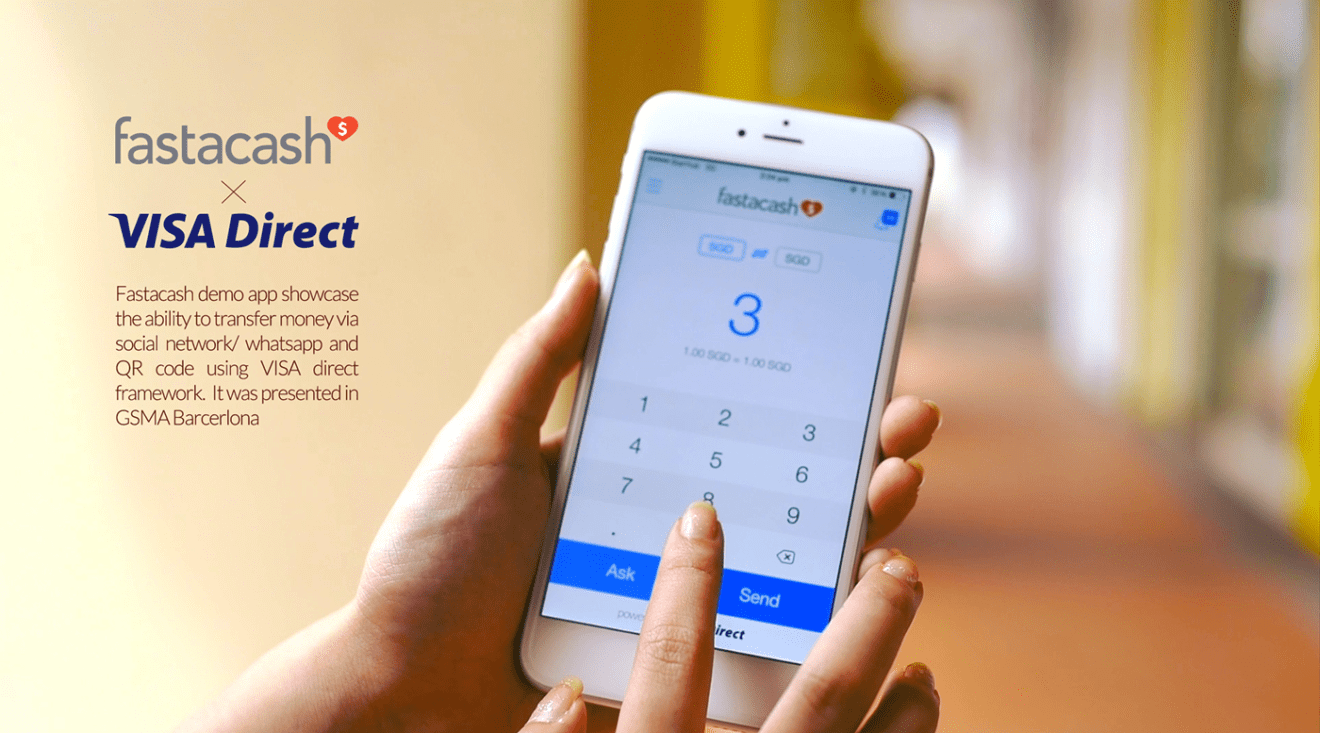
    Fastacash, a global platform enabling payments across social networks, has made a strategic investment in Myanmar focused company, MyPAY.

    MyPAY, which is developing a mobile payment system, also has a strategic partnership with MySQUAR,  a social network in Myanmar with approximately 1.5 million user accounts.

    Along with the investment, fastacash will also provide the technology platform to MyPAY to enable payments through the social network. fastacash will also support MyPAY’s go-to-market activities, including market insights and global partnership management.

    Through the fastacash platform, anyone using MyPAY will be able to transfer money, and airtime to their social connections, and make payments at retail points. MyPAY is expected to leverage MySQUAR’s user base of approximately 1.5 million user accounts.

    “In MyPAY we have found a strong local partner. Together we will make social payments a reality – for the very first time – in one of the last large untapped markets. Building a presence in Myanmar is aligned with our strategy to be a global leader in social payments, given Myanmar’s prominence as a large domestic market and receive market for global remittances,” said Vince Tallent, Chairman and CEO of fastacash.

    We see tremendous opportunity for both peer-to-peer and person-to-merchant payments in Myanmar. Together with fastacash, MyPAY is going to introduce a mobile money app, compliant with Myanmar law, to make payments easier for consumers and merchants in Myanmar. With fastacash’s technology, we are able to leverage social networks such as MySQUAR. Together, we are empowering a connected market where ninety percent of people are unbanked and underserved by traditional financial institutions,” said Nicolas Nguyen, CEO of MyPAY.

    Myanmar is one of Asia’s fastest emerging economies, with its gross domestic product (GDP) rising 8.5 percent in FY2014 (IMF), and forecast to rise 7.7 percent in FY2015. McKinsey estimates the country’s economy will quadruple from US$45 billion in 2014 to US$200 billion by 2030. Economic growth in the country is expected to be tied to demographic trends and mobile and social penetration.

    The country’s young population, with 47% under the age of 24, are expected to drive the consumption of mobile and social networks.

    Myanmar’s mobile penetration is estimated to rise from 10.5% in 2014 to 57% in 2016, boosted by the entry of foreign telecom companies. Mobile is expected to present a huge opportunity for Myanmar; by 2016 nearly 15 million people will be able to access the internet, mainly via their mobile devices. As only 4.8% of citizens have a bank account, a large opportunity exists for mobile money services.

    fastacash has live services in India, Indonesia, Russia, Singapore and Vietnam. Through partnerships with banks, money transfer operators, mobile network operators and social networks, it builds social payment capabilities within their services and mobile applications. Its partners include financial institutions such as DBS Bank (Singapore), Axis Bank (India), Oxigen Wallet (India), Techcombank (Vietnam), Doku (Indonesia), MOBI.Dengi (Russia), as well as VISA Europe.

  • Flipkart launches financial assistance programme for vendors

    Flipkart launches financial assistance programme for vendors

    Online retail major Flipkart on Friday launched its financial assistance programme Growth Capital Initiative for sellers across the country. The company has tied up with leading banks and financial institutions such as Bajaj Finserv, Axis Bank, NeoGrowth, Lendingkart and Capital First, for the same.

    The platform will compare lending services between different financial players and enable access to capital. While Flipkart will play the role of a curator, the platform will create an arena and ecosystem of financial services for sellers that will be governed by the market forces.

    “Lack of funding has often emerged as one of the key hurdles for small businesses. In fact, most of the lending organisations consider them as ‘un-bankable’ which results in a lot of SMEs/units closing down or borrowing from other sources at higher rates. We see a huge unmet demand in this sector. Our initiative will provide simple, hassle-free and competitive options to sellers to avail financial services,” said Ankit Nagori, Chief Business Officer at Flipkart.

    With this initiative, sellers across India will be able to gain quick access to loans with basic documentation and within minimum turn-around-time. Our focus is to simplify the whole capital fund gathering process so that they can make timely investment and focus on developing their businesses, added Nagori.

    Rivals Snapdeal already has a financial assistance arm for vendors in place since last year while Amazon has tie-ups with various financial institutions in the country for the same. In addition, there are start-ups like Lendingkart.com and Capital Float that assist vendors in online e-commerce to seek easy loans.